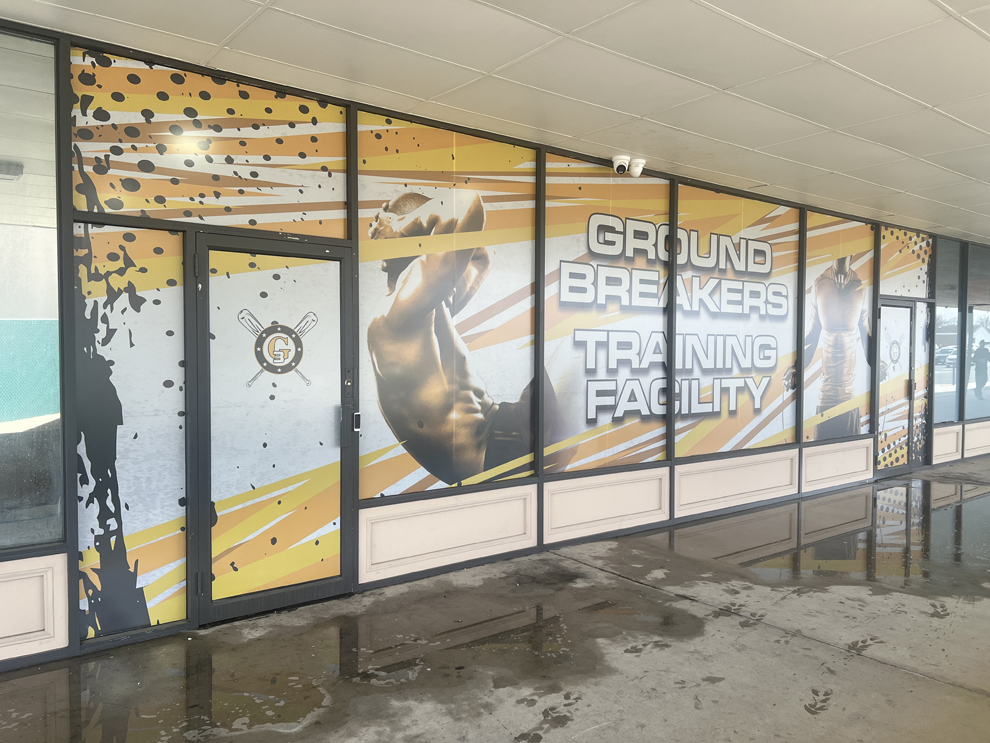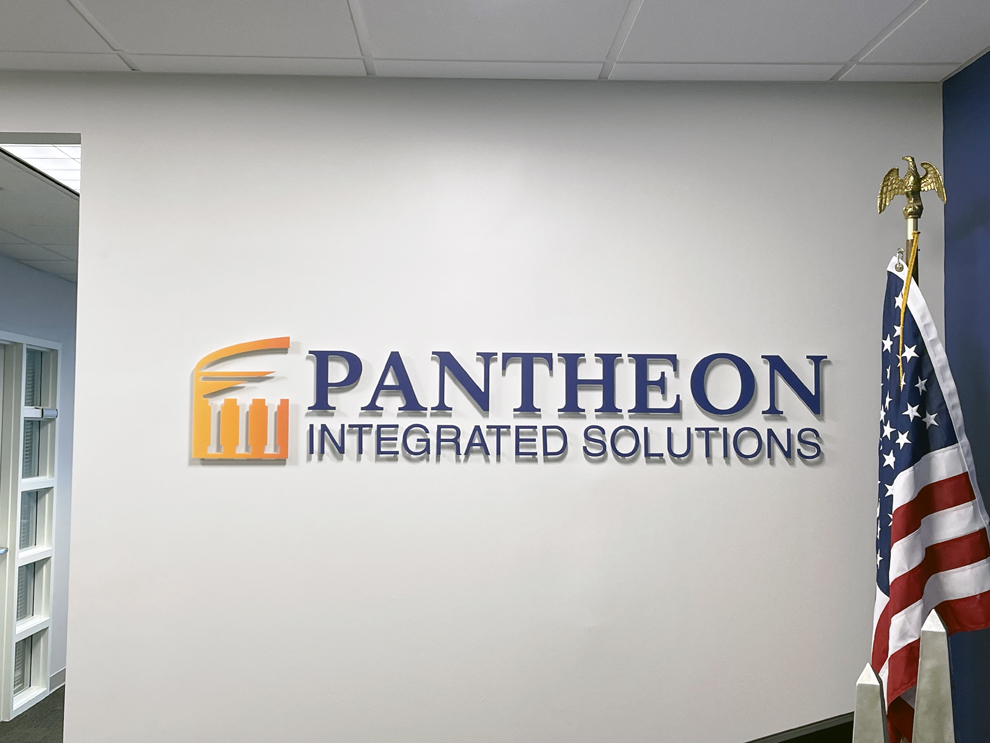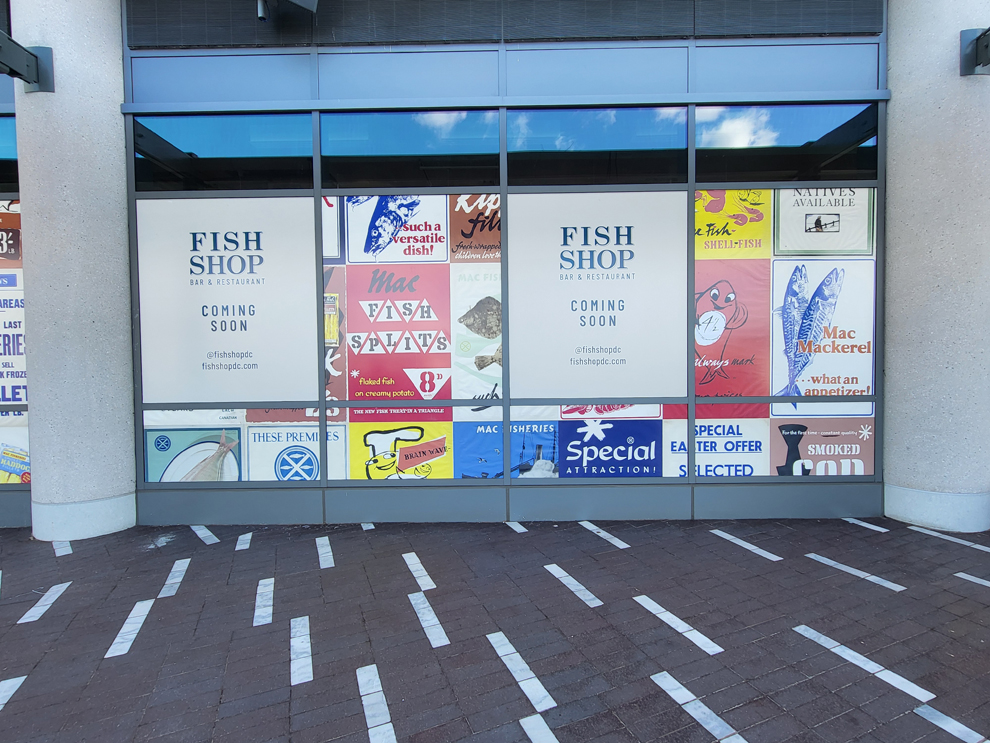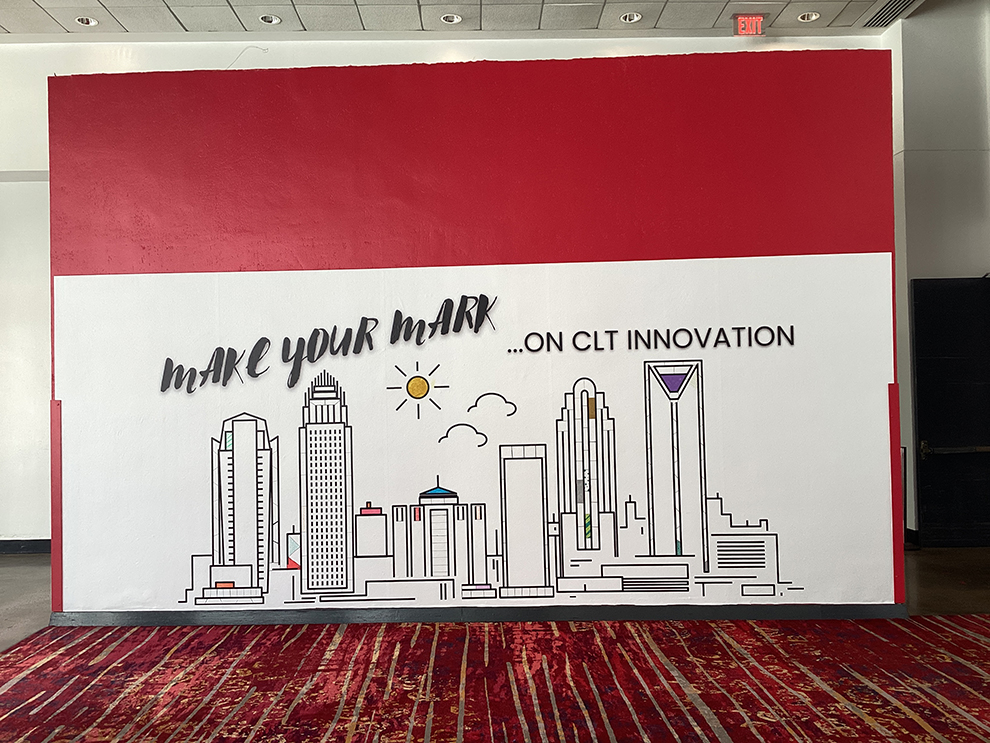
The entrance to your business should build confidence and establish a clear sense of identity before a visitor reaches the reception desk. Storefront graphics help create that transition by introducing the brand, organizing what people see, and preparing them for the workplace or commercial interior beyond the door. The strongest result is not a crowded window or a collection of unrelated signs. It is an arrival experience in which the entrance, lobby, walls, glass, and interior displays feel connected to the same organization and purpose. That continuity should be visible from the first approach to reception.
Heritage Signs & Displays helps Charlotte organizations develop storefront graphics as part of that larger interior experience. Window graphics, entry lettering, privacy film, and distraction markers can establish identification, visual interest, privacy, and awareness on glass. Inside the space, lobby signs, dimensional lettering, wall graphics, backlit signs, wayfinding, and storytelling displays can continue the identity through reception areas, offices, meeting rooms, corridors, showrooms, and other customer-facing interiors. Each element has a specific role, but the completed space should communicate as one coordinated brand experience.
Our team collaborates with client stakeholders to understand what they want people to recognize, feel, and understand as they enter and move through the space. Heritage then translates those goals, brand standards, messages, architecture, existing lighting, and site conditions into environmental graphic design concepts and production-ready details. One dedicated Project Manager connects discovery, the required site survey, design development, production, fabrication, approvals, scheduling, and professional installation. Clients gain one accountable Heritage relationship while the people responsible for the finished work share the same project history and client objectives.
Charlotte is home to Heritage's headquarters and primary specialty production facility. Project management, environmental graphic design, production, fabrication, and installation resources work in close coordination there. That proximity supports communication, scheduling, quality control, and accountability for Charlotte-area clients. It also lets questions about production feasibility, finishing details, installation planning, and timing move quickly between the people responsible for the finished work. Heritage can use that same Charlotte capacity for larger or multi-location workplace programs when a client needs coordinated execution beyond one site, without changing the local-first role of the Charlotte operation.
Heritage focuses on workplace and commercial interiors. In Storefront projects that continue into the interior, Heritage produces and installs specific types of non-illuminated exterior signs and graphics. A Charlotte client can therefore address the arrival and the workplace together rather than treating the exterior threshold as a separate sign project. The exterior portion can strengthen identification before people enter, while entrance glass, lobby features, wall graphics, displays, and other interior elements continue the experience inside. Detailed exterior capabilities, exclusions, and approval responsibilities are addressed later on this page.
Heritage is an award-winning, veteran-owned, family-led company founded in 1977 and approaching its 50th anniversary. Our purpose is to honor God by serving clients and communities with excellence. For Charlotte clients, that commitment means listening carefully, recommending responsibly, communicating directly, and carrying the approved project through a professionally installed conclusion.
Storefront graphics should establish identity and help people enter with confidence, but the entrance does not need to communicate every part of the organization's story. The interior provides more space to express culture, capabilities, history, purpose, and the experience employees, customers, patients, members, or visitors should have. Planning the entrance and interior together creates a clearer message and reduces the visual disconnect that can occur when doors, windows, lobby features, and interior walls are planned independently.
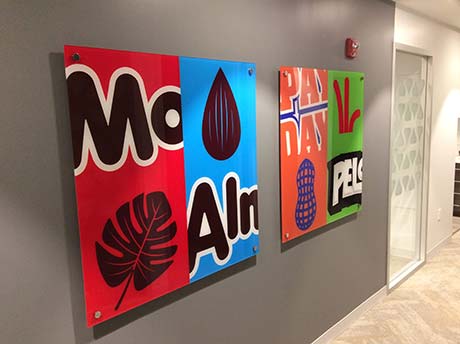
Heritage develops the progression according to the space. Window graphics or cut vinyl lettering may provide recognition while preserving selected views. Frosted vinyl or etched-look privacy film can add visual separation to glass offices, conference rooms, or vestibules. A lobby sign can become the primary interior focal point, while wall graphics, dimensional elements, wayfinding, and branded displays extend the identity into the areas people use every day.
This approach serves corporate offices, healthcare practices, professional firms, universities, nonprofits, financial institutions, hospitality spaces, showrooms, fitness facilities, and selected customer-facing businesses. The applications differ, but the objective remains consistent: create a purposeful first impression and continue it through the interior.
Charlotte organizations choose Heritage when they want the entrance and interior to work as one project and one client experience. Heritage's One Dedicated Project Manager System keeps client discovery, site information, environmental graphic design, approvals, production, fabrication, scheduling, and professional installation connected while giving the client one consistent point of coordination.
The Charlotte headquarters adds a distinctive operational advantage. Environmental graphic designers, Project Managers, production specialists, fabricators, and full-time professional installers can work in unusually close coordination with the primary specialty production facility. Questions about materials, construction, finishing, production feasibility, site conditions, and installation planning can move quickly among the Heritage people responsible for the finished result rather than being handed from one outside provider to another.
Heritage is veteran-owned, family-led, and approaching 50 years in business. Charlotte clients can use this connected capability for a substantial branded entrance, a broader workplace interior, phased improvements, or multi-location programs. Whatever the scope, Heritage preserves project knowledge, protects approved intent, and remains accountable for carrying the work through installation.
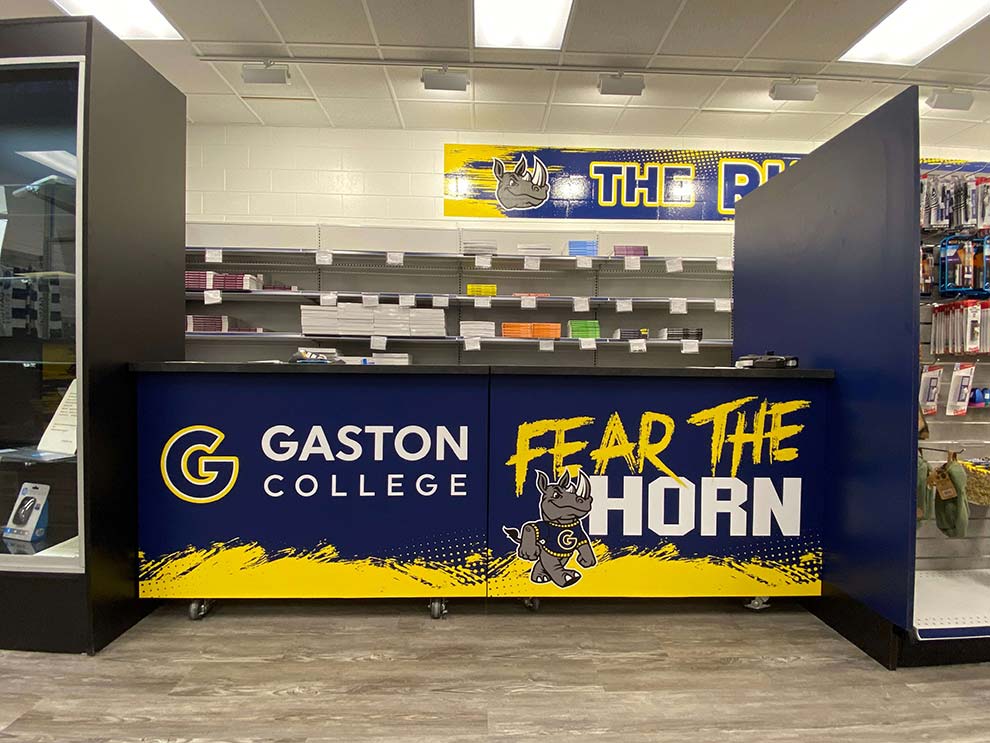
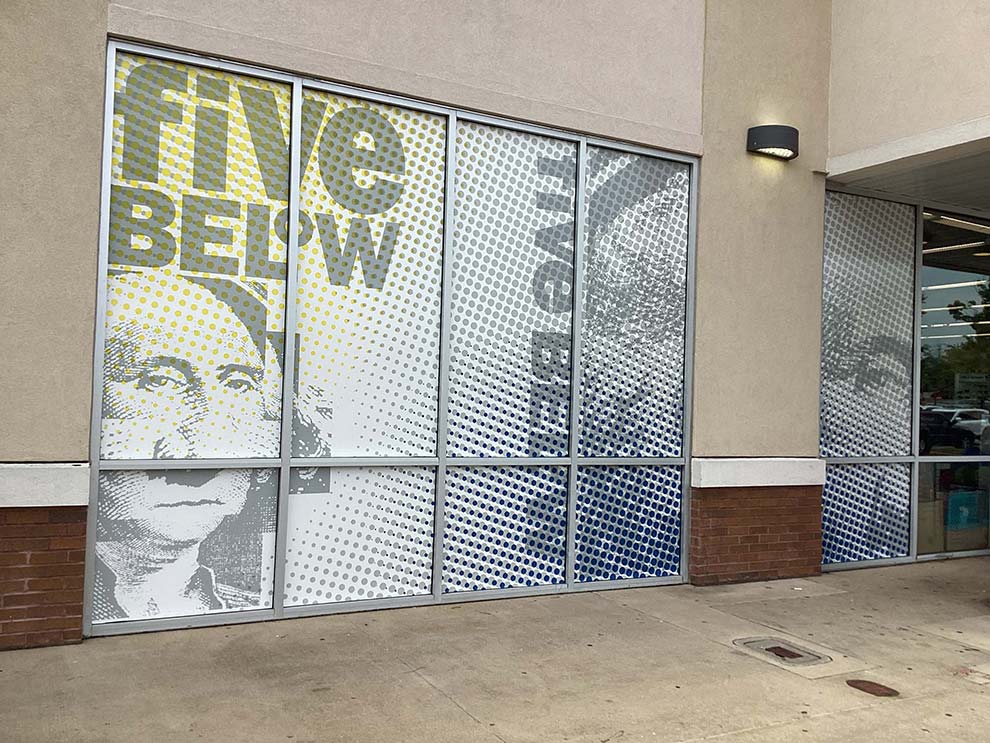
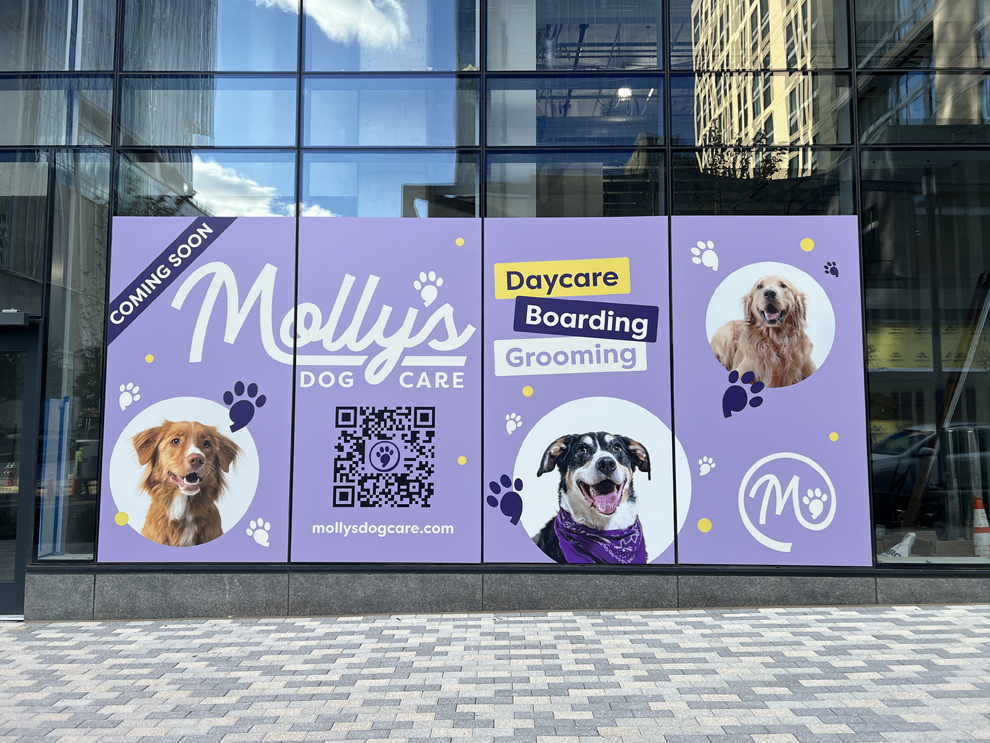
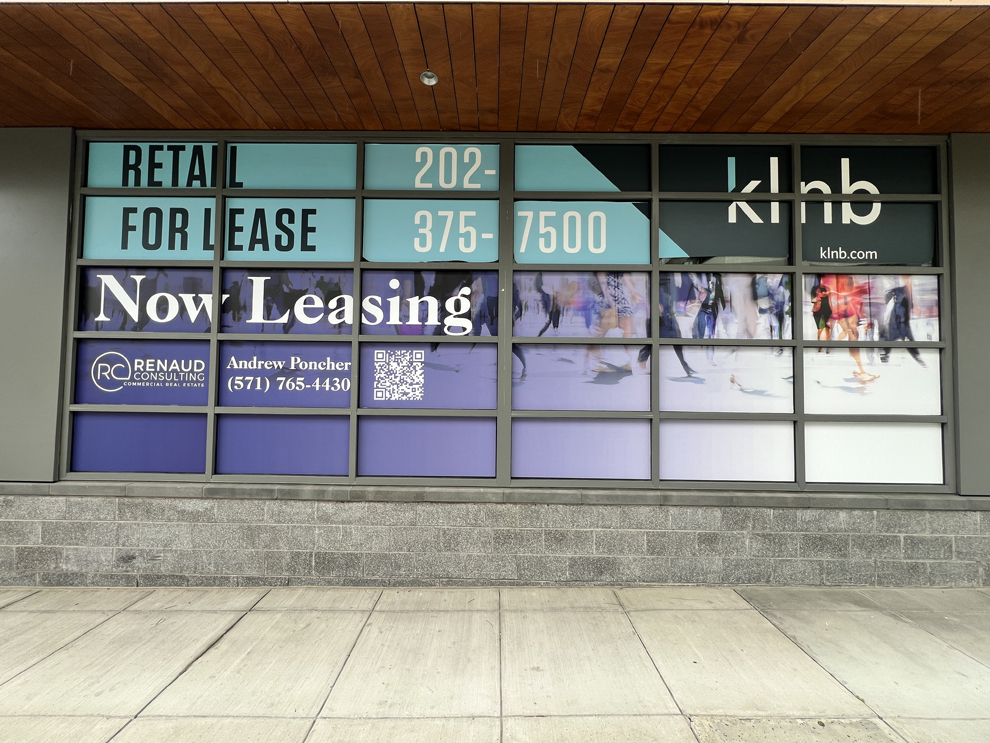
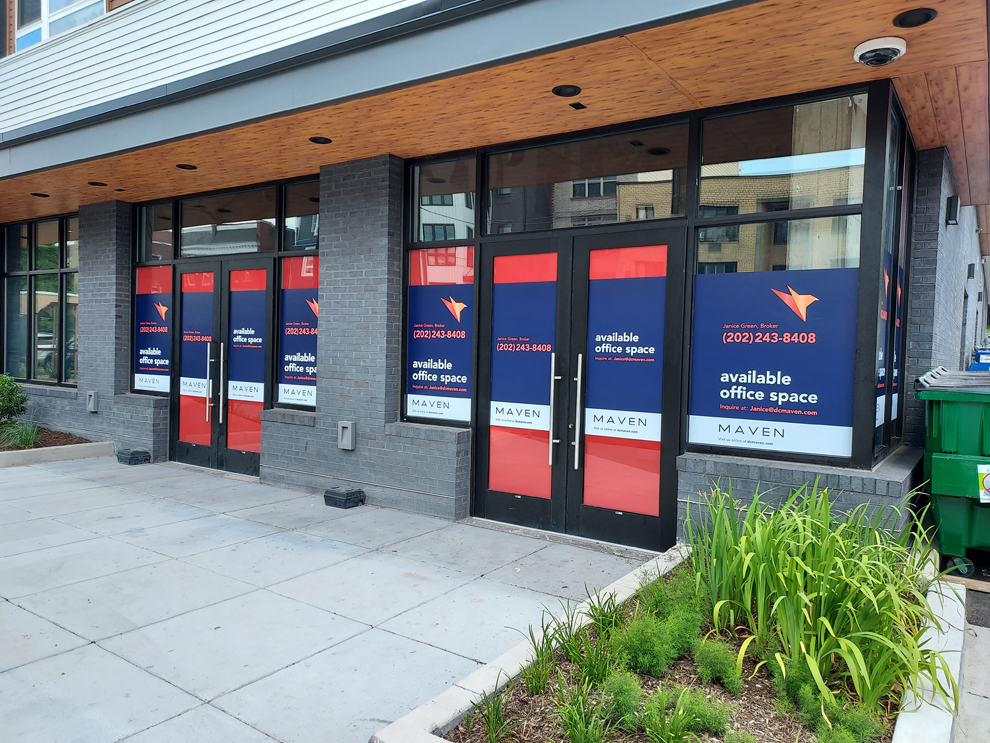
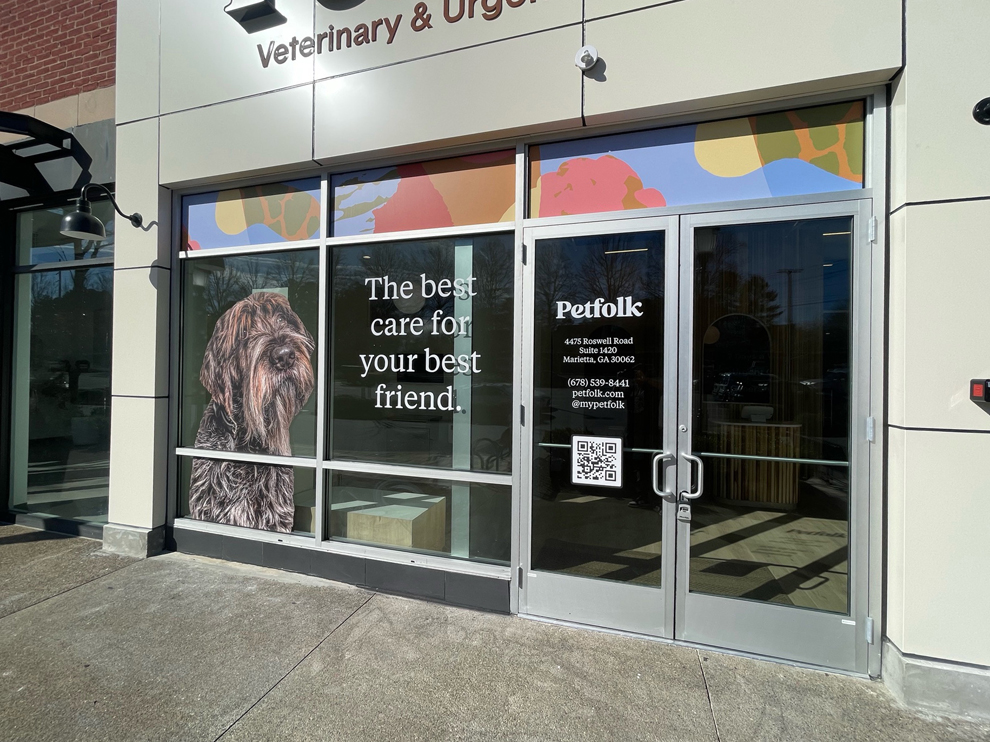
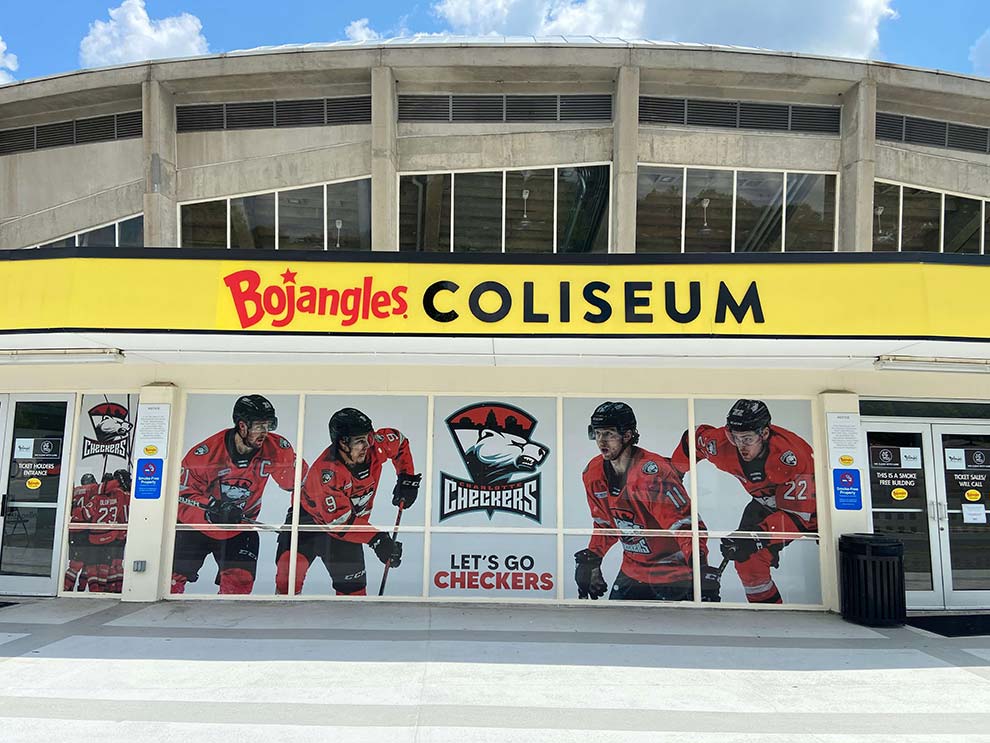
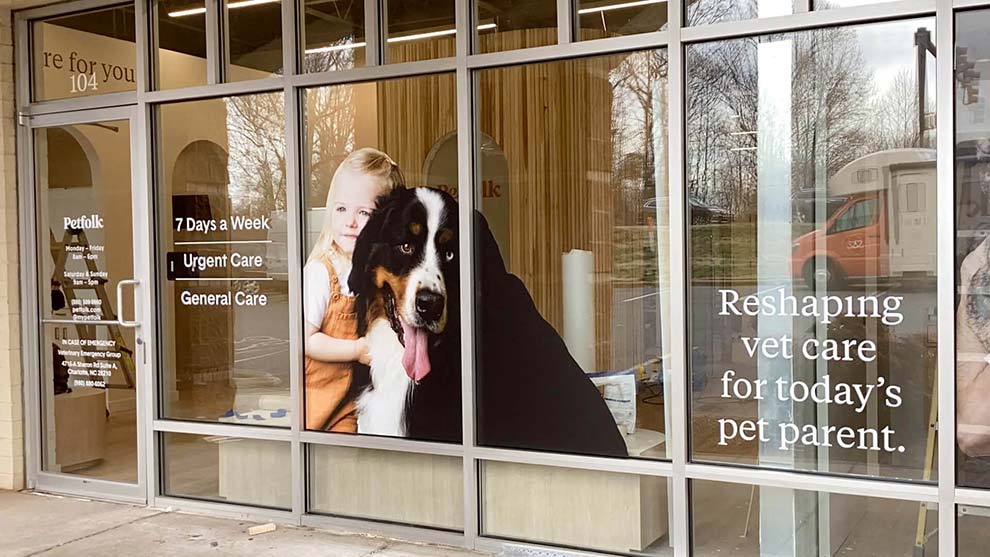
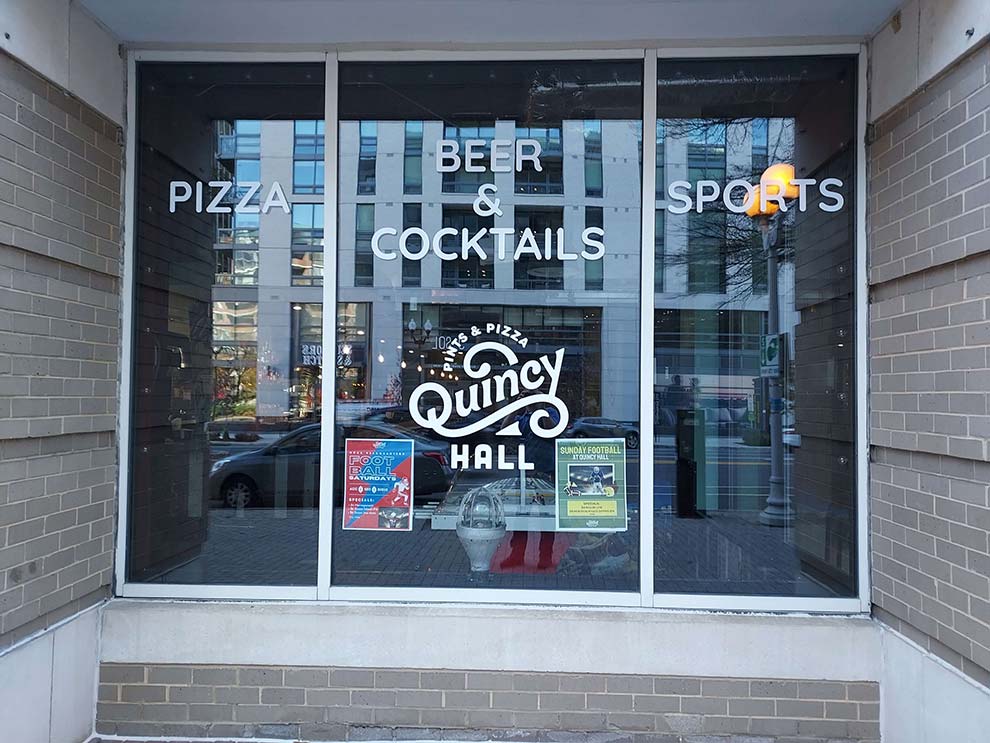
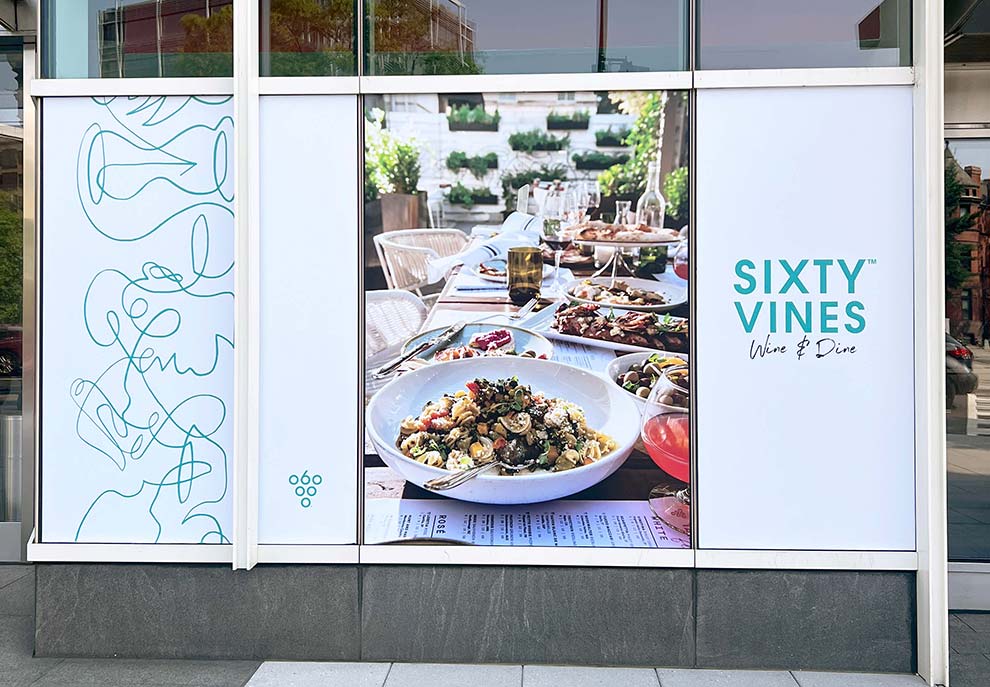
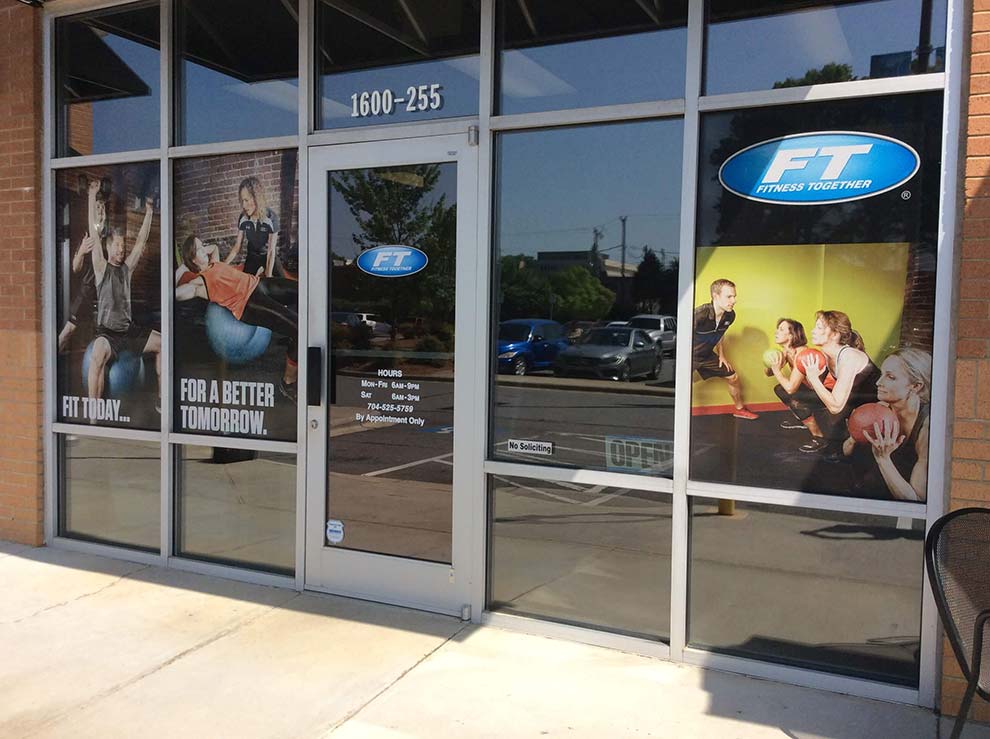
Custom window graphics can add identity, color, messaging, patterns, or selected coverage to entrance glass and interior windows. Heritage plans opaque, translucent, perforated, or cut adhesive vinyl graphics around viewing conditions, desired privacy, visibility through the glass, and their connection to the surrounding interior.
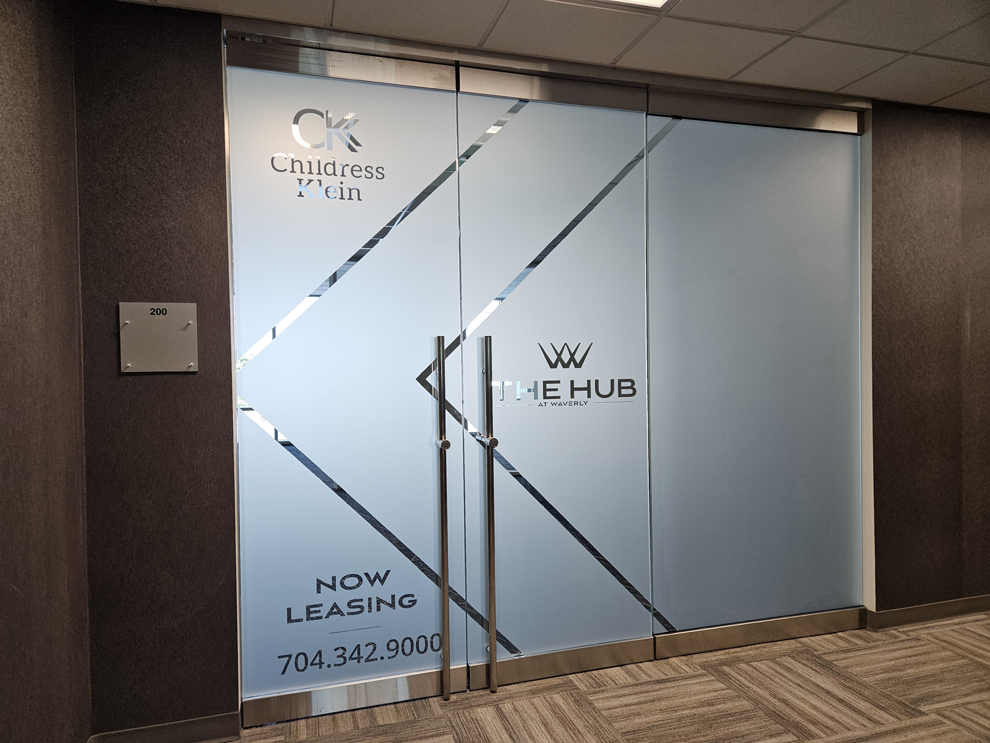
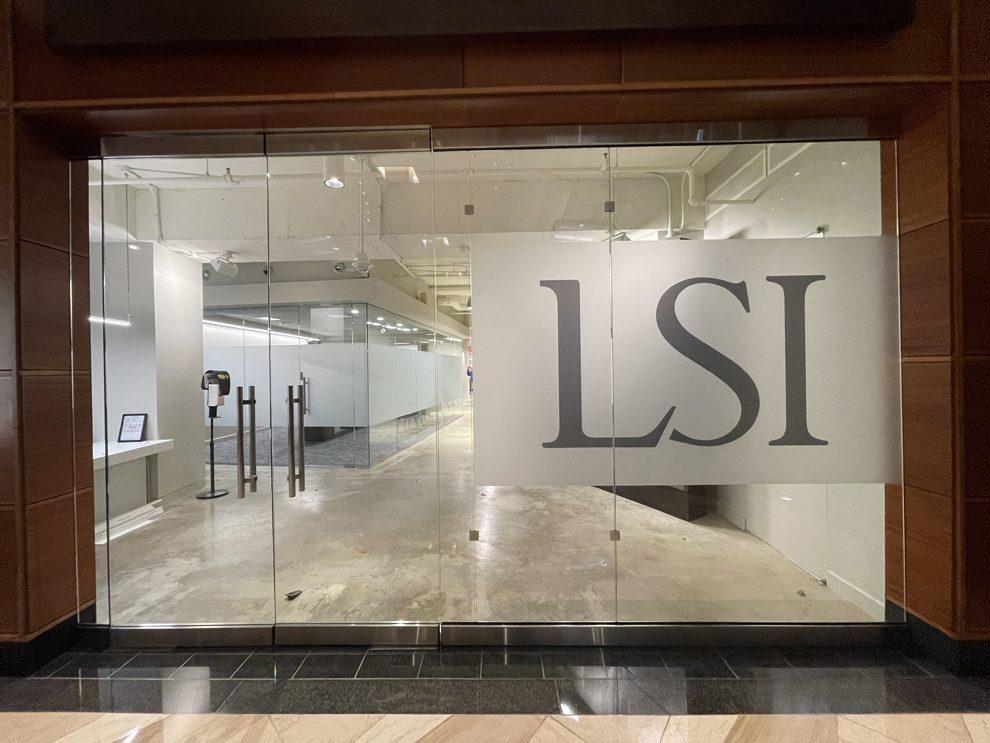
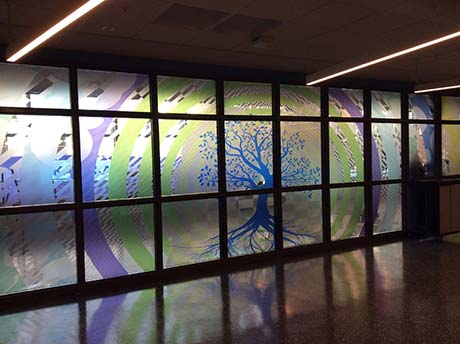
Heritage uses frosted vinyl and etched-look privacy film to create visual separation while allowing light to move through offices, conference rooms, vestibules, and customer areas. Patterns, bands, logos, and custom designs can support privacy, brand recognition, and a refined architectural appearance.
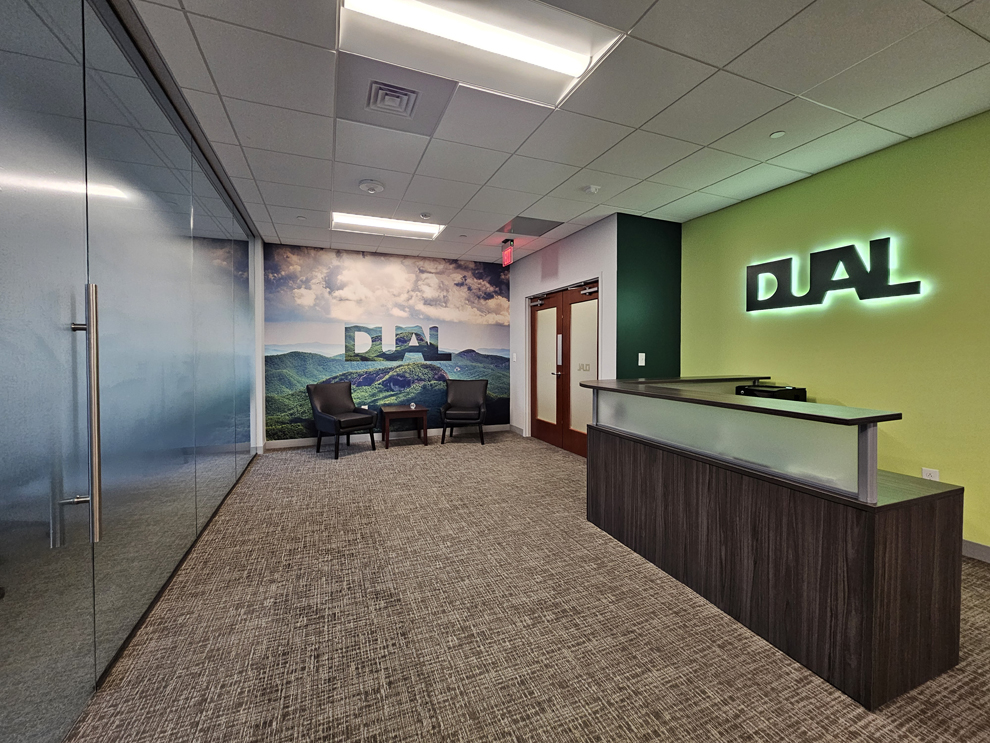
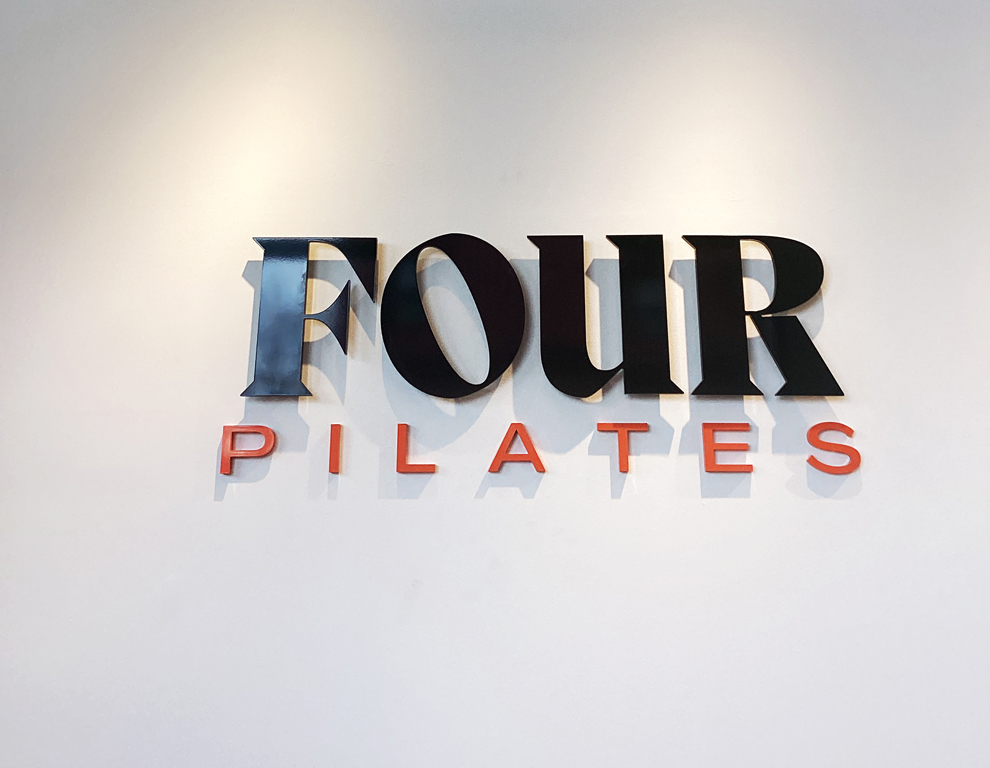
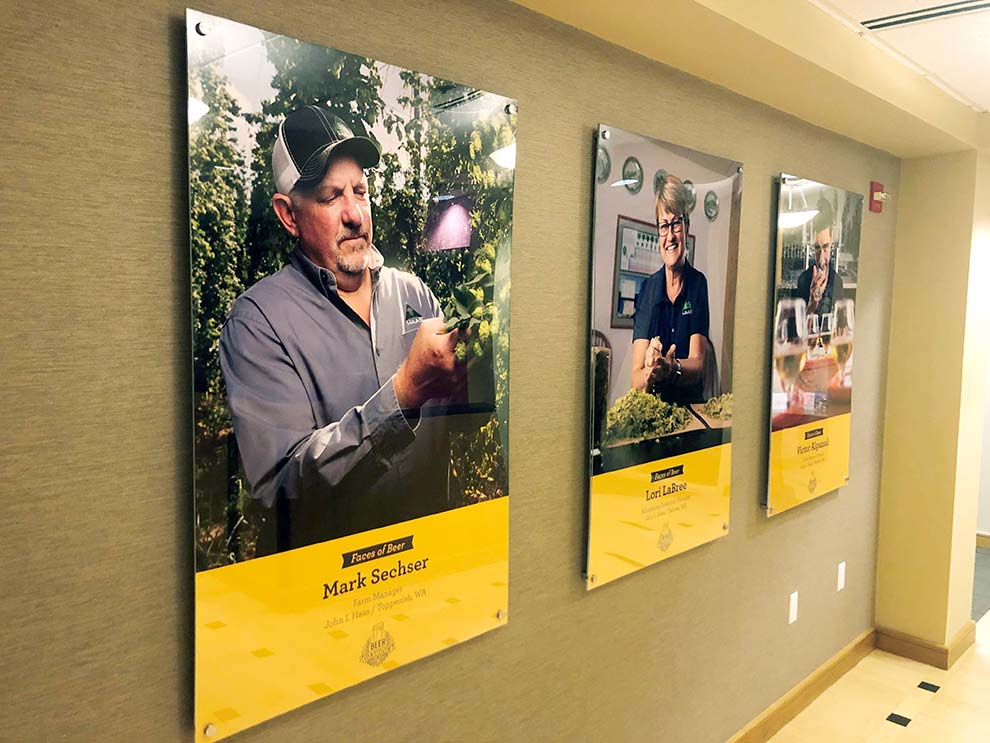
Acrylic lobby signs create a strong interior destination after the entrance introduces the brand. Heritage coordinates dimensions, color, layers, mounting, placement, and surrounding graphics so the reception sign feels integrated with the wall, furniture, architecture, and visitor experience.
Dimensional letters and logos bring depth and architectural presence to reception walls, corridors, showrooms, and branded displays. Interior designs can use a non-illuminated finish, halo illumination, or backlighting coordinated with entrance graphics, lobby signs, wall treatments, and existing room lighting.
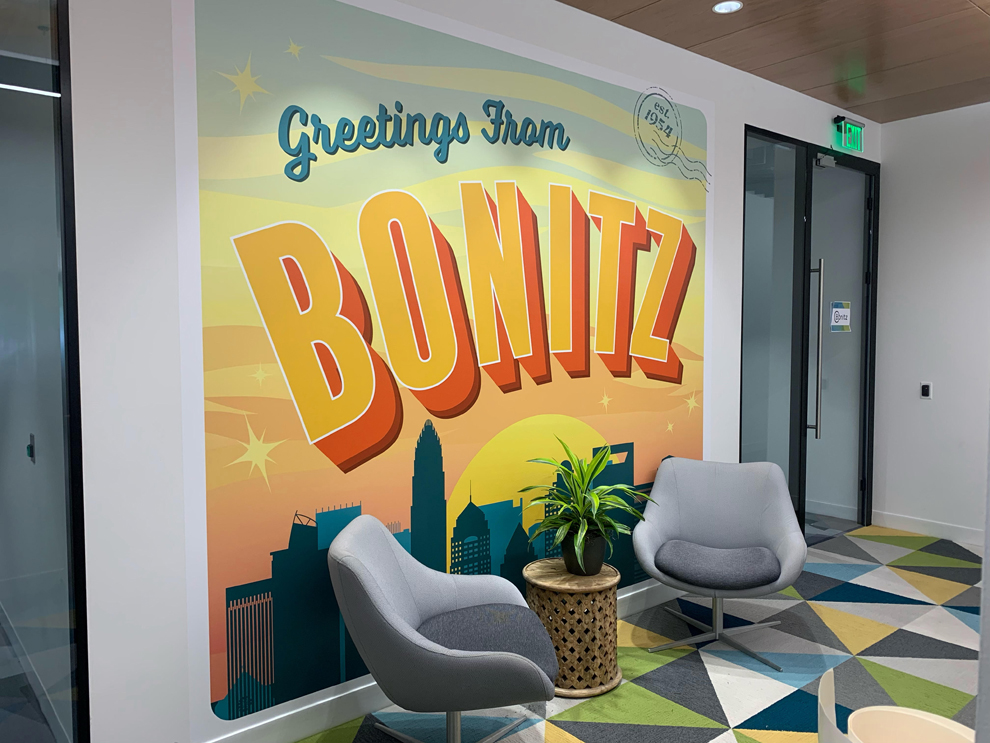
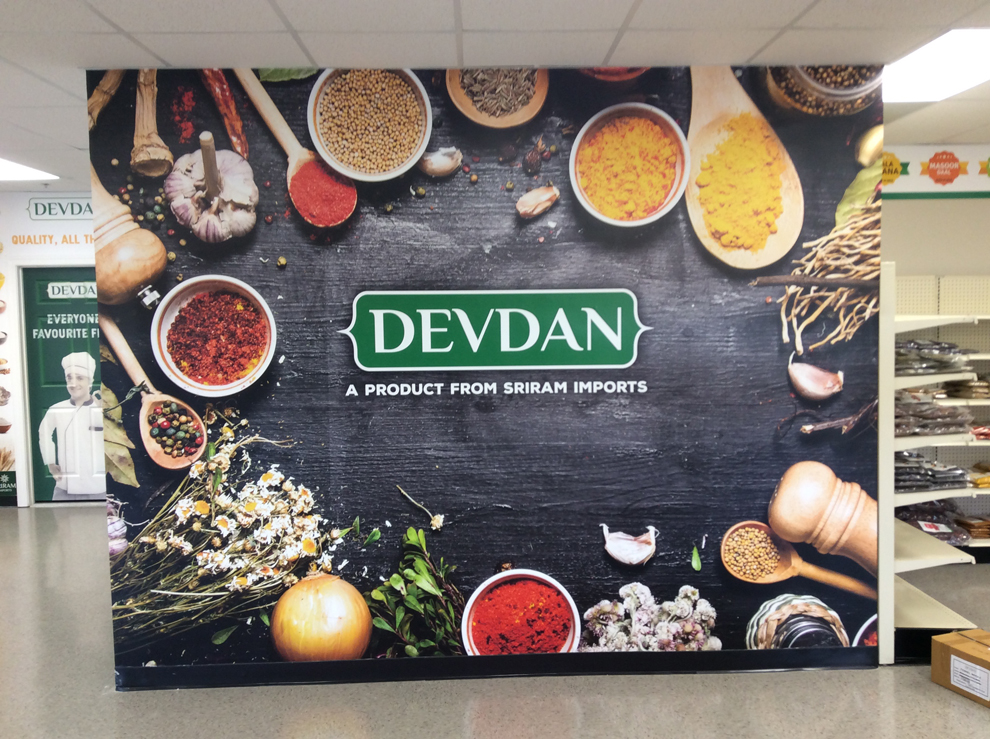
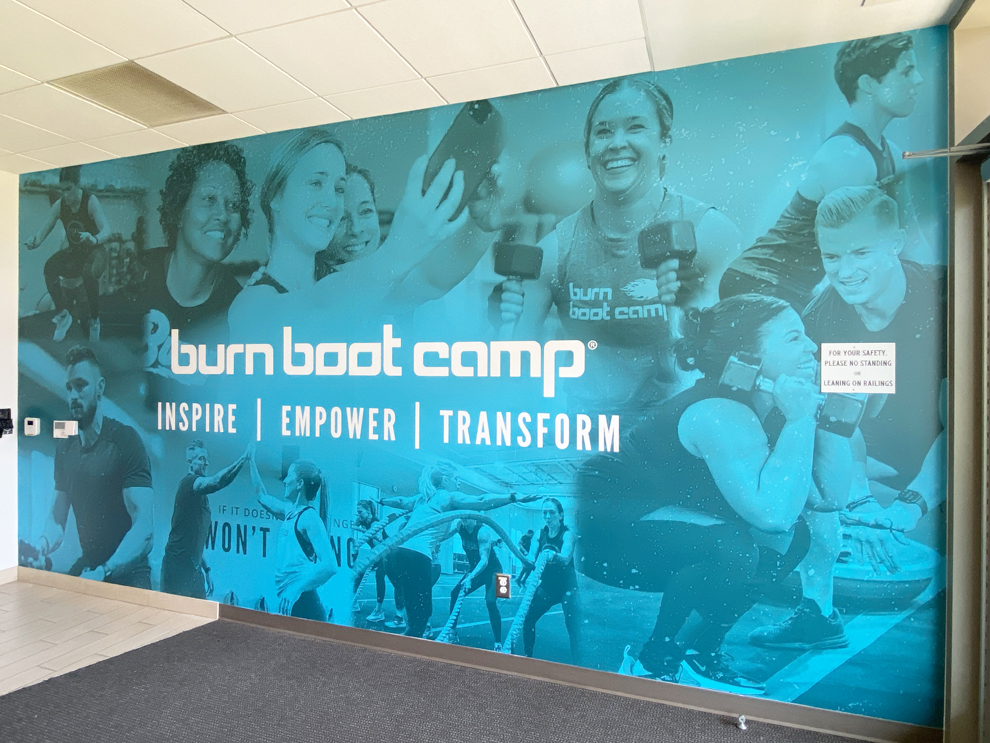
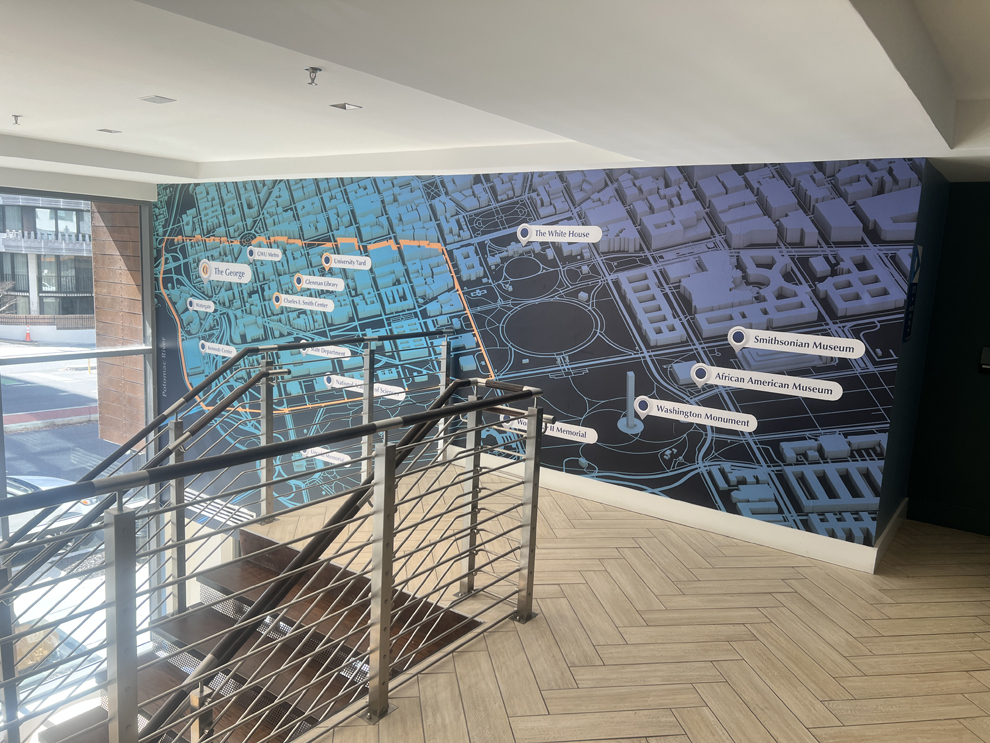
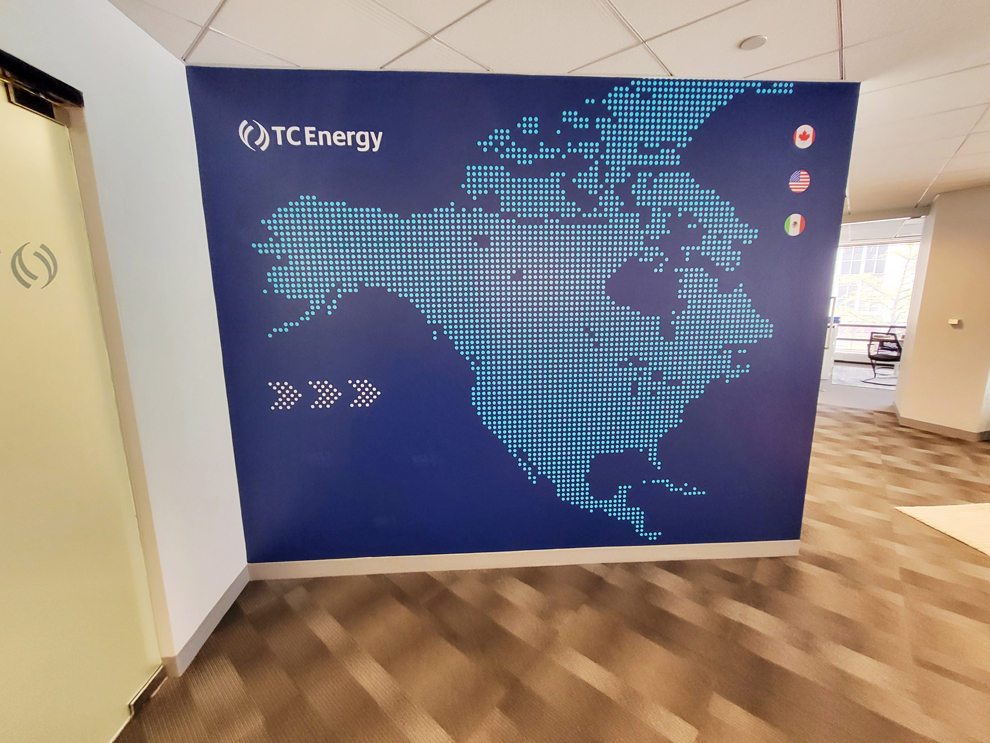
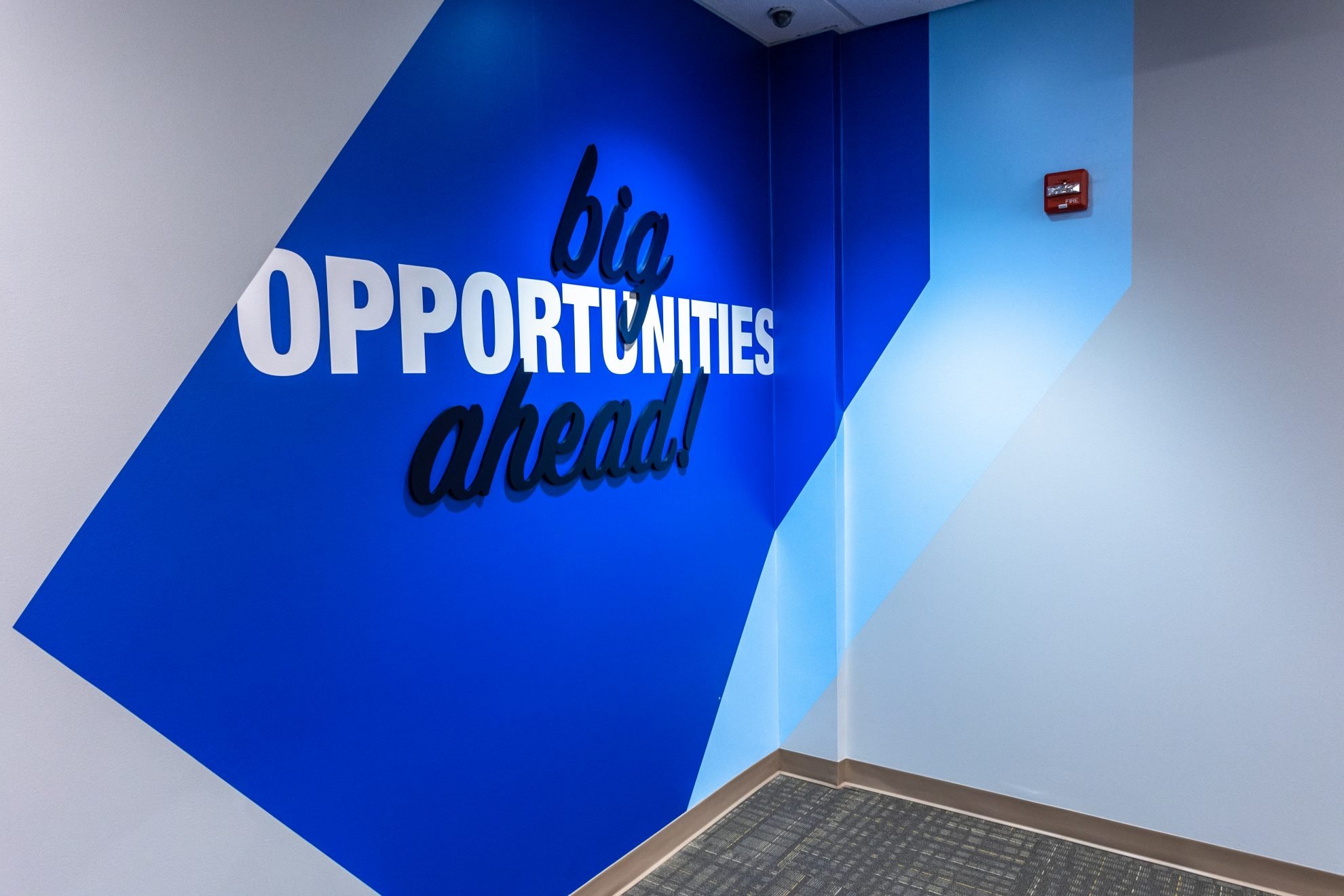
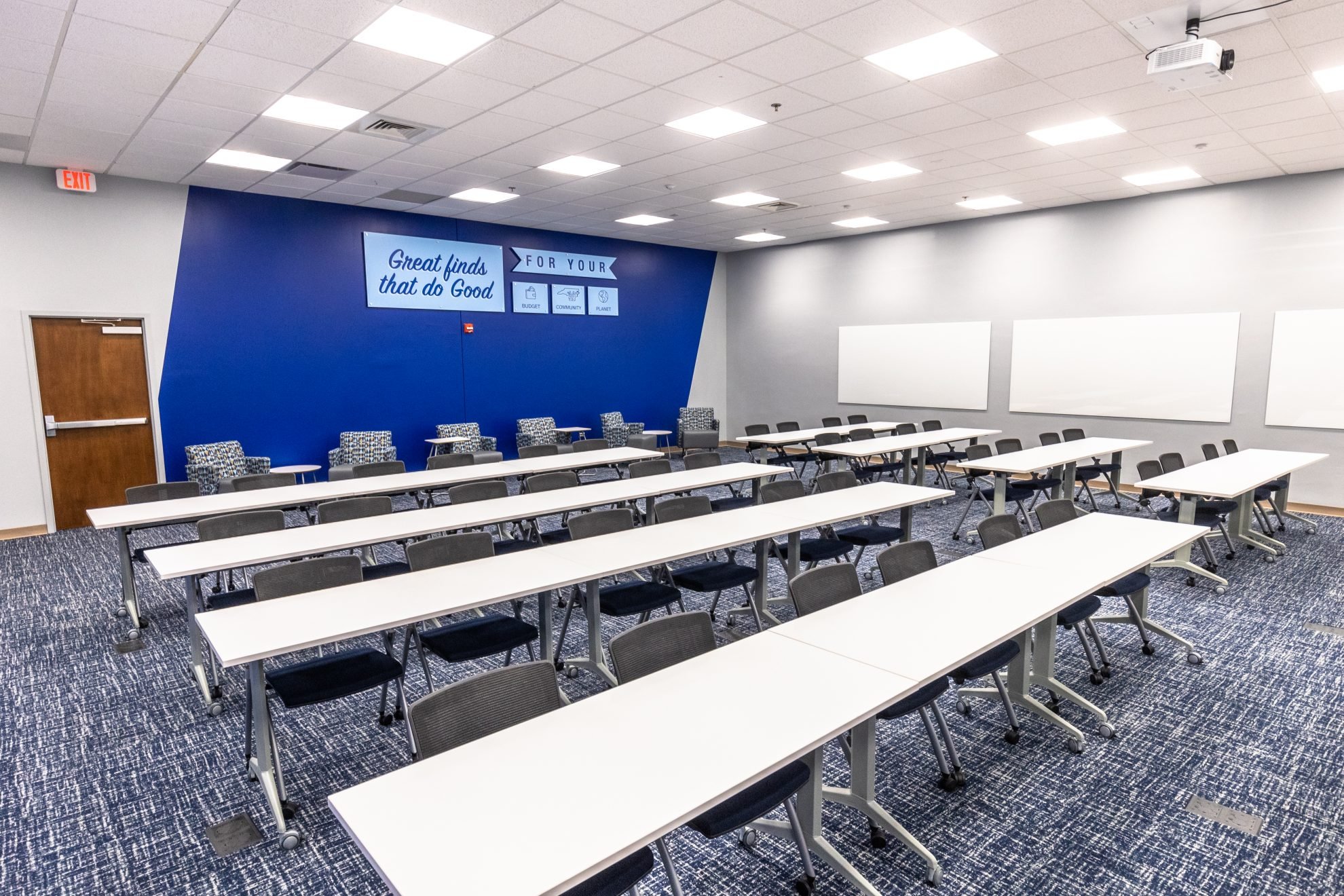
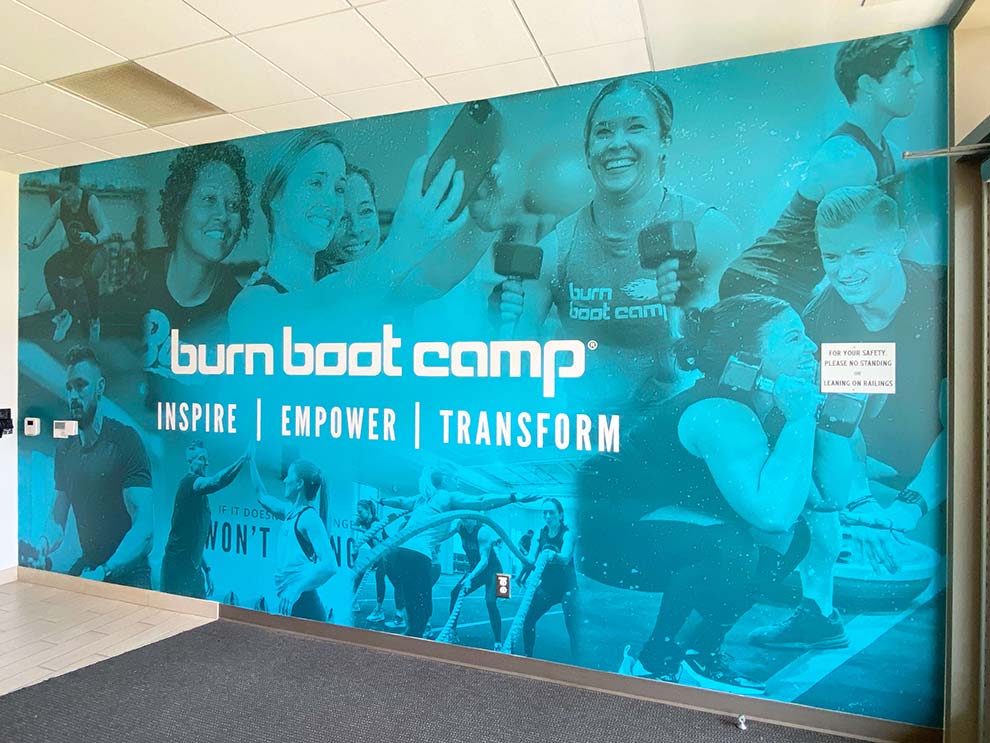
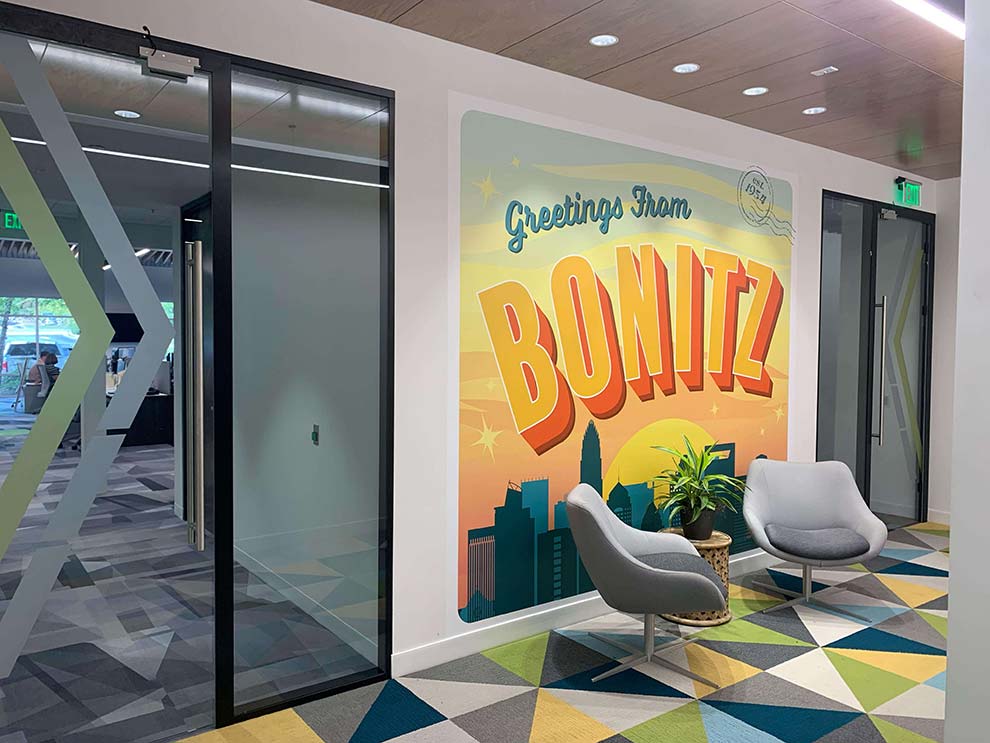
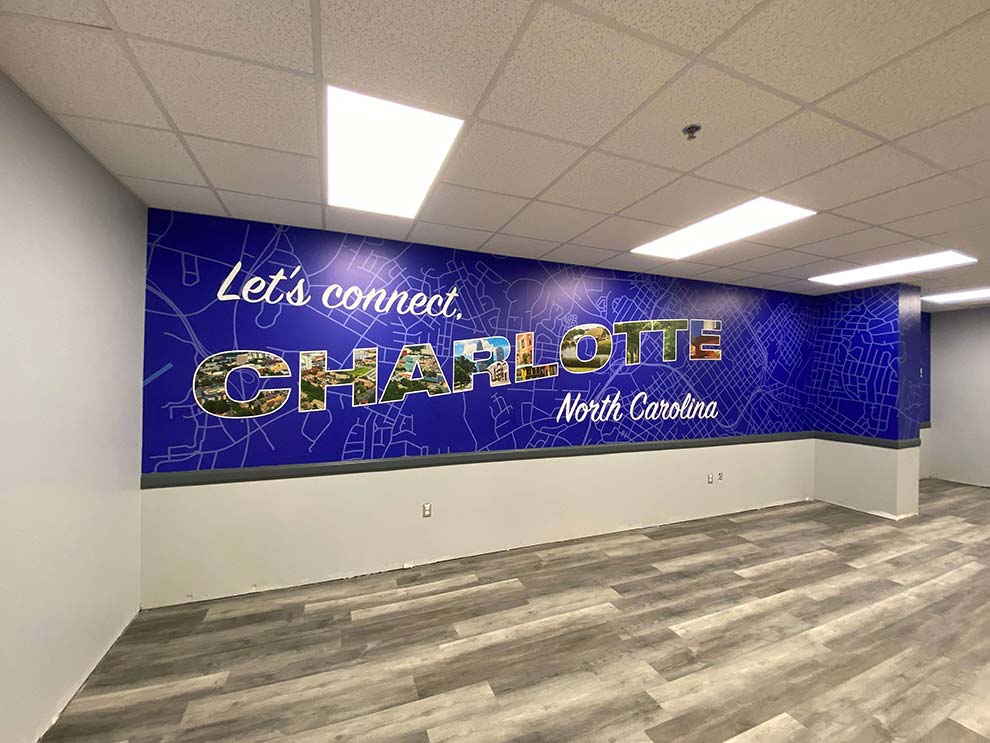
Wall wraps use photographs, patterns, maps, brand colors, or messaging to transform large interior surfaces. They can carry the identity established at the entrance into reception areas, corridors, meeting spaces, employee areas, and other prominent locations throughout the commercial interior.
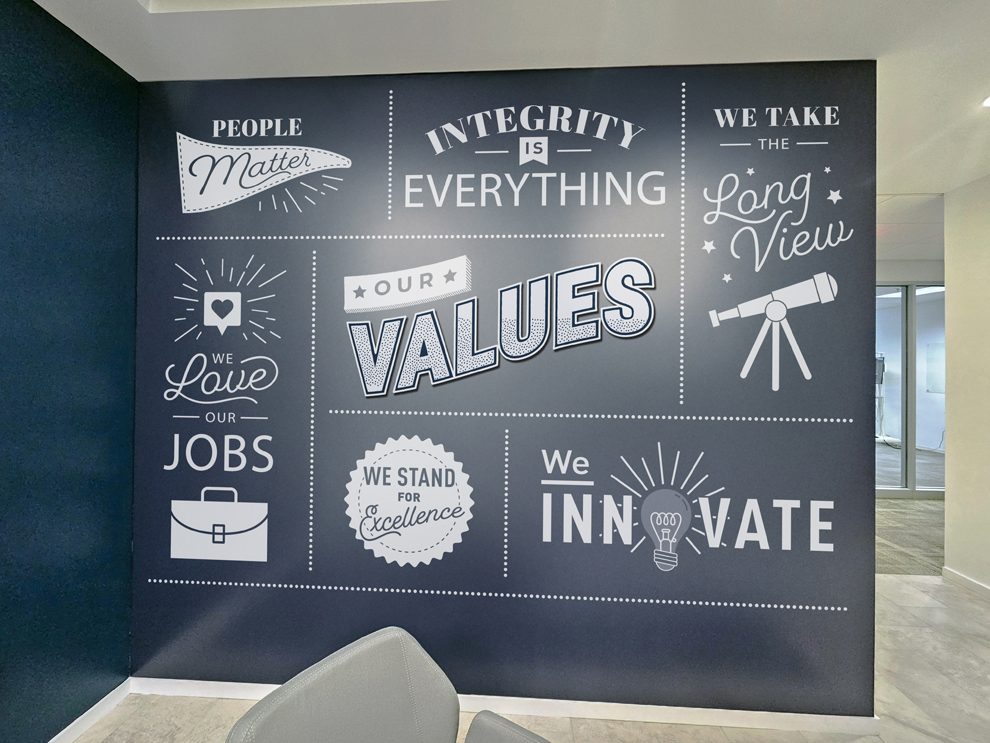
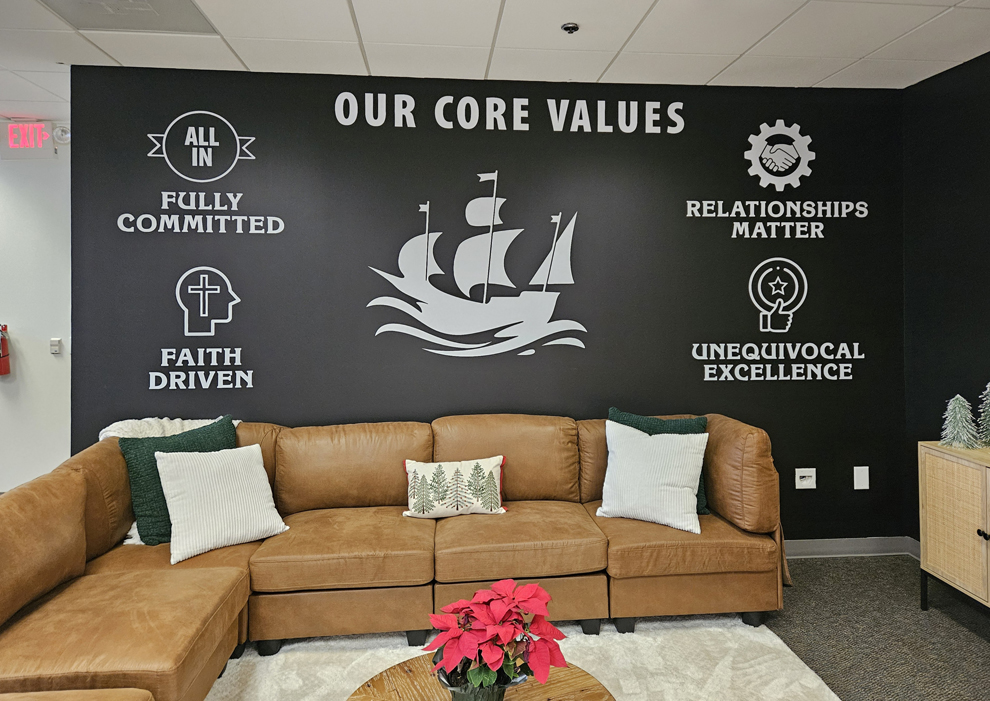
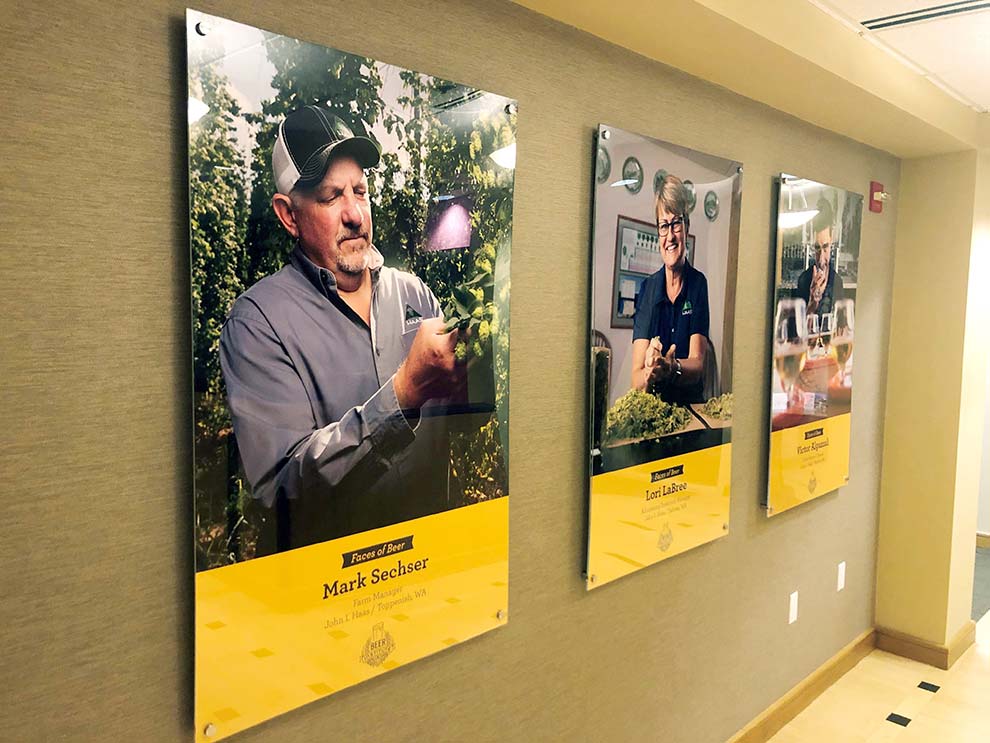
Storytelling displays can present a mission statement, core values, company history, milestones, recognition, services, or community impact. A coordinated wall presentation may bring together photographs, printed graphics, dimensional elements, acrylic panels, standoff mounted signs, and architectural hardware.
Silicone edge graphics fit within slim frames to create clean, tensioned fabric displays. SEG fabric graphics can feature prominent brand imagery, campaigns, seasonal visuals, or changeable messaging inside showrooms, hospitality settings, customer areas, corporate interiors, and selected storefront environments.
Backlit signs give logos, messages, and branded features added visual presence inside reception areas and customer-facing interiors. Heritage plans construction, finishes, dimensional depth, placement, and illumination while considering how the room's existing lighting will affect the completed presentation.
Tell Heritage what people should understand when they arrive and what the workplace should communicate after they enter. Begin with Get Started Now and provide the Charlotte-area location, business objectives, preferred completion date, investment expectations, photographs, measurements, brand files, and property information. Your dedicated Project Manager will assess those details, clarify the remaining decisions, and bring together the appropriate Heritage resources for environmental graphic design, production, fabrication, and professional installation. Together, we can create an entrance and interior experience that feels connected, confident, and unmistakably yours.
Charlotte's business landscape includes headquarters, financial institutions, healthcare organizations, universities, manufacturers, professional firms, hospitality groups, nonprofits, and growing businesses. Entrances in Uptown, South End, Ballantyne, University City, the airport corridor, and surrounding communities can sit along busy streets, inside mixed-use developments, within office campuses, or behind shared property controls. Those settings create different priorities for recognition, privacy, viewing conditions, access, and the relationship between the entrance and interior.
Heritage's Charlotte headquarters and primary specialty production facility support local discovery, the required site survey, field verification, environmental graphic design, project management, production, fabrication, installation planning, and professional installation. That gives Charlotte-area clients a local team and production backbone working in close coordination.
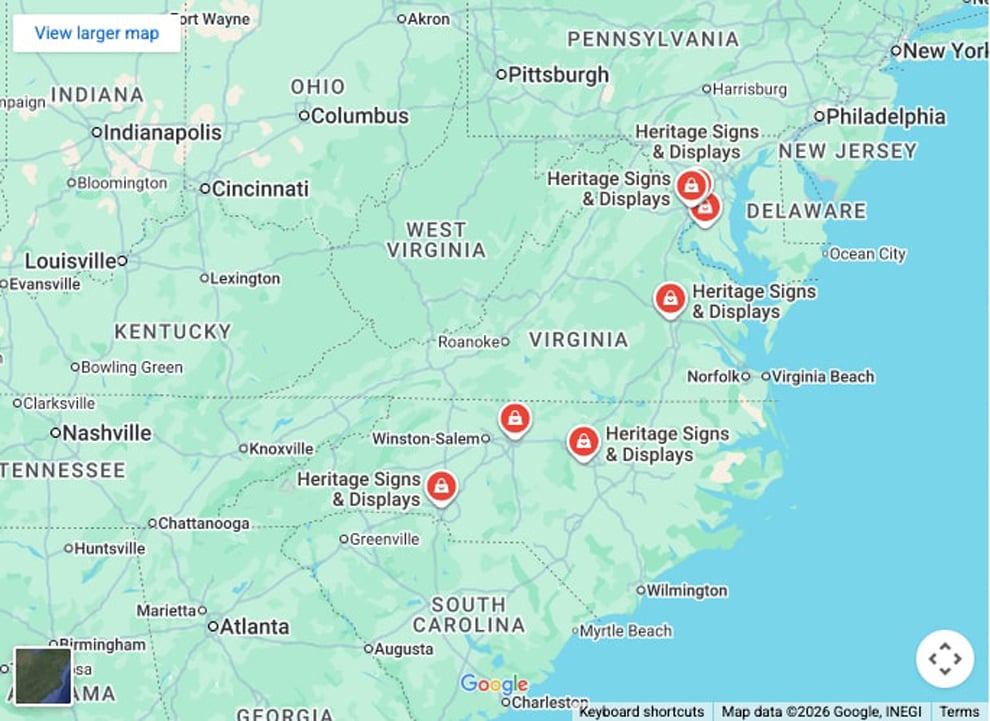
From the immediate Charlotte marketplace, Heritage can extend support across the broader Carolinas and through the full Heritage Network. For organizations with locations across the Carolinas and Mid-Atlantic, local offices and teammates can support individual properties while one dedicated Project Manager preserves program knowledge and approved brand standards without forcing identical physical solutions at every site.
Environmental graphic design helps Charlotte organizations decide what the entrance should introduce and what the interior should develop more fully. Heritage can shape a stronger arrival, establish privacy without sacrificing useful light, create a branded lobby destination, guide people through the workplace, and develop timeline or history walls, core values or mission statement features, recognition displays, and other visual experiences that give the interior greater meaning.
Some clients begin with complete brand standards or approved artwork. Others bring photographs, architectural plans, existing graphics, messages, or an early idea. Heritage works with client stakeholders to translate that direction into appropriate scale, placement, materials, graphics, and fabricated elements that can be produced and installed successfully.
When architects, interior designers, branding agencies, landlords, or property teams are involved, Heritage collaborates within the broader project while keeping its role clear. Environmental graphic design remains connected to production realities, fabrication, and professional installation. Heritage does not provide licensed architecture, engineering, general interior design, lighting design, or code consulting, and keeps those professional boundaries clear.
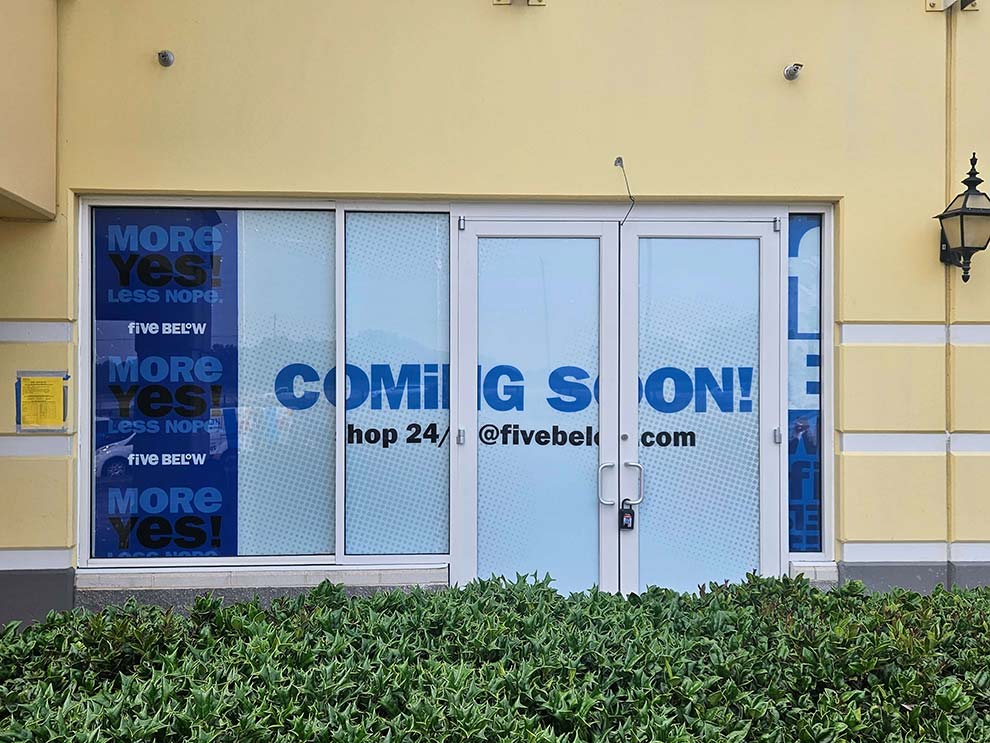
For Charlotte Storefront projects that continue into the branded interior, Heritage's exterior work is a defined part of the same program. Heritage produces and installs exterior window graphics, printed wall wraps and wall graphics, dimensional identification, custom non-illuminated sign panels, and other related non-illuminated elements. Used together, those features establish the organization at the approach and create a clear transition to entrance glass, lobby signs, displays, and interior wall branding.
On printed exterior wall graphics, Heritage applies protective film laminate as standard practice. The laminate supplies added UV and weather protection, while the team reviews the wall surface, exposure, attachment method, and installation access before accepting that exterior application.
The limits remain specific. Heritage does not produce or install monument signs, illuminated exterior signs, channel letters, or pylon signs. Heritage neither decides whether a sign permit is required nor manages or facilitates the permitting process. Any required sign permits and property approvals must be confirmed and secured by the client, the general contractor, or the property owner or property manager.
Every Charlotte Storefront Graphics project includes a Heritage site survey, giving the team direct knowledge of measurements, surfaces, access, property conditions, and the client's objectives before production is finalized. That information remains connected to the dedicated Project Manager, environmental graphic designers, production and fabrication team, and Heritage's full-time professional installers as the work advances.
Charlotte's headquarters and primary specialty production facility make that collaboration especially close. Material choices, fabrication details, finishing expectations, field conditions, access requirements, scheduling, and installation planning remain part of one shared project history. Questions can move among the people responsible for the work before they become problems at the property, reducing unnecessary handoffs and last-minute surprises.
Heritage does not treat installation as a separate transaction at the end of the project. The installers are part of the same process that shaped the approved solution. That continuity helps protect the client's property, improve installation efficiency, minimize disruption, support clear communication, and keep accountability for the finished result with one coordinated Heritage team.
Before Heritage installs adhesive wall graphics, the drywall must be smooth, stable, properly repaired, and covered with correctly applied primer and finish paint that has fully cured. An adhesion test can indicate whether the selected vinyl performs properly on the painted face, but it cannot verify the bond holding the primer and paint to the drywall beneath. If paint pulls away during testing or normal repositioning, Heritage stops. The property owner or client must arrange and pay for the repair, proper priming, repainting, and full cure required before Heritage returns.
Removal later presents a separate condition. Heritage uses slow, careful removal methods to reduce avoidable damage, but a damage-free result cannot be guaranteed. Adhesive vinyl can still release paint or primer and sometimes affect the drywall facing. Charlotte clients should plan time and budget for possible restoration, which the property owner or client arranges and pays for. When replacement graphics are planned, removing the old vinyl early reveals those needs before the new installation date. With appropriate preparation and planning, wall graphics remain a proven and effective branding solution.
A productive Charlotte Storefront Graphics project starts by clarifying the arrival the organization wants to create, how the interior should continue it, and which decisions must be settled before production. Heritage reviews audience, brand priorities, site readiness, stakeholder approvals, schedule, anticipated investment, and property requirements. Photographs, measurements, brand standards, architectural information, and existing artwork help the dedicated Project Manager separate confirmed information from items the required site survey or design process still needs to resolve.
Charlotte is especially well suited to substantial projects that benefit from the close relationship among environmental graphic design, the headquarters team, primary specialty production, fabrication, and professional installation. Heritage work that combines production and professional installation often represents overall project values from $10,000 to more than $200,000. The scope may center on a prominent entrance, continue through a larger workplace, unfold in phases, or extend to several locations.
The dedicated Project Manager keeps approvals, project knowledge, scheduling, and next decisions organized while Heritage directs the appropriate people and production resources toward the approved result.
They give the arrival a clear visual beginning. Graphics on doors and windows can identify the organization, introduce color, provide privacy, or direct attention. After the visitor enters, a reception sign, dimensional logo, wall treatment, or directional system can develop the message further. Heritage determines how these moments relate so the front door and interior read as parts of the same business rather than separate decorating decisions.
No. In Charlotte, the same planning can benefit a professional office, healthcare practice, bank, university facility, nonprofit center, hospitality property, fitness business, showroom, or customer service location. What matters is the need for a recognizable entrance and a commercial interior that represents the organization well. Heritage focuses on professionally planned work that proceeds through accountable project management, production, fabrication, and installation rather than small commodity transactions.
Available approaches include opaque adhesive vinyl, translucent graphics, perforated window graphics, cut lettering, custom logos and patterns, frosted vinyl, etched-look privacy film, distraction markers, and partial or full coverage. Heritage does not select from that list in isolation. Viewing distance, desired openness, privacy, incoming light, the condition of the glass, and the visual plan inside the entrance guide the material and coverage recommendation.
Clear glass can be difficult to notice, especially across open offices, conference rooms, and entry areas. Distraction markers use visible bands, dots, patterns, logos, or other vinyl graphics to help define the surface. They may also reinforce the brand or coordinate with a privacy treatment. Heritage incorporates their position, dimensions, repetition, and appearance into the glass design but does not claim that the graphics certify building-code or safety-glazing compliance.
The image is printed on vinyl with many small openings. From the primary viewing side, the printed area forms the design; from the reverse side, the openings preserve a limited view through the glass. Lighting on each side, ink coverage, the construction of the vinyl, and installation direction influence the result. Heritage reviews those conditions before deciding whether perforated window graphics fit the communication and visibility goals.
Coverage can be placed only where separation is needed. Frosted vinyl, etched-look privacy film, opaque bands, custom patterns, and branded graphics can screen seated or standing sightlines while leaving other glass open for daylight. Heritage studies who uses the room, what must remain visible, and how people approach doors or corridors. The privacy treatment can then function as part of the interior identity instead of looking like an afterthought.
Yes. The intended service period should be decided before the material is selected because a short campaign and long-term workplace branding may call for different adhesive systems. A material described as removable can still affect the surface beneath it. Painted drywall may lose paint, primer, or facing paper during removal, while glass and other substrates need their own evaluation.
Plan for the possibility that the painted wall will need restoration. Heritage uses careful, deliberate removal methods intended to avoid unnecessary damage, but adhesive vinyl can still take paint or primer with it and may affect the drywall facing. The condition beneath the graphic cannot be promised in advance. The client or property owner therefore arranges and pays for any repair, new primer and paint, and the cure time needed before the wall is reused or receives replacement graphics. Heritage does not perform or fund that restoration.
There is no single lifespan for every application. Performance varies with the chosen material, substrate, exposure, cleaning practices, physical contact, and whether the installation is protected inside or faces exterior conditions. Heritage matches the system to the client's expected service period and operating environment. That conversation is more useful than assigning one broad durability promise to every window, door, or wall in every setting.
Wall graphics need a stable painted surface. Drywall should be sound, smooth, repaired where necessary, properly primed and painted, and fully cured before vinyl is installed. About four weeks is a useful planning allowance for many paints, but manufacturer requirements and actual site conditions control readiness. Some washable, scrubbable, stain-resistant, low-VOC, zero-VOC, or otherwise challenging finishes can need cleaning, testing, or a different compatible adhesive approach.
An adhesion test can show how the vinyl behaves on the painted face. It cannot tell Heritage how securely the paint and primer are attached to the drywall below. If testing or normal repositioning pulls paint from the wall, Heritage stops. The client or property owner arranges and pays for the needed repair, priming, repainting, and full cure before work is rescheduled. Glass is evaluated separately for tint, coatings, seals, moisture, texture, and old adhesive.
Heritage's defined Charlotte Storefront scope includes exterior window graphics, exterior wall graphics or wraps, dimensional identification, custom sign panels, and related non-illuminated features when Heritage is also producing and installing the branded interior at the property. These elements strengthen the approach and connect it naturally to the entrance and experience inside.
A protective film laminate is standard on printed exterior wall graphics because it adds UV and weather protection. Heritage does not produce or install channel letters, monument signs, pylon signs, or illuminated exterior signs. Heritage does not determine sign permit requirements or manage or facilitate the sign permitting process. The client, property owner or property manager, or general contractor confirms and secures any required sign permits and property approvals.
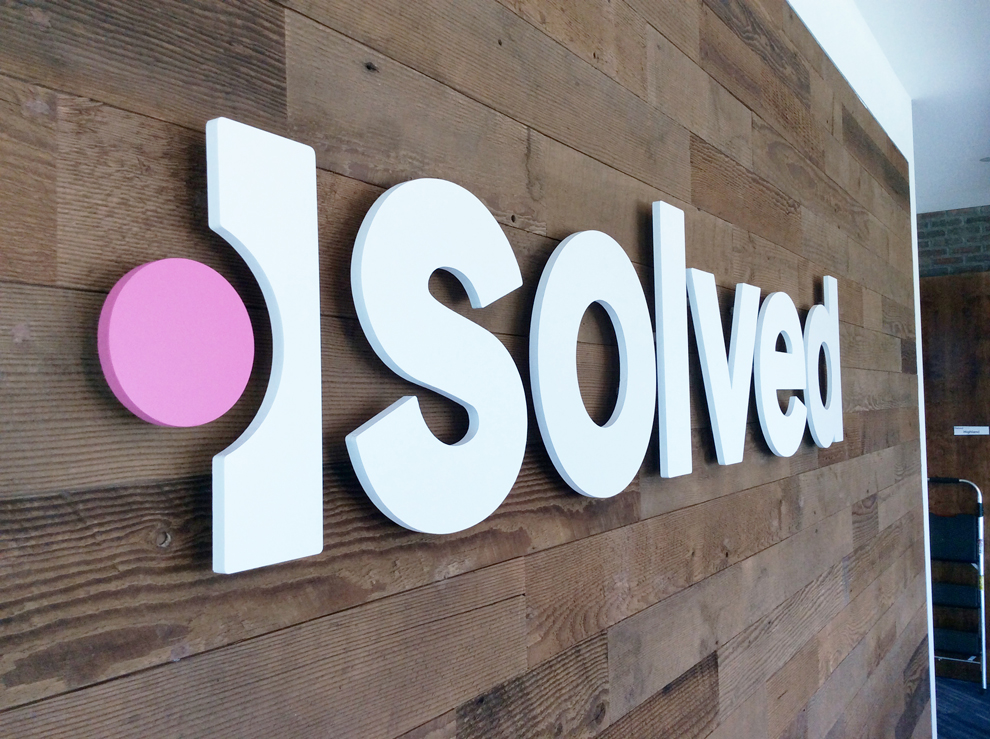
Dimensional letters or logos can establish a visual destination behind reception, along a corridor, inside a showroom, or within a storytelling display. For interior use, the design may be non-illuminated, halo-lit, or backlit. Heritage evaluates proportion, depth, finish, mounting, viewing angle, and the room's existing light so the dimensional feature complements nearby glass graphics, wall treatments, reception signage, and the surrounding architecture.
Selection begins with the desired appearance and the physical realities of the installation. Size, weight, finish, location, expected use, mounting, and surrounding materials all matter. Options can include acrylic, adhesive vinyl graphics, dimensional components, fabric graphics, and aluminum composite material (ACM). ACM provides the appearance of a metal surface at much less weight than solid metal while remaining durable. Heritage does not print on or cut solid aluminum or steel as a sign substrate.
Yes. Entrance graphics can introduce the name or identity, and a backlit sign can provide the stronger focal point after visitors step inside. Heritage considers proportions, colors, depth, illumination, mounting, wall placement, adjacent graphics, and the influence of the room's existing light. Coordinating those factors keeps the illuminated sign from feeling detached from the rest of the branded commercial interior.
Every Heritage Storefront Graphics project requires a site survey. In Charlotte, the visit connects the creative plan to the real property by confirming dimensions, glass and wall conditions, existing materials, access routes, property rules, available installation periods, and other field conditions. The Heritage team also discusses the audience, business objectives, privacy, schedule, and daily operations with the client. Those findings support accurate design, estimating, production, fabrication, and installation planning before the work advances.
Heritage can receive brand standards, architectural files, interior plans, agency concepts, approved copy, and property requirements, then develop the environmental graphics for production. The team evaluates scale, materials, fabrication, mounting, and installation and prepares the necessary production artwork. This collaboration supports the broader design effort while keeping Heritage's role accurate: we do not provide licensed architecture, engineering, general interior design, lighting design, or code consulting services for the project.
It organizes the relationship between message and place. Heritage uses environmental graphic design to determine what people should notice first, which glass should remain open, where privacy belongs, how the entrance should lead to the lobby, and where a timeline, mission statement, core values, recognition feature, or directional element can add meaning. Those decisions are developed with production, fabrication, materials, and installation in mind so the finished workplace can be executed as designed.
A client can keep one dedicated Project Manager while Heritage connects the local offices and teammates appropriate to locations across the Carolinas and Mid-Atlantic. That Project Manager carries forward priorities, approvals, brand standards, production expectations, and communication history. Local teams then address measurements, access, architecture, surfaces, schedules, and installation conditions at each property. The brand program stays coordinated without requiring every workplace to receive an identical physical solution.
Heritage's full-time professional installers complete these projects as part of the same team that carried the work through the required site survey, environmental graphic design, project management, production, and fabrication. The installer therefore receives more than finished signs or graphics. Field measurements, site conditions, material choices, fabrication details, approved design intent, access requirements, and schedule information are already part of the shared project record.
Charlotte's headquarters and primary specialty production facility make communication among these disciplines especially direct. Questions can be addressed before the installation date rather than being discovered after a separate installer arrives.
For the client, this means one accountable Heritage process focused on protecting the property, minimizing disruption, working efficiently, and delivering the approved result.
Heritage keeps installation tied to work for which it can manage the earlier decisions. Measurements, substrates, adhesives, production quality, fabrication, packing, and surface conditions all influence what an installer can accomplish. Heritage therefore does not accept installation-only assignments for customer-provided signs or graphics. Its installation resources are used for signs, graphics, displays, and branded elements that Heritage produces, fabricates, procures, or manages within the same client engagement.
A focused scope may move more quickly, while larger, phased, or multi-location projects naturally require additional coordination. Heritage builds the schedule around the required site survey, design decisions, stakeholder approvals, production and fabrication, property readiness, access, and professional installation. The dedicated Project Manager establishes a realistic plan after those variables are understood rather than promising a standard timeline that may not fit the actual project.
Cleaning depends on the product and how the surface is used. Most printed adhesive graphics installed on interior walls are left unlaminated. Where frequent handling or routine cleaning creates a stronger need for surface protection, Heritage may add laminate over the printed vinyl, including certain healthcare, cafeteria, preschool, and other high-contact applications.
Exterior wall graphics are handled differently. Heritage uses a protective film laminate on those printed graphics as standard practice. The laminate adds UV protection that helps slow fading from sunlight and provides protection against rain and other outdoor exposure. Maintenance recommendations should follow the specific vinyl and laminate system selected for the project.
Take the old graphics down early, not on the day the replacements are scheduled. Until the vinyl is removed, the team cannot know whether the painted wall will reveal paint or primer loss, drywall-facing damage, residue, ghosting, or another condition that needs attention. Heritage removes graphics carefully, but those underlying conditions can still appear.
If restoration is needed, the client or property owner arranges and pays for the repair, proper priming, and repainting. The renewed finish then has to cure fully before Heritage returns with the replacement graphics. About four weeks is a useful planning allowance for many paints, subject to manufacturer requirements and actual conditions. Early removal creates room in the schedule for that work. Heritage does not offer graphics removal as a separate service.
The current Charlotte-region starting point is an anticipated overall investment of at least $3,000. The actual investment reflects the complete project, including scope, materials, fabrication, quantities, site conditions, and professional installation. Get Started Now provides the current qualification point and a place to share the location, timing, and project information Heritage needs for an initial review.
Yes. The Charlotte operation can support a prominent entrance, a broader workplace interior, phased improvements, or a program spanning several locations. Heritage projects that combine production with professional installation commonly range from $10,000 to more than $200,000. One dedicated Project Manager preserves the client relationship while Charlotte's headquarters and primary specialty production resources coordinate with the field support needed at each property.
Yes. Charlotte is the headquarters and primary specialty production backbone, but multi-location clients can also draw on Heritage offices and teammates in other verified markets. One dedicated Project Manager connects that local site support to the broader Carolinas and Mid-Atlantic program. The result combines property-level knowledge with coordinated brand standards, production, fabrication, installation planning, and continuity without implying that Charlotte itself is the local office for every market.
Charlotte places Heritage's headquarters, primary specialty production facility, project resources, environmental graphic design, fabrication, and installation support in unusually close proximity. That operating structure allows questions about materials, production feasibility, finishing, field conditions, and installation to move quickly among the people responsible for the result. Heritage is veteran-owned, family-led, and has served clients since 1977, with a purpose centered on honoring God by serving clients and communities with excellence.
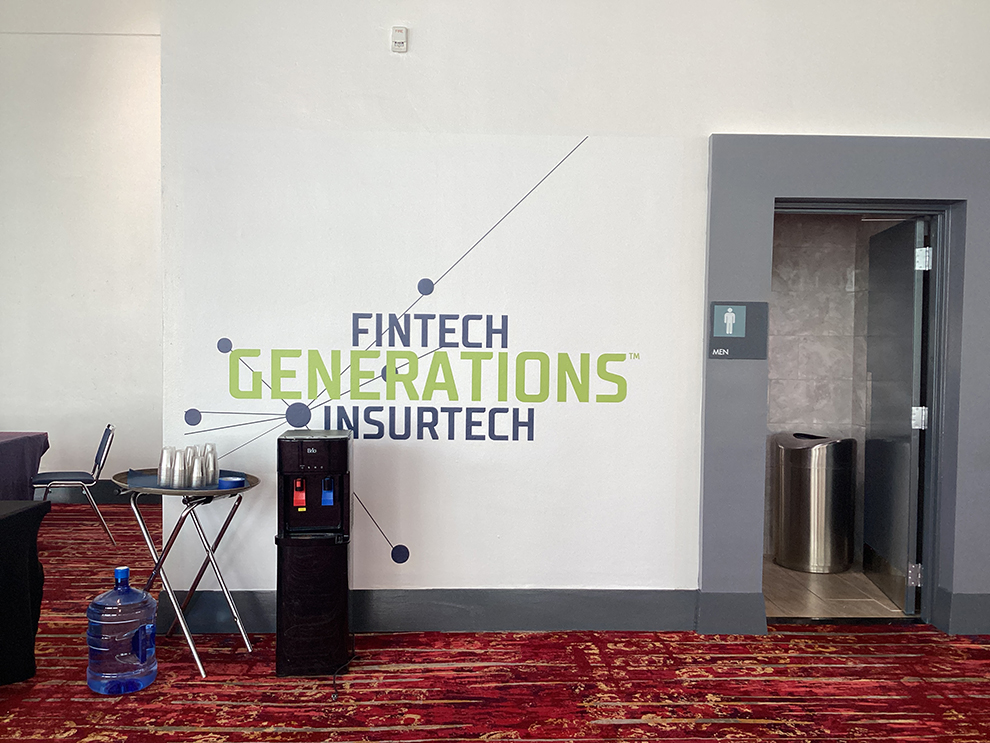
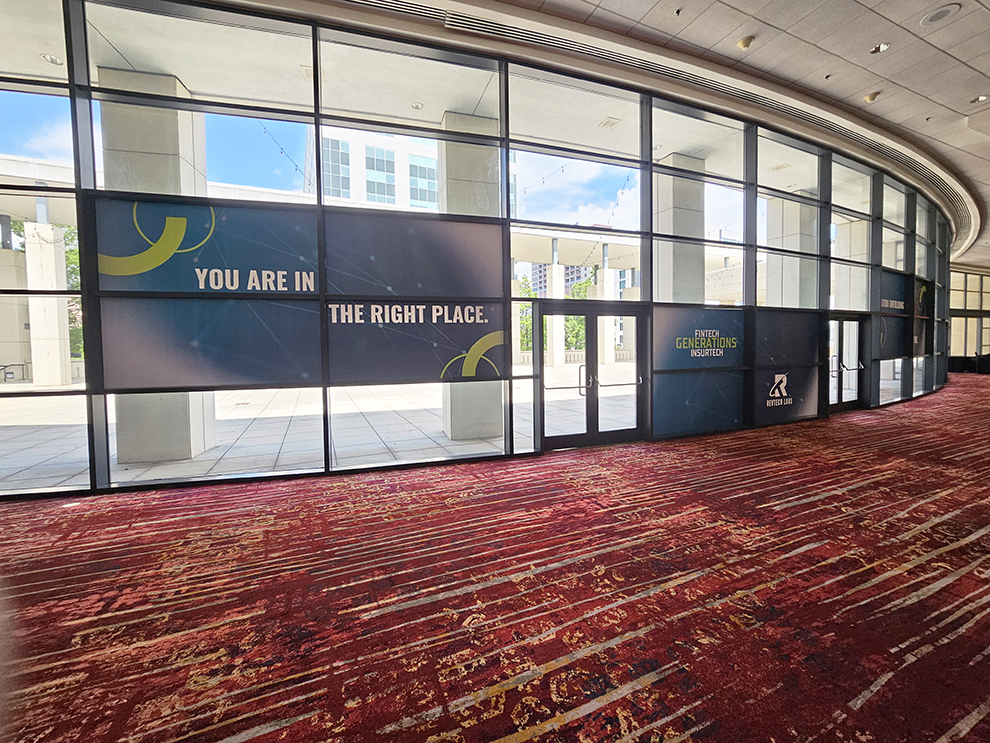
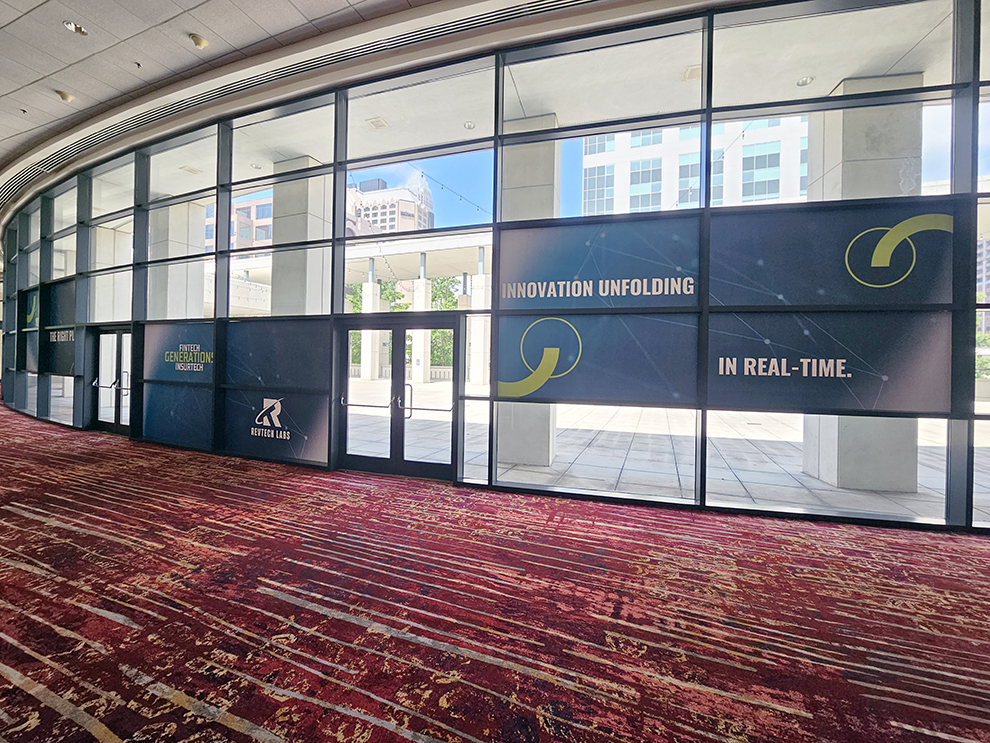
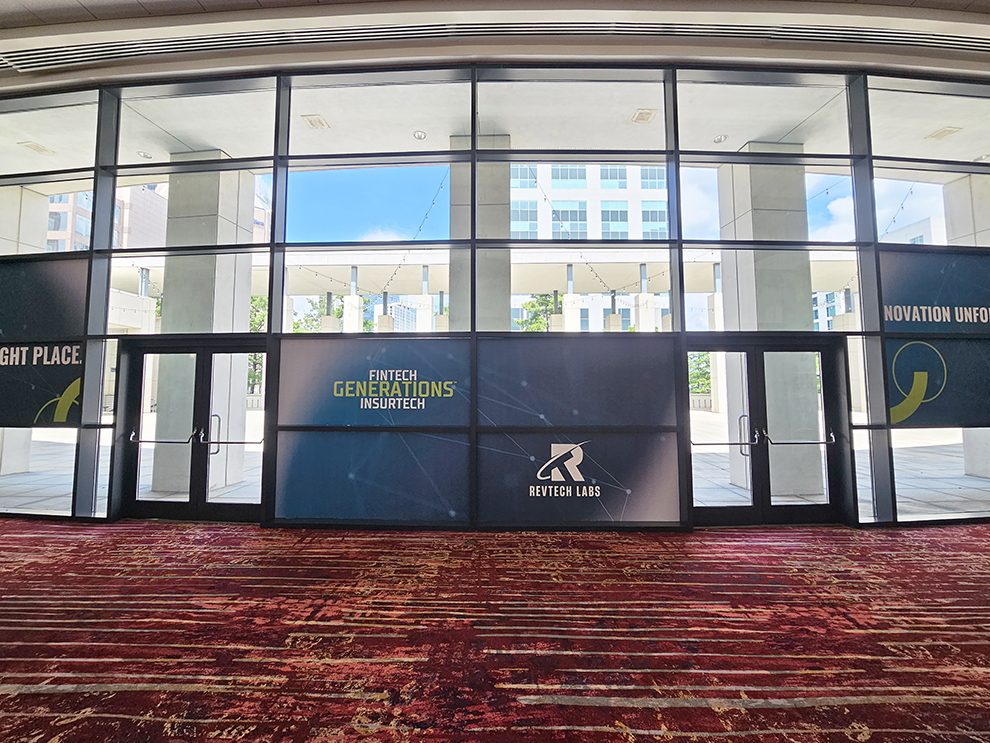
Heritage Signs & Displays collaborated with the Fintech + Insurtech Generations 2023 conference at the Charlotte Convention Center. Heritage worked closely with the client to create an interactive and branded event environment for attendees to network and discuss key topics impacting the financial and insurance sectors. The project enhanced the premier annual conference's atmosphere and engagement.
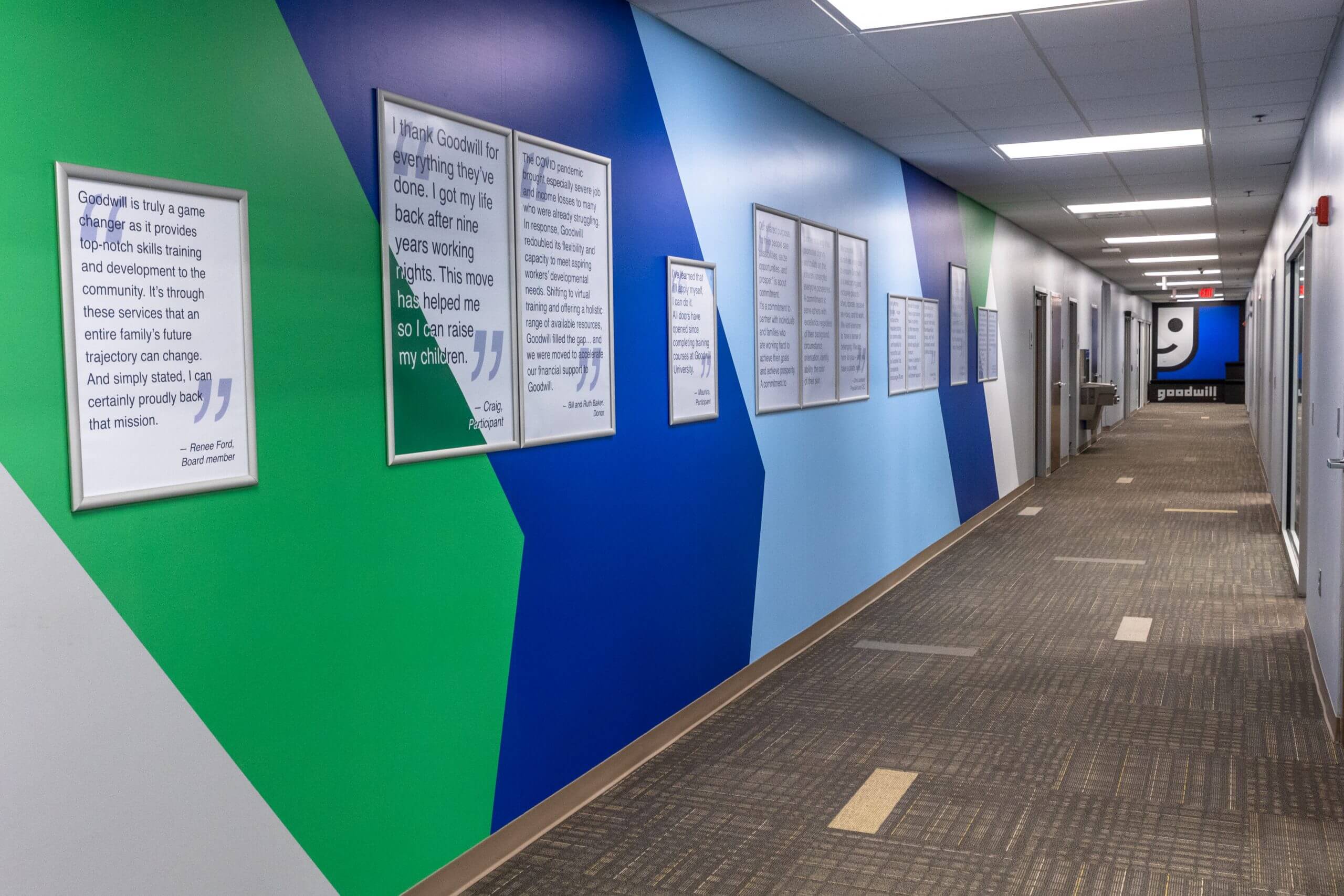
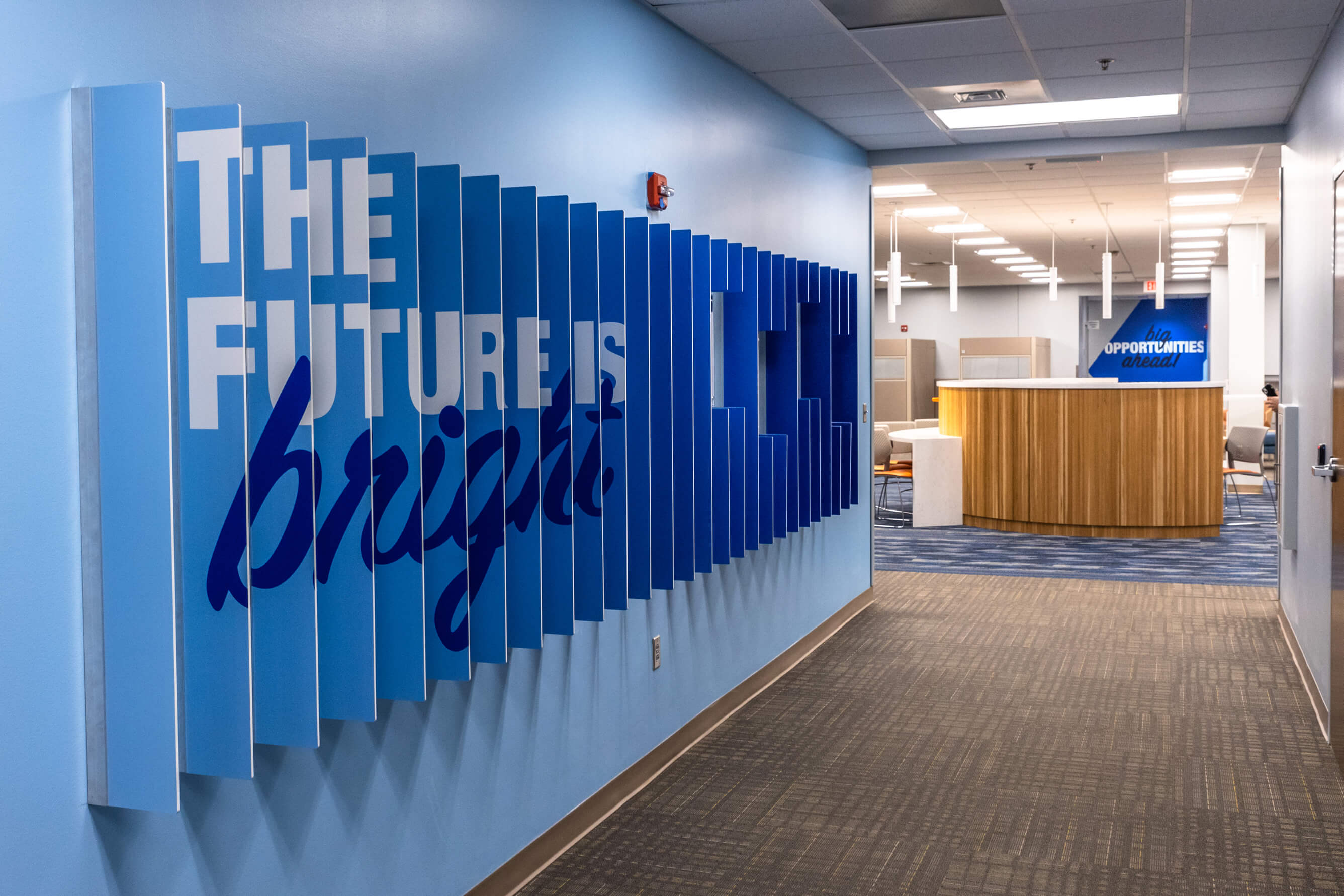
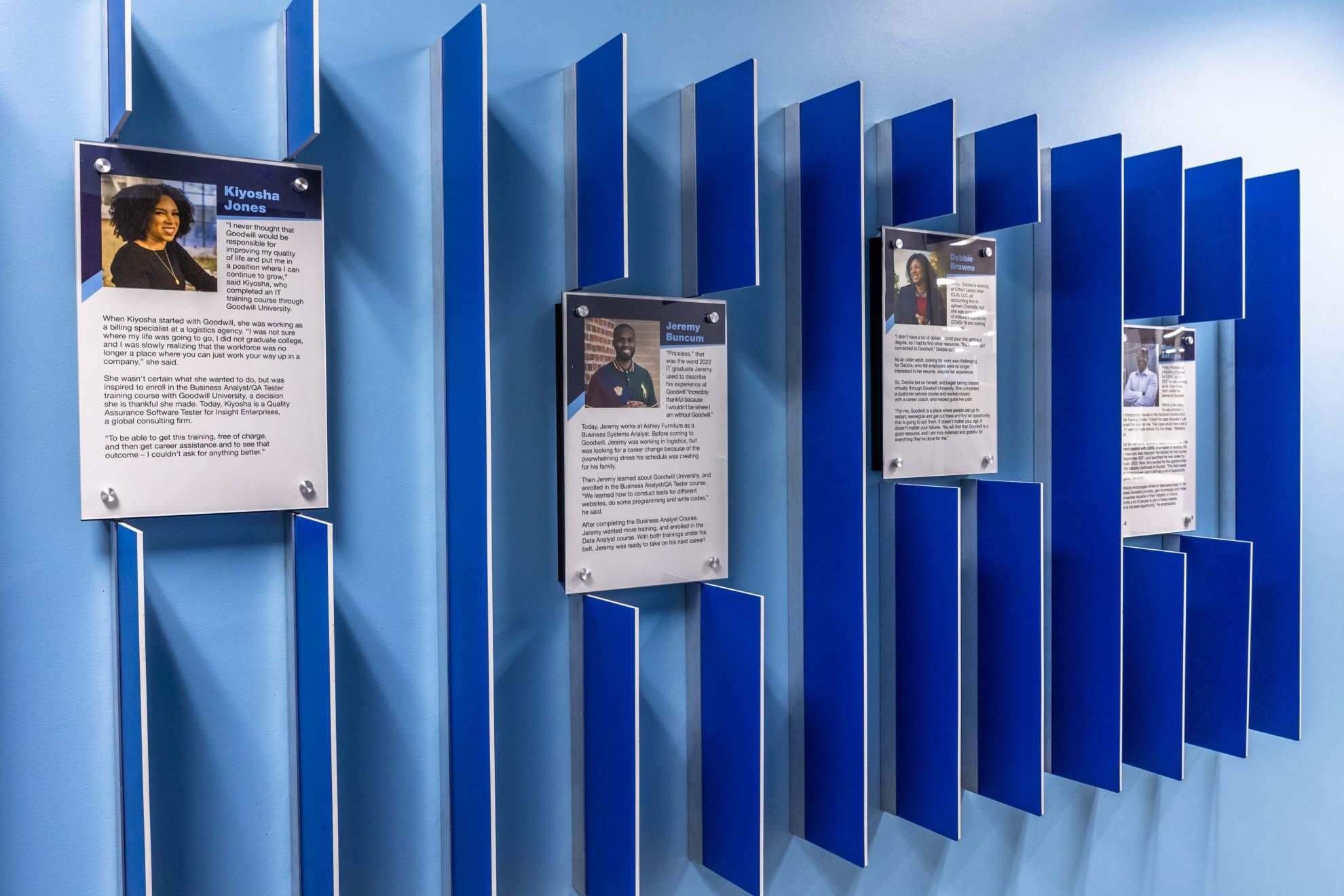
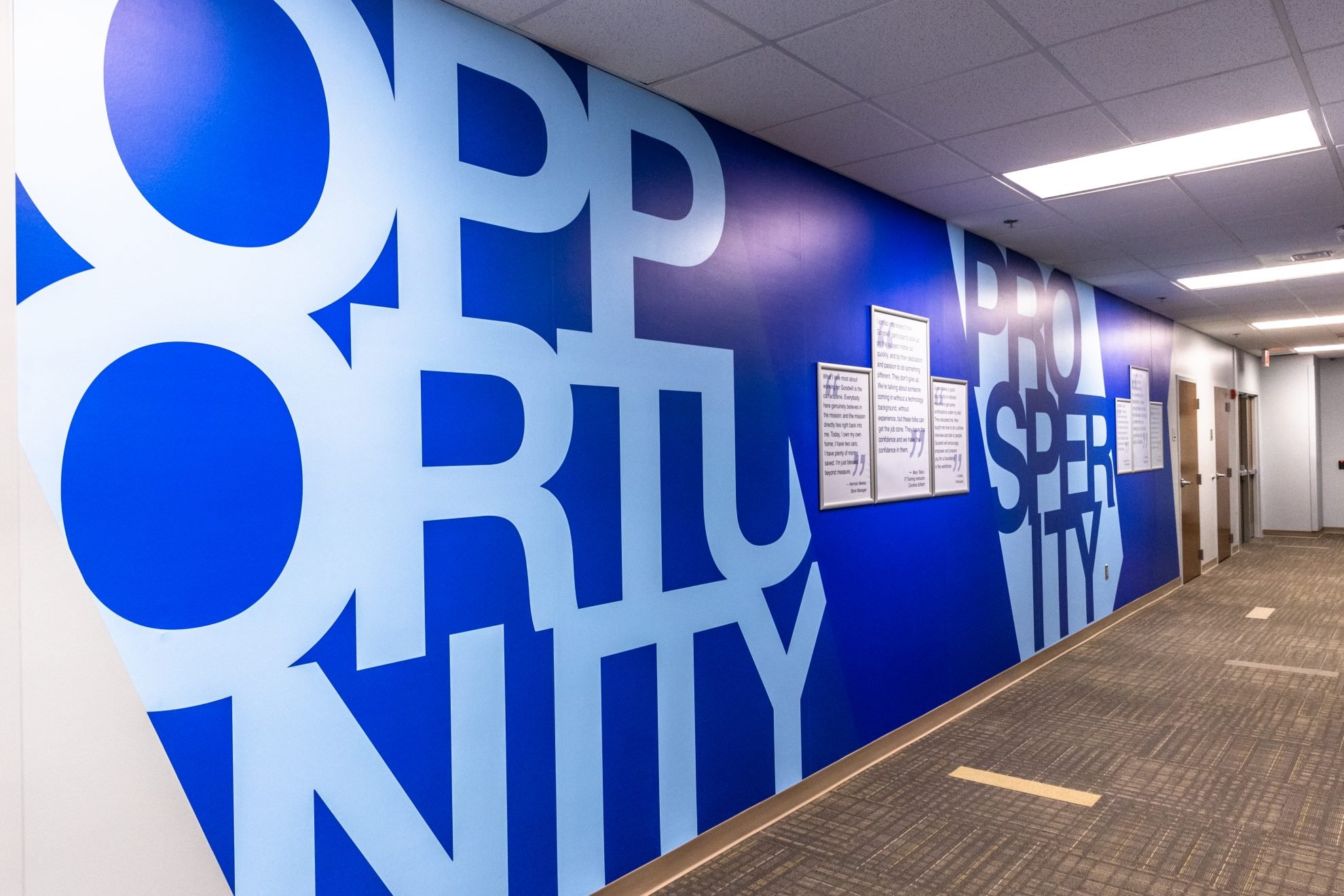
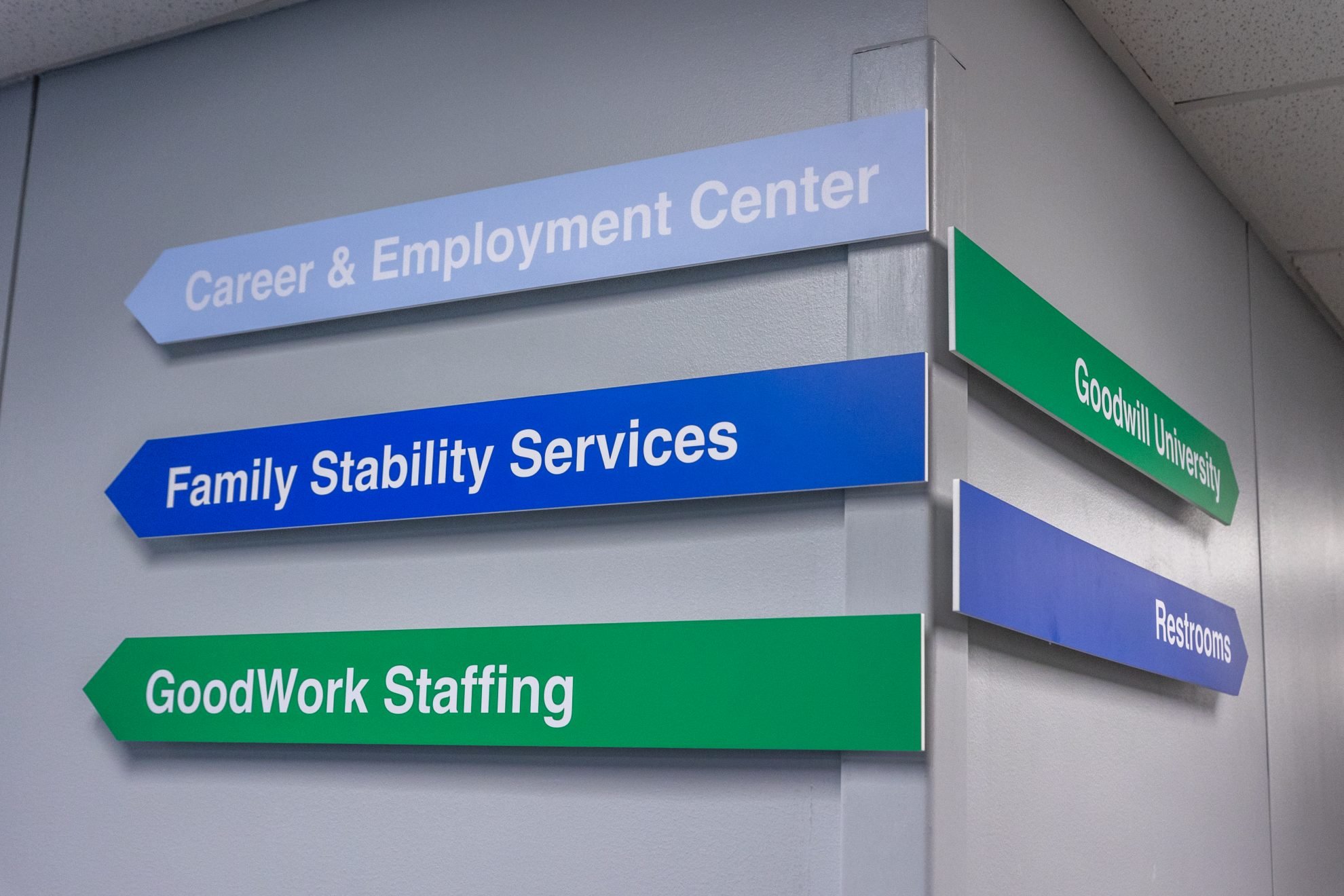
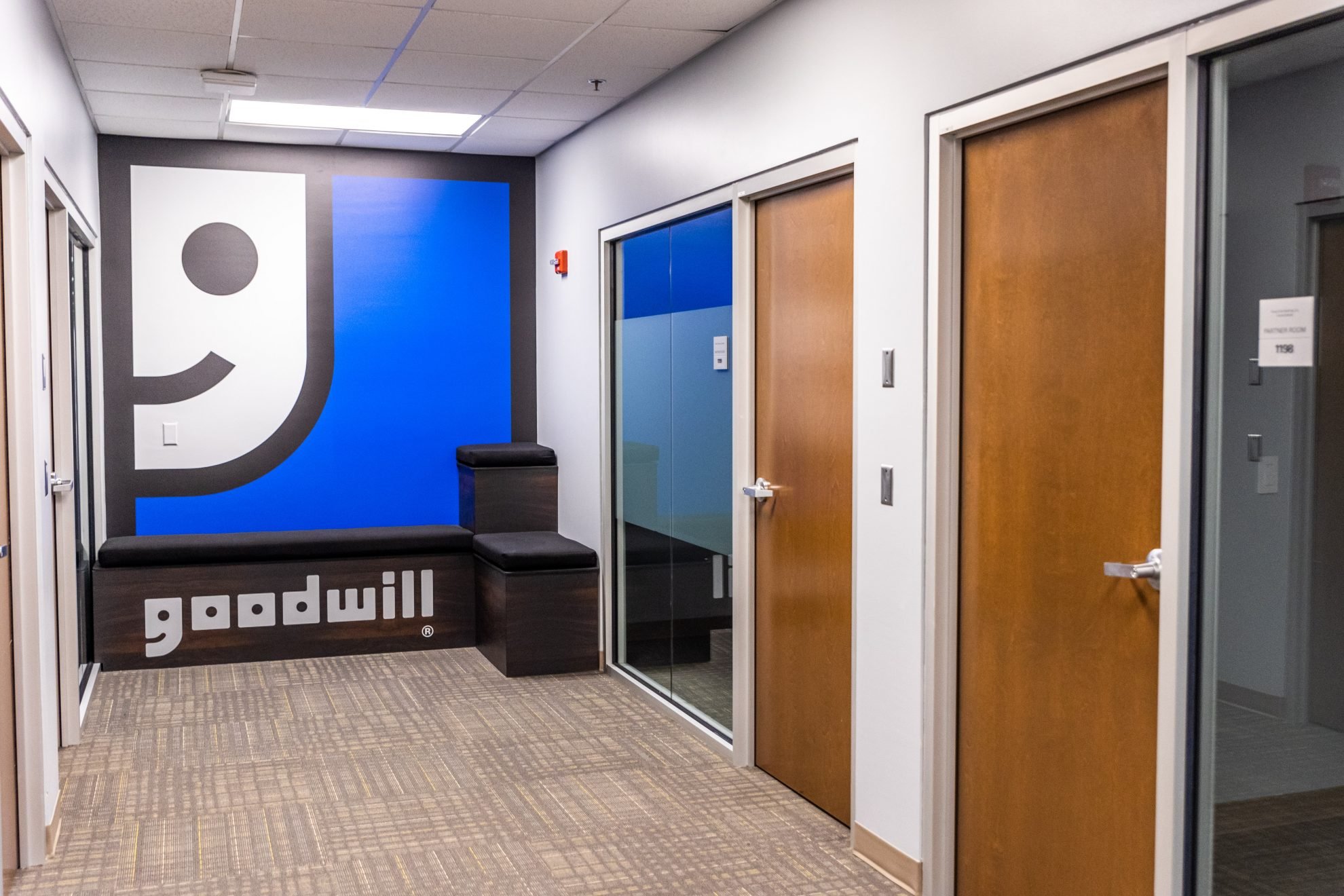
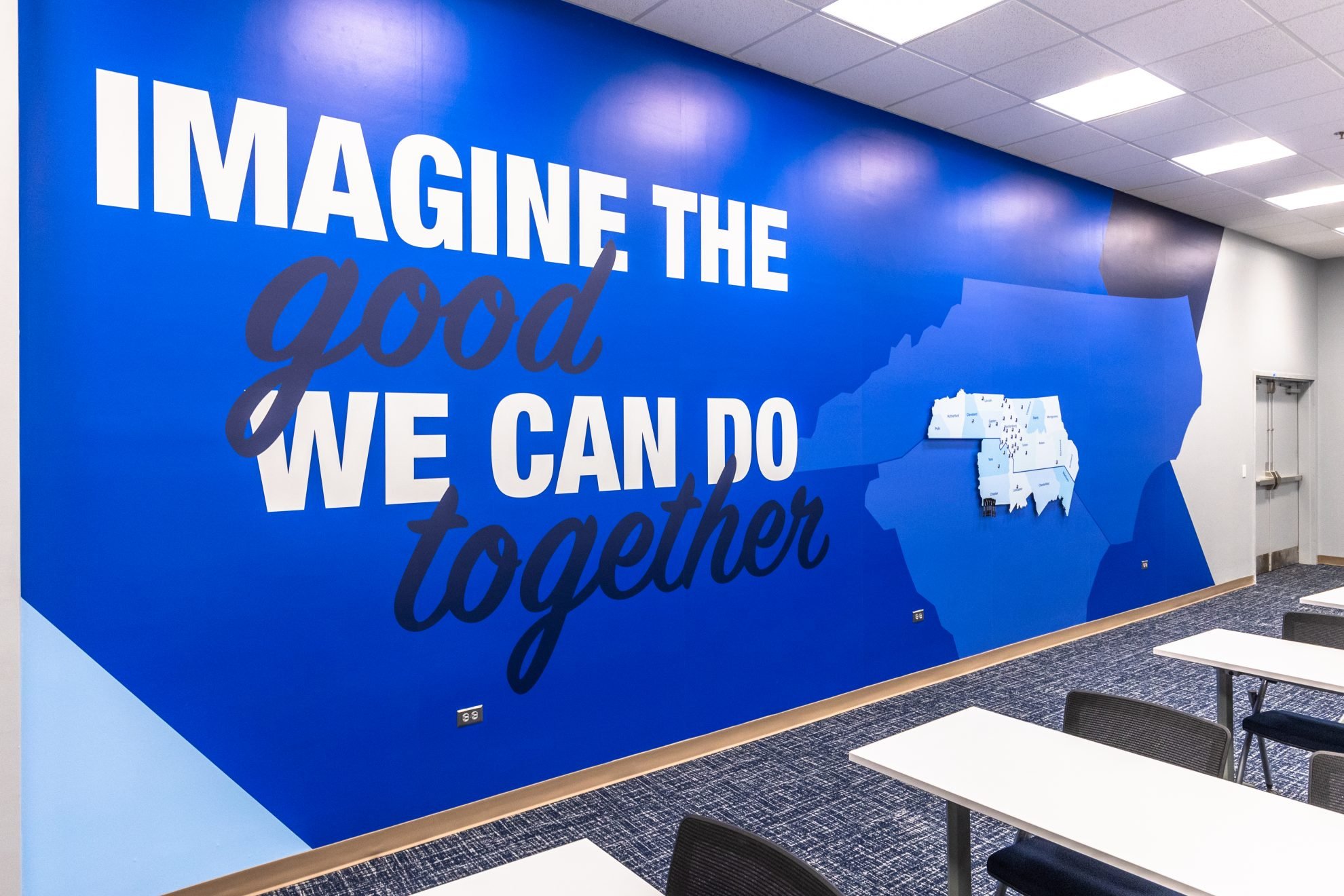
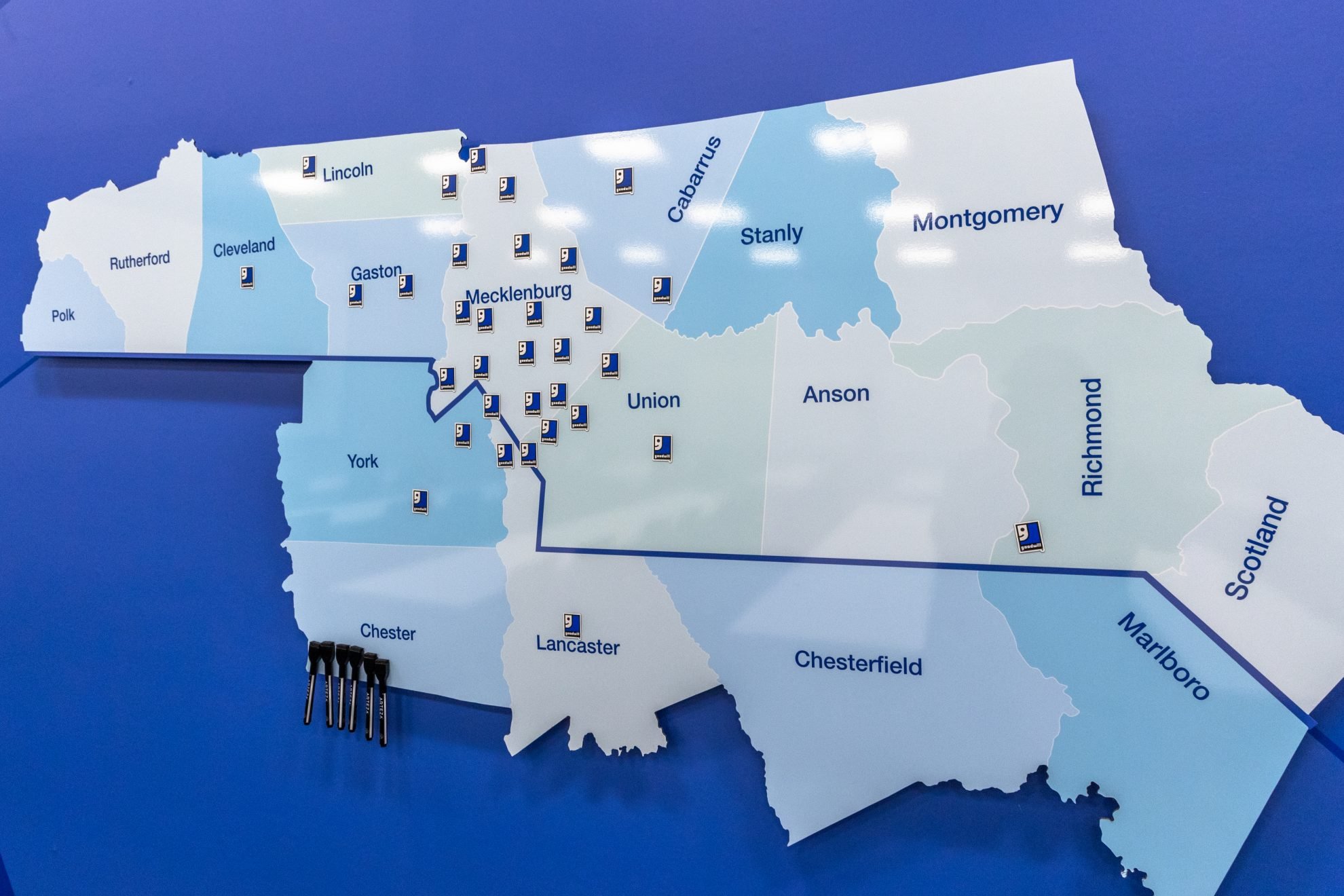
Heritage Signs & Displays collaborated with Goodwill Industries of the Southern Piedmont to transform the Opportunity Campus in Statesville, NC. The project included lenticular wall displays, wall wraps, frosted vinyl, wayfinding signs, and custom wall displays. These elements enhanced the Career & Employment Center, creating an engaging and branded environment that reflects Goodwill's values and mission to support workforce development.