
Use Charlotte Operating Depth to Make Better Branding Decisions Earlier
A growing workplace, headquarters, venue, or event program works better when its visual communication is considered before individual signs and graphics become disconnected purchases. Heritage Signs & Displays helps Charlotte organizations shape signs, graphics, displays, recognition features, and branded interior elements around the people who will use the space and the result the organization wants to create.
Charlotte gives Heritage an unusual operating advantage. Our headquarters and primary specialty production facility are here, along with Charlotte-region client, project, field, and installation resources. That proximity makes it easier for environmental graphic design, production planning, fabrication decisions, site information, and professional installation to inform one another before work reaches the field. The benefit is not that every component must be produced in one building. It is that substantial Heritage capability is close enough to the market to help resolve practical questions while options are still flexible.
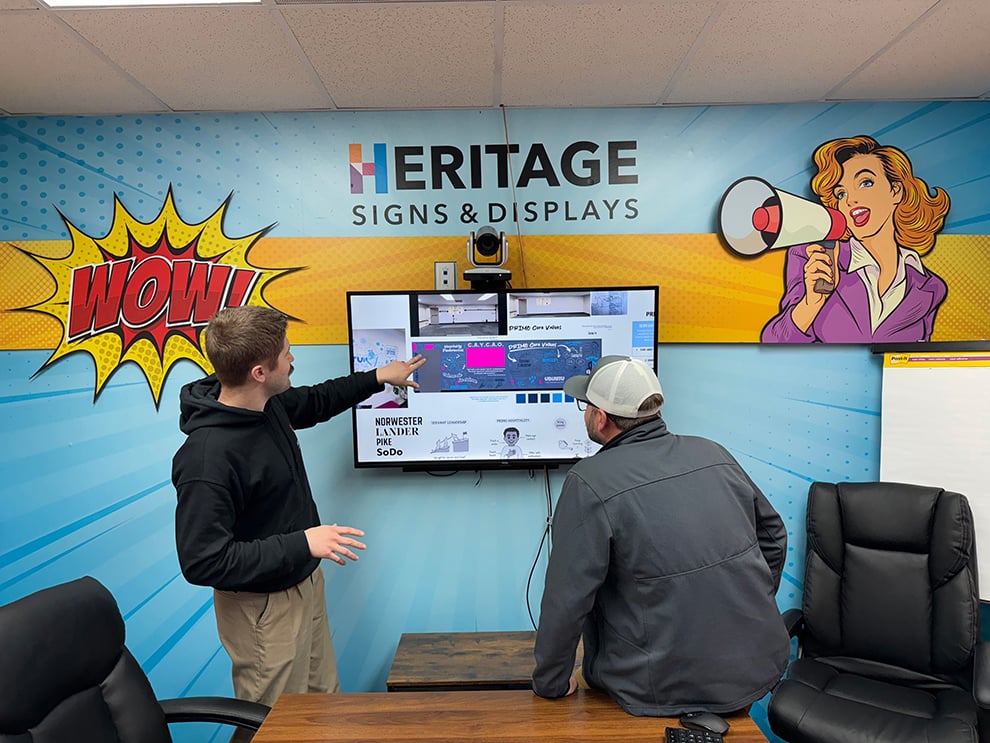
Heritage is a veteran-owned, family-led sign company founded in 1977. We are best suited to project-oriented workplace interiors and event environments where thoughtful planning, responsive communication, and accountable execution matter as much as the individual products.
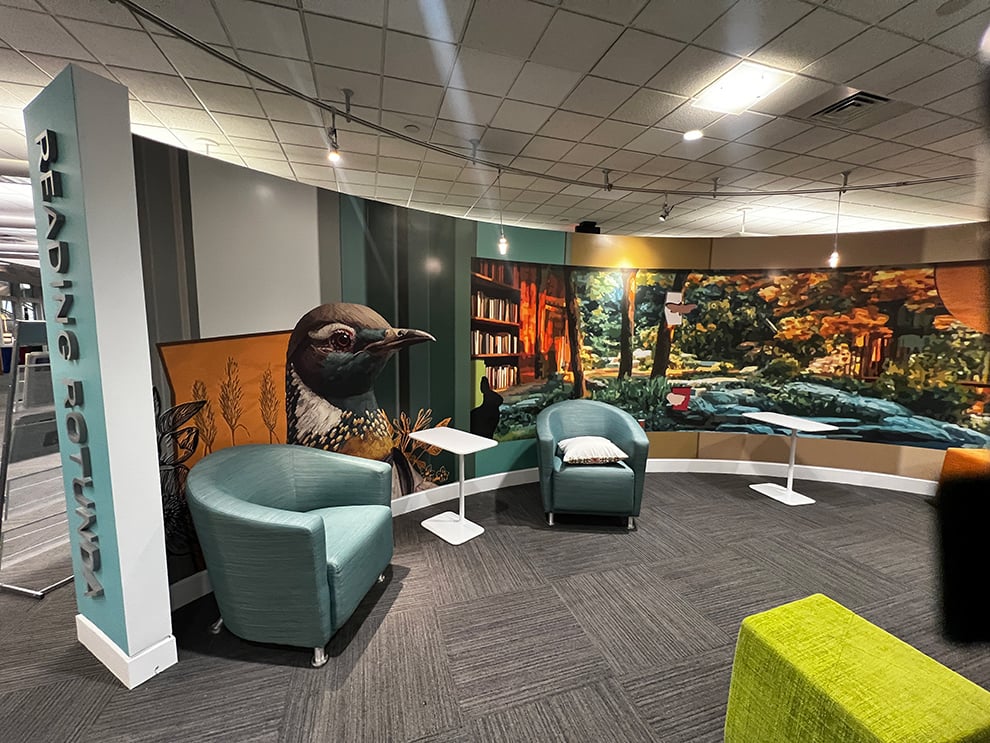
Charlotte organizations often contact Heritage during a move, renovation, headquarters update, recruiting push, event cycle, rebrand, or facility expansion. At that stage, the most useful conversation is not always about a particular material. It is about what people should notice, understand, feel, or do when they encounter the space.
Heritage can help separate those communication priorities before the project is locked into individual products. An entrance may need credibility and identity. Glass may need privacy without feeling disconnected from the brand. Employee areas may need culture and recognition. Visitors may need clearer direction. An event may need sponsor visibility, registration support, and a strong visual focal point.
When those needs are understood early, production and fabrication choices can support the design rather than constrain it later. It also gives the team room to compare alternatives before schedule or budget narrows the choices. That is especially useful in Charlotte because client collaboration, field information, production resources, and installation planning can remain closely connected through one Heritage-managed project record.
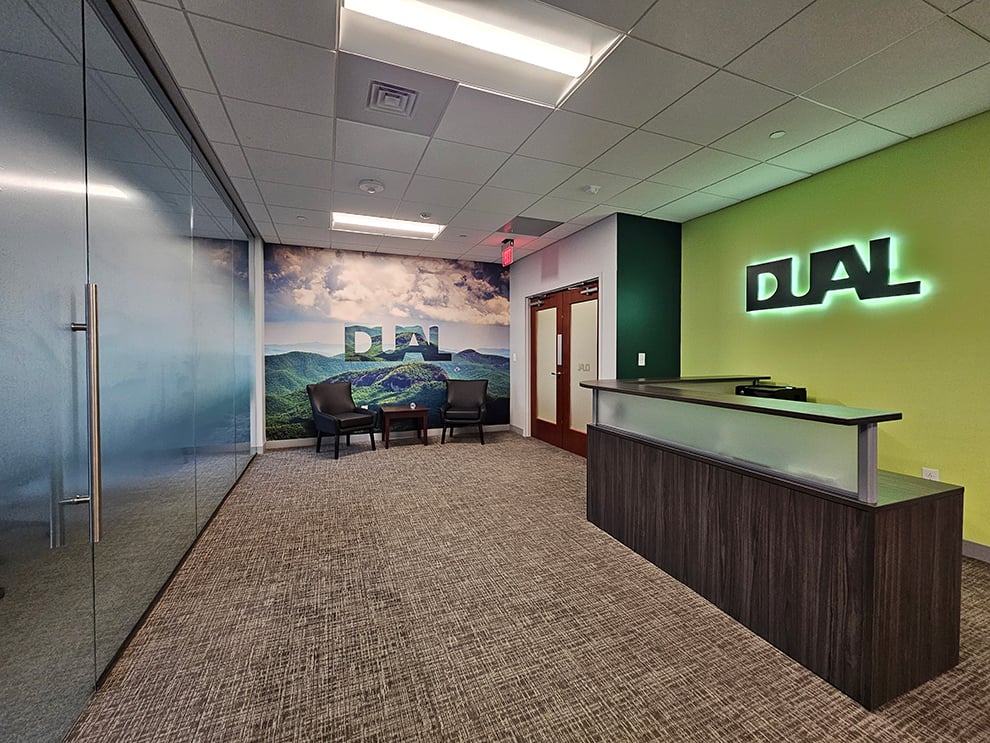
Charlotte clients benefit when environmental graphic design is developed with an understanding of how the finished work will be produced. Heritage uses design to establish message hierarchy, scale, placement, sightlines, material character, dimensional depth, color, privacy, illumination, and update needs, then tests those choices against real production and installation considerations.
That relationship is especially useful for headquarters, growing workplaces, recognition features, and event environments where several physical elements need to feel intentional together. A concept can be refined while material options, fabrication methods, mounting approaches, production sequence, and installation access are still flexible. The result is a visual direction that is not only attractive on a screen but practical to build at the size and location the client actually needs.
Some clients ask Heritage to develop the environmental graphic design direction. Others arrive with architectural, interior, or brand standards already established. Heritage can work effectively in either model. We translate the approved intent into the signs, graphics, displays, production, fabrication, project management, and professional installation within our scope. Architecture, engineering, commercial interior design, accessibility, and code responsibilities remain with the appropriate regulated professionals.
Interior signs help Charlotte workplaces, campuses, clinics, offices, and facilities identify spaces, support navigation, and make interiors feel more complete and professional.
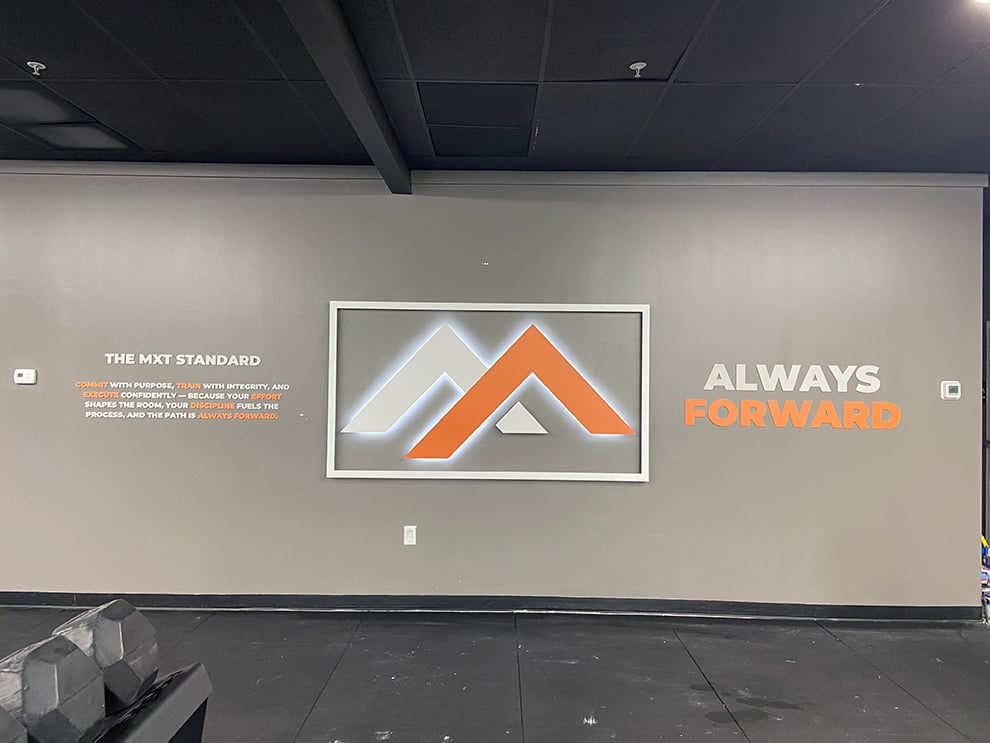
Office signs help departments, conference rooms, executive areas, employee spaces, and shared interiors communicate clearly while supporting a consistent workplace brand.
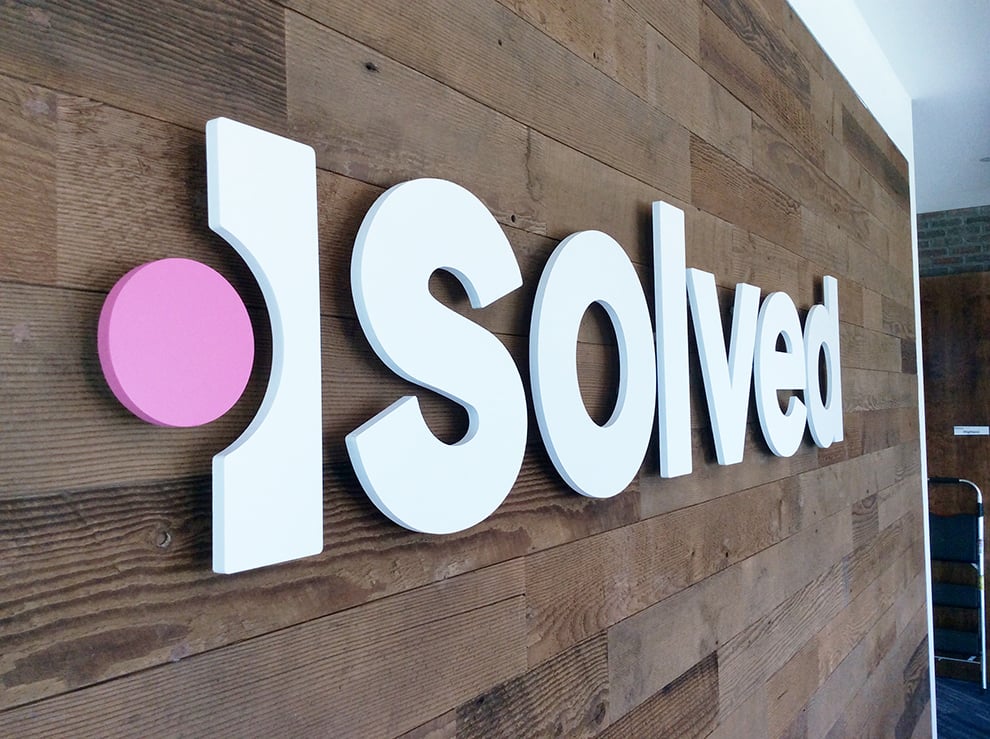
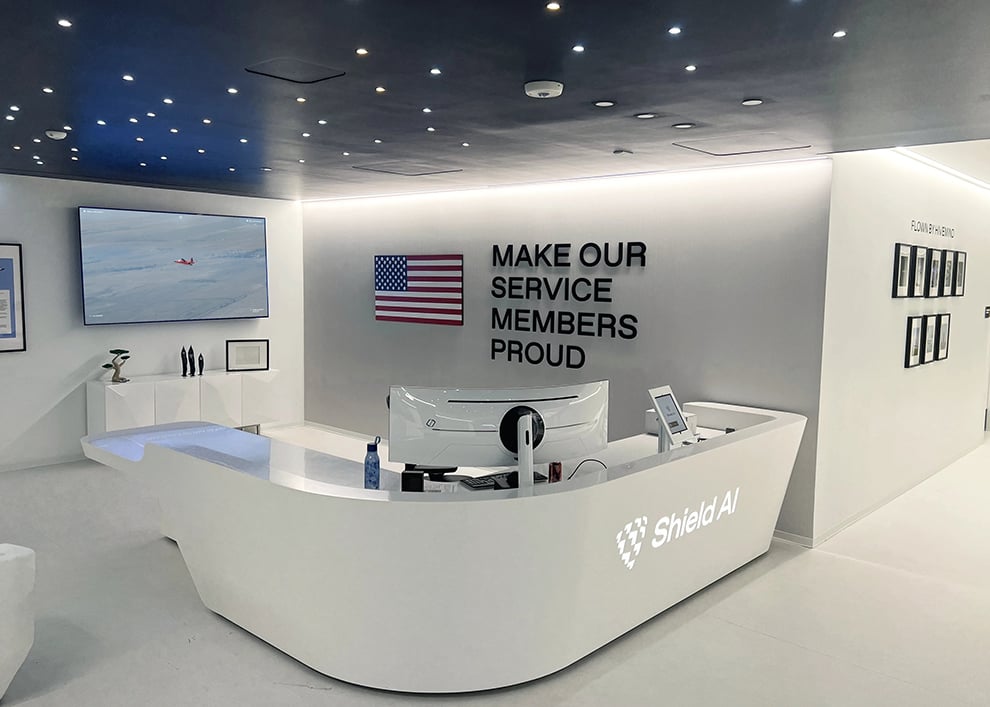
Lobby signs give Charlotte offices, headquarters, healthcare environments, university spaces, and commercial facilities a polished branded focal point at arrival.
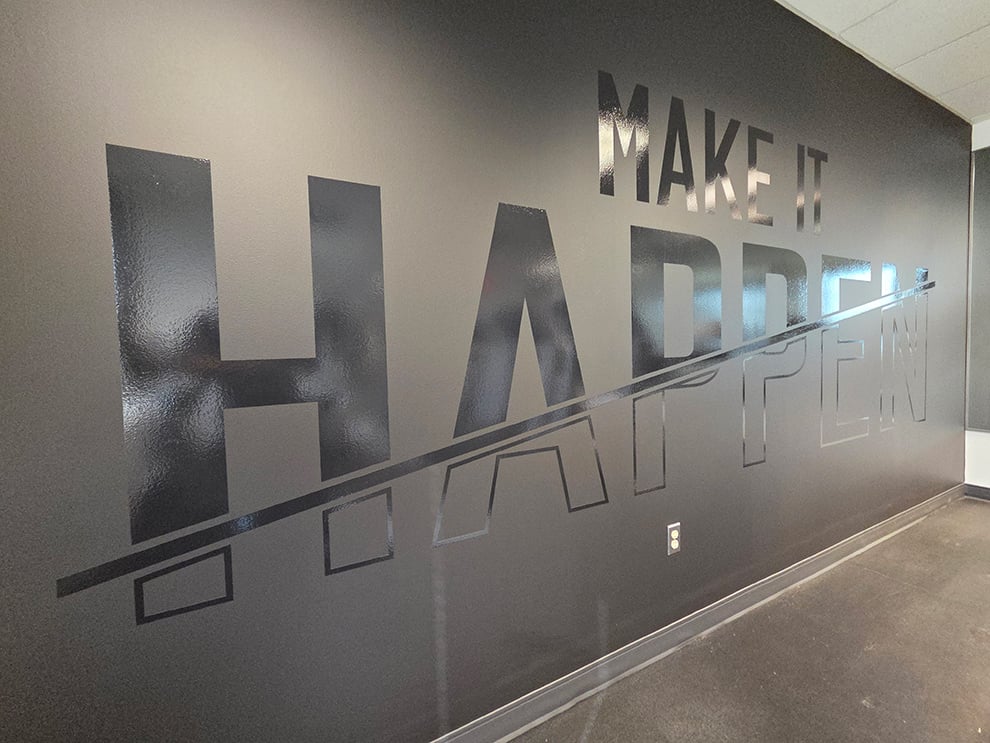
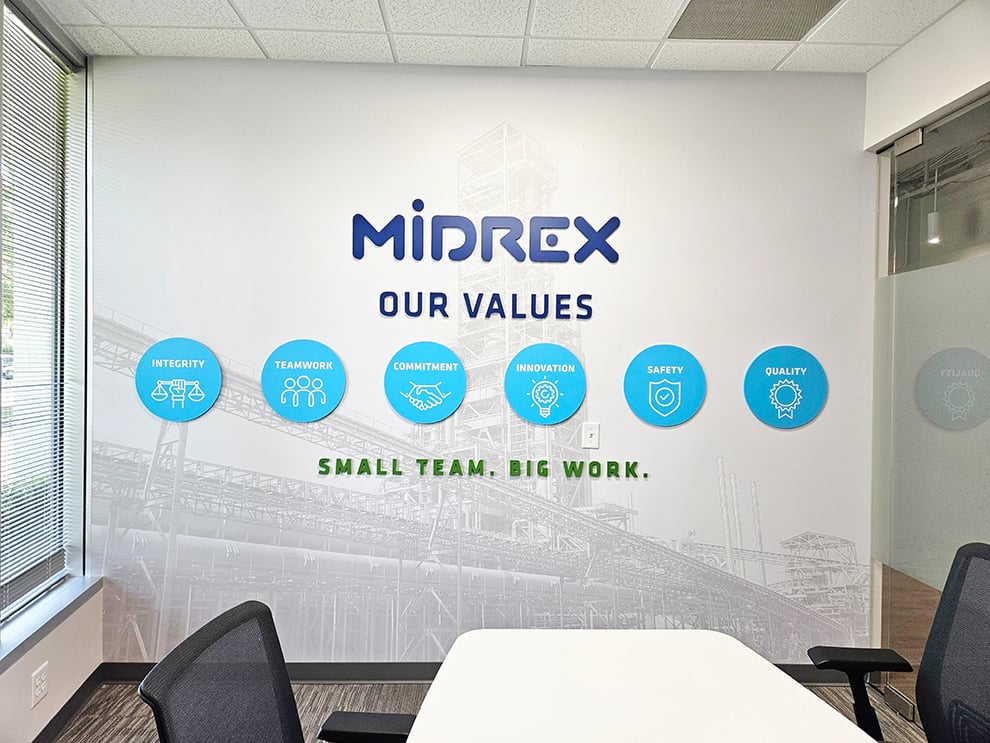
Dimensional letters add depth and permanence to logos, values, department names, feature walls, reception areas, and high-impact branded interior moments.
Backlit signs create illuminated emphasis for reception areas, premium workplace interiors, venue spaces, and high-visibility branded walls.
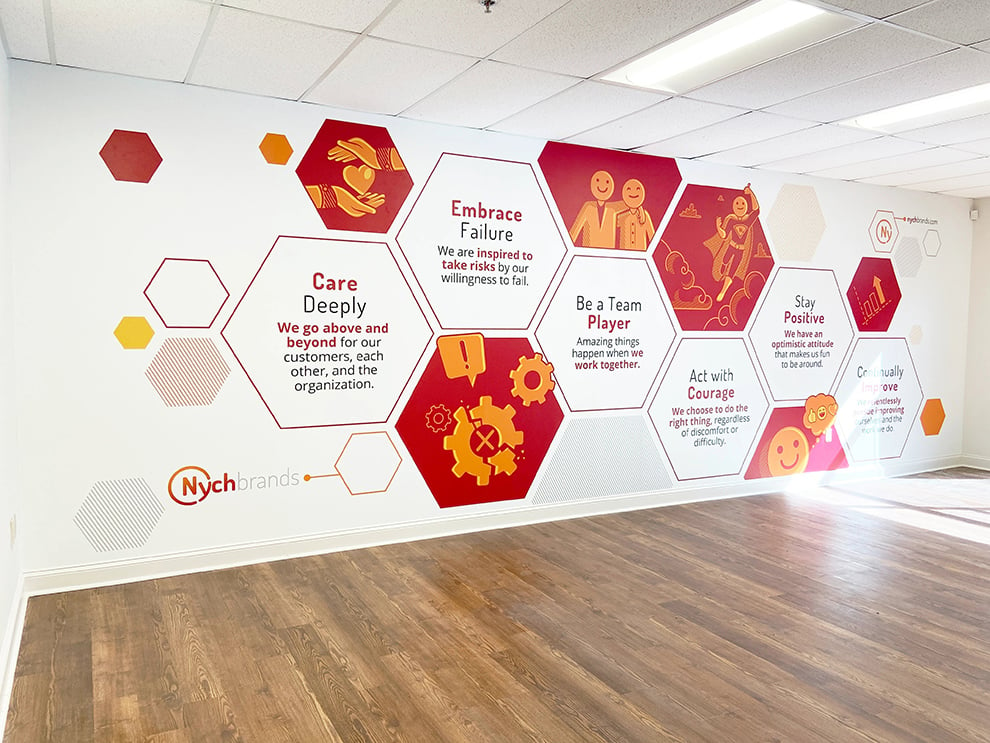
Privacy vinyl brings discretion, safety, and branded visual rhythm to conference rooms, office fronts, glass partitions, and collaborative workspaces.
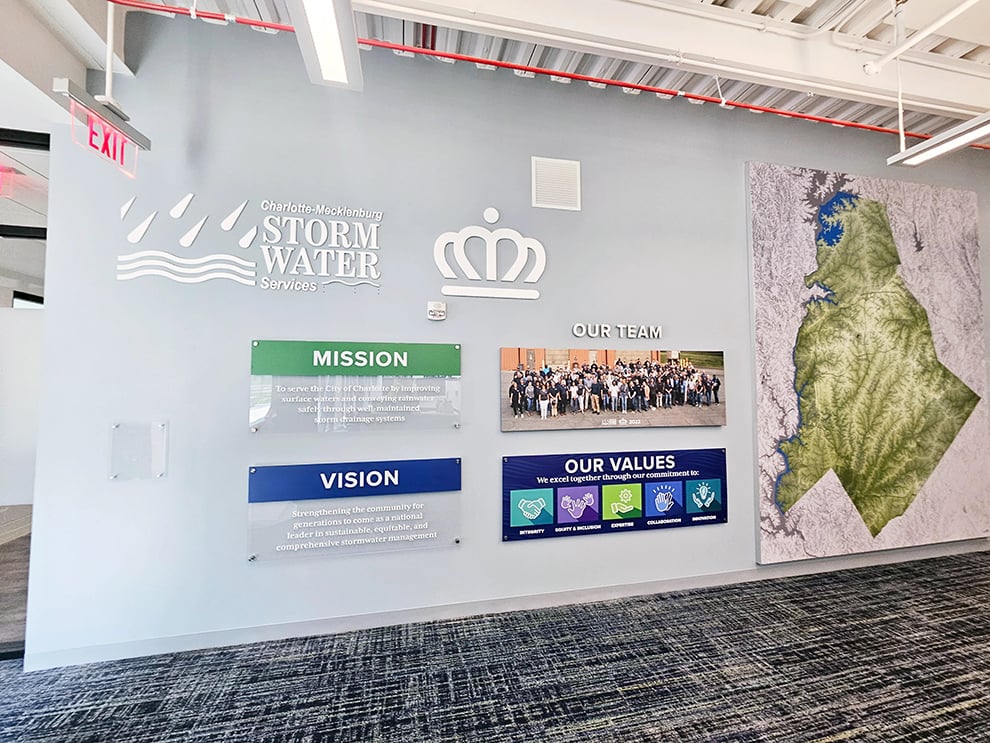
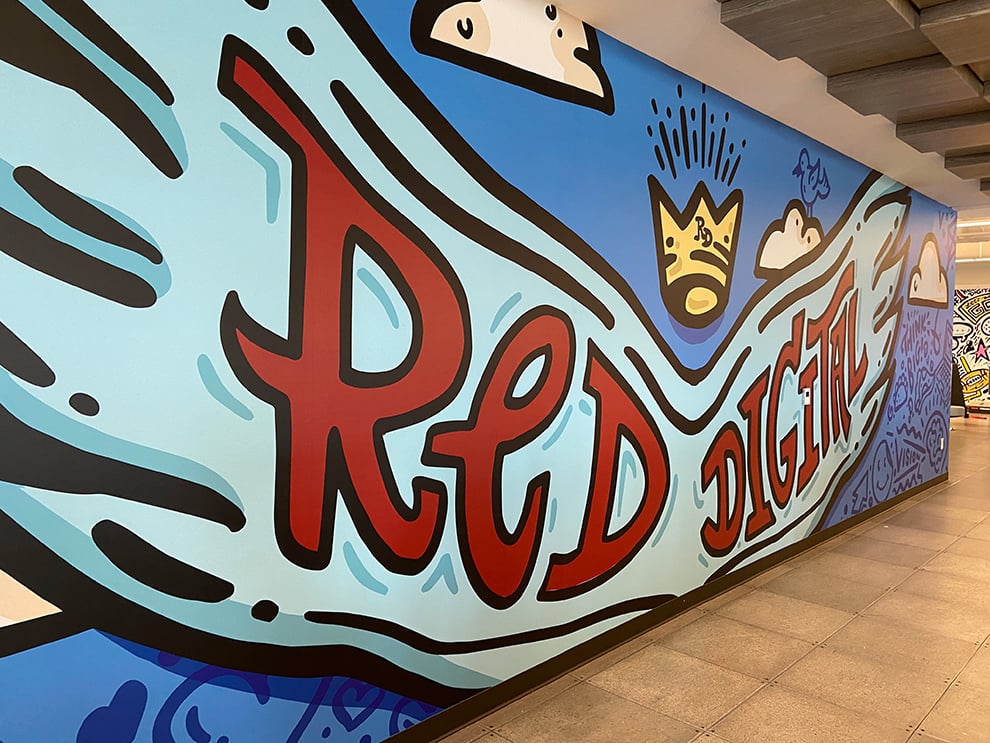
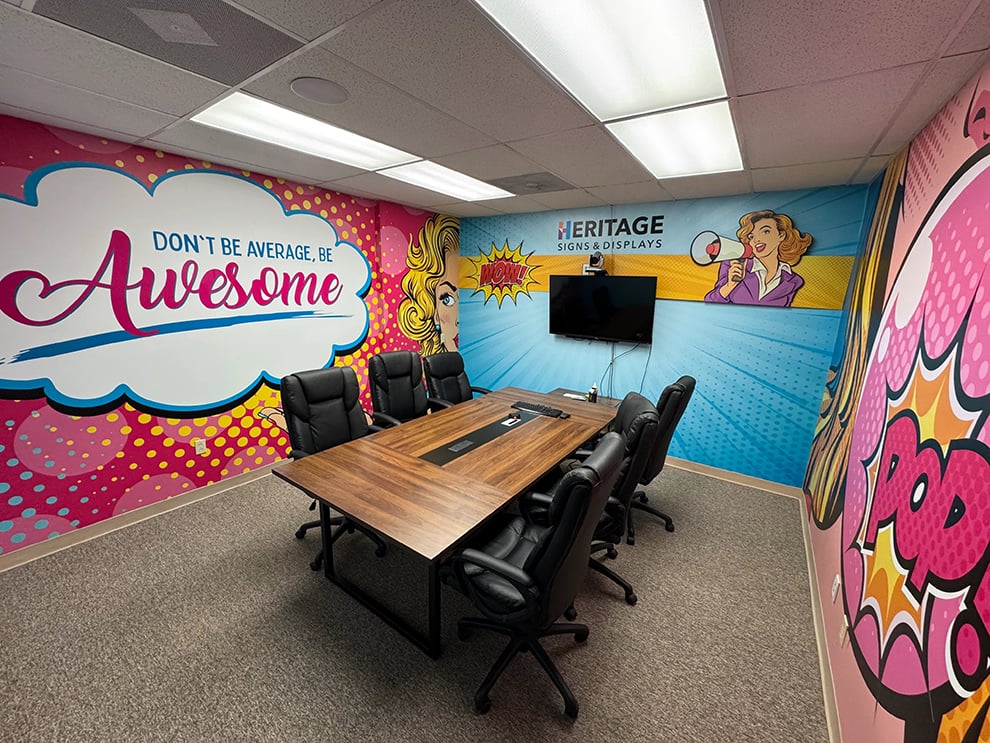
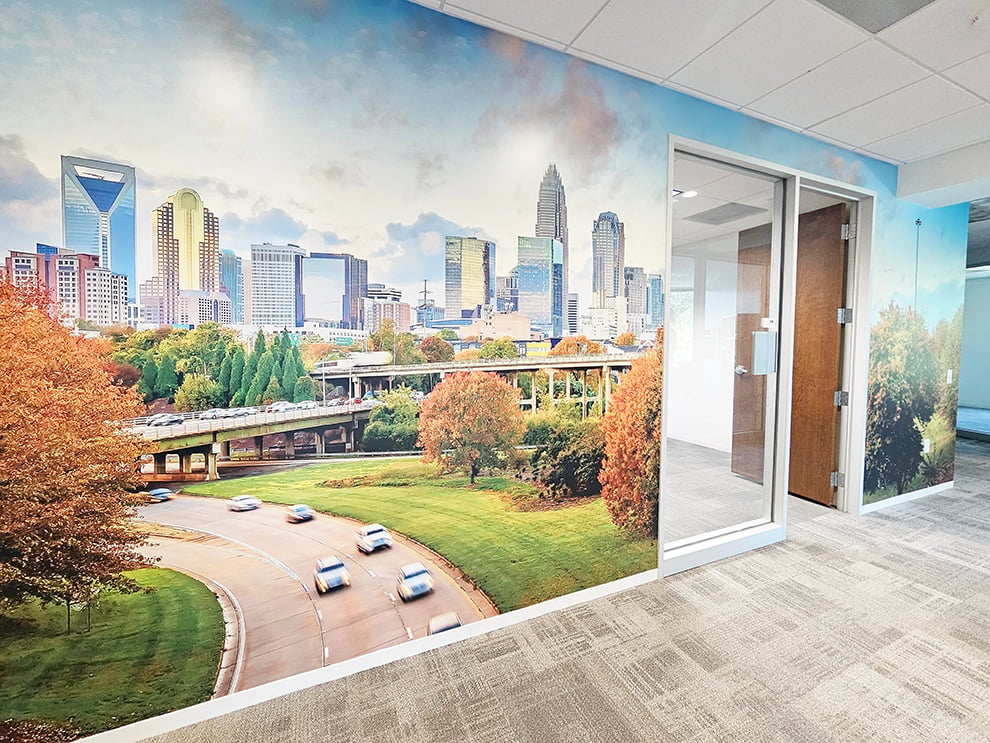
Wall wraps turn office walls, corridors, employee areas, and facility interiors into branded surfaces that support culture, wayfinding, history, or storytelling.
Charlotte organizations frequently use their workplaces to support recruiting, client confidence, employee culture, growth, and operational clarity at the same time. A strong branded interior can help a new headquarters feel established, help an expanding team understand shared values, or give visitors clearer cues as they move through an unfamiliar facility.
Heritage creates lobby features, office signs, wall graphics, window graphics, privacy treatments, dimensional lettering, backlit signs, recognition displays, wayfinding, and related interior elements as parts of a larger workplace communication plan. The strongest solution does not make every surface equally loud. It gives important spaces the right amount of visual emphasis based on audience and purpose.
For Charlotte businesses, healthcare organizations, universities, manufacturers, logistics companies, professional firms, nonprofits, sports organizations, and other growing operations, that can mean a confident arrival experience, useful direction, purposeful employee spaces, and branded features that feel connected to the facility rather than added after everything else was decided. That clarity supports both daily use and the impression the organization makes on people entering the space.
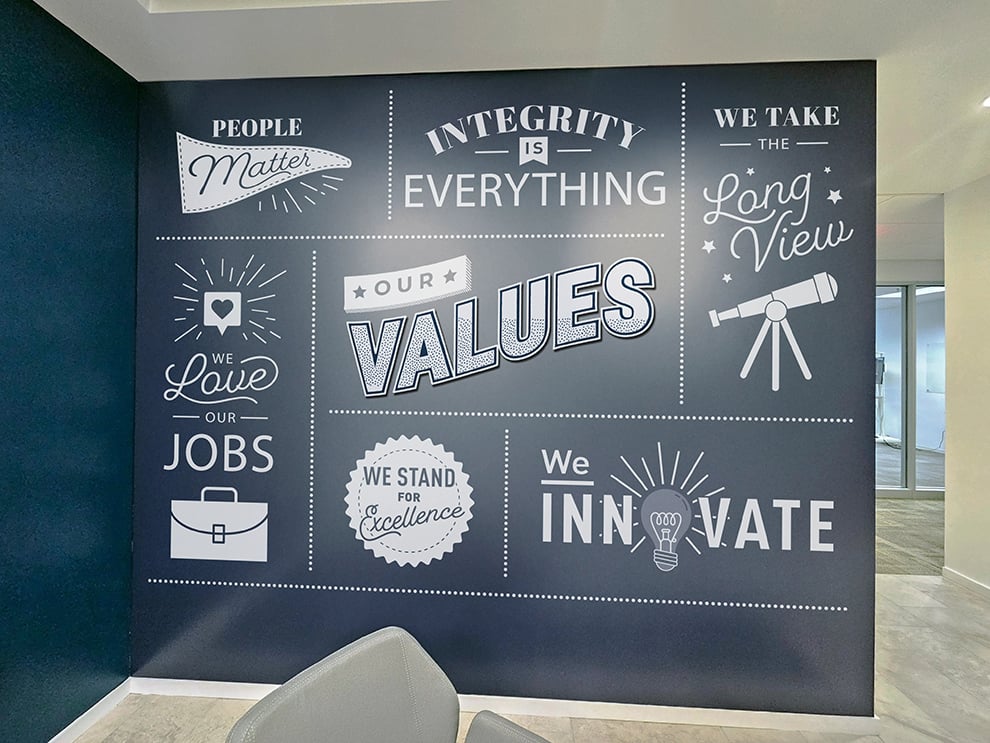
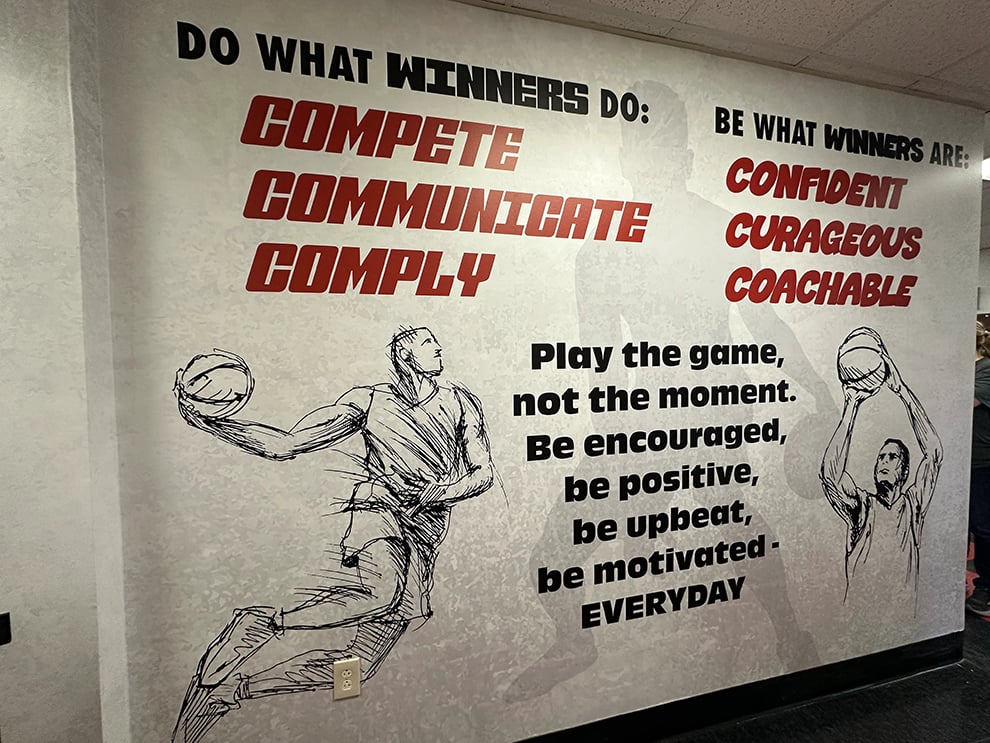
Mission statement walls help Charlotte organizations make purpose visible in offices, headquarters, healthcare spaces, campuses, nonprofit interiors, and shared workplace areas.
Core values walls help growing teams keep shared principles visible in training rooms, hallways, employee areas, and leadership spaces.
Inspiration walls bring meaningful messages, photography, quotes, or branded imagery into spaces where people gather, work, learn, serve, or connect.
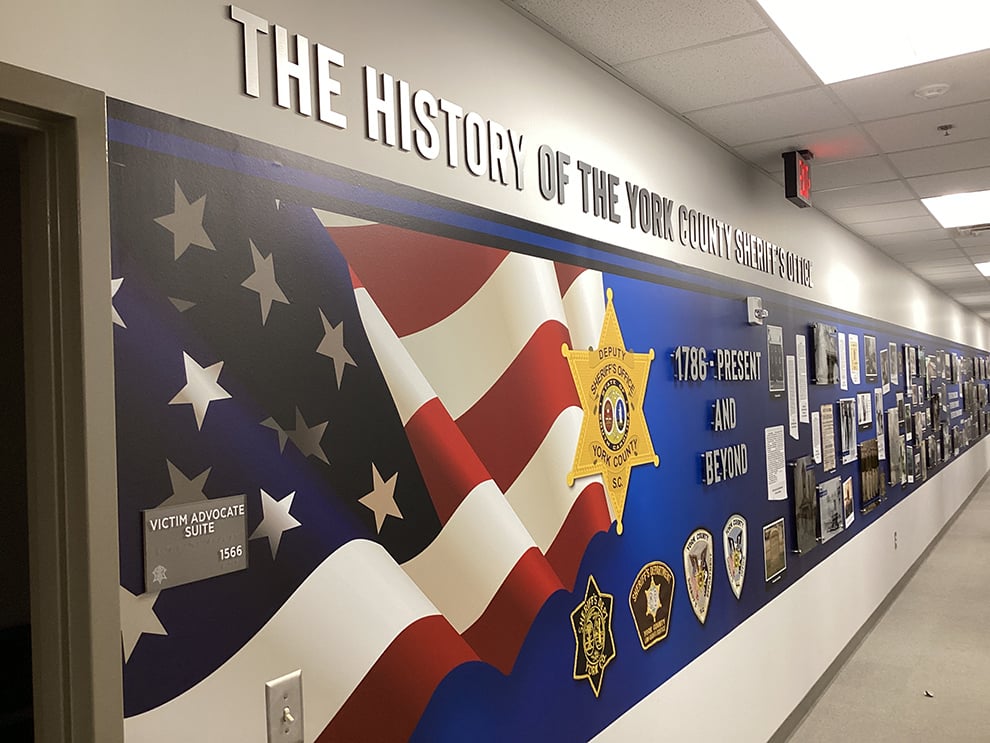
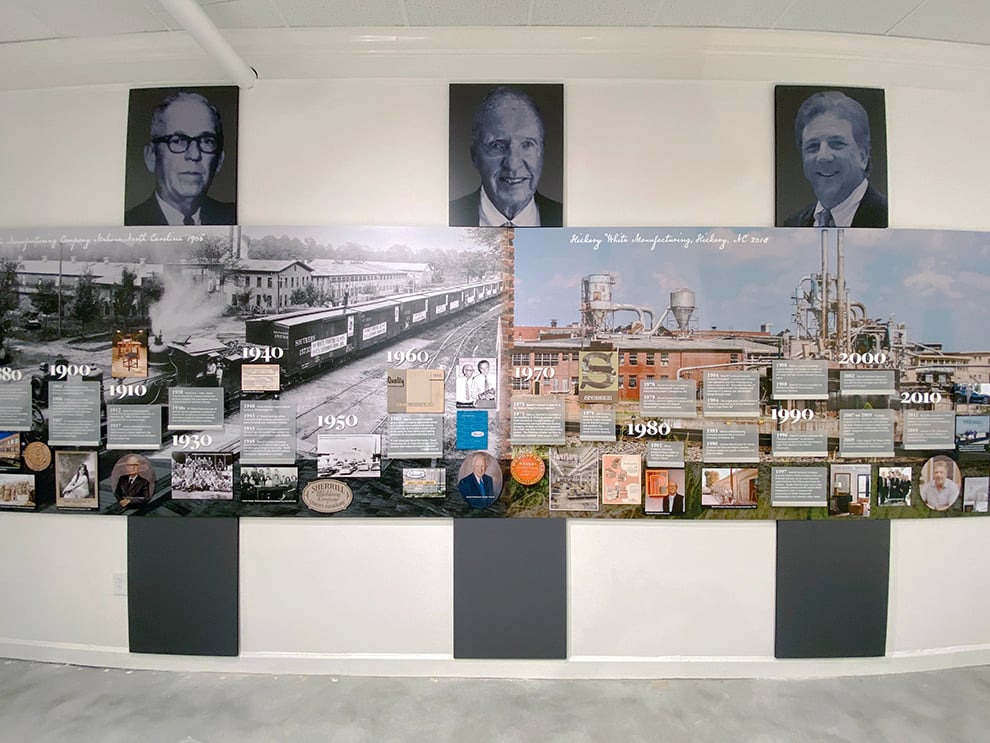
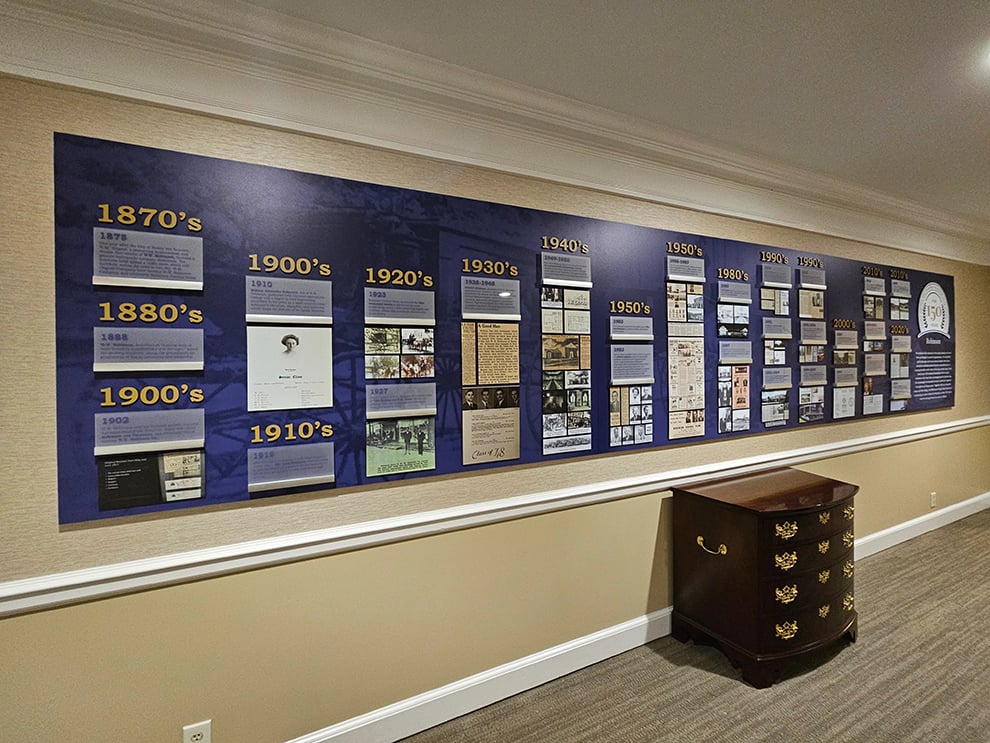
Timeline walls help Charlotte-area organizations celebrate founding stories, growth milestones, expansions, achievements, and defining moments.
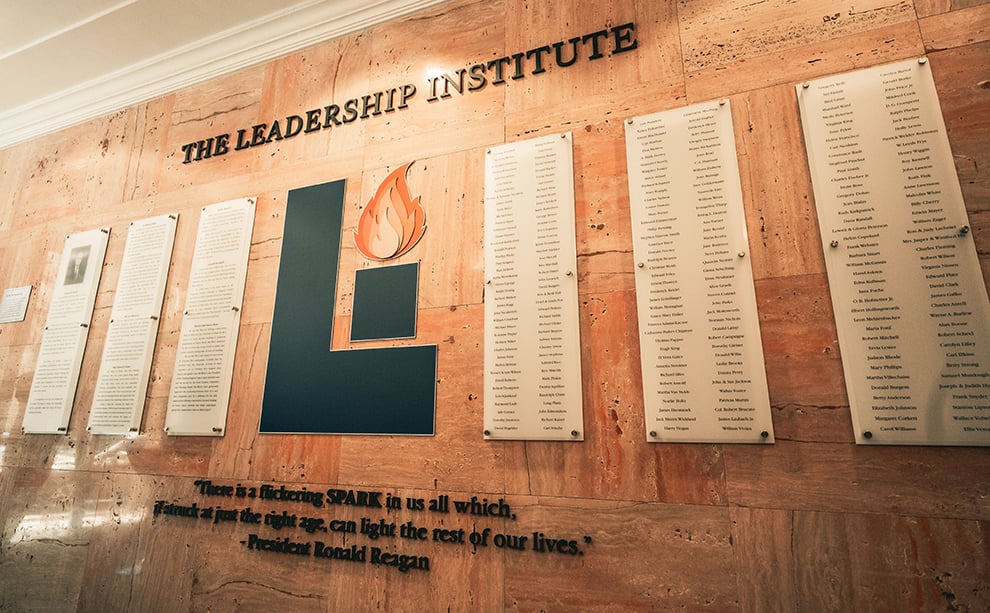
Donor recognition displays honor generosity for nonprofits, schools, healthcare organizations, universities, ministries, and community institutions.

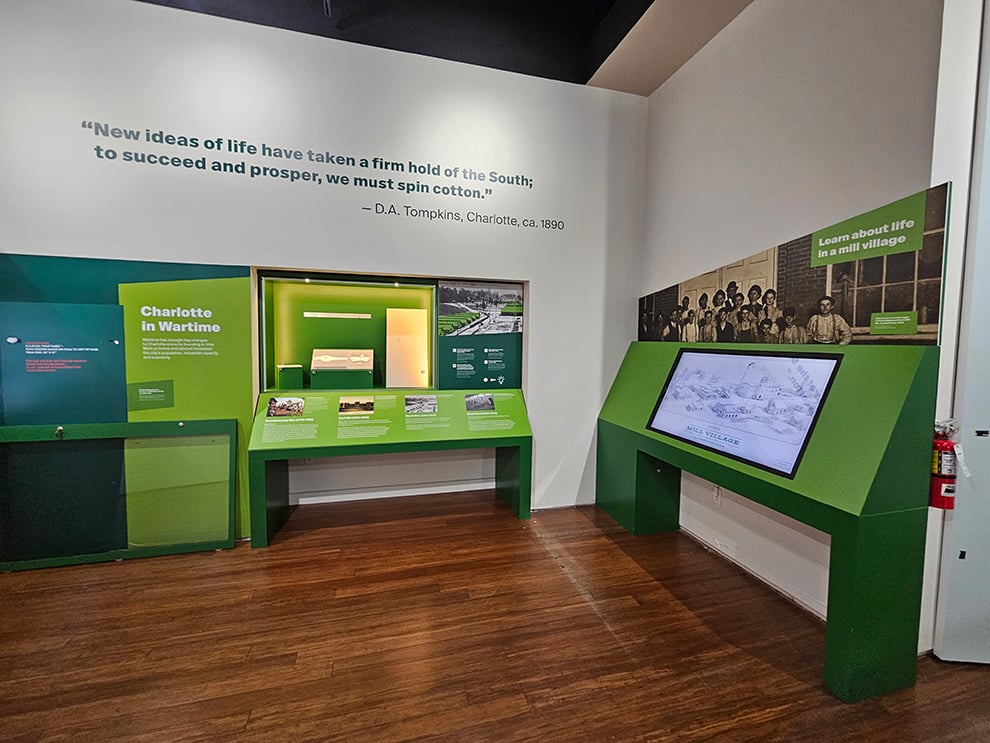
Museum and exhibit displays support storytelling for educational, cultural, historical, corporate, institutional, and venue-based environments.
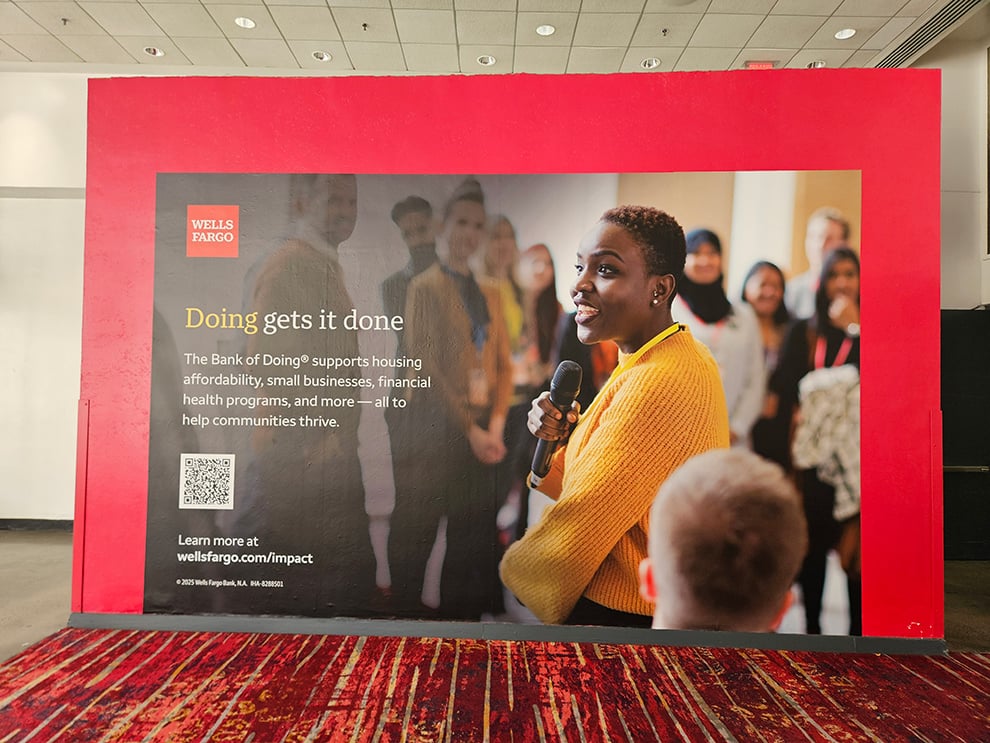
Lenticular displays add movement and visual interaction to interior features where changing imagery can create interest and engagement.
Growth can make an organization's story harder to see. New employees may know the current brand without knowing the milestones that shaped it. Longtime team members may value achievements that are invisible to visitors. Donors, students, patients, supporters, or community partners may deserve recognition that feels intentional and durable.
Heritage creates timeline wall displays, mission statement and core values features, donor recognition, employee and veteran recognition, milestone displays, historical presentations, photographs, dimensional elements, printed panels, and other storytelling systems. These can become meaningful parts of headquarters, training spaces, corridors, gathering areas, campuses, healthcare facilities, nonprofit interiors, and public-facing workplaces.
The design should make the story easier to understand, not simply place more information on the wall. Heritage helps establish hierarchy, viewing distance, material character, dimensionality, update strategy, and placement so the feature works well for people moving through the space. When future names, achievements, images, or milestones are likely to change, we can also plan that update need into the physical system from the beginning.
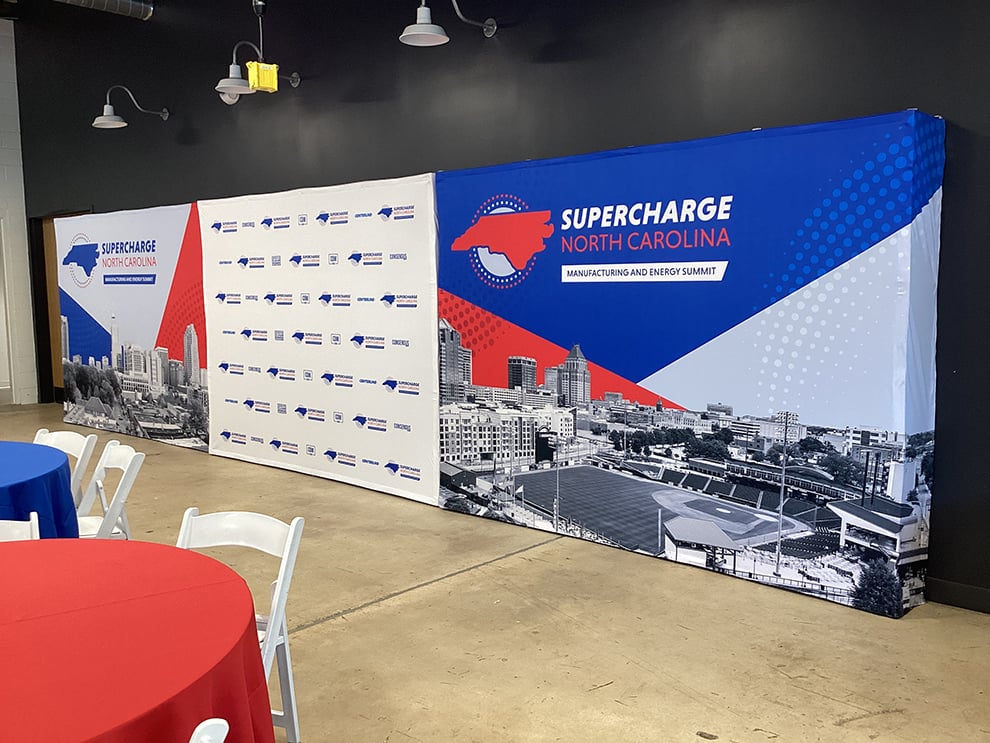
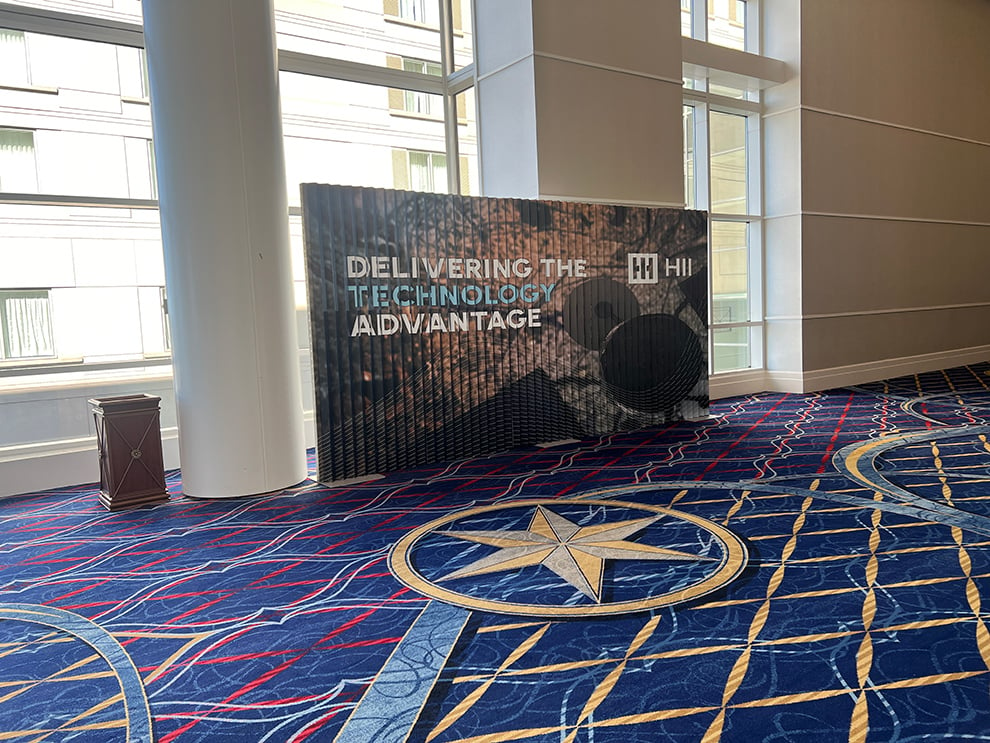
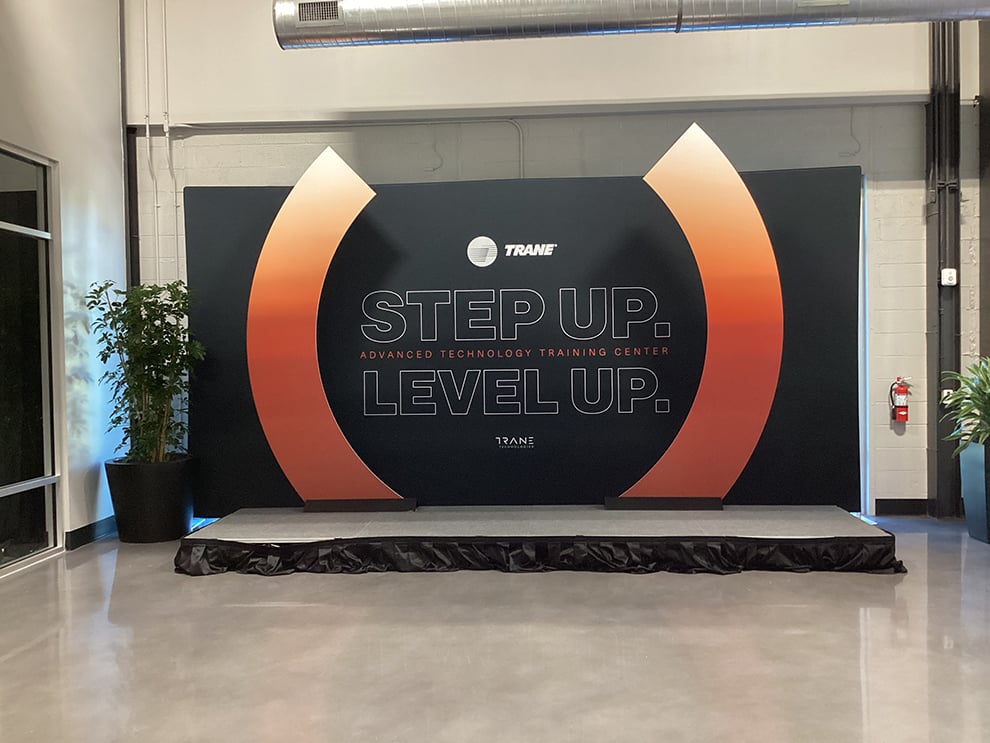
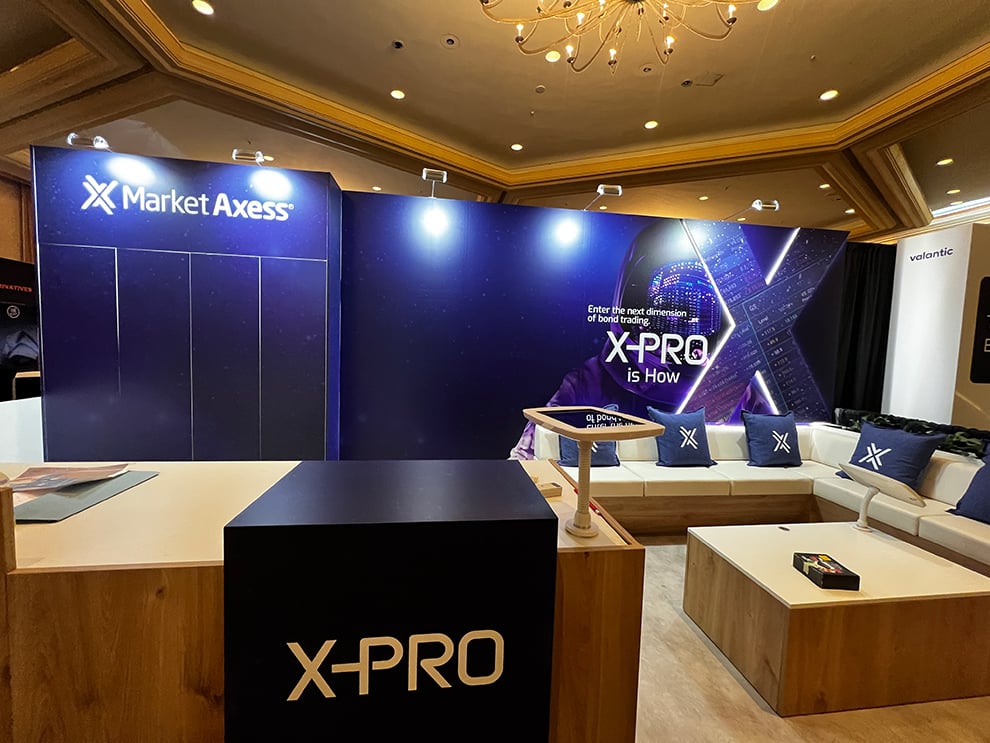
Event backdrops create branded visual anchors for stages, sports events, corporate meetings, award ceremonies, fundraisers, media moments, and venue activations.
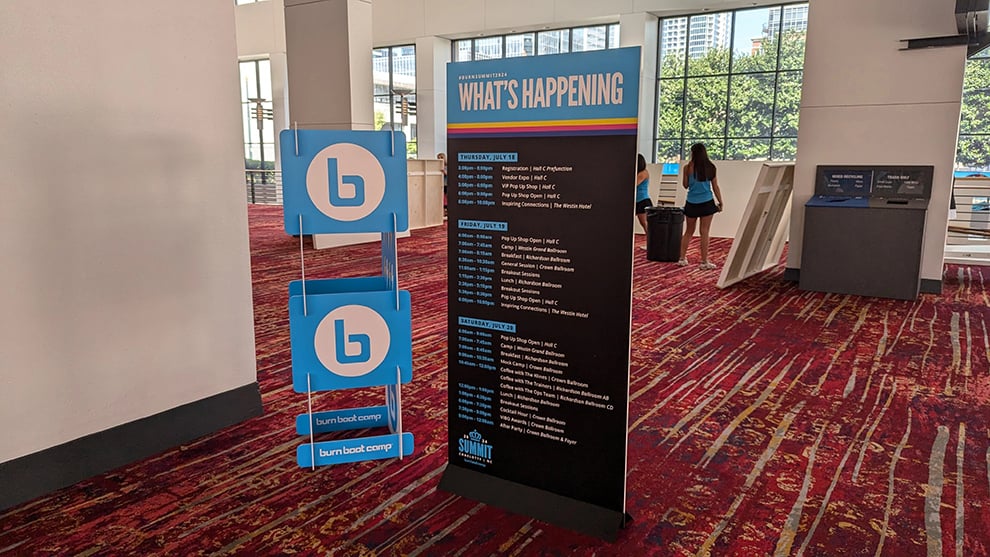
Retractable banner stands provide flexible messaging for recruiting events, conferences, trade shows, lobbies, sponsor areas, and recurring meetings.
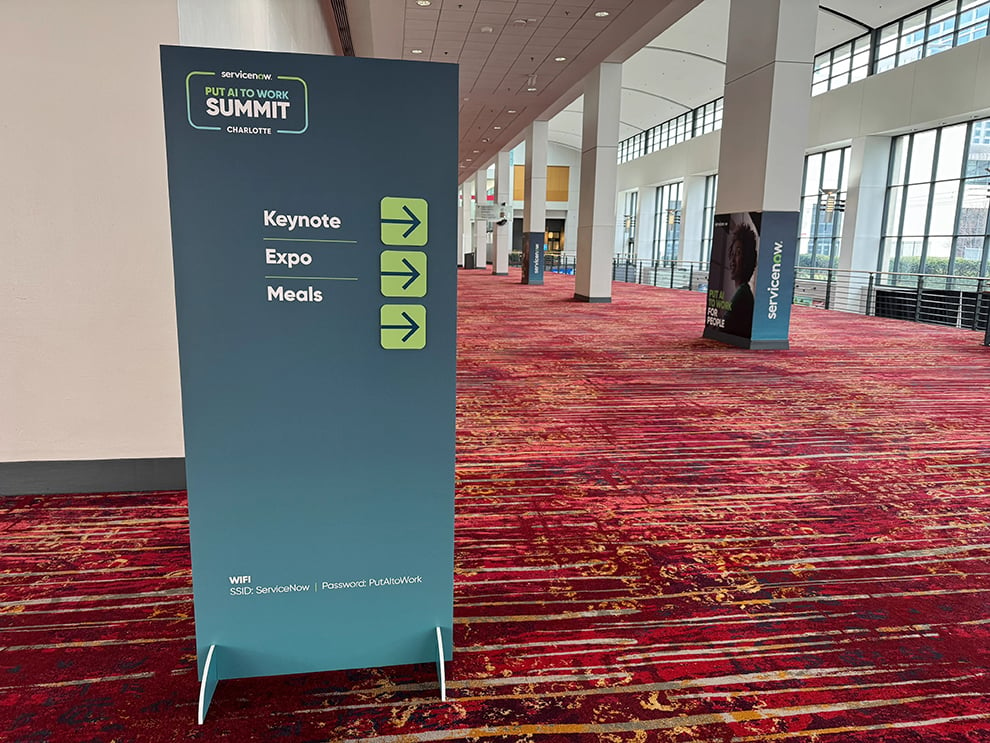
Step and repeat banners support photo opportunities, sponsor visibility, award events, galas, brand activations, and venue-based gatherings.
Meter boards display schedules, maps, sponsors, directional messages, welcome graphics, and event information in a portable freestanding format.
Directional signs help guests, attendees, employees, and visitors move through event venues, campuses, hotels, offices, healthcare facilities, and large properties.
Sponsor recognition displays help events acknowledge supporters with professional graphics that fit the event brand, audience, and setting.
A well-produced sign or graphic still depends on what happens at the property. Heritage treats professional installation as the final execution stage of the same project record used for design, site verification, production, and fabrication.
Our full-time professional installers receive the approved placement, dimensions, materials, mounting information, access conditions, sequencing, and other site details developed earlier in the engagement. That continuity helps them protect surrounding finishes, align components accurately, manage mounting and application decisions, and communicate quickly when field conditions differ materially from what was expected.
Charlotte's local field and installation resources are closely connected to Heritage's headquarters and primary specialty production facility. That creates a practical feedback loop when an installation question needs production knowledge or when a site condition suggests a responsible adjustment. Heritage does not provide installation-only service for customer-provided signs or graphics because controlling measurements, material selection, production quality, fabrication, fit, and replacement responsiveness gives our team a stronger basis for accountability through completion. That is especially valuable on schedule-sensitive work.
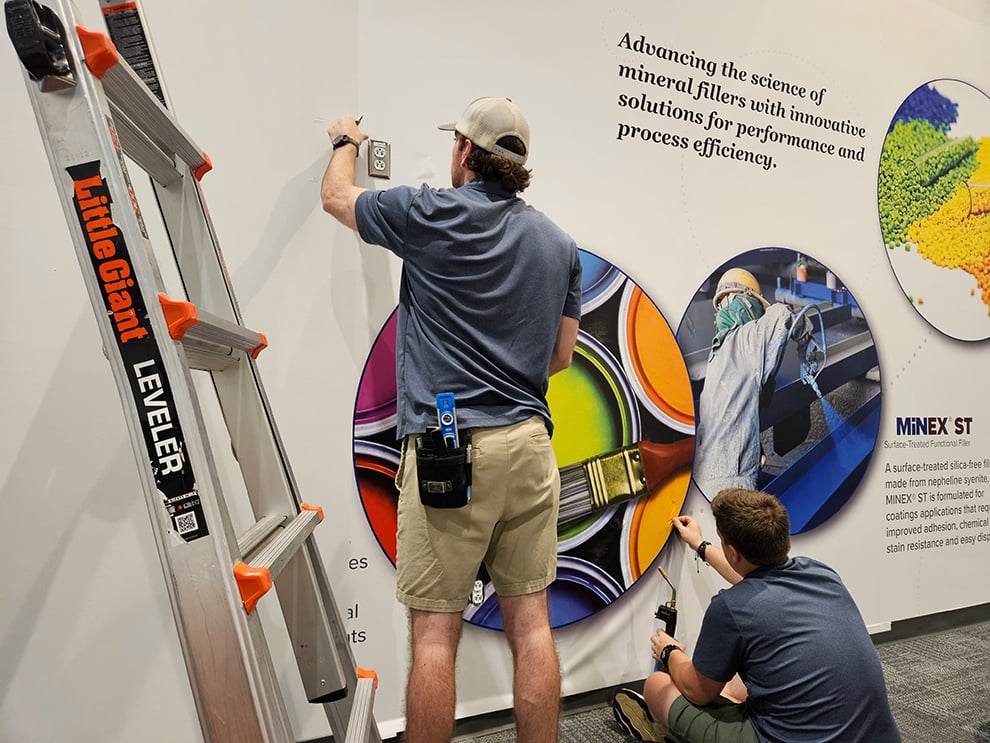
Charlotte's event calendar includes corporate meetings, sports and entertainment programs, university events, nonprofit fundraisers, conventions, and conferences. These projects often combine short timelines with changing sponsor information, venue rules, delivery requirements, and a high expectation for polished presentation.
Heritage creates physical event branding for the moments that shape the guest experience, from arrival and registration through sponsor visibility, navigation, stage presence, photo areas, and presentations. A program may use a branded backdrop, freestanding schedule boards, portable banners, registration graphics, sponsor recognition, directional pieces, and selected wall or window applications. The mix should support the event journey rather than become a collection of unrelated products.
Heritage preserves capacity for time-sensitive work and tests the requested date against the production, fabrication, delivery, access, and installation still required. When the commitment can be met responsibly, the team moves proactively. If the full request cannot be completed well in the available time, we communicate early and develop a practical alternative through prioritization, staged delivery, resequencing, or an adjusted application. Heritage creates and installs the physical branded environment; event strategy and event-planning services remain with the responsible client or partner.
Charlotte projects often move quickly because a lease, construction milestone, executive visit, recruiting initiative, opening date, or event schedule creates a firm decision window. Heritage's One Dedicated Project Manager System gives the client one primary point of coordination while the project moves through design, site verification, production, fabrication, delivery, and professional installation.
The Project Manager preserves the decisions that accumulate along the way: who can approve the work, what the site survey found, which brand standards control, what production needs, what the property requires, and which date matters most. That continuity reduces repeated explanations and helps different Heritage resources work from the same current project history.
The Charlotte operating model makes that especially useful because client-facing resources, environmental graphic design, production, fabrication, field support, and installation can interact closely without shifting accountability among separate vendors. The client still has one Heritage relationship, even when different specialists contribute behind the scenes. For multi-location programs, the same Project Manager can also preserve approved standards while local execution adapts to each property.
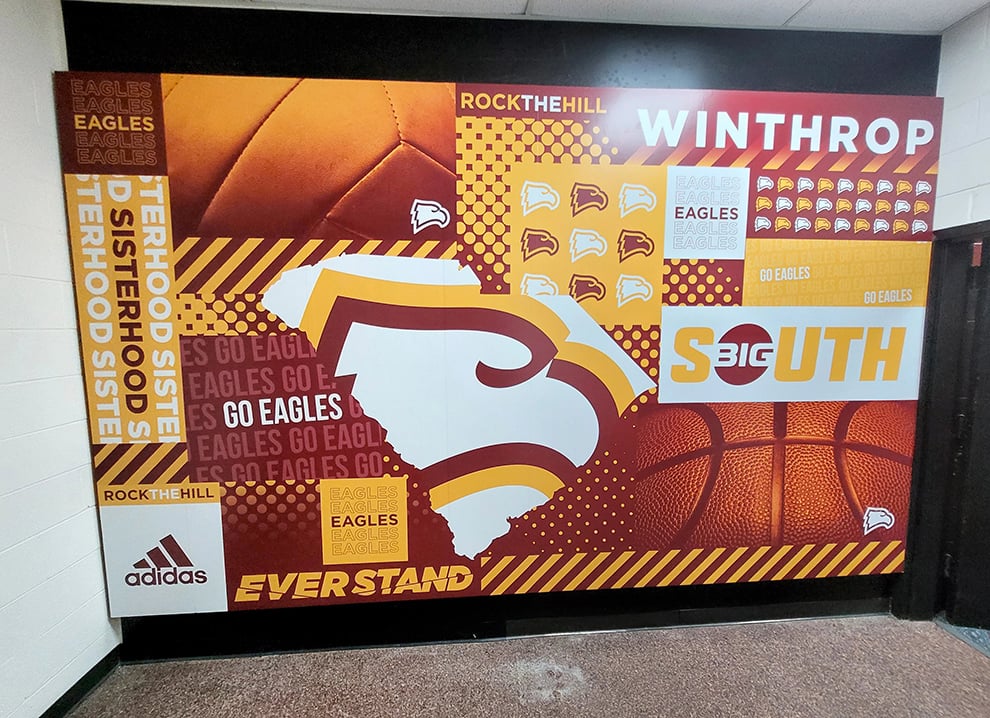
Projects that ultimately include Heritage professional installation require a Heritage site survey. The survey connects the client's goals to the actual Charlotte-area property before final production and installation decisions are released.
Heritage verifies reasonably observable dimensions, surfaces, placement areas, mounting conditions, access, work zones, and other site facts that can affect how the approved design is produced and installed. This is especially useful in renovations, occupied offices, headquarters projects, healthcare facilities, campuses, venues, and other settings where the visual concept must work around existing architecture and operating conditions.
The survey does not expose every concealed condition inside a wall, ceiling, finished surface, or building system. It does reduce avoidable assumptions and gives the Project Manager, design, production, fabrication, and installation teams a shared field record. If the property changes materially after the survey, additional verification may be necessary before the next stage. Early site knowledge helps protect fit, schedule, installation planning, and the finished result by resolving observable questions in advance rather than leaving them for installation day.
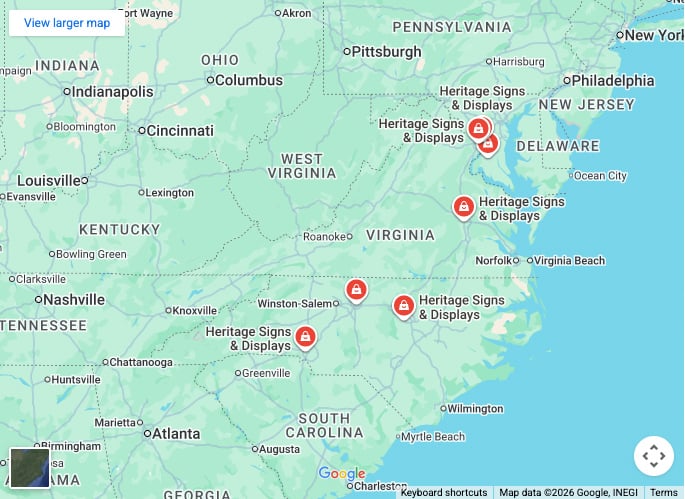
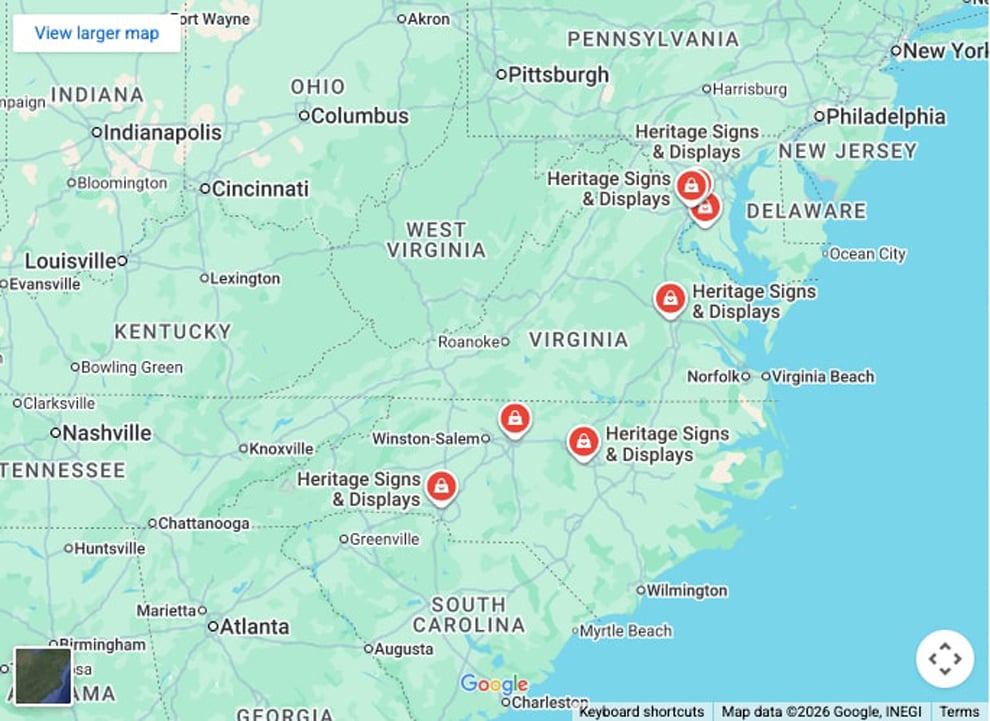
Charlotte is Heritage's headquarters and primary specialty production facility, with Charlotte-region client, project, field, and installation resources serving the local market. That is the first layer of support for organizations in Charlotte and close-in communities such as Concord, Gastonia, Rock Hill, Salisbury, Statesville, and comparable nearby markets.
The Charlotte operation also anchors the Carolinas production system. Raleigh provides genuine local field and installation support for the Research Triangle, while Greensboro supports the Piedmont Triad. Those offices are not extensions of a fictional Charlotte local office; they are distinct Heritage resources that allow surveys, planning, installation, and issue resolution to stay closer to each site.
When a Charlotte client has facilities beyond the Carolinas, the broader Heritage network can support the program across the Mid-Atlantic as well. Production may occur in Charlotte, Waldorf, or another verified Heritage production resource based on equipment, expertise, capacity, schedule, and workflow. One dedicated Project Manager helps keep the client's standards and project history connected while local execution responds to each property.
A company expanding from Charlotte into several offices or facilities usually wants consistent brand standards, not identical physical installations. Different buildings across the network have different wall dimensions, glass, entrances, sightlines, access, audiences, and construction conditions. A program succeeds when the visual identity is preserved while the execution is adapted intelligently.
Heritage can help establish repeatable standards for signs, graphics, recognition systems, materials, color, mounting approaches, update components, and production expectations. The Project Manager preserves approvals and communication history while local Heritage teammates verify the conditions that matter at each property.
That model can support new-office rollouts, renovations, rebrands, recurring event programs, healthcare or educational networks, and other multi-location efforts. Charlotte's production depth can provide a strong resource for substantial or specialized work, but production geography does not replace local site knowledge. The goal is one coordinated client relationship, one current body of project information, and site-level execution that respects the real architecture rather than forcing every location into the same dimensions or installation method.
A Charlotte opportunity is a strong fit when the client benefits from coordinated decisions rather than a quick product transaction. Headquarters branding, a substantial recognition feature, an event graphics program, a renovation, or a multi-location rollout can all qualify when design, site conditions, production, fabrication, schedule, and professional installation need to be managed together.
New Charlotte-region workplace interior and event environment inquiries should plan for an anticipated overall project investment of at least $4,000. The amount applies to the complete Heritage-managed engagement. Discussing fit early helps the client decide whether the intended scope warrants Heritage's project resources before detailed design or production planning advances. Early qualification also protects planning time and production capacity.
Heritage also supports substantially larger engagements. Many Heritage projects involving production and professional installation range from $10,000 to more than $200,000. Location, desired outcome, timing, known site conditions, drawings or photographs, approximate scope, and anticipated investment give the Project Manager enough context to recommend the most useful next step.
Clear scope helps a Charlotte client bring the right partners into the project early. Heritage focuses on workplace interiors, event environments, storefront graphics, and related branded signs, graphics, displays, and features. Where an entrance program naturally extends outside, Heritage can also produce and install non-illuminated exterior window graphics, exterior wall graphics, dimensional lettering, sign panels, and related storefront elements when the product and site support the application.
Several categories remain outside Heritage's offer. We do not produce or install monument signs, pylon signs, channel letters, or illuminated exterior signs. Vehicle wraps and fleet graphics are not Heritage services, and our installers do not provide installation-only service for customer-provided signs or graphics.
Property and professional responsibilities stay with the parties who control them. The client, property owner or property manager, or general contractor secures required sign permits and property approvals; Heritage does not decide whether a permit is required or serve as the permitting agent. Qualified property resources provide code-compliant building power for illuminated interior features. Architects, engineers, commercial interior designers, accessibility professionals, and code professionals retain regulated responsibilities outside Heritage's sign and display scope.
You do not need a finished product list before starting. Share the Charlotte-area location, desired result, users, important date, and available information. Photographs, drawings, brand standards, plans, artwork, and dimensions are helpful but do not have to be complete.
A Heritage Project Manager can help identify what needs to be decided next and what should be verified at the property. Projects moving forward to Heritage professional installation include the required site survey so production and installation decisions are grounded in the actual site. Use Get Started Now to begin the conversation.
Charlotte combines client-facing project resources with Heritage's headquarters and primary specialty production facility. That means environmental graphic design, project management, field information, production, fabrication, and professional installation can stay closely connected while important decisions are still being made.
The advantage is not simply local manufacturing. It is the ability to reduce handoffs, preserve project knowledge, test ideas against production reality, and carry the approved direction through installation with one accountable Heritage team.
Yes. New offices and headquarters are strong fits for Heritage because the visual program can be planned before individual signs and graphics become disconnected decisions.
Heritage can help organize arrival branding, lobby features, office identification, glass privacy, wall graphics, culture displays, recognition, wayfinding, dimensional lettering, illuminated interior signs, and other branded elements around the way employees, visitors, candidates, and clients will use the space. Early coordination also lets production, fabrication, site conditions, and installation influence the plan before final release.
Yes. Heritage uses environmental graphic design to translate brand identity, culture, history, recognition, privacy, direction, and other communication goals into physical signs, graphics, displays, and branded features.
Because Charlotte is home to Heritage's headquarters and primary specialty production facility, design decisions can be considered alongside material, fabrication, mounting, production, and installation realities. Heritage may develop concepts directly with client stakeholders or implement approved direction established by architects, commercial interior designers, branding agencies, and other professional partners.
Yes. Heritage frequently works as the sign, graphics, display, production, fabrication, project management, and installation partner within a larger project team.
An architect or commercial interior designer may control the broader building or interior direction. A branding agency may control identity standards. Heritage can protect and implement that approved intent through the physical branded elements within our scope. Heritage does not replace the architect, engineer, commercial interior designer, accessibility or code professional, or another regulated professional whose responsibilities extend beyond Heritage's work.
Heritage's One Dedicated Project Manager System gives the client one primary Heritage relationship from early planning through completion.
The Project Manager preserves approvals, site findings, schedule information, brand standards, production needs, property requirements, and communication history while different Heritage specialists contribute. In Charlotte, that continuity is especially useful because client-facing, design, production, fabrication, field, and installation resources can interact closely without requiring the client to manage those handoffs separately.
Yes. A Charlotte engagement that will conclude with Heritage professional installation includes a Heritage site survey before final production and field execution are released.
The visit records the reasonably observable dimensions, surfaces, placement zones, access, mounting conditions, and other site facts that affect the work. It gives the Project Manager and production team an actual field record instead of relying on drawings or assumptions alone. Conditions hidden inside walls, ceilings, finished surfaces, or building systems may still require separate verification if they become relevant.
Heritage professional installers complete Heritage-managed installation work in the Charlotte market. They are part of the same operating system that receives the approved design, site findings, production information, mounting details, access plan, and schedule.
That continuity gives the field team context for alignment, application, mounting, property protection, finish, and field judgment. If a condition differs materially from the project record, the installer can connect quickly with the Project Manager and the appropriate production or project resource instead of treating the issue as someone else's problem.
No. Heritage does not provide installation-only service for customer-provided signs or graphics.
Measurements, materials, fabrication, production accuracy, fit, mounting, packaging, and replacement response all affect installation quality. Keeping those responsibilities inside a Heritage-managed project gives our installers better information and allows Heritage to remain accountable for the finished result rather than inheriting unknown production specifications from another provider.
No. Charlotte is Heritage's headquarters and primary specialty production facility, but the best production location depends on the project.
Heritage can use the facility, equipment, expertise, capacity, schedule, and workflow best suited to the work. Charlotte provides substantial production depth for Carolinas projects and can support specialized work for the broader Heritage network, while other verified production resources may participate when appropriate. The client's Charlotte project relationship and field support remain connected regardless of where a particular component is physically produced.
Yes. Moves, expansions, renovations, and headquarters changes are valuable times to involve Heritage because visual communication can be planned alongside the new workplace instead of added after occupancy.
Heritage can help identify what people should understand at arrival, where privacy or wayfinding matters, how culture and history should appear, and which branded elements need to be permanent or updateable. Site verification, production planning, fabrication, and installation can then be sequenced around the real move or construction schedule.
Heritage can translate a mission statement, core values, history, milestones, recognition, photography, employee stories, and other meaningful content into physical workplace features.
The goal is not simply to fill walls. A culture display should help employees, recruits, clients, and visitors understand what the organization values and how it became what it is today. Heritage can combine environmental graphic design, dimensional elements, printed graphics, photographs, display hardware, and updateable components so the presentation feels intentional and appropriate to the space.
Yes. Future updates should be considered before the physical system is finalized.
Heritage can help distinguish the permanent branded structure from names, photographs, achievements, giving levels, milestones, or other information likely to change. Depending on the project, updateable panels, inserts, modular components, replaceable graphics, or another planned method can keep future changes from requiring a complete rebuild of the display.
Heritage creates the physical branded elements used for conferences, corporate meetings, university events, sports and entertainment programs, nonprofit gatherings, recruiting events, conventions, fundraisers, and other Charlotte-area events.
The work can include event backdrops, meter boards, retractable banner stands, sponsor recognition, directional signs, registration graphics, stage-related branded features, wall or window graphics, and photo areas. Heritage focuses on making the physical visual environment clear, cohesive, and executable; event strategy, programming, and event-planning services remain with the client or other responsible partners.
Yes. Heritage evaluates the requested date against approvals, site readiness, production and fabrication needs, venue or property access, transportation, installation capacity, and the scope that still has to be completed.
If the date is realistically achievable, the team works proactively toward it. If the full scope cannot be completed responsibly, Heritage communicates early and helps identify a practical alternative such as prioritizing the highest-impact elements, phasing installation, resequencing production, adjusting an application, or revising the scope.
Yes. Phasing can help when construction finishes in stages, an occupied workplace cannot release every area at once, budgets are allocated across periods, approvals are staggered, or several locations are part of one rollout.
Heritage can establish the larger visual direction first and then sequence production and installation around the actual project conditions. Planning the phases as one program helps protect brand consistency, materials, mounting decisions, and future connections even when the physical work is completed over time.
A Charlotte property should be ready enough that Heritage can perform the agreed installation safely and without working around unfinished conditions that belong to others.
The exact readiness list depends on the site. It can include completed installation surfaces, clear work zones, confirmed loading and elevator access, building or security arrangements, an authorized site contact, and code-compliant power when an illuminated interior feature requires it. Heritage identifies known needs during survey and planning; the property team, general contractor, venue, or client completes the access, approvals, and site conditions within its control.
If a material site condition changes after the Heritage survey, the team evaluates whether additional field verification is needed before production or installation proceeds.
Changes to walls, millwork, glass, mounting locations, construction sequencing, access, power, or other relevant conditions can affect dimensions, materials, hardware, schedule, or installation planning. Confirming the revised condition before the next major stage helps protect the fit and finished result instead of forcing the installer to solve a preventable discrepancy in the field.
Yes. Charlotte installations frequently take place in offices, healthcare settings, campuses, venues, and other properties that remain in use.
The installation plan can account for occupied areas, employee or visitor traffic, limited work windows, sensitive finishes, security procedures, and other known constraints. Heritage installers organize equipment, access, sequencing, and protection around those conditions. The client or property team remains responsible for the building rules, occupancy controls, access, and operating conditions it manages.
Heritage coordinates its sign, graphic, display, production, fabrication, and installation responsibilities against the confirmed requirements of the broader project team.
A general contractor may control construction sequencing. Facilities may manage access and building readiness. A property manager may establish loading, work-hour, or approval procedures. Qualified trades may handle electrical or other regulated work. One dedicated Project Manager keeps Heritage's project information aligned with those requirements without transferring another party's professional or property responsibilities to Heritage.
Yes. Heritage can support multi-location clients across the Carolinas and Mid-Atlantic through local offices and teammates connected by one dedicated Project Manager.
The Project Manager preserves approved standards, project history, production expectations, and client preferences while local Heritage resources verify the conditions that differ from site to site. That makes it possible to maintain one client relationship without pretending that a Washington, DC office, Raleigh workplace, Richmond facility, and Charlotte headquarters should use identical physical solutions.
New Charlotte-region workplace interior and event environment opportunities should plan for an anticipated overall project investment of at least $4,000. The amount applies to the complete Heritage-managed engagement.
Charlotte's project model also supports much larger scopes. Many Heritage projects involving production and professional installation range from $10,000 to more than $200,000. Actual investment follows the design development, materials, quantities, fabrication, property conditions, schedule, transportation, and installation required.
Yes. A Heritage project does not need to involve an entire building.
A substantial lobby feature, donor recognition display, timeline wall, branded conference area, dimensional installation, or backlit sign may justify the same disciplined environmental graphic design, production, fabrication, site verification, project management, and professional installation used on a larger program. The key question is whether the complete opportunity fits Heritage's project-oriented model and current investment requirements.
Heritage can extend a coordinated Charlotte branding project to selected non-illuminated exterior elements where the entrance and interior should work together. The in-scope exterior work can include window graphics, wall graphics, dimensional lettering, sign panels, and related storefront features when the selected application and property conditions support them.
The exterior offer is intentionally limited. Heritage does not produce or install monument signs, pylon signs, channel letters, or illuminated exterior signs, and vehicle wraps and fleet graphics are not provided.
Required sign permits and property approvals are secured by the client, property owner or property manager, general contractor, or another responsible party assigned to that work.
Heritage does not determine permit necessity. We also do not prepare or submit permit applications or permit documents, communicate with permitting authorities for the client, pay permit fees, pursue variances, or obtain governmental approvals. Heritage can use the approved requirements supplied by the responsible parties when producing and installing the signs and graphics included in our contracted scope.
Heritage can produce and professionally install applicable illuminated interior sign components, but building electrical service is outside our scope.
When a feature needs power, the client or property team provides a safe, code-compliant electrical supply through qualified electrical resources. Heritage coordinates the sign component and installation information with the approved power location and project conditions. We do not perform the building wiring, electrical permitting, electrical engineering, or other licensed electrical work assigned to the property or its electrical contractor.
The responsible project professionals establish requirements that fall within architecture, engineering, accessibility, ADA, building code, or similar regulated disciplines.
Heritage does not act as the client's architect, engineer, commercial interior designer, accessibility or ADA consultant, code consultant, or compliance certifier. Once the appropriate professional or property party provides the approved requirement, Heritage can apply it to the signs, graphics, displays, fabrication, and installation work included in our scope. That keeps Heritage accountable for execution without assuming another discipline's authority.
Removal can be part of a Charlotte replacement project when it is included in a new Heritage production and installation engagement. Planning it early is important because the condition behind the existing sign or graphic is not fully known until it is exposed.
Heritage removes painted-wall graphics carefully, but damage-free removal cannot be guaranteed. Paint, primer, drywall, and earlier repairs can affect the result. If the wall needs repair, proper priming, repainting, restoration, or full cure, the client or property owner arranges and pays for that work before Heritage returns with replacement graphics.
Yes. Recurring events are easier to manage when the reusable and changing parts of the visual program are identified early.
Heritage can help establish repeatable sizes, brand standards, production approaches, and reusable display elements while allowing sponsor names, dates, speakers, schedules, or campaign messages to change for each event. One dedicated Project Manager can preserve the history of the program so the next event begins with established knowledge rather than a complete restart.
Bring whatever is already available: the project location, desired result, audience, important date, anticipated overall investment, photographs, floor plans, brand standards, existing artwork, sketches, or examples of what is changing.
You do not need a complete product list. Heritage can use the initial conversation to identify the decisions that matter, what needs field verification, which stakeholders need to participate, and whether the opportunity fits Heritage's project-oriented workplace interior or event environment model.
Involving Heritage before every sign, graphic, material, and mounting decision is fixed usually creates more room for useful problem-solving.
Early involvement allows environmental graphic design, production, fabrication, site conditions, access, and installation realities to influence the plan while alternatives are still practical. Heritage does not need to control the broader architecture or interior design. We can join an established project team and help translate approved direction into a buildable sign and display program before late changes become more costly or disruptive.
Production and fabrication determine how the approved idea becomes a physical object at full scale.
Material thickness, dimensional depth, illumination, mounting, finish, panel size, printed output, hardware, seams, update needs, and installation access can all influence what is practical. Charlotte's close connection between environmental graphic design and substantial production resources gives Heritage an opportunity to evaluate those realities earlier, helping the client reach a solution that is visually strong and executable rather than discovering avoidable conflicts after approval.
Yes. Heritage's Charlotte-region market includes close-in communities such as Concord, Gastonia, Rock Hill, Salisbury, Statesville, and comparable nearby areas.
The Charlotte operation provides client, project, field, installation, headquarters, and production resources for the region. When a project extends farther across the Carolinas, Heritage connects the appropriate local field resources and production capabilities rather than presenting Charlotte as the local office for every market.
Heritage selects the production resource based on the equipment, expertise, capacity, workflow, schedule, and quality-control needs of the project.
Charlotte is the headquarters and primary specialty production facility and supports substantial Carolinas work, but production is not assigned by website ownership alone. Another verified Heritage production resource may participate when it is the better operational fit. The client's Project Manager remains responsible for keeping production decisions connected to the approved scope, site information, schedule, and installation plan.
Yes. A first project can be used to define repeatable design, material, production, mounting, and documentation standards for later locations.
Heritage can help record approved sizes, finishes, colors, graphic treatments, recognition logic, mounting approaches, update methods, and other decisions that should remain consistent. Future sites can then be verified individually and adapted to their real dimensions, architecture, access, and audiences. This creates continuity without forcing every building into the same physical solution.

