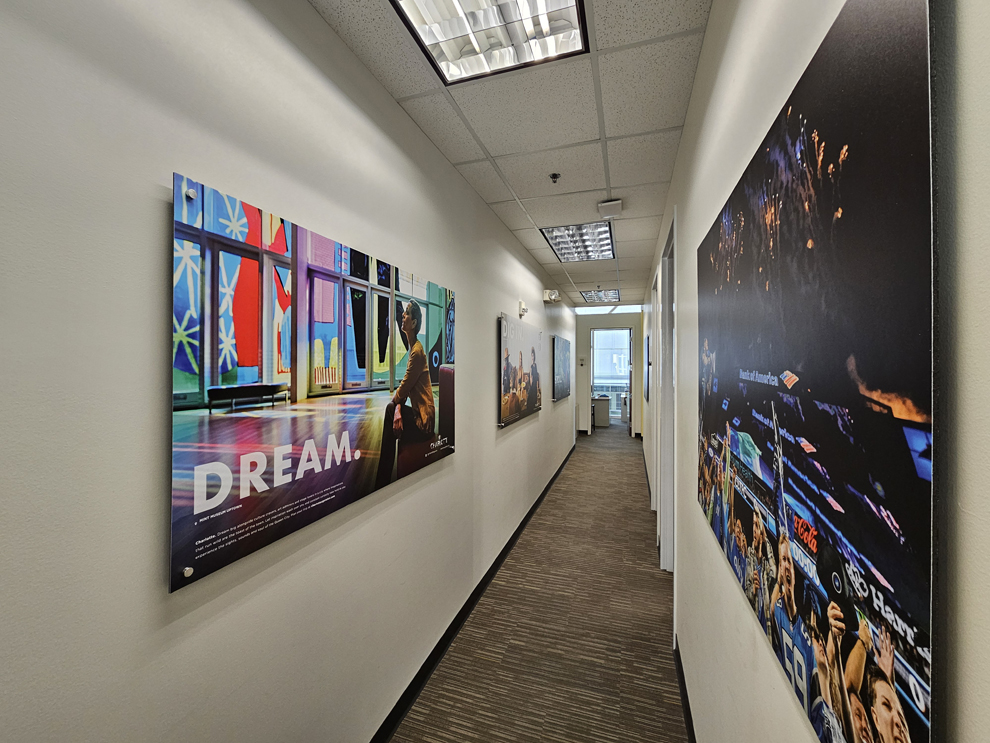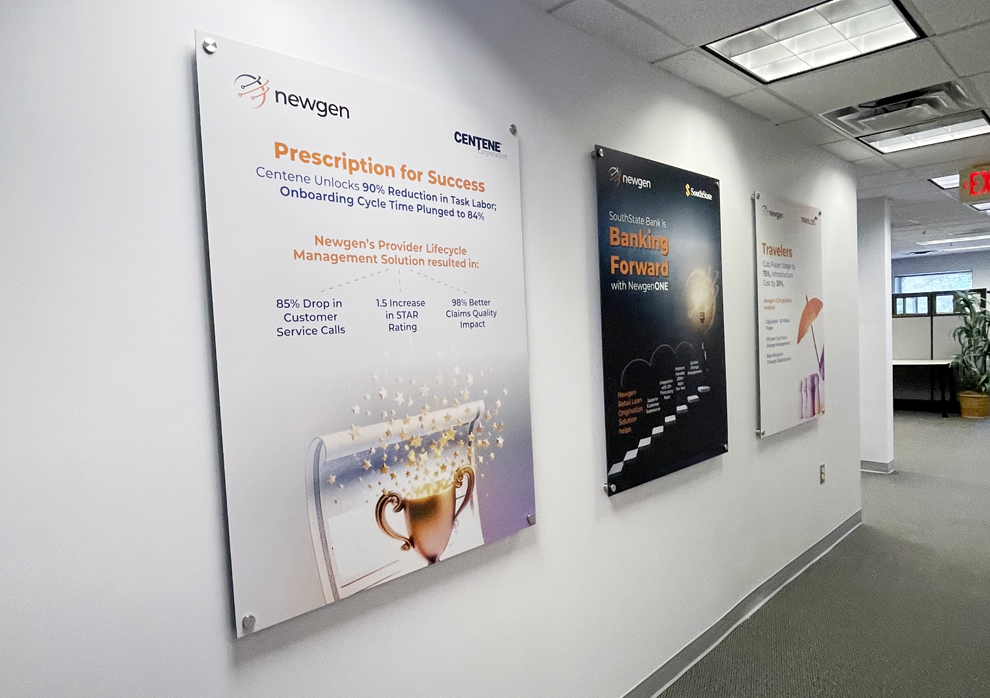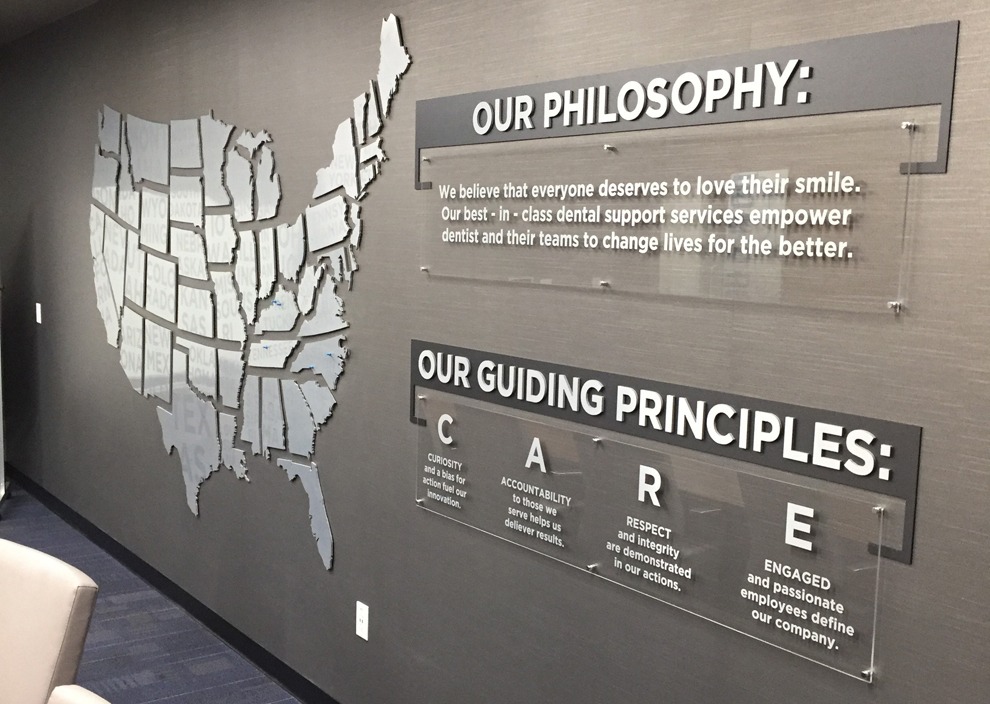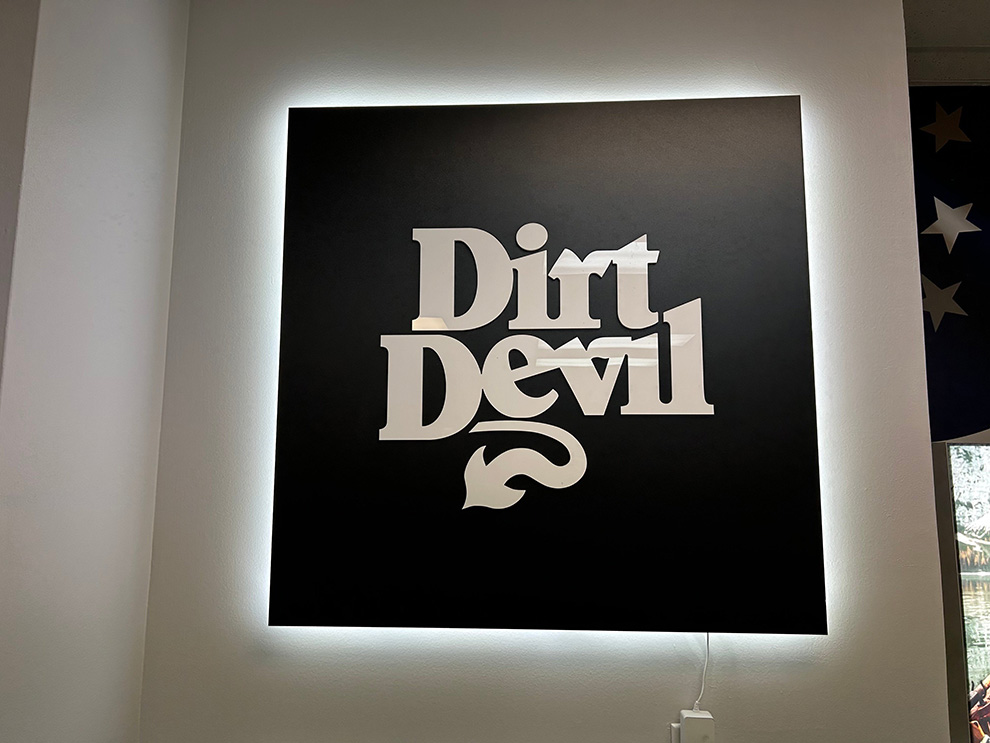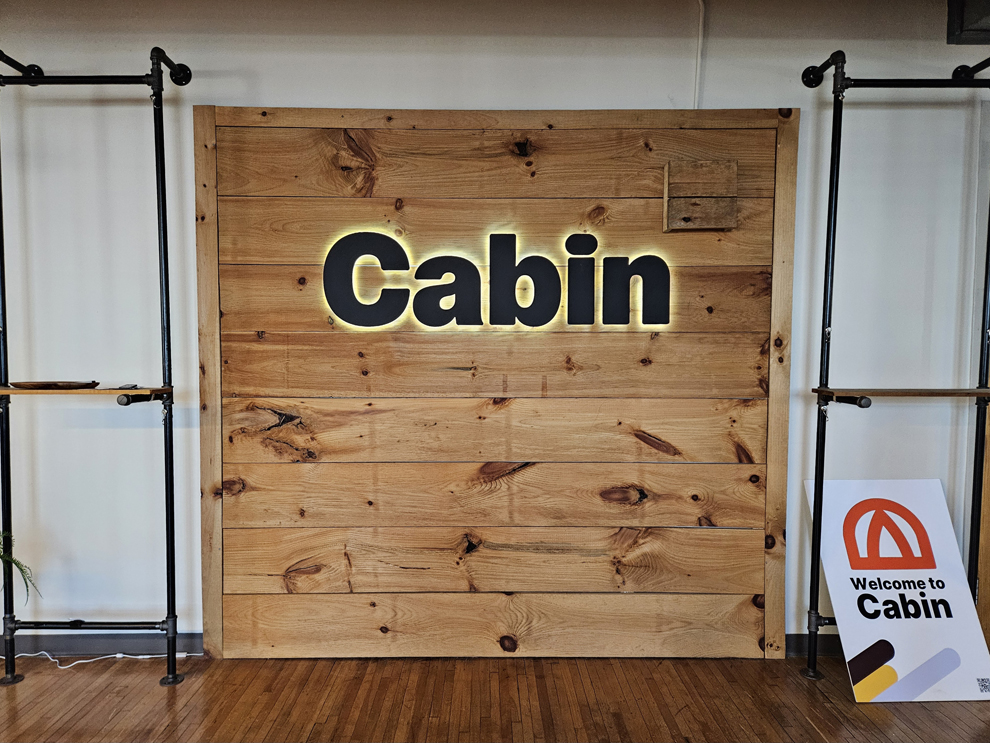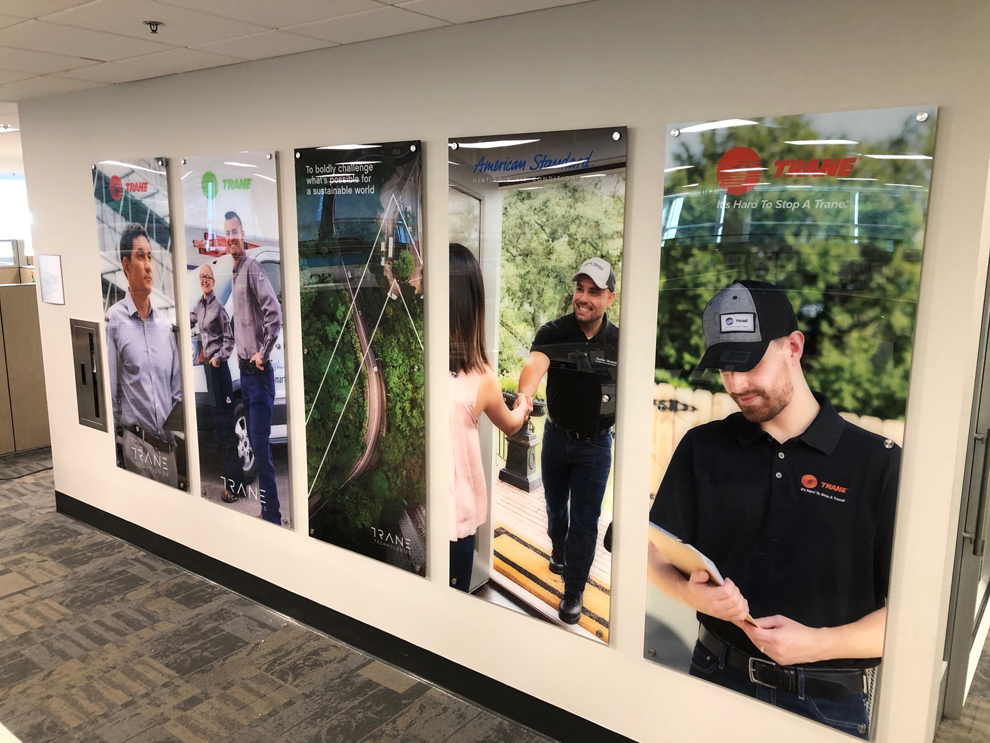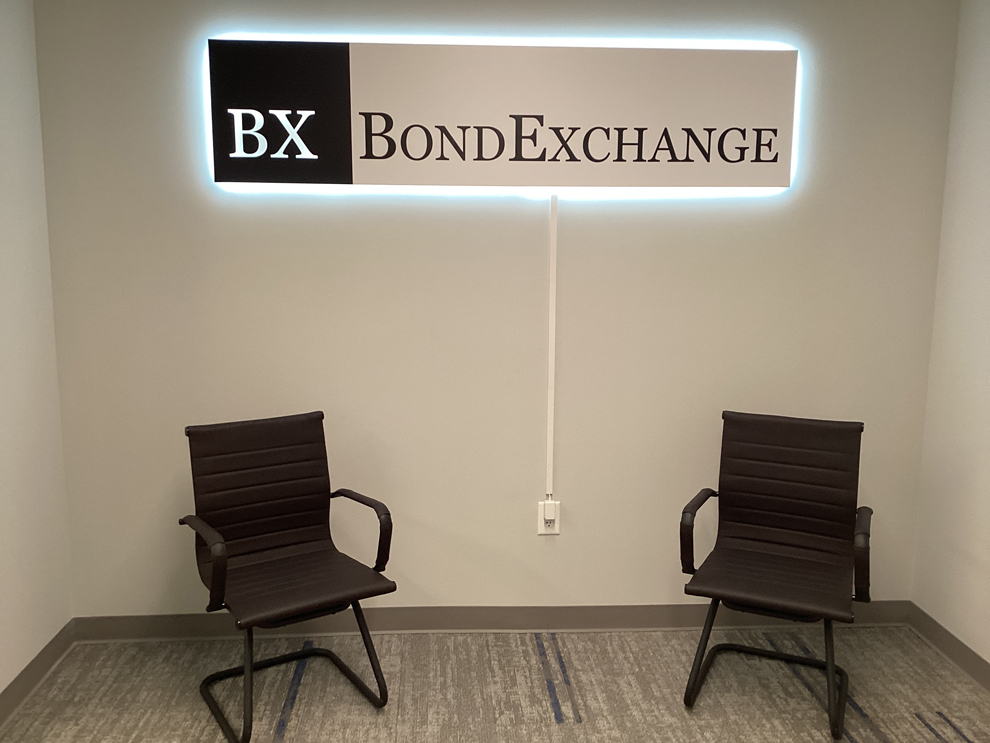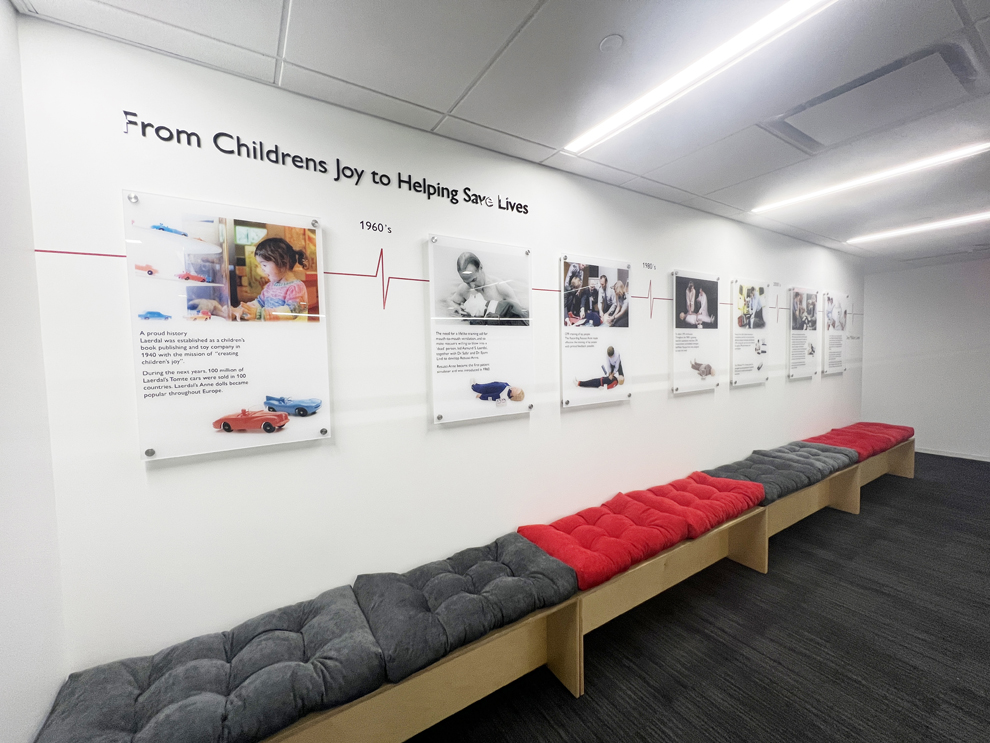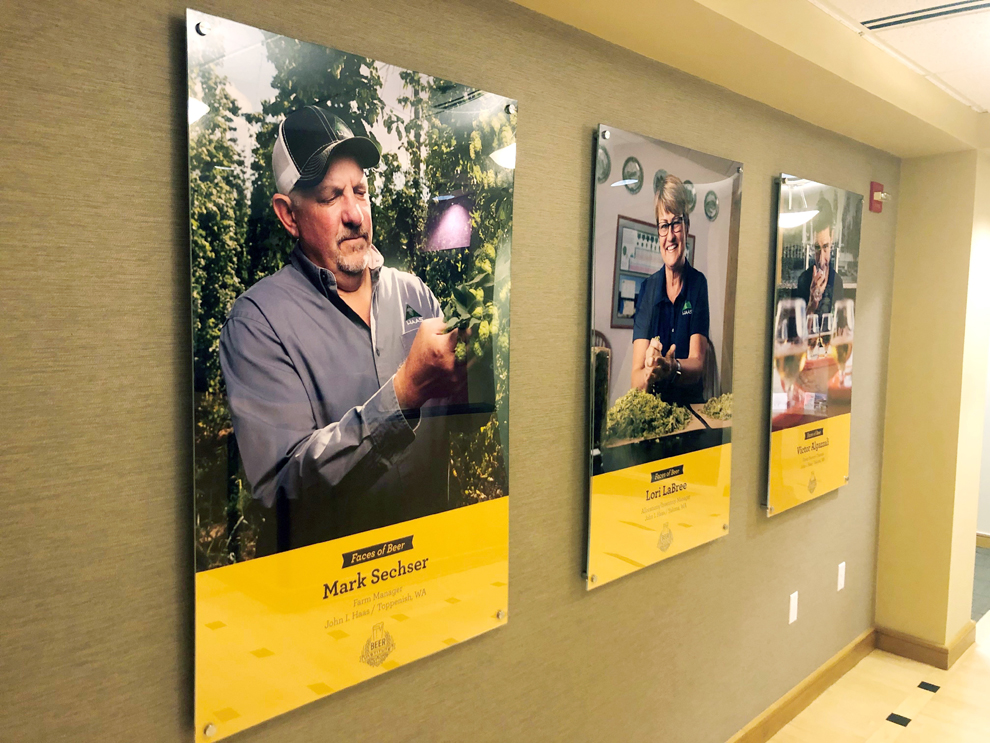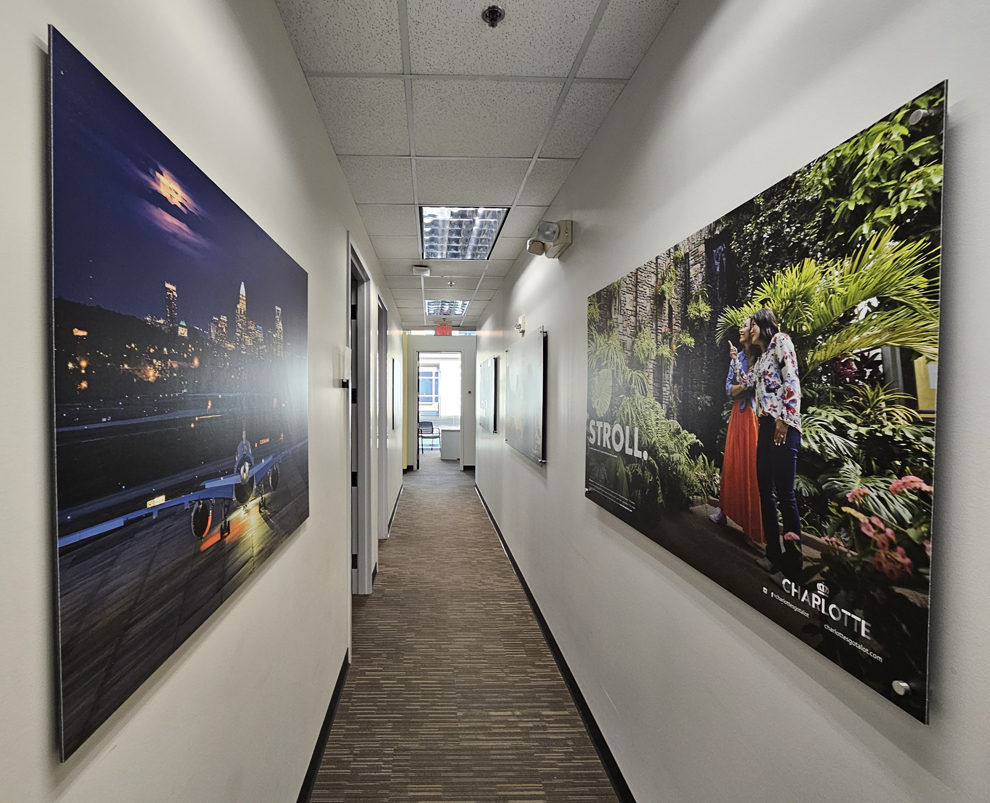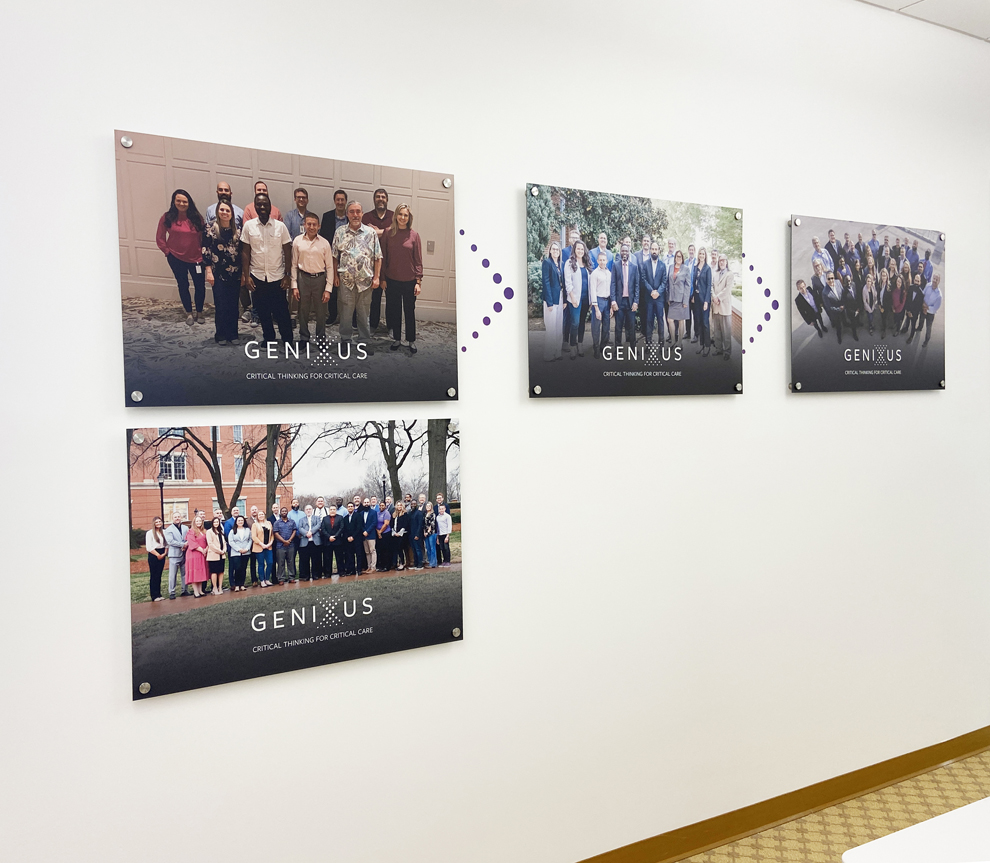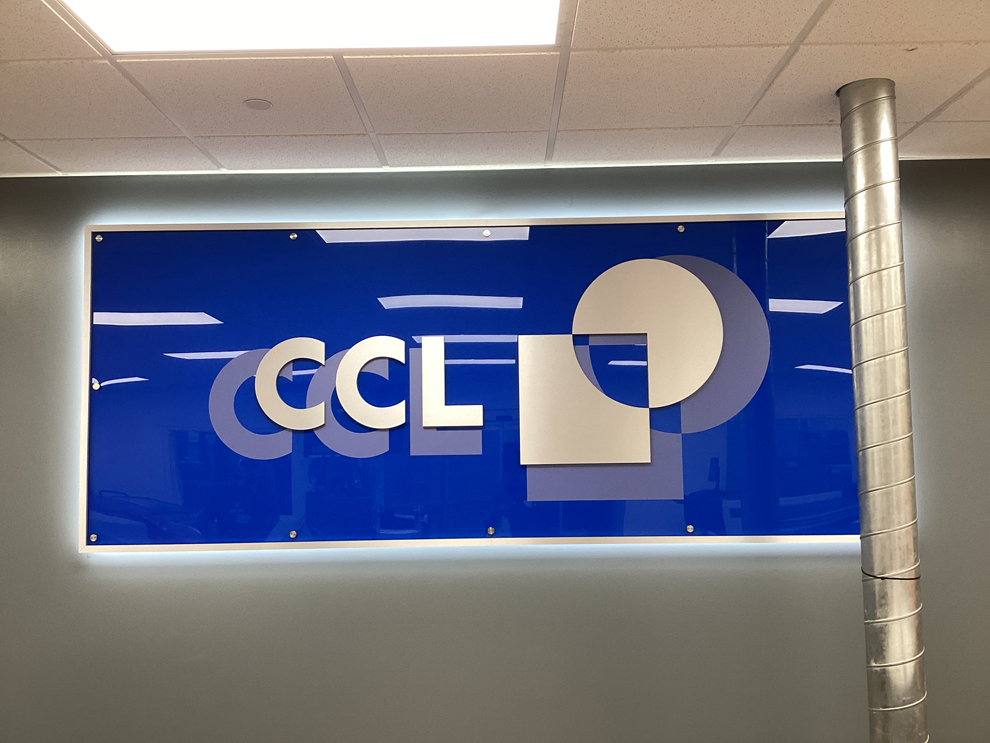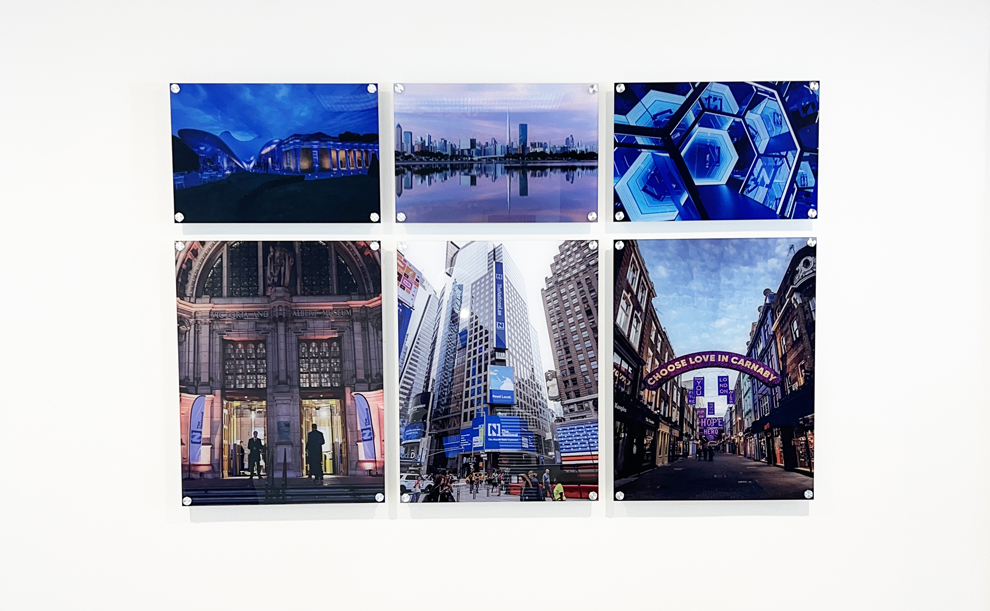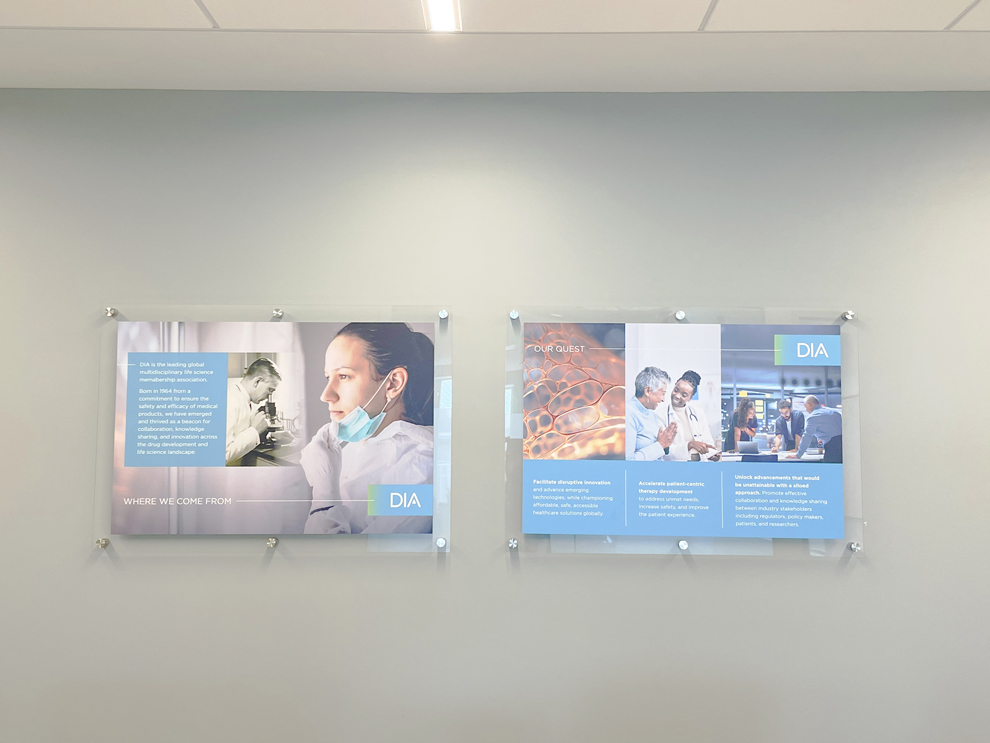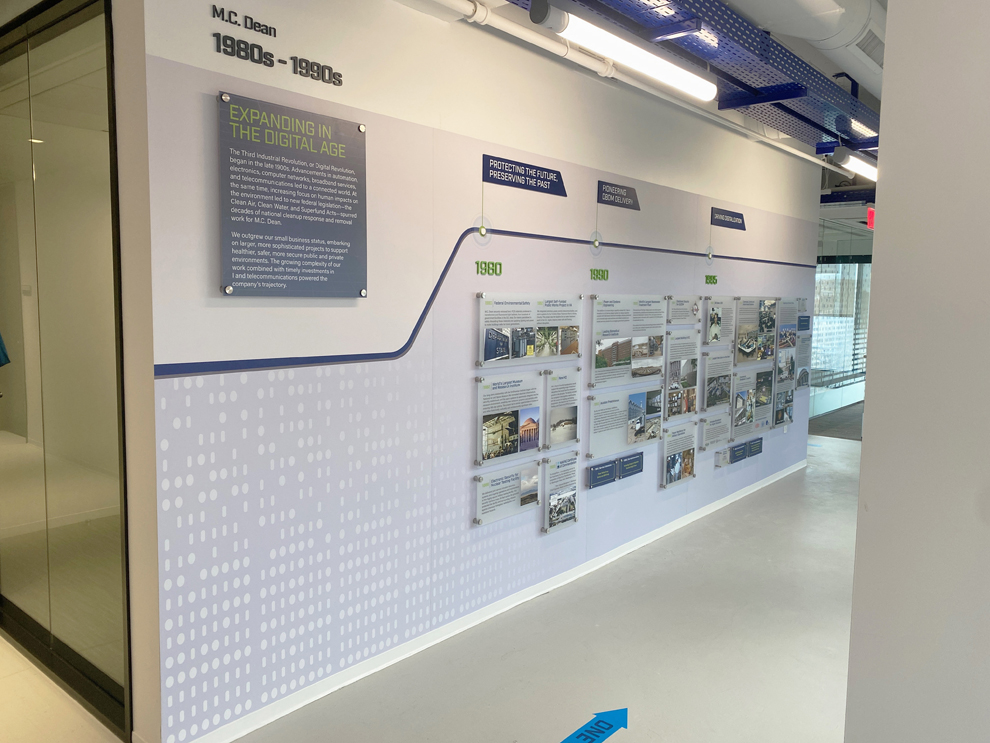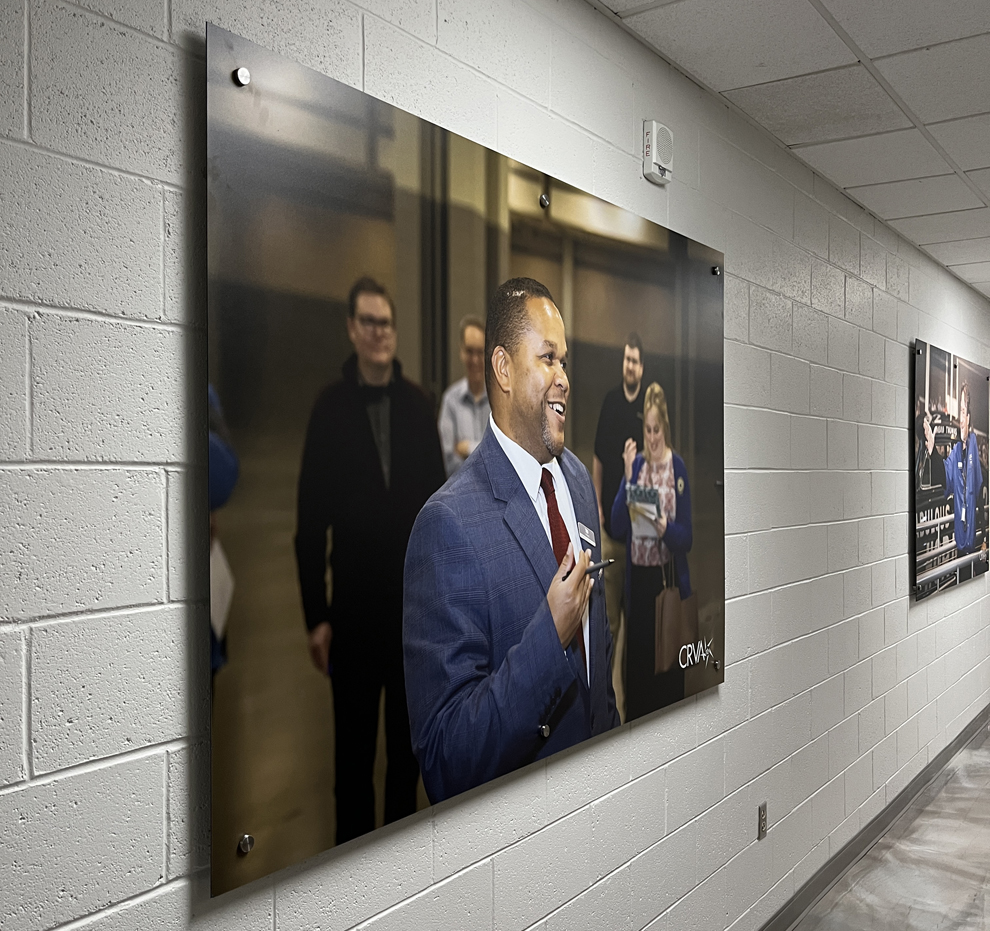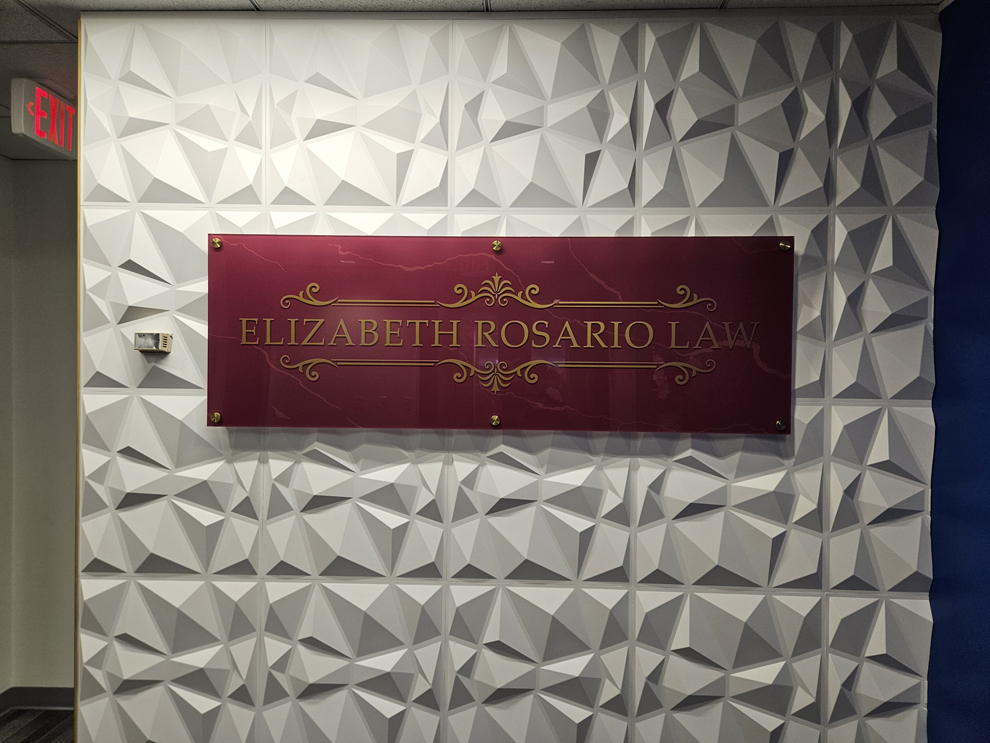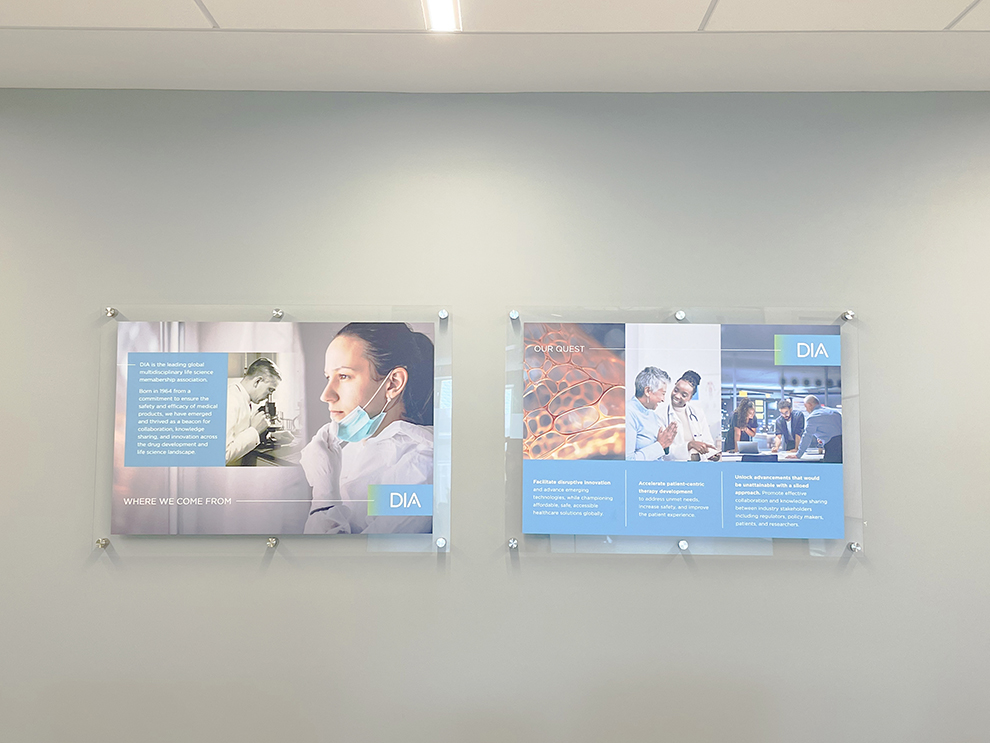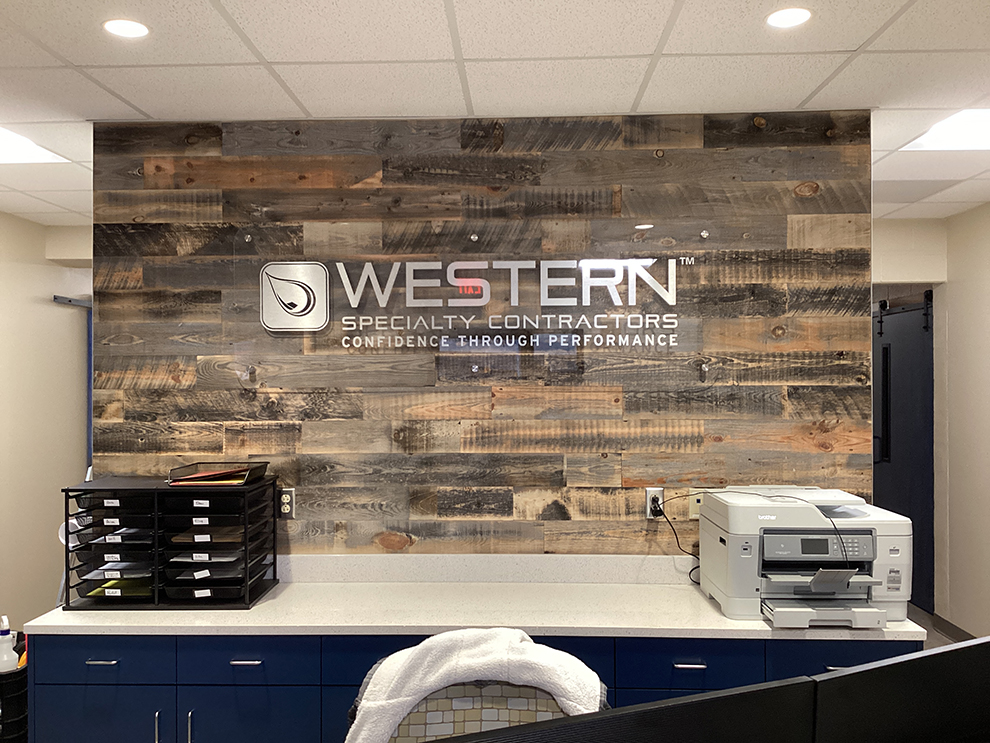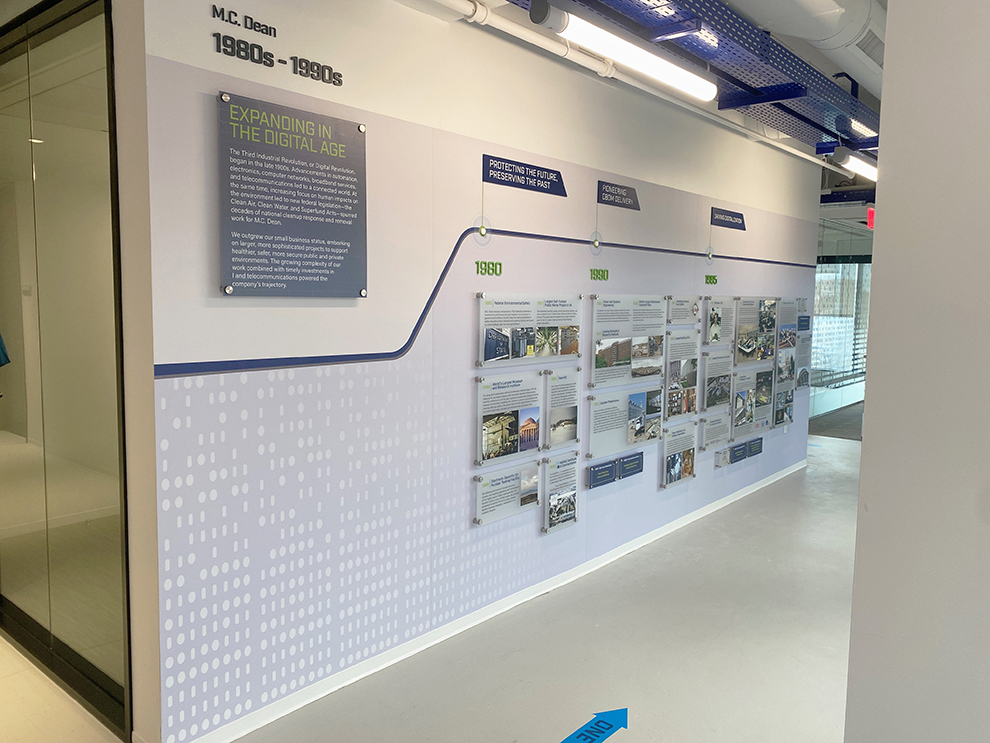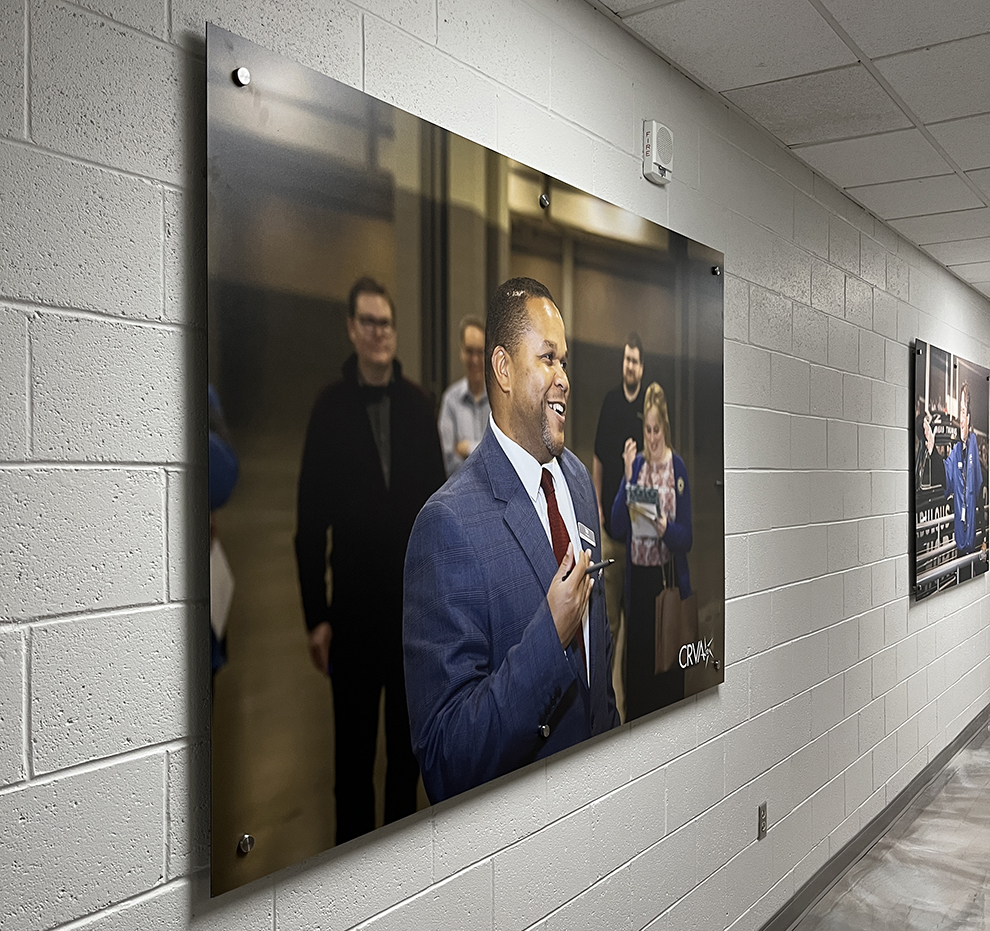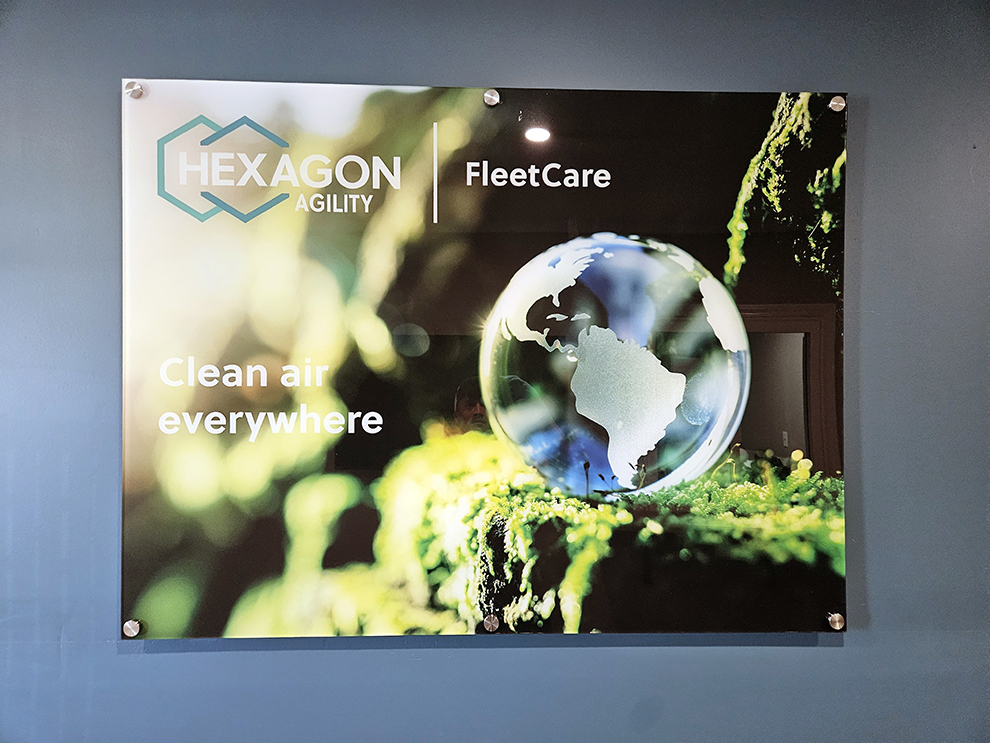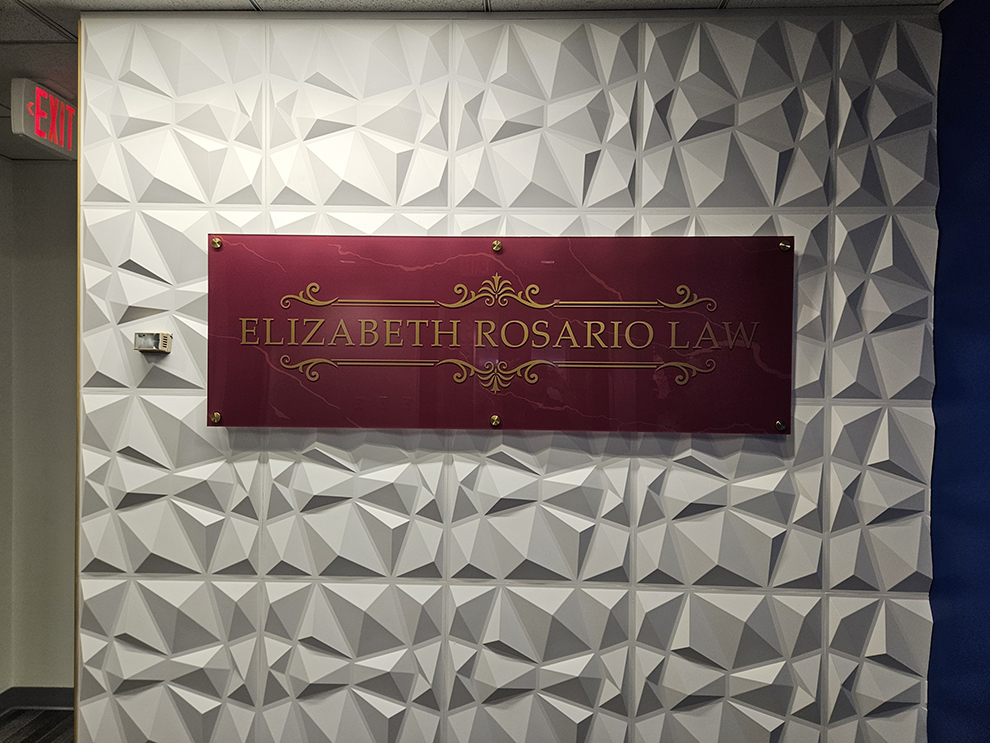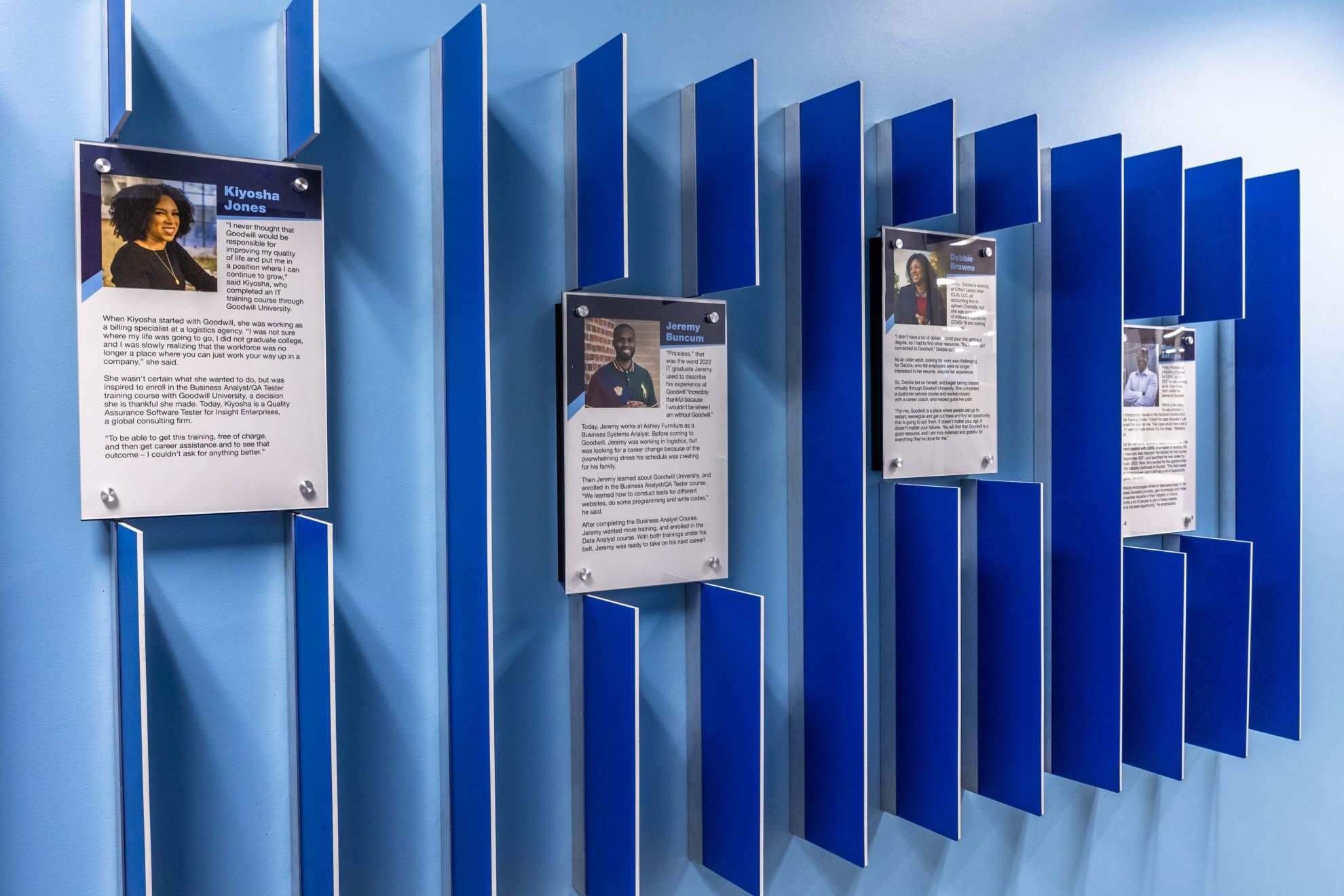
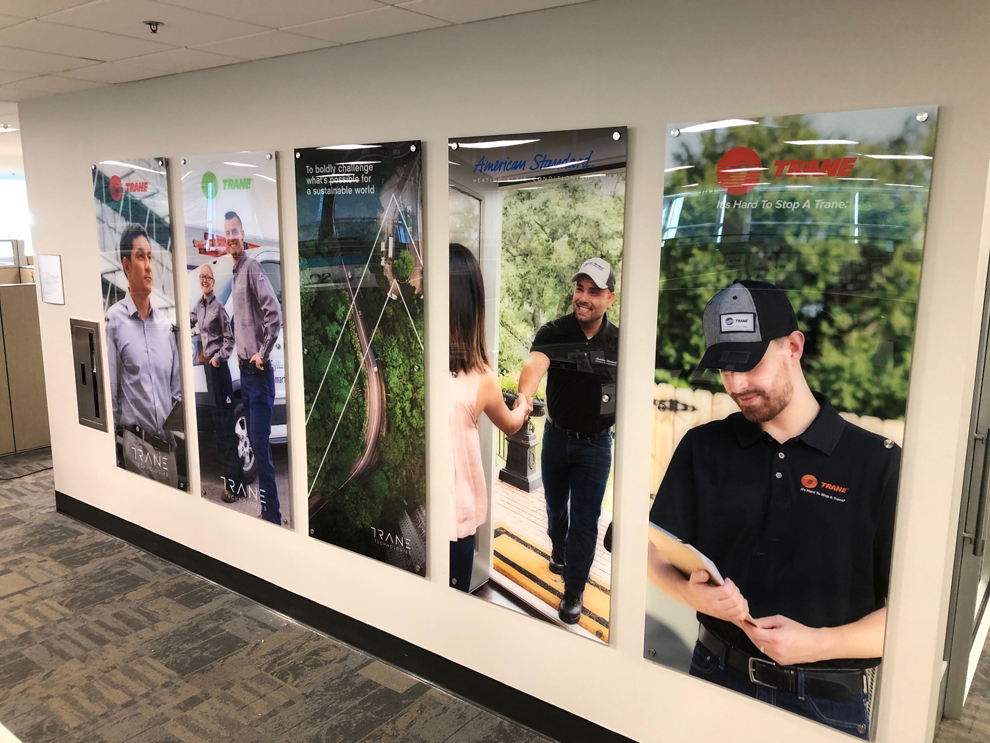
Standoff mounted signs create depth by positioning a finished panel several inches or fractions of an inch away from the wall. Metal barrels support the panel, while coordinating caps secure its face. This spacing creates a distinct shadow and floating appearance that cannot be achieved with a flat wall graphic. Since the mounting hardware remains visible, its size, placement, and finish contribute directly to the overall design.
Organizations in Concord, NC often choose standoff construction when they want a lobby, hallway, reception area, or recognition space to feel established and architectural. Heritage Signs & Displays is a veteran-owned, family-operated company founded in 1977. We serve businesses, healthcare practices, manufacturers, schools, nonprofits, churches, sports organizations, and professional firms throughout Concord and Cabarrus County. Our team turns brand messages, organizational values, donor recognition, and company histories into professionally designed wall displays.
Many projects are prompted by an office relocation, facility renovation, company rebrand, fundraising campaign, expansion, or renewed focus on employee recruitment. The display’s purpose should determine its design. A reception sign needs to build trust immediately. A donor wall should organize names clearly and allow for future additions. Directories must be readable from practical viewing distances. History and values displays should invite closer attention without overwhelming the room.
We coordinate environmental graphic design, project management, production, fabrication, and installation through one managed process. A dedicated project manager oversees consultation, field information, design review, approvals, production, delivery, site access, and installation scheduling. This connected approach allows us to evaluate creative decisions against material, fabrication, and mounting requirements before production begins.
Standoff mounting is a construction method, not a specific sign material. Depending on the project, we may recommend clear acrylic, opaque acrylic, aluminum composite material, printed rigid panels, layered components, dimensional letters, or removable inserts. An acrylic panel can also be mounted flush, suspended from above, or attached with adhesive. Acrylic describes the material, while standoff mounting describes how the sign is secured and projected from the wall.
Every wall-mounted standoff sign requires carefully positioned holes and fasteners selected for the wall substrate and total display weight. We establish the mounting pattern before fabrication so the panel and wall template align correctly. Removing or relocating the display will typically leave holes that need to be patched, primed, and refinished. Standoff mounted signs are therefore better suited to permanent or semi-permanent installations than seasonal promotions, temporary offices, or portable event displays.
As a veteran-owned business, we strive to honor God by serving our clients and communities with excellence. That commitment guides how we listen, make recommendations, prepare estimates, fabricate displays, protect occupied Concord workplaces, and remain responsible for the project through final installation. Our work is not complete until the display is level, every cap is secure, and the installation area has been cleaned.
The floating appearance of a standoff sign comes from several components working together. Barrels establish the distance between the panel and wall. Caps hold the sign face in position. Fasteners and anchors transfer the display’s weight into the supporting surface. Barrel diameter, projection depth, cap finish, quantity, and spacing must be proportional to the panel and compatible with the surrounding architecture.
Wall construction has a major influence on the mounting plan. Drywall, concrete block, brick, wood blocking, plaster, tile, and specialty finishes require different anchors and installation techniques. Panel weight, edge clearances, utilities inside the wall, cleaning access, and the possibility of people touching the display must also be considered.
Installation templates must be highly accurate. Even a minor alignment problem becomes noticeable when several polished caps are arranged in a straight line. Correcting an error after drilling may require visible wall repairs.
We address these details before releasing a project for production. The mounting pattern, panel arrangement, balance, update strategy, and service access are treated as parts of the design rather than last-minute installation decisions. This level of planning distinguishes standoff signs from adhesive graphics, flush-mounted panels, directly mounted dimensional letters, and portable display systems.
Most Concord organizations are not simply looking to fill an empty wall. They want the display to accomplish something meaningful. A project may need to improve a corporate entrance, recognize campaign donors, communicate company values, preserve an organization’s history, or create a more orderly wayfinding system. Our first responsibility is to understand that larger objective.
We then evaluate the practical requirements. Content length, panel quantity, dimensions, wall placement, viewing distance, substrate, hardware, lighting, finish, and future updates all affect the recommendation. We consider how people move through the room, where they pause, and what they need to understand. If another sign type would work better than standoff construction, we explain why and recommend the more appropriate solution.
Connecting consultation, field evaluation, design, production, fabrication, and installation helps preserve consistency. Color, panel tolerances, hole placement, hardware finishes, wall conditions, and building access can influence one another. Concord clients work with one accountable Heritage team instead of coordinating separately with a designer, printer, fabricator, and installation company.
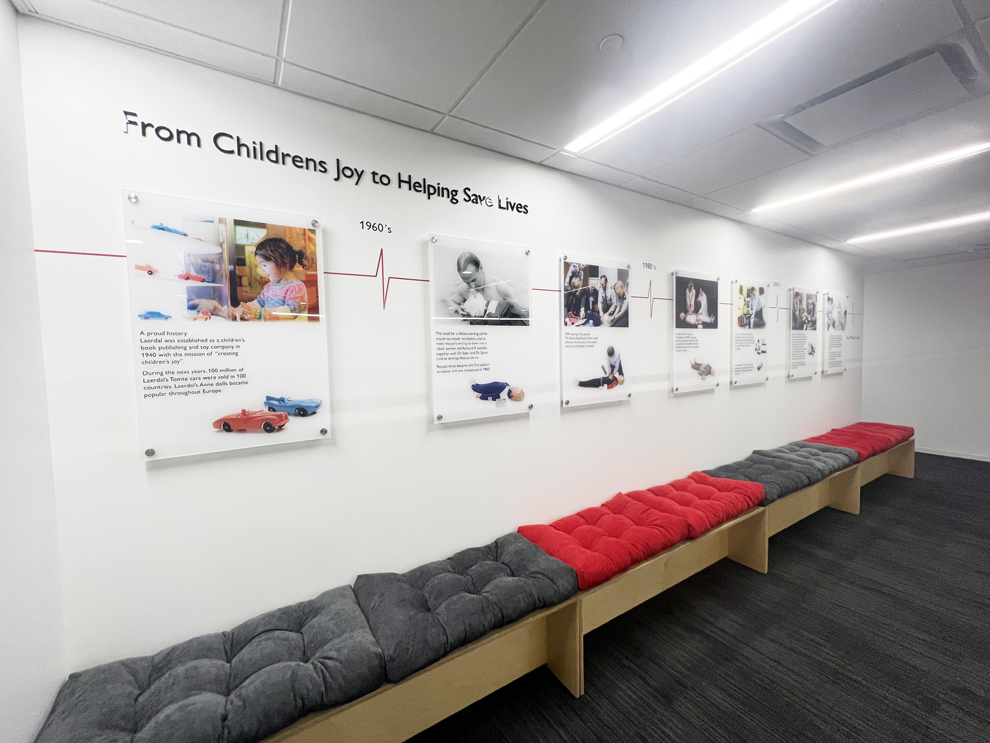
Organizations comparing standoff mounted signs in Concord, NC may also consider several related interior graphics and display options. Each category offers a different way to communicate branding, information, recognition, or workplace culture.
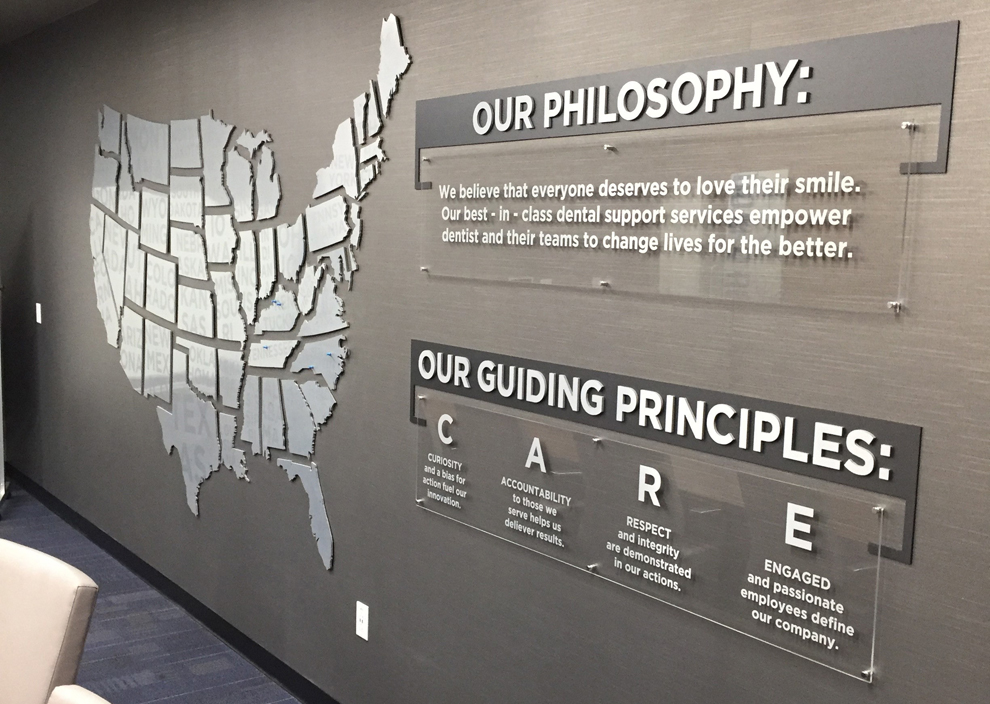
Wall wraps use large-format printed graphics to cover broad interior surfaces with photography, colors, patterns, and messaging. They are useful when the design needs to extend across more space than a rigid panel can reasonably cover.
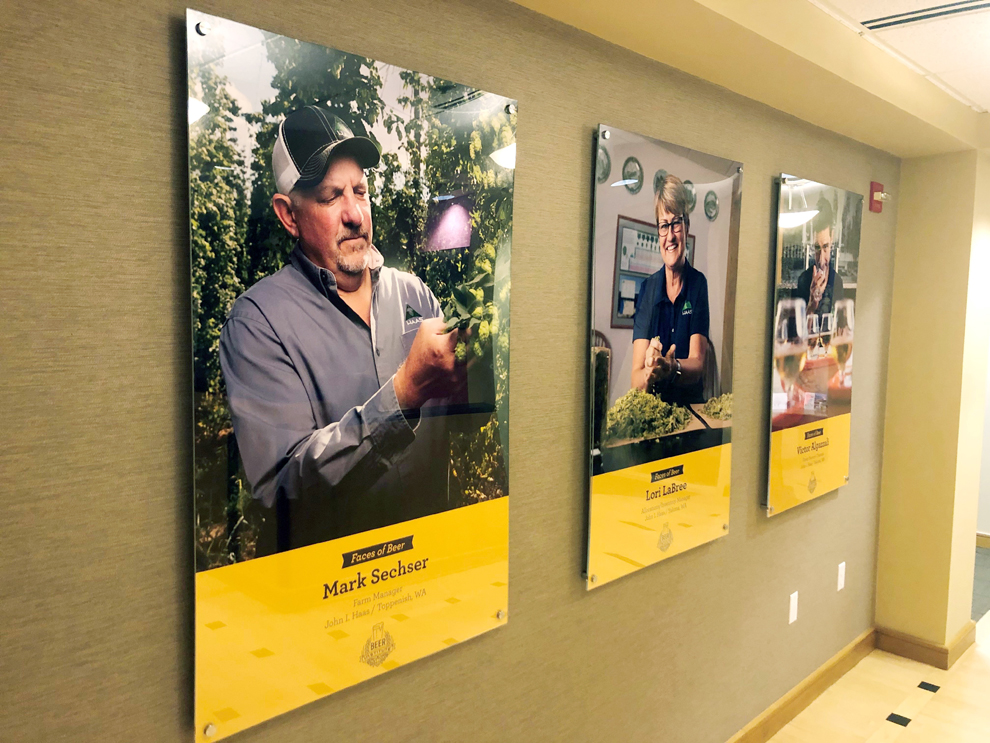
Printed and cut vinyl graphics can add branding, decorative patterns, privacy, and informational messaging to glass doors, office windows, conference rooms, and storefront-facing interiors.
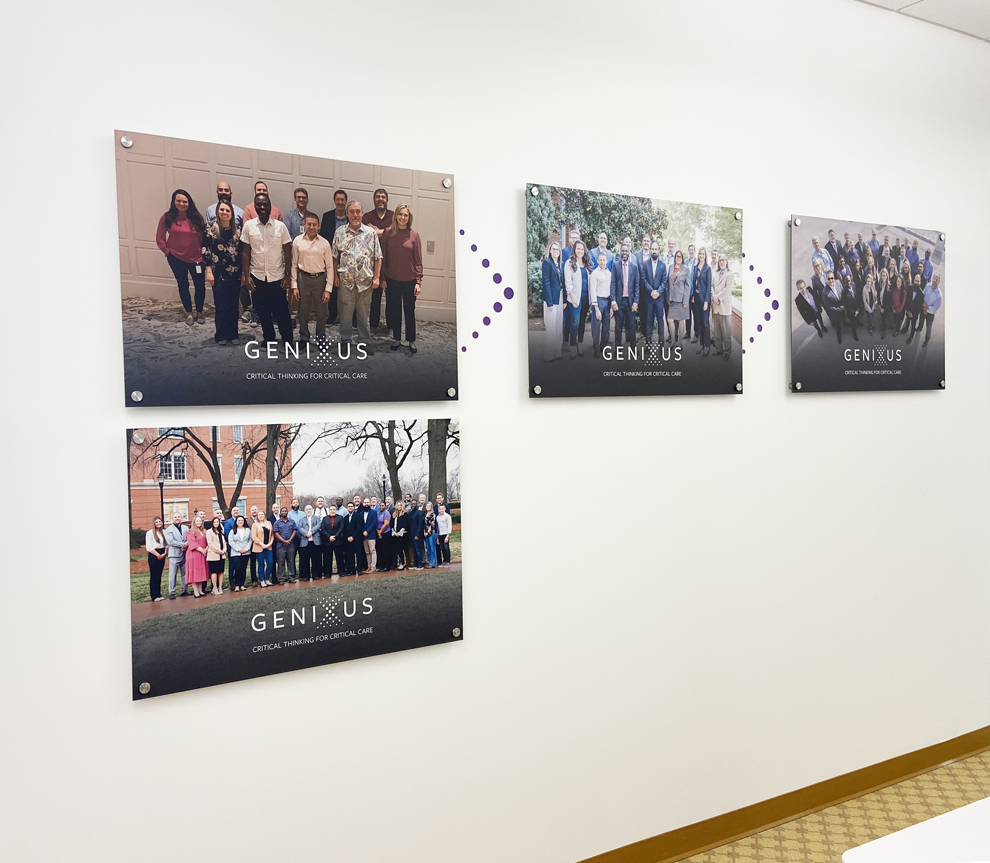
Lobby signs establish an organization’s identity at the primary point of arrival. Standoff mounting may be used when a projected panel and visible hardware complement the architecture and brand.
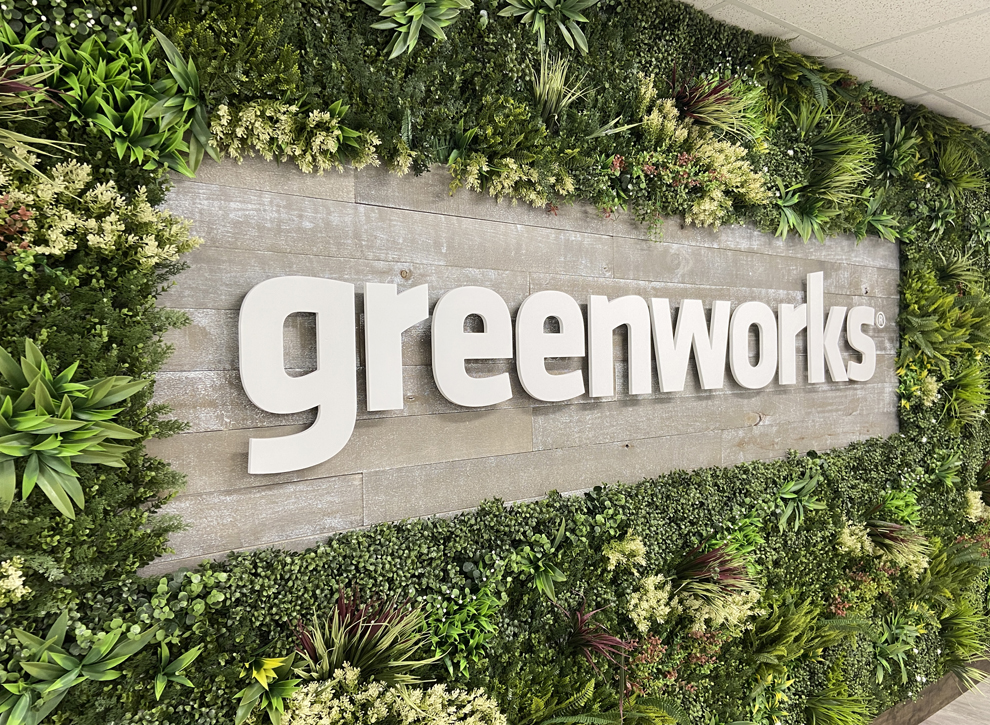
Frosted vinyl creates an etched-glass appearance on interior glazing. It can improve privacy while adding subtle logos, patterns, or branded details. It also pairs well with nearby standoff signs.
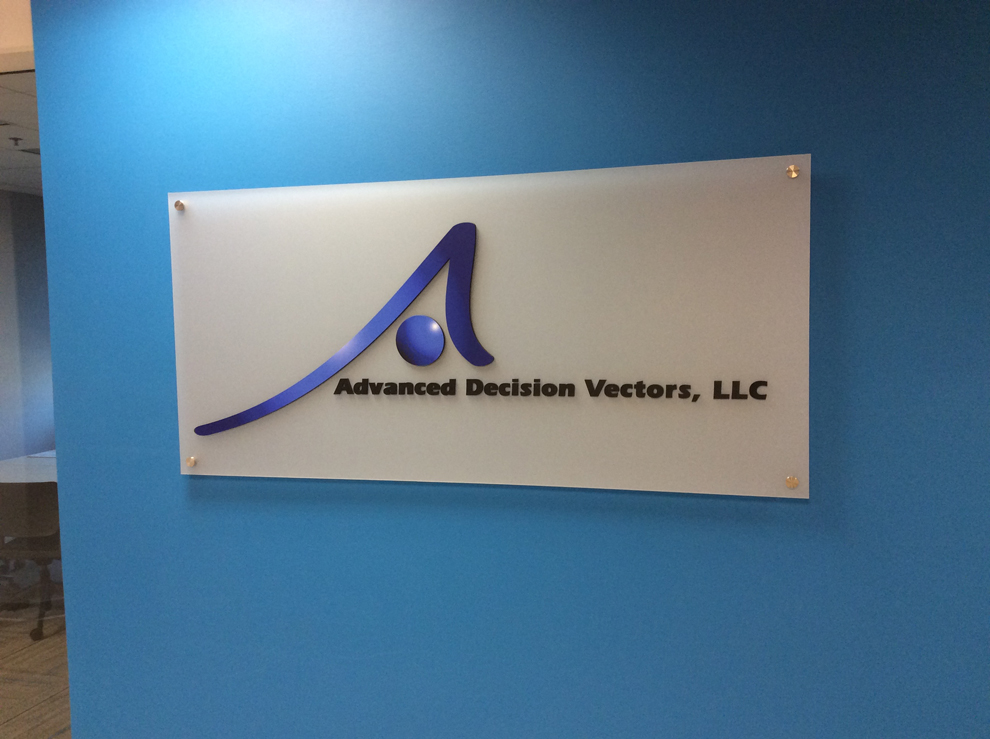
Elevator wraps bring graphics to elevator doors, cab interiors, and other frequently used transition areas. They can reinforce a larger branded environment throughout a building.
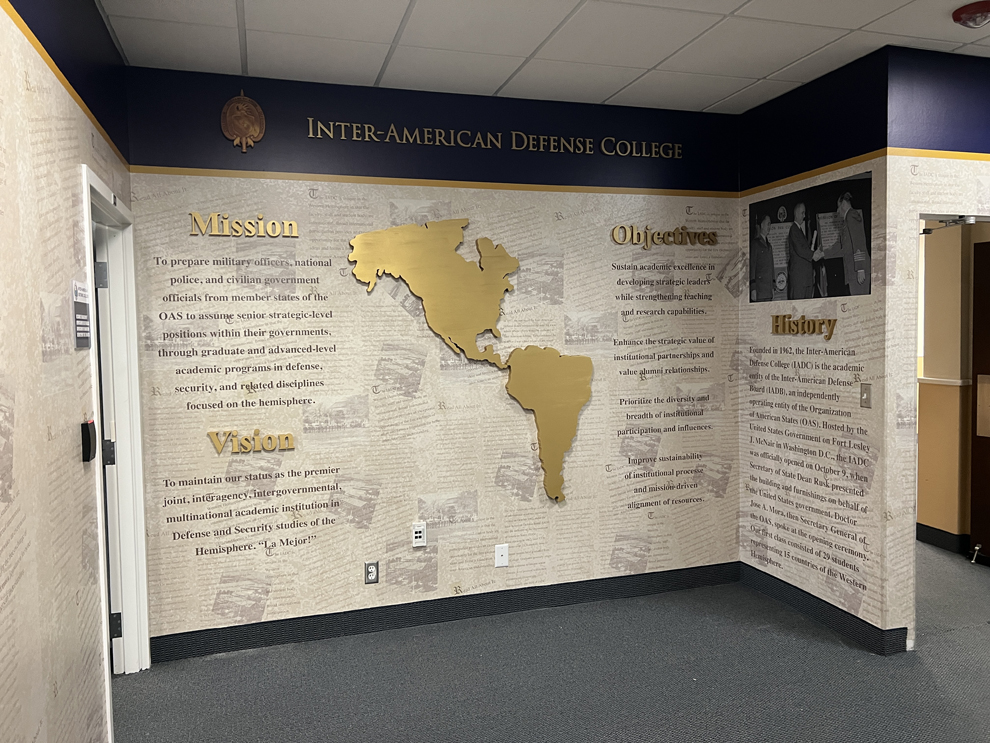
Dimensional letters are individually fabricated characters, symbols, and logo elements. They may be mounted directly to a wall or incorporated into a layered standoff panel.
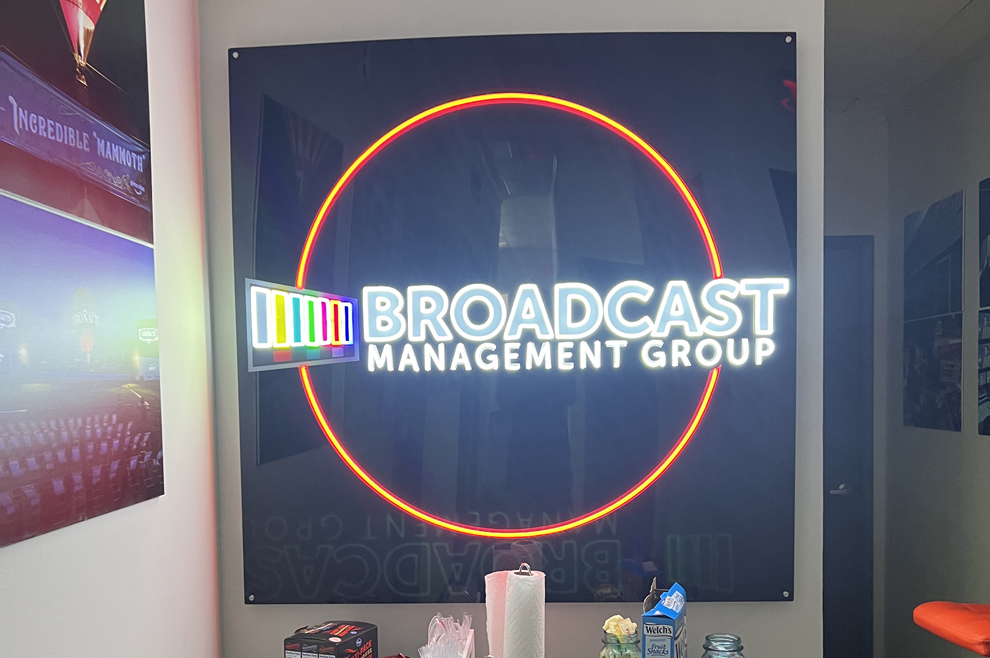
Acrylic signs can be clear, frosted, opaque, printed, or layered. Acrylic is commonly used with standoff hardware, but it can also be installed using several other attachment methods.
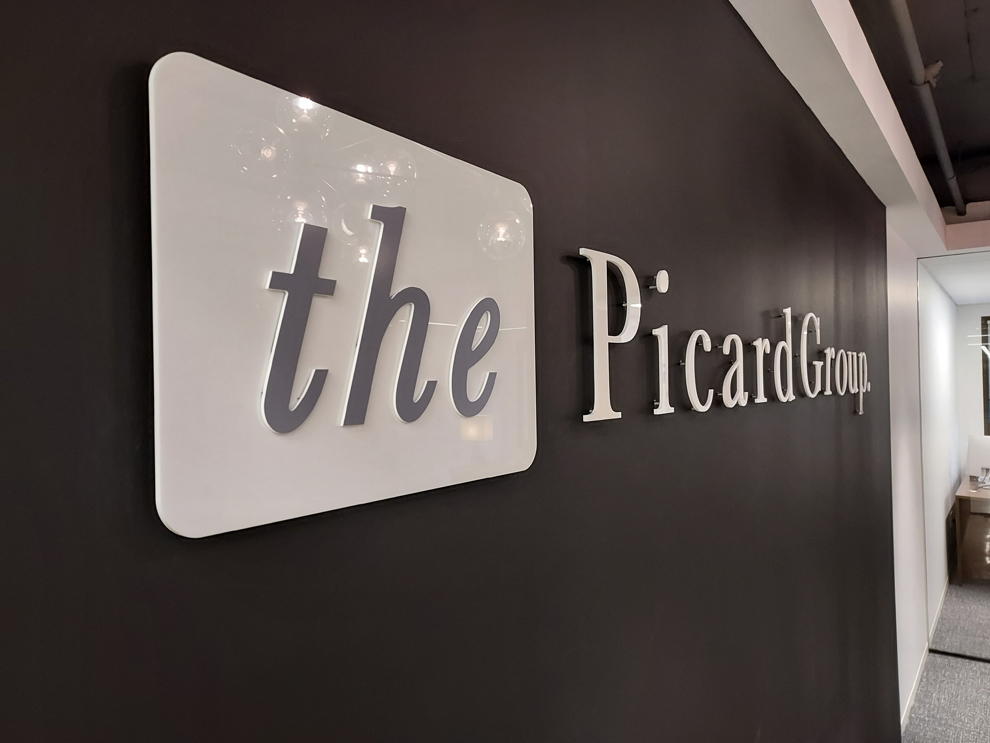
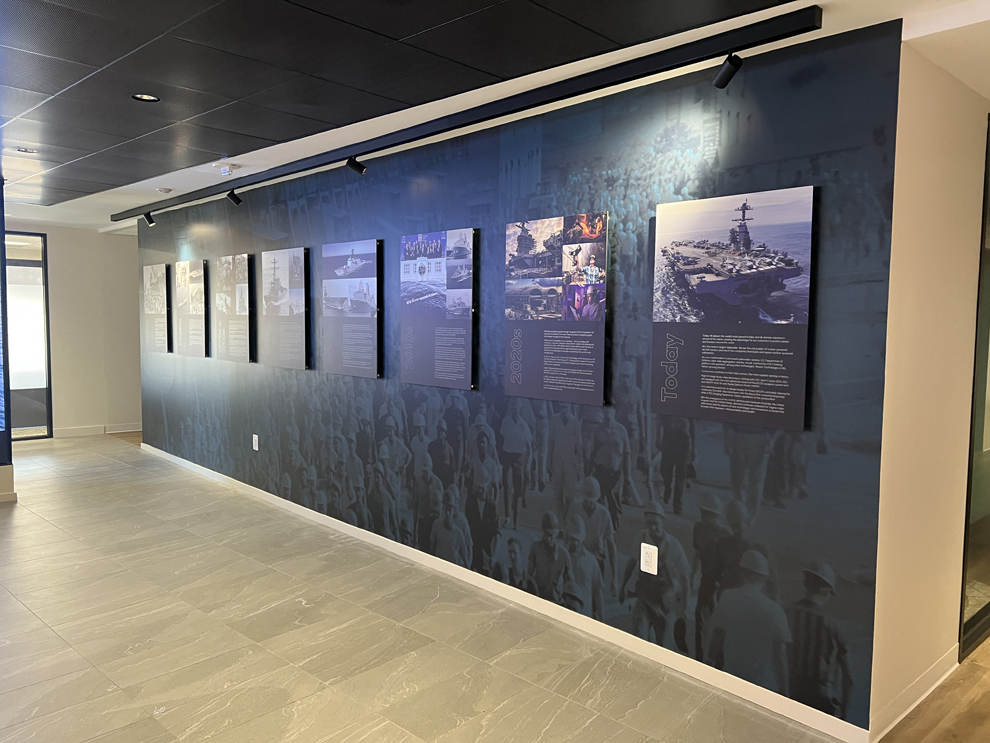
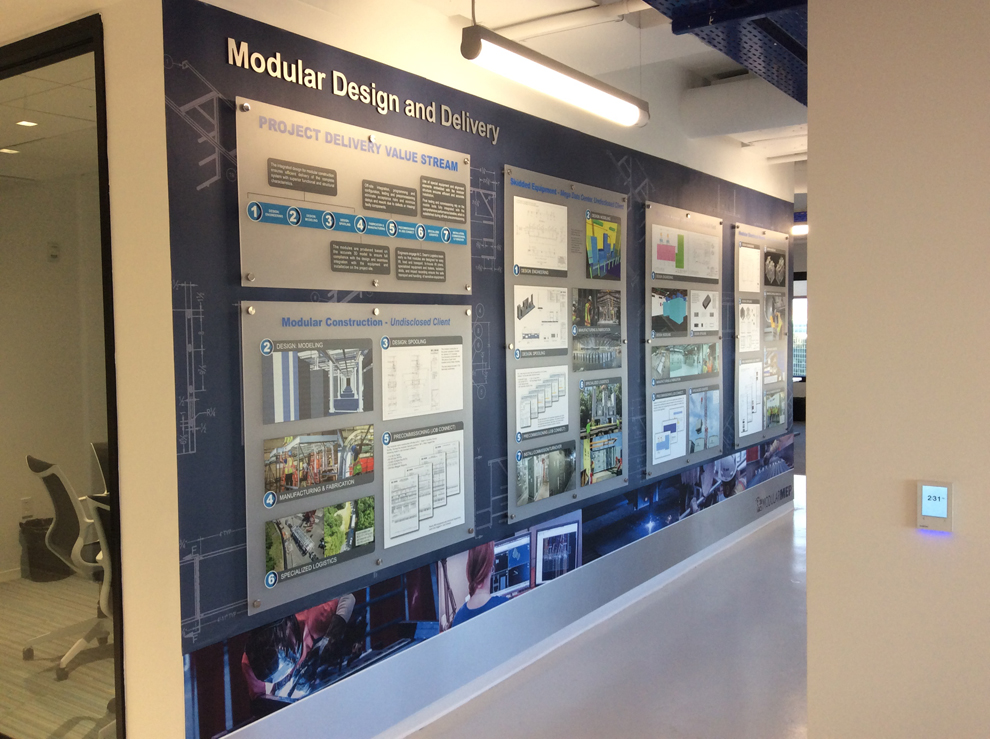
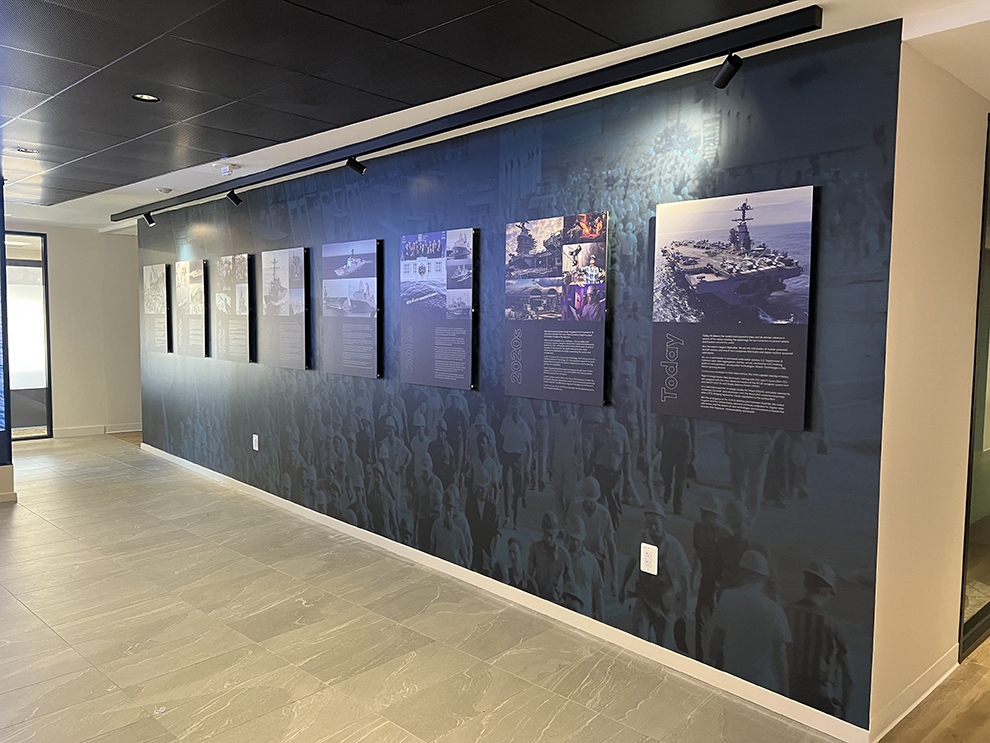
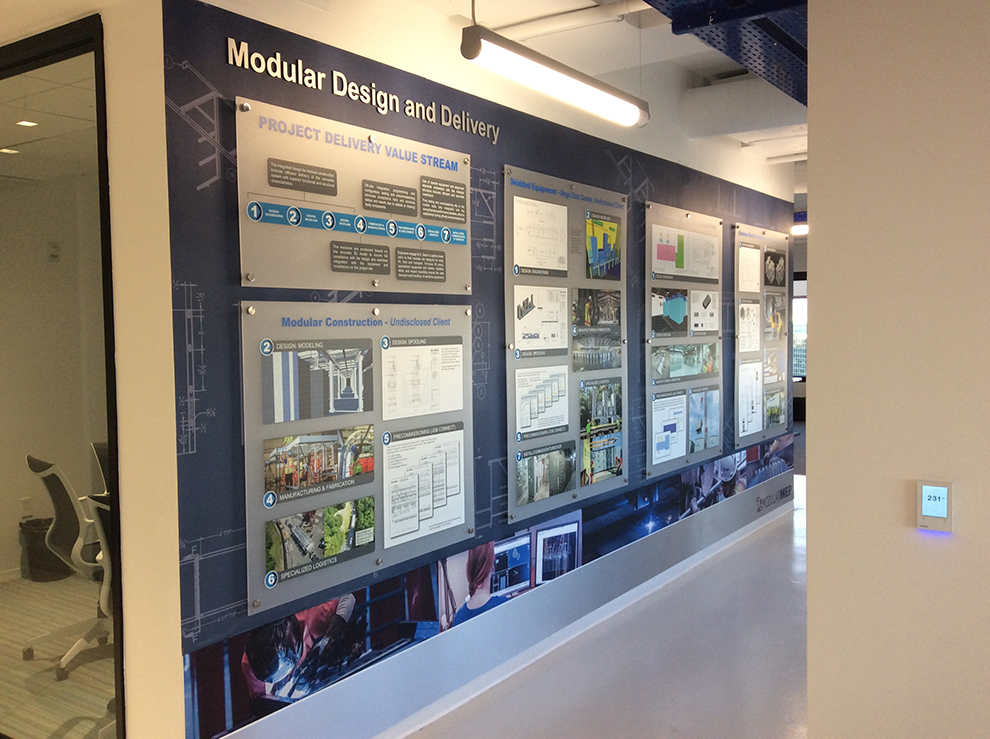
Wall displays combine text, photographs, timelines, recognition, and organizational messaging. Modular panels mounted on standoffs can establish a strong hierarchy and make future updates easier to manage.
If you are planning a Concord office renovation, a new corporate suite, a donor recognition wall, or a lobby update, Heritage Signs & Displays can develop a standoff mounted sign around your space and objectives.
Use the Get Started Now form to provide the Concord installation address, preferred completion date, intended audience, message, brand files, wall photographs, approximate dimensions, known wall construction, access restrictions, future update needs, and anticipated project scope. Our team will review the information, identify any missing site details, and recommend the appropriate next step.
We support organizations in corporate offices, medical practices, manufacturing facilities, educational campuses, nonprofit spaces, churches, retail environments, and professional suites throughout Concord. Projects may be located near Downtown Concord, Concord Mills, Charlotte Motor Speedway, West Cabarrus, Afton Village, or major corridors such as Interstate 85, US 29, and NC 49.
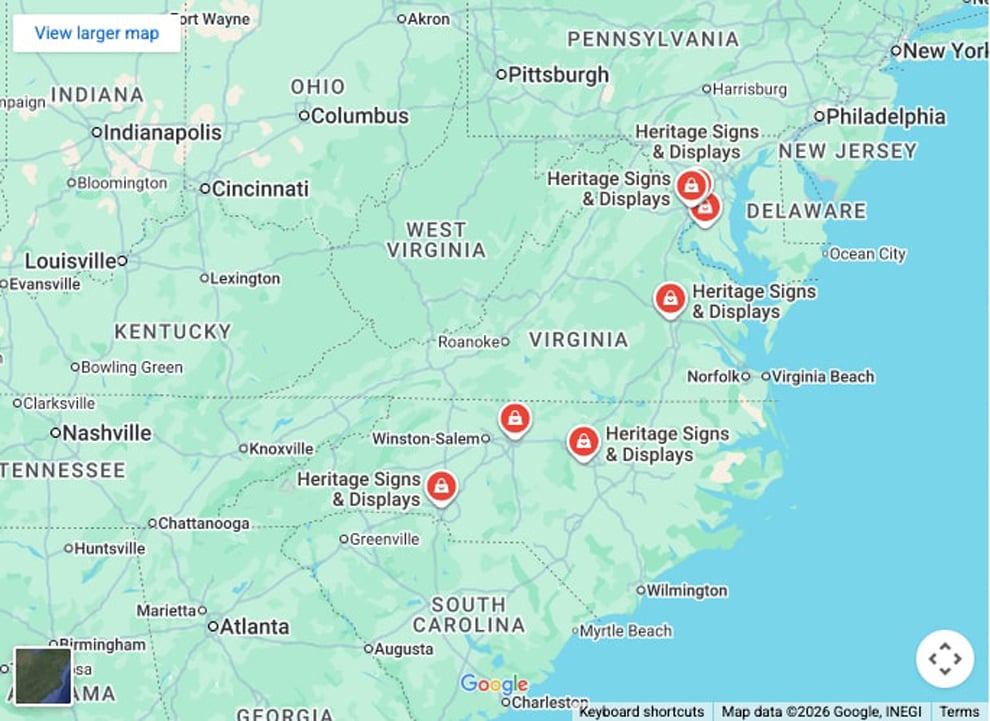
Our regional service area also includes Kannapolis, Harrisburg, Mount Pleasant, Huntersville, University City, Charlotte, and other communities across the greater Charlotte region. This local reach is especially valuable for organizations managing facilities at more than one address.
Concord has a varied business community shaped by manufacturing, motorsports, healthcare, education, retail, hospitality, professional services, and nonprofit activity. Sign requirements differ significantly across these settings. A medical office may need one polished reception panel, while a manufacturer may require a multi-panel history display or an employee recognition wall spanning a long corridor.
For clients with multiple locations, one Heritage project manager can coordinate typography, color references, hardware finishes, materials, and panel standards across the program. Each building still receives an individual review because wall construction, dimensions, lighting, access procedures, and audience needs can vary from site to site.
Our environmental graphic design process begins with the intended audience and outcome. We identify what people should see first, what they should understand, and what they should remember after leaving the space. A visitor might need confirmation that they reached the correct office. A donor may want to locate a name. A job candidate may be looking for evidence of the organization’s culture. An employee may need to recognize an achievement or understand the company’s history.
We use scale, typography, contrast, imagery, panel spacing, content order, material, hardware finish, lighting, projection depth, and sightlines to create one cohesive communication system. We also consider whether space should be reserved for future names, photographs, milestones, or other content.
Viewing behavior affects the layout. A display read while walking through a corridor needs concise messaging and larger type. A recognition wall positioned near reception seating can support more detailed content. A directory requires a different hierarchy than a company timeline or values display.
Because our designers coordinate with production and installation teams, fabrication requirements can influence the layout before approval. Panel tolerances, seams, printed color, mounting locations, template precision, cleaning clearance, and installer access are considered early. This protects the design from avoidable changes during installation.
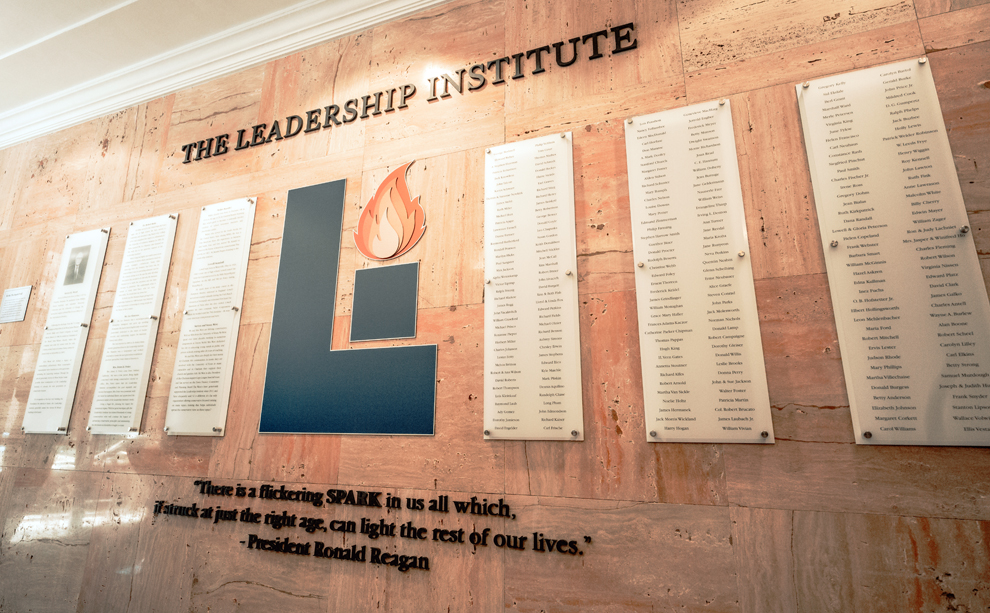
Installation precision is particularly important with standoff signs because the hardware remains exposed. Consistent projection, evenly spaced caps, accurate alignment, and clean drilling determine whether the display looks integrated with the building or simply attached to it. We verify the layout carefully before drilling begins.
Installation planning may involve photographs, architectural drawings, field measurements, wall construction, surface condition, viewing angles, lighting, nearby doors, millwork, and the route our crew will use to reach the installation area. Larger, layered, or multi-panel displays may require an on-site survey.
We also coordinate practical site requirements such as building hours, security procedures, elevator reservations, loading access, occupied-space protection, ladder or lift use, and communication with contractors or facility managers. Addressing these details before delivery makes installation more efficient and reduces disruption.
Our full-time installers place signs and displays that Heritage has designed, produced, fabricated, or procured as part of a managed project. We do not provide installation-only services for signs purchased from another manufacturer. Keeping design assumptions, material specifications, fabrication, mounting hardware, and installation under one process allows us to remain accountable for the finished result.
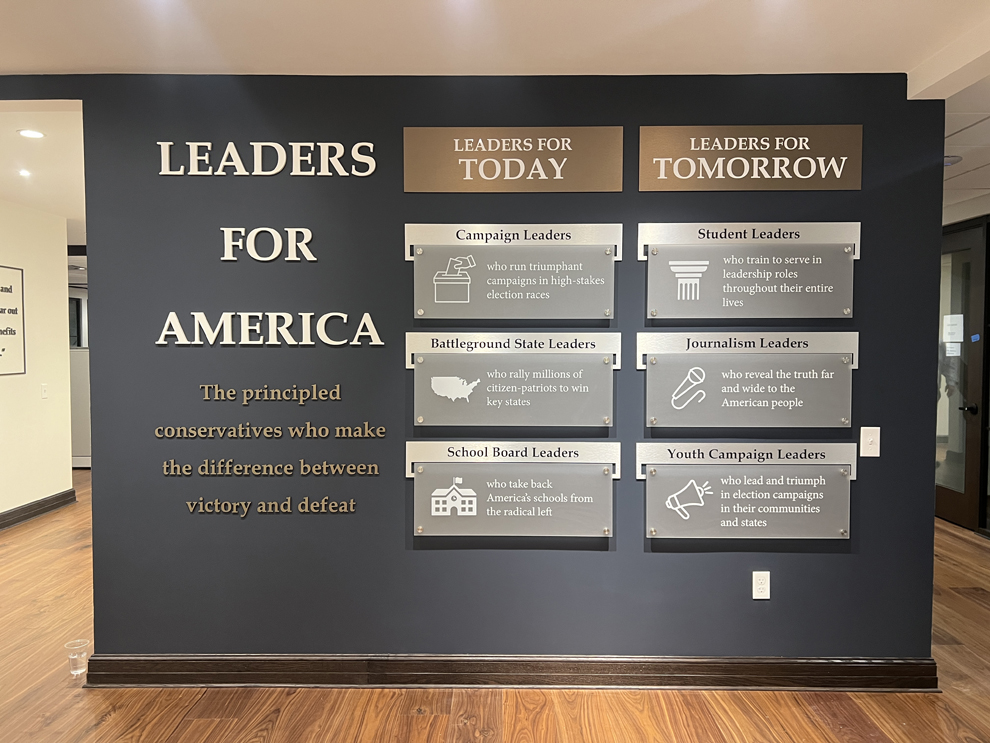
Heritage is a strong fit for organizations that view a standoff sign as part of a professionally managed branding, recognition, culture, or wayfinding project. A scope may include one prominent lobby feature or several coordinated displays. In either case, the project should benefit from consultation, environmental graphic design, production, fabrication, and professional installation working together.
Heritage-managed projects begin with an anticipated total investment of $3,000. This amount applies to the full project, not to each panel, letter, cap, or barrel. A qualifying project might involve a custom reception display with field verification and installation, a multi-panel company values presentation, or a donor wall designed with replaceable name inserts.
Final pricing depends on dimensions, material selection, design development, content preparation, fabrication complexity, wall conditions, mounting hardware, site access, and installation requirements. Coordinating additional interior graphics with the standoff display can also affect the overall scope.
Heritage does not install signage manufactured by an outside supplier. We also do not provide conventional exterior sign programs such as monument signs, pylons, or channel letter systems. Exterior standoff applications may be considered when the materials, hardware, anchors, substrate, weather exposure, and applicable requirements support the design. Since the mounting process penetrates the wall, a standoff sign should not be treated as temporary.
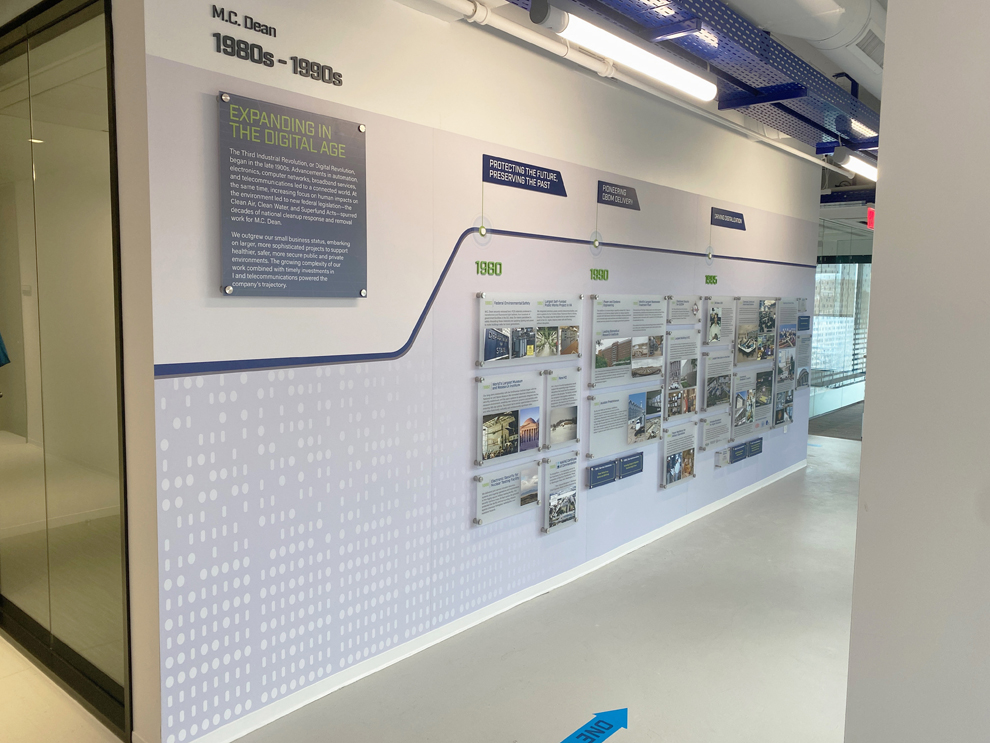
A site survey is recommended when dimensions, wall construction, installation access, lighting, architectural alignment, utilities, or building procedures cannot be confirmed through photographs and drawings. Surveys are especially useful for layered, illuminated, multi-panel, or highly visible displays.
The information gathered can guide anchor selection, mounting templates, fabrication, installation sequencing, and crew scheduling. Verifying conditions early reduces the risk of field modifications that could compromise the approved design.
Yes. We can establish consistent specifications for panel materials, hardware finishes, typography, colors, spacing, and proportions across several offices. However, each site still requires its own review.
Wall dimensions, substrates, lighting, access, and audience behavior may differ between buildings. A successful multi-location program maintains visual consistency while accounting for the physical conditions at each property.
Removing the sign usually leaves holes from anchors and fasteners. Restoring the wall may require patching, sanding, priming, painting, or specialty finish repair.
For this reason, standoff mounted signs are best treated as permanent or semi-permanent installations. Organizations expecting to relocate frequently or remain in a space for only a short period may benefit from a portable or non-penetrating display option.
Heritage-managed projects begin with an anticipated overall investment of $3,000. This figure reflects the complete project rather than the cost of one panel or individual hardware component.
The final investment depends on display size, materials, design work, content preparation, fabrication, wall conditions, mounting requirements, site access, installation, and any additional interior graphics included in the project.
Potential materials include clear acrylic, opaque acrylic, aluminum composite material, printed rigid substrates, dimensional lettering, layered panels, and replaceable inserts. Aluminum composite material can provide a metallic appearance while weighing less than solid metal, which may be beneficial for some drywall applications.
The material should be selected according to panel dimensions, weight, color, edge appearance, transparency, lighting, maintenance, and update requirements. We evaluate the panel and mounting system together to confirm that the complete display can be produced, transported, installed, and maintained properly.
Cleaning requirements depend on the panel material, printed graphics, and hardware finish. In many cases, gentle dusting with a soft, nonabrasive cloth is sufficient.
Any cleaning product should be compatible with the approved surface. Liquids should not collect around panel edges, caps, or barrels. Abrasive pads, harsh solvents, and excessive pressure can scratch acrylic, damage printed graphics, dull finishes, or affect alignment.
No. We do not offer installation-only services for signs manufactured by outside providers. Installation quality depends on panel tolerances, mounting templates, hardware selection, anchor requirements, fabrication precision, and assumptions made during design.
We install products designed, produced, fabricated, or procured through a Heritage-managed project. This keeps responsibility connected from the initial plan through final placement.
Yes. Standoff panels can organize donor and sponsor names by contribution level, campaign, program, date, or another meaningful category. Replaceable inserts can also support future additions.
The display should be planned around the expected number of names, reading distance, expansion capacity, update procedure, material consistency, and desired tone. Establishing the recognition structure before designing the panels produces a clearer and more sustainable result.
A standoff mounted sign is defined by its attachment method. The panel projects away from the wall using barrels, caps, and fasteners. An acrylic sign is defined by the material used for its face.
Acrylic can be mounted on standoffs, installed flush, suspended, or adhered. Standoff hardware can also support aluminum composite material, printed rigid panels, and layered assemblies. One term describes mounting, while the other describes material.
Lighting may be incorporated into certain designs through halo illumination, backlighting, illuminated letters, or nearby architectural fixtures. The feasibility depends on electrical access, wire routing, mounting depth, ventilation, wall construction, service access, and applicable code requirements.
These conditions should be reviewed before fabrication. If illumination is the primary feature of the display, a dedicated backlit or illuminated sign system may be more appropriate than a standard standoff panel.
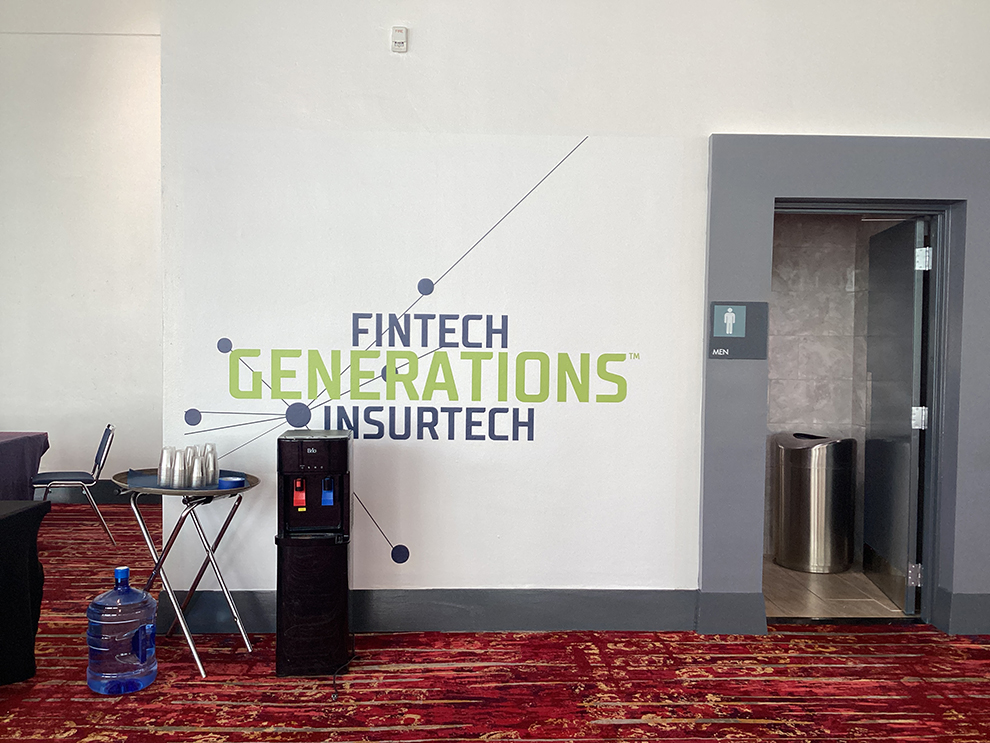
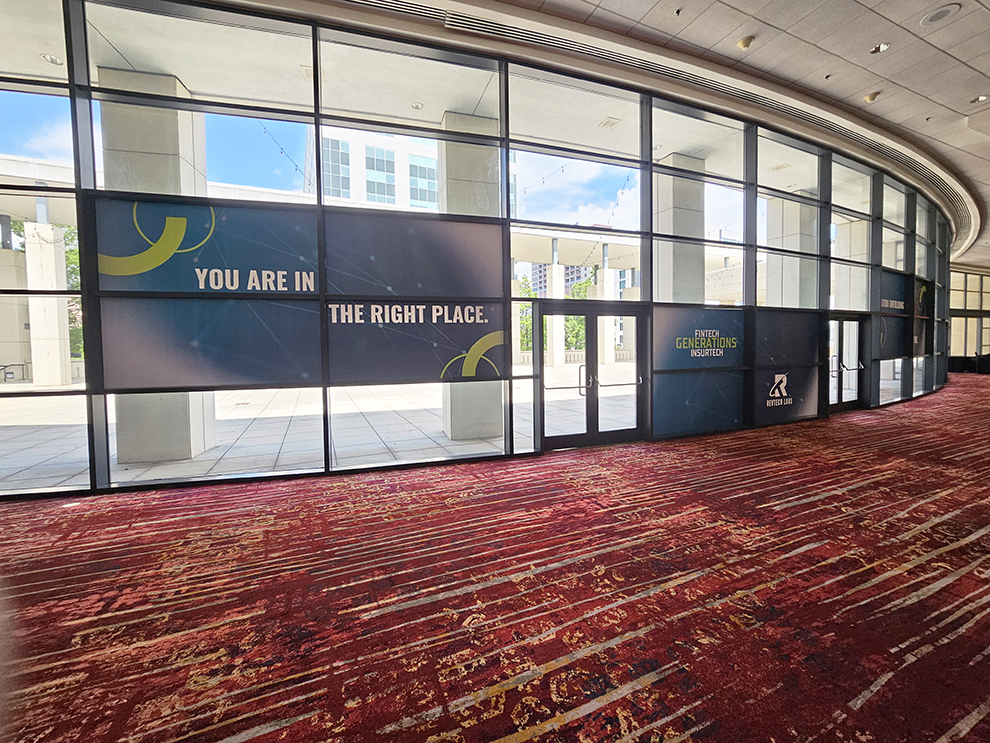
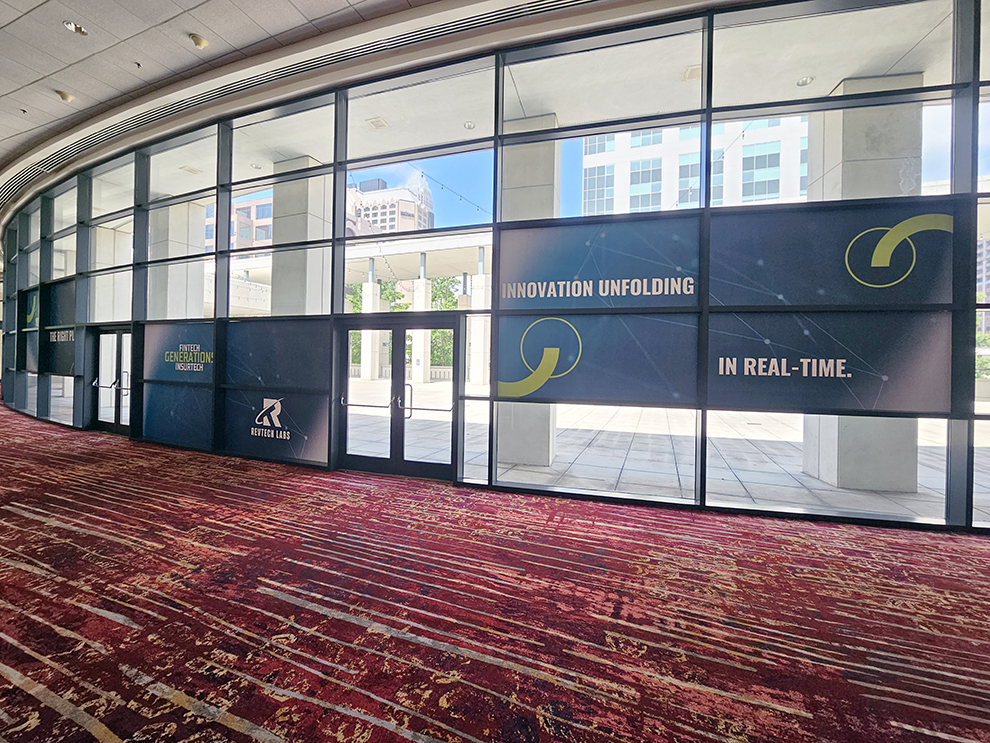
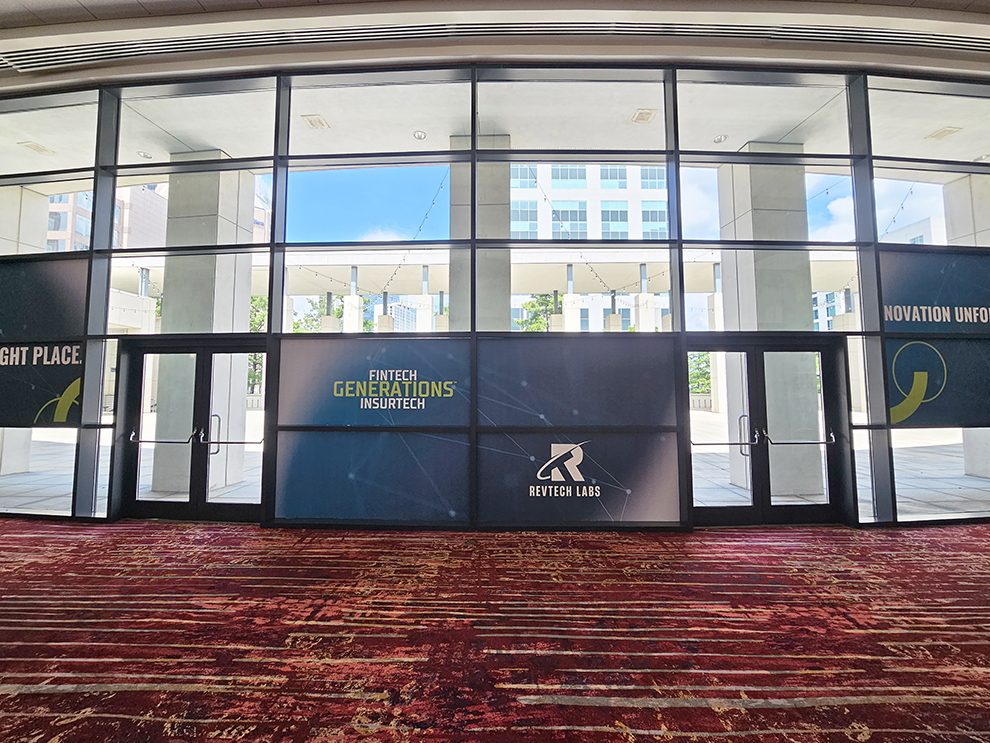
Heritage Signs & Displays collaborated with the Fintech + Insurtech Generations 2023 conference at the Charlotte Convention Center. Heritage worked closely with the client to create an interactive and branded event environment for attendees to network and discuss key topics impacting the financial and insurance sectors. The project enhanced the premier annual conference's atmosphere and engagement.
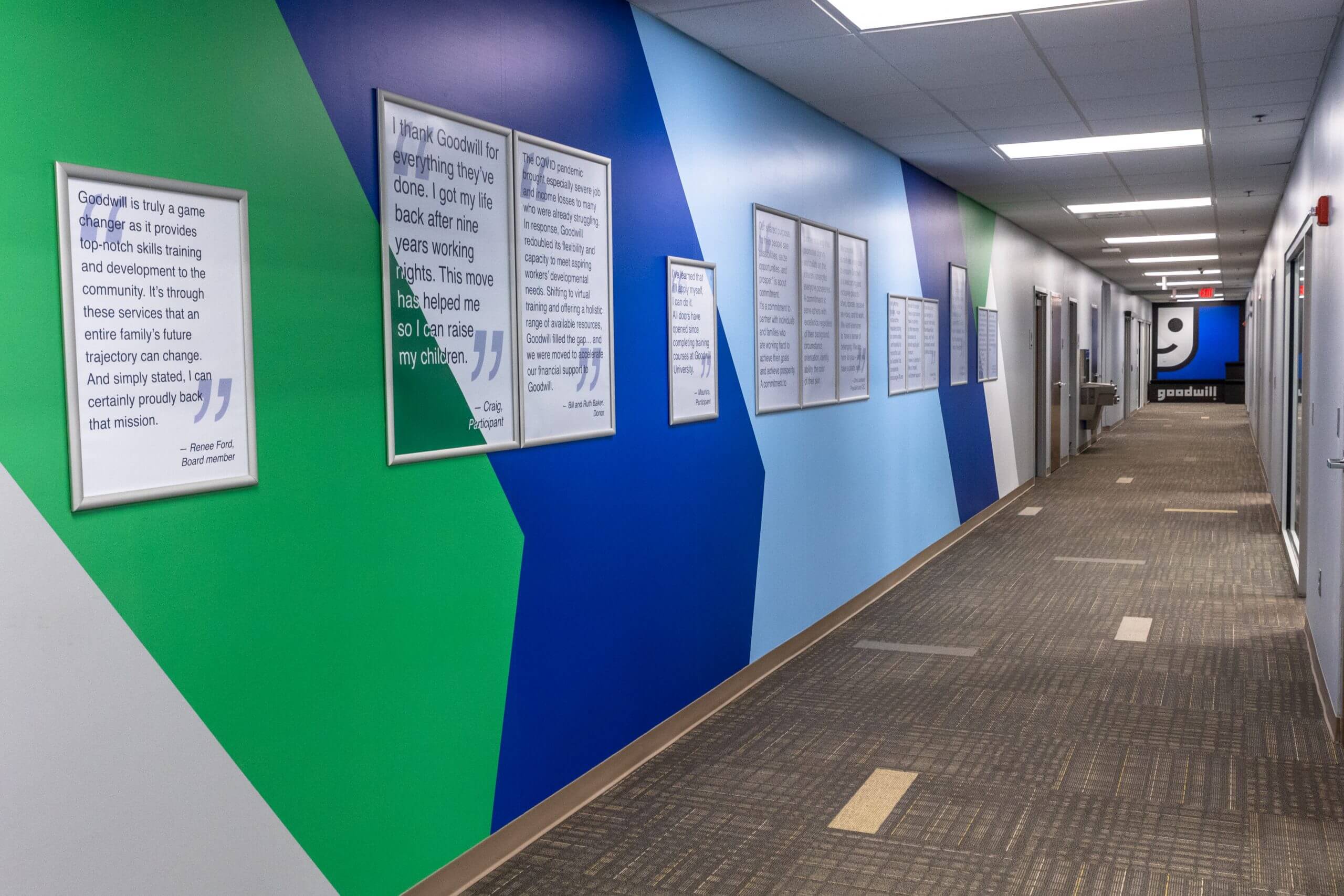
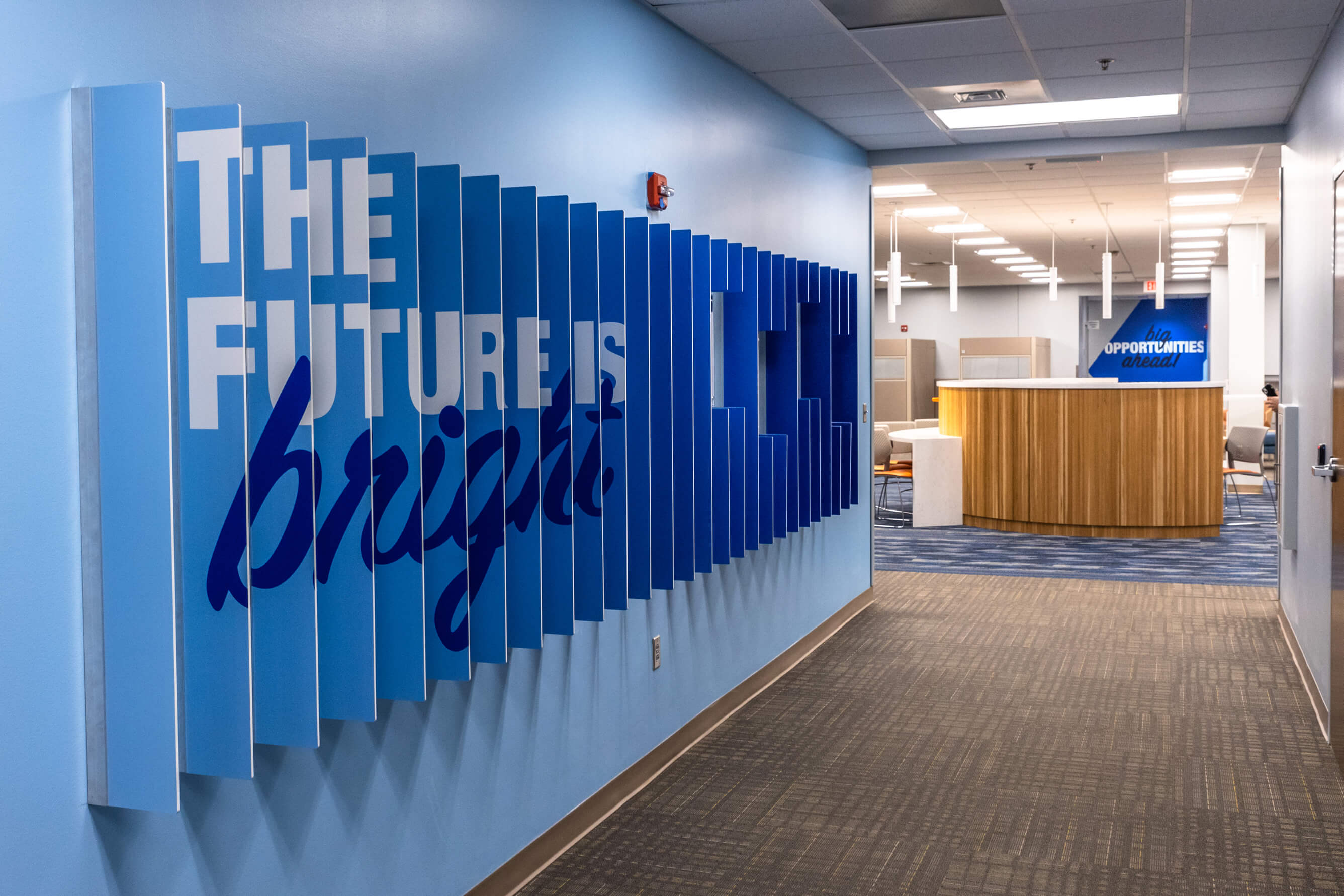
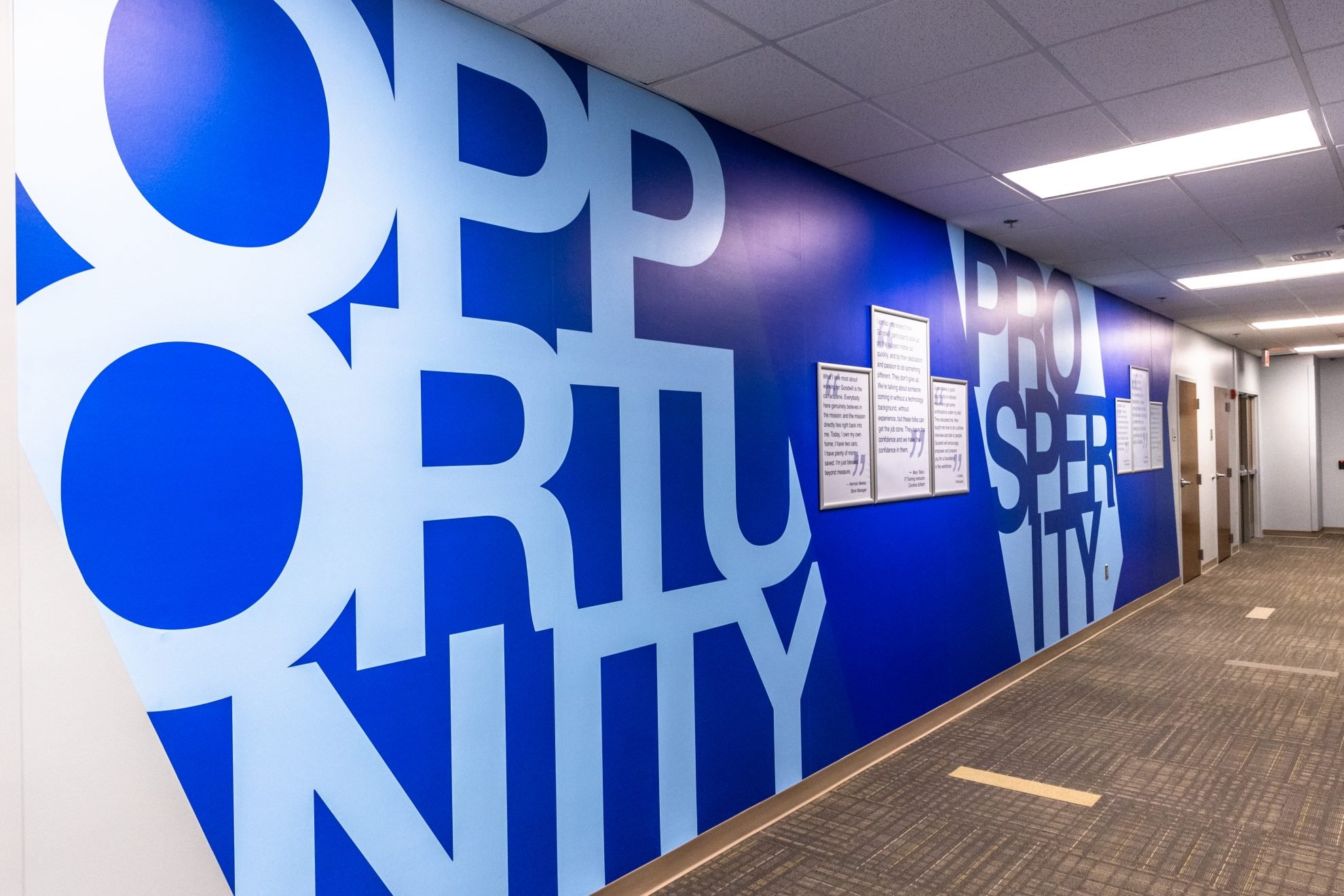
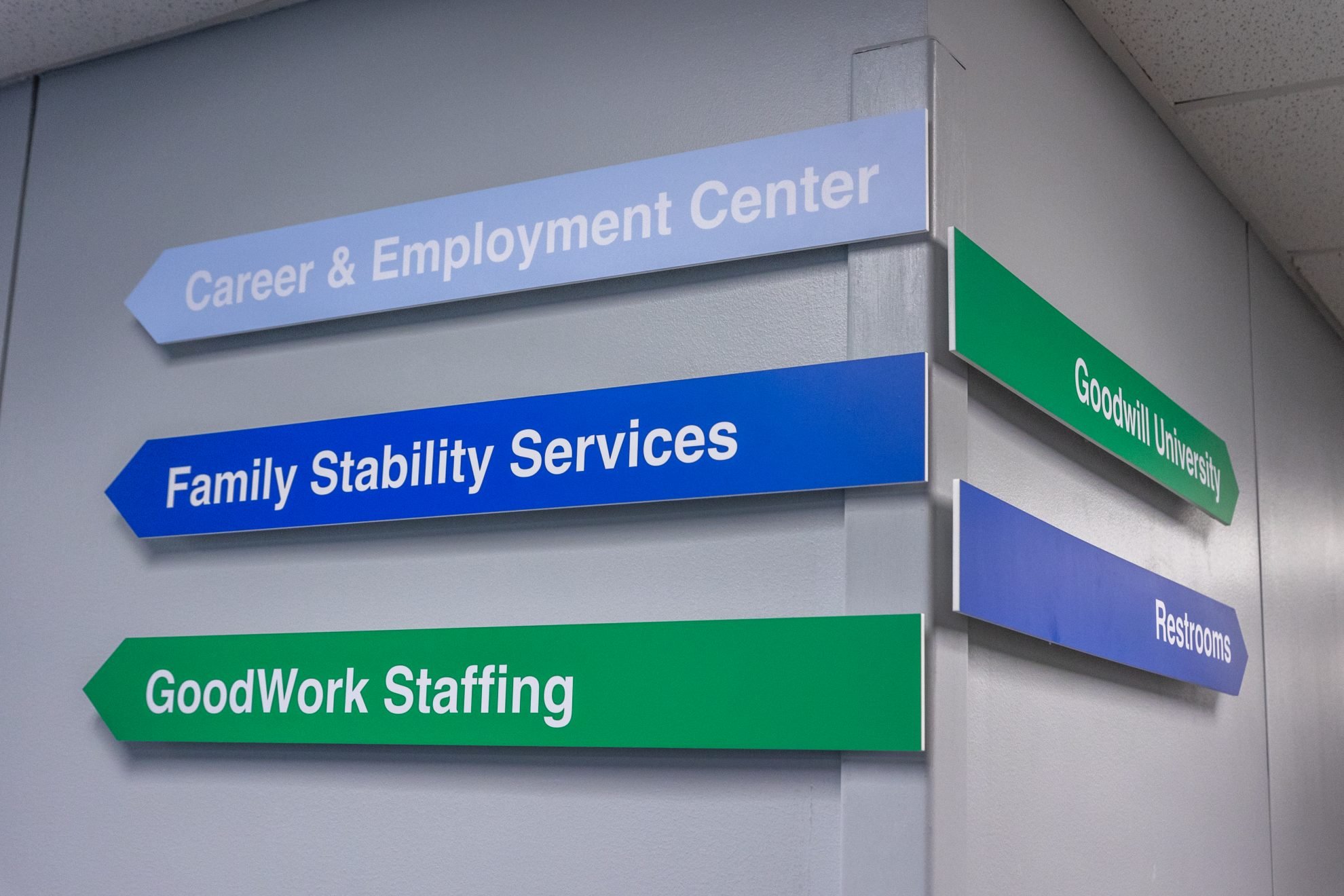
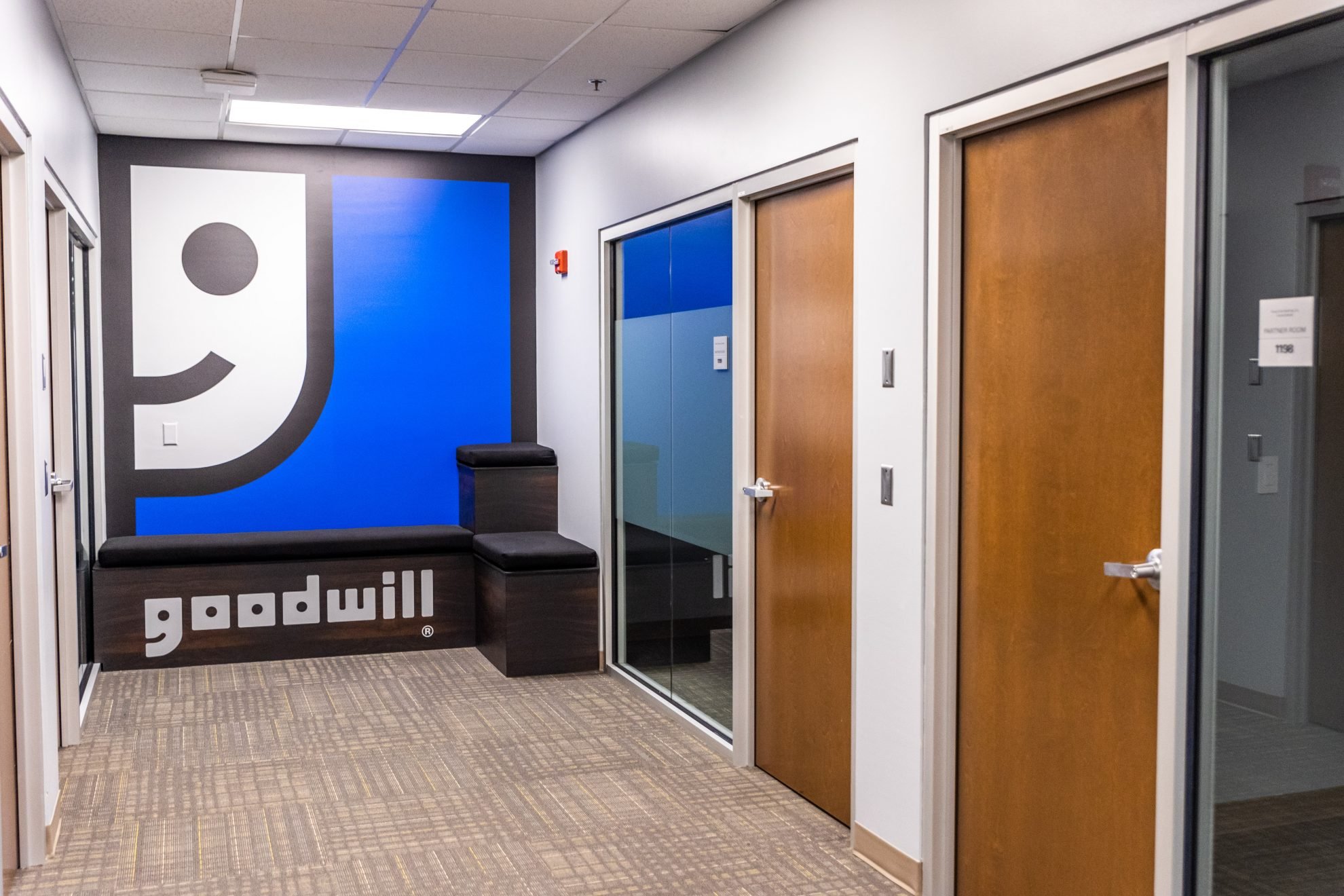
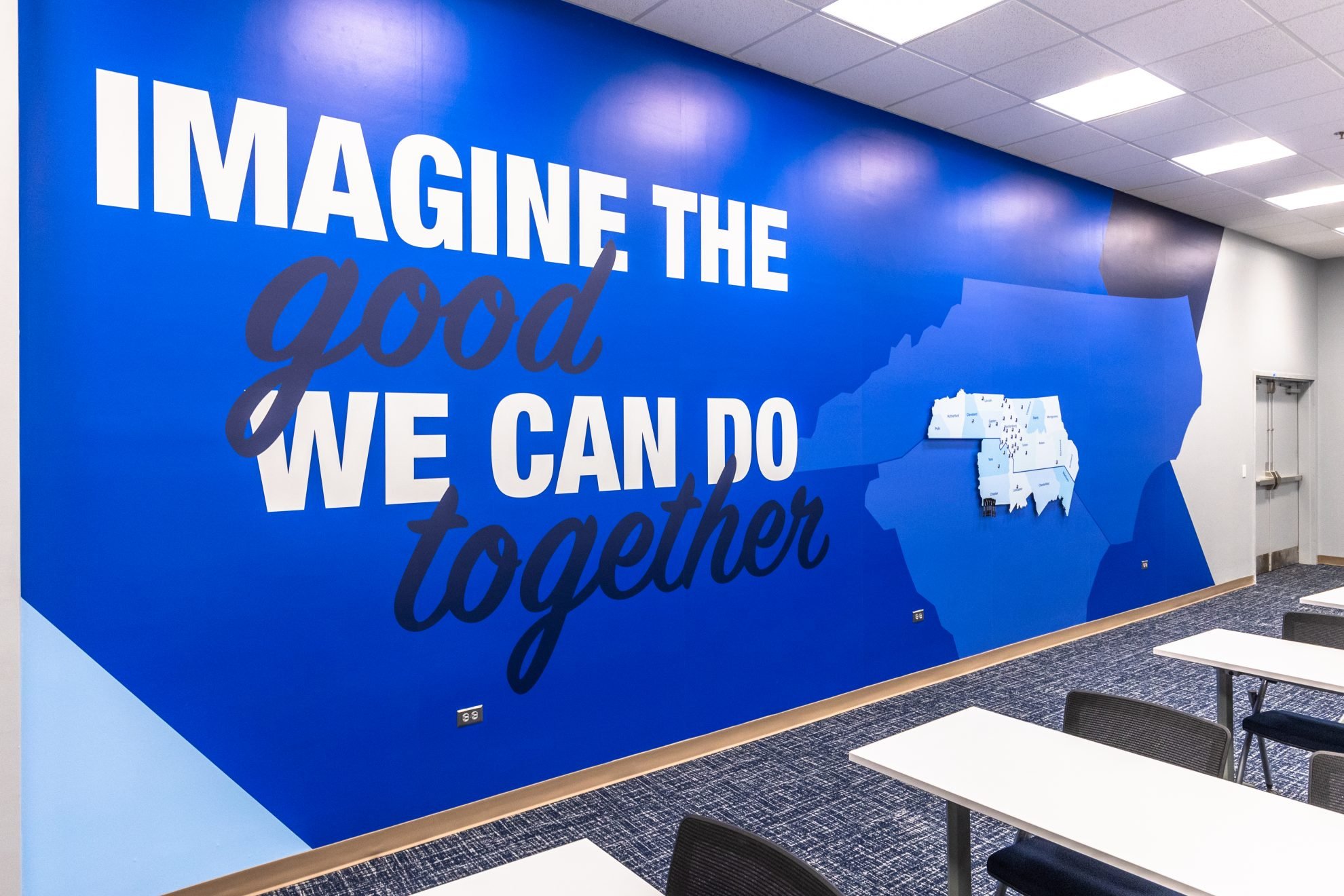
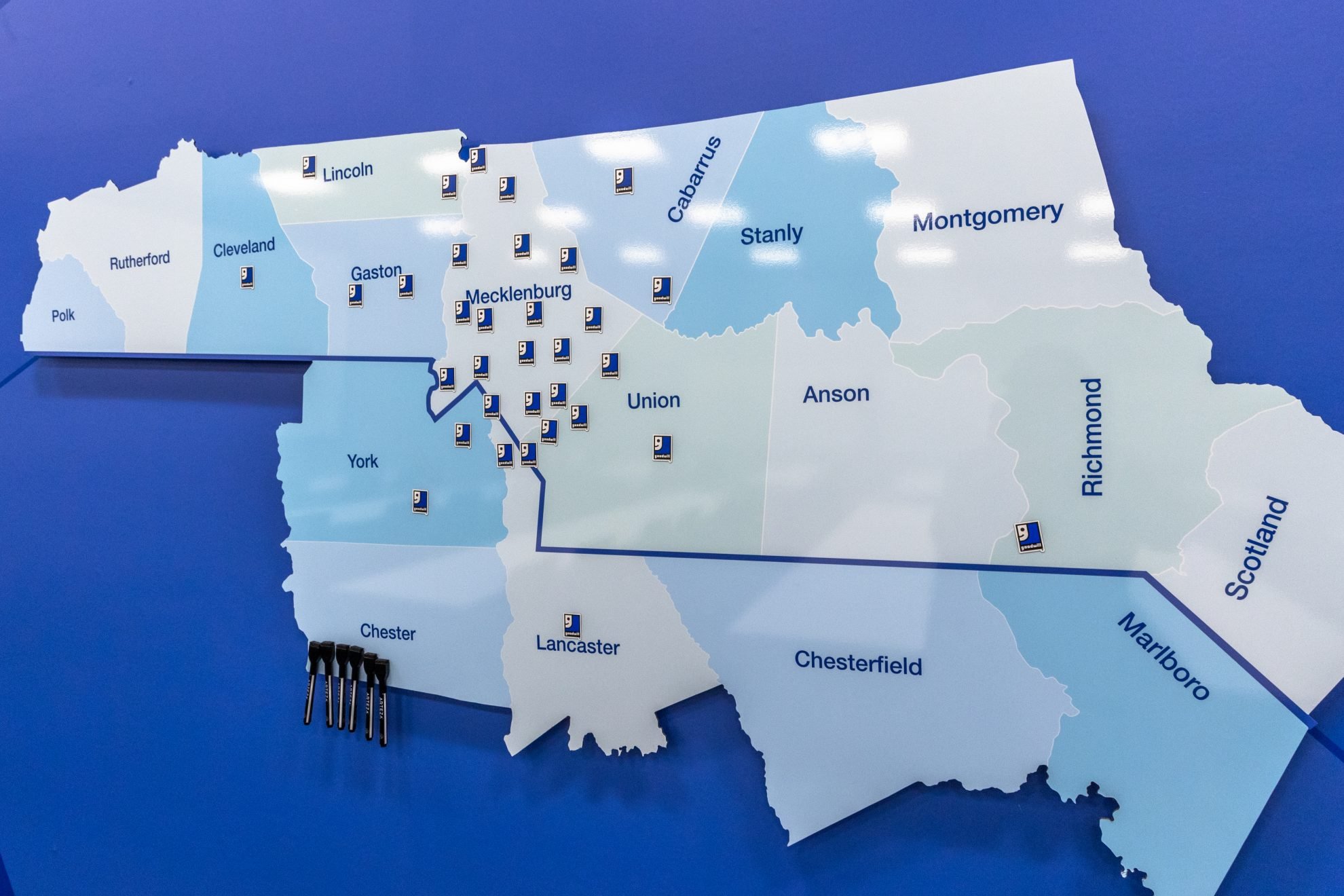
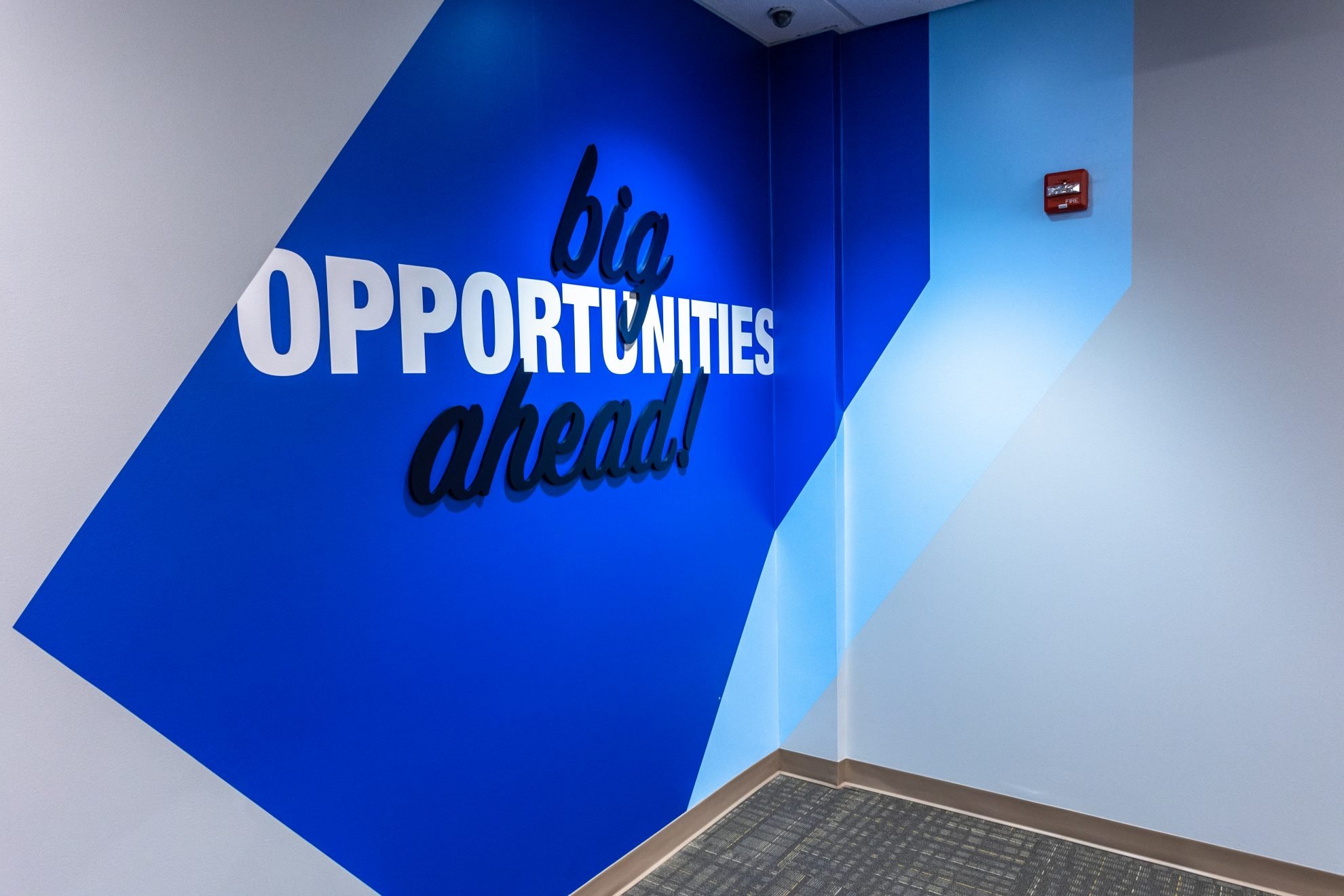
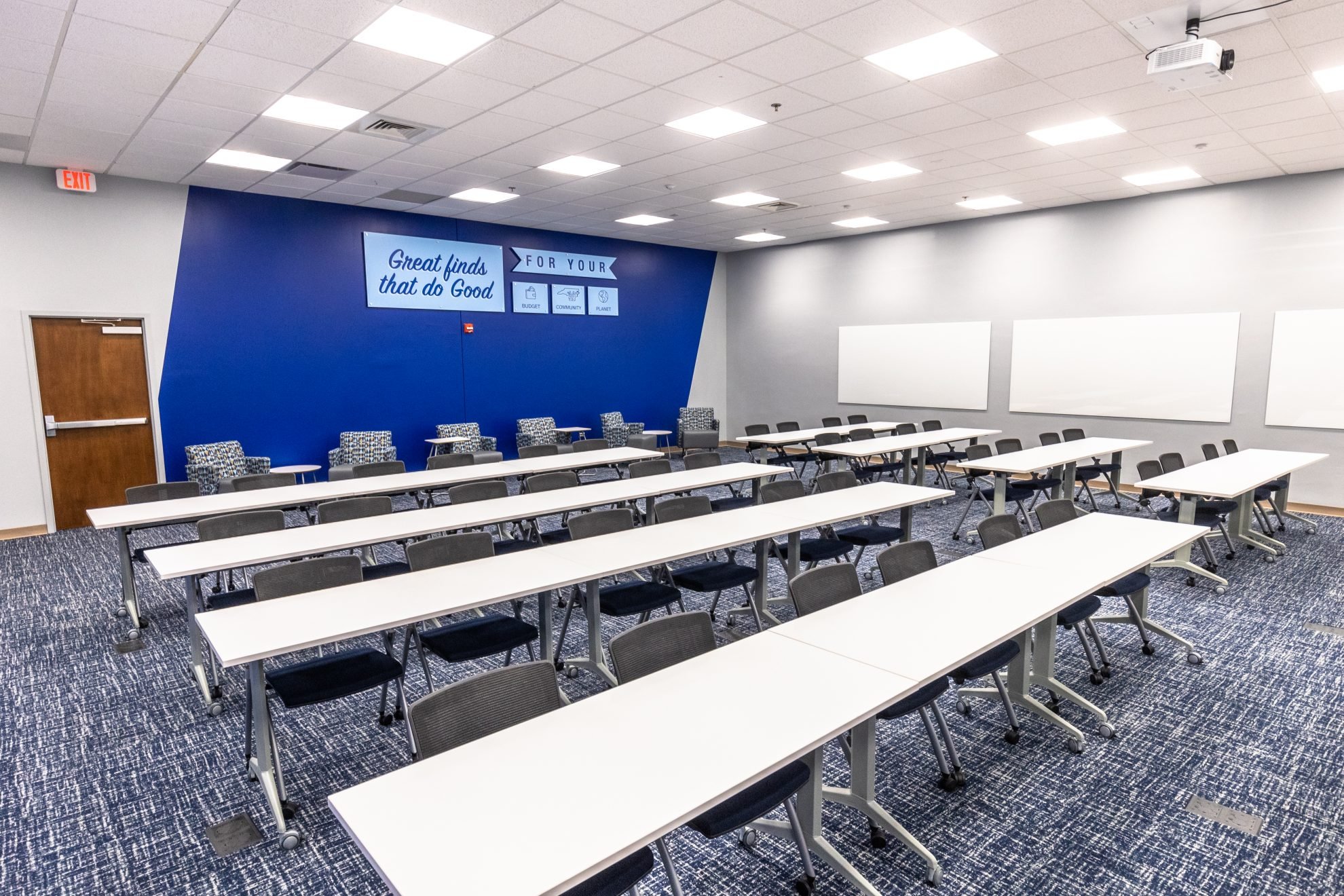
Heritage Signs & Displays collaborated with Goodwill Industries of the Southern Piedmont to transform the Opportunity Campus in Statesville, NC. The project included lenticular wall displays, wall wraps, frosted vinyl, wayfinding signs, and custom wall displays. These elements enhanced the Career & Employment Center, creating an engaging and branded environment that reflects Goodwill's values and mission to support workforce development.