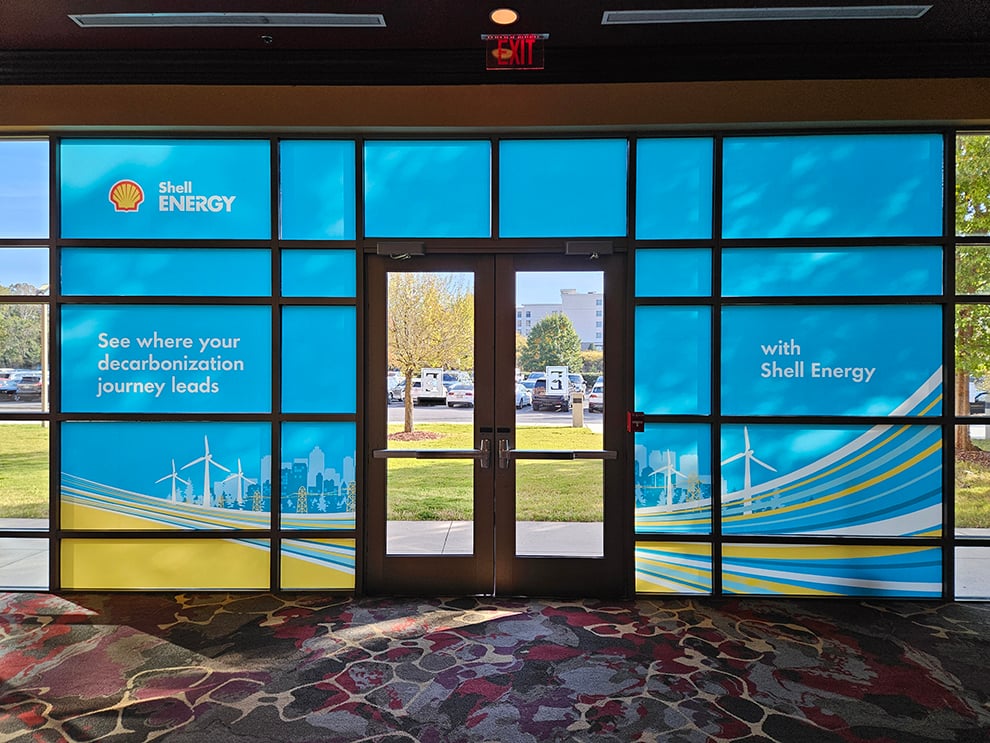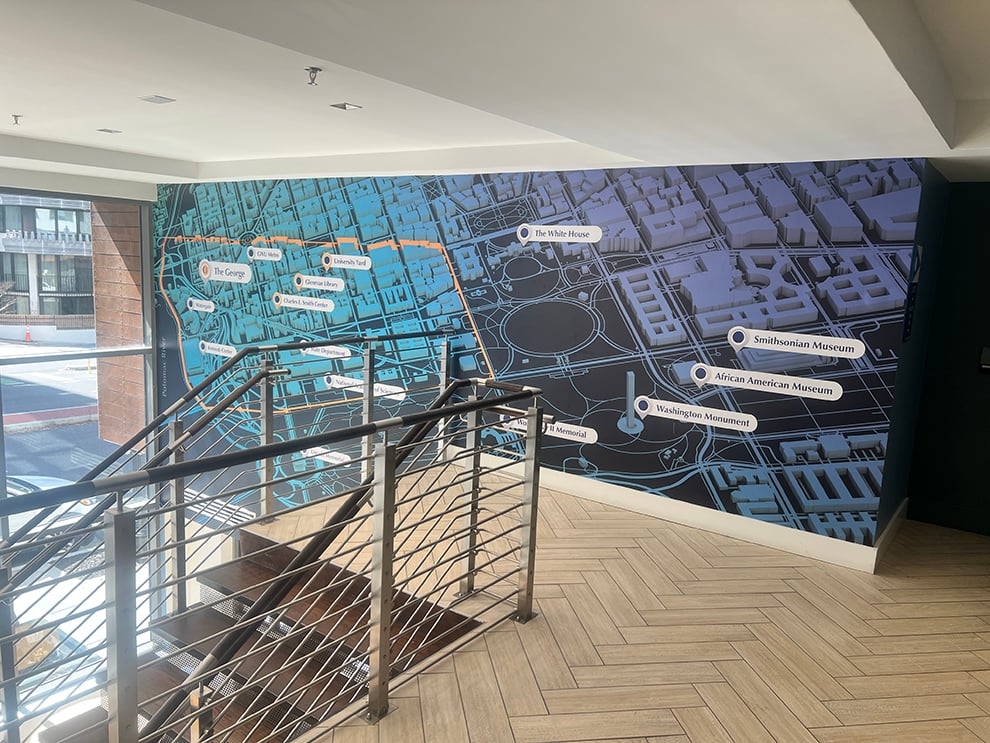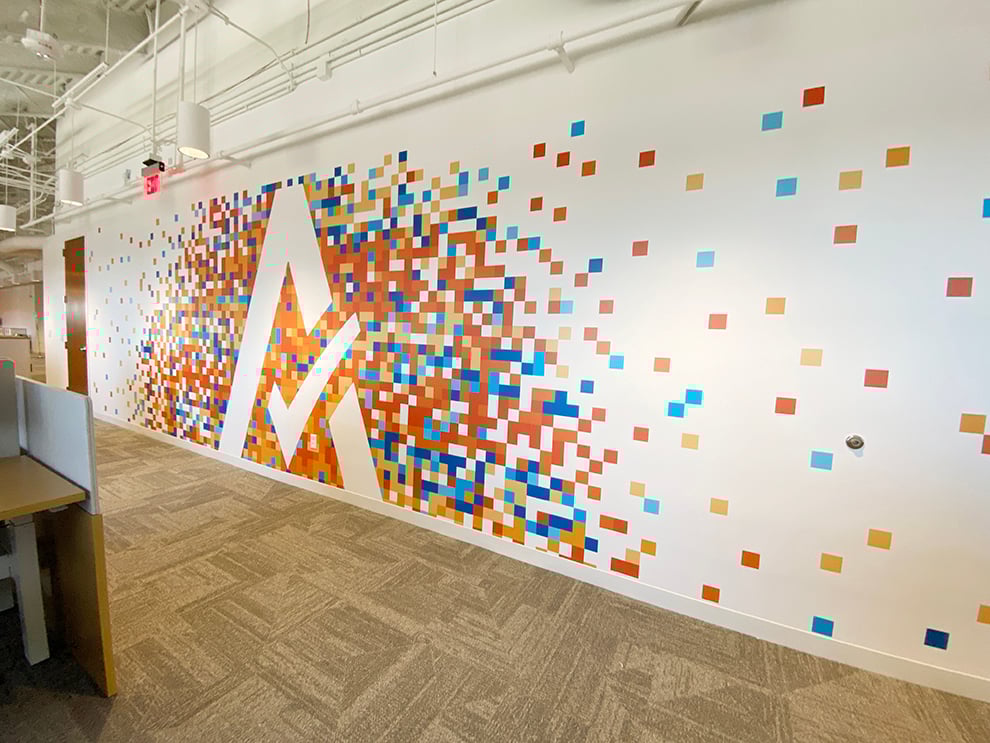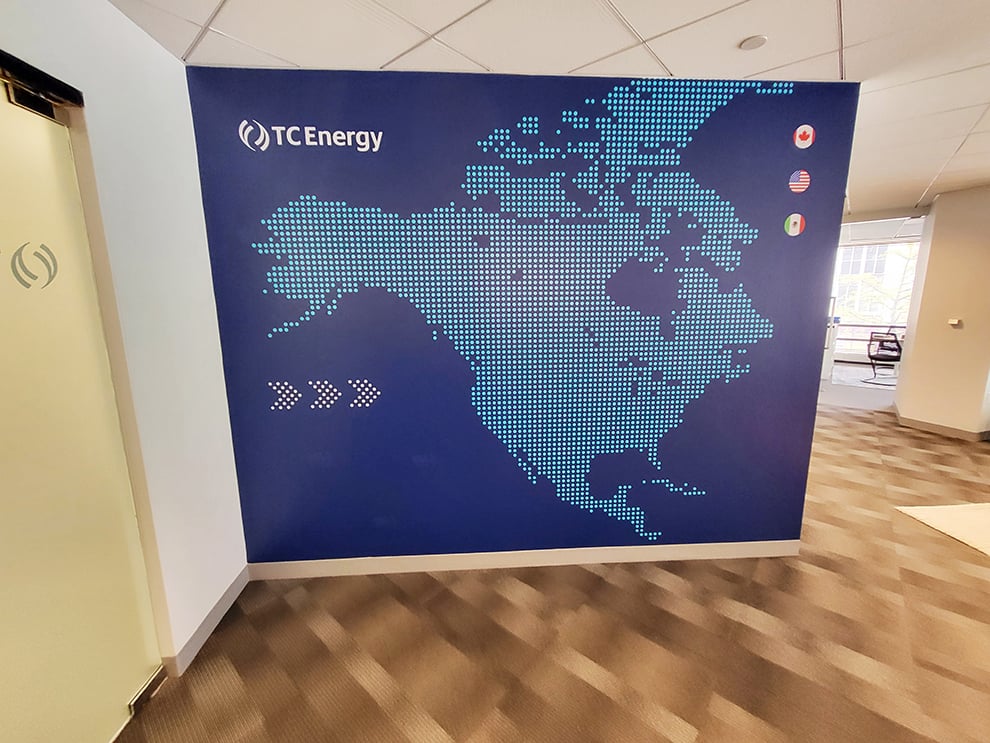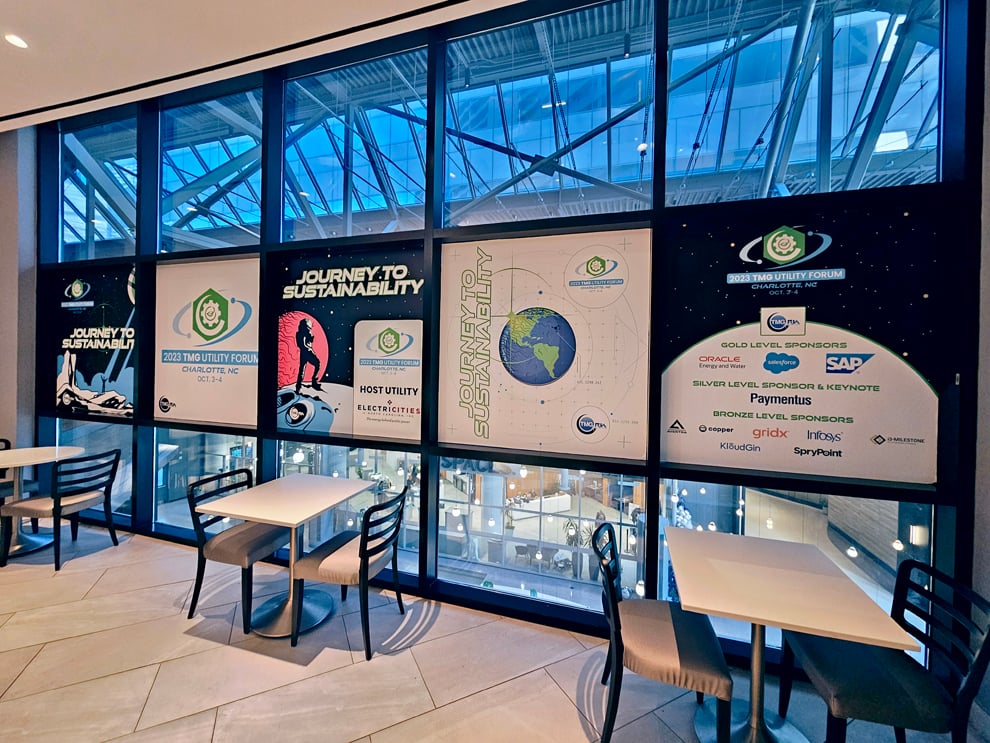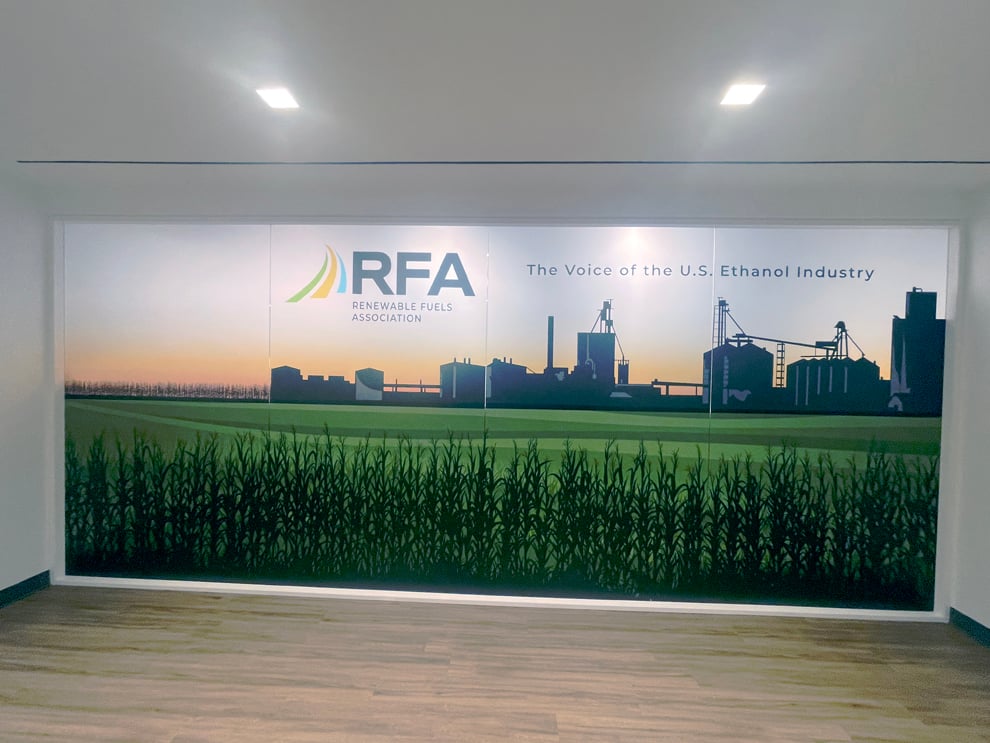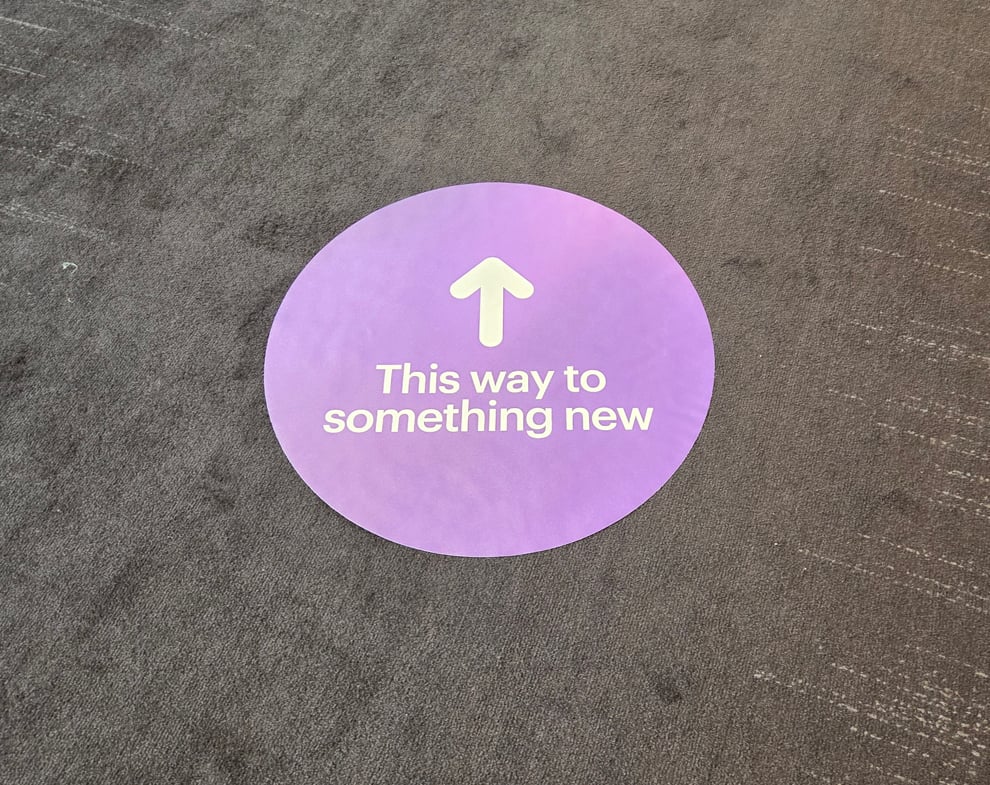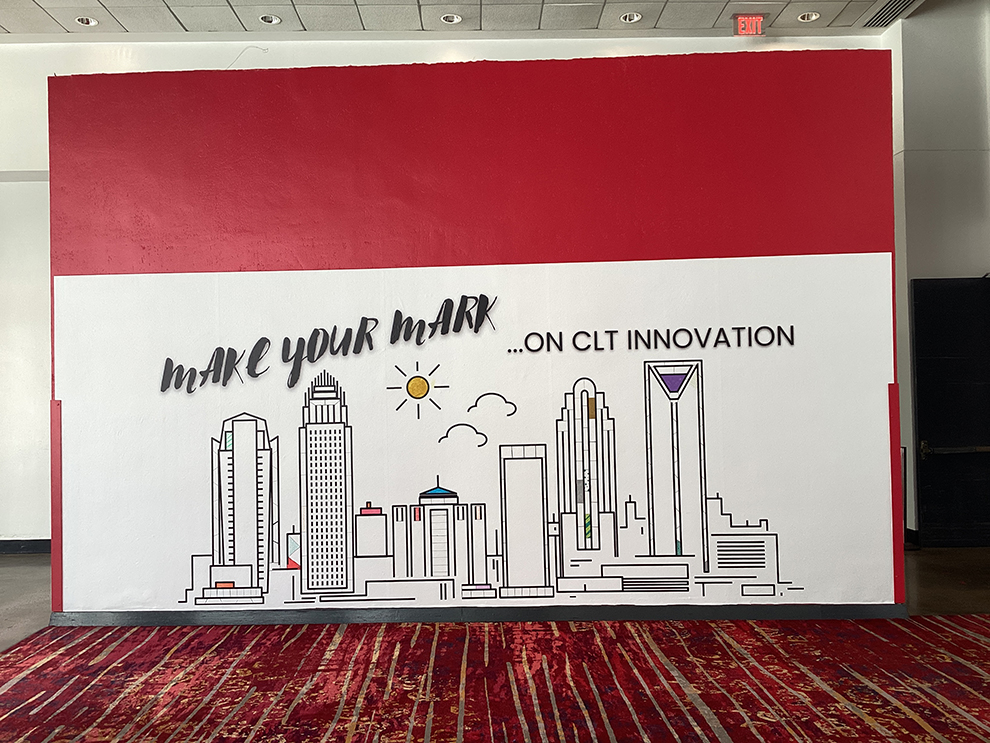
Adhesive vinyl graphics let Charlotte organizations use surfaces already in the space for branding, privacy, direction, and communication without rebuilding the space. A glass conference room can gain privacy and brand character. A floor can help direct movement. A wall or elevator can carry a campaign, pattern, message, or visual identity. The opportunity is broader than choosing a piece of vinyl. The material, adhesive, finish, placement, and installation approach need to match both the surface and the result the client expects.
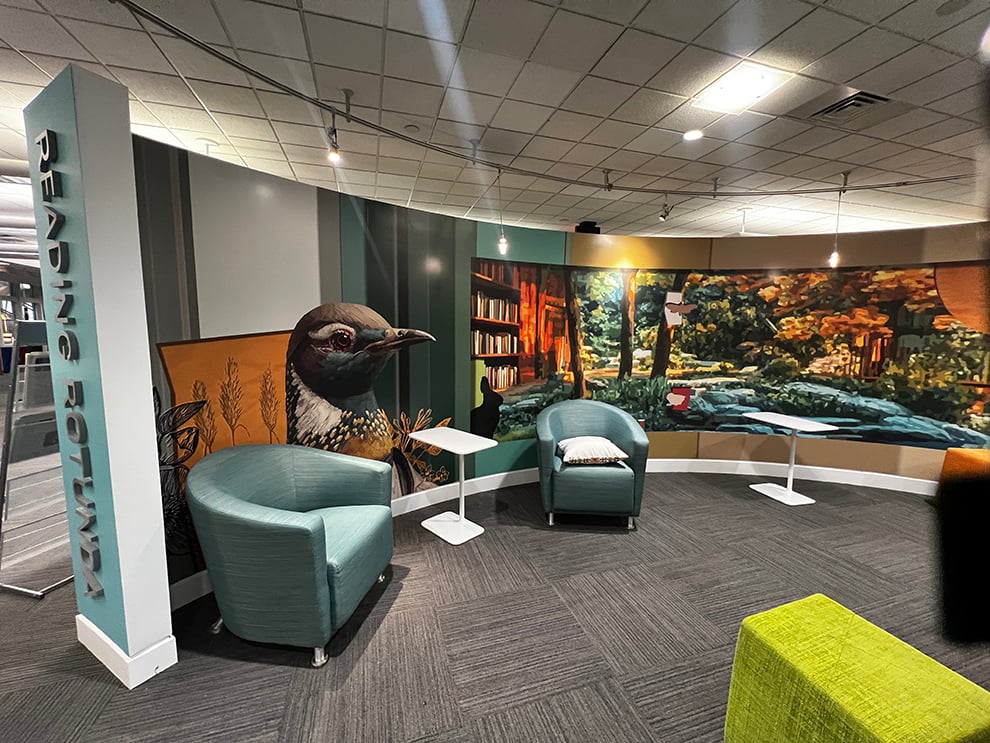
Heritage Signs & Displays, a veteran-owned and family-led company, helps Charlotte organizations plan adhesive vinyl as a flexible part of workplace interiors and event environments. Some projects call for a focused application on one surface. Others use several types of vinyl graphics together so people encounter a coordinated message as they move through the space. Cut lettering may identify a room or reinforce a brand without covering the full surface. Privacy treatments can make glass more functional while preserving light. Floor or elevator graphics can bring communication into places that ordinary wall signage does not reach. When the wall itself becomes the primary visual feature through substantial coverage, imagery, or storytelling, Wall Wraps remains the more specific architectural-scale wall solution within the broader adhesive vinyl family. This flexibility also gives clients room to plan around changing needs. A privacy treatment can solve an immediate workplace issue, while additional graphics can be introduced later as teams grow, spaces change, campaigns rotate, or a broader interior branding program develops.
The process begins with the experience the client wants to create. Heritage's environmental graphic designers consider what people need to notice, understand, or feel and how the selected surface can support that objective. The design is then developed around practical factors such as visibility, privacy, scale, material behavior, and how the graphic relates to nearby signs or displays. On clear glass, distraction markers can help make the surface easier to notice while contributing to the visual identity. Heritage does not represent applied vinyl as proof of building-code or safety-glazing compliance.
One dedicated Project Manager keeps decisions from becoming disconnected as the project advances. Information gathered during the required site survey stays tied to approved design direction, material choices, production, fabrication, scheduling, and professional installation. That continuity allows the people producing and installing the work to understand what the client approved and what the site requires before the finished graphics reach the property.
Charlotte clients also have the advantage of working in the market where Heritage's headquarters and primary specialty production facility are located. Local client, project, field, and installation team members are closely connected to production and fabrication specialists who support work throughout the Carolinas and the broader Heritage network. Founded in 1977, Heritage is an award-winning, veteran-owned, family-led company approaching its 50th anniversary. We seek to honor God by serving clients and communities with excellence through thoughtful recommendations, craftsmanship, accountability, and dependable follow-through.
Adhesive vinyl is not a single material that behaves the same way everywhere. A successful application depends on matching the vinyl and adhesive system to the surface, intended use, and service period. Those choices influence appearance, installation, durability, cleaning, and eventual removal, so Heritage selects the system around what the graphic needs to accomplish.
Painted walls require attention to wall condition, primer, paint, cure, and the intended duration of the graphic. Glass applications raise different questions involving privacy, visibility, coatings, lighting, and whether the selected product uses wet or dry installation. Floor graphics need materials and protective systems intended for foot traffic and the specific flooring. Elevator graphics must account for moving panels, clearances, repeated contact, and the way the design crosses seams or edges.
This surface-specific approach is what makes adhesive vinyl useful across so many settings. Heritage does not treat every request as a generic decal. The selected system should suit the surface, expected service period, maintenance needs, and the experience the client wants the finished graphics to support.
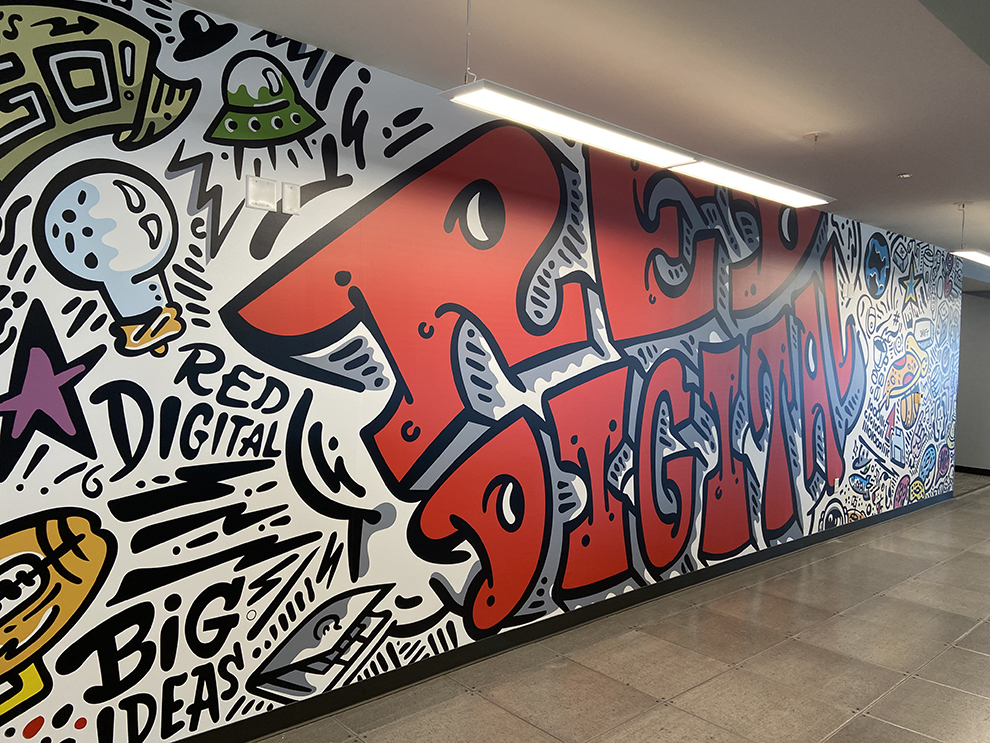
A finished adhesive graphic can look simple even when the work behind it is not. The client needs the design to fit the surface, the material to perform as expected, the production to be accurate, and the installation to finish cleanly. Charlotte organizations benefit when those decisions remain connected instead of being divided among unrelated providers.
Heritage's One Dedicated Project Manager System gives the client one consistent point of coordination while environmental graphic designers, production specialists, fabricators, and professional installers work from shared project information. In Charlotte, that coordination is reinforced by Heritage's headquarters and primary specialty production facility, where project, production, fabrication, and installation teams can resolve questions close to the work itself.
Heritage also installs graphics it produces, fabricates, procures, or manages rather than providing installation-only service for customer-provided graphics. Controlling measurements, material selection, print quality, fit, and replacement responsiveness helps Heritage remain accountable for the finished result and schedule. That combination of local field involvement and substantial production capability is especially valuable for phased, complex, and multi-location programs.
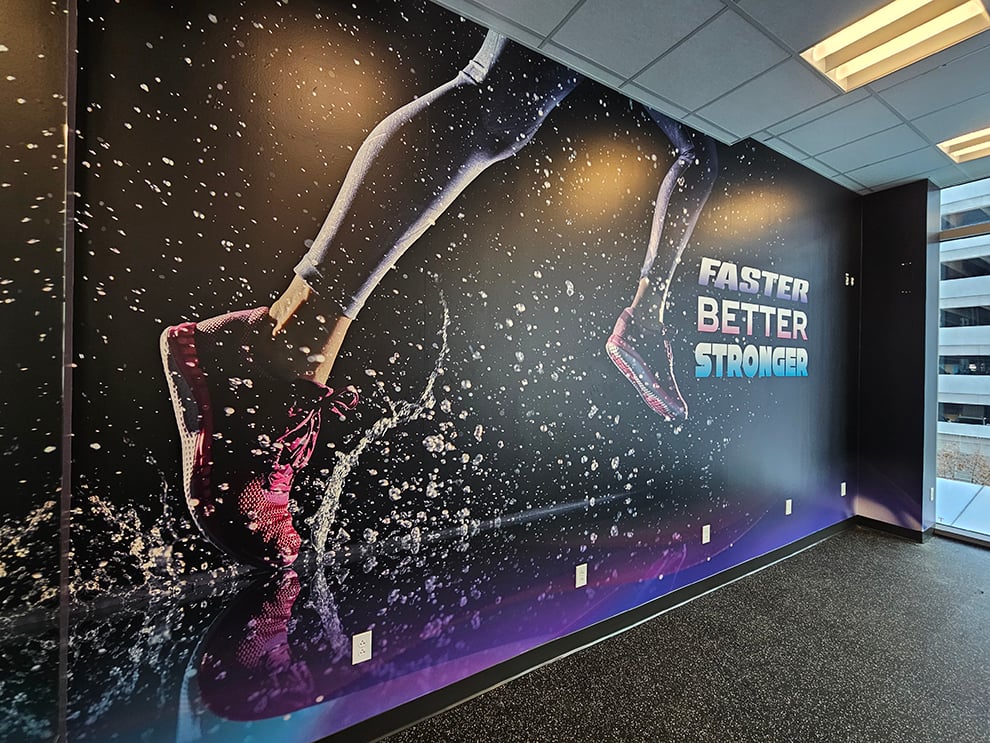
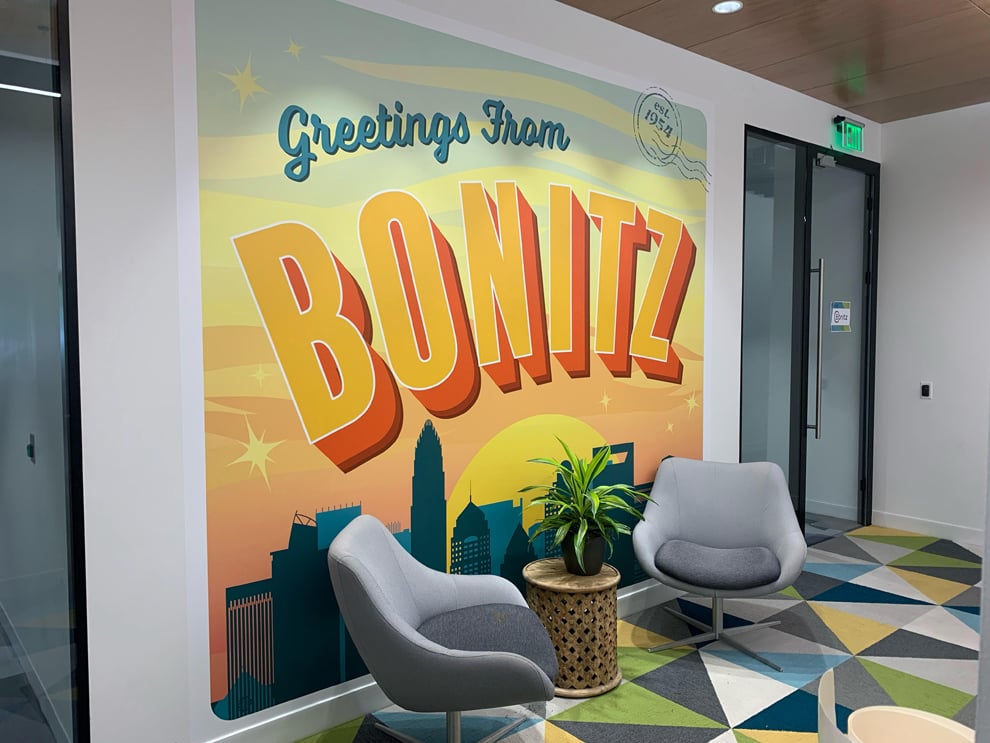
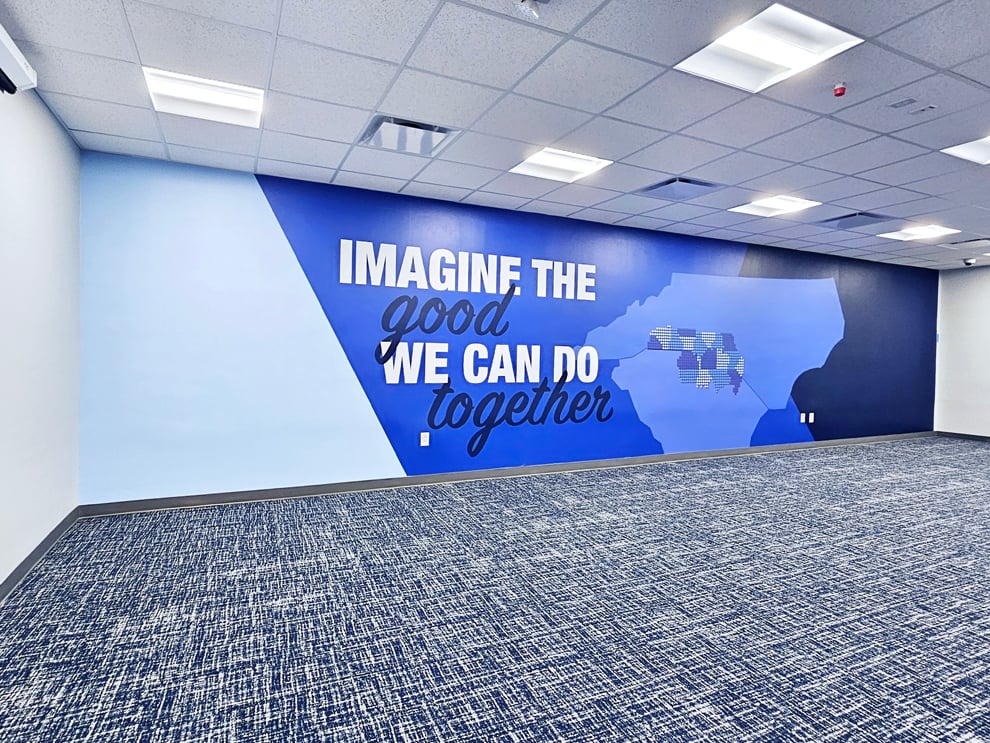
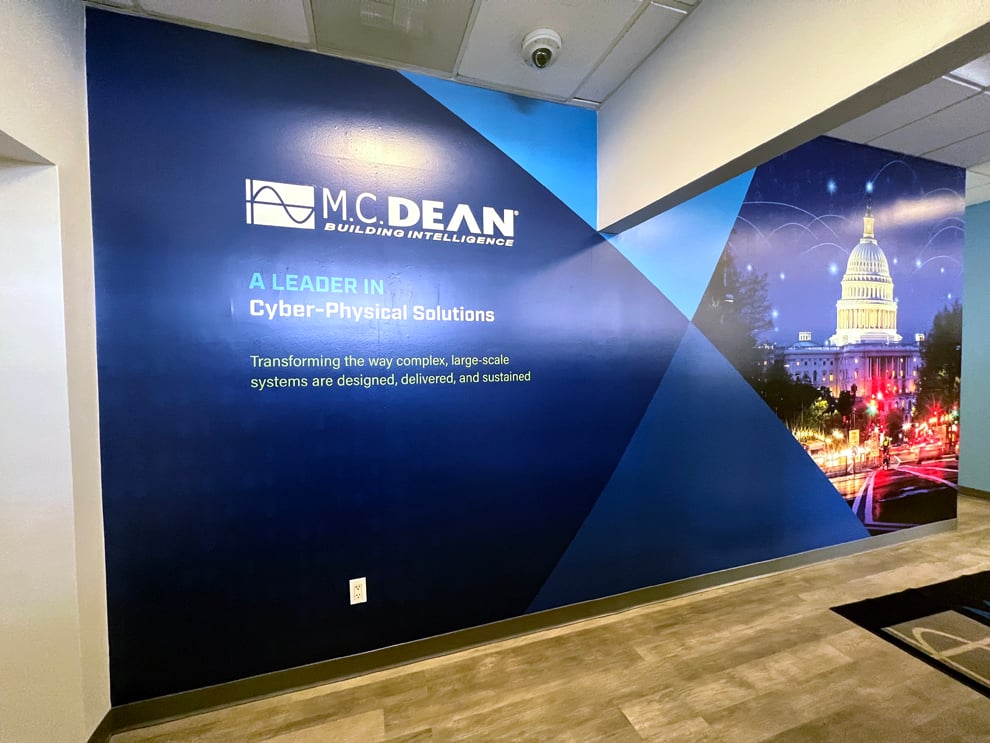
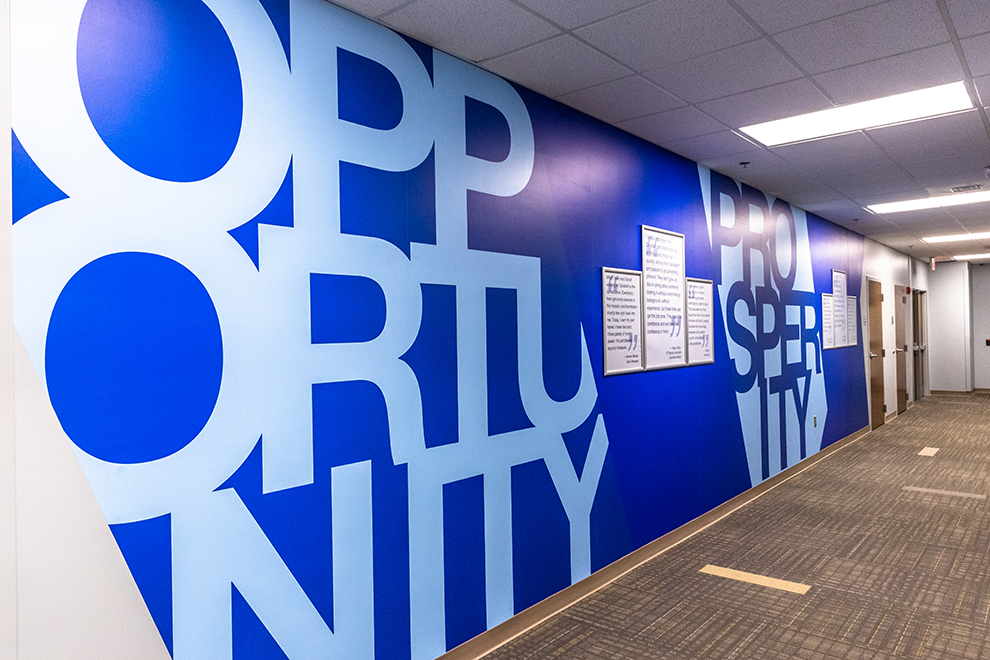
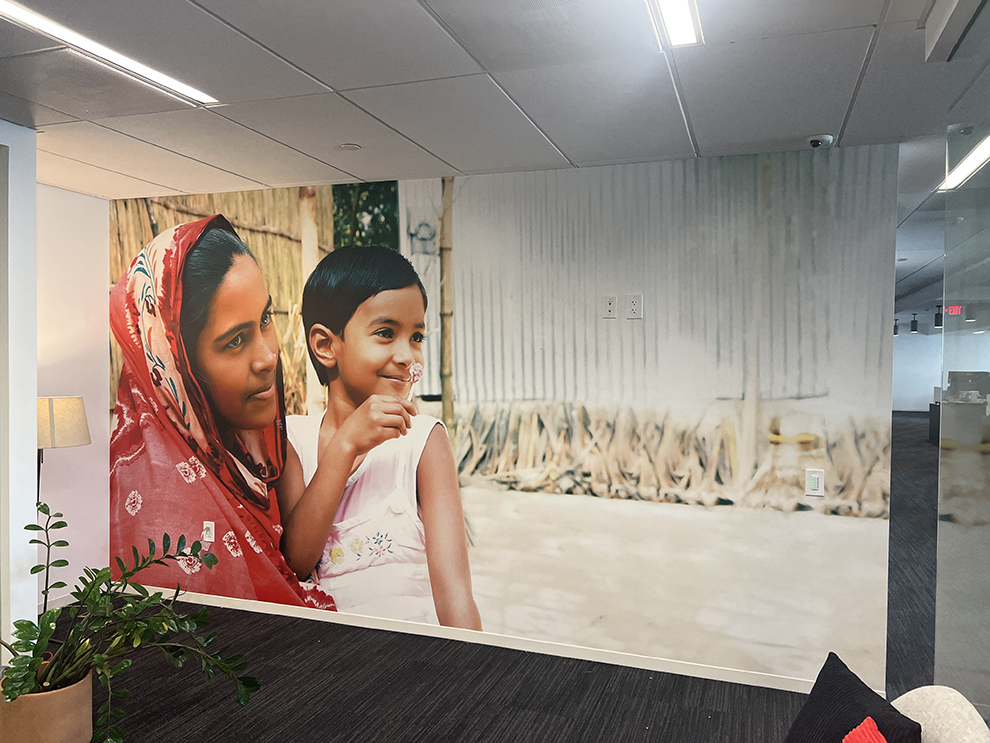
Wall wraps are the related solution when a wall needs to become a major visual feature rather than carry a smaller applied message. They support large-scale imagery, color, storytelling, and branded transformation while preserving Wall Wraps as the dedicated architectural-scale wall category.
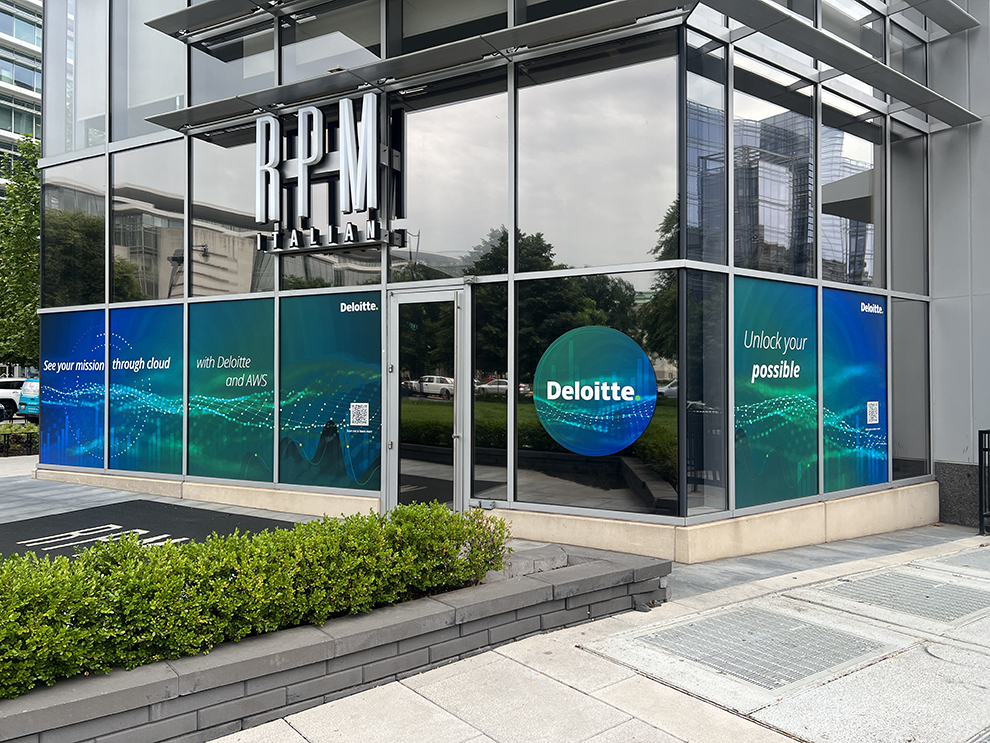
Window graphics give glass a larger communication role through identity, messaging, visibility, or selected views. For Adhesive Vinyl buyers, this related solution becomes useful when the glass itself needs dedicated planning around coverage, lighting, material choice, viewing direction, and installation method.
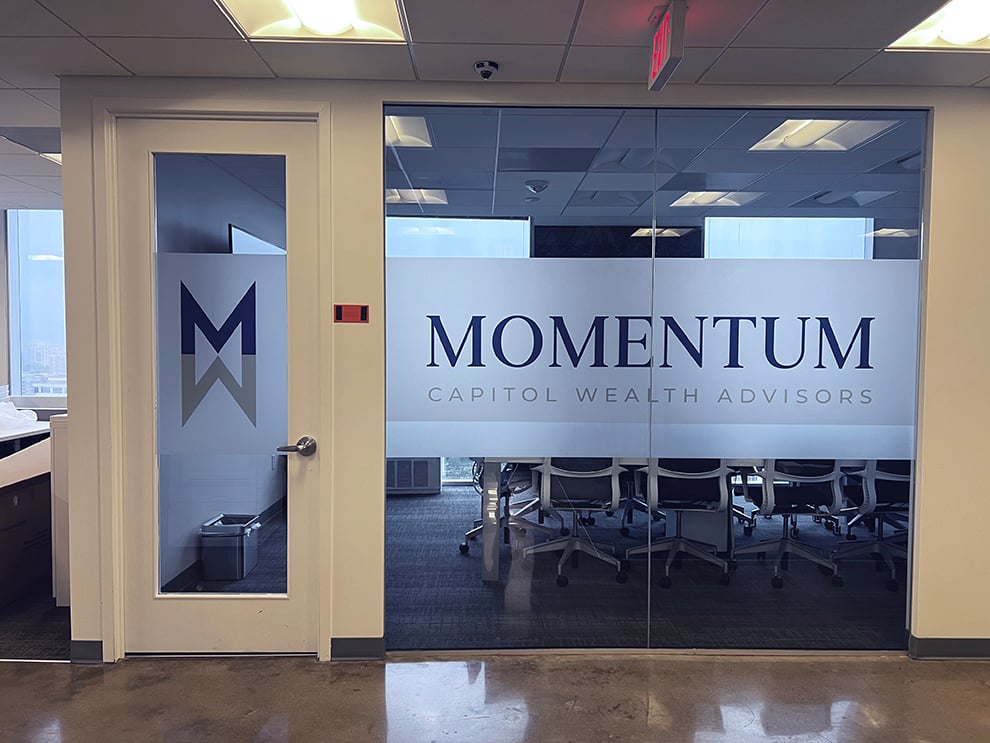
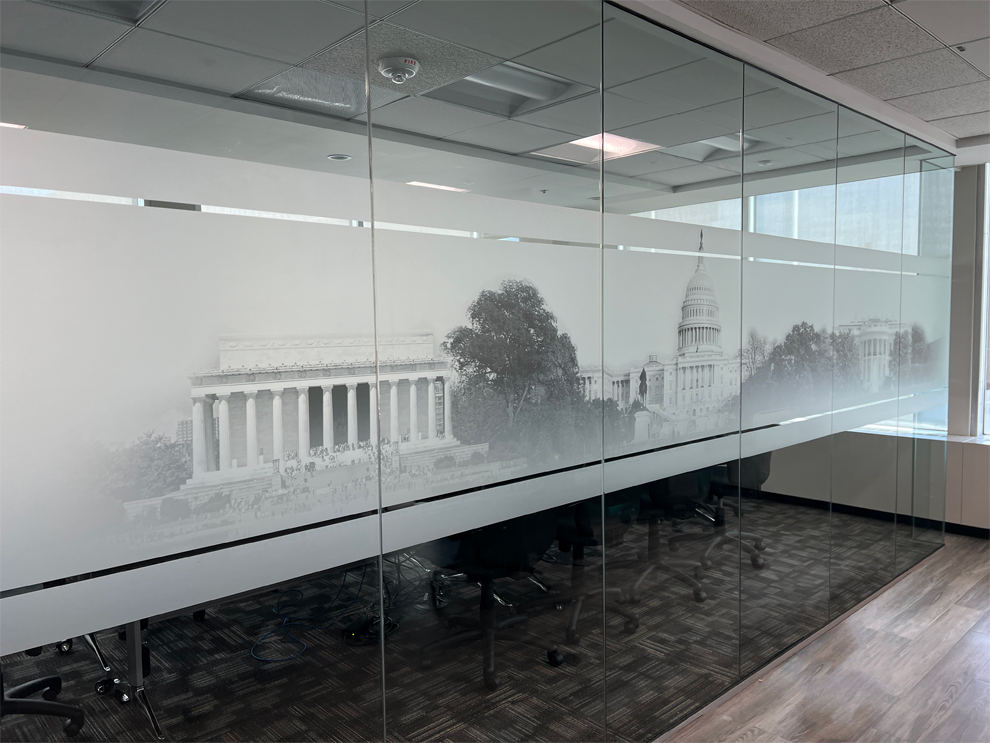
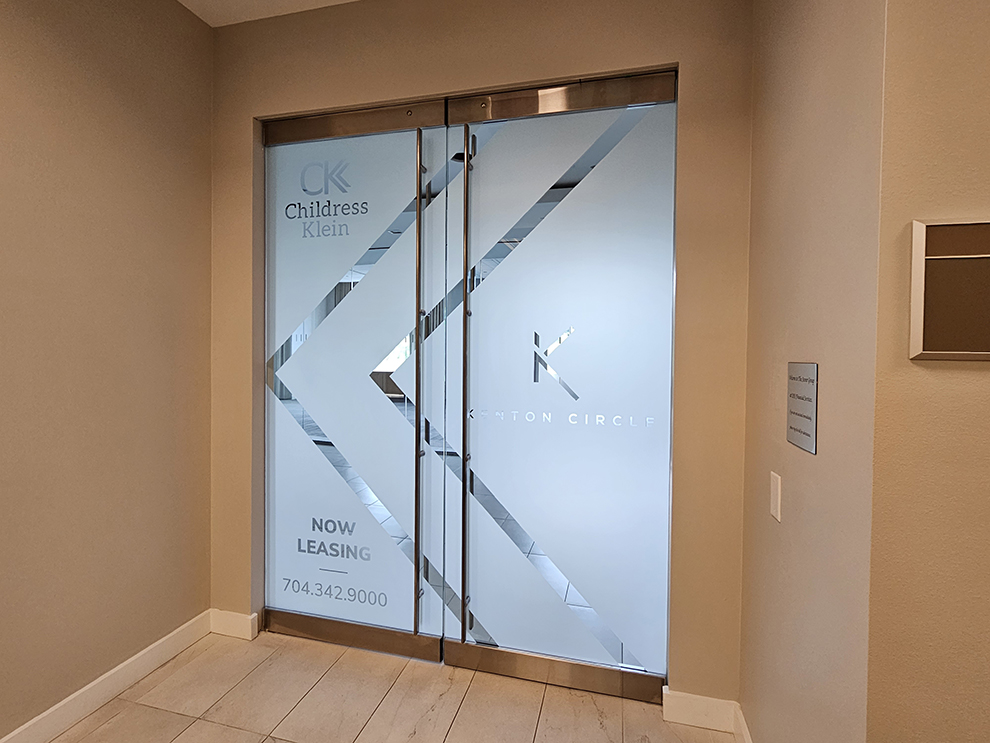
Frosted vinyl and privacy film help offices and meeting spaces gain visual separation without giving up natural light. This related solution supports patterns, logos, privacy bands, and decorative treatments when glass privacy needs deserve more focused design, sightline, material, and installation planning.
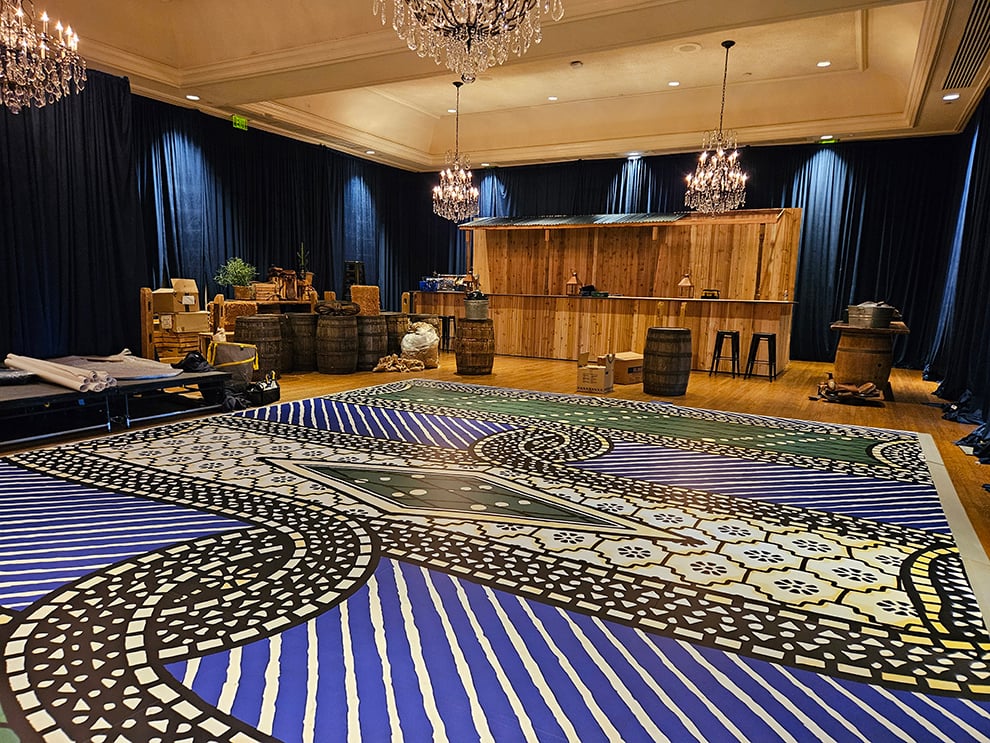
Floor graphics move adhesive communication onto walking surfaces for direction, branding, sponsorship, or event messaging. They require their own material and installation decisions because flooring type, foot traffic, cleaning, protective laminate, and expected service period influence how the finished application should perform.
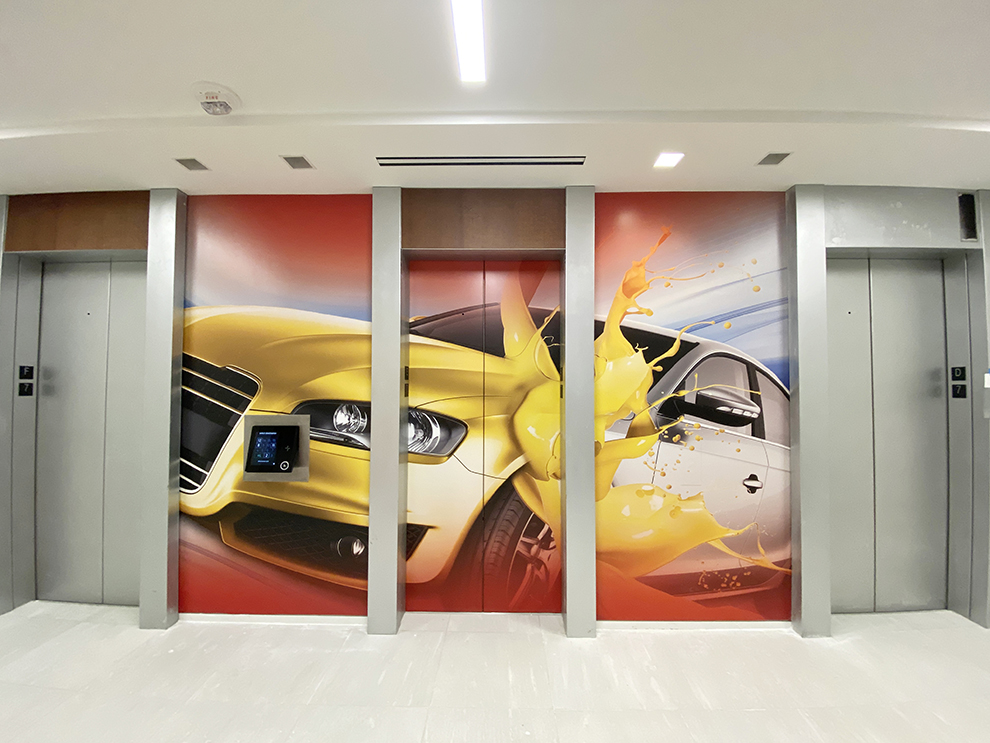
Elevator wraps bring branding to doors, selected cab surfaces, and surrounding areas that receive frequent traffic and movement. This related solution requires close attention to seams, edges, clearances, surface finishes, cleaning, and normal elevator operation while turning a transition space into a branded feature.
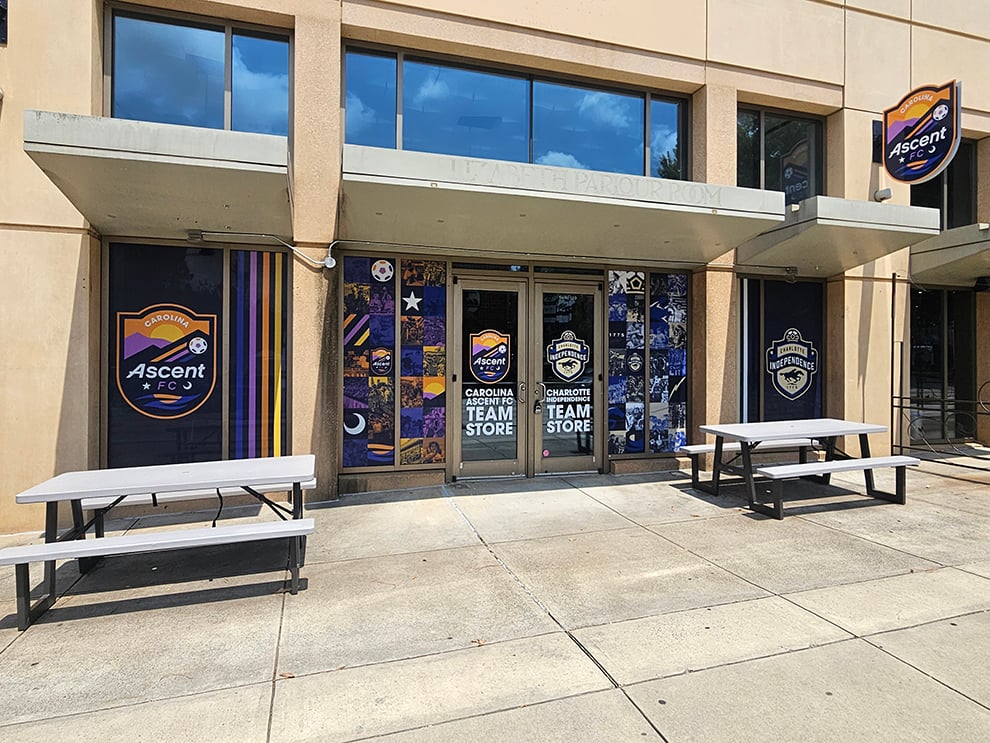
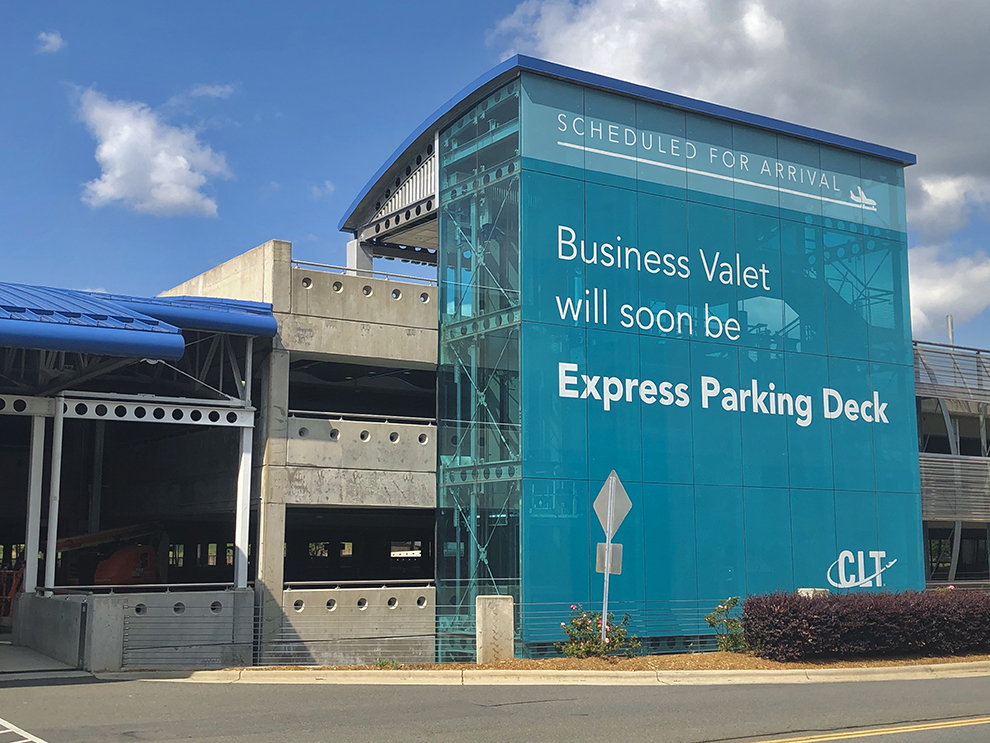
Storefront Graphics connects adhesive window and wall applications to the complete entrance experience. Charlotte organizations can use this related solution when glass, doors, selected exterior-facing surfaces, and nearby signs or graphics need to work together as a coordinated arrival rather than isolated applications.
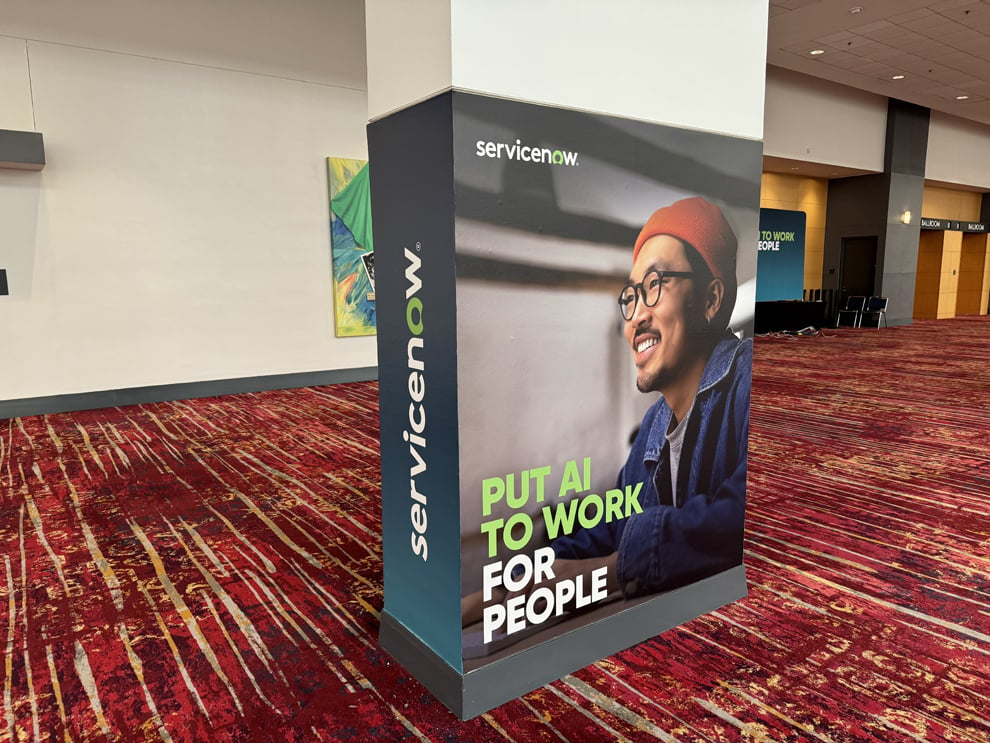
Event Signs & Graphics places adhesive vinyl within a broader event environment that may also include displays, directional signs, sponsor recognition, and other branded elements. It is the related solution when wall, window, floor, or display graphics need to support the larger event experience.
Charlotte organizations benefit from close coordination between local field support and the production operation that anchors Heritage's Carolinas system. The people who see the property, document field conditions, plan the work, produce the graphics, and install them can stay closely connected throughout the engagement. That continuity helps design, material, and installation questions move from site observation to production decisions without unnecessary re-explanation or fragmented handoffs.
Heritage supports the immediate Charlotte marketplace, including Concord, Gastonia, Rock Hill, Statesville, Salisbury, and comparable close-in communities. A required site survey gives the team firsthand information about the property before production begins, helping material and installation decisions respond to the actual surfaces and operating conditions rather than assumptions.
For organizations with several facilities, Charlotte's production capacity can also support broader programs across the Carolinas and Mid-Atlantic. One dedicated Project Manager can preserve brand standards, messaging, and project knowledge while graphics are adapted to the dimensions and conditions of each property. The result is consistent brand communication without forcing one physical layout onto spaces that are not identical.
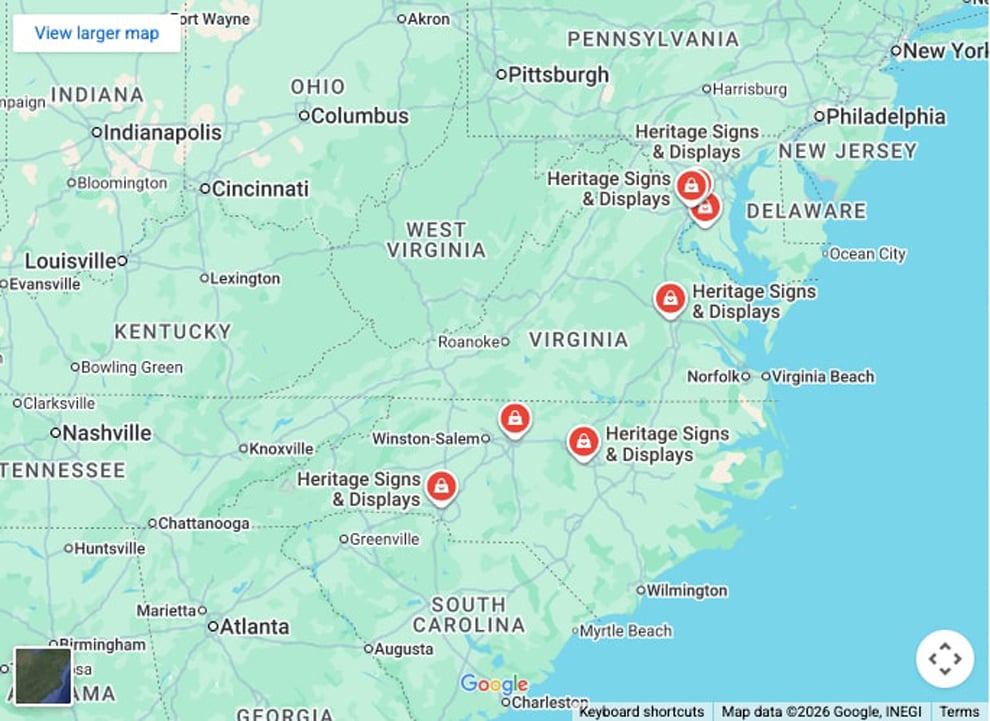
Environmental graphic design helps determine what an adhesive vinyl application should communicate before the project gets reduced to material and measurements. Heritage starts with the audience and intended result. A glass treatment may need to create privacy without making a room feel closed. A directional graphic should be easy to understand while still belonging to the brand. A temporary campaign may need strong visibility without competing with permanent signs and displays.
Some clients arrive with complete brand standards and approved artwork. Others need Heritage to help develop the visual approach. Our environmental graphic designers can work directly with client stakeholders or collaborate with architects, interior designers, branding agencies, and other environmental graphic designers while keeping Heritage's role focused on the graphics and physical elements within our scope.
Before approval, the team resolves the production and installation details that affect the selected application. Image quality, scale, coverage, cut or panel requirements, and surface transitions are considered because they influence what people will actually see. Addressing those decisions during design helps reduce avoidable production changes and gives installers a clear, buildable direction.
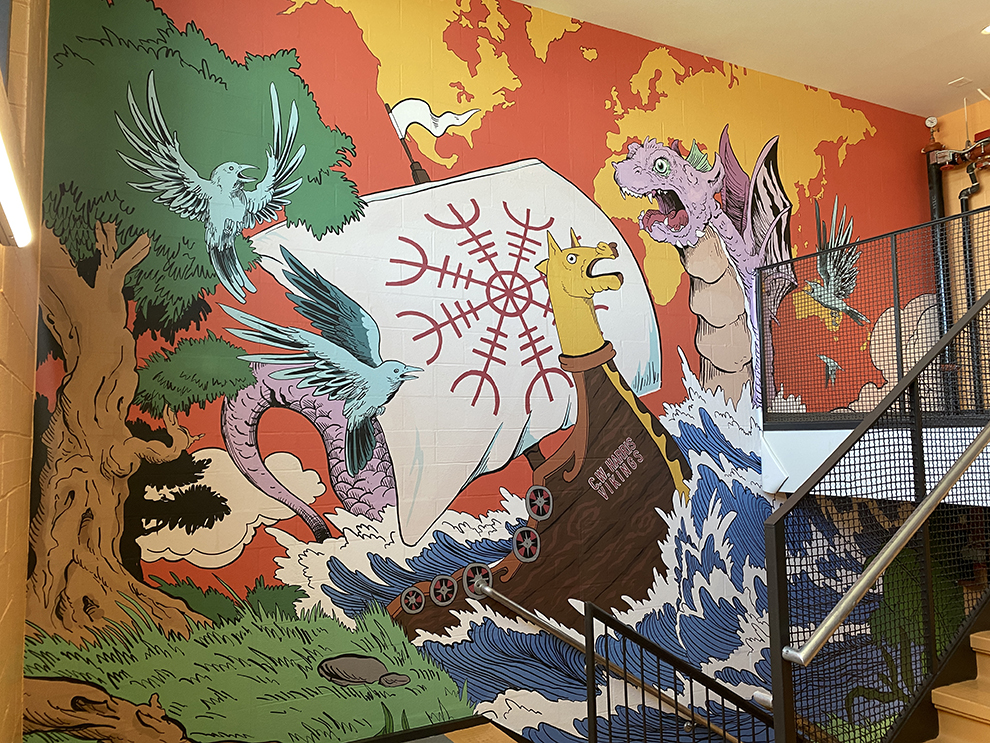
Professional installation is where Charlotte's close connection between field support, production, and installation becomes especially useful. A required site survey gives Heritage verified dimensions, surface conditions, access details, and installation requirements before production is finalized. One dedicated Project Manager carries those findings into the project record so the people preparing the graphics and Heritage's full-time installers are working from the same approved information.
Charlotte's local field and installation resources work closely with the production and fabrication operation at Heritage headquarters, allowing questions about fit, material, paneling, sequence, or access to be resolved without sending the client between unrelated providers. Installers prepare the work area, confirm placement, manage alignment and registration, handle seams and edges where relevant, and protect surrounding finishes while keeping the site orderly.
If conditions differ from what was documented, Heritage pauses, communicates what was found, and determines the appropriate next step. The goal is not simply to apply vinyl. It is to carry the approved design into the space accurately, reduce avoidable disruption, and keep accountability for the finished installation with the Heritage team managing the project.
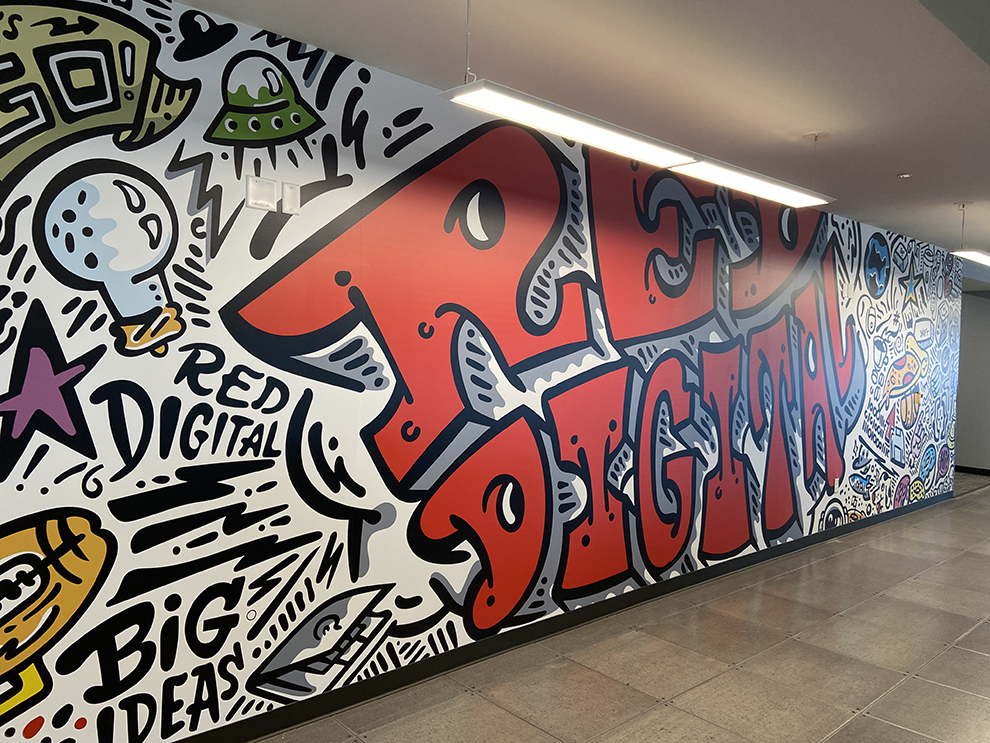
Painted-wall performance depends heavily on the condition of the wall beneath the vinyl. Drywall should be sound, smooth, clean, dry, and properly repaired. Primer and paint must be properly applied, and the finish paint must reach full cure before installation. Fresh paint can feel dry before it is fully cured and may continue to outgas, releasing gases or vapors that can become trapped beneath vinyl installed too soon and contribute to bubbles, blisters, lifting, or premature adhesion failure. Roughly four weeks is useful planning guidance for many paints, but the paint manufacturer's cure requirements and site conditions determine readiness.
Heritage can evaluate and test the visible painted surface, but cannot confirm the hidden bond among paint, primer, and drywall. Normal lifting or repositioning during installation may expose a weak bond. If paint or primer begins to release, Heritage stops, explains the condition, and avoids worsening the wall. The client or property owner arranges and pays for repair, priming, repainting, and full cure before Heritage returns.
Proper preparation and early planning help adhesive wall graphics perform as intended while reducing last-minute problems from hidden wall conditions.
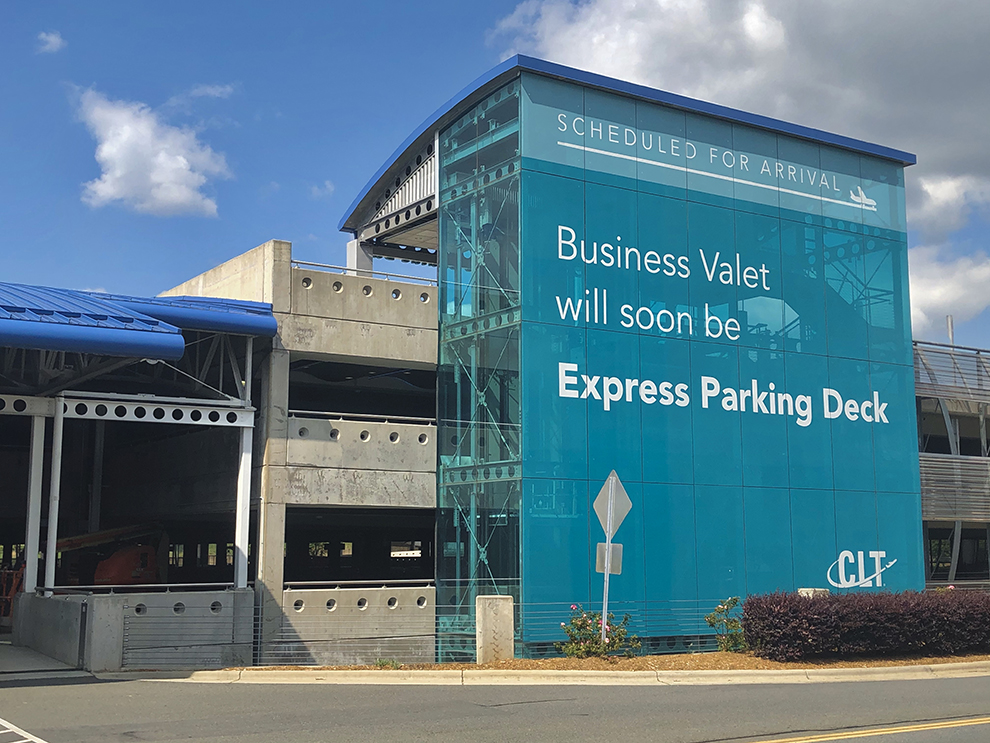
Project planning should establish how the Charlotte client's desired result can move realistically into production and installation. Heritage aligns scope, priorities, target date, site readiness, stakeholder approvals, surfaces, access, and the client's anticipated overall project investment, then uses discovery and field verification to identify what still needs to be resolved.
Many Heritage projects involving production and professional installation range from $10,000 to more than $200,000. Charlotte's headquarters and primary specialty production facility create a close connection among project management, environmental graphic design, production, fabrication, local field support, and installation. That operating depth is especially useful when timing becomes demanding. Heritage evaluates what can responsibly be completed and, when the full original plan is not realistic, works with the client to prioritize or phase the strongest attainable solution.
For new workplace interior and event environment projects in Charlotte and surrounding Charlotte-region communities, clients should currently plan for an anticipated overall project investment of at least $4,000. Heritage evaluates selected exterior applications for physical suitability, while the client, property owner or property manager, or general contractor handles required sign permits and property approvals.
Show Heritage the surfaces you want to use and the result you need from the graphics. Through Get Started Now, share your Charlotte project location, target date, anticipated overall investment, photographs, artwork, brand standards, or other information already available. Heritage can help determine the remaining design, material, and field decisions rather than asking you to solve them first. One dedicated Project Manager will review the request, confirm whether the project is a good fit, and organize the Heritage resources needed to carry the approved direction through production and professional installation.
It covers printed and cut vinyl applications selected for compatible walls, glass, doors, floors, elevators, displays, and other surfaces. The category can serve branding, privacy, identification, direction, campaigns, and longer-term workplace needs. Material choice is not universal. Heritage considers the substrate, intended appearance, expected duration, exposure, cleaning, installation method, and removal expectations before recommending the vinyl and adhesive system.
Possible applications include properly prepared painted walls, glass, doors, selected flooring, elevator surfaces, display panels, and other compatible substrates. Heritage evaluates the specific surface instead of assuming that one adhesive belongs everywhere. Texture, paint or glass coatings, moisture, traffic, movement, cleaning, exposure, and the intended service period all influence whether a proposed system is appropriate.
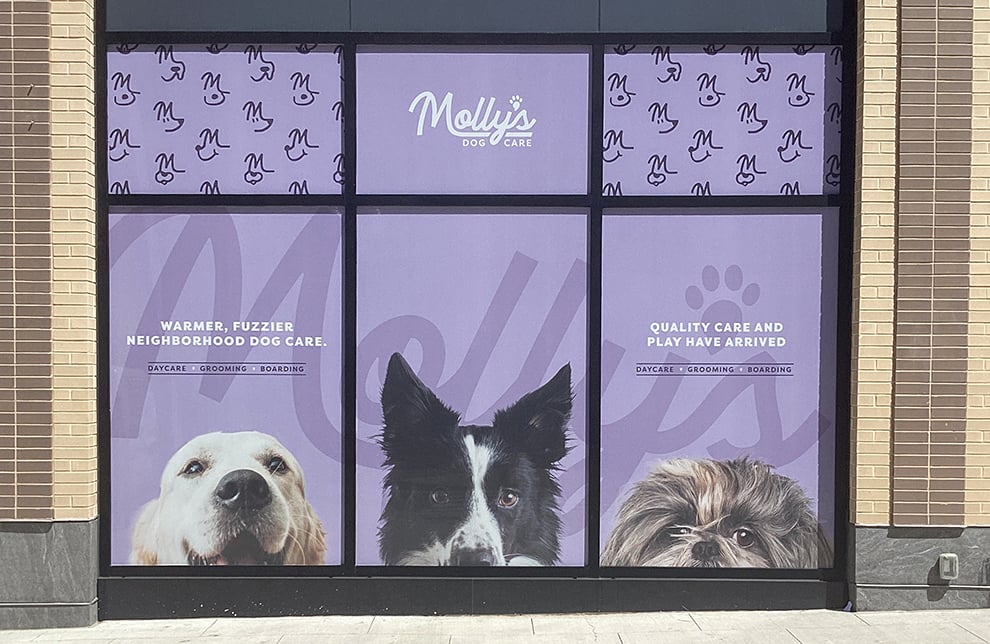
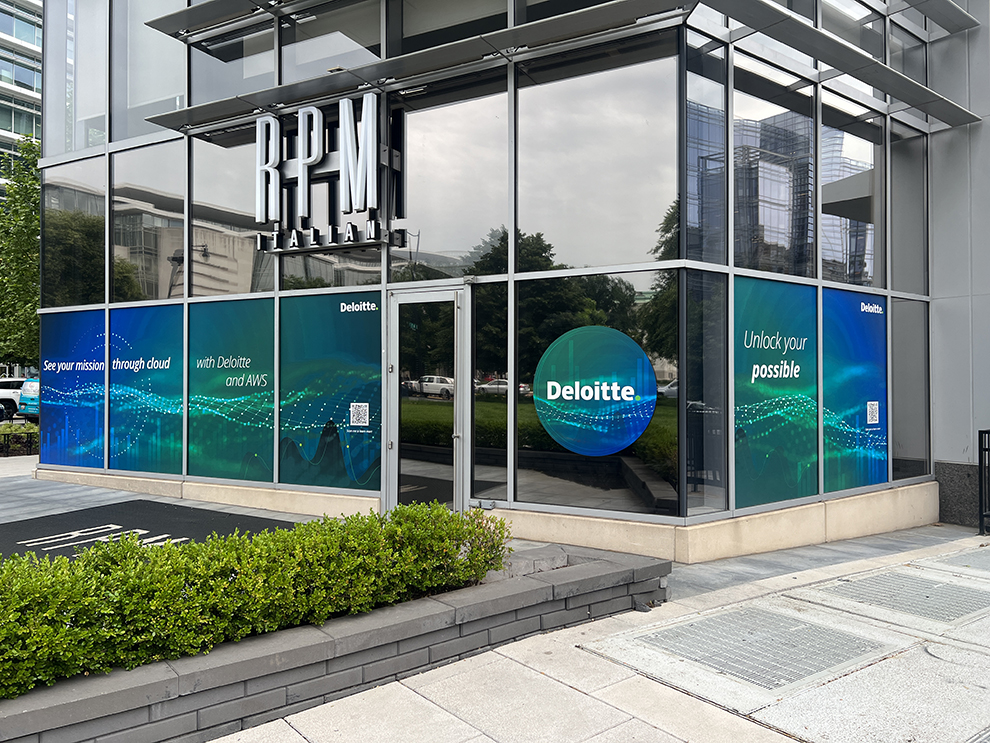
Window graphics can help identify a business, add branded messaging, create visual interest, support selected views, or improve privacy on glass. Depending on the goal, the solution may use printed graphics, frosted or etched-look privacy treatments, cut vinyl, perforated window graphics, patterns, logos, or distraction markers. Heritage starts with what the client wants people to see or experience, then recommends the material and coverage that fit the glass and location.
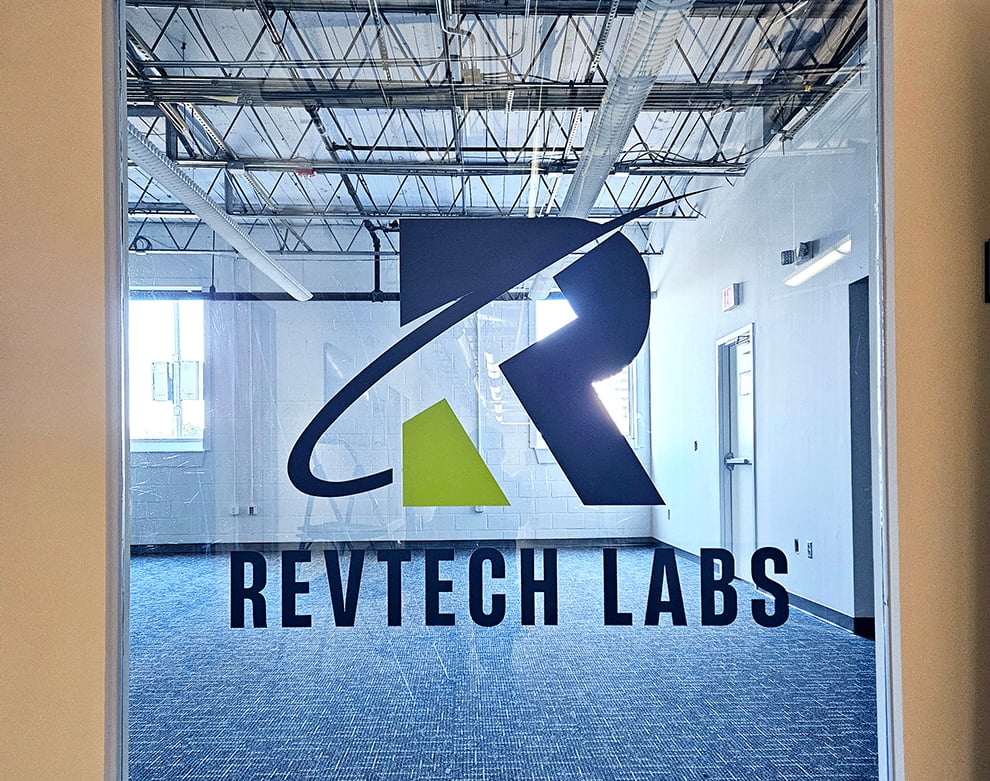
Privacy vinyl can give conference rooms, offices, and shared spaces greater visual separation while allowing light to remain part of the environment. Coverage can be concentrated where people sit or stand rather than automatically covering the entire glass surface. Heritage may use frosted vinyl, etched-look privacy film, bands, patterns, logos, or selected opaque areas after considering room use, sightlines, desired openness, cleaning, and the brand experience.
Adhesive vinyl depends on the painted surface supporting it. If the paint is still curing, the graphics can develop bubbles, lifting, or other adhesion problems. If the paint and primer are not securely bonded to the drywall, normal installation may expose that weak connection. Heritage reviews visible wall condition, repairs, texture, moisture, paint information, and other factors that may affect performance. That evaluation helps reduce avoidable surprises, but it cannot confirm the hidden bond among paint, primer, and drywall.
Fresh paint can feel dry before curing is complete. During that curing period, the paint may continue to outgas, releasing gases or vapors. If vinyl is installed too soon, those emissions can become trapped beneath the graphic and contribute to bubbles, blisters, lifting, or premature adhesion failure.
Outgassing is not the only possible cause of an adhesion problem. Moisture, contamination, paint bonding, substrate condition, material selection, and installation conditions can also matter. Heritage therefore uses the paint manufacturer's full-cure requirements as the readiness standard. Roughly four weeks remains useful planning guidance for many paints, but the manufacturer's requirements and actual conditions at the property control the timing.
Positioning an adhesive graphic can require the installer to lift or adjust the material until placement and alignment are correct. If the paint and primer are not securely bonded to the drywall, that normal installation process can cause paint or primer to release. Heritage stops rather than continuing over the problem, and the dedicated Project Manager explains what the installer found.
The client or property owner then arranges and pays for the necessary repair, proper priming, repainting, and full cure. Heritage returns after the repaired wall is ready. When the graphics are tied to an important opening, event, workplace change, or another fixed date, identifying wall conditions early helps protect the project schedule from the added repair and cure time.
It can show how the proposed vinyl behaves against the paint that Heritage can see and touch, which helps with material and installation decisions. It cannot inspect the hidden connection among paint, primer, and drywall. A favorable result therefore reduces uncertainty but does not guarantee that paint will stay bonded during later repositioning, installation, or removal.
Yes. When Heritage will provide professional installation, a site survey is required. The visit combines discovery with on-site verification of dimensions, surfaces, access, existing graphics, and other conditions that could affect the work. Those findings become part of the project record used by the dedicated Project Manager, production team, and installers, so decisions are based on the actual property rather than assumptions.
One dedicated Project Manager can preserve the client's brand standards, messaging, approvals, and project knowledge across multiple properties. Local site information is then used to adapt each application to the dimensions, surfaces, architecture, access, and operating needs of that location. The physical layouts do not need to be identical for the brand experience to remain consistent. Heritage can adjust the execution while protecting the same visual standards and storytelling from site to site.
Perforated vinyl contains many small openings. When it is printed and installed on glass, the graphic can read strongly from the intended viewing side while still allowing a degree of vision through the window. Lighting on each side, image coverage, orientation, and the specific product all influence the effect. Heritage recommends perforated window graphics only when that balance supports the client's branding, visibility, daylight, and view objectives.
Distraction markers are decorative or branded vinyl elements that help make clear glass easier to notice. They may use bands, dots, patterns, logos, or another visible treatment while also contributing to privacy or visual identity. Heritage can coordinate them with surrounding glass graphics, but applied vinyl is not presented as proof of building-code or safety-glazing compliance.
It can be. Some frosted vinyl and privacy film products are positioned on glass with a wet-application method. Even after the installer removes as much solution as practical, a small amount of moisture may remain temporarily between the glass and material. While that moisture dries, the surface can show haze, streaks, cloudiness, small pockets, or uneven areas.
The dry-out period is not fixed. Product, glass, temperature, humidity, sunlight, and site conditions all influence it, and some installations can take days to several weeks to fully clear. Heritage should know about important openings, meetings, events, photography, or presentation dates during planning so timing can account for this normal condition. Other window graphics are installed differently; wet application should not be assumed for every product.
They can, although the VOC level alone does not determine whether a wall will be difficult. Some washable, scrubbable, stain-resistant, and other paints may create adhesion challenges. Heritage may recommend cleaning, adhesion testing, or a vinyl and adhesive system better suited to the painted surface. Even a favorable test cannot confirm how securely the paint and primer are bonded to the drywall underneath, so the visible surface and hidden wall system remain separate considerations.
Heritage plans wall-graphic removal carefully and uses deliberate techniques to reduce avoidable damage. That professional care cannot guarantee a damage-free painted wall because the result also depends on the condition and bond of the paint, primer, and drywall beneath the vinyl. If paint, primer, or drywall facing begins to release, Heritage pauses and communicates what is happening rather than continuing removal across an unstable surface.
When replacement graphics are planned, removing the old graphics early gives the client or property owner time to address any restoration before the new installation date. The client or property owner remains responsible for arranging and paying for repair, proper priming, repainting, full cure, and related restoration. Heritage remains responsible for careful removal, communication, and professional handling of the conditions encountered.
Yes. Glass does not have the paint, primer, and drywall layers that create the primary wall-removal risk. A glass removal can still leave adhesive residue or reveal an existing issue involving tint, coatings, or the glass surface. Heritage evaluates the specific glass and material rather than applying painted-wall assumptions to it. Removal methods depend on the vinyl, age, exposure, access, and visible condition of the application.
Schedule removal early enough to learn what the wall needs before the replacement date. Heritage can remove the existing graphics when it is also responsible for producing and installing the new ones. Once the old material is off, paint loss or drywall-facing damage may become visible. The client or property owner then has time to arrange and pay for restoration, apply new primer and paint if needed, and allow the repaired surface to fully cure before Heritage comes back.
Yes. Adhesive vinyl is regularly used for Charlotte event branding, temporary campaigns, sponsor messaging, seasonal graphics, short-term wayfinding, window applications, floor graphics, and other time-defined needs. Heritage selects the material and adhesive around the surface, intended duration, appearance, traffic, exposure, and removal plan so the application matches the way it will be used.
Temporary applications still require appropriate surface preparation and removal planning, particularly on painted walls, but short-term and event graphics are a normal part of Heritage's Adhesive Vinyl capabilities rather than an unusual exception.
Begin with how long the application needs to serve the client. There is no single lifespan that applies equally to an interior glass graphic, a floor application, an elevator surface, or exterior-facing vinyl. Material and adhesive choice, sunlight, moisture, traffic, contact, cleaning, the substrate, and installation quality all affect performance. Heritage uses the intended duration and real conditions to select a system suited to the planned use.
Protection depends on the way the graphic will be used. Interior wall graphics are usually printed without laminate. Heritage may add it for floor traffic, frequent handling, abrasion, repeated cleaning, or other exposure that could benefit from a protective layer. Exterior wall graphics are treated differently: a protective film laminate is included as standard practice. Its UV protection helps slow fading from sunlight, and the added layer also protects the print from rain and other outdoor exposure.
Yes. Some clients already have complete brand standards or approved artwork, while others need help developing how the graphics should look and function in the space. Heritage's environmental graphic designers can collaborate with client stakeholders and professional design partners to resolve scale, placement, coverage, messaging, and production details. Heritage remains focused on the environmental graphics and physical elements within our scope rather than licensed architectural or general interior design services.
Yes. A workplace or event project may use vinyl on more than one surface when each application has a useful role. Window privacy, wall messaging, floor direction, elevator graphics, cut lettering, or event graphics can be coordinated so the overall result feels intentional rather than assembled one item at a time. One dedicated Project Manager keeps approved brand standards, site information, production expectations, and professional installation connected across the project.
Selected exterior window and wall applications can be part of a Heritage-managed project when the material and site conditions support them. Heritage reviews exposure, substrate, access, installation conditions, and intended duration before confirming the application. For printed graphics on exterior walls, protective film laminate is standard and provides added UV and weather protection. The client, property owner or property manager, or general contractor remains responsible for obtaining any required sign permits and property approvals.
Heritage does not offer installation-only service for customer-provided graphics. Installation depends on decisions made earlier, including measurements, material selection, print and production quality, fit, and the ability to reproduce material quickly if a correction is needed. Keeping those decisions within Heritage's scope allows the team to take greater responsibility for the schedule, installation quality, and finished result instead of inheriting materials it did not control.
For new workplace interior and event environment projects in Charlotte and the surrounding Charlotte region, clients should currently plan for an anticipated overall project investment of at least $4,000. This means the client's anticipated investment in the complete Heritage-managed project scope, not the price of one isolated graphic or component.
The $4,000 amount is the current starting project-fit threshold, not Heritage's typical project size. Many Heritage projects involving production and professional installation range from $10,000 to more than $200,000. Actual investment depends on environmental graphic design, scope, materials, production, fabrication, surfaces, access, site conditions, and professional installation.
The starting threshold helps Heritage preserve the responsiveness, communication, and coordinated support accepted new projects depend on. Get Started Now gives the team enough context to evaluate the project, its timing, and the appropriate next step.
Begin with the information you already have. The project location, desired result, target date, anticipated overall investment, photographs, approximate dimensions, and available artwork or brand standards give Heritage a useful starting point. If painted walls are involved, paint information is helpful as well. You do not need to solve every technical detail before contacting us. The discovery process and required site survey will identify the field information and decisions still needed.
Charlotte clients benefit from local field and installation support that is closely connected to Heritage's production and fabrication resources. Site information can move quickly into material, production, scheduling, and installation decisions without forcing the client to reconnect separate providers. One dedicated Project Manager keeps those decisions organized from discovery through professional installation. That local operating depth helps Heritage respond to changing project needs, protect approved design intent, and remain accountable for the finished result rather than treating adhesive vinyl as a commodity purchase.
Yes. Charlotte clients benefit from having Heritage's headquarters and primary specialty production facility in the same market as local field and installation resources. When timing is unusually tight, one dedicated Project Manager can connect site information, environmental graphic design, production, fabrication, and installation planning around what needs to be ready and when.
Heritage first determines which parts of the scope are essential, whether approvals, materials, site readiness, and access support the requested date, and what can be produced and installed responsibly. If the complete plan cannot fit the available time, the team works with the client on the strongest practical alternative. That may involve phasing the work, changing the sequence, selecting another application or material, or completing the highest-priority areas first.
The objective is to use Charlotte's connected resources to find a plan Heritage can stand behind rather than promise a date without a workable execution path.
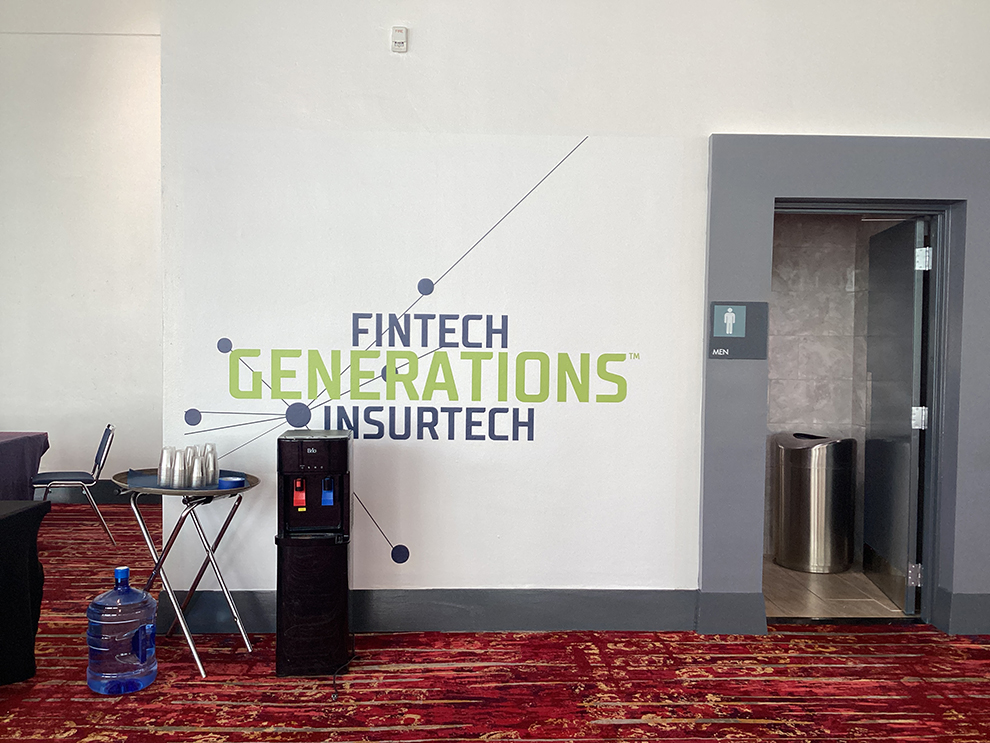
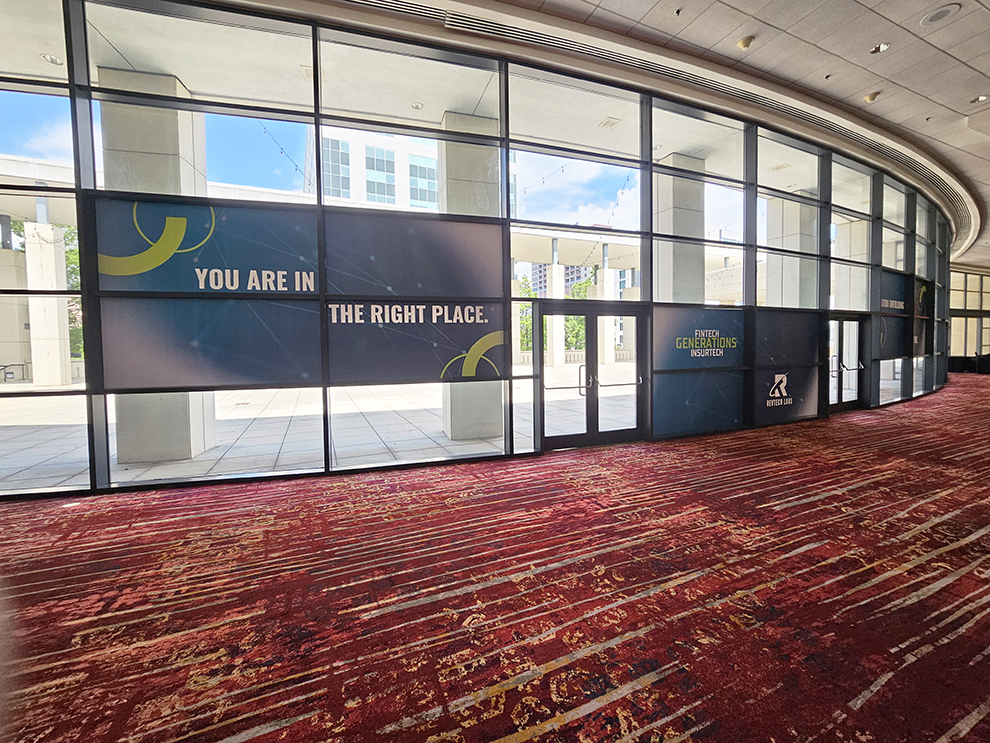
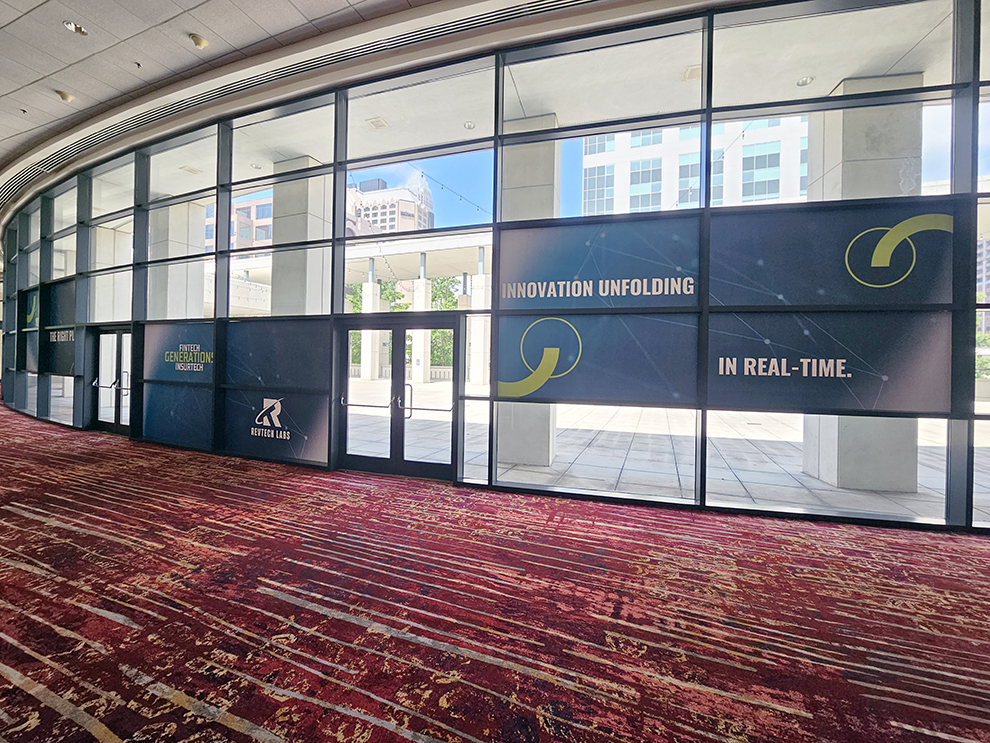
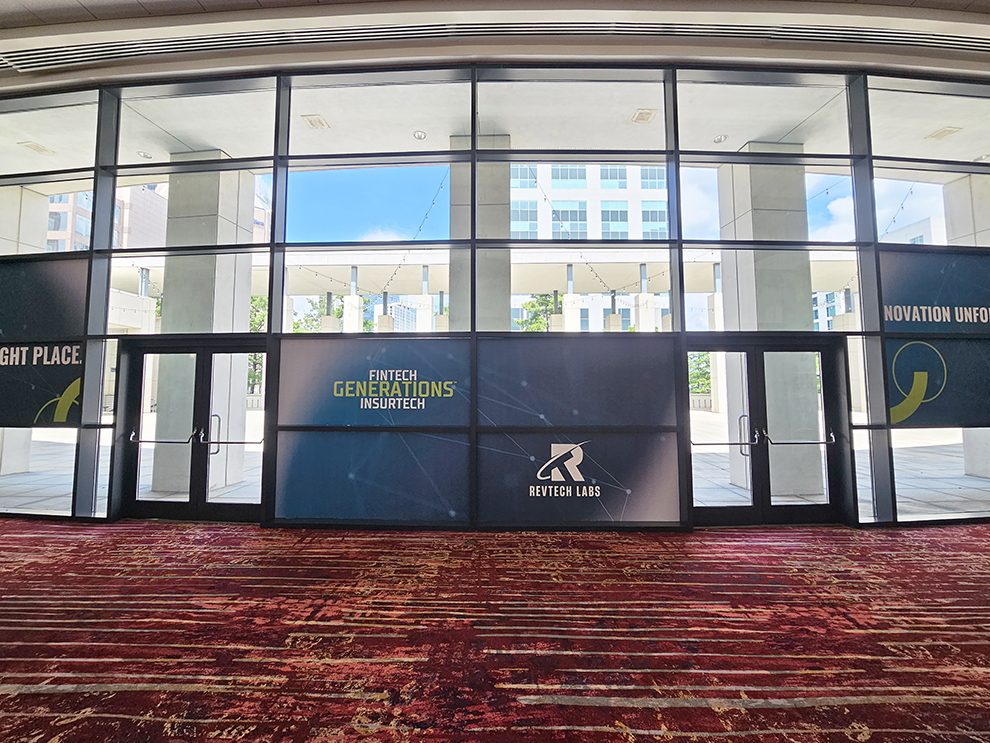
Heritage Signs & Displays collaborated with the Fintech + Insurtech Generations 2023 conference at the Charlotte Convention Center. Heritage worked closely with the client to create an interactive and branded event environment for attendees to network and discuss key topics impacting the financial and insurance sectors. The project enhanced the premier annual conference's atmosphere and engagement.
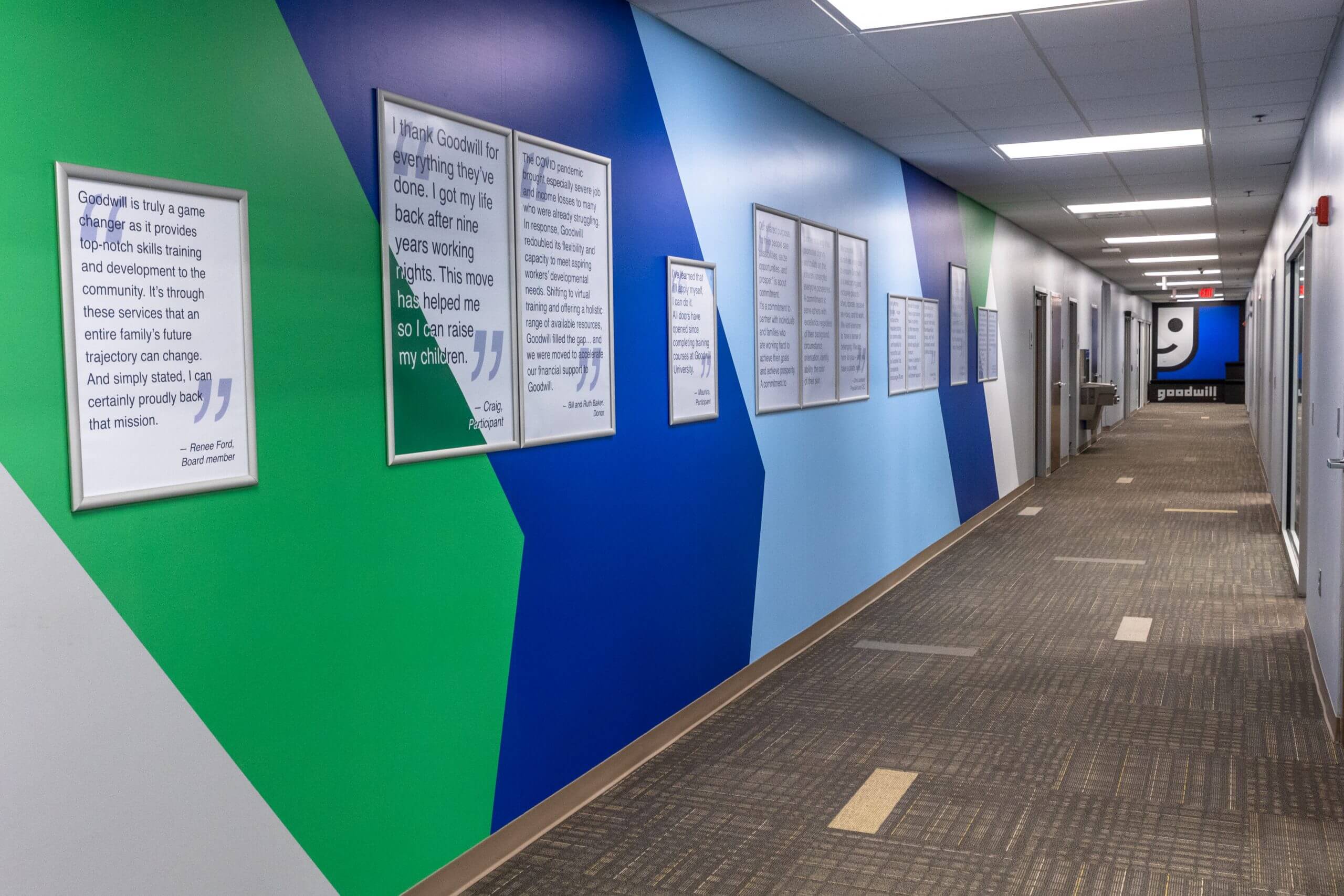
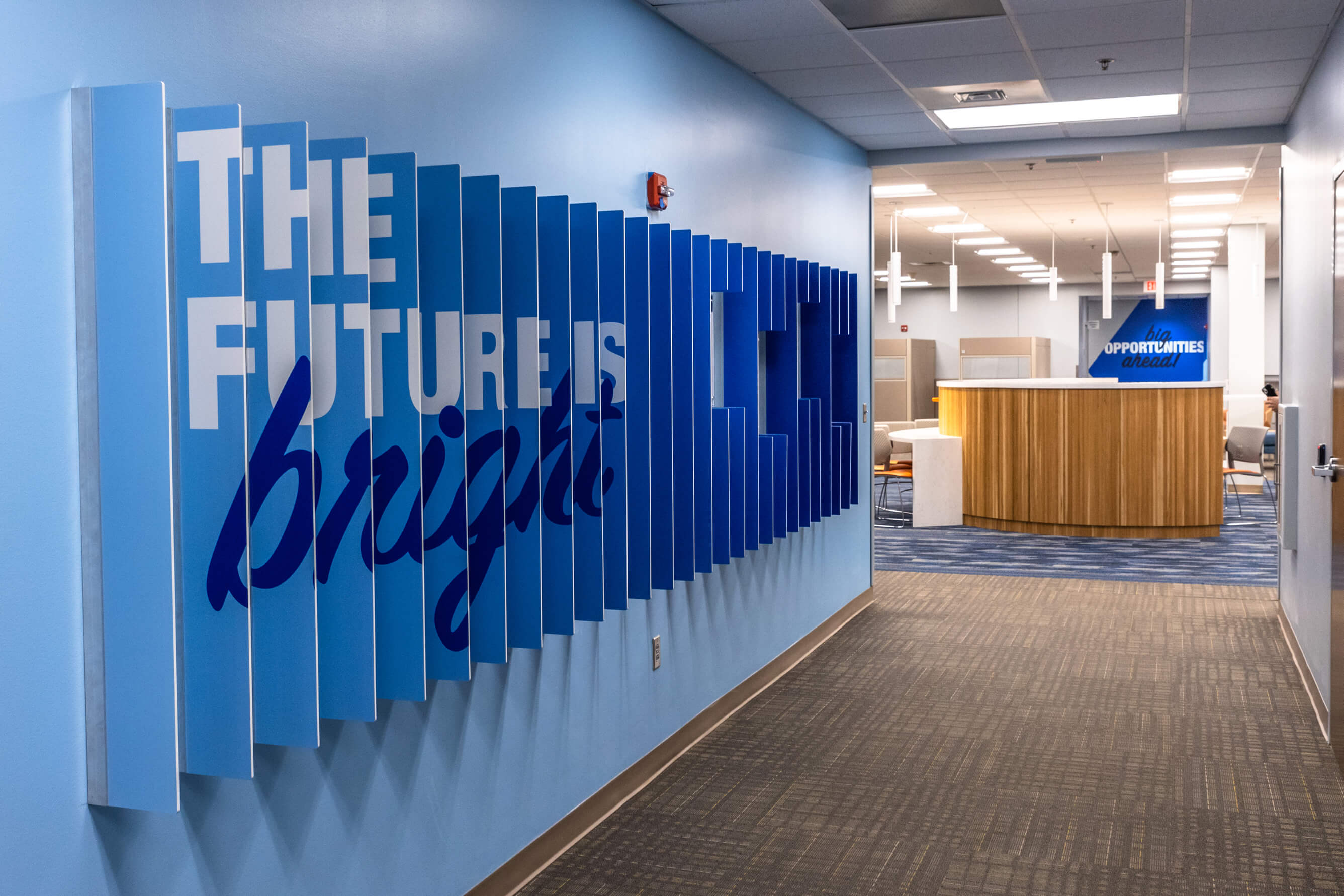
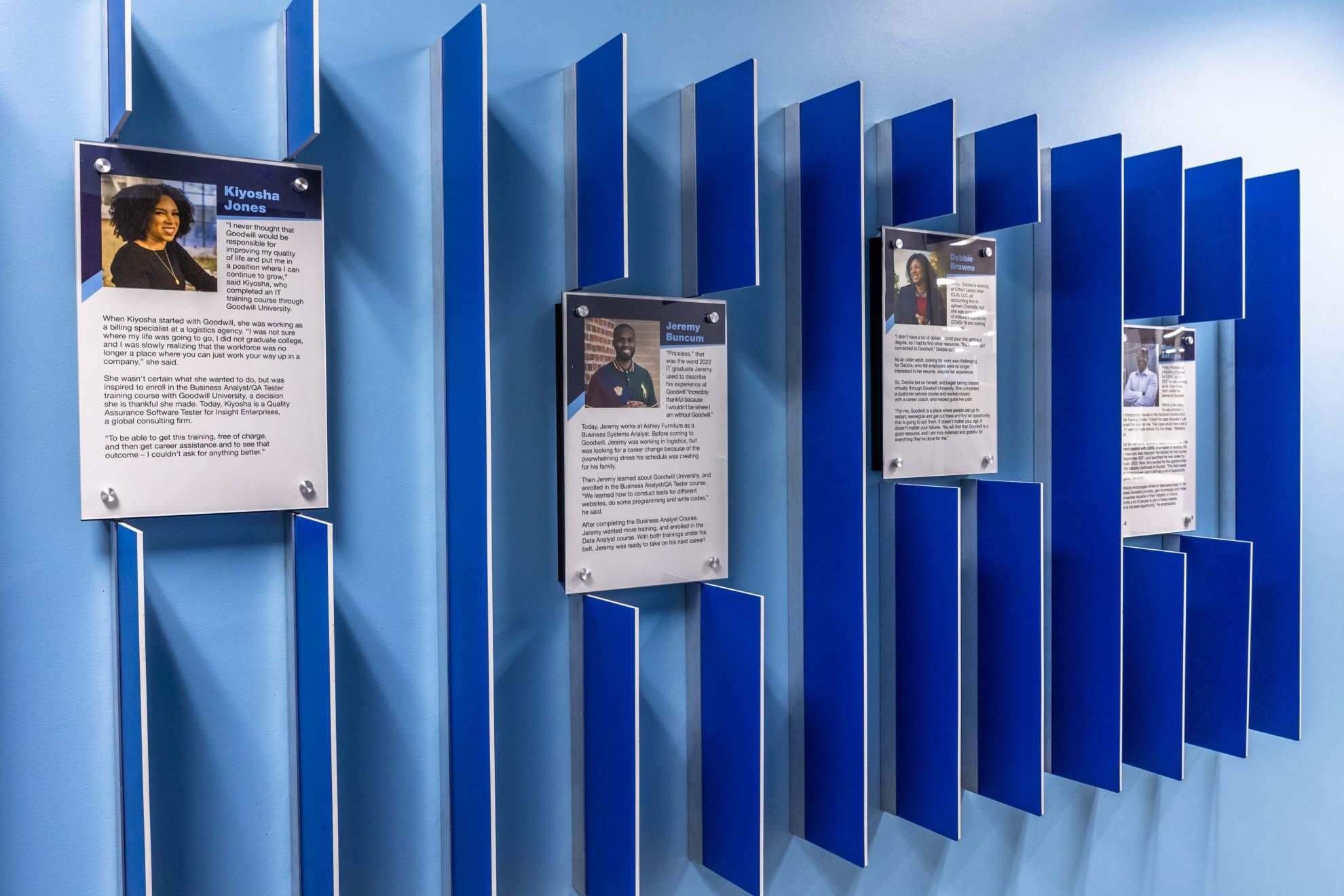
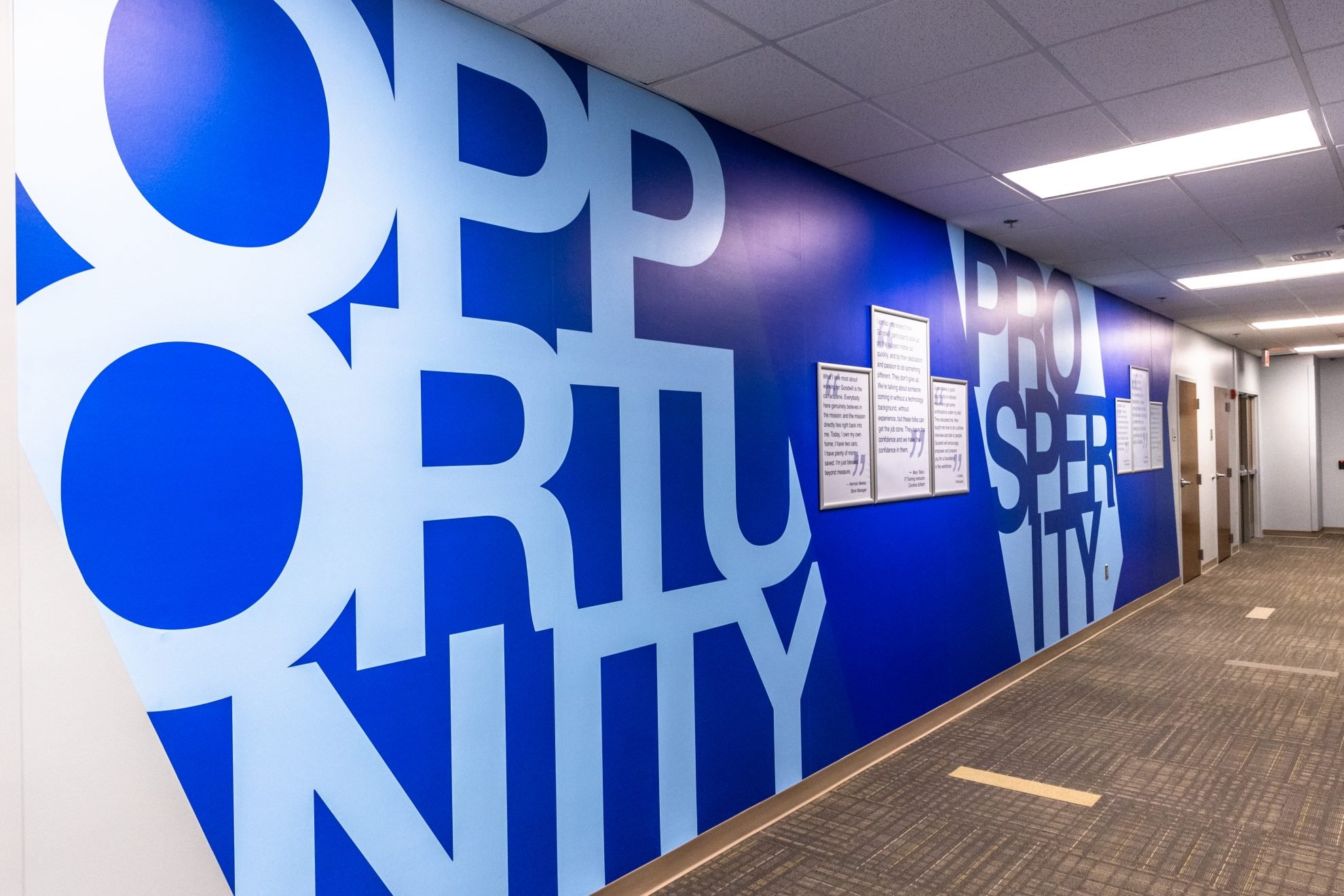
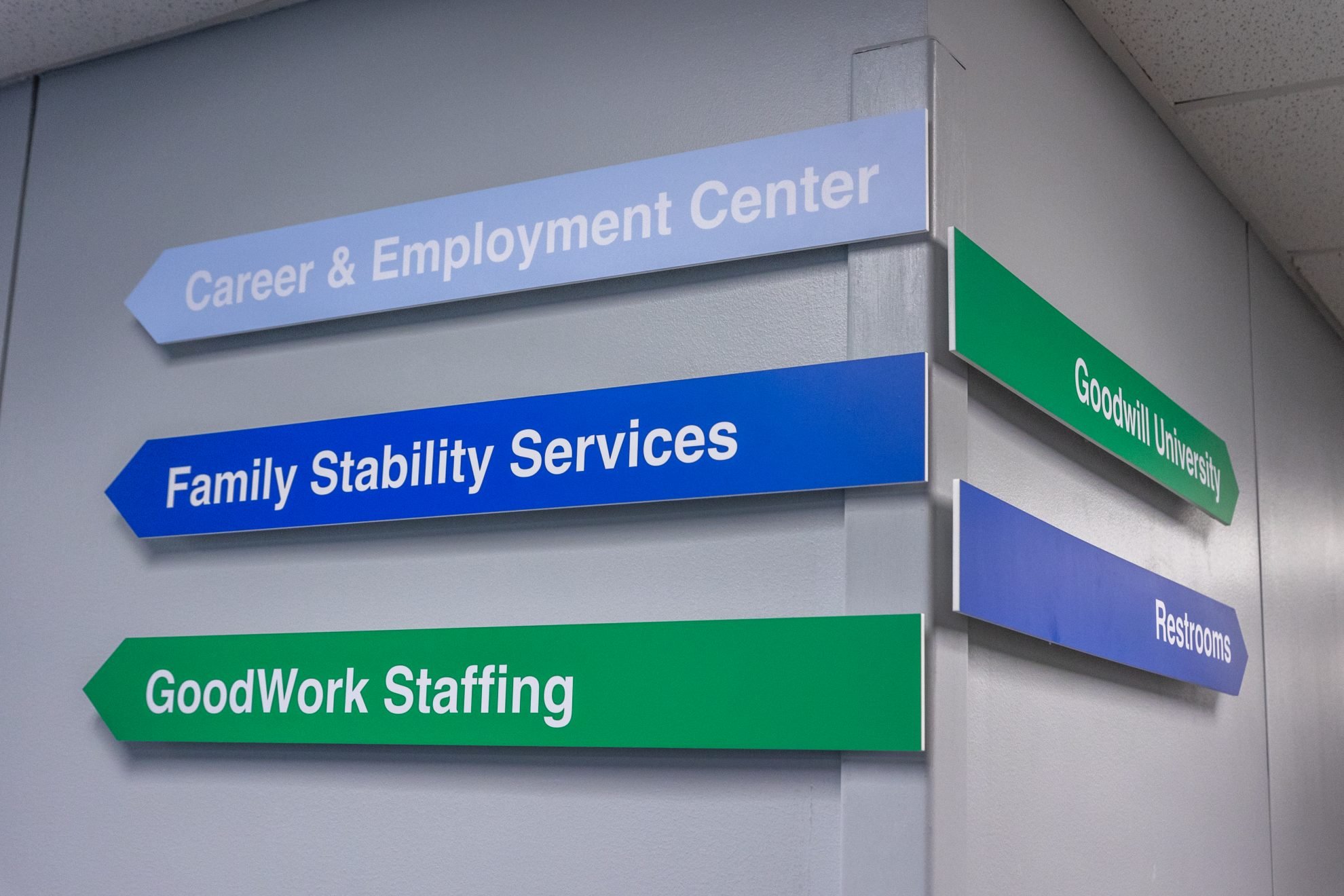
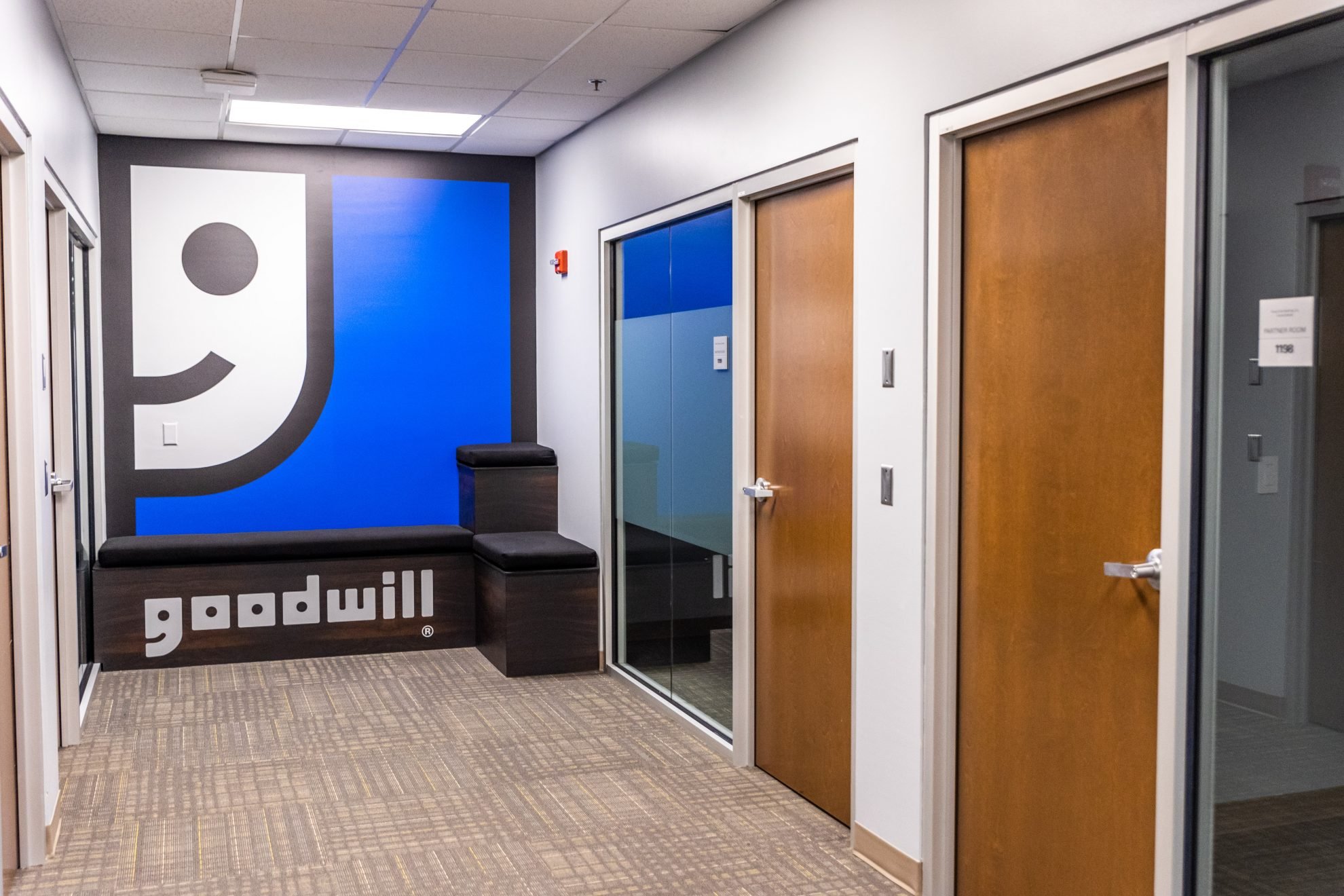
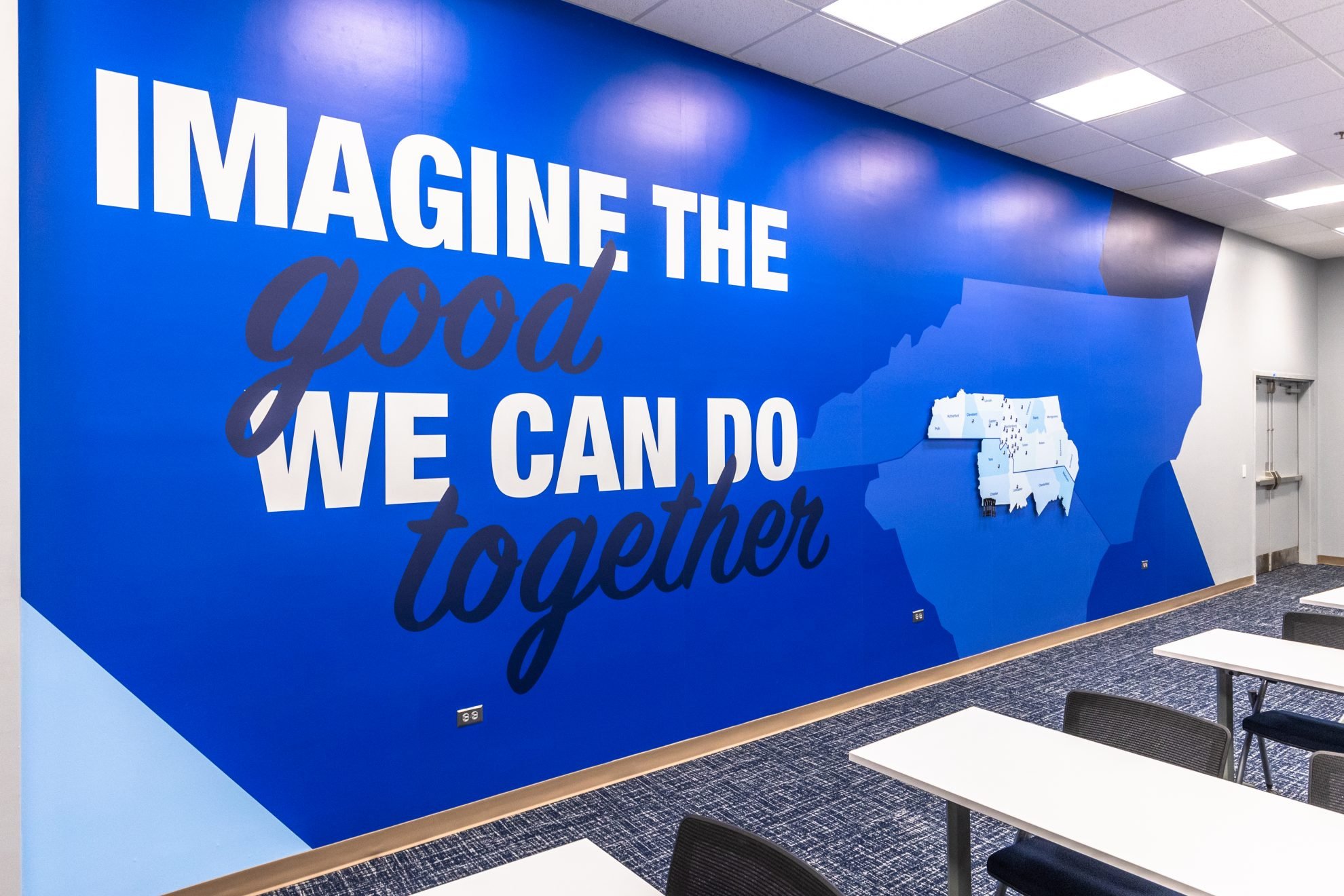
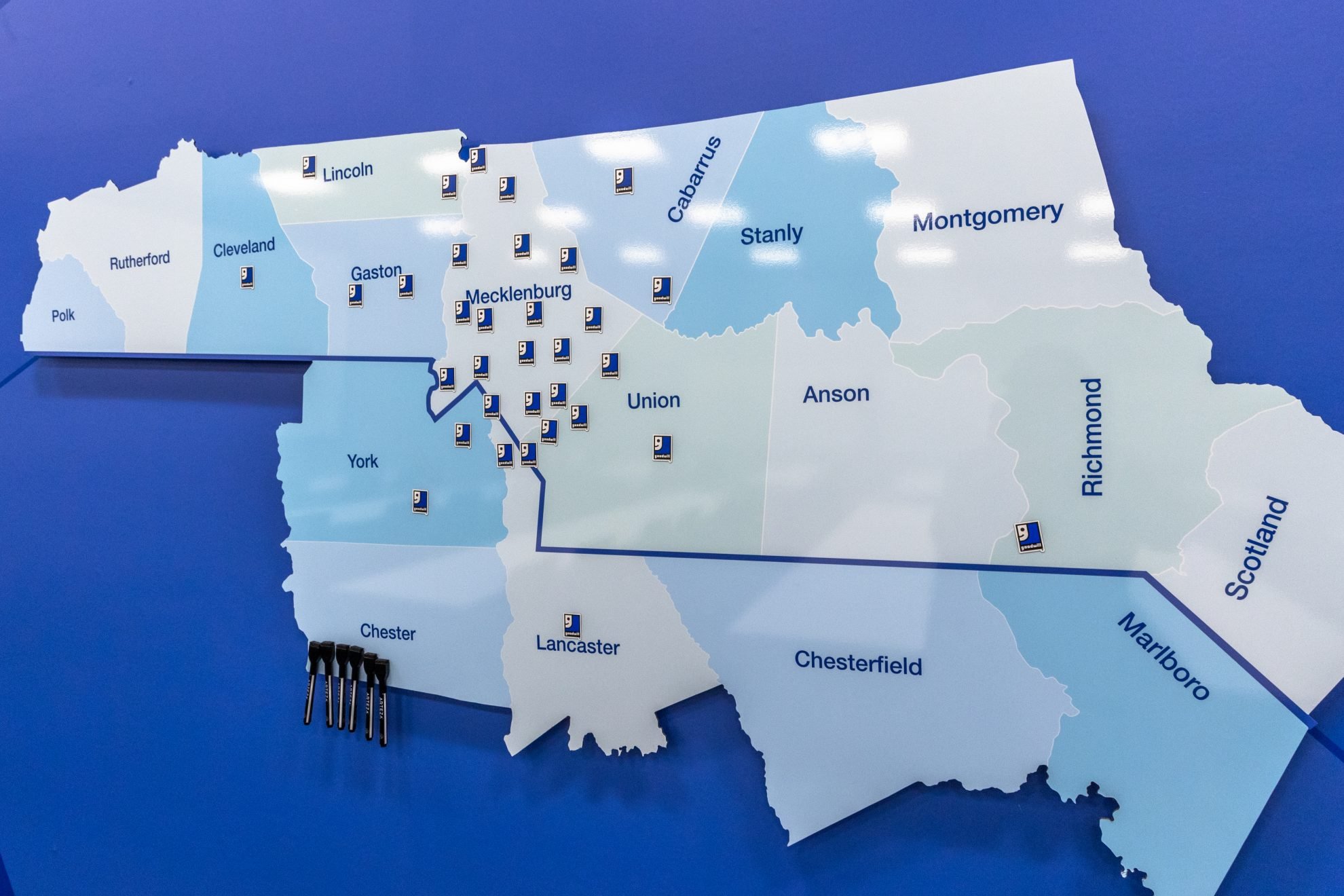
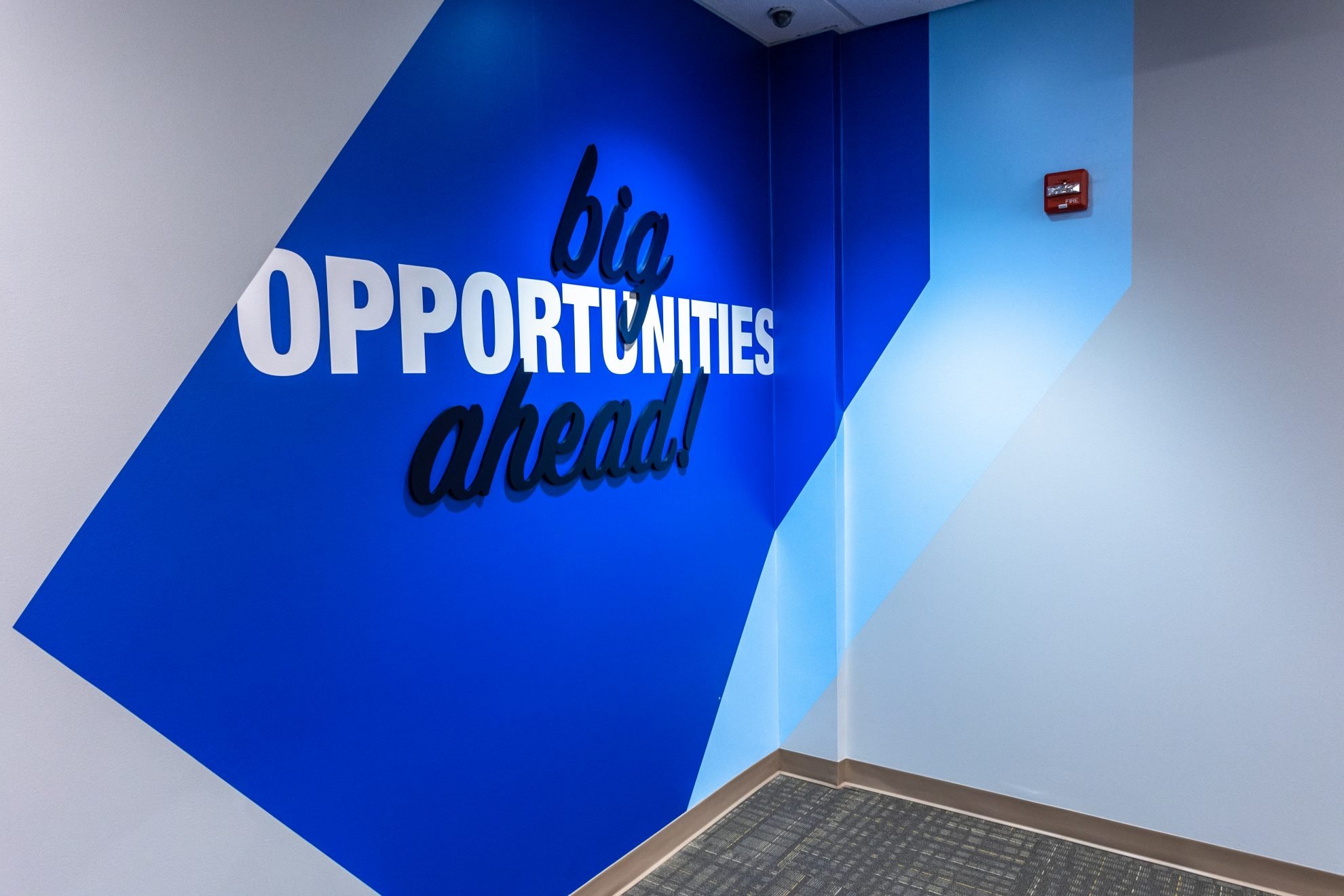
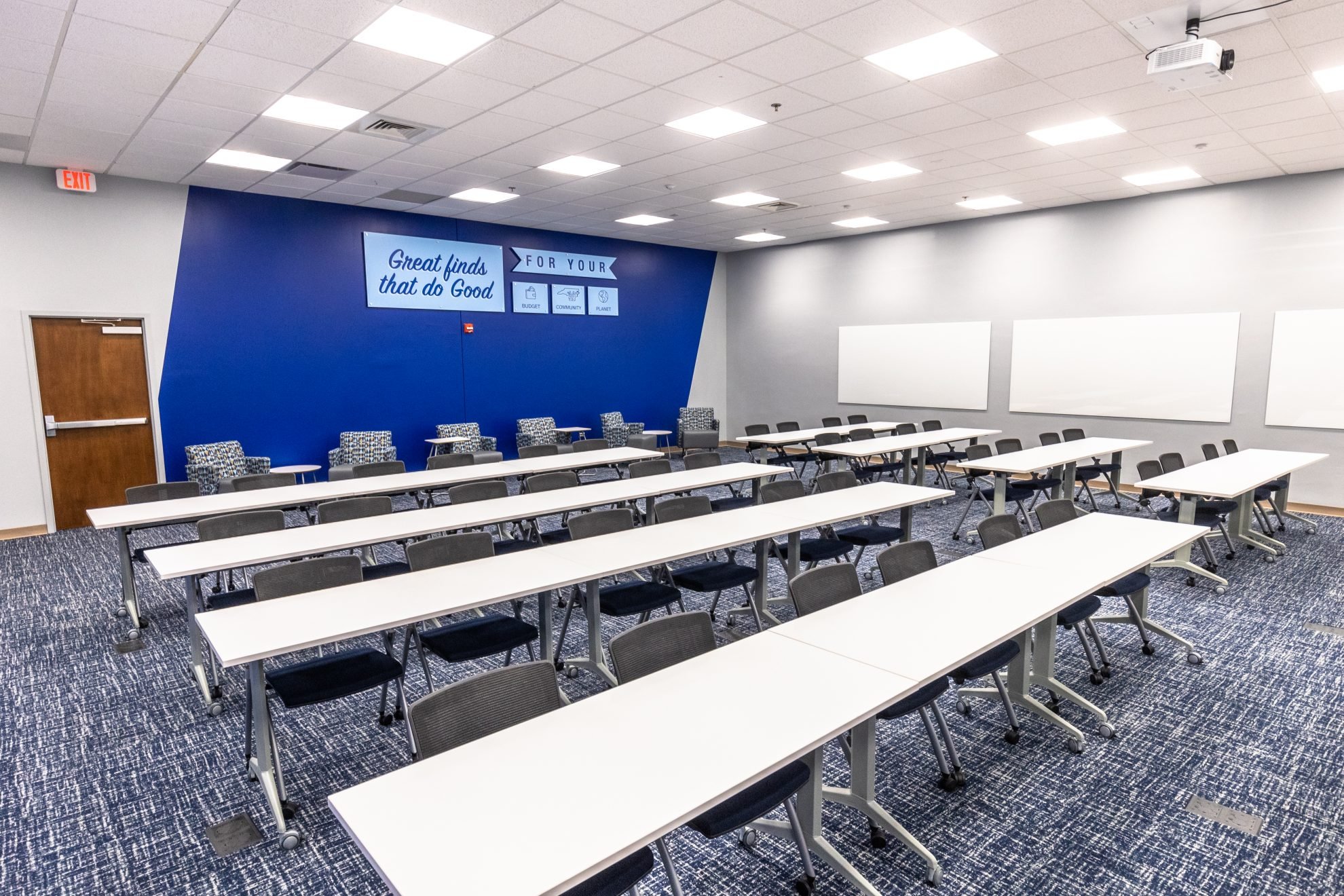
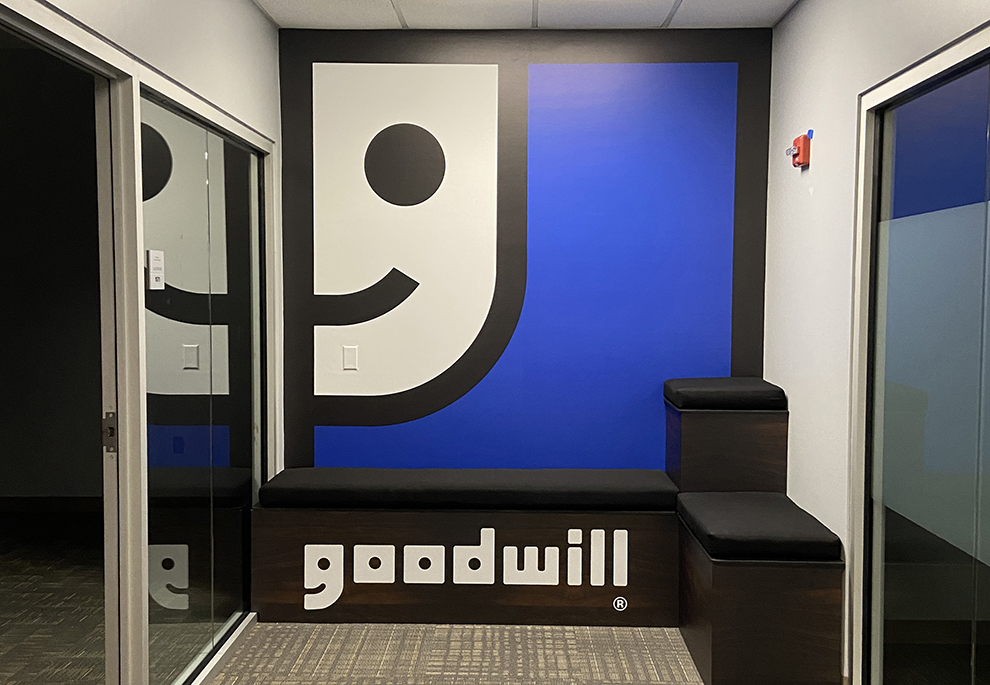
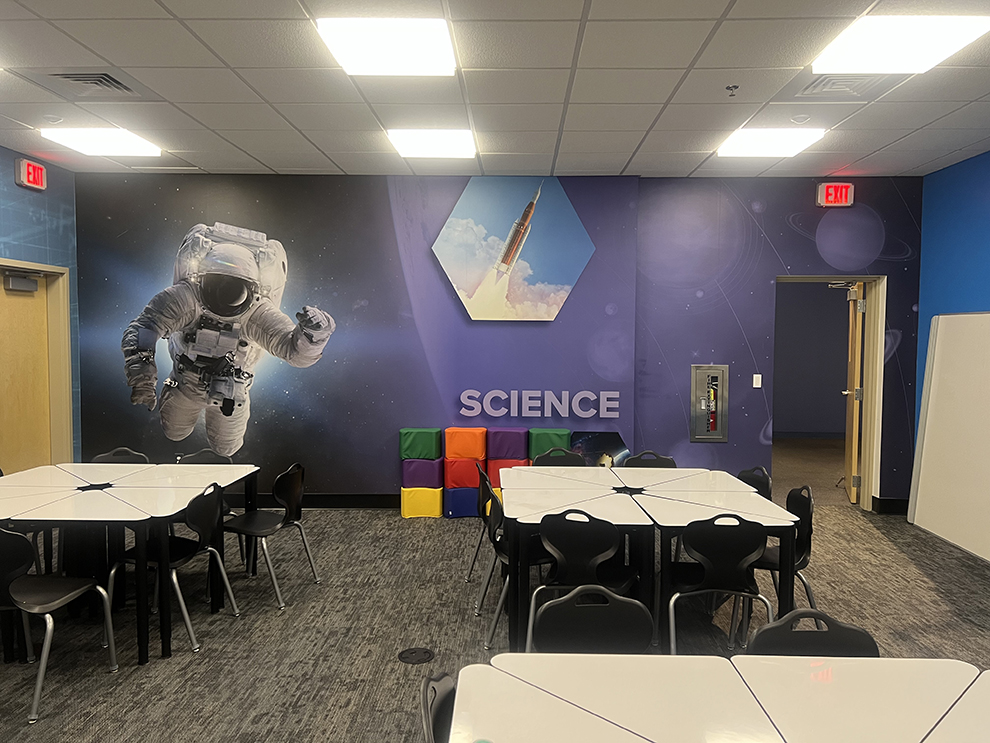
Heritage Signs & Displays collaborated with Goodwill Industries of the Southern Piedmont to transform the Opportunity Campus in Statesville, NC. The project included lenticular wall displays, wall wraps, frosted vinyl, wayfinding signs, and custom wall displays. These elements enhanced the Career & Employment Center, creating an engaging and branded environment that reflects Goodwill's values and mission to support workforce development.