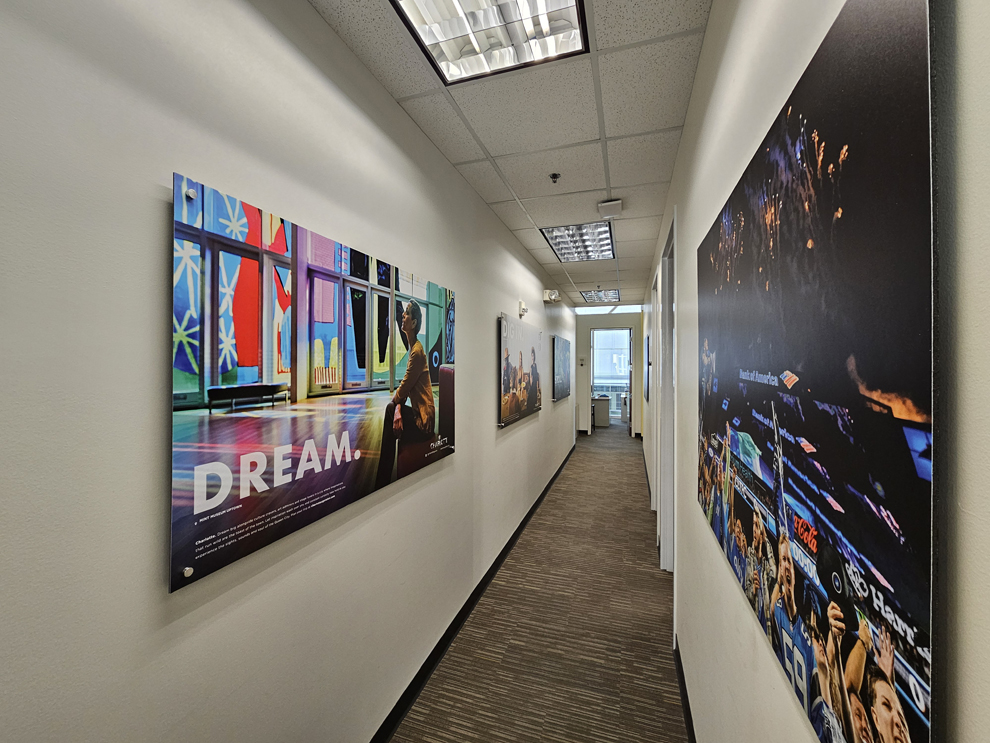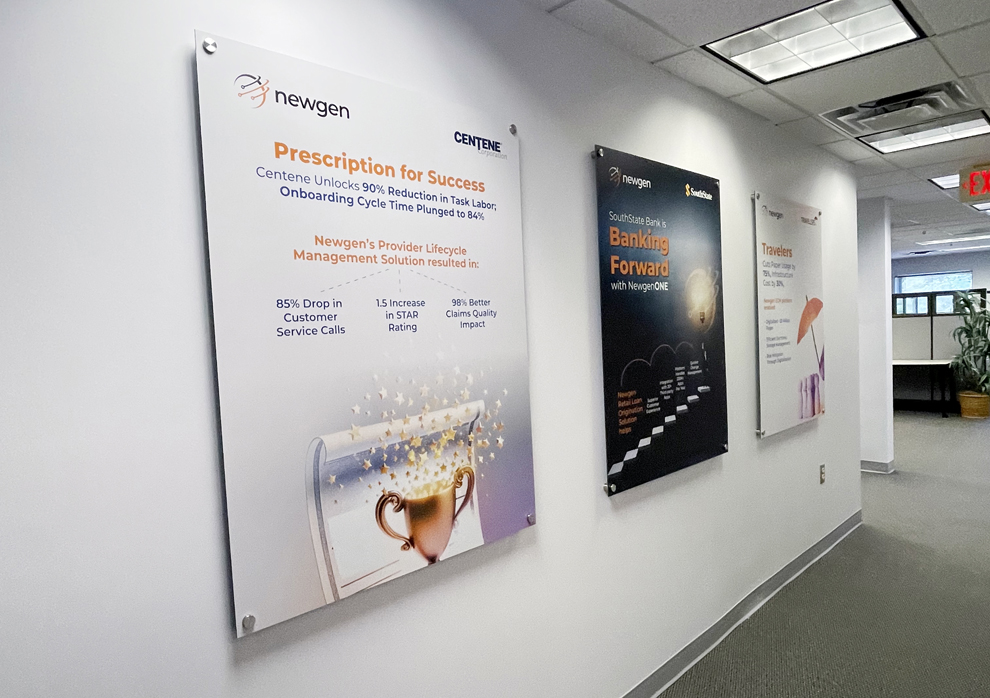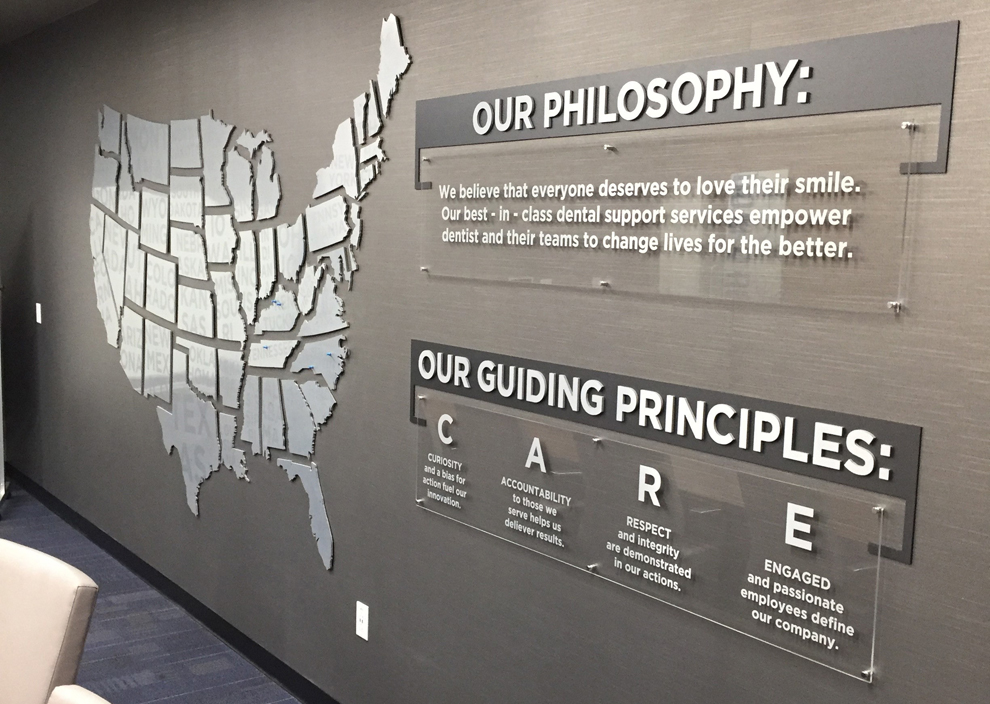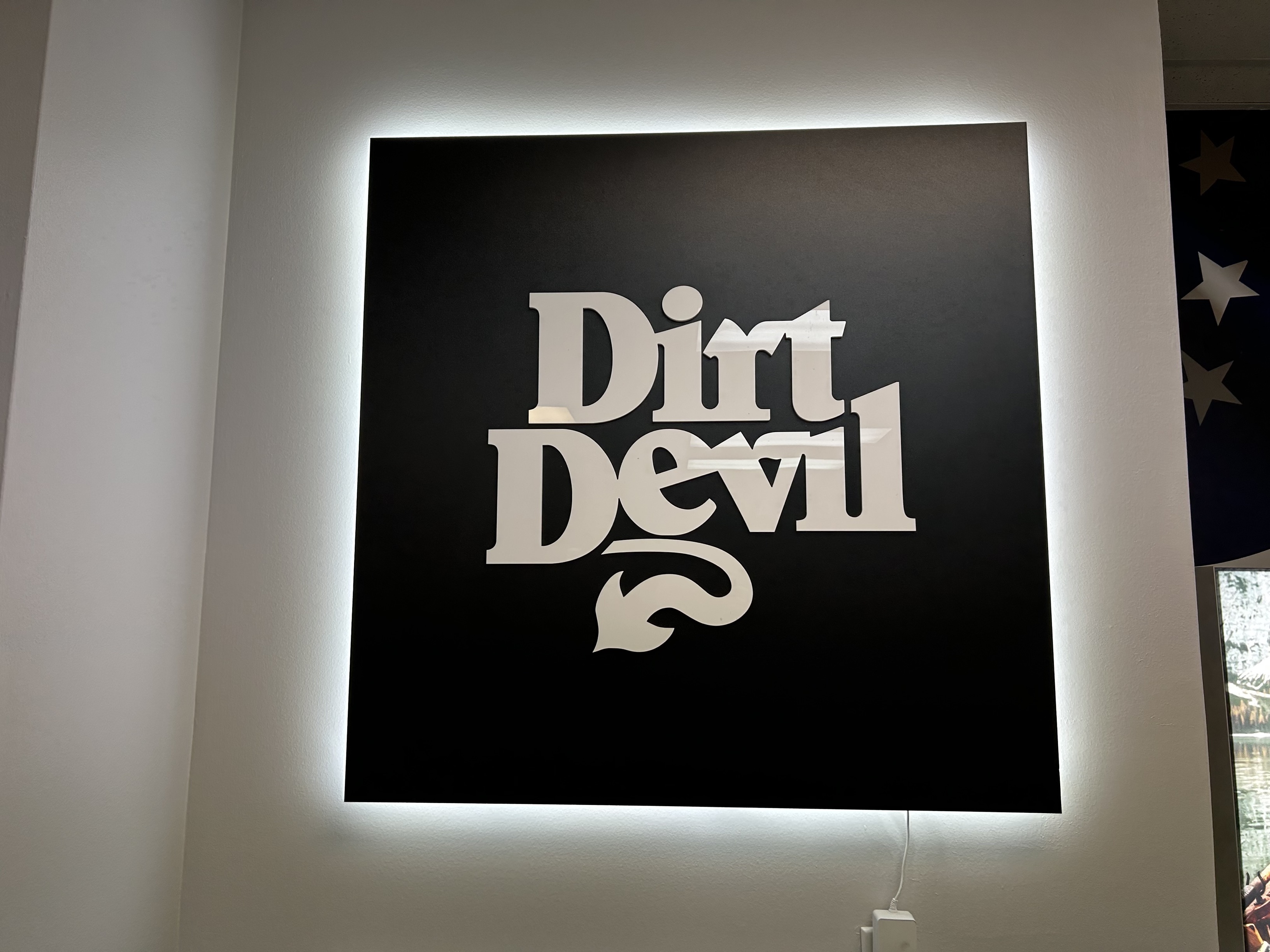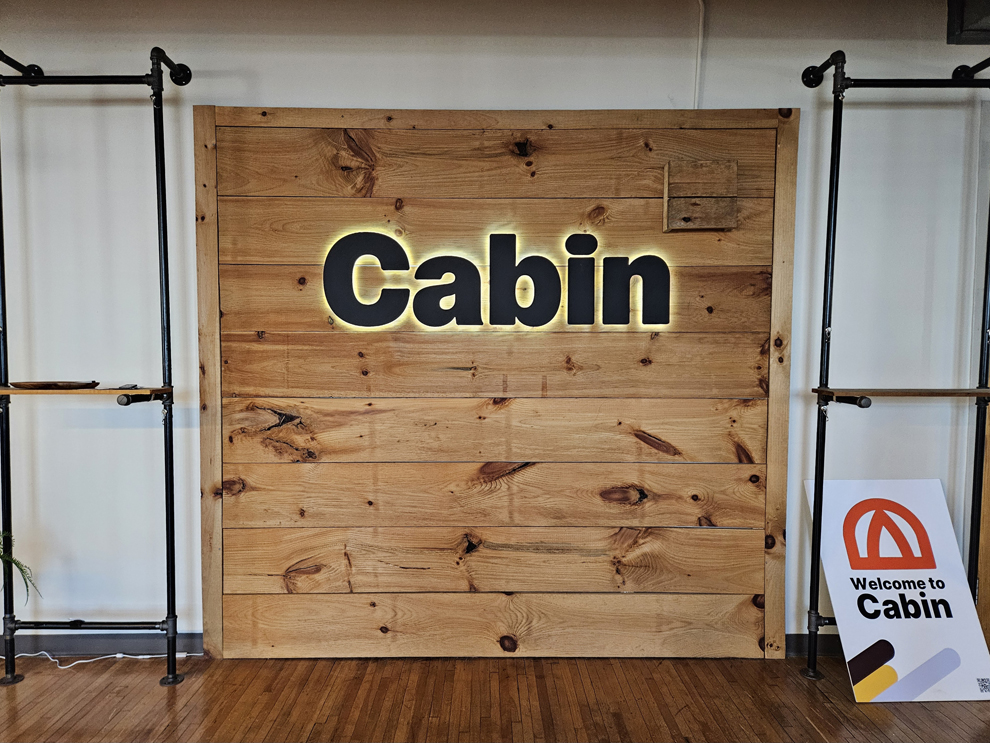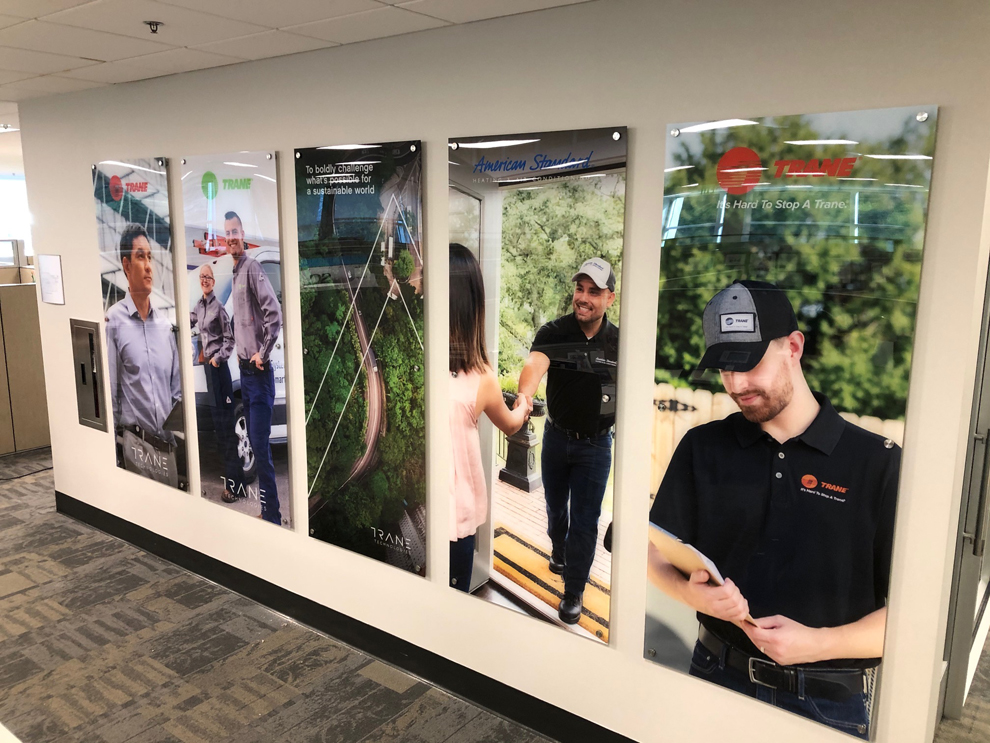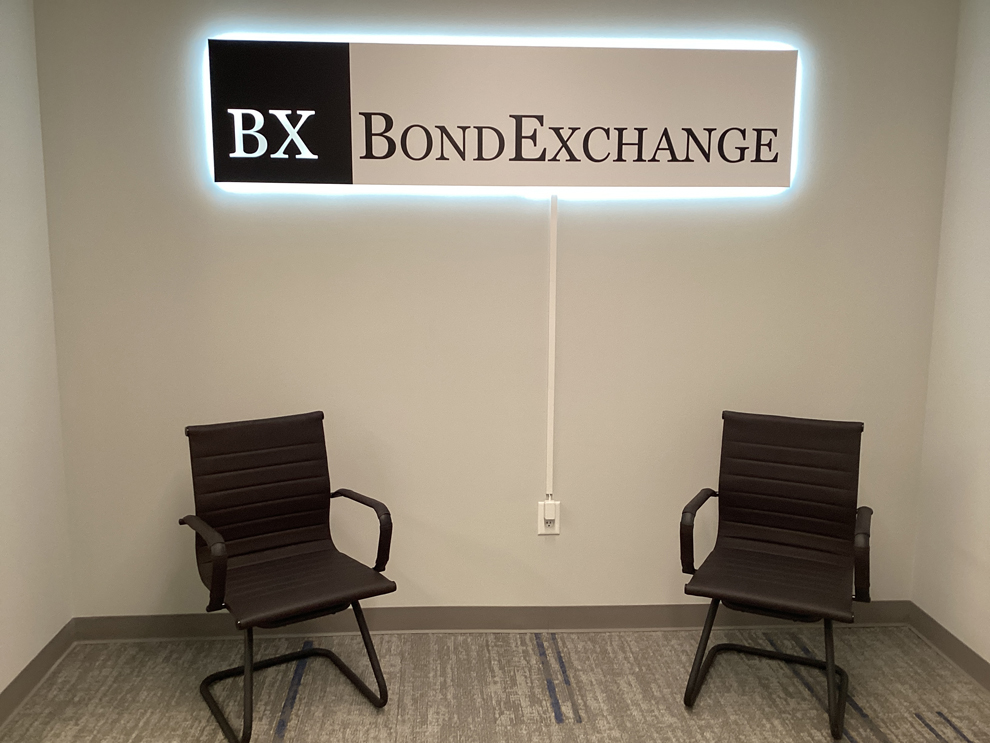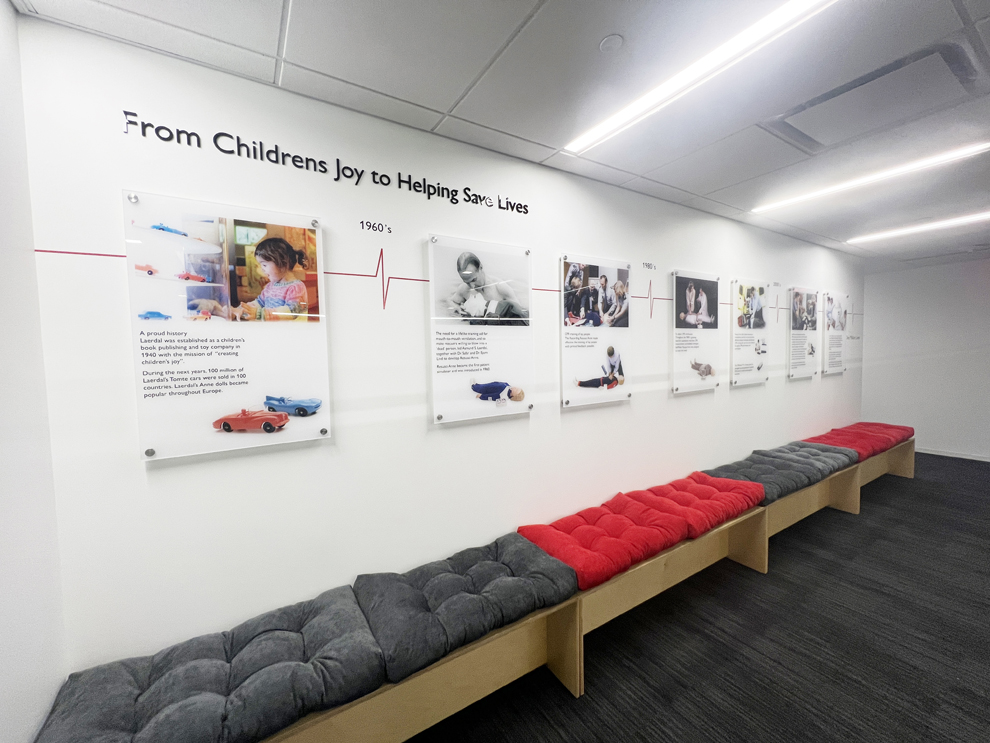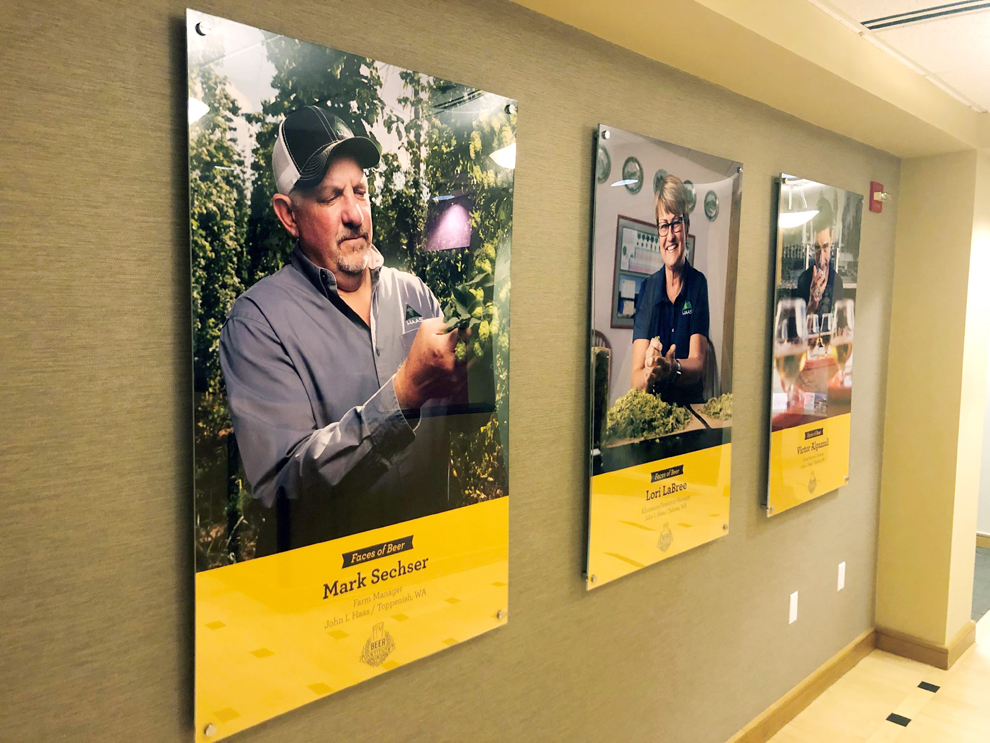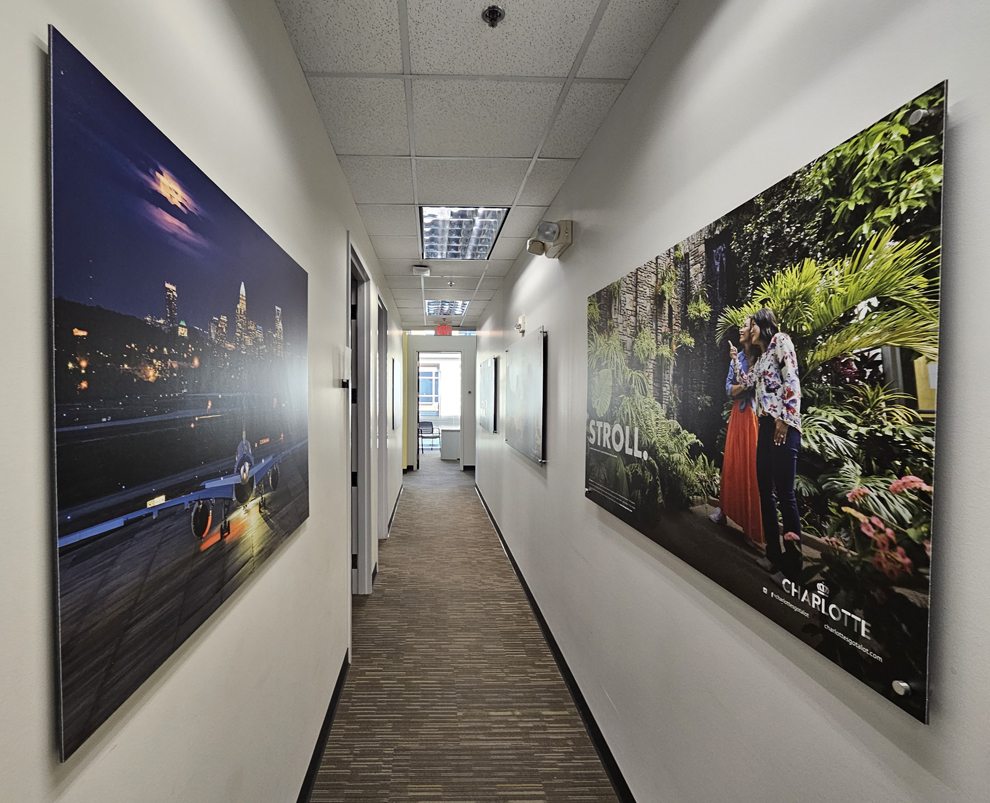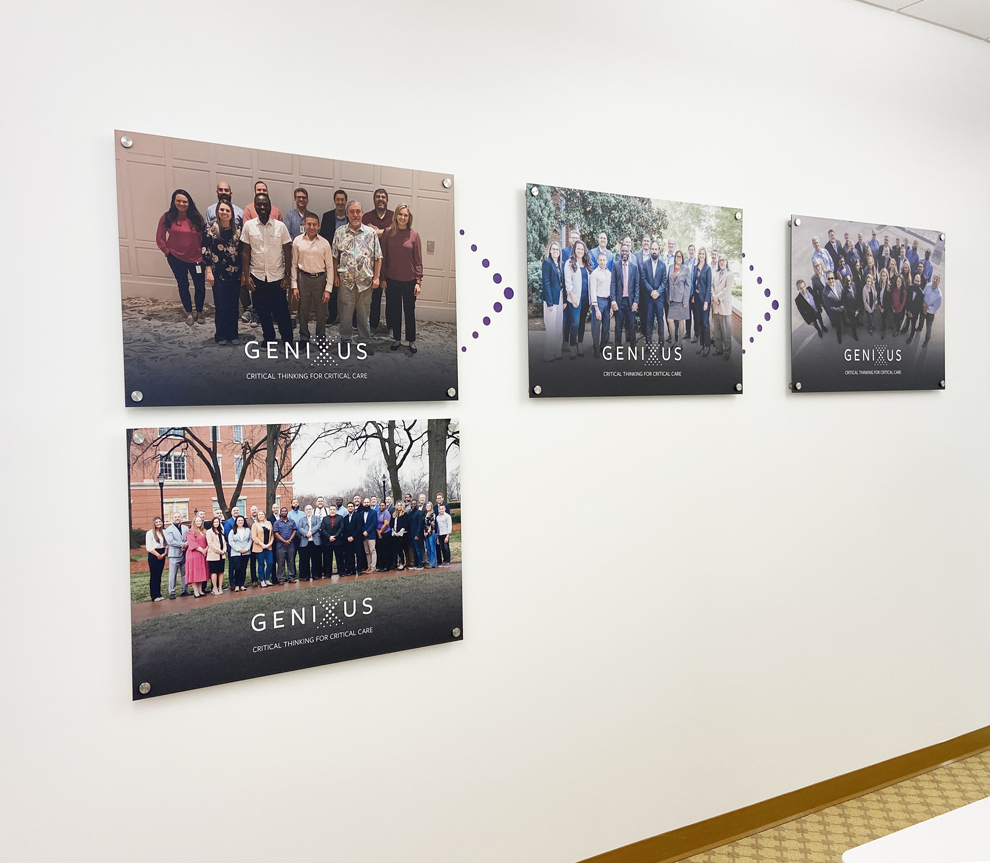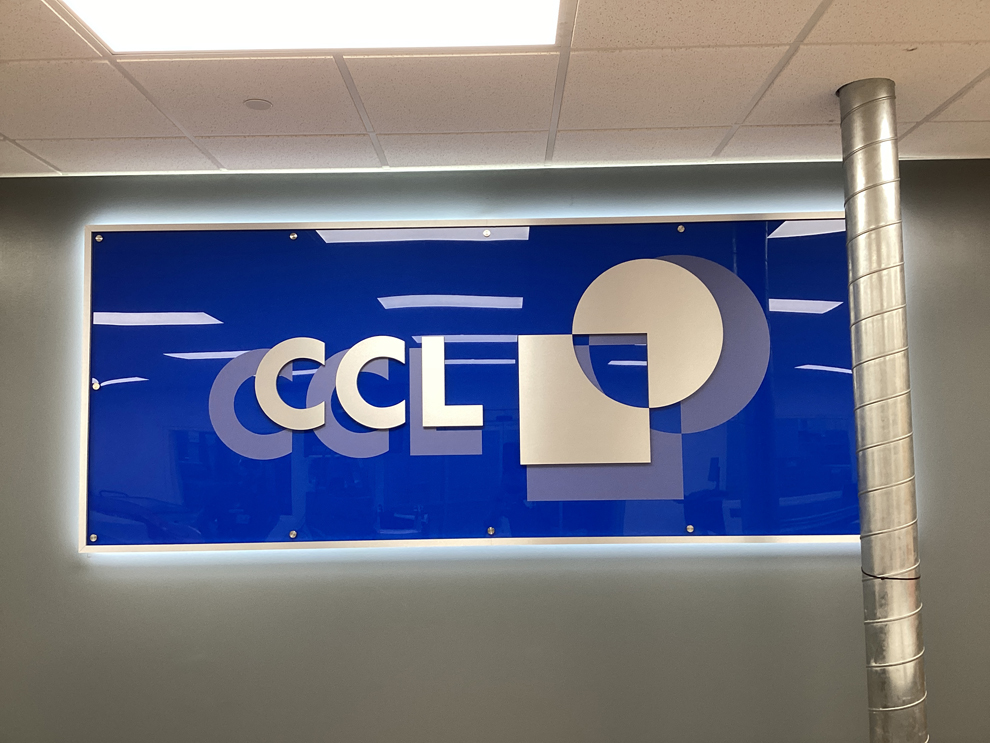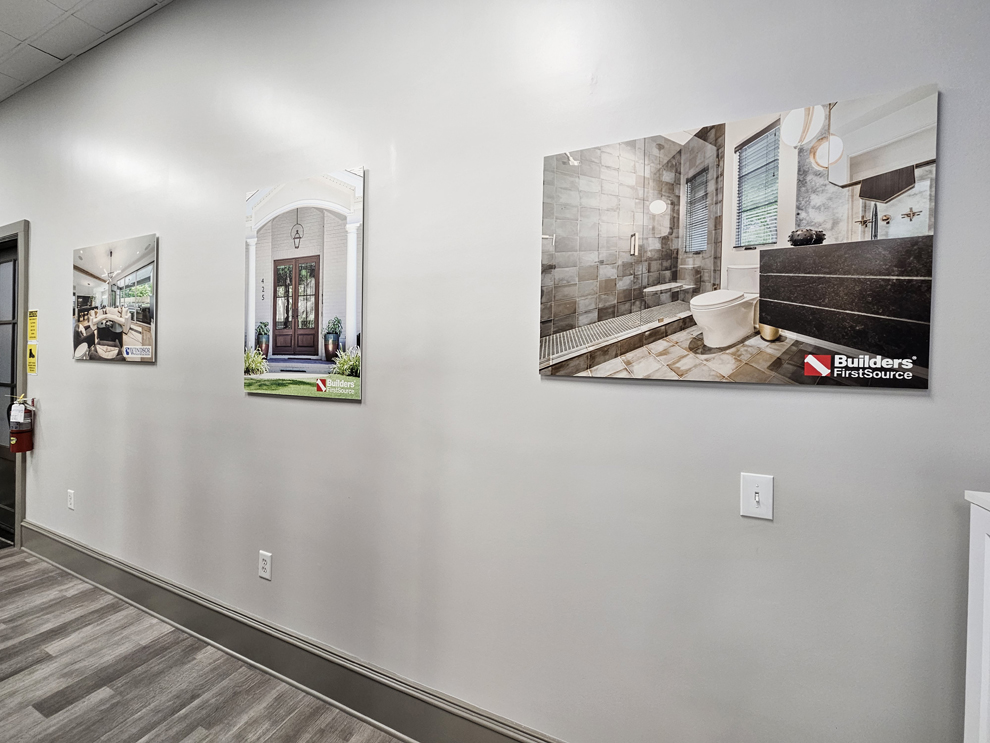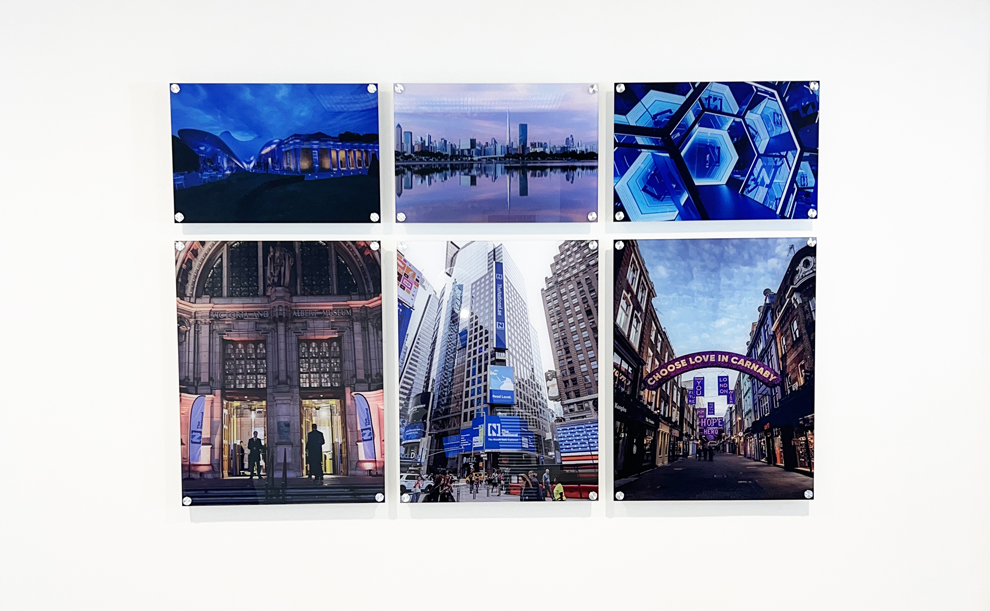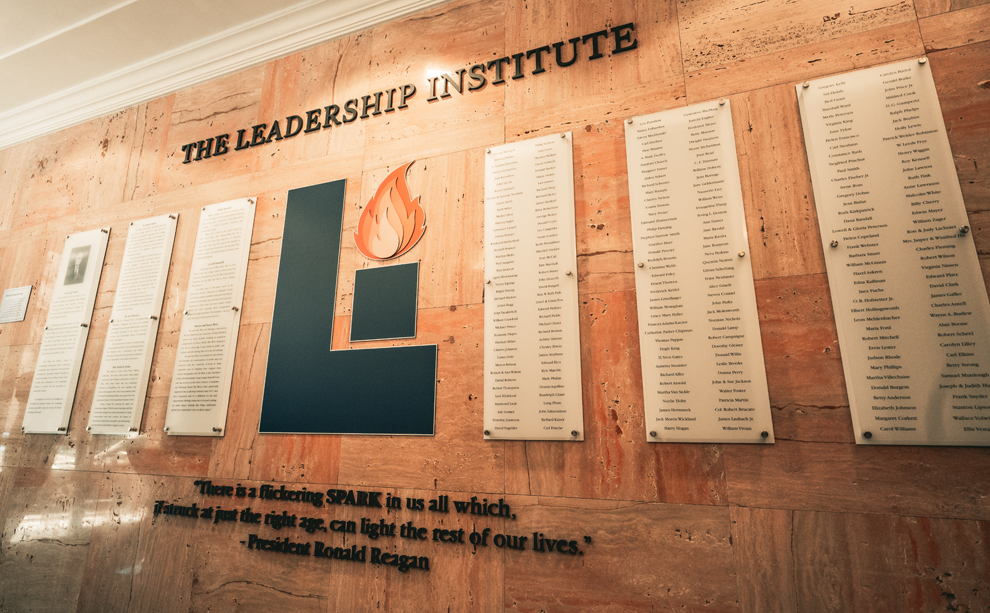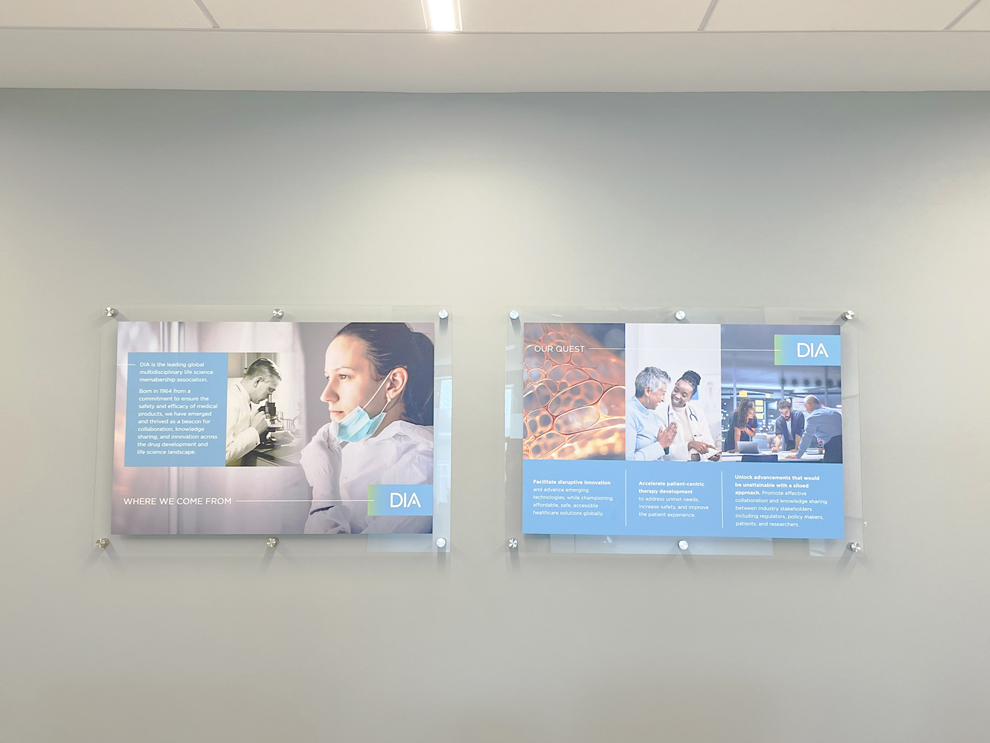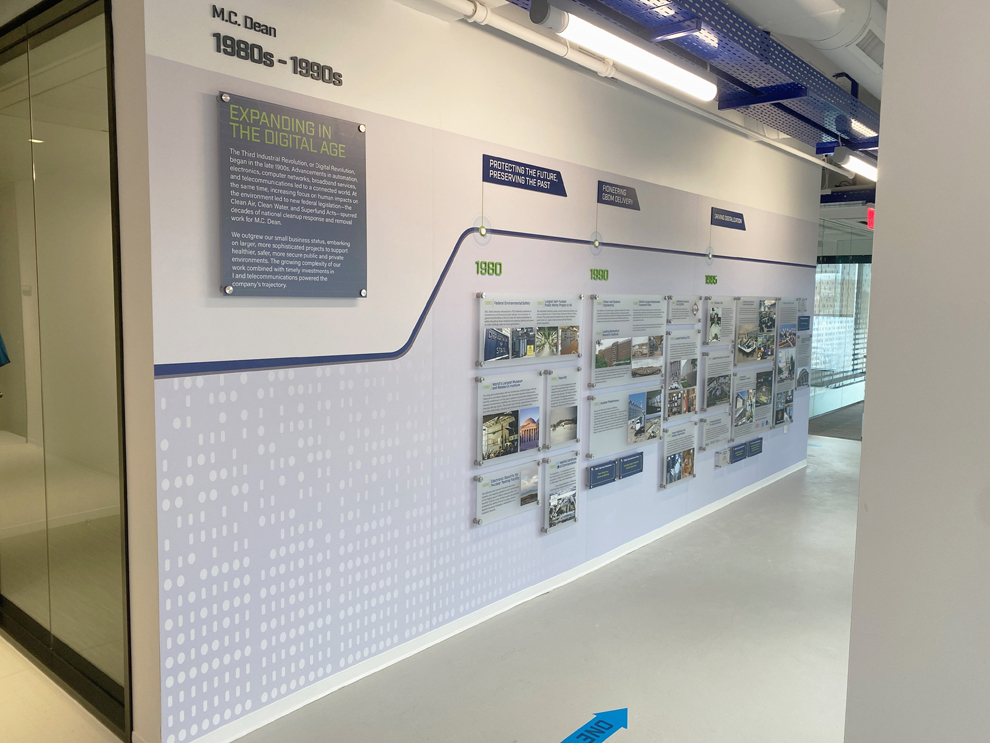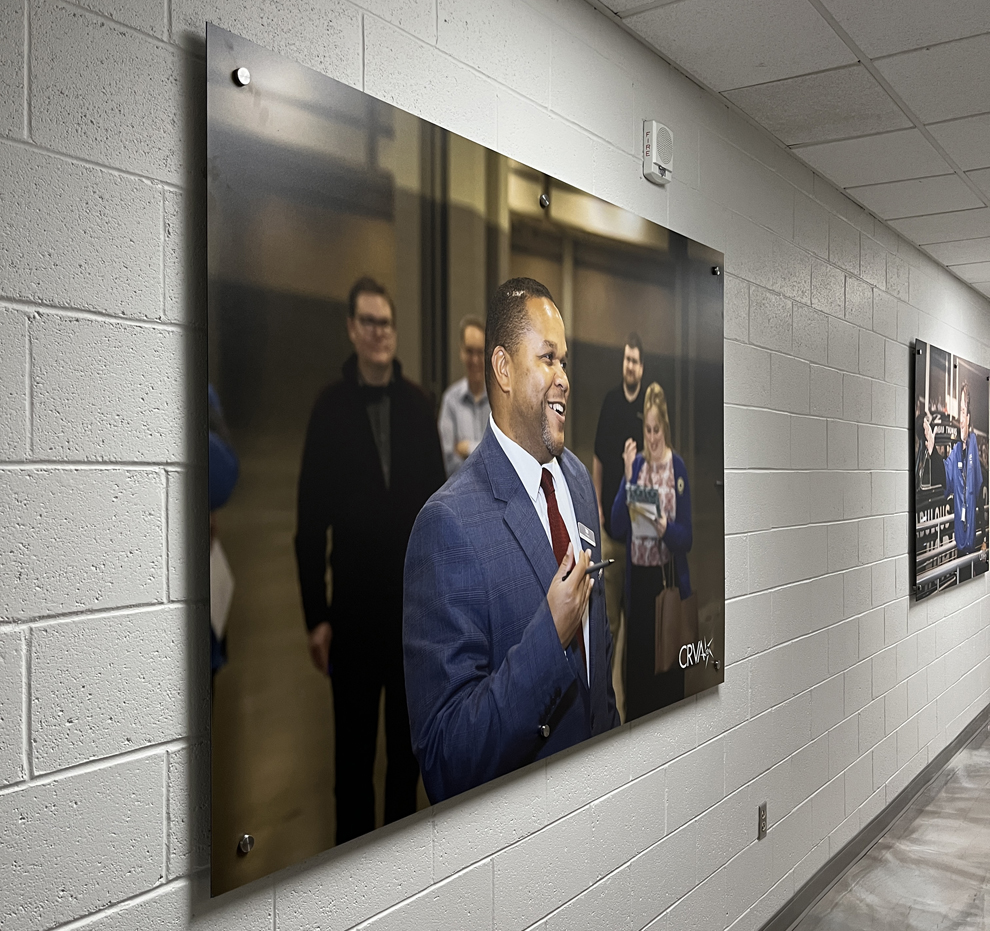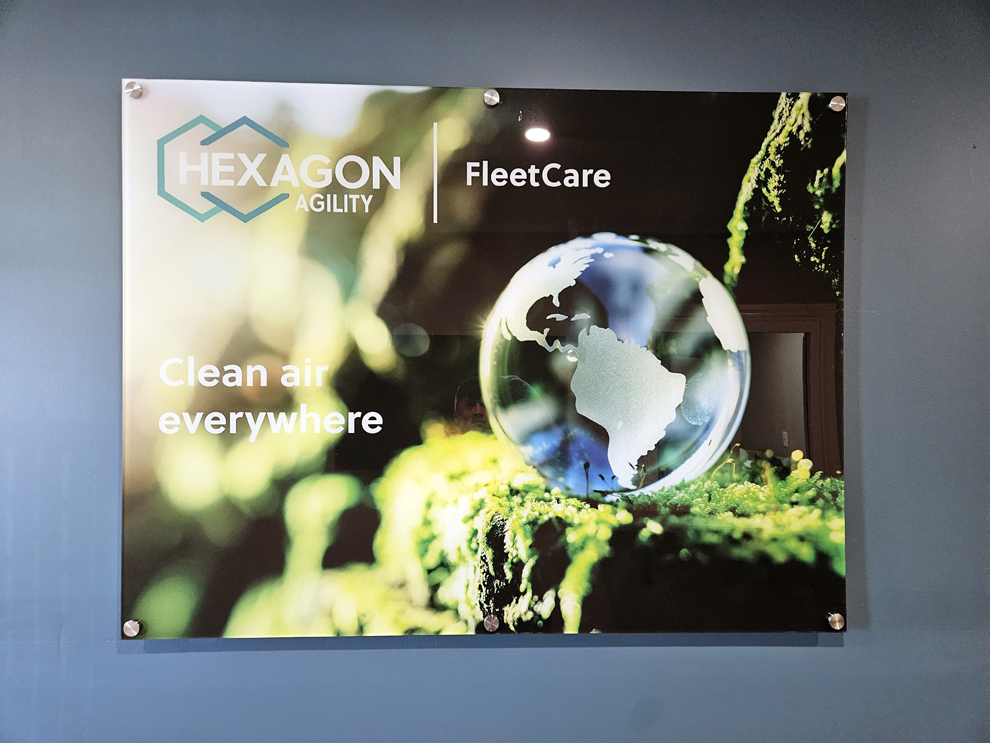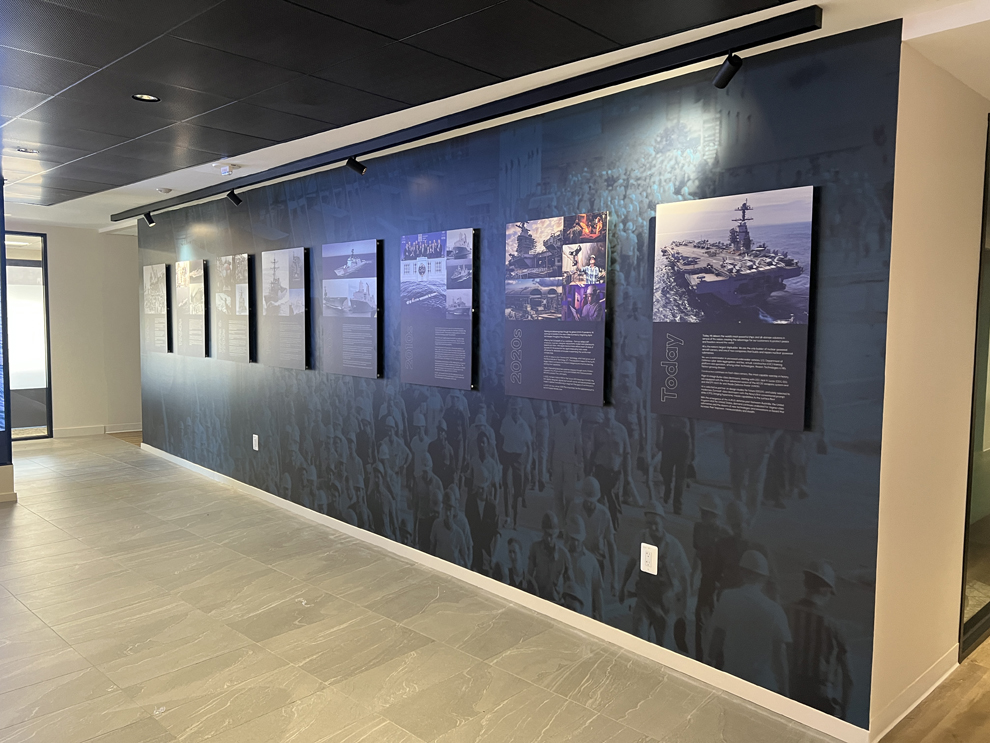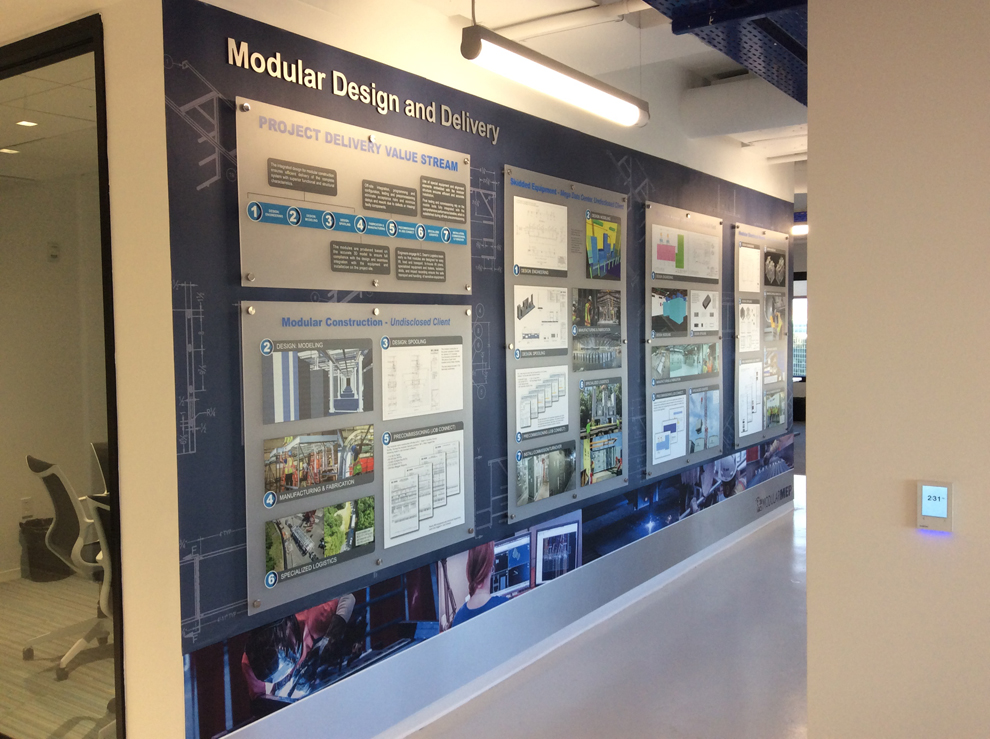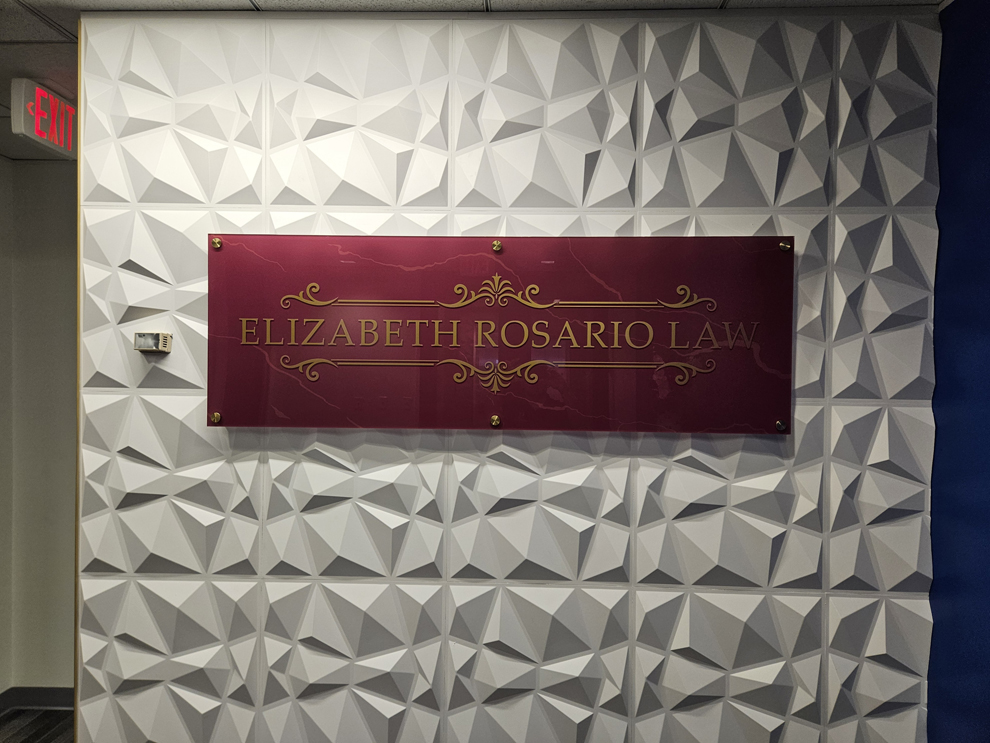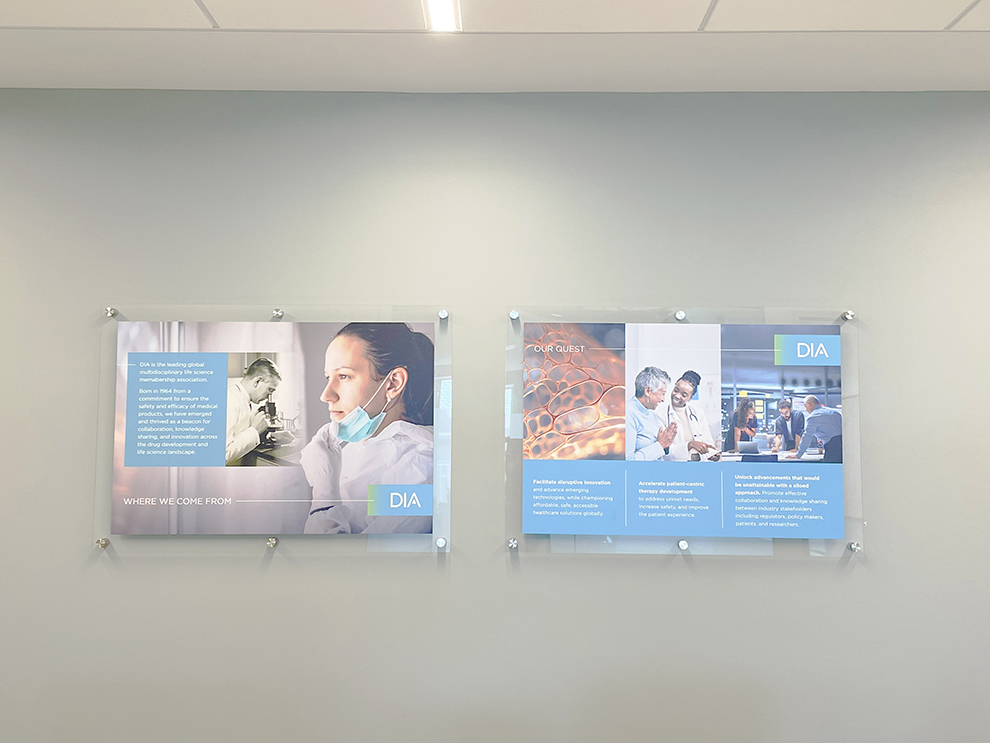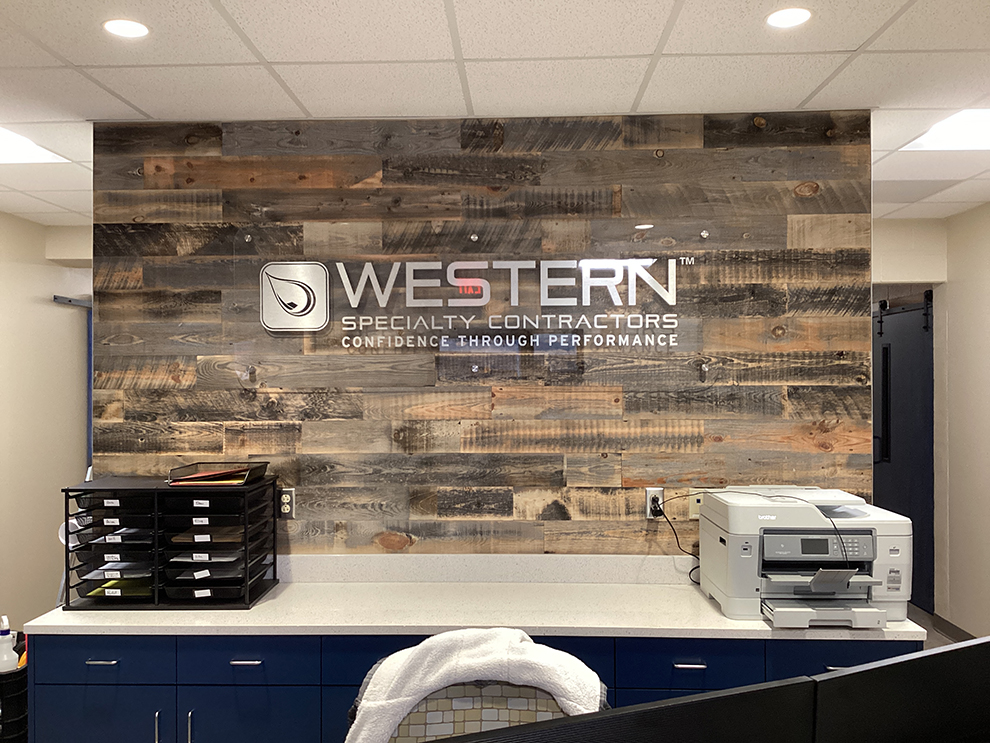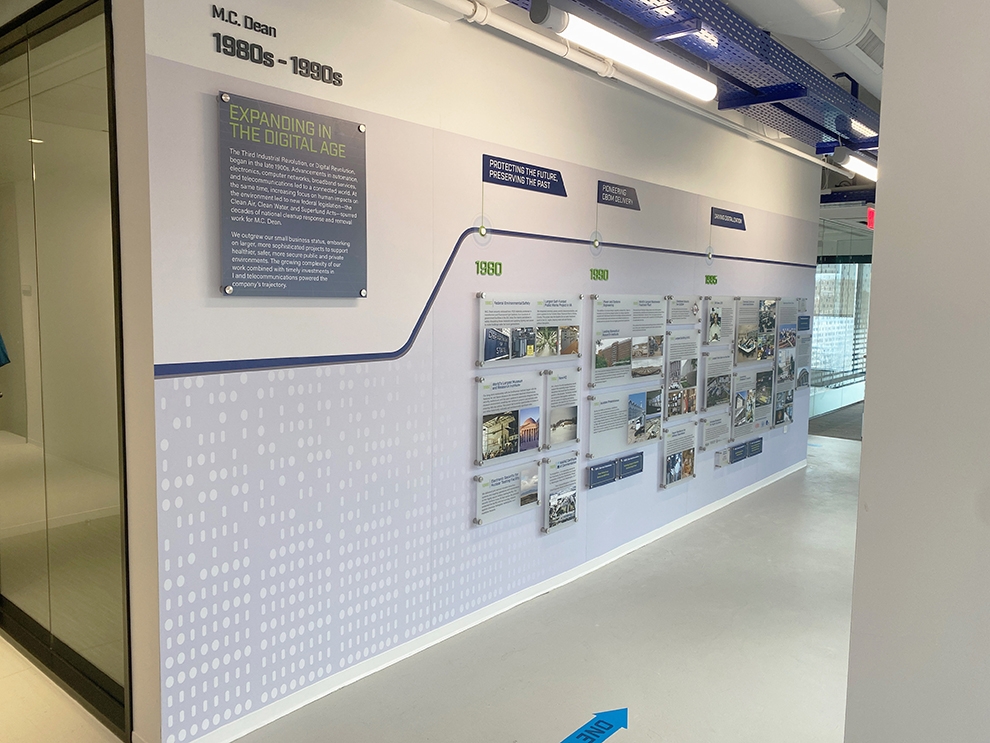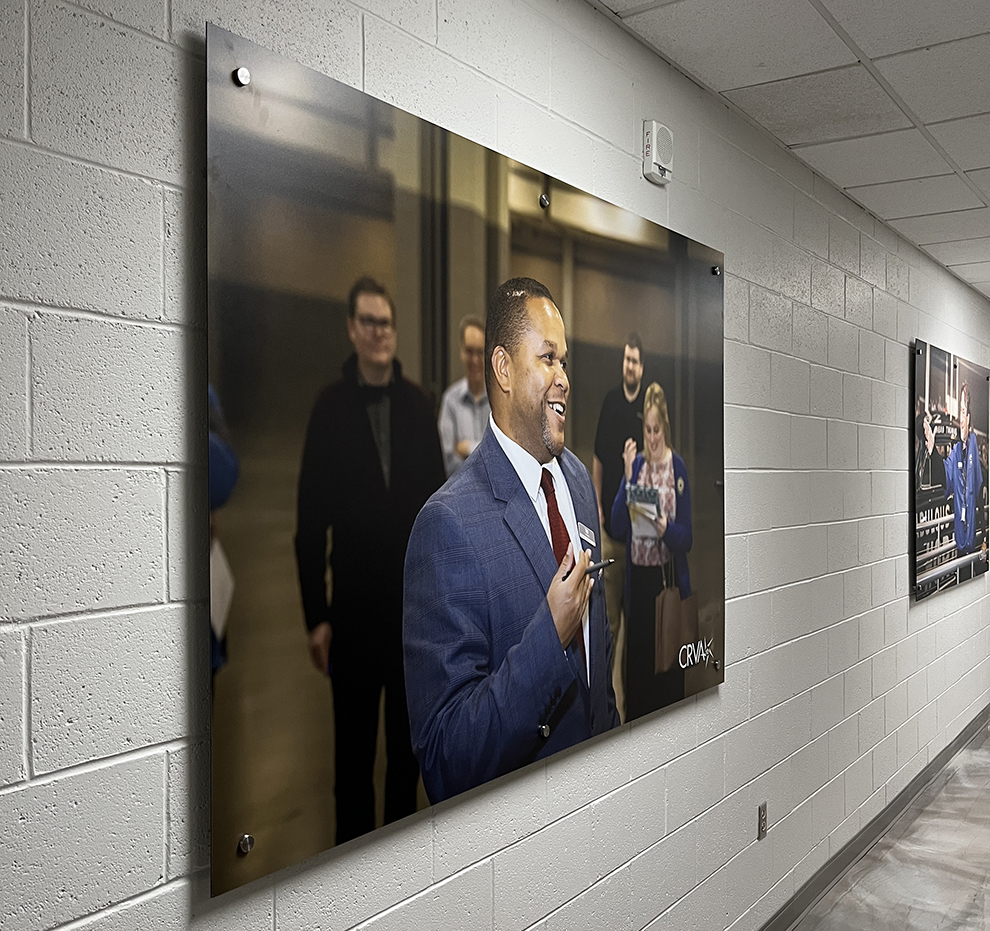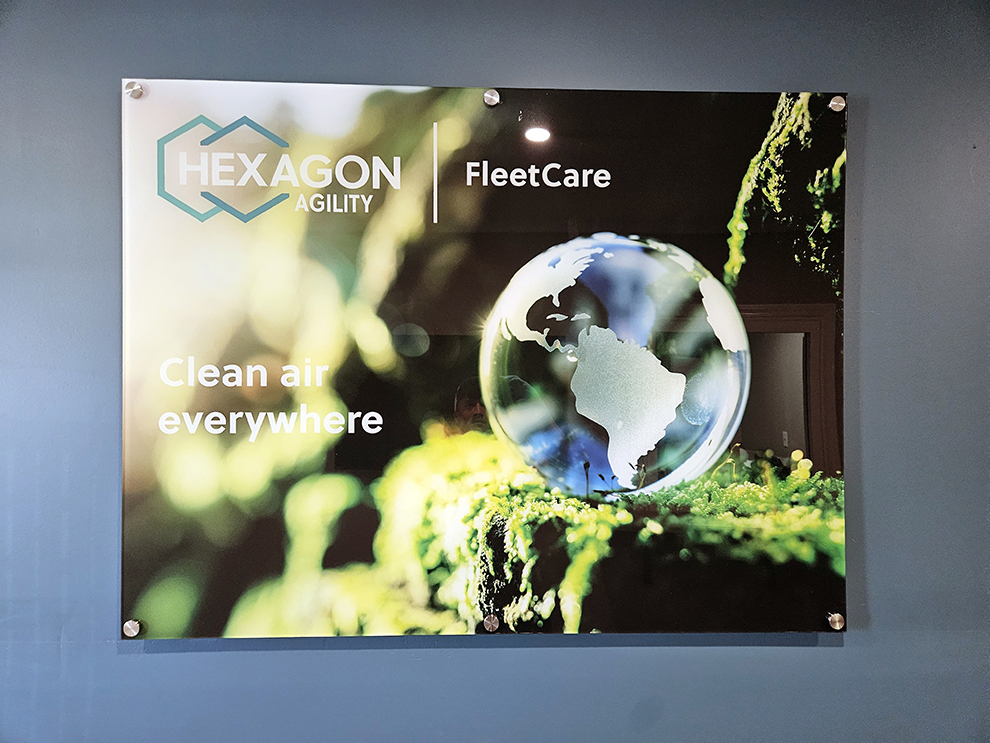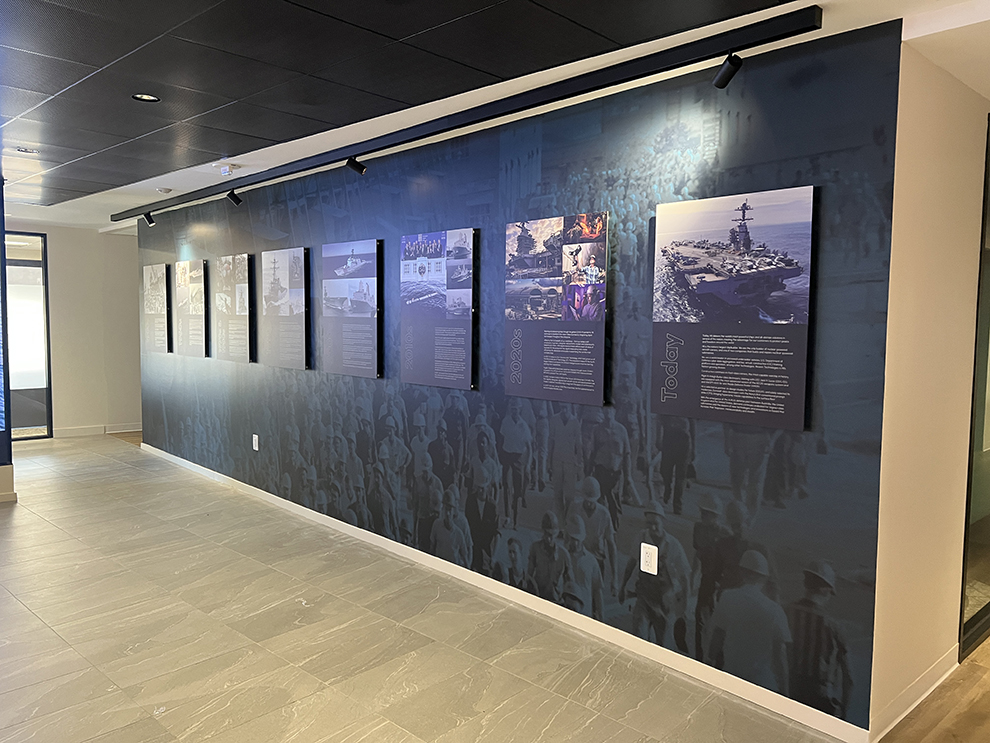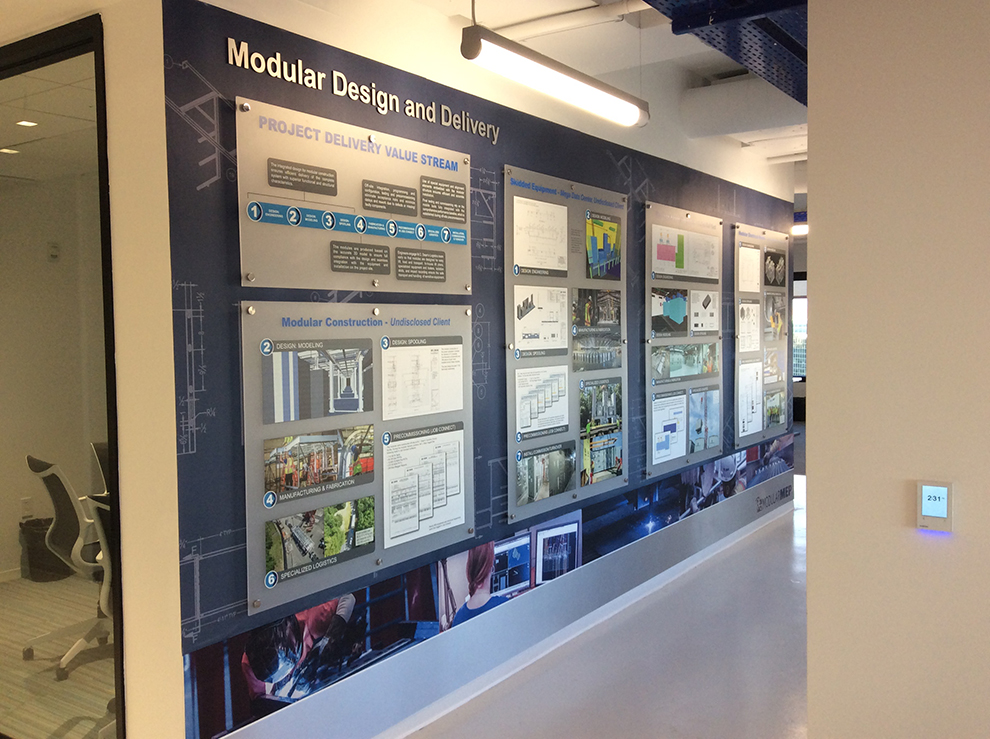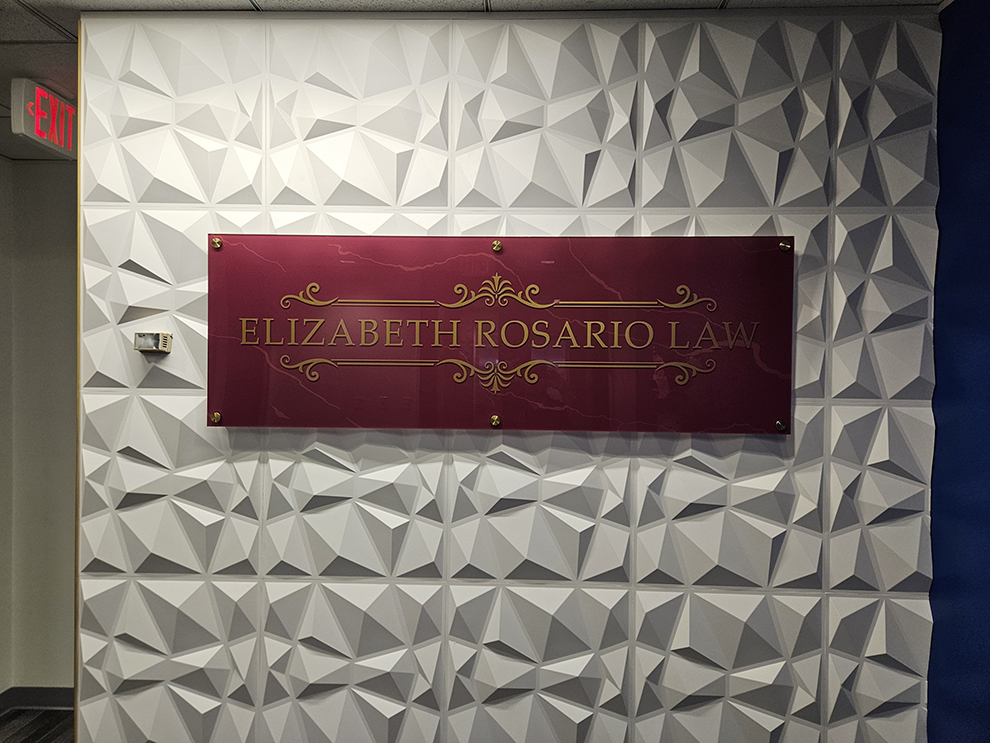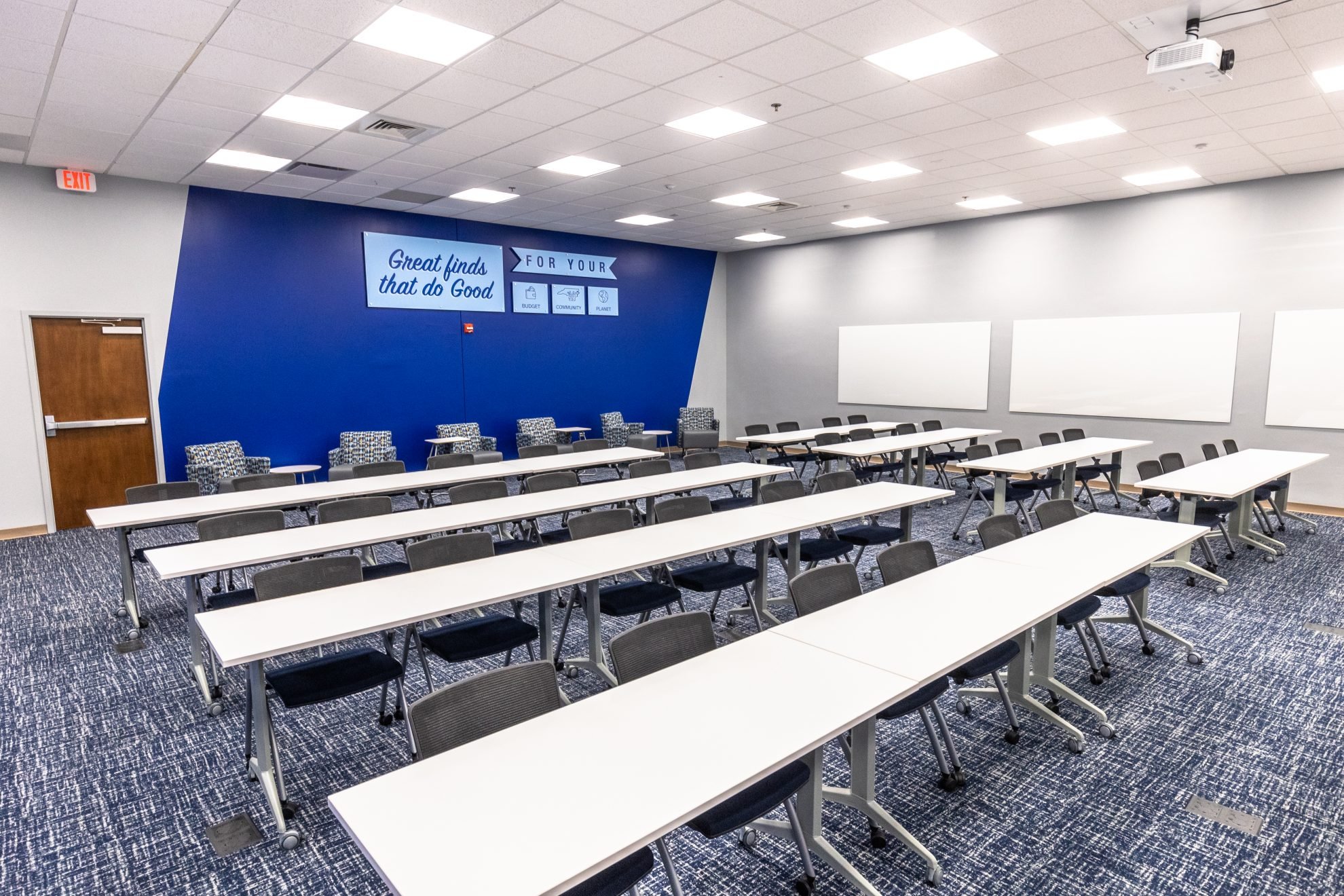
Standoff mounted signs create dimension by positioning a rigid sign face several inches or fractions of an inch away from the wall. Exposed metal barrels and caps secure the panel while producing a clean shadow behind it. The result feels integrated with the interior architecture, giving company logos, donor names, organizational values, historical information, and department identifiers more visual authority than a flat wall graphic.
Businesses and organizations in Lincolnton, NC often select this style of signage when renovating a lobby, opening a new location, updating an office, or creating a more polished customer experience. Heritage Signs & Displays is a veteran-owned, family-led company established in 1977. We serve companies, healthcare organizations, manufacturers, schools, nonprofits, ministries, professional firms, and other organizations throughout Lincoln County and the greater Charlotte region.
Every project starts with the purpose of the space. Lobby signage should communicate professionalism as soon as someone enters. Donor displays need a clear recognition structure and may require room for future additions. Mission and values graphics should strengthen workplace culture without blending into the surrounding décor. Directories and identification panels must remain easy to read from realistic viewing distances. Defining the goal first helps determine the appropriate dimensions, materials, content, hardware, and placement.
Heritage coordinates environmental graphic design, project management, production, fabrication, and installation through one managed process. A dedicated project manager guides the project from the initial consultation and site information through design approval, production, scheduling, and installation. Our regional production capabilities keep design concepts aligned with practical fabrication requirements while supporting Lincolnton organizations with additional locations across North Carolina and beyond.
Standoff mounting is not limited to acrylic signs. It refers to the way a panel is secured and projected away from a surface. Depending on the design, the sign face may use clear acrylic, frosted acrylic, opaque panels, aluminum composite material, dimensional elements, printed graphics, or removable inserts. The size of the barrels, style of the caps, hardware finish, mounting pattern, and distance from the wall all affect the appearance of the completed display.
Proper installation is essential because standoff systems rely on mechanical fasteners. Installers must drill accurate mounting points and choose anchors suited to the wall material and total sign weight. Removing or moving the sign will typically leave holes that require repair and repainting. For this reason, standoff mounted signs are best suited to permanent or semi-permanent applications rather than short-term promotions, temporary announcements, or portable event displays.
Heritage seeks to be a valued resource that honors God by serving our clients and communities with excellence. We demonstrate that commitment through attentive consultation, practical recommendations, precise production, respectful work in occupied buildings, and continued accountability through installation. Our goal is to create a distinctive Lincolnton interior feature that communicates clearly and serves the people who use the space each day.
The signature floating appearance comes from a carefully planned group of components. Metal barrels determine how far the sign sits from the wall. Decorative caps secure the panel to those barrels, while fasteners and anchors carry the load. Each detail, including cap size, barrel depth, hardware color, and mounting position, should complement both the sign face and the surrounding interior.
Wall construction plays an important role in the installation plan. Drywall, concrete block, brick, plaster, tile, wood, and specialty finishes require different drilling and anchoring techniques. Installers must also consider panel weight, edge clearance, hidden electrical or plumbing systems, cleaning access, and the possibility of routine contact. Accurate templates are especially important because even a minor alignment issue can become obvious across several exposed metal caps.
Before fabrication begins, Heritage reviews panel layout, mounting patterns, visual spacing, update requirements, and wall conditions. These details are treated as part of the design instead of being left for installers to resolve at a Lincolnton job site. This planned approach distinguishes standoff systems from adhesive graphics, flush-mounted panels, direct-mounted letters, and portable displays intended for temporary use.
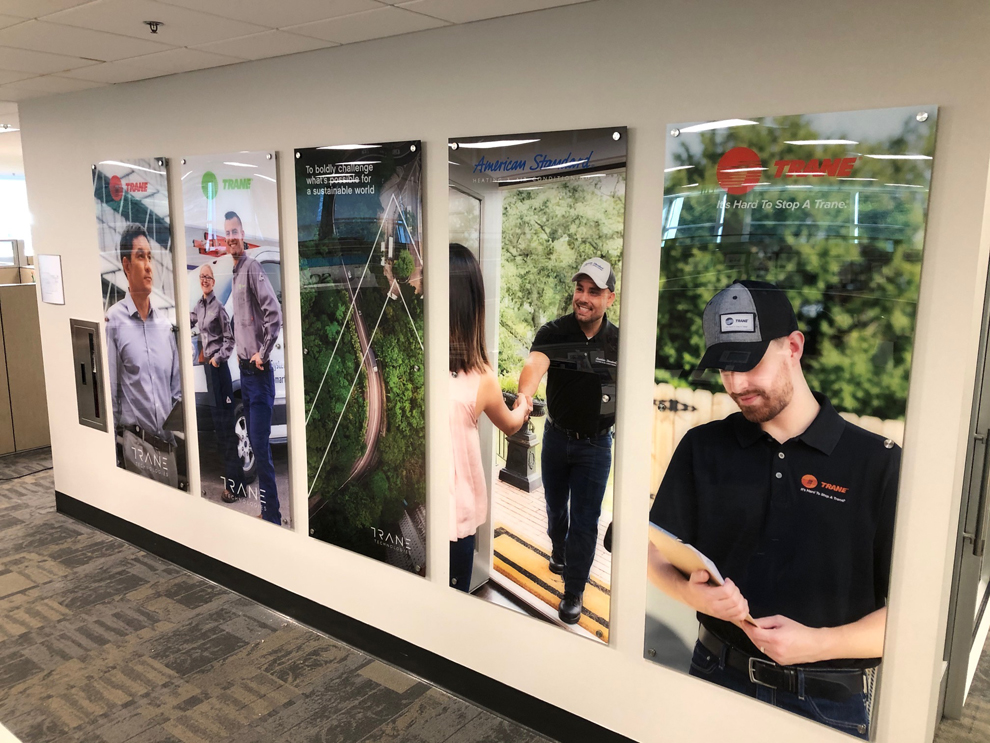
A standoff display should do more than occupy an empty wall. It may introduce a business, recognize donors, explain an organization’s history, present company values, or help visitors identify departments. Understanding the message and its intended audience provides a foundation for the entire project.
Heritage takes a consultative approach rather than limiting clients to standard products. Our team considers content length, panel proportions, sightlines, material transparency, wall color, hardware finish, lighting, furnishings, artwork, and nearby architectural details. Reviewing these elements together helps ensure that the display works in the physical environment, not just in a digital proof.
One Heritage-managed process connects consultation, field verification, design, production, fabrication, and installation. This coordination helps control color, panel tolerances, hardware locations, wall preparation, scheduling, and building access. Lincolnton clients also receive a dedicated point of contact who remains familiar with the project from the first conversation through final installation.
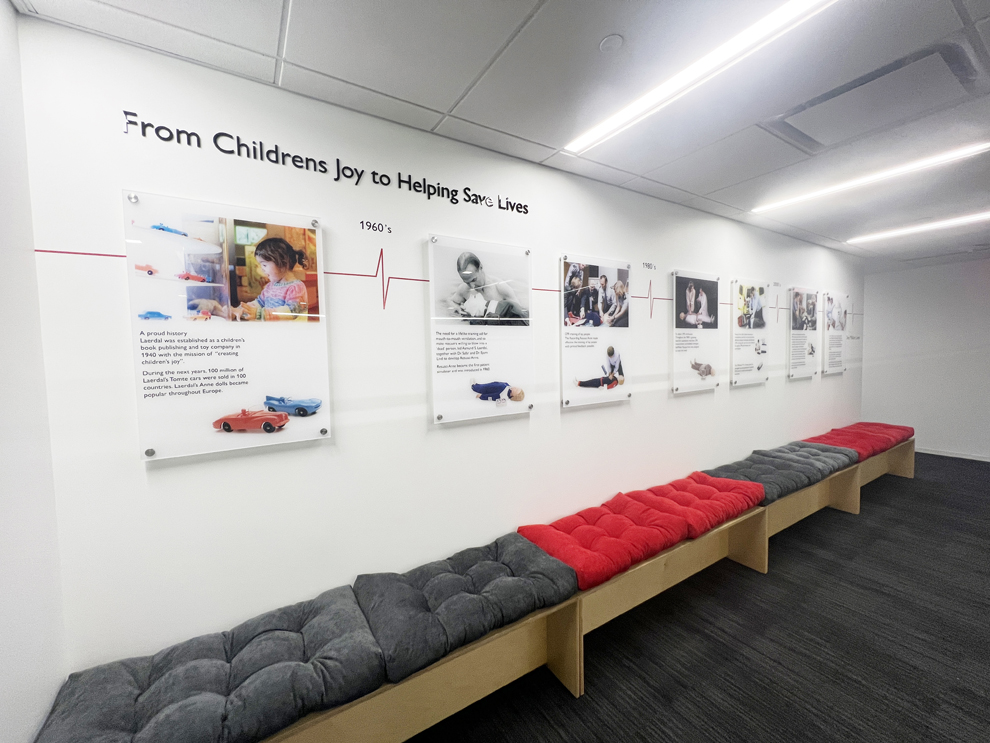
Organizations in Lincolnton may compare several types of interior signage before choosing a permanent wall solution. The following options can complement standoff mounted signs or provide an alternative based on the message, environment, and desired visual effect.
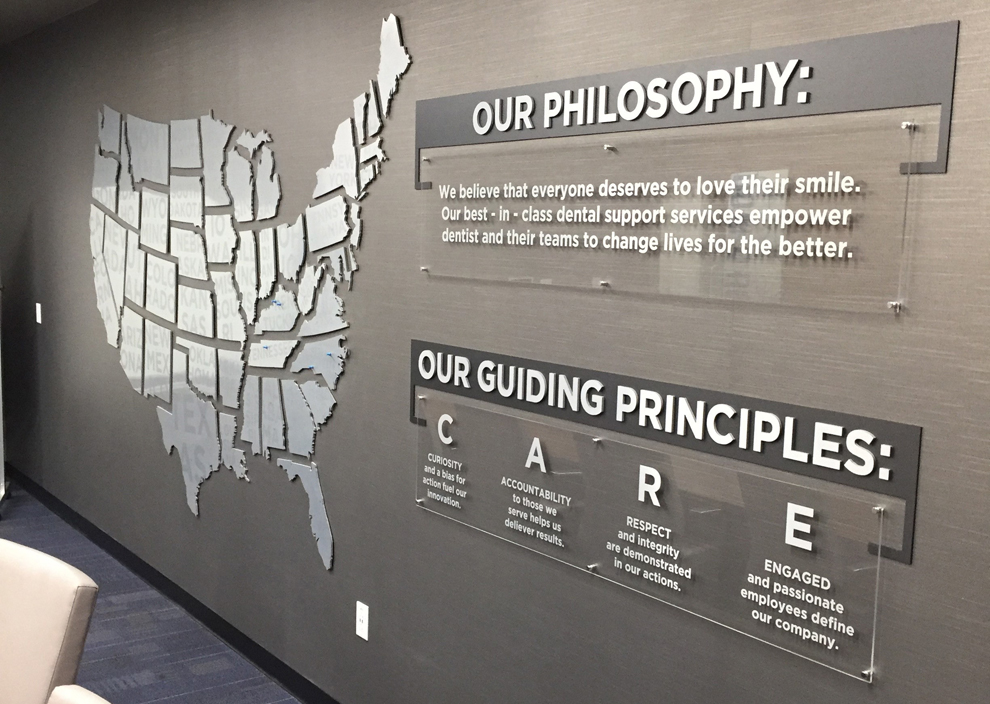
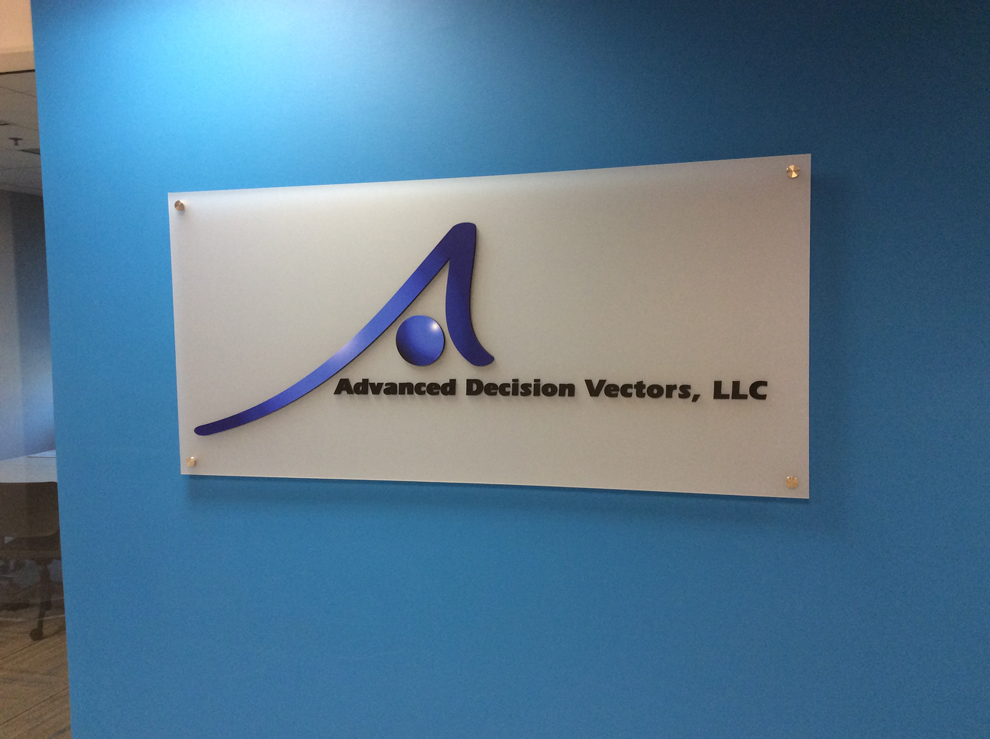
Lobby signs identify an organization and establish its visual character at the main entrance. Standoff mounted panels are an effective option when the space calls for exposed hardware, dimensional depth, and a polished shadow line.
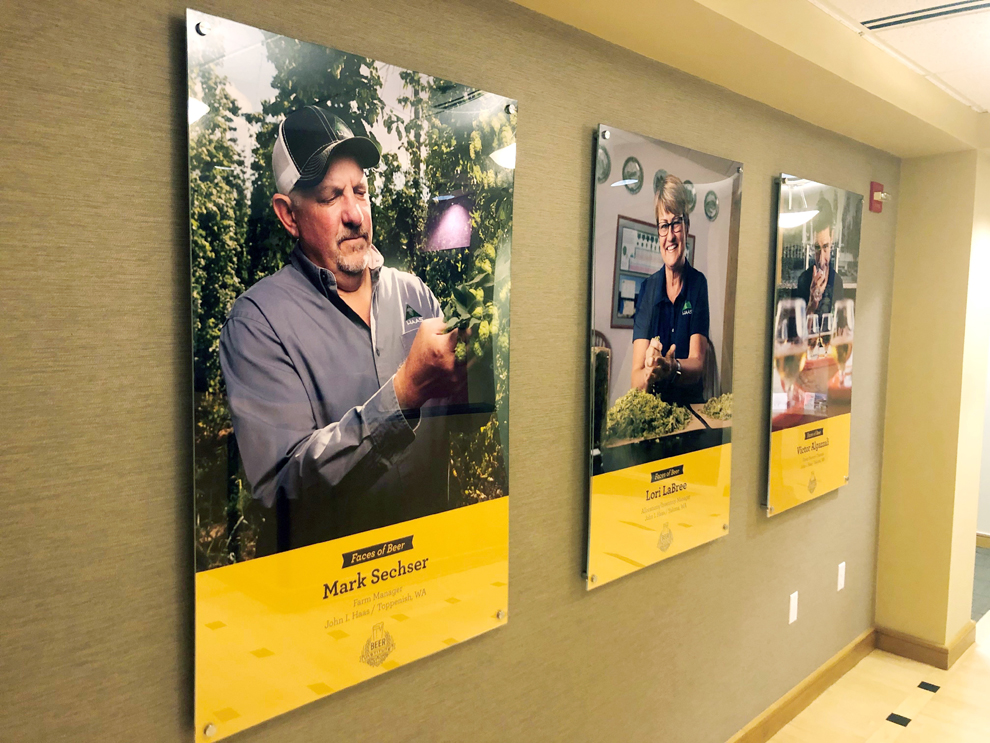
Acrylic can be clear, frosted, colored, layered, or printed. Acrylic panels may be attached with visible standoffs, hidden hardware, direct mounts, or another method selected for the wall and design.
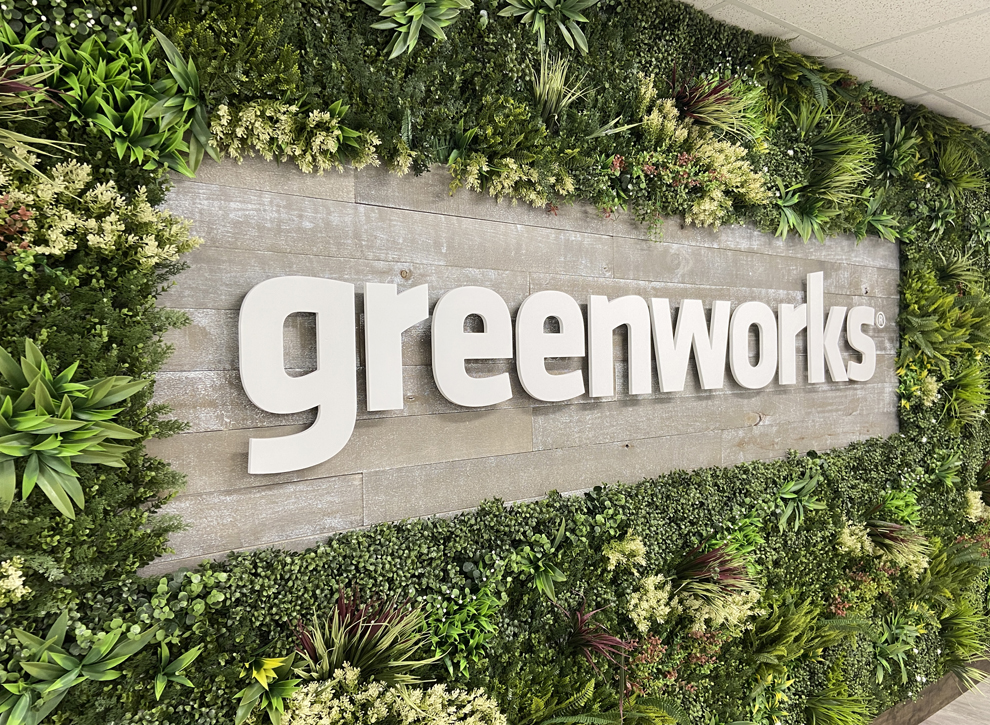
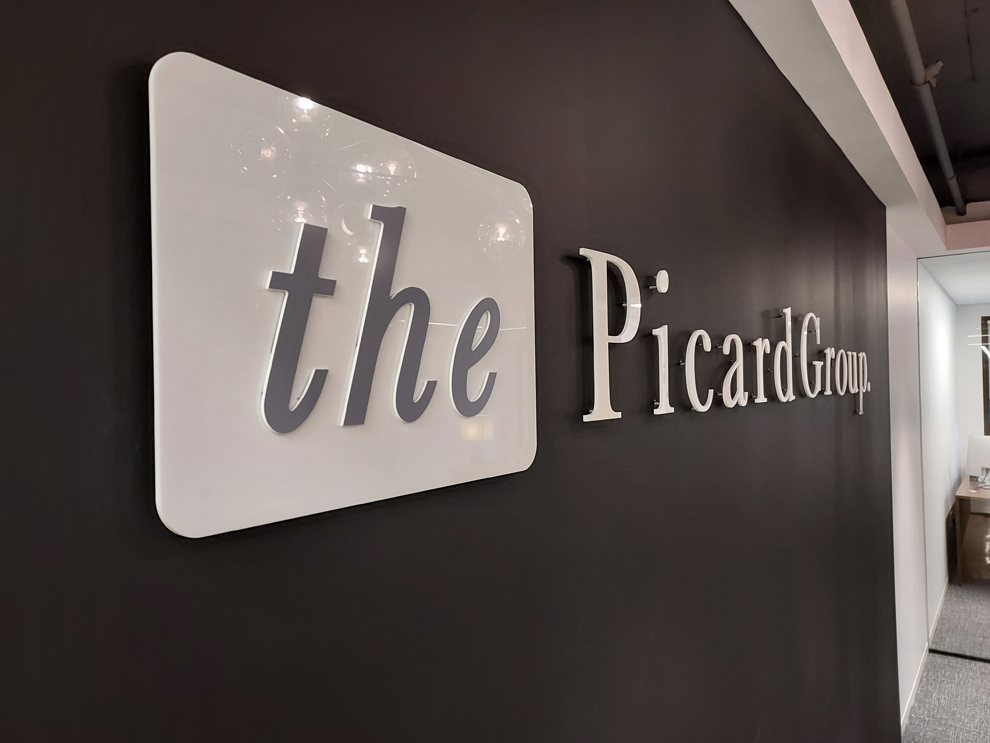
Dimensional letters and logo elements are individually fabricated and mounted to a surface. They can be installed on their own or combined with a standoff panel to create additional depth and hierarchy.
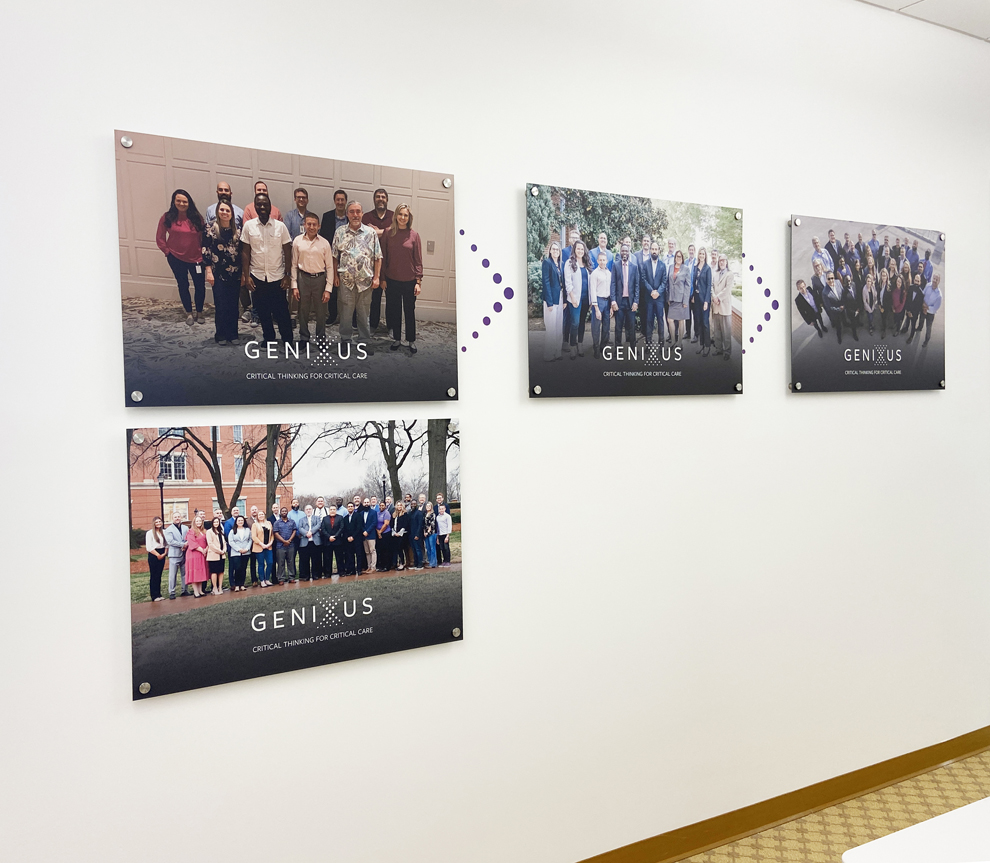
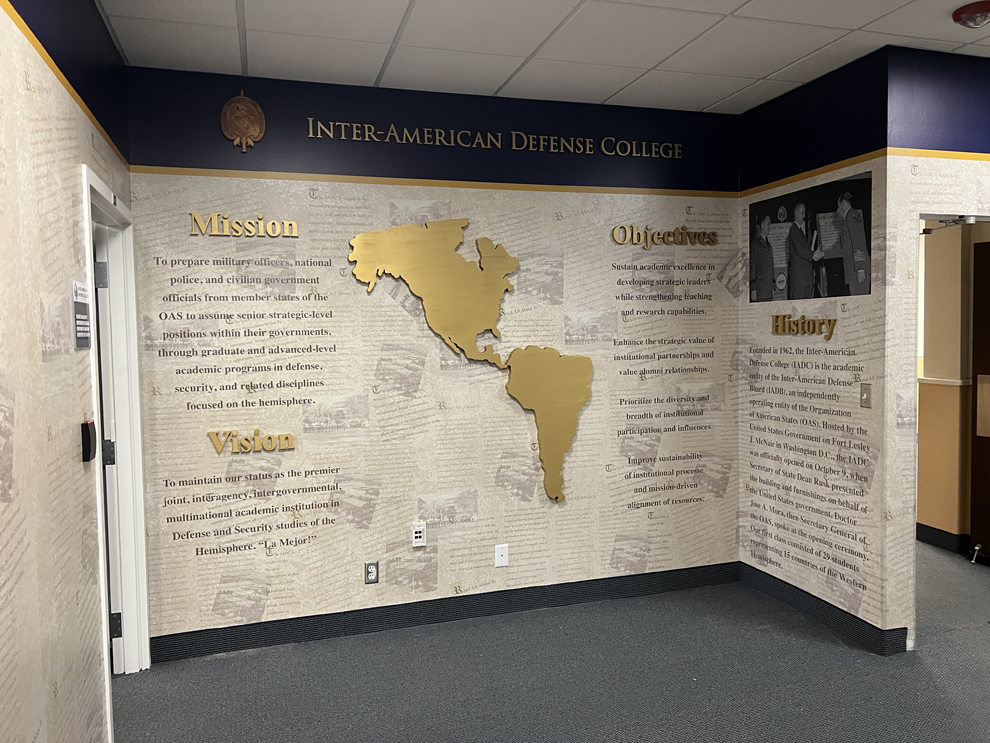
Wall displays organize company history, employee recognition, donor information, photography, and organizational values. Modular standoff panels can divide content into readable sections and make selected information easier to update.
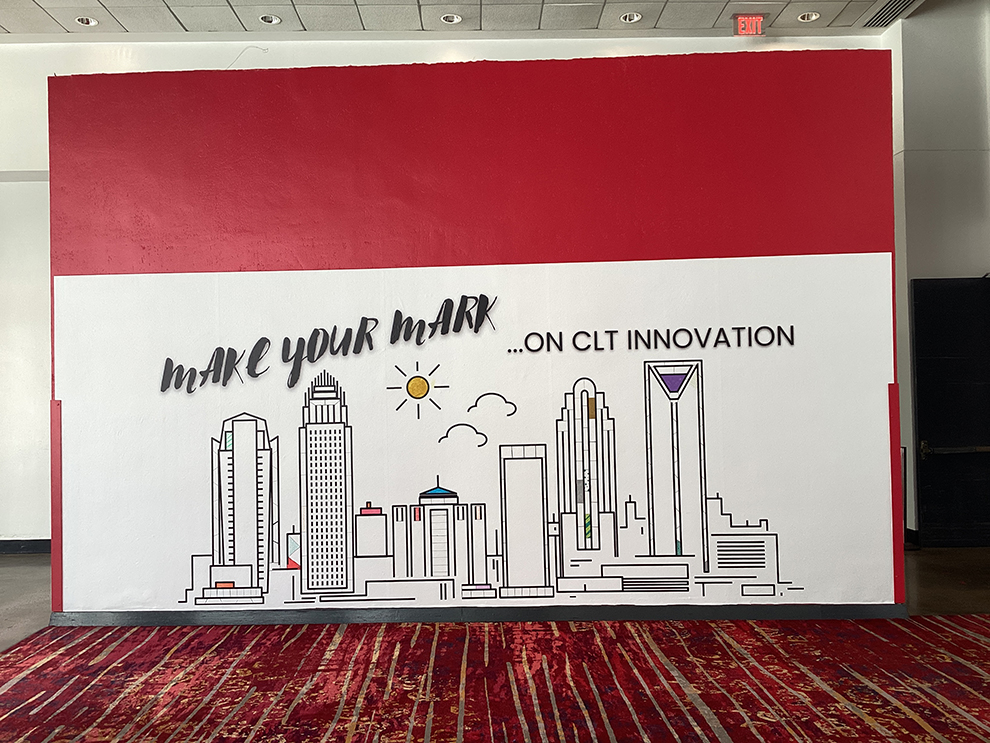
Wall wraps use printed vinyl to transform large interior surfaces with branded color, imagery, patterns, or storytelling. A wrap can also provide a visual background for a dimensional standoff sign.
Window graphics add logos, patterns, messaging, and decorative elements to glass. They are particularly useful in storefronts, conference rooms, office suites, and buildings with limited wall space.
Frosted vinyl creates the appearance of etched glass while improving privacy. Custom patterns, logos, and branded designs can coordinate with standoff signage installed elsewhere in the office.
Elevator wraps bring branded imagery, company messaging, and promotional graphics into frequently used areas. They can extend a visual story introduced by a lobby sign or wall display.
If your Lincolnton organization is opening a new office, renovating a lobby, planning a donor recognition program, or creating a company values display, Heritage Signs & Displays can develop a standoff panel system for your space. The sign can be designed around the wall, brand standards, audience, content, and installation requirements from the start.
Complete the Get Started Now form and include the installation address, preferred completion date, approximate dimensions, intended message, audience, brand guidelines, vector logo files, wall photographs, available drawings, known wall construction, future update needs, and anticipated project investment. Our project team will review the information, identify any additional site details, and determine whether a Heritage-managed solution is appropriate for your Lincolnton facility.
Heritage serves organizations in Lincolnton and communities throughout Lincoln County and the greater Charlotte area. Our service area includes Denver, Iron Station, Maiden, Cherryville, Gastonia, Hickory, Huntersville, and Charlotte. Common projects include lobby identification, donor recognition systems, values displays, company history walls, office directories, and dimensional workplace graphics.
Lincolnton’s mix of manufacturers, professional firms, healthcare providers, schools, retailers, nonprofits, ministries, and community organizations creates a wide range of signage needs. One project may involve a single logo panel for a reception area, while another may require a coordinated display spanning several walls. The planning process should reflect the complexity of the message, materials, and installation conditions rather than relying on square footage alone.
Organizations with multiple locations can work with one Heritage project manager to maintain consistent colors, typography, panel layouts, materials, hardware finishes, and installation standards. Each facility still receives individual attention to dimensions, substrates, access requirements, and site-specific conditions.
Environmental graphic design focuses on how people experience information within a physical setting. Visitors entering a Lincolnton office should be able to confirm the organization’s identity quickly. Employees moving through a hallway should understand a company value without stopping to read a dense block of copy. Donor recognition should make individual names easy to locate while preserving an appropriate sense of importance.
Heritage designers coordinate typography, contrast, scale, content order, panel placement, material selection, hardware finish, lighting, sightlines, and traffic patterns. We also consider how the display may need to change. Modular panels, replacement inserts, expansion areas, and organized file records can make future updates easier.
Connecting design with fabrication and installation helps identify practical concerns early. Panel seams, color expectations, mounting tolerances, anchor positions, cleaning access, templates, and installation sequencing are reviewed before production. This preparation helps preserve the approved design and reduces the need for compromises during installation in an occupied Lincolnton facility.
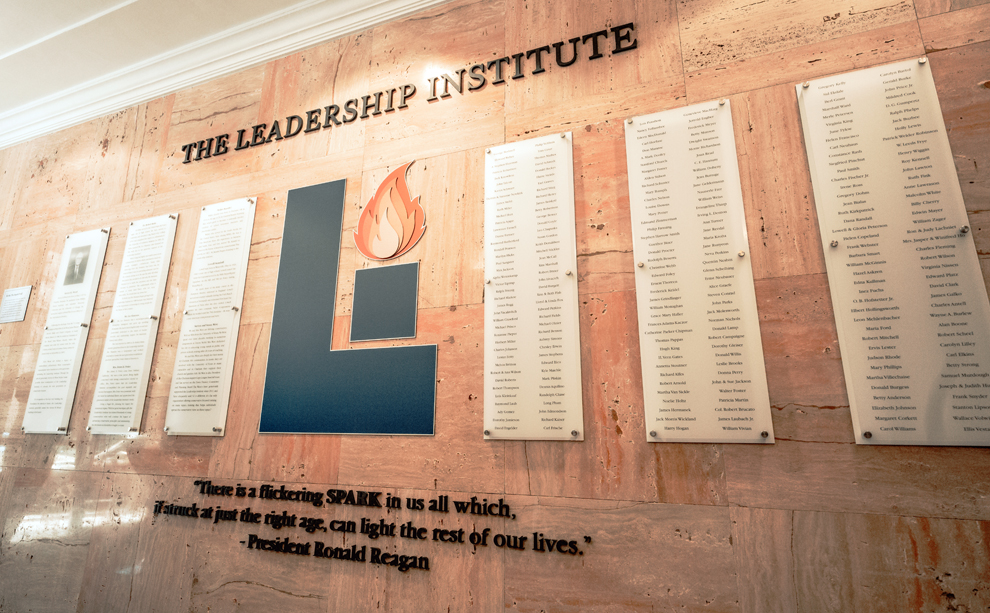
A successful installation begins long before drilling starts. Because standoff hardware remains visible, minor errors in spacing, alignment, or level can be noticeable from across a lobby or corridor. Heritage plans mounting layouts and fabrication templates carefully so the installed sign appears balanced and precise.
Installation planning may include wall composition, surface condition, available blocking, concealed utilities, panel weight, hardware spacing, viewing angles, lighting, nearby doors, furniture, and other architectural features. Our team also reviews access routes, working hours, lift or ladder requirements, dust containment, floor protection, security procedures, and coordination with facility managers or contractors.
Heritage installs signs that we design, produce, fabricate, or procure as part of a managed project. We do not provide installation-only services for standoff signs made by another company. Keeping responsibility for measurements, materials, hardware, tolerances, templates, and anchoring within one process helps our installers respond effectively if unexpected conditions are discovered on site.
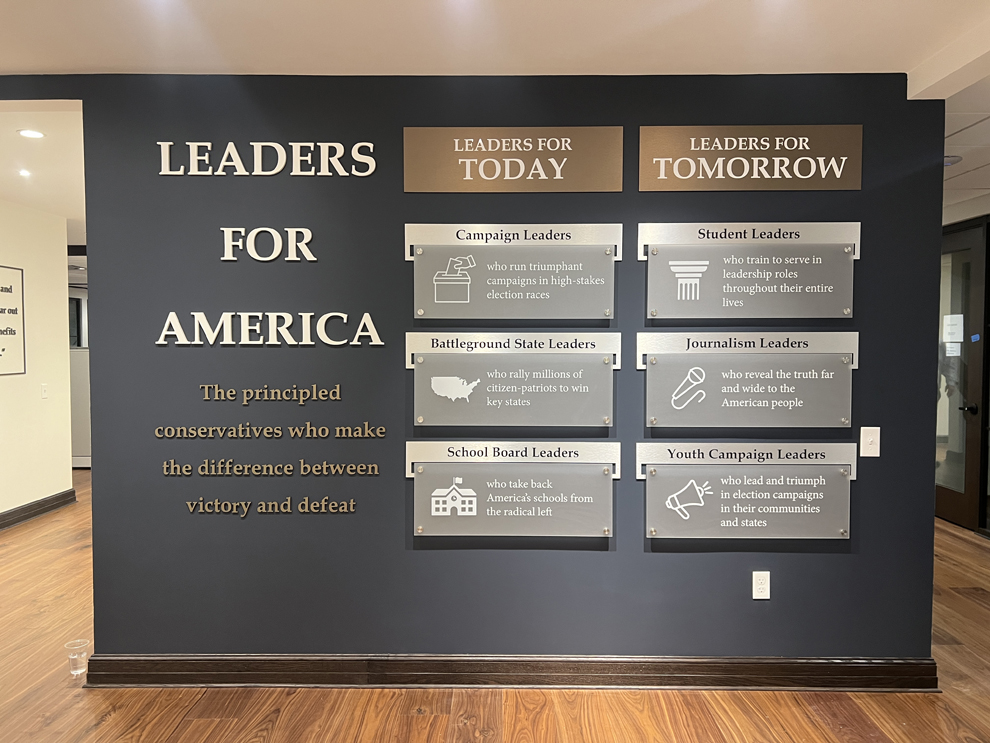
Heritage is a strong choice for Lincolnton organizations seeking a permanent interior feature supported by professional consultation, design, fabrication, project management, and installation. A project may focus on one prominent reception sign or combine several coordinated displays for branding, recognition, culture, and wayfinding.
Heritage-managed projects begin with an anticipated total project investment of $3,000. This starting figure applies to the overall project, not to each panel, letter, or piece of hardware. A qualifying scope may include a custom reception sign with a logo and tagline, a modular recognition wall, or a series of values panels. Final pricing depends on size, materials, content preparation, design requirements, fabrication complexity, hardware, wall conditions, access, and installation needs.
Standoff signs are not recommended for every application. Mechanical anchors create holes in the wall, and removing the display generally requires patching and refinishing. Temporary campaigns and frequently changing messages may be better served by removable graphics or portable displays. Heritage also does not provide traditional exterior sign programs involving channel letters, monument signs, or pylon signs. Certain exterior wall-mounted standoff signs may be considered when the surface, hardware, weather exposure, anchoring requirements, and applicable regulations support the installation.
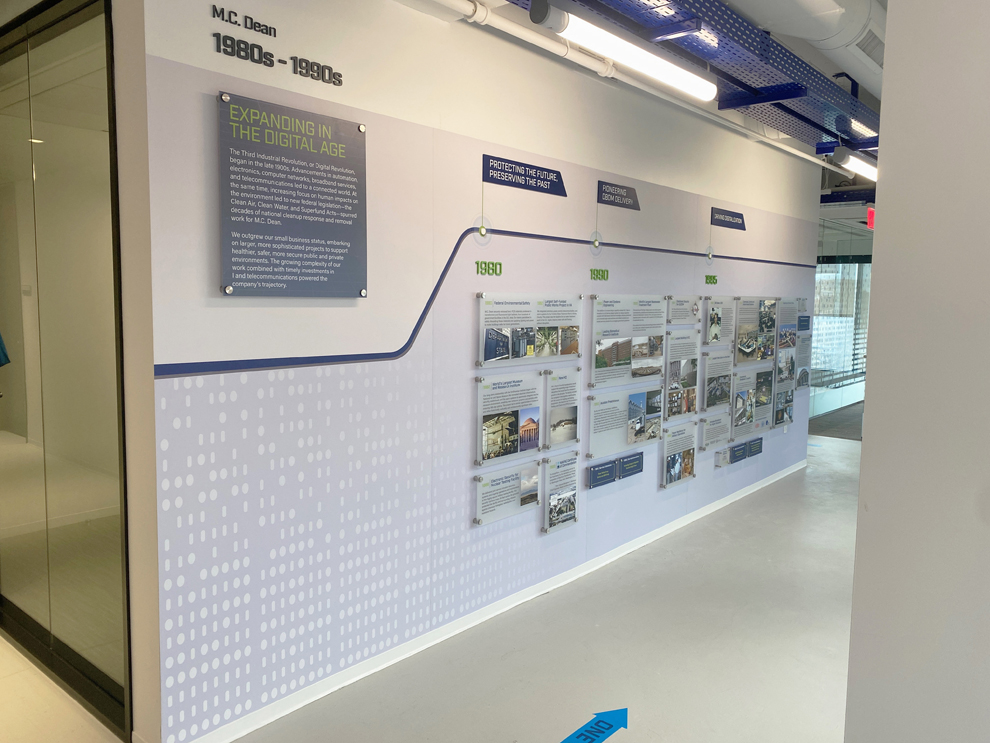
Standoff mounting describes the installation method. Acrylic describes the material used to make a sign face or component. An acrylic panel can be mounted with standoffs, hidden fasteners, adhesive, or other hardware. A standoff system can also support aluminum composite material, printed rigid panels, and other approved materials.
Longevity depends on material quality, fabrication accuracy, hardware selection, wall stability, moisture, sunlight, temperature changes, physical contact, maintenance, and the relevance of the displayed information. Interior standoff signs made with suitable materials can provide years of service. Replaceable panels or inserts may extend the life of displays containing names, dates, milestones, or departmental information.
No. Heritage does not offer installation-only services for signs or panels produced by another provider. Mounting quality depends on verified measurements, panel tolerances, hardware specifications, templates, anchors, and fabrication accuracy. Heritage installs signage developed or procured through our managed process so responsibility remains connected from design through completion.
Standoff signs can be installed on many interior surfaces, including drywall, masonry, plaster, wood, tile, and certain specialty finishes. Each material may require a different anchor, fastener, or drilling method. Wall condition, sign weight, hardware spacing, concealed utilities, and installer access must be evaluated before the mounting approach is finalized.
A site survey is recommended when measurements, substrates, wall access, lighting, architectural alignment, electrical conditions, or building procedures cannot be confirmed through reliable drawings and photographs. Large, layered, illuminated, or multi-panel installations often benefit from field verification. Survey information supports accurate design, templates, fabrication, scheduling, and installation planning.
Yes, if future updates are considered during the initial design. Replaceable panels, modular sections, removable inserts, and reserved expansion areas can accommodate new names, dates, milestones, departments, or leadership information. The update method should be established before fabrication because it affects panel spacing, hardware placement, templates, and file organization.
Heritage Signs & Displays is a veteran-owned, family-led company founded in 1977. Lincolnton clients receive environmental graphic design, project management, regional production, fabrication, and professional installation through one coordinated process. This approach allows branding, materials, wall conditions, hardware, scheduling, and installation details to be addressed together.
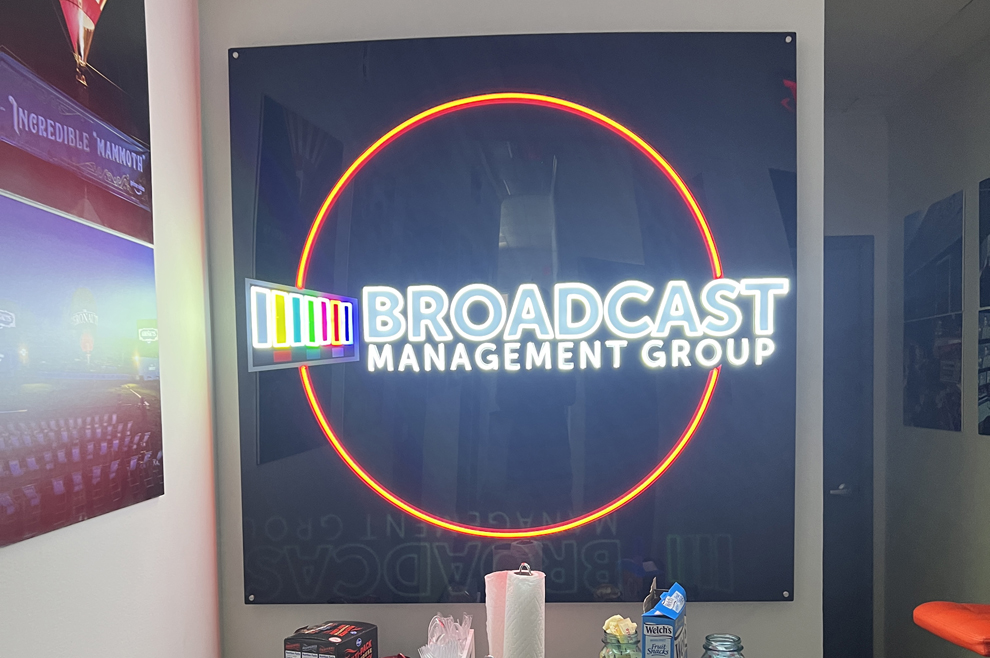
Some standoff displays can be paired with backlighting, halo illumination, illuminated letters, or nearby architectural lighting. Electrical access, wiring routes, ventilation, mounting depth, service access, wall construction, and applicable codes must be reviewed before fabrication. If illumination is the primary visual feature, a dedicated backlit sign may be more appropriate than a standard standoff system.
Standoff panels can work well for permanent directories, floor identification, department signs, and selected wayfinding locations. Effective directional signage also requires clear terminology, readable typography, sufficient contrast, accessible placement, appropriate sightlines, and an understanding of traffic patterns. Locations with frequent departmental changes may need easily replaceable inserts.
Heritage-managed projects begin with an anticipated overall investment of $3,000. This amount represents a starting point for the complete project rather than the cost of one panel, letter, or standoff. Dimensions, materials, design development, fabrication complexity, wall conditions, access requirements, installation, and related interior graphics will influence the final investment.
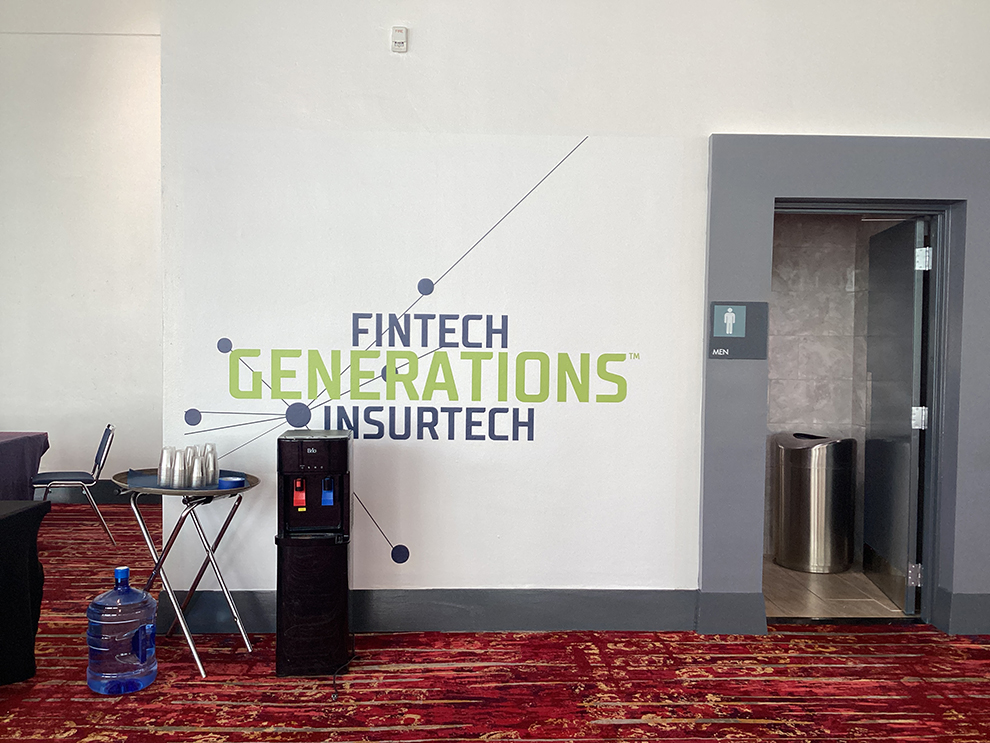
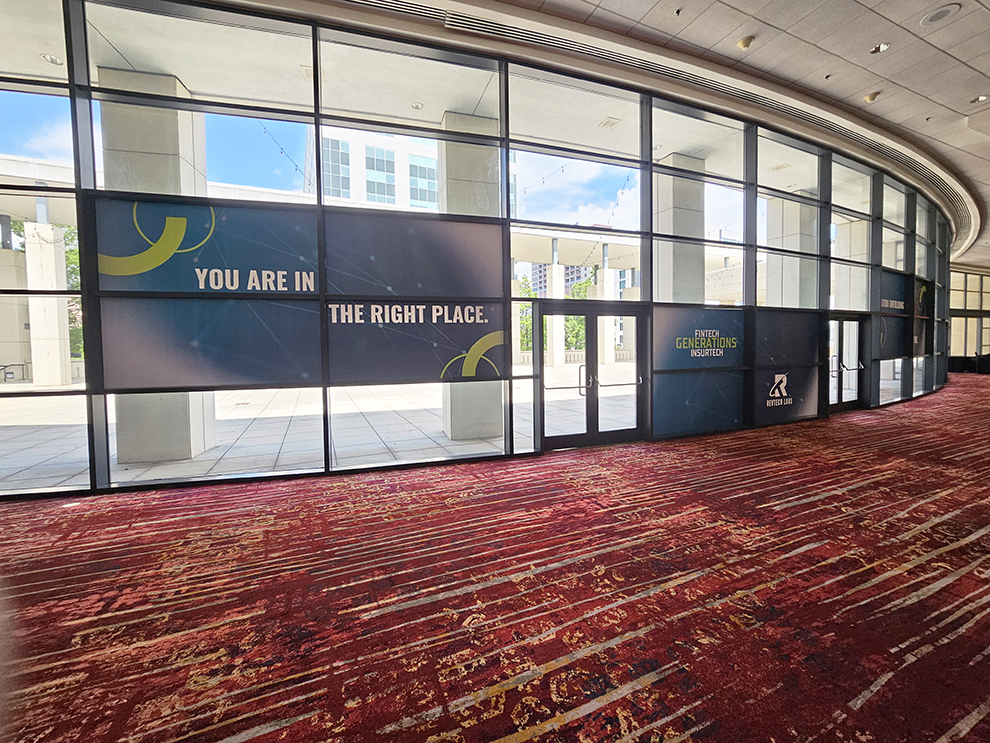
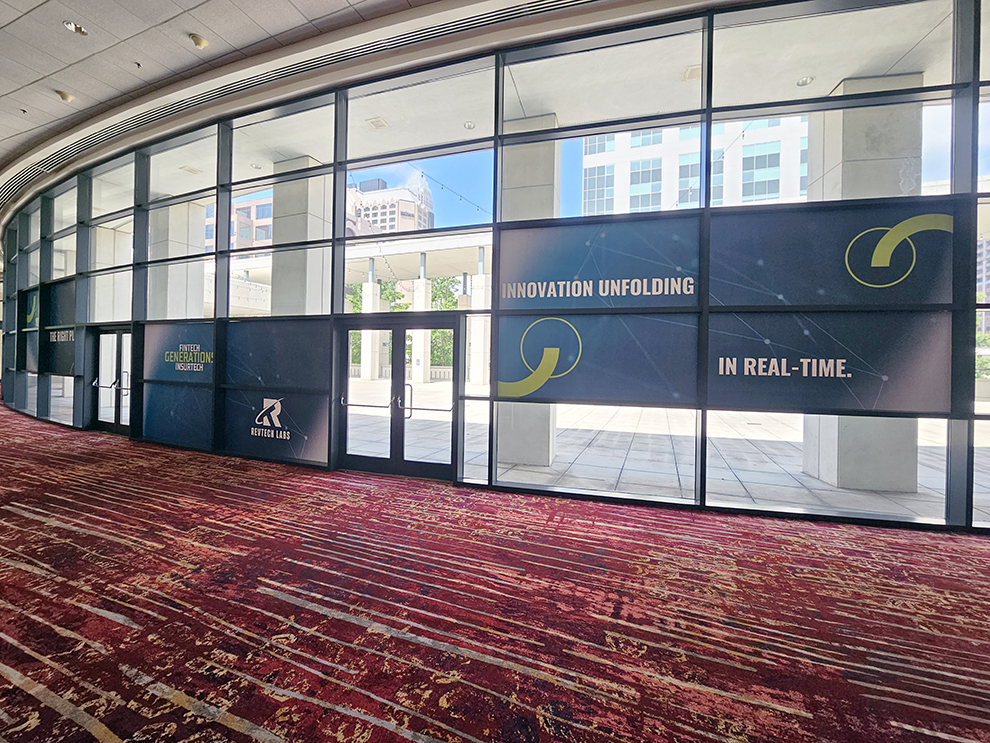
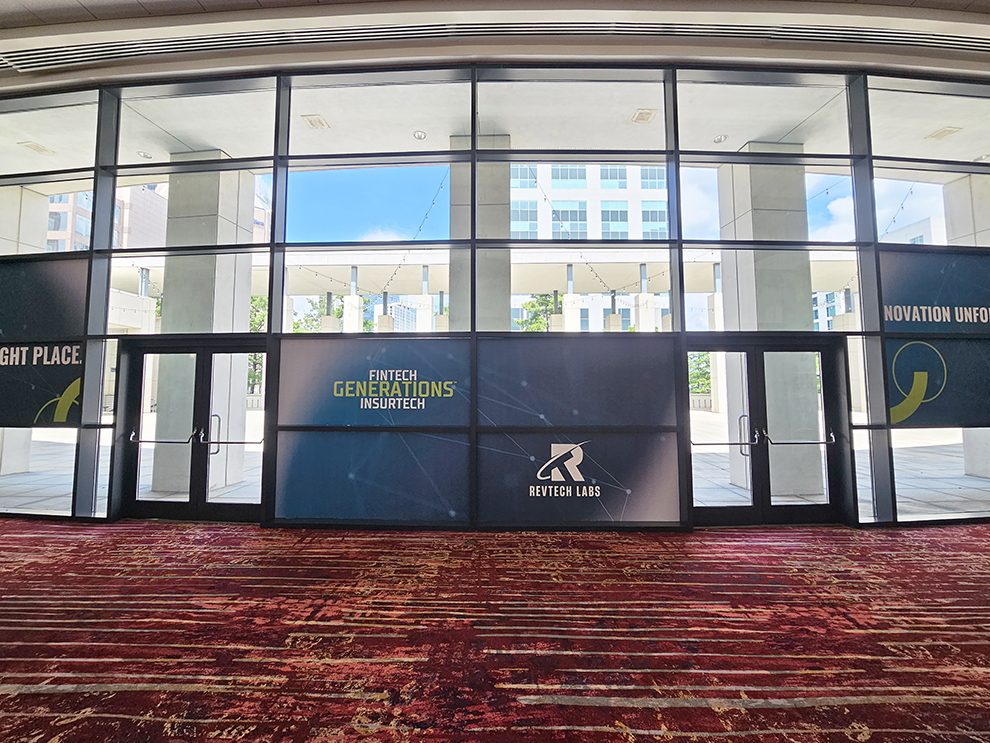
Heritage Signs & Displays collaborated with the Fintech + Insurtech Generations 2023 conference at the Charlotte Convention Center. Heritage worked closely with the client to create an interactive and branded event environment for attendees to network and discuss key topics impacting the financial and insurance sectors. The project enhanced the premier annual conference's atmosphere and engagement.
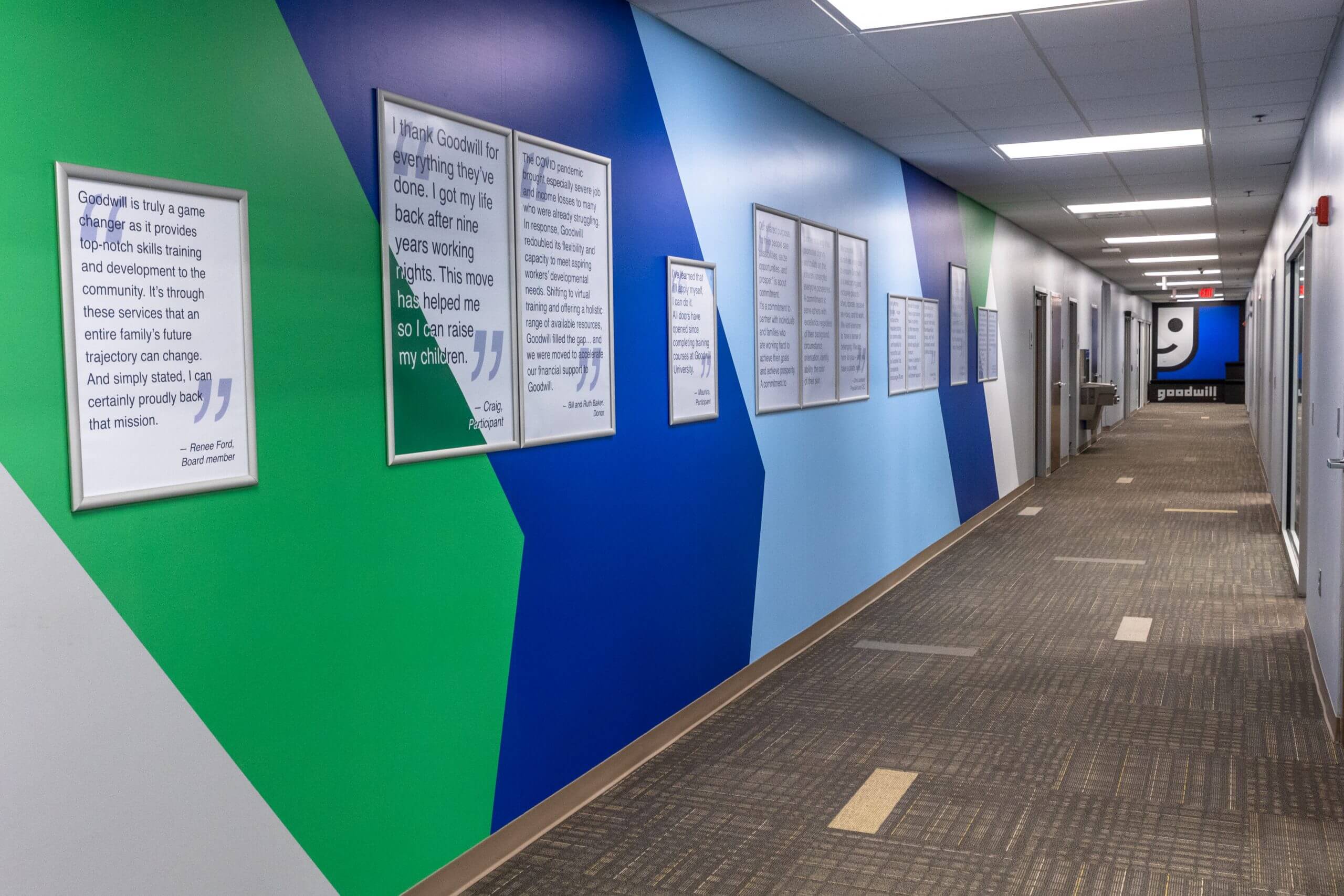
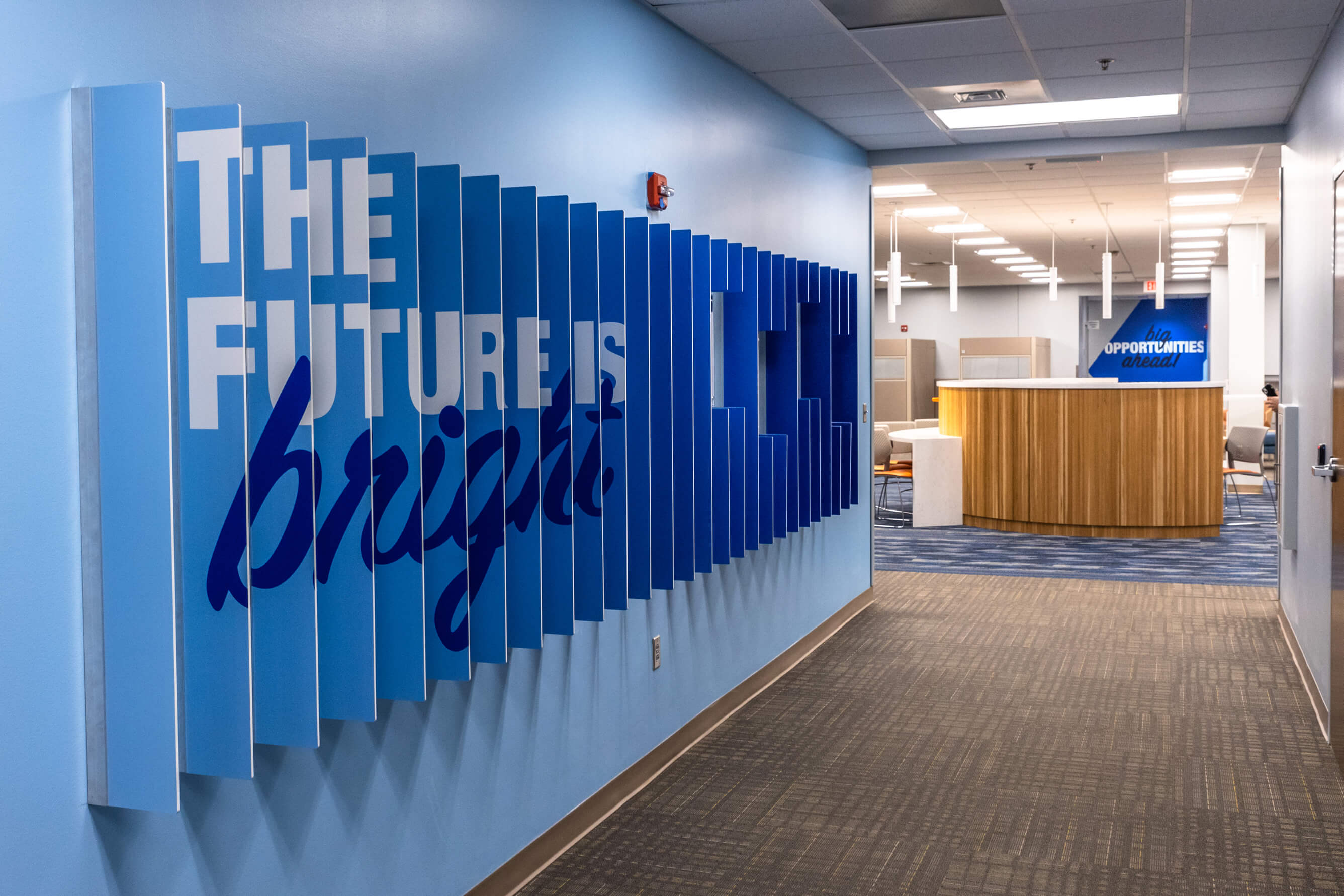
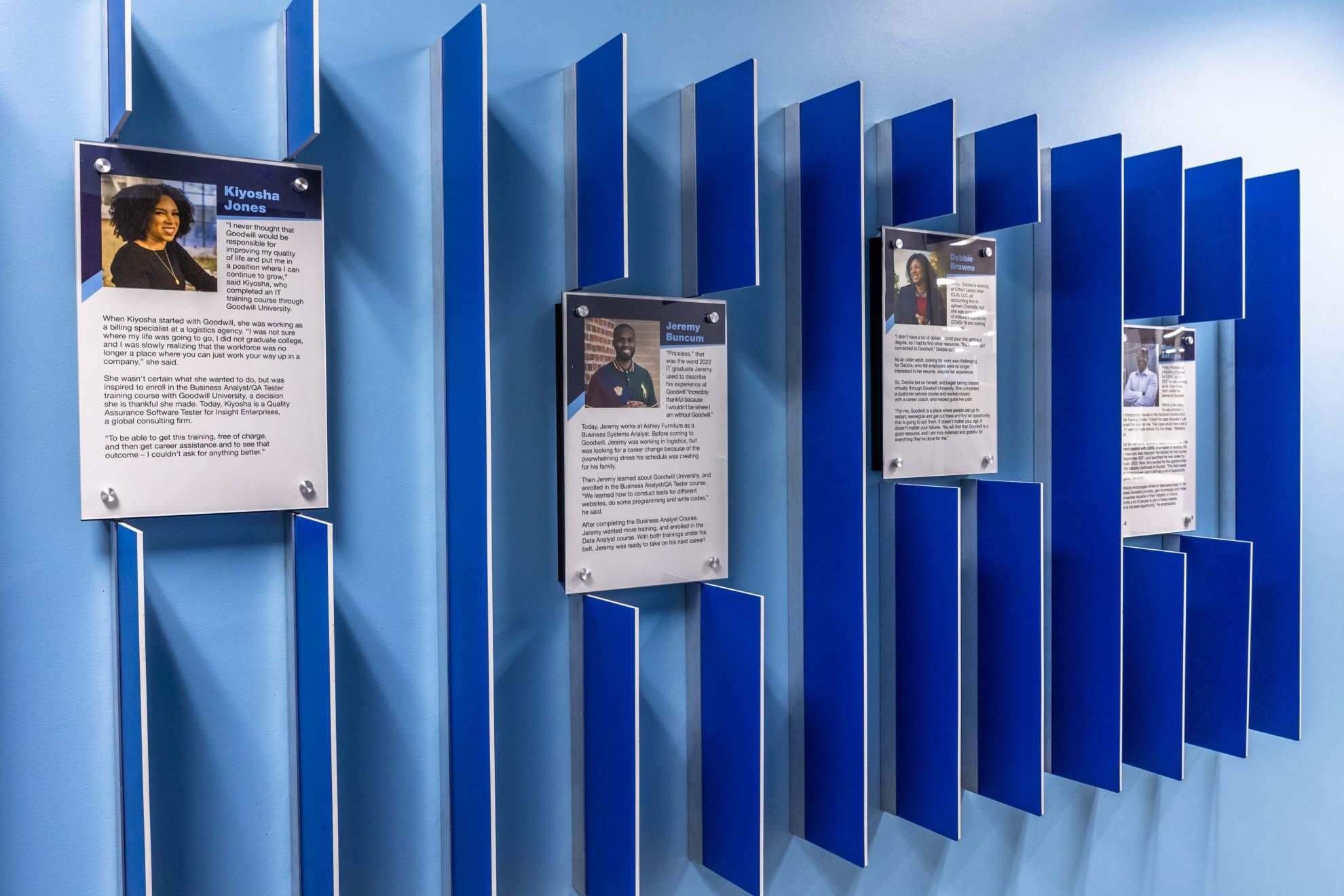
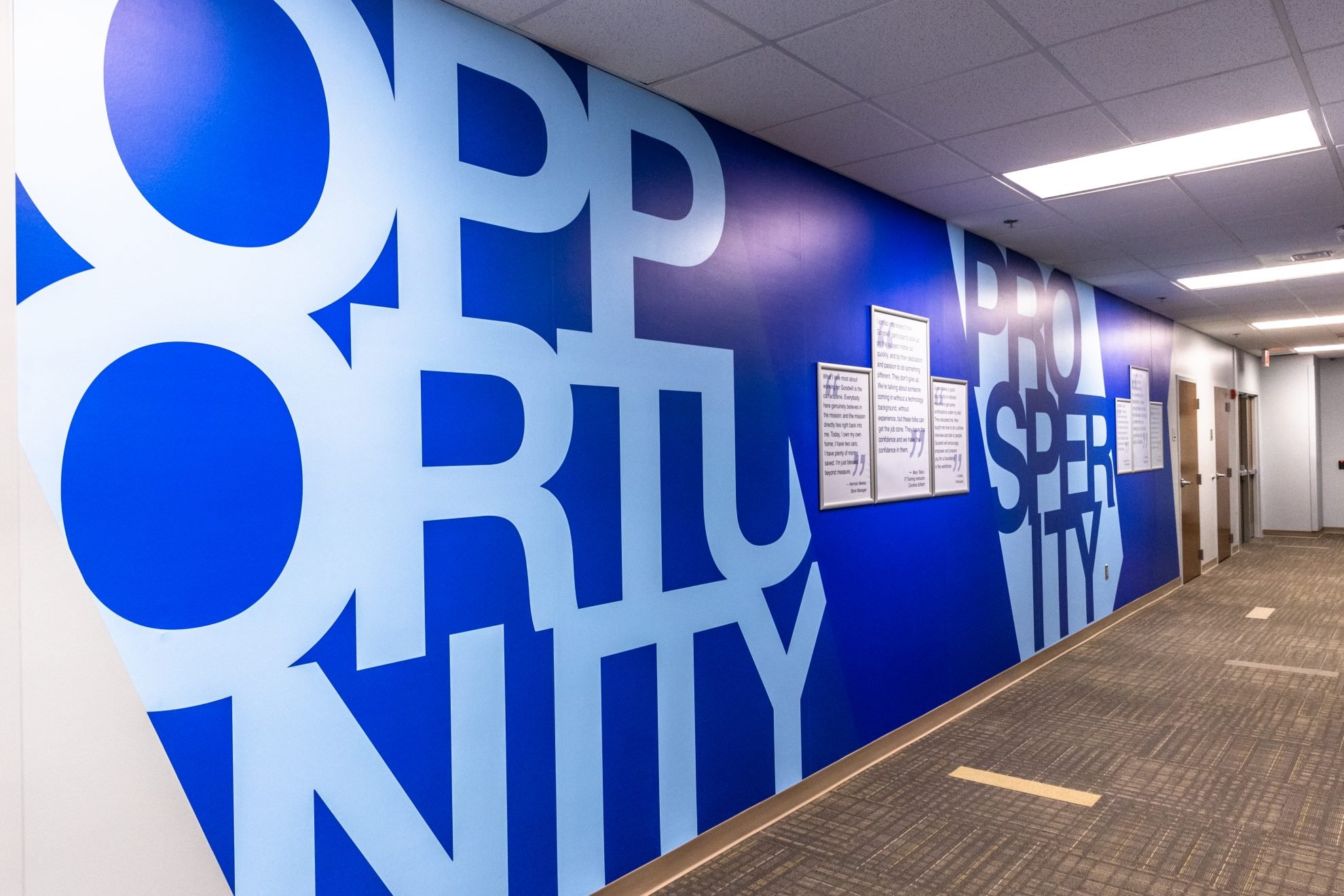
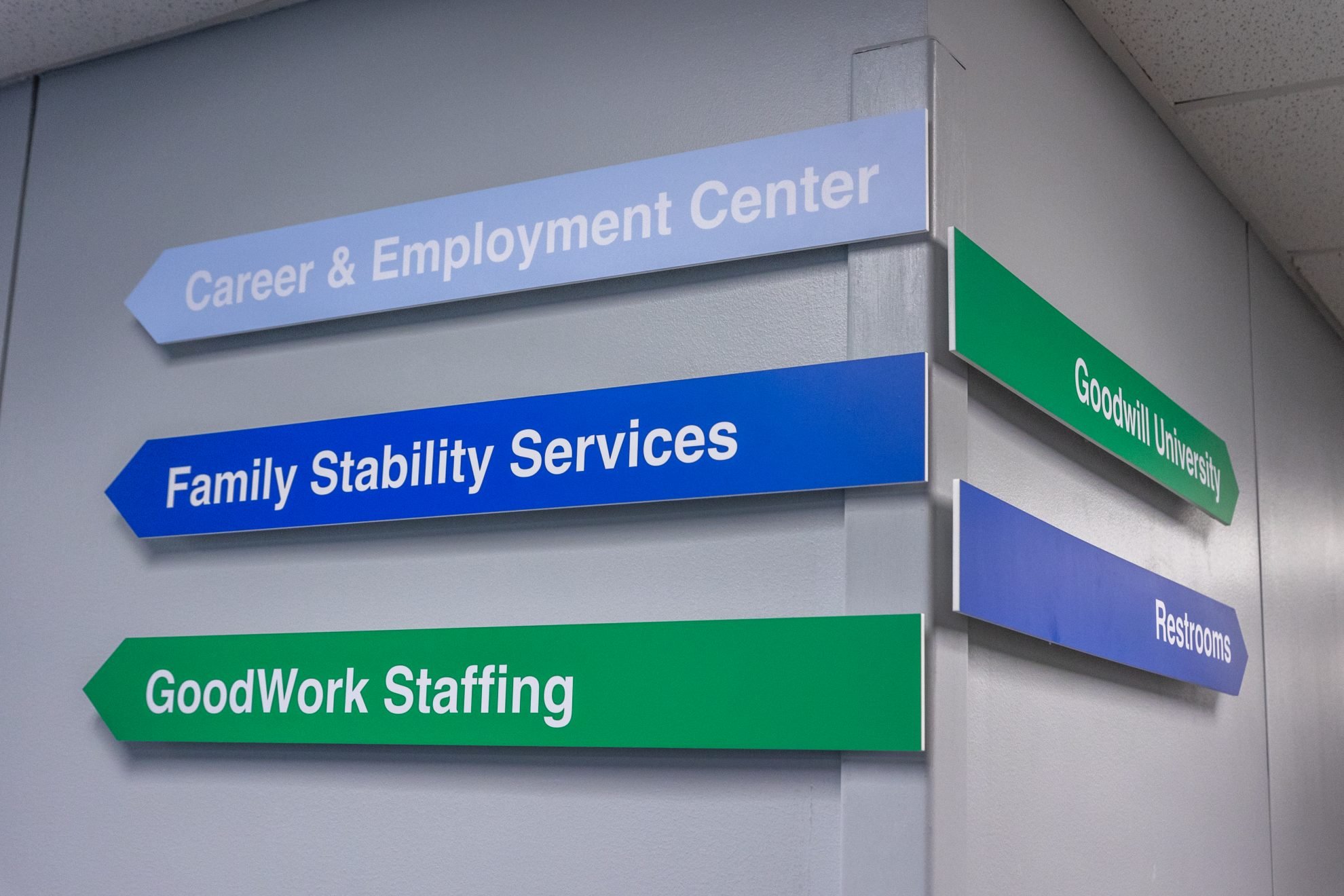
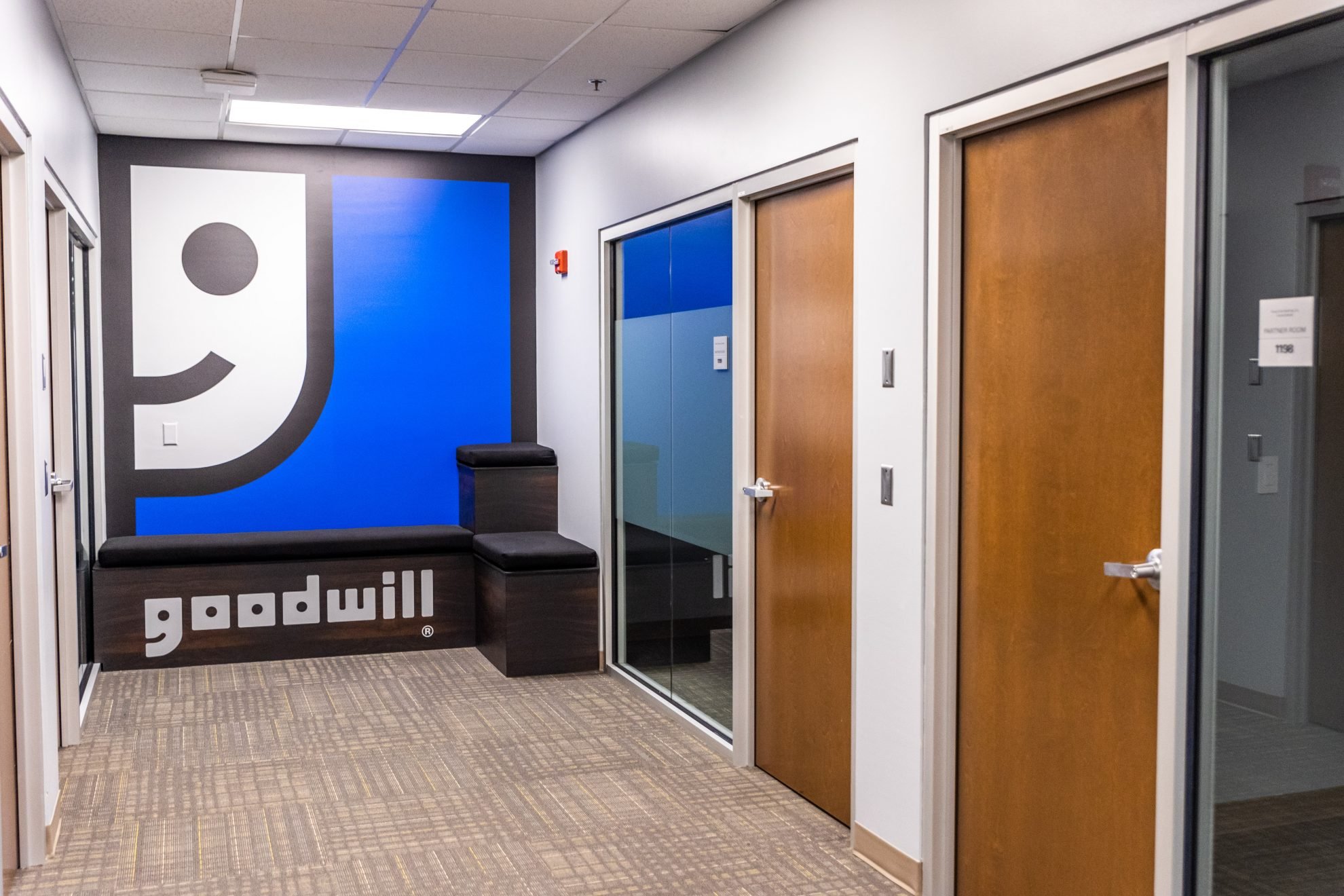
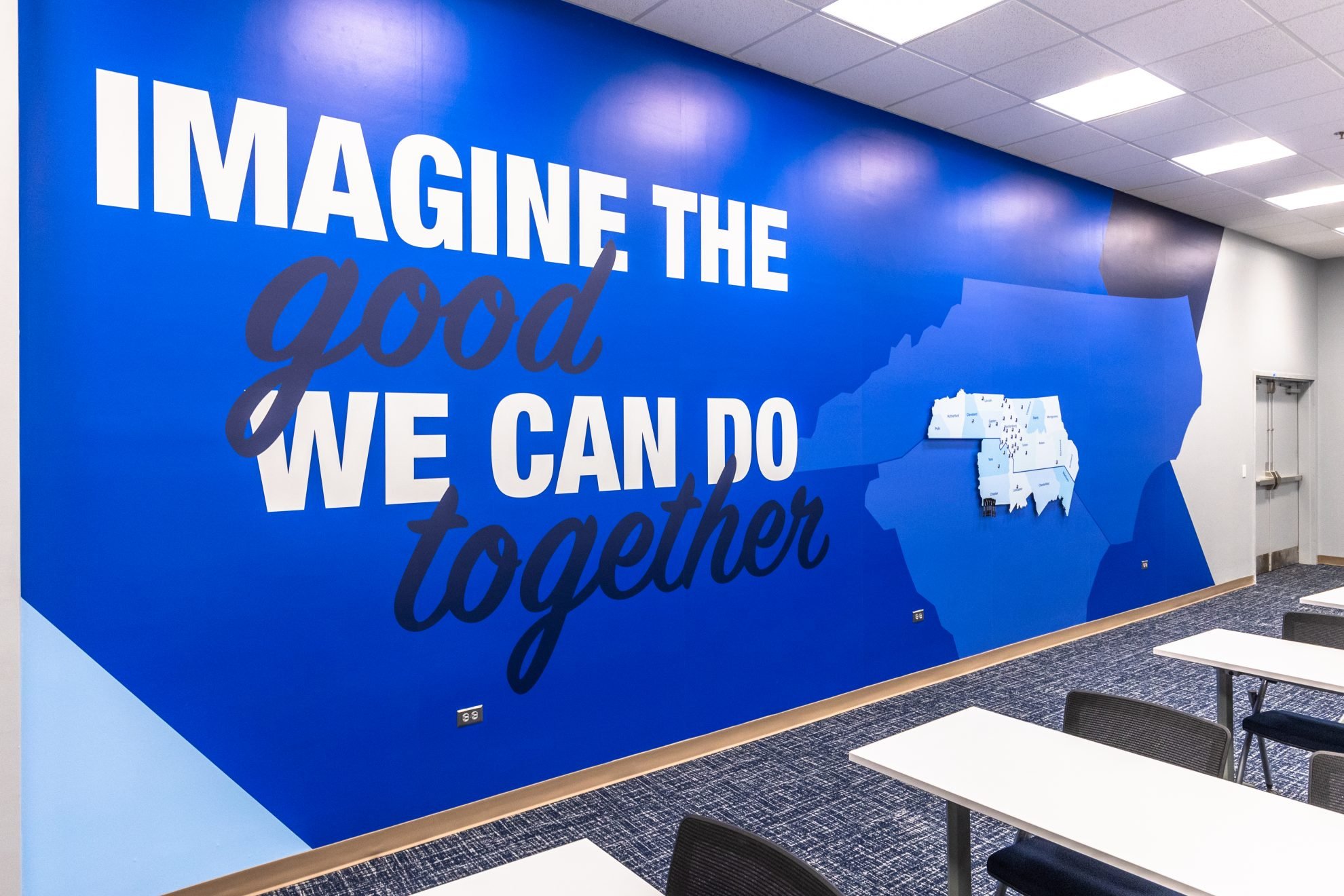
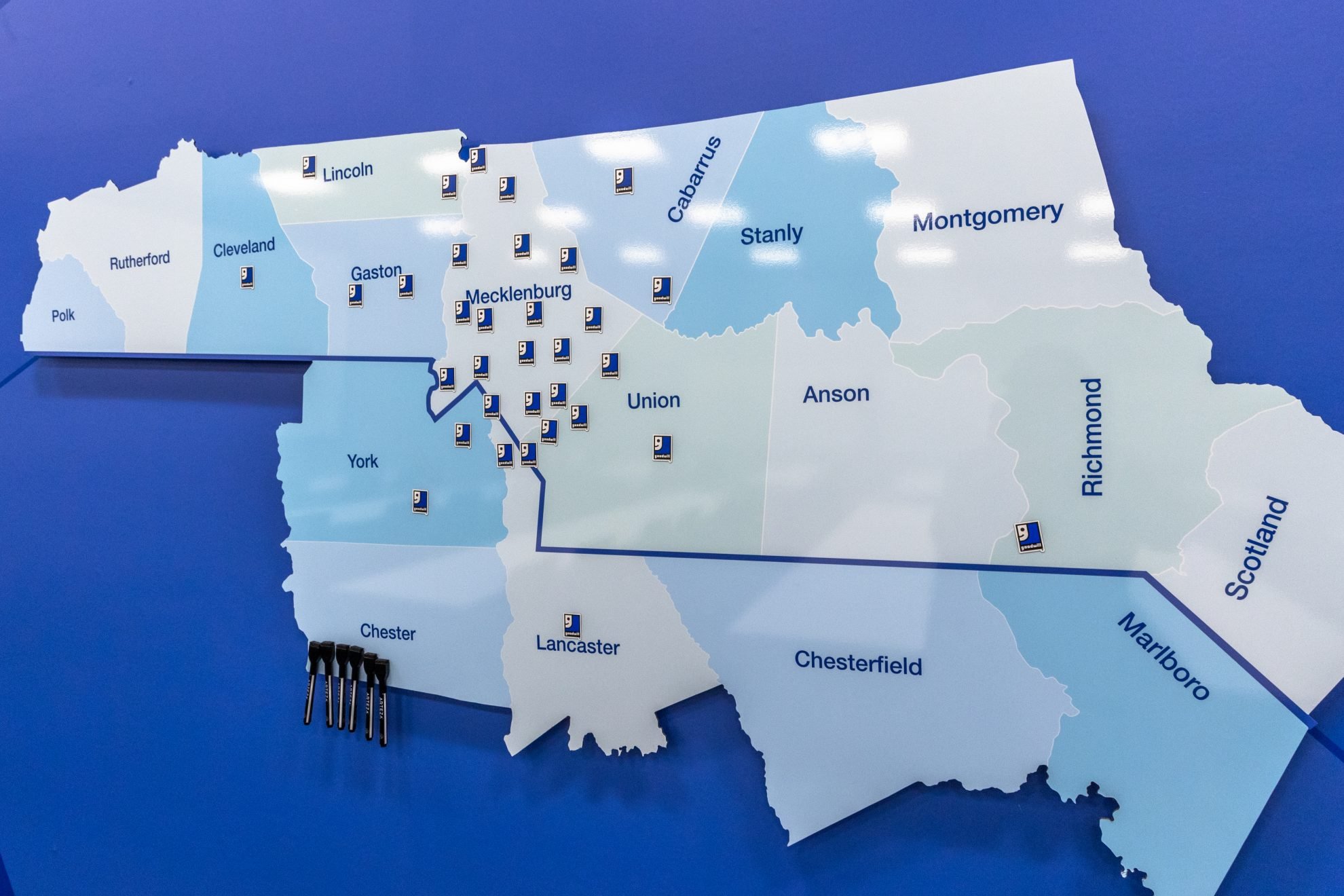
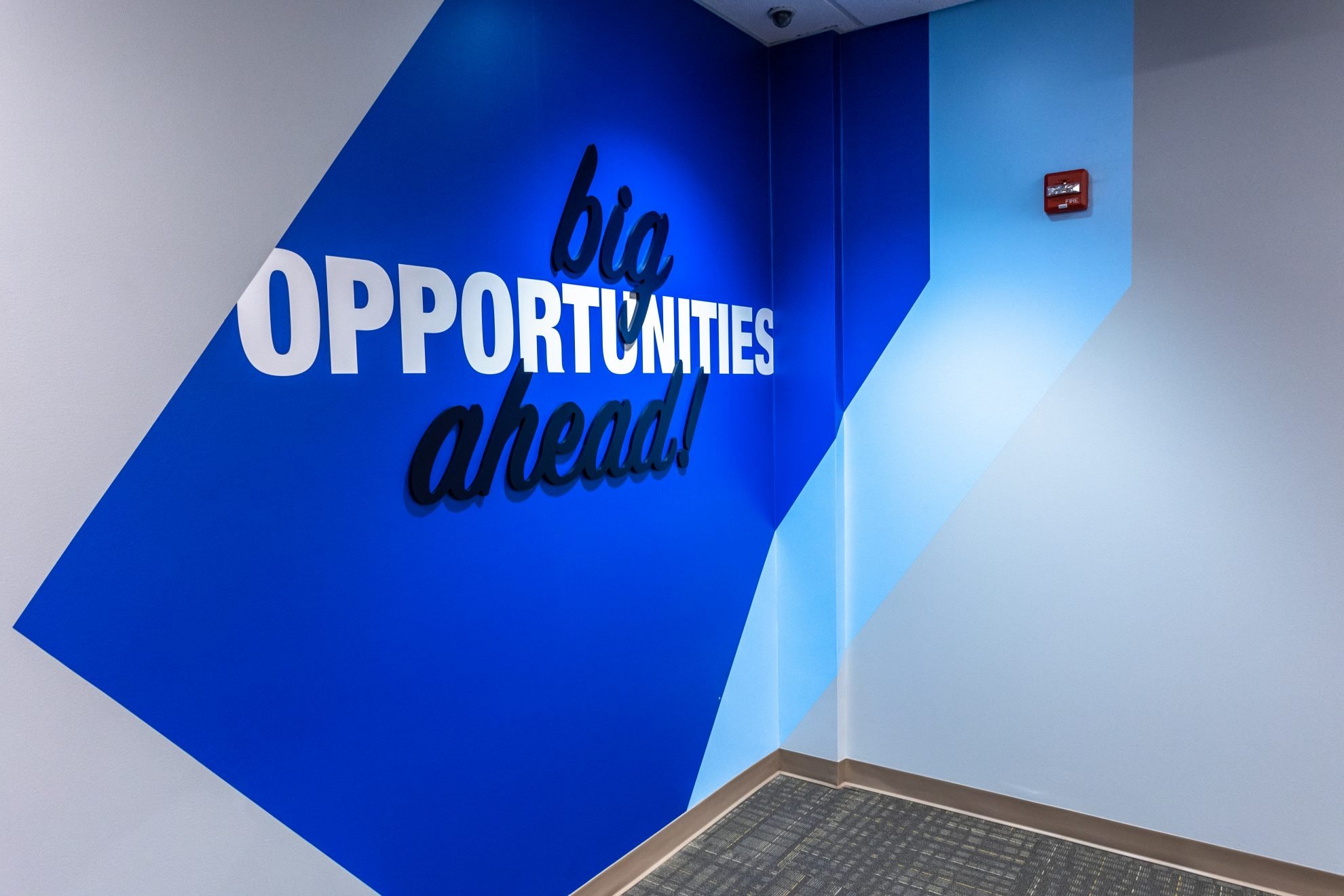
Heritage Signs & Displays collaborated with Goodwill Industries of the Southern Piedmont to transform the Opportunity Campus in Lincolnton, NC. The project included lenticular wall displays, wall wraps, frosted vinyl, wayfinding signs, and custom wall displays. These elements enhanced the Career & Employment Center, creating an engaging and branded environment that reflects Goodwill's values and mission to support workforce development.