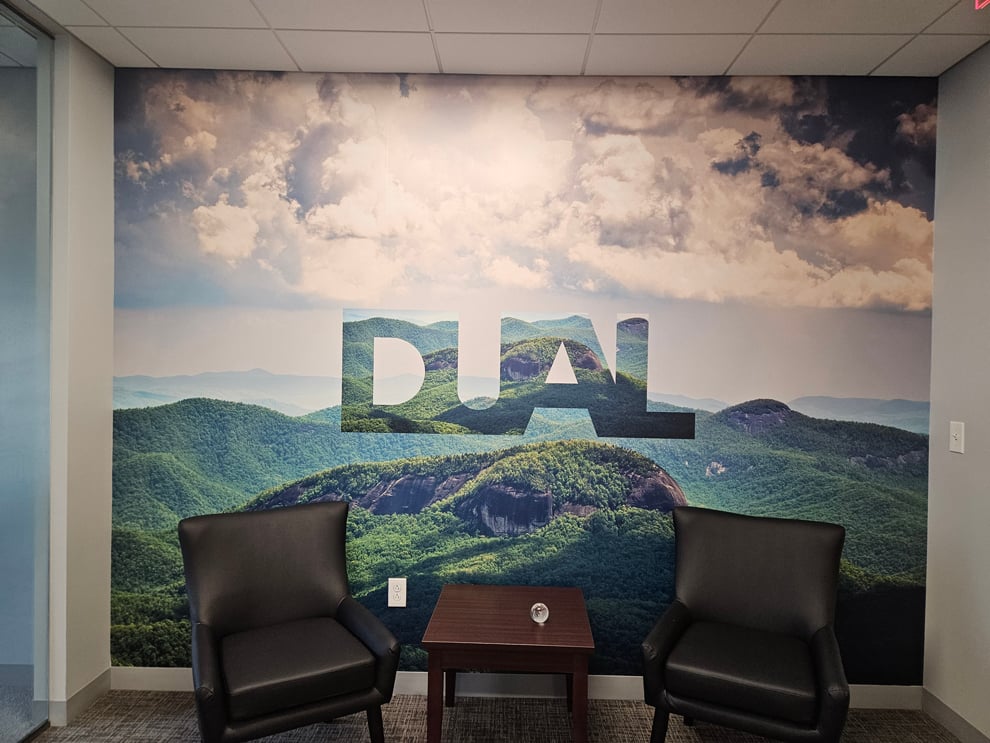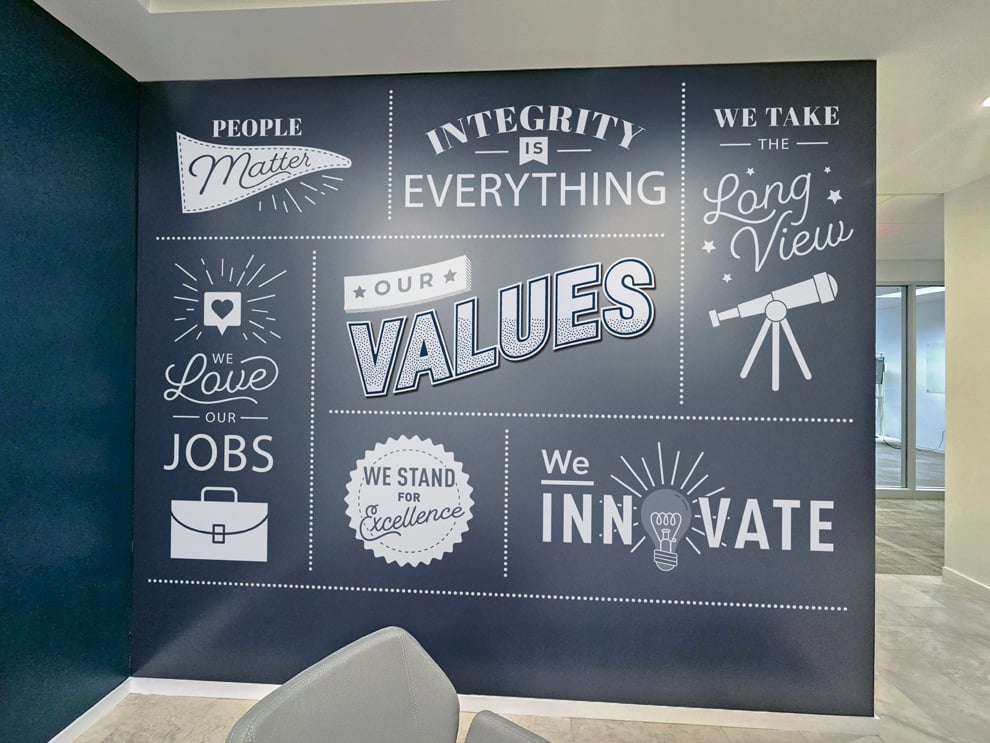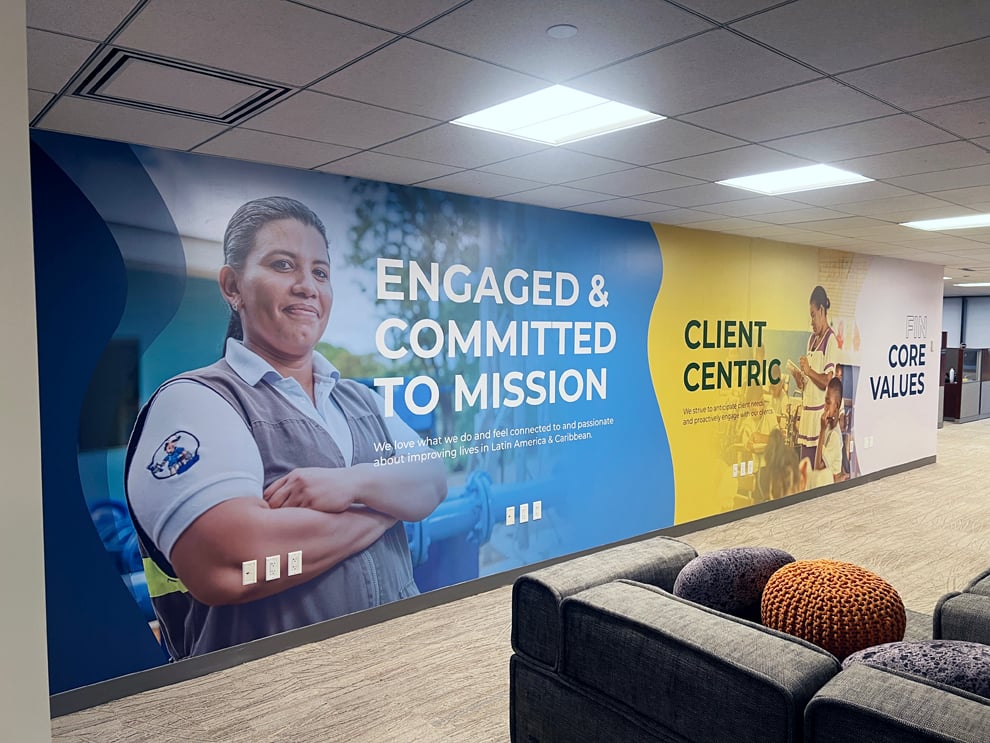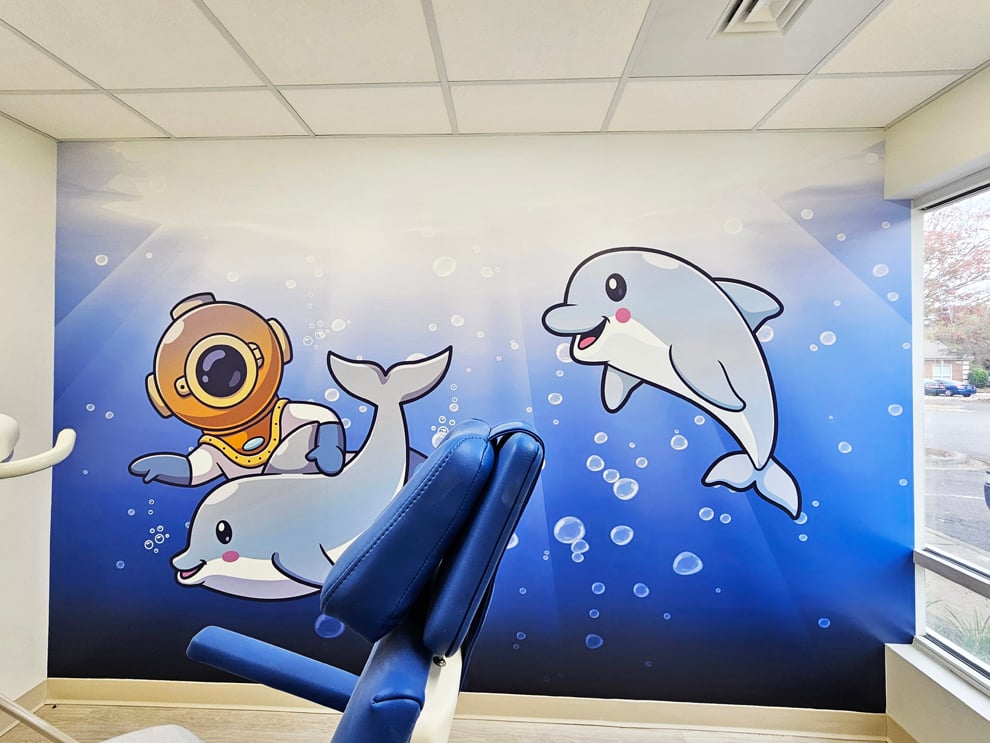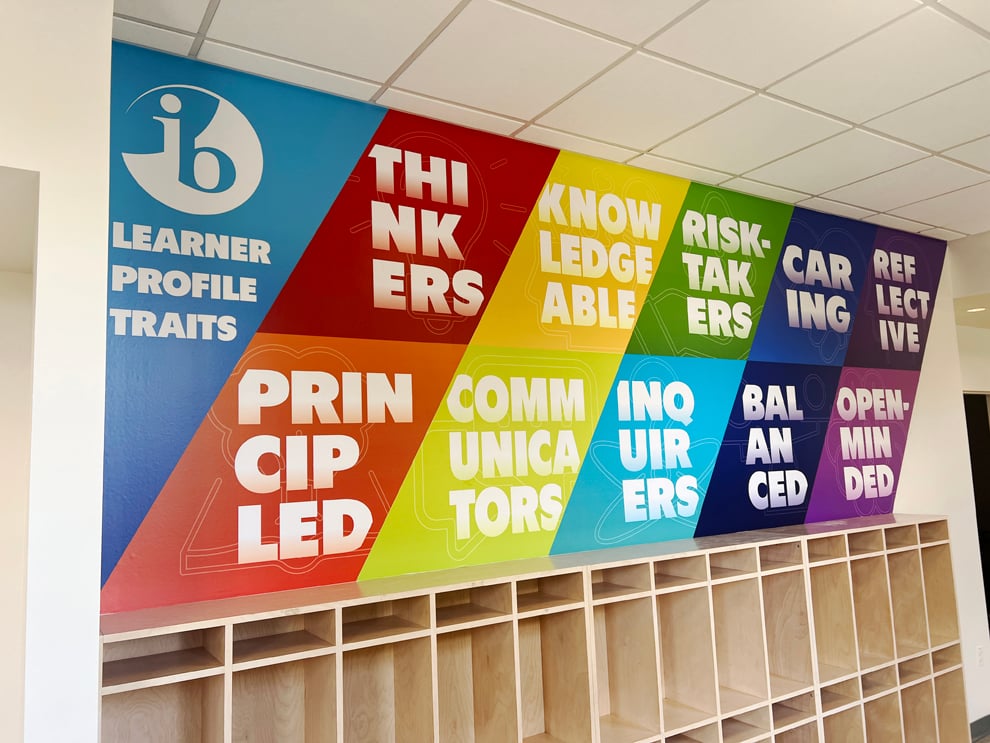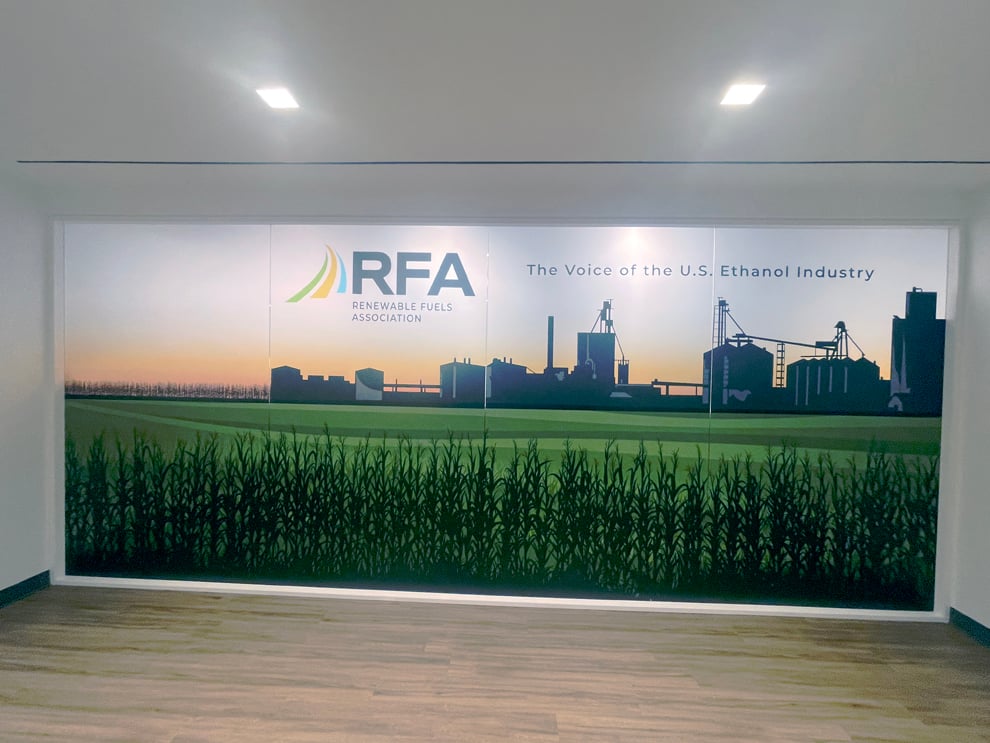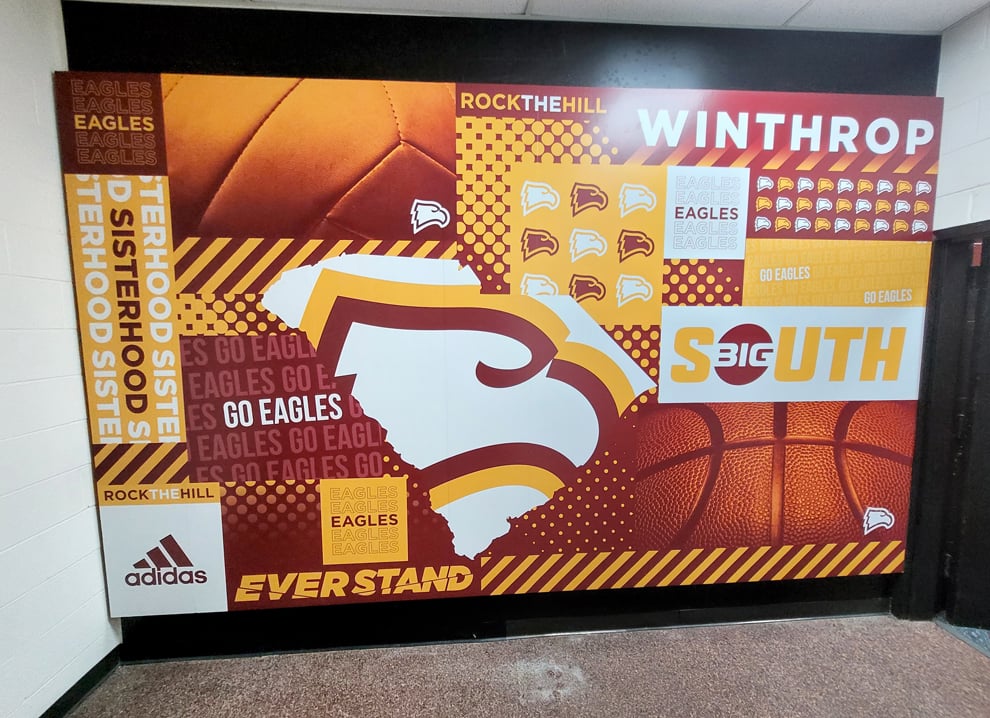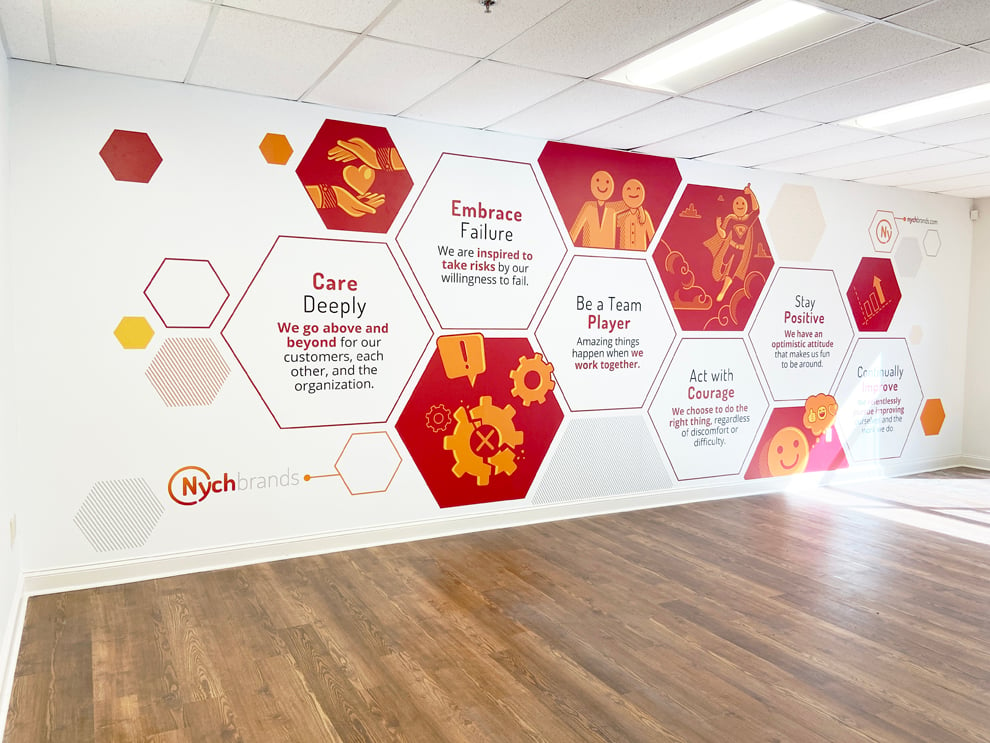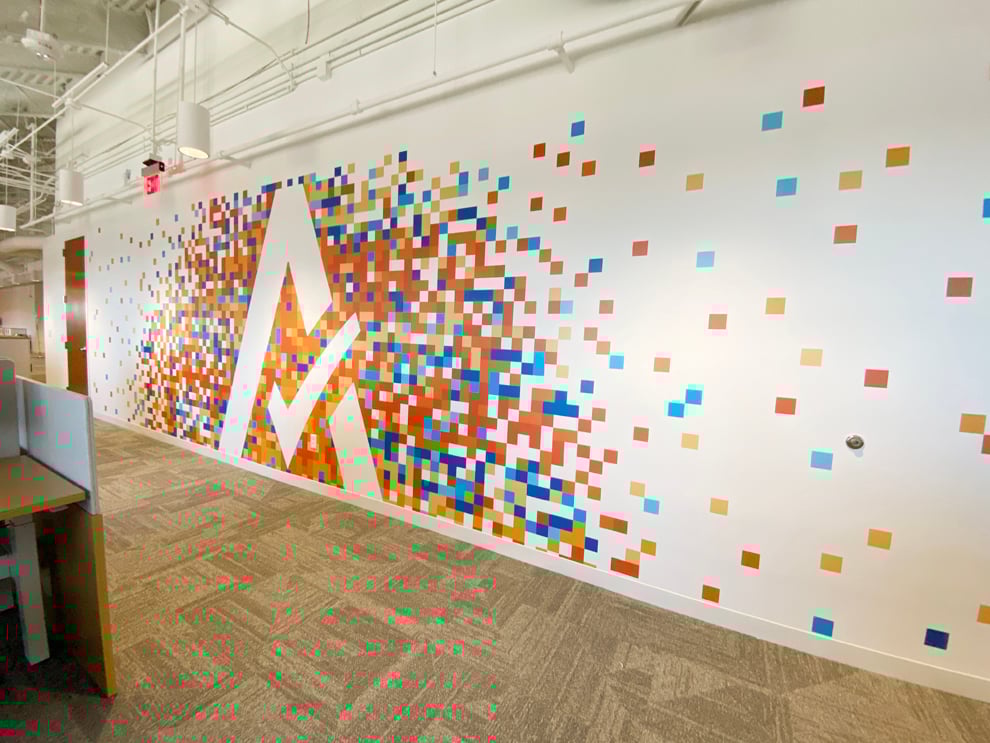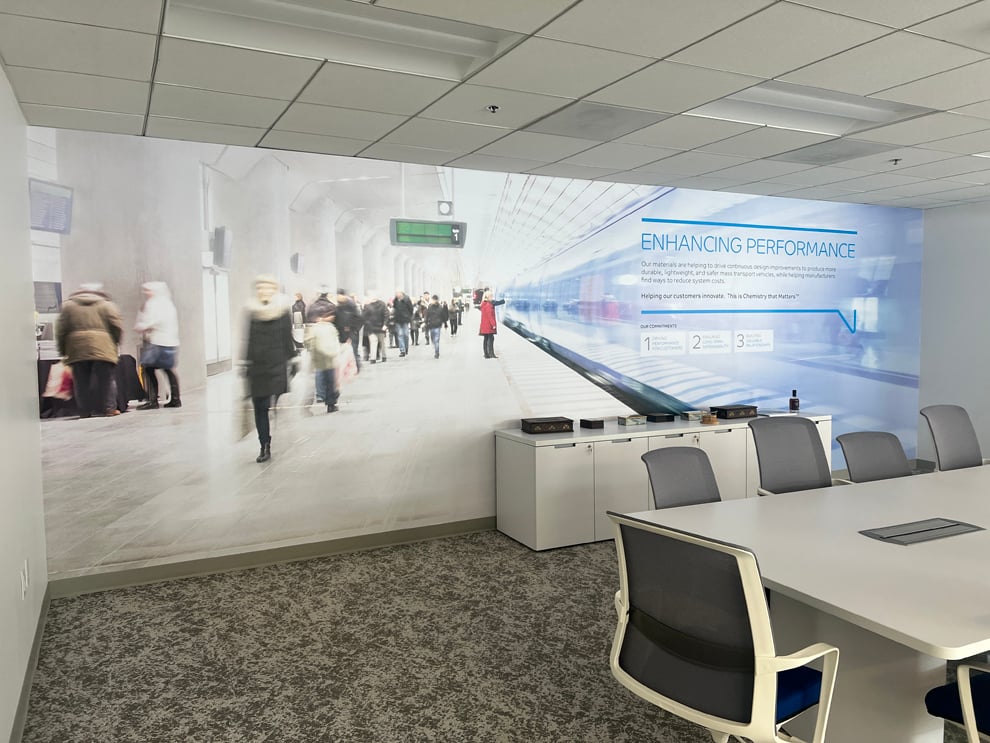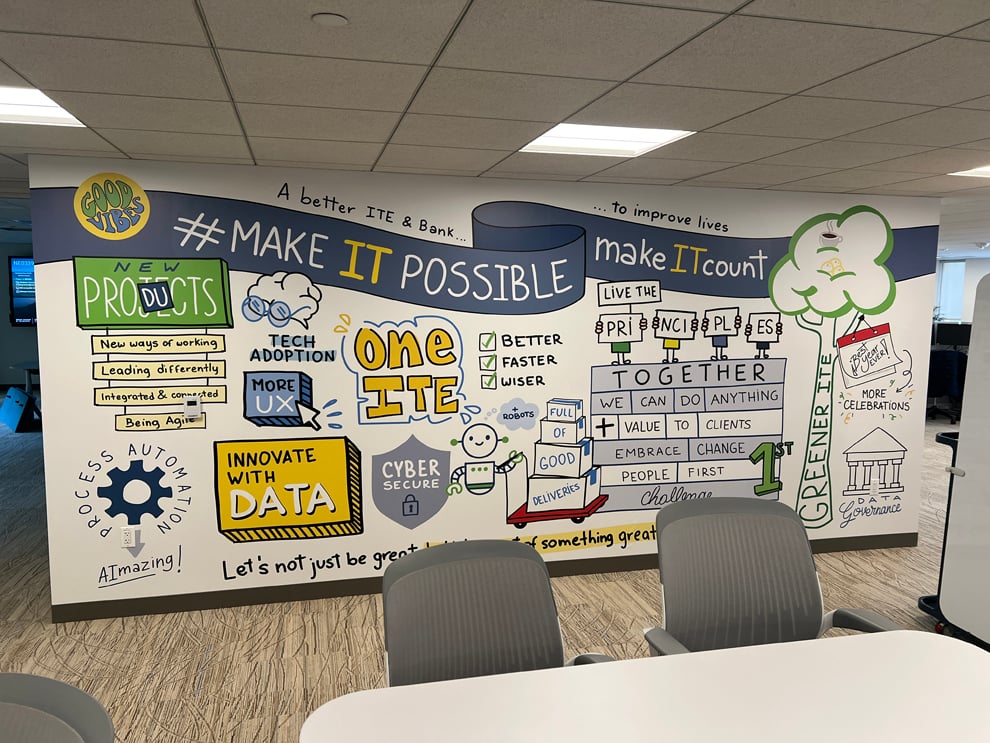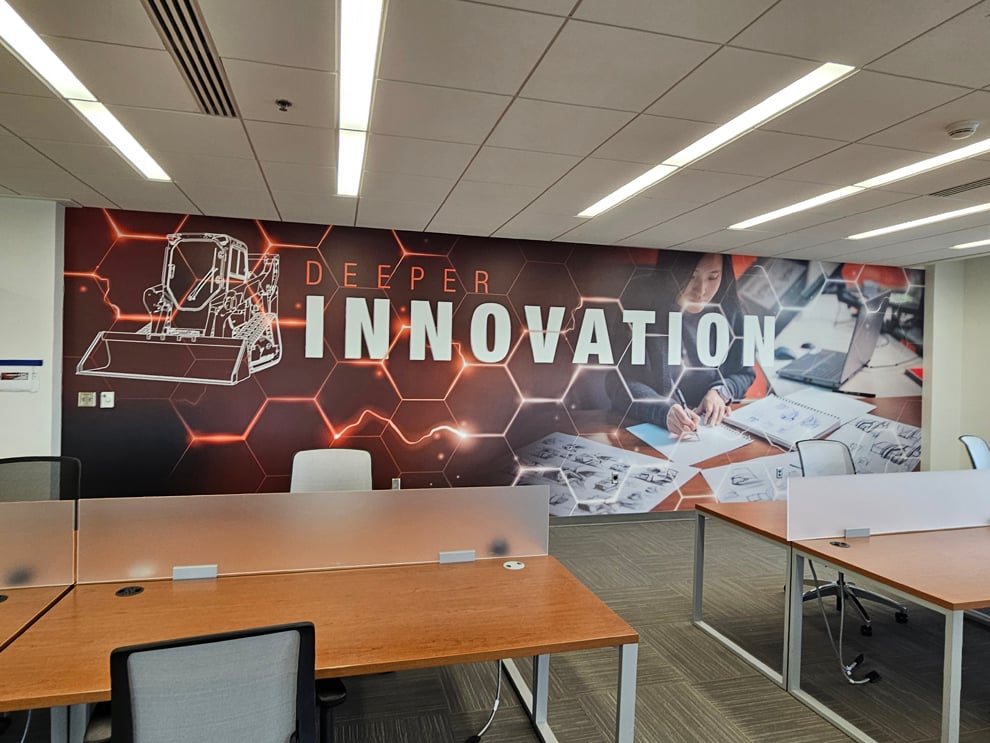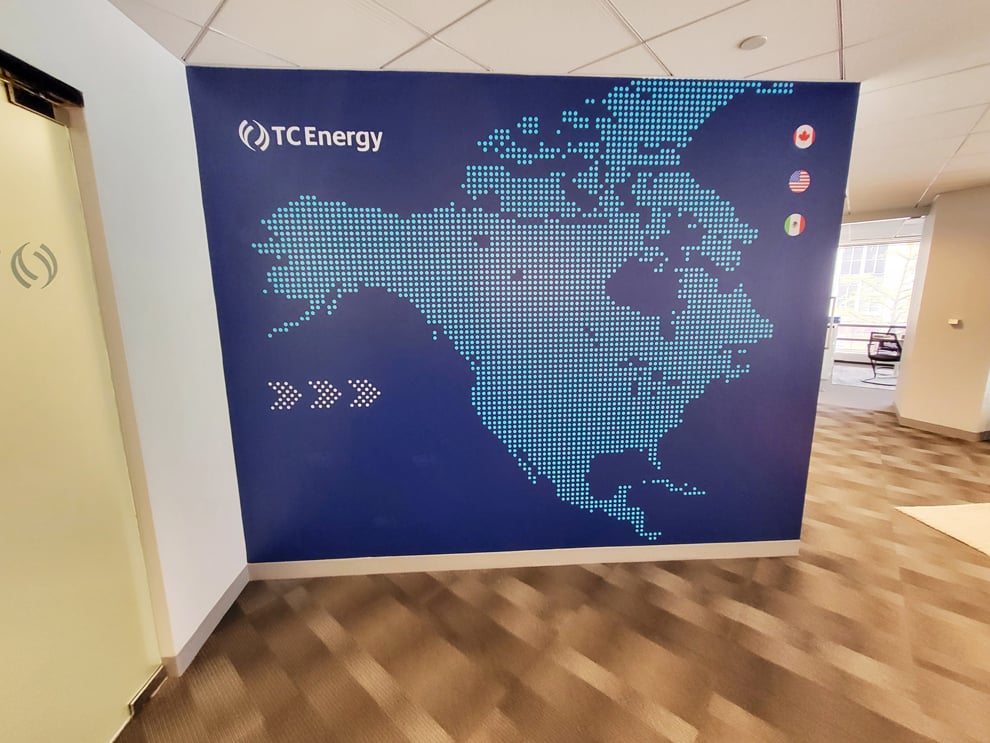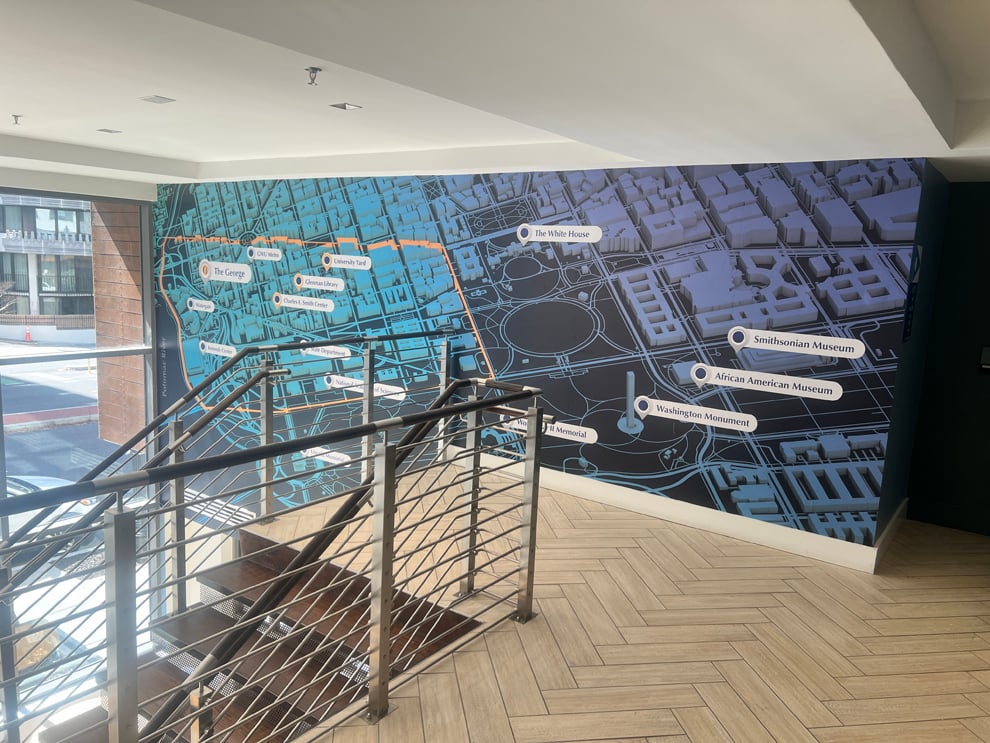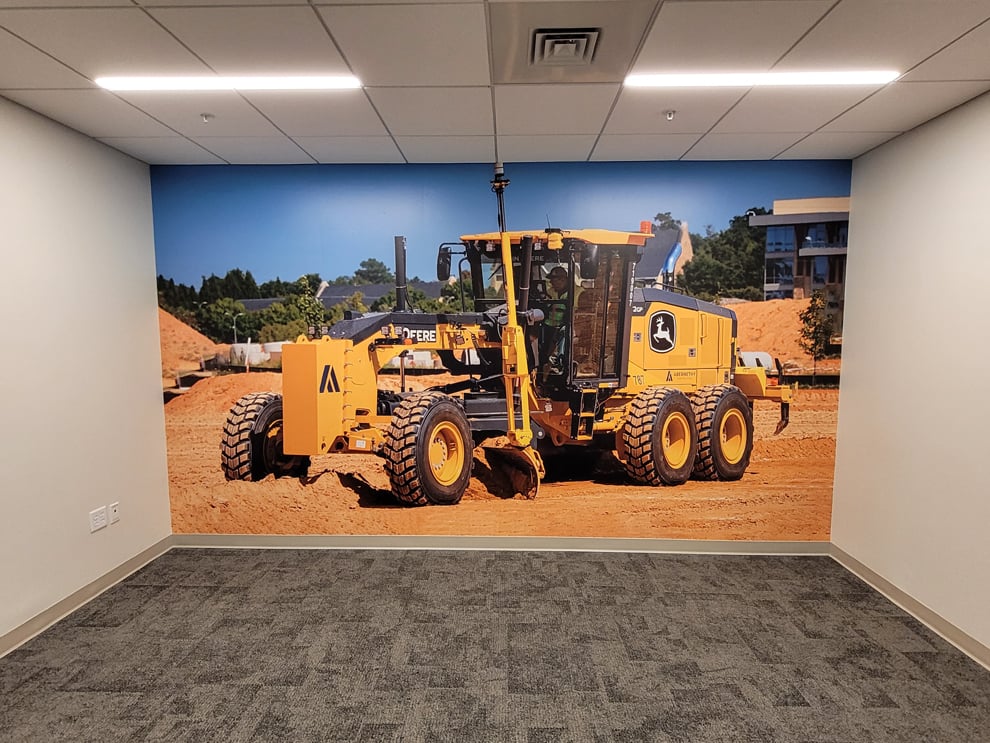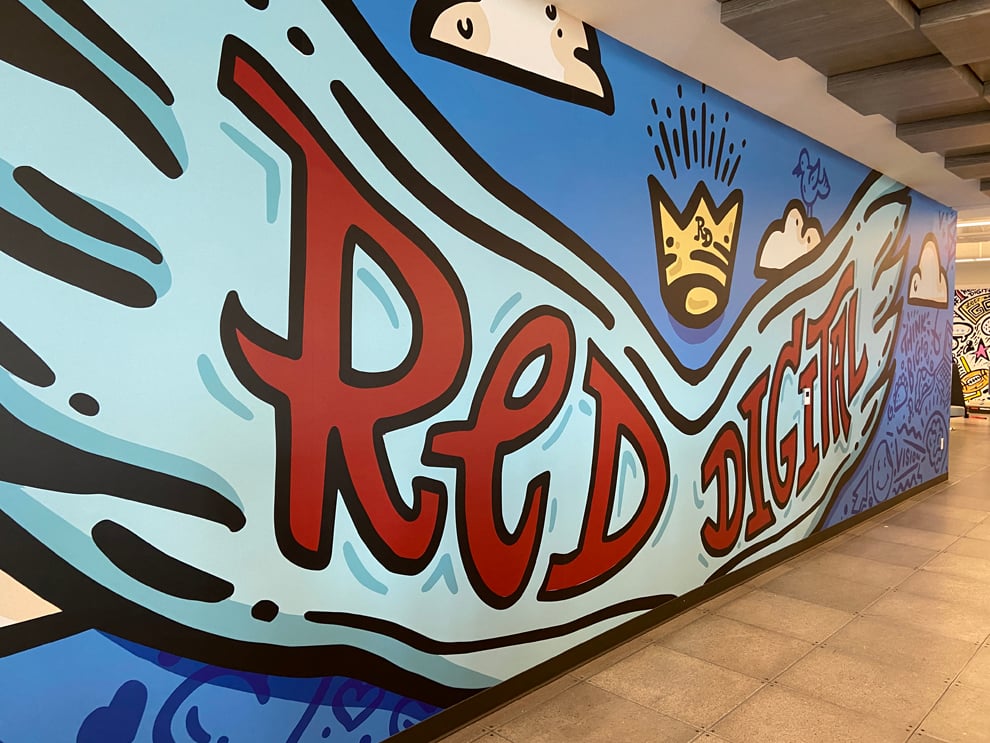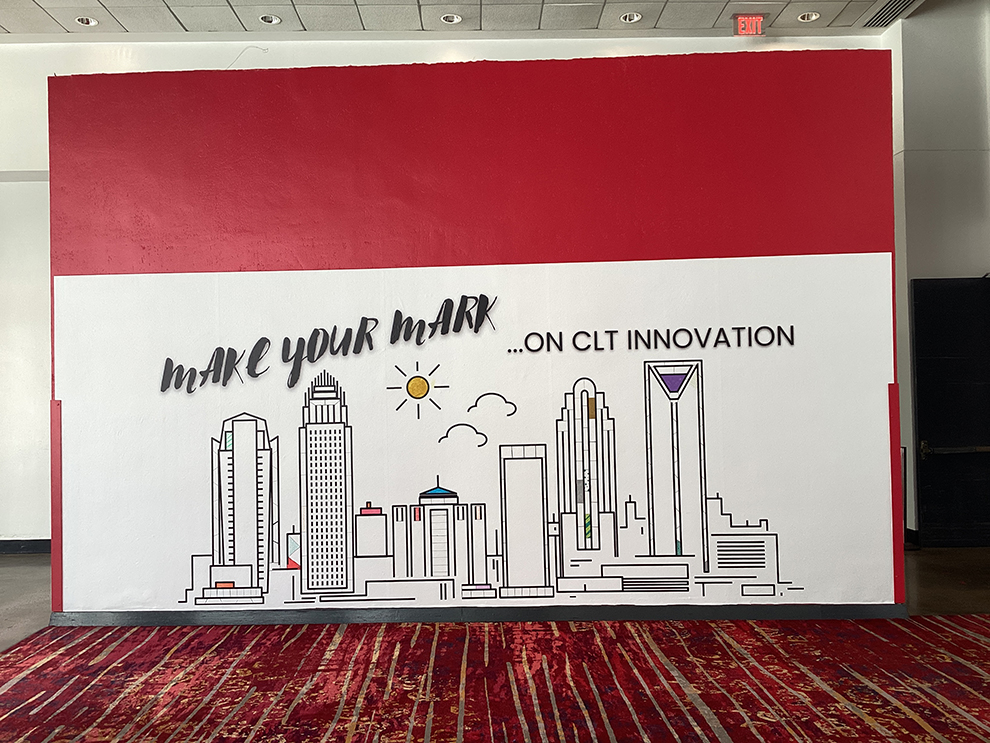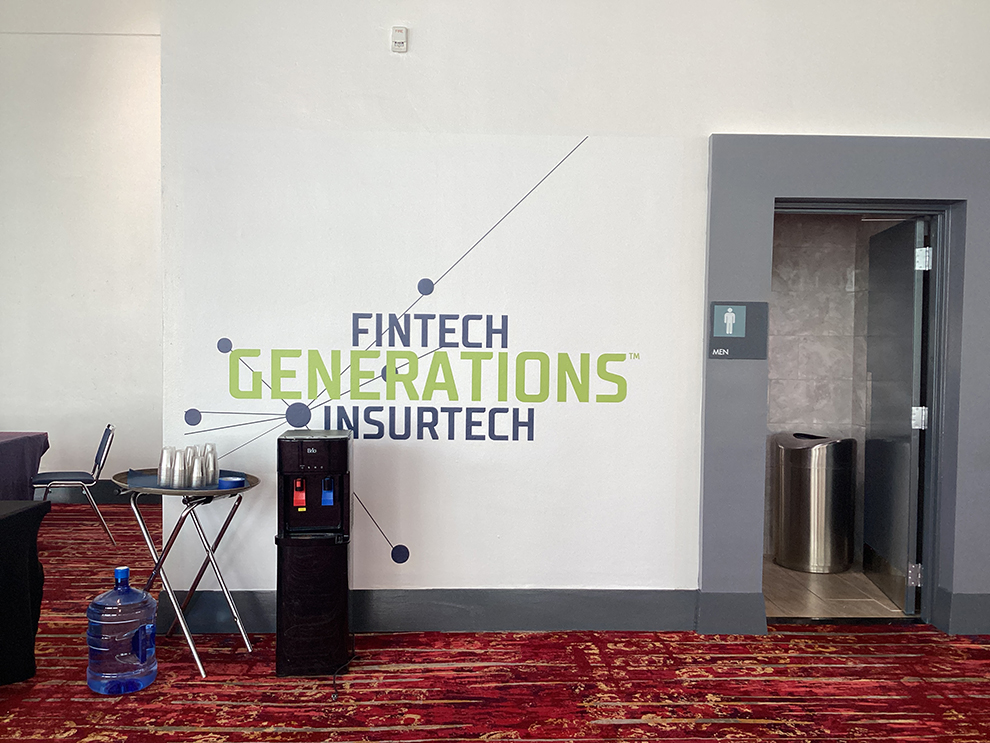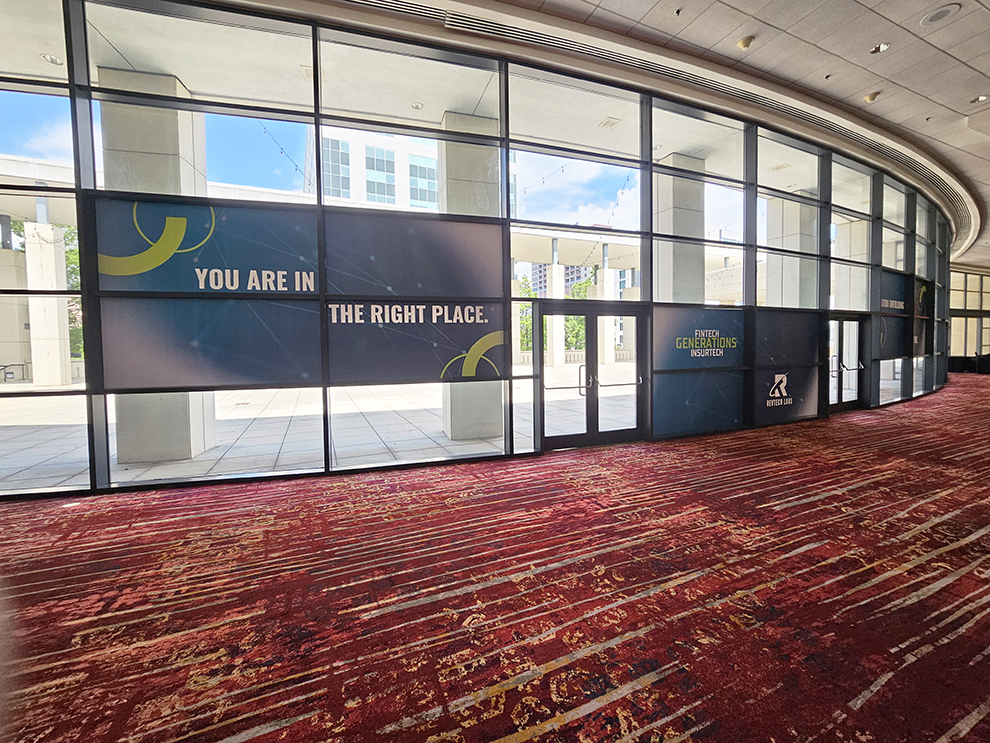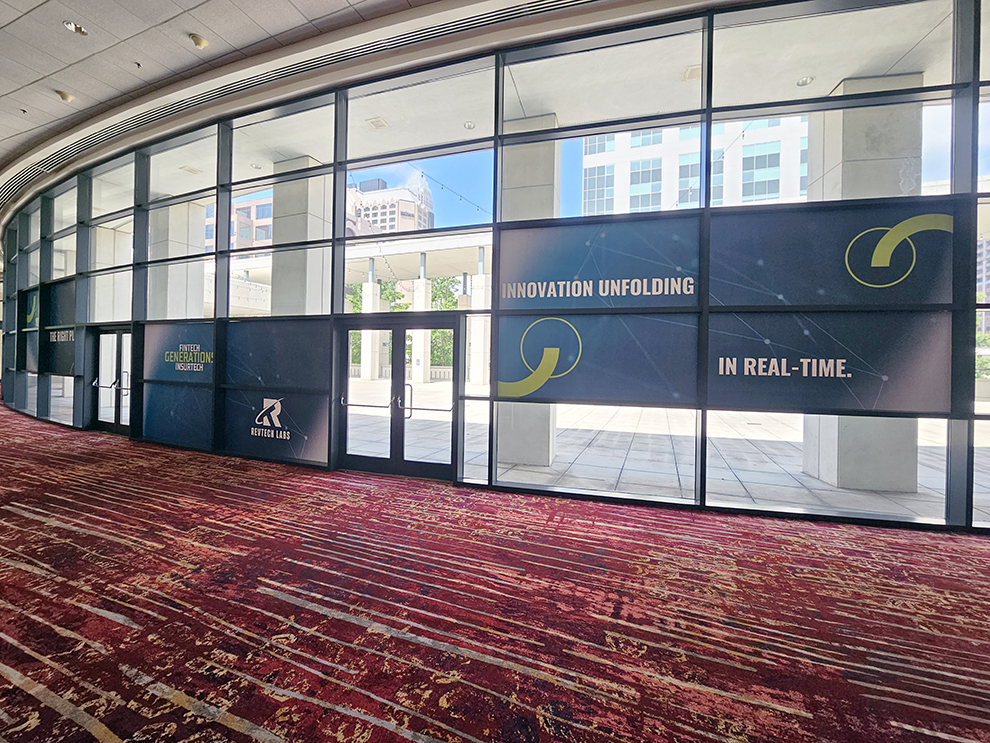
A large wall can become a more purposeful part of a Hickory, NC workplace. Wall Wraps give organizations a substantial visual surface for communicating identity, culture, history, recognition, research, or direction in a format people encounter as they move through the environment. Instead of leaving a prominent wall as background, a mural or large-format wall graphic can establish an arrival experience, guide a story through a corridor, reinforce values in shared spaces, or create a realistic event setting with more presence than a freestanding display alone.
Heritage Signs & Displays works with Hickory clients to plan, produce, fabricate, and professionally install Wall Wraps, wall murals, and large-format wall graphics. Environmental graphic design begins with the intended result and the audience. Heritage considers scale, sightlines, image quality, message hierarchy, architecture, wall conditions, traffic patterns, furnishings, lighting, and the relationship between the graphic and surrounding signs and displays. Those decisions influence whether the composition should rely on photography, typography, illustrations, patterns, archival material, branded color, or a carefully balanced combination.
Wall graphics can support core-values features, mission statement displays, history walls, recognition programs, educational storytelling, branded corridors, employee experiences, donor acknowledgements, and event applications. They may also provide the graphic field behind dimensional letters, standoff mounted panels, mounted photographs, lobby signs, or other fabricated features. In those applications, the wall wrap remains the principal visual foundation while layered components add depth, hierarchy, and focal points where the content requires more emphasis.
Hickory organizations are supported through Heritage’s Charlotte headquarters and primary specialty production facility. One dedicated Project Manager connects discovery, the required site survey for installed work, field verification, environmental graphic design, production, fabrication, scheduling, and professional installation. That connected process helps prevent approved design intent from becoming separated from material selection, panel planning, seam placement, production requirements, or actual site conditions. The client is not simply purchasing printed vinyl. The client is relying on Heritage to carry a complex visual idea through decisions that affect fit, appearance, performance, and installation readiness.
Founded in 1977, Heritage is an award-winning, veteran-owned, family-led company approaching its 50th anniversary. Heritage brings Charlotte-area production resources together with Hickory field coordination for feature walls, multi-wall programs, phased workplace updates, and event environments. Heritage seeks to honor God by serving clients and communities with excellence through care, accountability, craftsmanship, and dependable follow-through. The objective is a wall experience that feels intentional from across the room and remains credible when viewed up close.
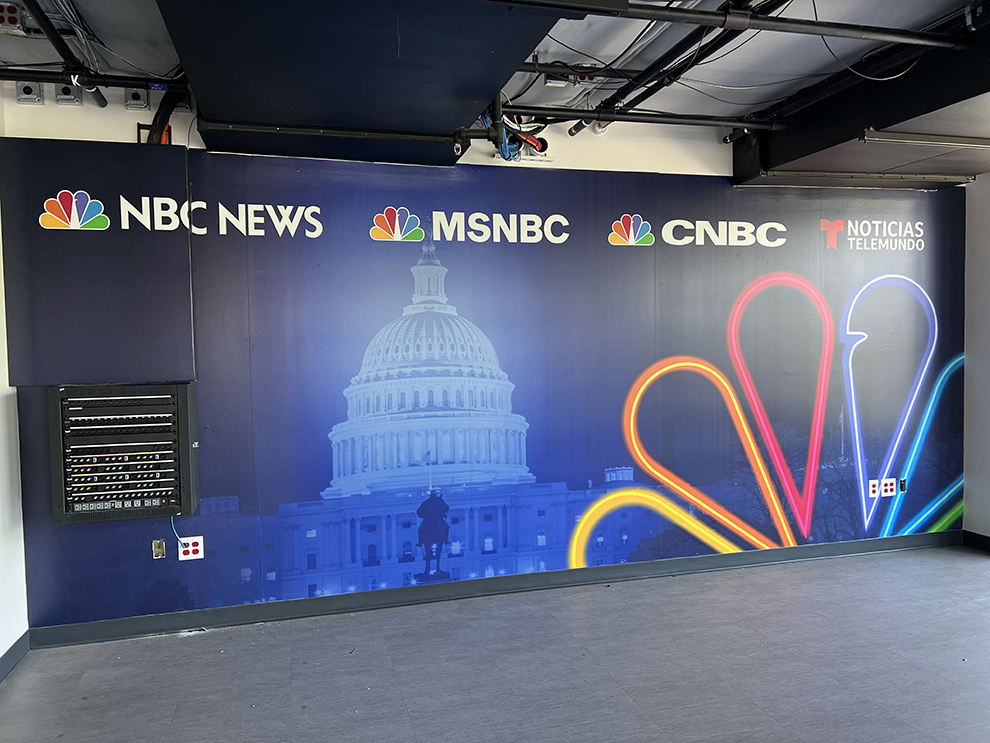
A Wall Wrap should be planned as a communication environment rather than a place to enlarge an existing logo, brochure, or campaign image. The wall’s size creates room for visual pacing, sequence, contrast, hierarchy, and storytelling that smaller signs generally cannot provide. A long workplace passage may become a timeline that unfolds over distance, while a reception feature may use restrained imagery and typography to establish a clear first impression.
Heritage helps clients decide whether full coverage, partial coverage, a mural composition, or a printed background supporting fabricated elements best serves the objective. Doors, corners, outlets, fixtures, soffits, glass transitions, and other interruptions affect how the artwork should begin, end, and move across the architecture. Those realities are resolved before production, not treated as afterthoughts on installation day.
The result should respond to the actual room, viewing distance, adjacent finishes, and daily traffic. A successful wall graphic is not merely scaled to fit. It is composed to belong in the environment where employees, visitors, clients, students, patients, or event attendees will encounter it.
Heritage connects creative direction to the practical decisions that determine how a large wall graphic will look and perform. Wall Wraps require more than approved artwork. Verified dimensions, strong image files, compatible vinyl and adhesive choices, deliberate panel planning, seam placement, finish requirements, and installation access all affect the final result.
Heritage’s One Dedicated Project Manager System provides one accountable point of continuity while environmental graphic designers, production and fabrication specialists, and professional installers work from shared project information. This model is particularly useful when a Hickory project includes multiple walls, layered elements, phased construction, workplace access limitations, or a fixed event deadline. Questions about artwork, site conditions, materials, production timing, or installation sequencing are addressed within one connected process.
Charlotte headquarters and production resources also support Hickory work with direct coordination between field planning and the people responsible for producing the graphics. That integration matters when a wall condition changes, an architectural detail requires adjustment, or approved artwork must be resolved around a real opening or transition. Heritage protects the visual and operational decisions that make the project feasible, rather than treating design, fabrication, and installation as separate purchases.
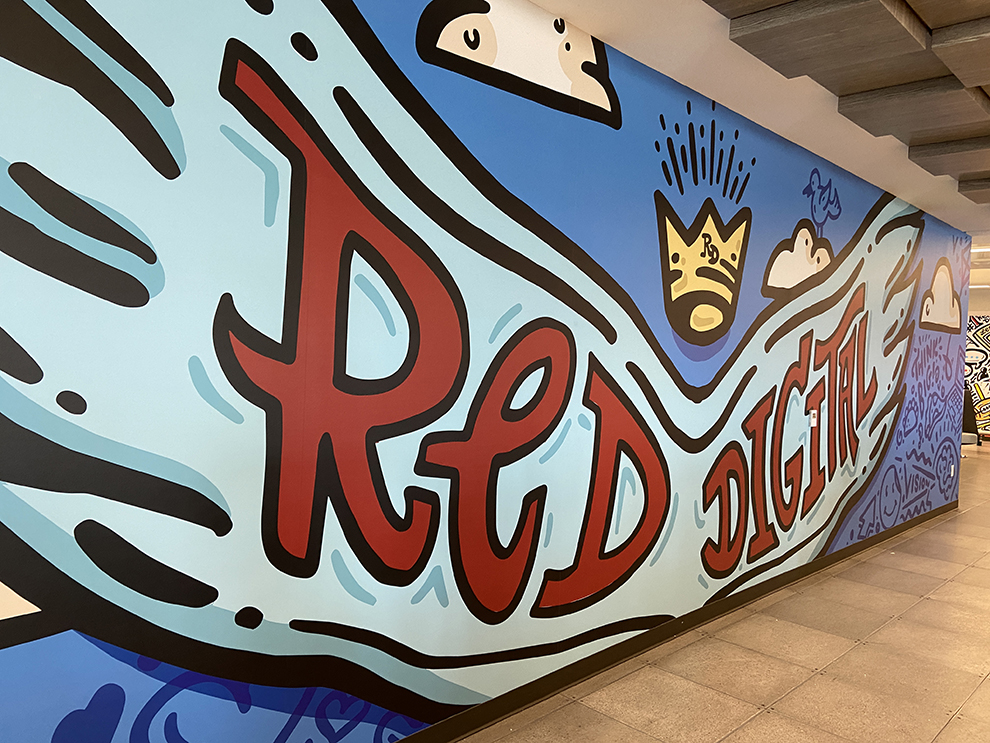
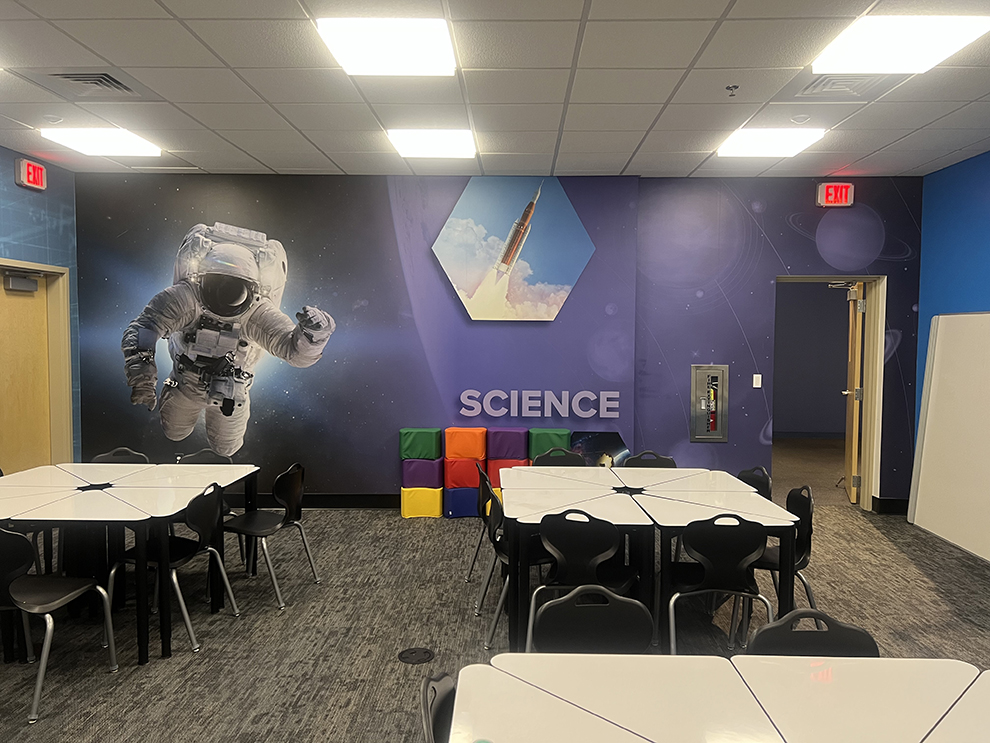
Wall Displays can add structured content over a large-format wall graphic. A Wall Wrap may establish the color, imagery, and story, while mounted panels, recognition components, or changing information create emphasis and allow the complete presentation to remain visually connected.
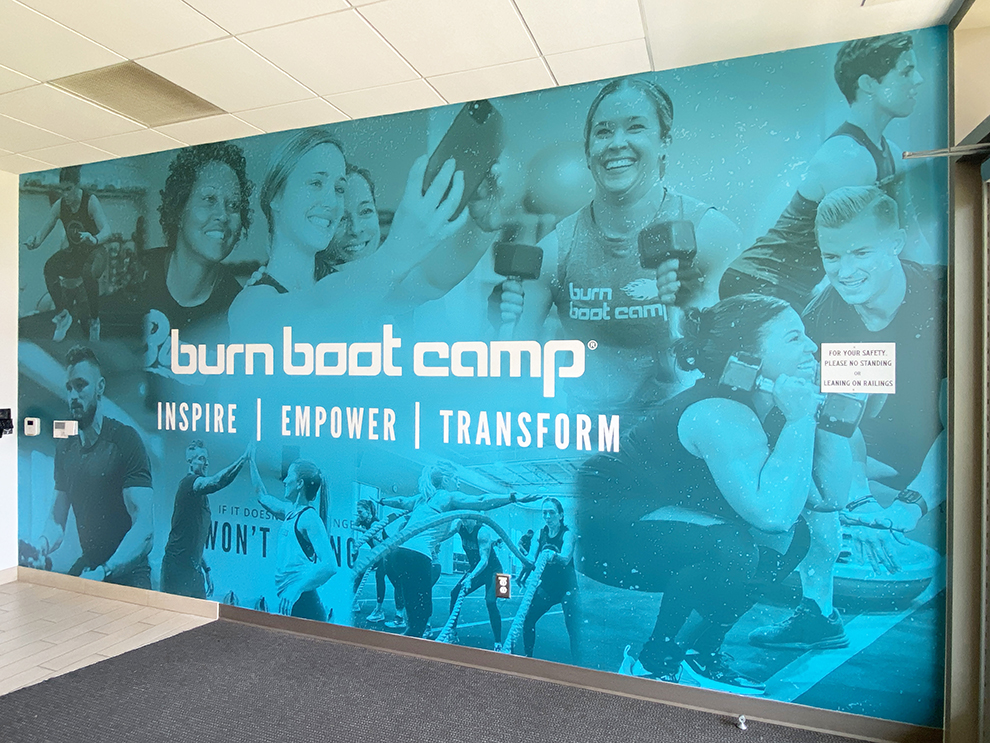
Lobby Signs can be positioned against Wall Wraps that provide more context than a painted background. The graphic may introduce photography, patterns, brand color, or messaging while dimensional identification remains clear and appropriately prominent.
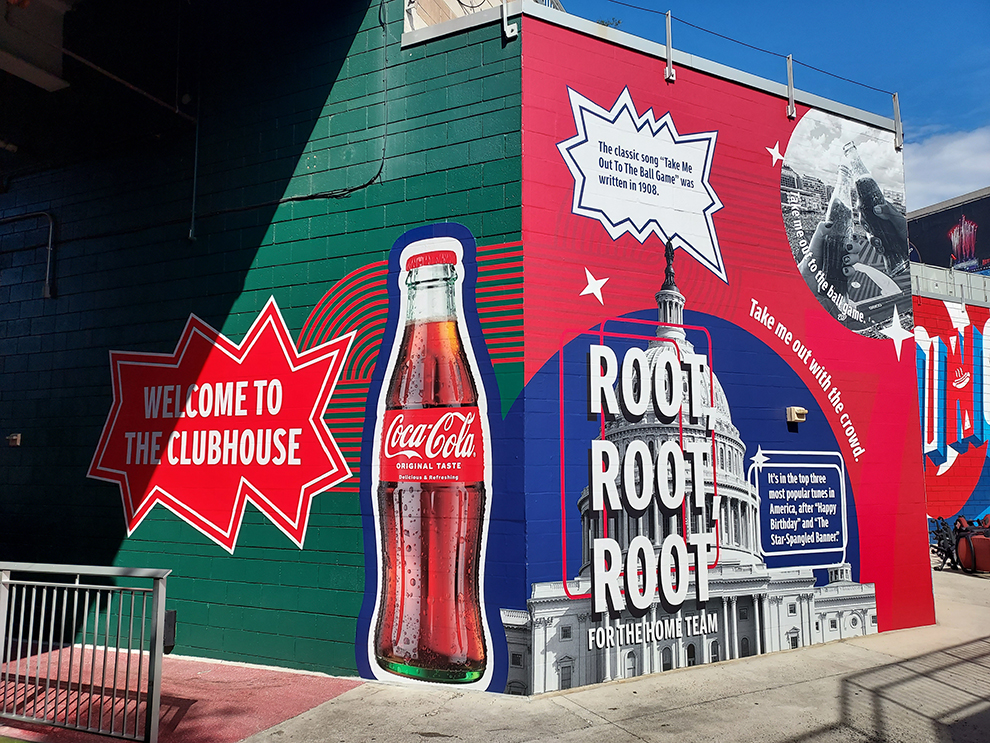
Dimensional Letters create contrast against a printed visual field. Heritage plans scale, color, mounting locations, and nearby imagery so the letters remain readable while the Wall Wrap provides depth and broader brand context.
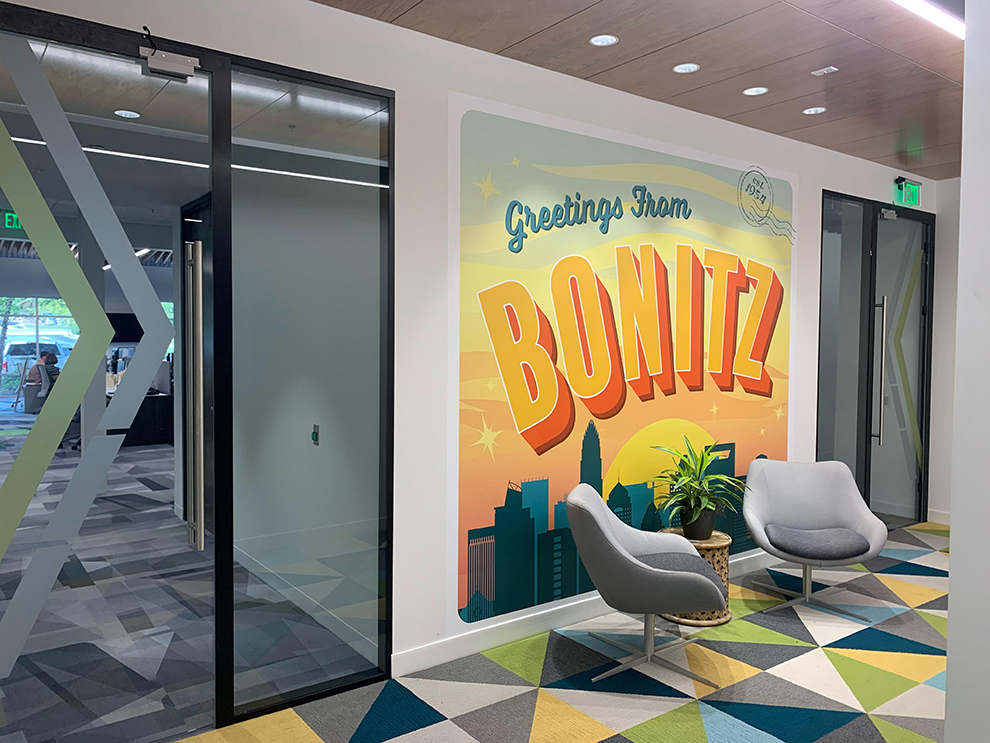
Standoff Mounted Signs can layer recognition, photographs, donor information, educational content, or changeable panels over a Wall Wrap. The printed wall supplies continuity, while the projected elements introduce physical depth and organized focal points.
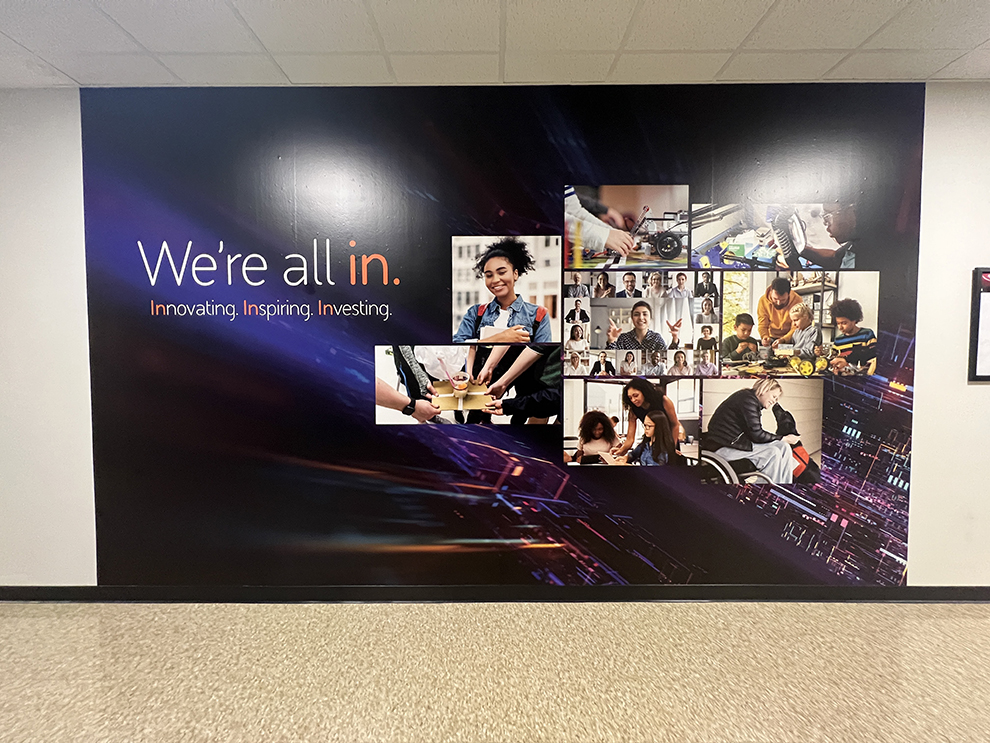
Backlit Signs can become a focal point within a larger wall composition. When appropriate, the illuminated element provides a controlled point of emphasis while the surrounding mural supports the hierarchy rather than competing for attention.
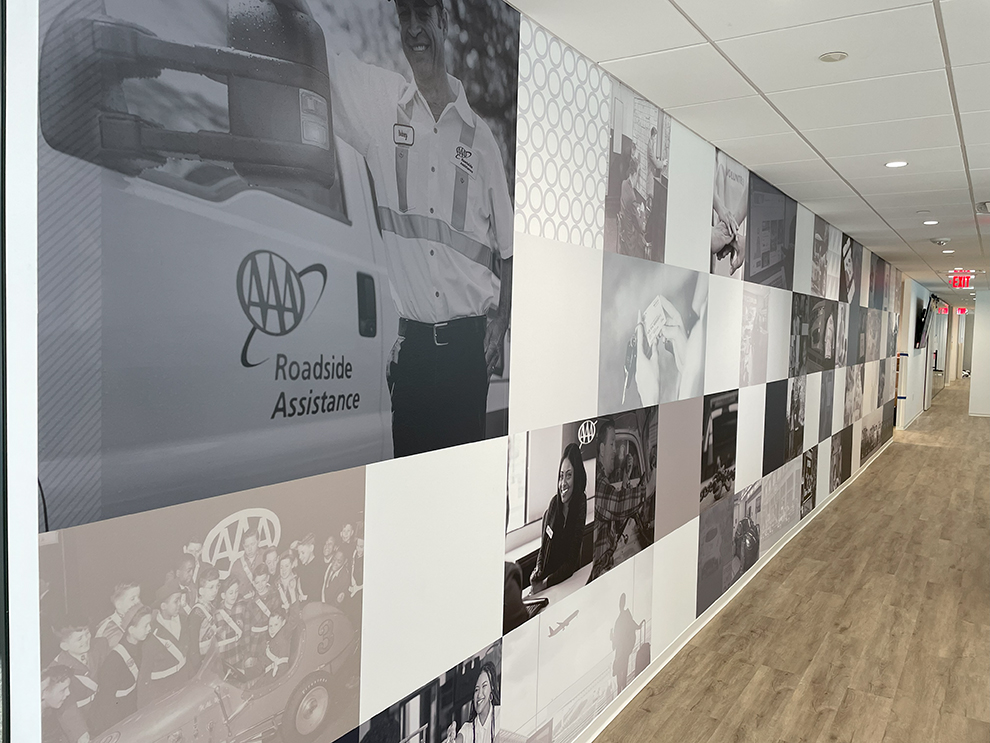
Elevator Wraps can extend a wall-graphics program into transition spaces with regular traffic. Coordinated artwork may carry campaign messaging, culture content, directional information, or event identity from surrounding walls into the elevator area.
Window Graphics can continue visual language from a wrapped wall onto nearby glass. Heritage coordinates color, imagery, privacy needs, and message placement so the wall and glass each serve a distinct purpose within the same workplace experience.
Frosted Vinyl can add privacy and subtle branding to conference room glass, office fronts, or interior partitions near a mural. It can support the overall composition without making transparent surfaces feel visually heavy.
Does a Hickory wall need to communicate more clearly with employees, visitors, clients, students, or event attendees? Share the project through Get Started Now. Include the address, desired outcome, audience, target completion date, anticipated overall investment, photographs, approximate dimensions, existing artwork, brand standards, paint information, and known access constraints.
Incomplete information does not prevent an inquiry. Heritage can use early discovery and the required site survey to identify what still needs to be measured, tested, approved, or scheduled. One dedicated Project Manager will organize the next decisions and connect the appropriate resources for environmental graphic design, production, fabrication, site survey, and professional installation.
Heritage supports Hickory clients with field coordination backed by the company’s Charlotte headquarters and primary specialty production facility. For installed Wall Wraps, Heritage conducts the required site survey, verifies dimensions and wall conditions, reviews access and installation timing, and carries that information into environmental graphic design, production, fabrication, and professional installation. This reduces reliance on assumptions passed between separate providers.
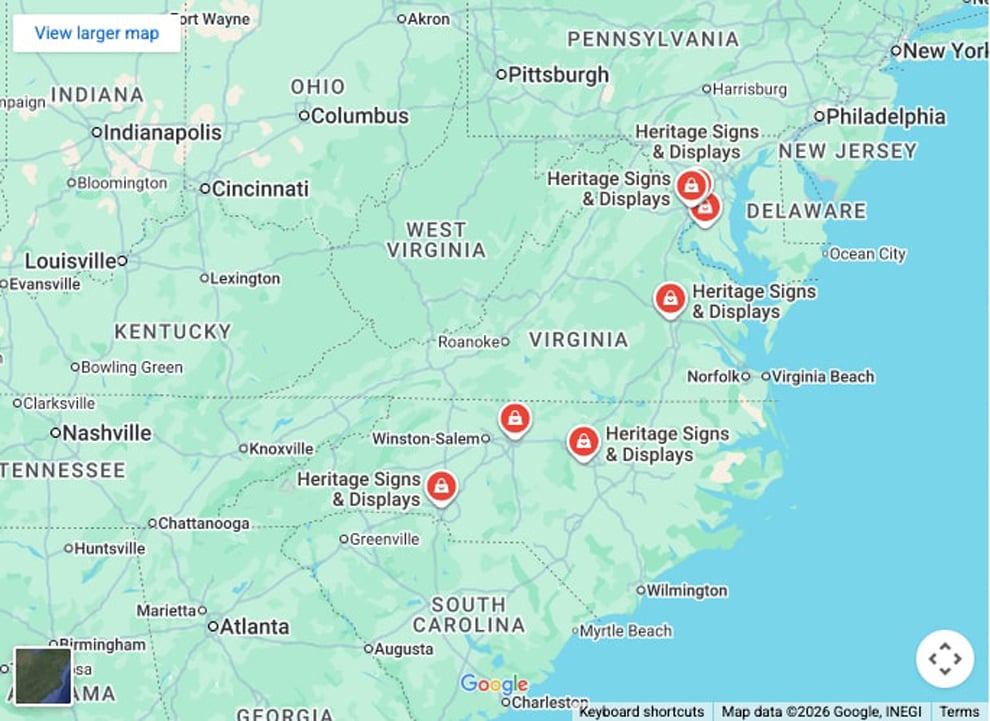
Hickory work may serve corporate offices, manufacturers, healthcare organizations, educational institutions, associations, professional firms, nonprofit organizations, retail environments, and event venues. Heritage also supports nearby Charlotte-market communities including Kannapolis, Harrisburg, Huntersville, Charlotte, Gastonia, Rock Hill, Statesville, and Salisbury. Local field planning is connected to the broader Carolinas production system, then to Heritage resources across the Mid-Atlantic when coordinated programs require wider support.
For multi-location clients, one dedicated Project Manager can preserve approved standards, project history, and communication continuity across the program. Each property is still evaluated individually because dimensions, architecture, access, audiences, wall conditions, and installation schedules vary. Consistent brand intent does not require identical physical execution at every location.
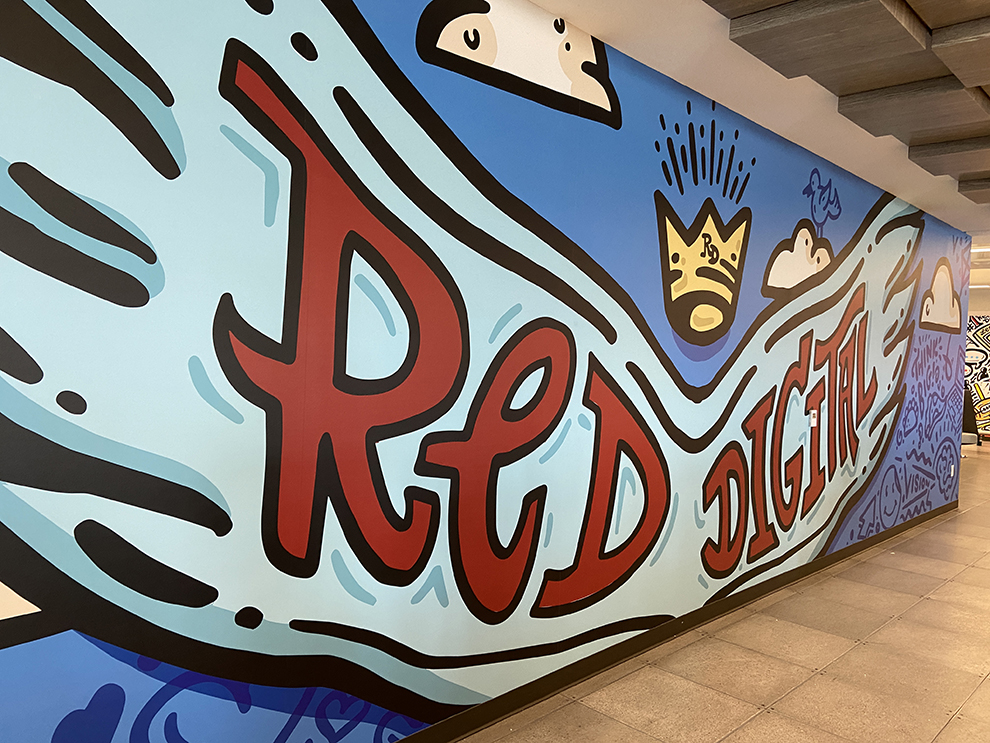
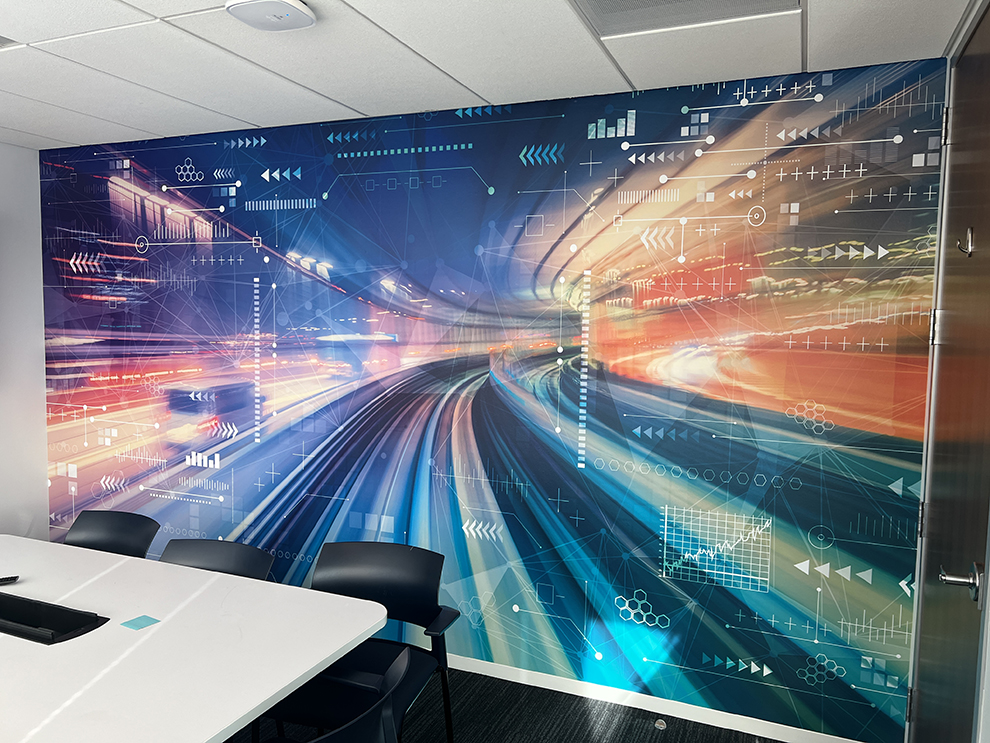
Environmental graphic design helps an organization decide what people should understand, notice, or remember when they encounter a large wall. A Hickory culture feature may emphasize core values and employee stories. A history wall may require chronological pacing across a long surface. A recognition display may depend on a printed background that supports dimensional components without overwhelming names, photographs, or donor information.
Heritage develops hierarchy, imagery, typography, color, scale, placement, and visual pacing around the real environment. The process considers viewing distance, wall proportions, surrounding finishes, lighting, architectural interruptions, and the relationship between the graphic and fabricated elements. That approach helps a mural read as one considered composition instead of a collection of enlarged content.
Clients may provide approved brand standards, finished artwork, messaging, or an established environmental graphic direction. Heritage can also develop environmental graphic concepts directly with client stakeholders. When architects, interior designers, branding agencies, environmental graphic designers, or general contractors own the broader direction, Heritage focuses on protecting and implementing approved design intent through production, fabrication, project management, and installation.
Professional installation begins long before the installers arrive at a Hickory site. The required site survey provides verified dimensions, wall conditions, access information, opening locations, work-hour constraints, and other field details that influence production and panel sequencing. One dedicated Project Manager keeps that knowledge connected through design, fabrication, scheduling, and field execution.
By installation day, Heritage installers should have a clear understanding of the approved artwork, panel plan, seam locations, material choices, and property considerations. They coordinate alignment, edges, corners, transitions, doors, outlets, fixtures, and other interruptions so the completed Wall Wrap reads as a unified visual surface. They also work within the agreed installation window and protect surrounding property as conditions allow.
This preparation supports a more orderly installation experience for facility teams, employees, contractors, and event stakeholders. If a field condition requires a decision, Heritage can coordinate the response through people who already understand the project’s scope and production requirements. Accountability remains connected to the finished result.
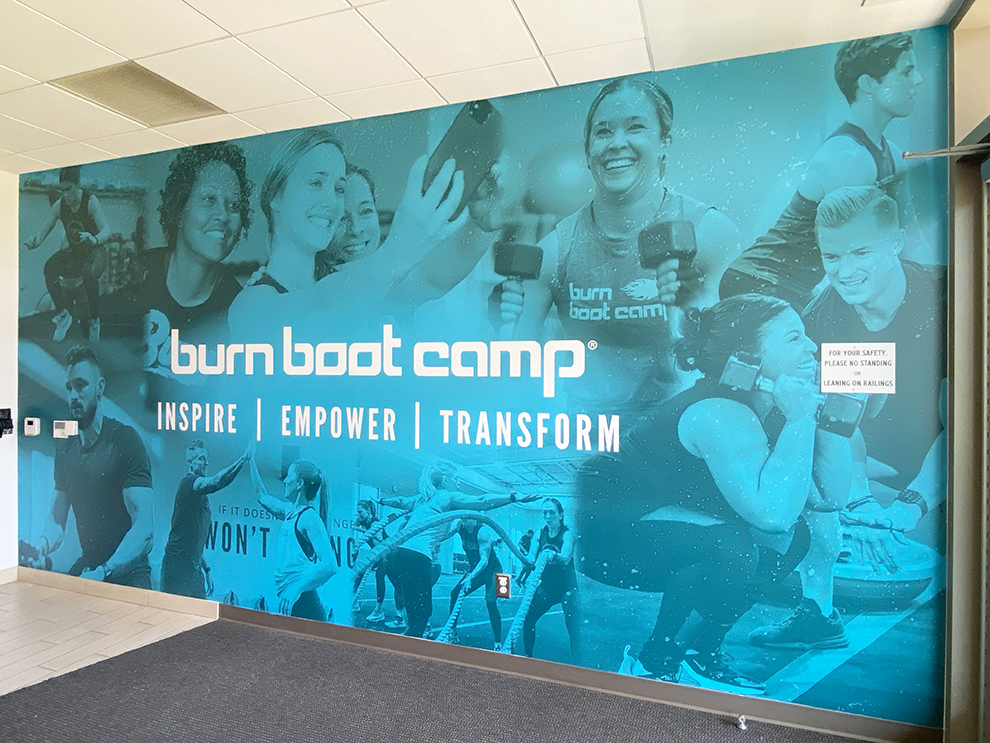
The painted wall is an important component of any wall wrap installation. Drywall needs to be sound, smooth, clean, dry, and properly repaired before vinyl is applied. Primer and finish paint should be correctly installed as part of the wall system, and the final coating must be given enough time to fully cure.
A coating can become dry to the touch before curing is finished. During continued curing, paint may release gases or vapors. When adhesive vinyl is installed prematurely, that outgassing can become trapped beneath the material and may contribute to bubbles, blisters, lifting, or premature adhesion failure. Approximately four weeks is useful planning guidance for many paints, although manufacturer requirements and actual site conditions determine when installation is appropriate.
Heritage can perform testing to see how vinyl responds to the painted finish. That test does not verify the bond between the paint, primer, and underlying drywall. If paint separates or peels during testing or normal repositioning, Heritage stops rather than risk worsening the wall. Repairs, correct priming, repainting, and the full curing process are arranged and paid for by the client or property owner before Heritage returns.
The condition of the wall also matters when graphics are eventually removed. Heritage takes care to limit avoidable damage, but a damage-free removal cannot be guaranteed. Paint, primer, or drywall facing can release during removal. The client or property owner arranges and pays for restoration. Wall wraps remain proven and effective tools for interior branding.
Wall Wrap planning should begin with decisions about the desired result, audience, wall coverage, project phases, schedule, site readiness, wall readiness, stakeholders, approvals, and anticipated overall investment. Photographs, approximate measurements, brand standards, artwork, messaging, paint information, installation address, access limitations, and target completion dates help Heritage understand the opportunity before field verification begins.
The required site survey replaces preliminary assumptions with information from the actual property. It helps identify architectural interruptions, wall conditions, access constraints, installation-window requirements, and material considerations that can affect scope and schedule. For replacement graphics, old graphics should be removed early enough to identify repair, repainting, and cure-time needs before the new installation date.
Many Heritage projects involving production and professional installation range from $10,000 to more than $200,000. That range describes capability, not a minimum. Hickory-region signs and displays projects currently carry an anticipated overall investment of at least $3,000. Final investment depends on coverage, design development, materials, fabrication, surface readiness, access, installation complexity, scheduling, and the intended service life of the graphic.
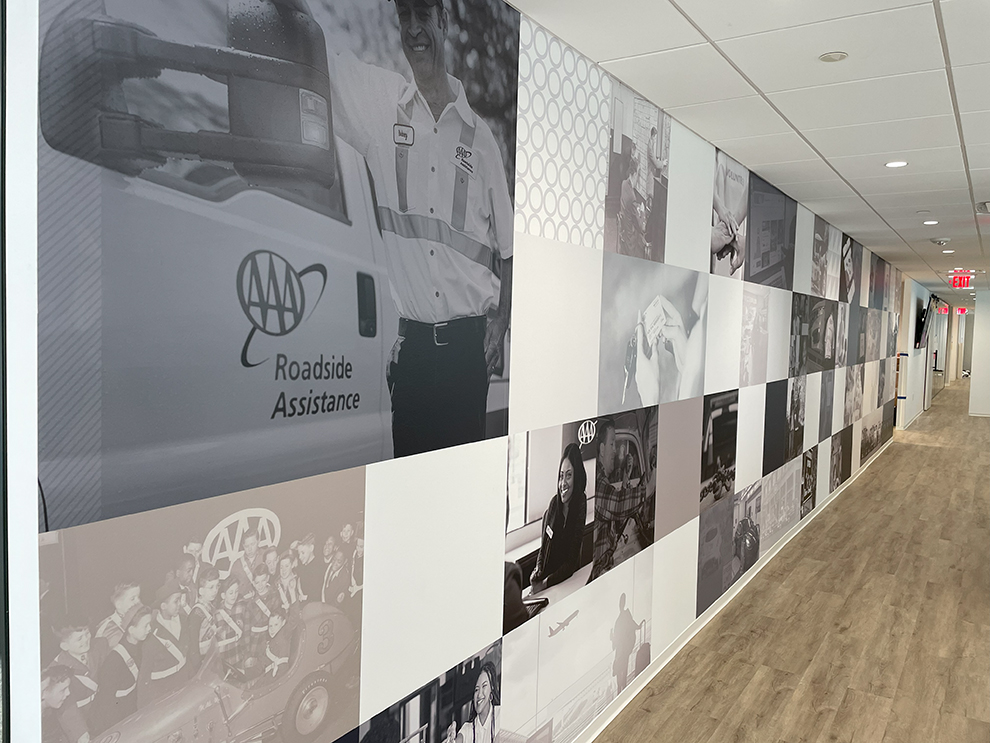
Wall Wraps can turn a substantial wall into a culture feature, branded arrival, timeline, recognition display, educational presentation, campaign environment, or event backdrop. Their scale allows organizations to organize imagery and messaging around the way people move through a space. Heritage plans the graphic around architecture, viewing distance, traffic patterns, and the intended audience experience. The strongest result begins with what the organization wants people to understand or remember.
Wall Wraps generally describe larger adhesive wall applications that treat a substantial wall area as the primary visual surface. A wall mural often emphasizes imagery or artwork, while wall graphics may include smaller applied messaging or branded components. These terms can overlap, but the planning distinction is useful because Heritage evaluates coverage, architecture, material selection, and the intended result rather than relying on a label alone. The wall itself remains the central communication surface.
A suitable wall should be sound, smooth, clean, dry, and properly repaired before adhesive graphics are installed. The drywall, primer, finish paint, texture, repairs, moisture exposure, and existing wall conditions can all affect appearance and adhesion. Heritage reviews those factors through the required site survey and may recommend testing or a different material approach when conditions warrant. Not every wall is a strong candidate for a wrap.
Full cure according to the paint manufacturer's requirements is the primary standard. A finish that merely feels dry can still be releasing gases or vapors. If adhesive vinyl is installed during this stage, those emissions may become trapped and contribute to bubbles, blistering, lifting, or premature adhesion failure.
For many paint systems, approximately four weeks provides useful planning guidance. Actual cure time varies with the paint system, temperature, humidity, wall preparation, and conditions at the site. Since outgassing is only one potential cause of adhesion problems, both manufacturer requirements and actual wall conditions should guide the schedule.
For new Hickory wall wrap and interior branding opportunities generated through the website, Heritage currently plans around an anticipated overall project investment of at least $4,000. This is a planning threshold for new website opportunities and is separate from Heritage's broader project range.
Many Heritage projects that involve production and professional installation range from $10,000 to more than $200,000. Scope, artwork development, materials, fabrication, existing wall conditions, scheduling, accessibility, and installation requirements influence final investment. Use Get Started Now to share the Hickory project you are considering and confirm the current regional investment level.
Yes. Washable, scrubbable, stain-resistant, low-VOC, zero-VOC, and similar finishes can behave differently with adhesive vinyl. Heritage may clean a test area, assess a sample, or recommend another compatible vinyl and adhesive system based on the actual painted surface. These paint types do not automatically require the strongest adhesive available. The material decision should be based on field conditions rather than a blanket assumption.
Heritage stops the work if paint peels or pulls away during testing or normal panel repositioning. That event can indicate a weakness in the paint or primer bond beneath the visible surface, not necessarily a problem with the graphic itself. The client or property owner arranges and pays for repair, proper priming, repainting, and required cure time before Heritage returns. Heritage does not perform or pay for wall restoration.
An adhesion test can provide useful information about how a proposed vinyl and adhesive perform against the visible paint surface. It may influence material selection, cleaning requirements, and installation planning. However, it cannot inspect or guarantee the hidden bond between paint, primer, and drywall. A successful test is one piece of risk evaluation, not a promise of universal adhesion or damage-free future removal.
No removal process can promise an unchanged wall. Heritage removes graphics slowly and carefully to reduce avoidable damage, but paint, primer, or drywall facing may still release with the vinyl. Paint loss and drywall-facing damage are the principal consequential risks. The client or property owner is responsible for arranging and paying for any needed repair, priming, repainting, cure time, or restoration.
Replacement graphics should be planned around the condition of the wall after existing vinyl is removed. Old graphics need to come down early enough for the client’s repair or painting contractor to identify damage, complete repairs, prime and repaint where needed, and allow the new finish to cure fully. Heritage can then schedule the replacement installation after wall readiness has been confirmed. This sequence helps protect the new installation date from avoidable surface delays.
No. Heritage does not provide installation-only service for wall graphics produced by a client or outside supplier. Accurate dimensions, material suitability, image quality, print consistency, panel planning, and replacement capability all affect the finished result. By producing, fabricating, procuring, or managing the graphics it installs, Heritage can remain accountable for coordination and quality. This policy is based on responsibility for the completed wall, not simply installation labor.
It depends on the texture, porosity, stability, design expectations, viewing distance, and intended service life. Mild texture can sometimes be addressed with specialized materials and installation methods. Deep texture, rough masonry, porous block, irregular concrete, or unstable paint may prevent the graphic from achieving the desired appearance or performance. Heritage evaluates the surface before recommending a Wall Wrap or an alternative sign or display solution.
Most printed interior Wall Wraps are generally installed without laminate. Heritage may add protective film laminate when frequent cleaning, repeated contact, or added print protection makes it appropriate for the environment. Healthcare, education, food-service, and high-traffic spaces may warrant that additional consideration. The protective layer should solve a real use condition rather than be applied automatically.
Yes, when the wall, timing, material system, access, and removal expectations support a temporary application. Event branding, campaigns, leasing periods, renovations, and seasonal messaging can all use Wall Wraps for a defined period. Heritage considers the expected removal date during material selection and planning. A removable adhesive does not guarantee that paint or drywall will remain unaffected when the graphic is later removed.
Yes. A Wall Wrap can establish imagery, color, pattern, or storytelling behind Dimensional Letters, Backlit Signs, Wall Displays, or Standoff Mounted Signs. Those fabricated elements can then introduce physical depth, contrast, and focused information without requiring the entire message to be printed. Heritage coordinates the relationship among the graphic, mounting locations, scale, and surrounding architecture. The wall graphic remains the visual foundation.
Yes. One dedicated Project Manager can maintain approved brand standards, decision history, communication continuity, and production expectations across a multi-location program. Each property is still surveyed and planned for its own wall dimensions, architectural conditions, access requirements, audience, and schedule. Heritage does not assume that the same physical solution fits every site. Consistency comes from preserving design intent while adapting execution responsibly.
The required site survey gives Heritage direct information about the actual property before graphics are produced. It verifies dimensions, wall conditions, openings, fixtures, paint considerations, access routes, work hours, installation windows, and other details that affect planning. That information connects the Project Manager, environmental graphic designers, production and fabrication teams, and installers. The result is based on verified Hickory site conditions rather than unconfirmed measurements.
Exterior wall graphics may be appropriate when Heritage verifies the surface, exposure, material system, installation access, weather conditions, and intended service life. Printed exterior wall graphics receive protective film laminate as standard practice for UV and weather protection. Heritage evaluates physical suitability separately from permitting. The client, property owner, property manager, or general contractor is responsible for confirming and securing required sign permits and property approvals.
Investment depends on the intended outcome, coverage area, design development, artwork readiness, material system, fabrication requirements, wall condition, access, installation complexity, schedule, and project phasing. Hickory-region signs and displays work currently carries an anticipated overall investment of at least $3,000. Many Heritage projects involving production and professional installation range from $10,000 to more than $200,000. Heritage discusses investment as part of scope qualification rather than presenting a generic square-foot price.
Share the project address, desired outcome, audience, target completion date, anticipated investment, photographs, approximate measurements, available artwork, brand standards, paint information, and access constraints. It is acceptable if some information is incomplete. Heritage can use discovery and the required site survey to identify unresolved conditions and next decisions. Early context helps Heritage recommend an appropriate path without forcing clients to solve every technical detail first.
Heritage combines environmental graphic design, one dedicated Project Manager, field verification, production, fabrication, and professional installation within one accountable process. Hickory clients benefit from Charlotte headquarters and primary specialty production resources while receiving project planning based on the actual property. Founded in 1977, Heritage is award-winning, veteran-owned, and family-led. The practical advantage is coordinated responsibility for the visual idea, the physical graphic, and the installed result.
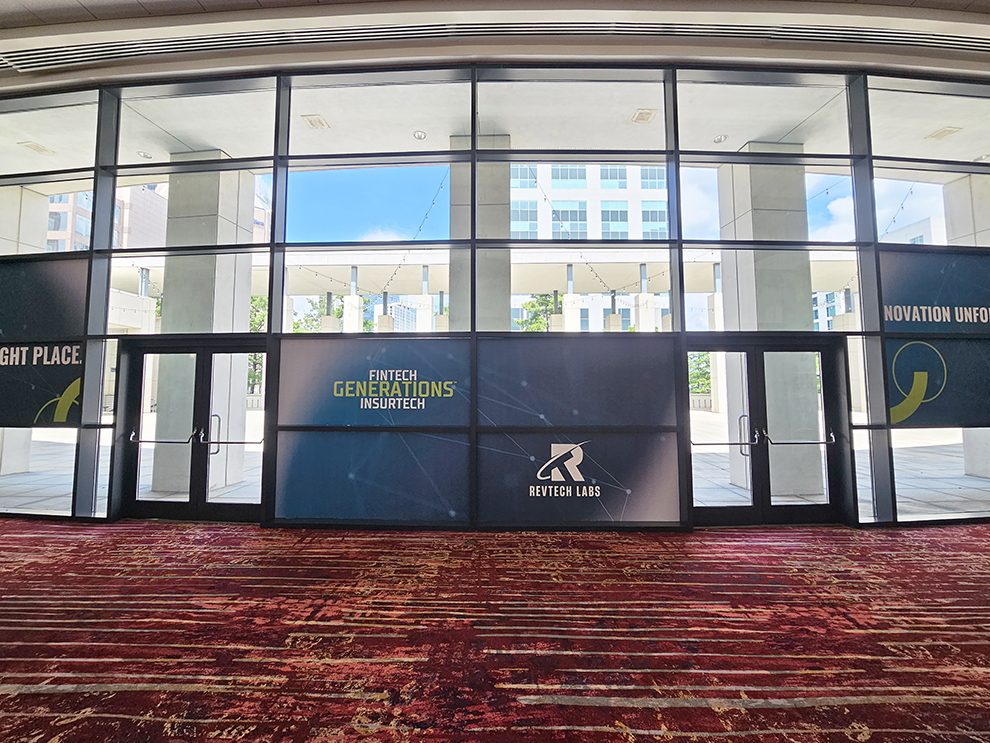
Heritage Signs & Displays collaborated with the Fintech + Insurtech Generations 2023 conference at the Charlotte Convention Center. Heritage worked closely with the client to create an interactive and branded event environment for attendees to network and discuss key topics impacting the financial and insurance sectors. The project enhanced the premier annual conference's atmosphere and engagement.
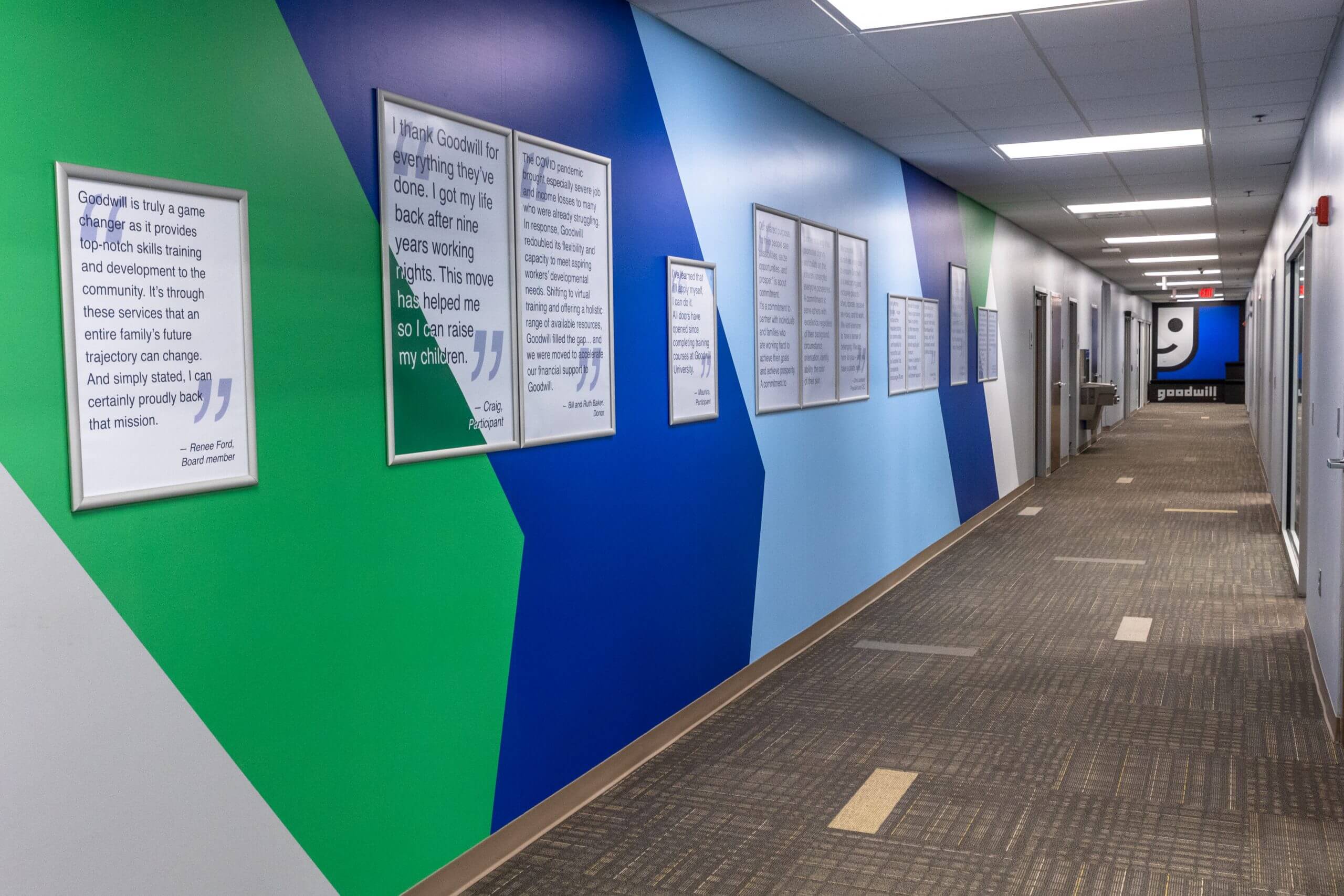
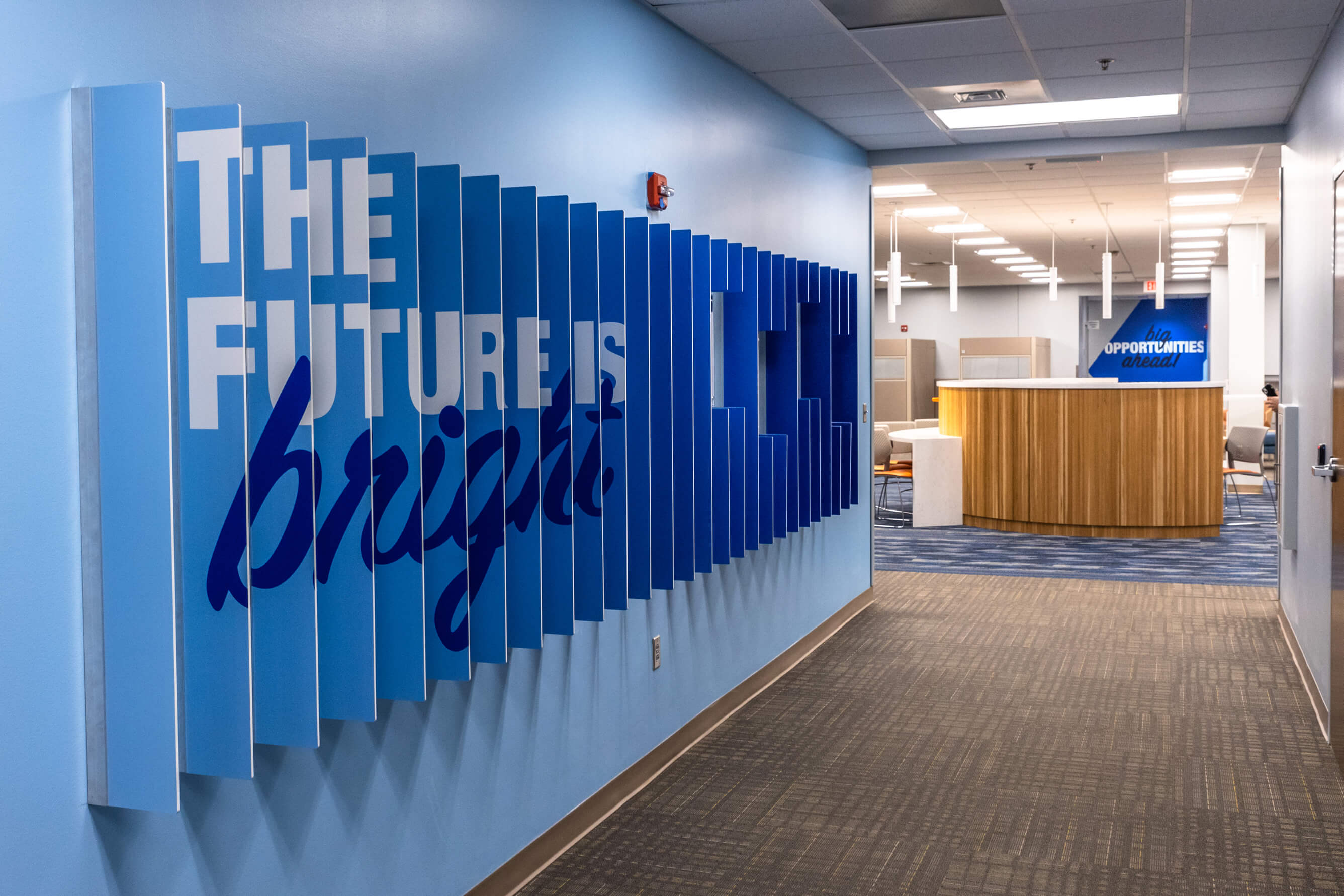
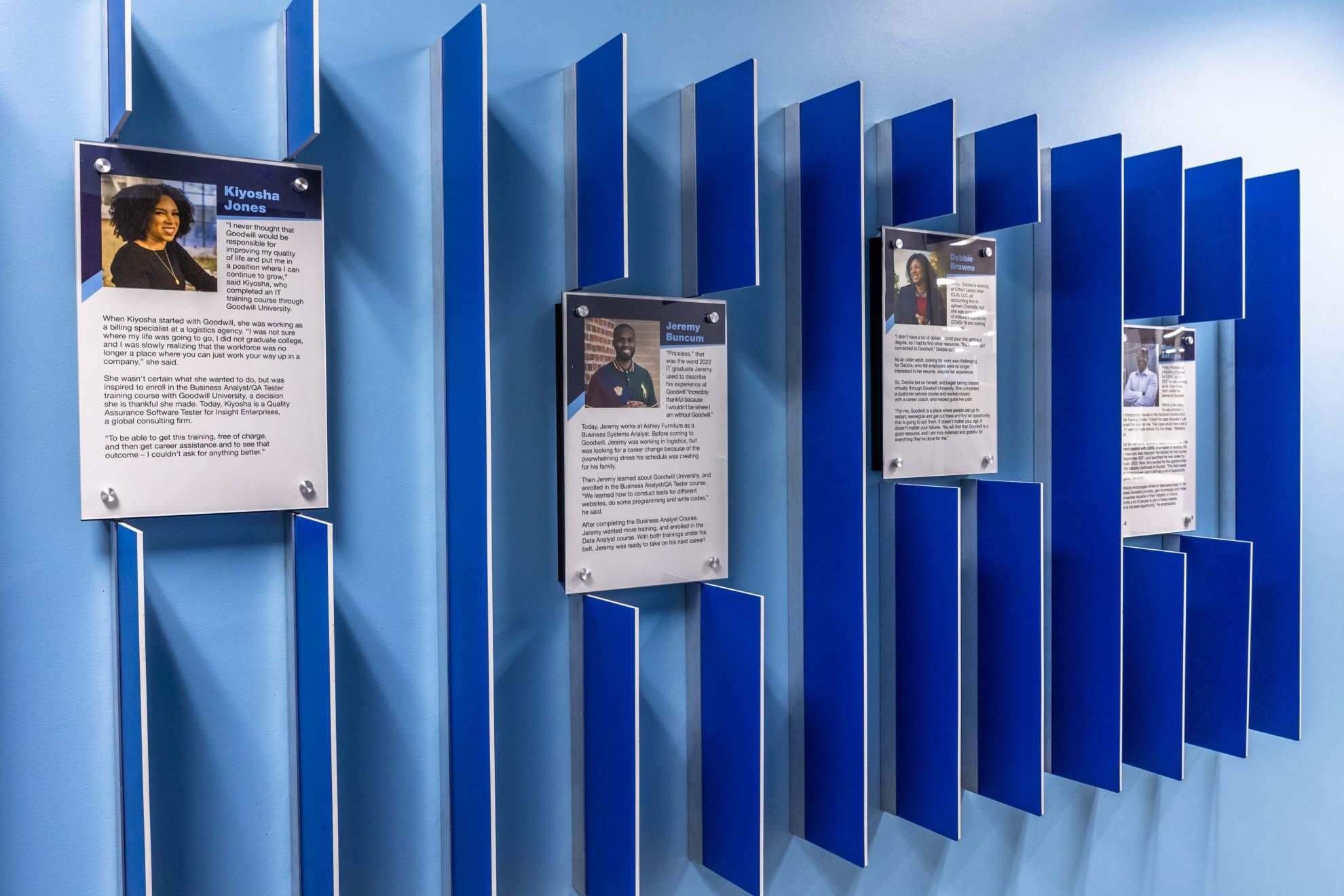
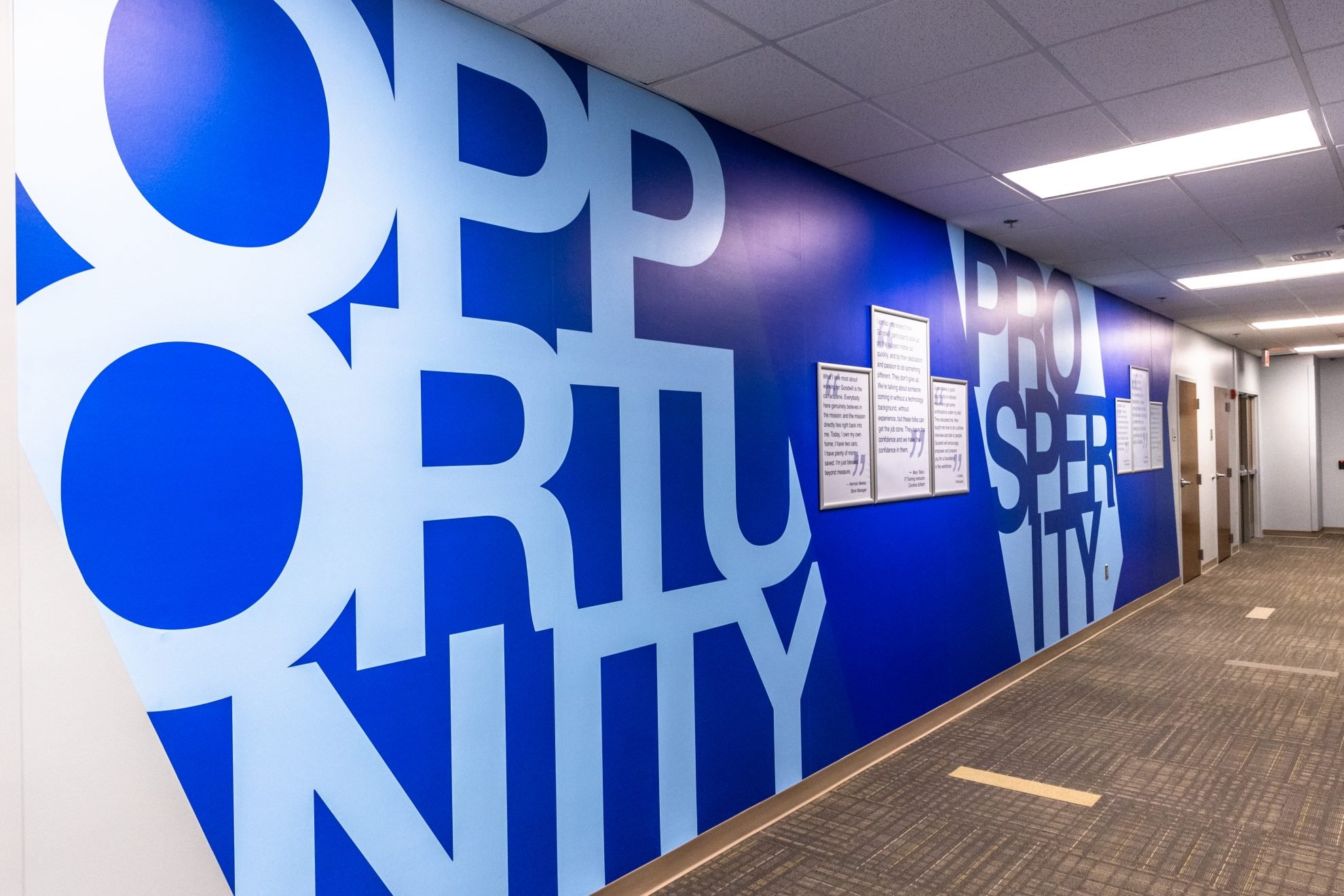
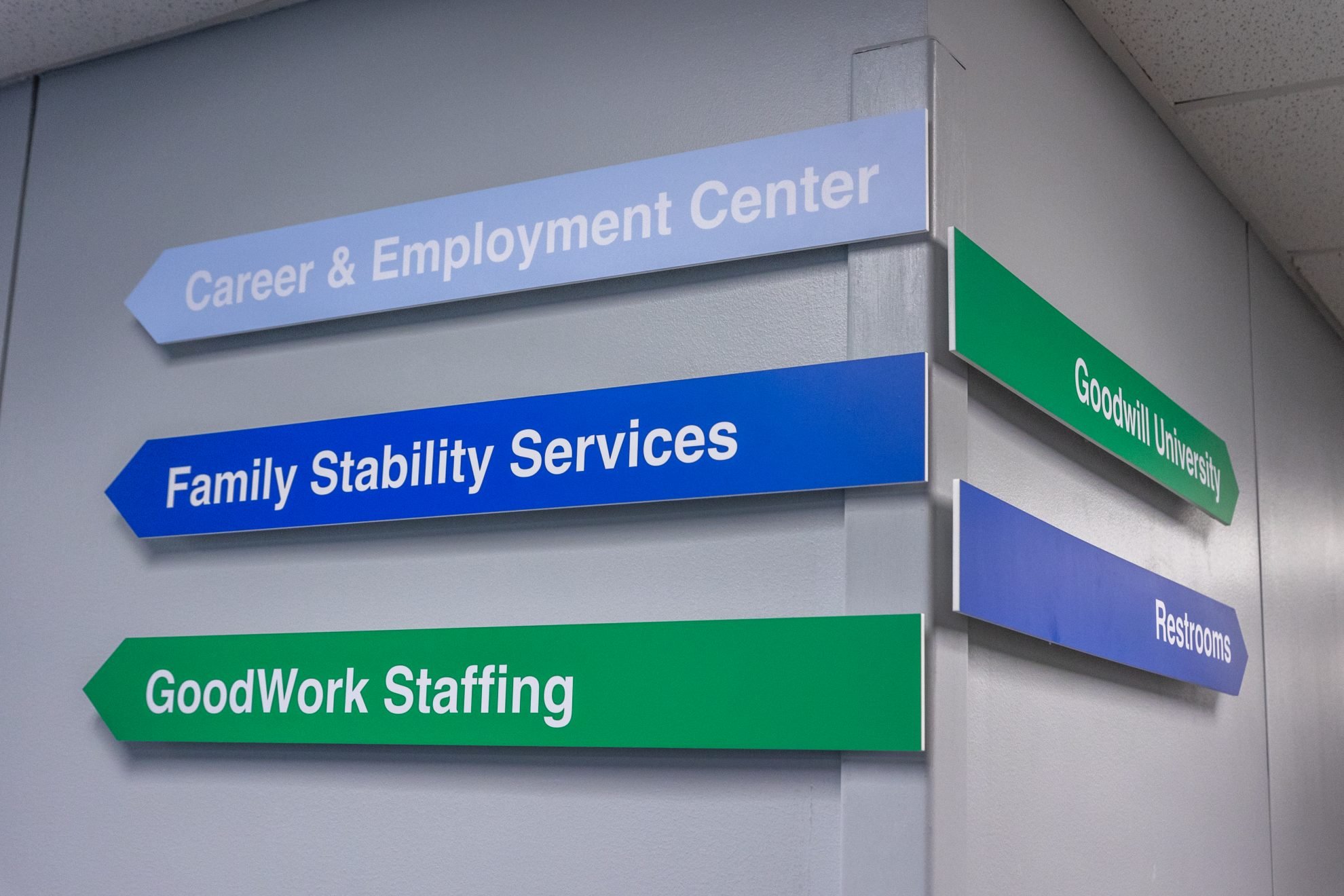
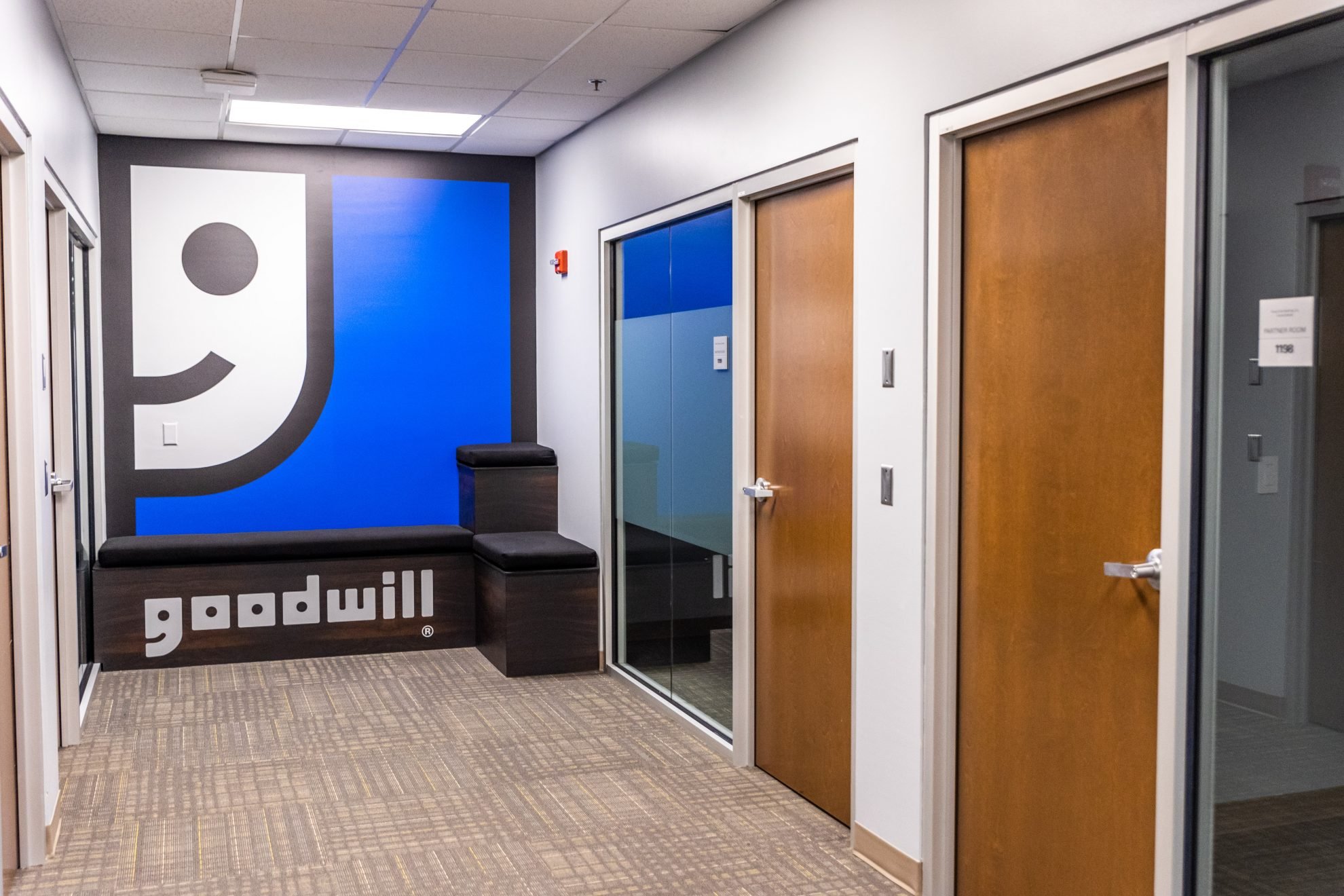
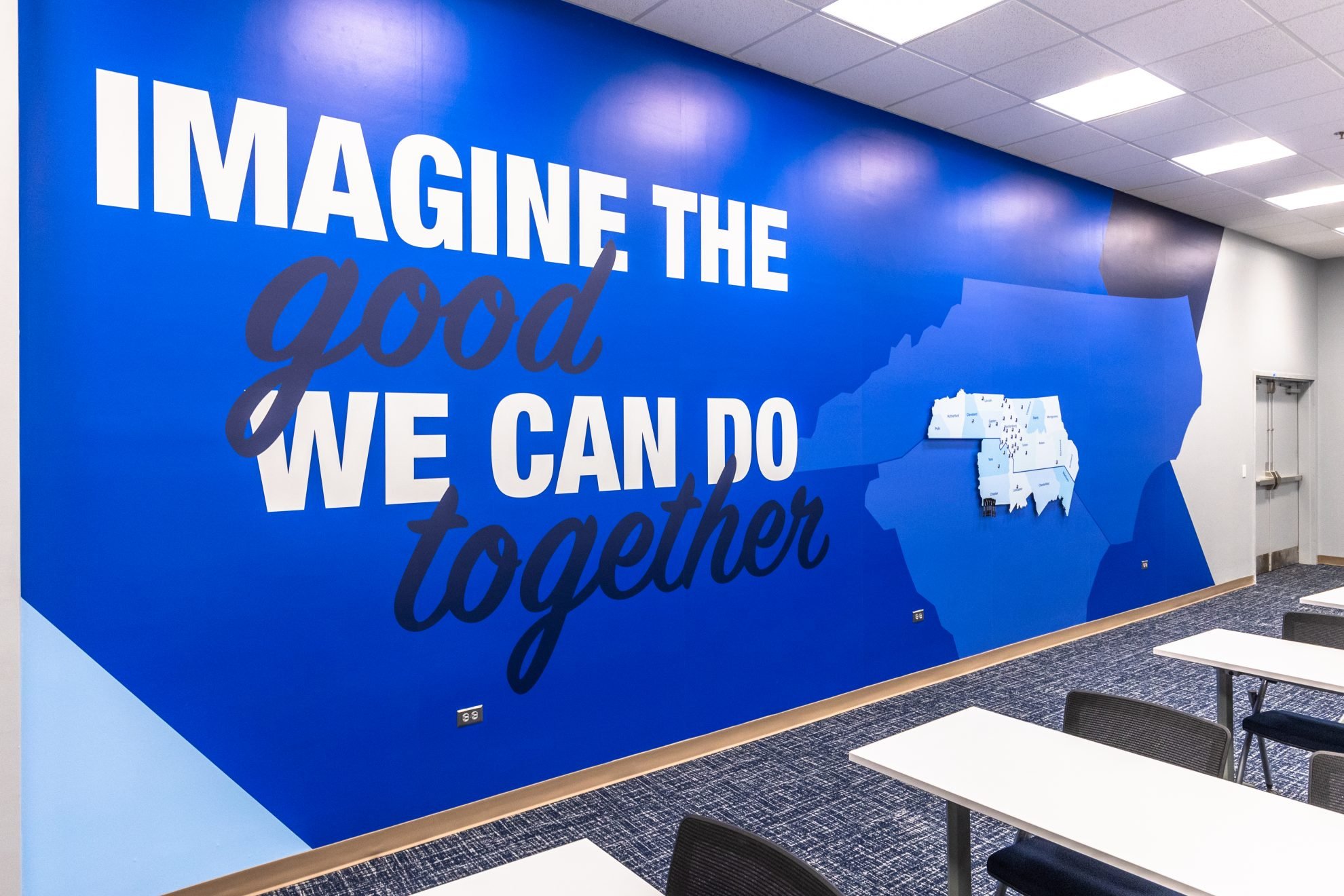
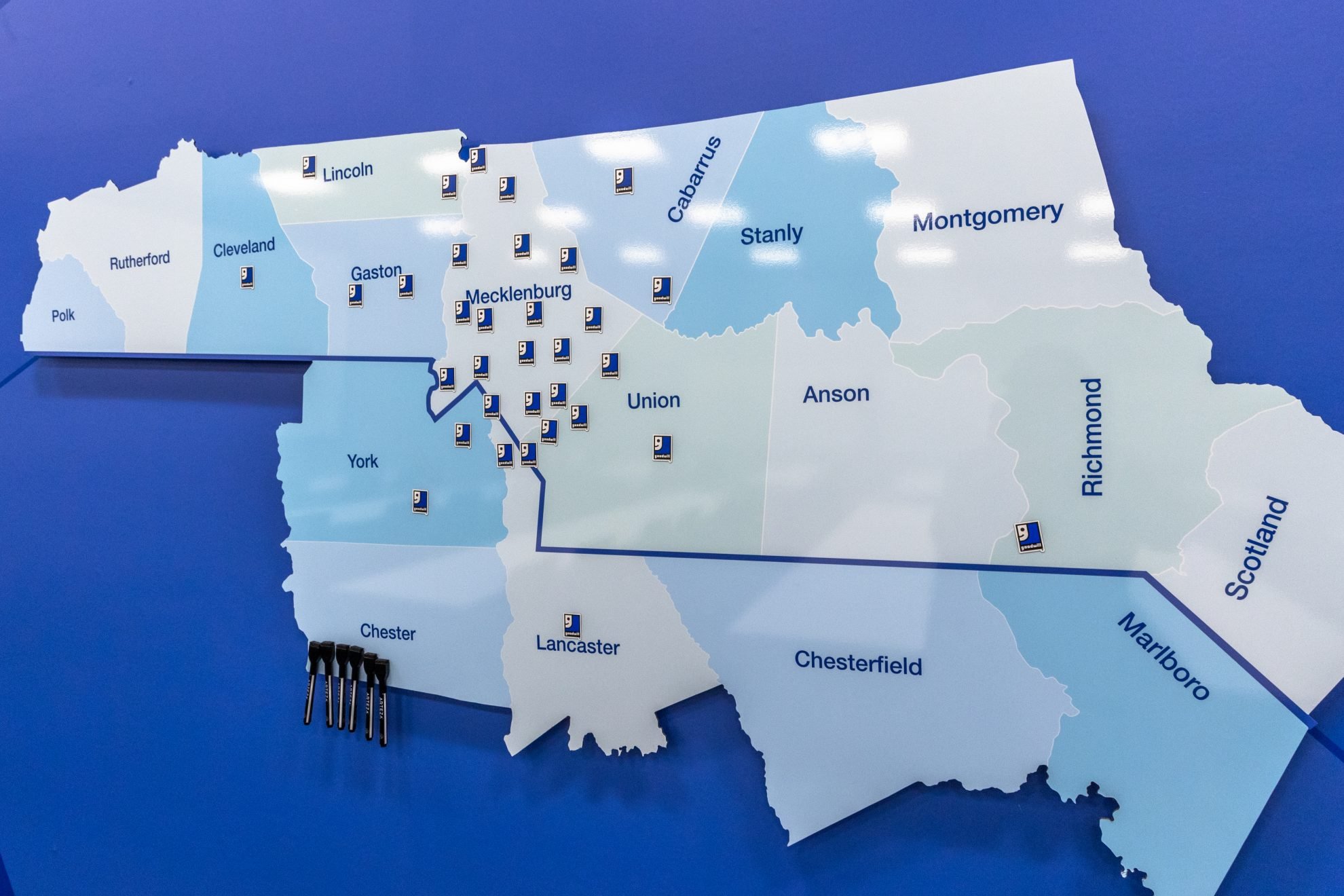
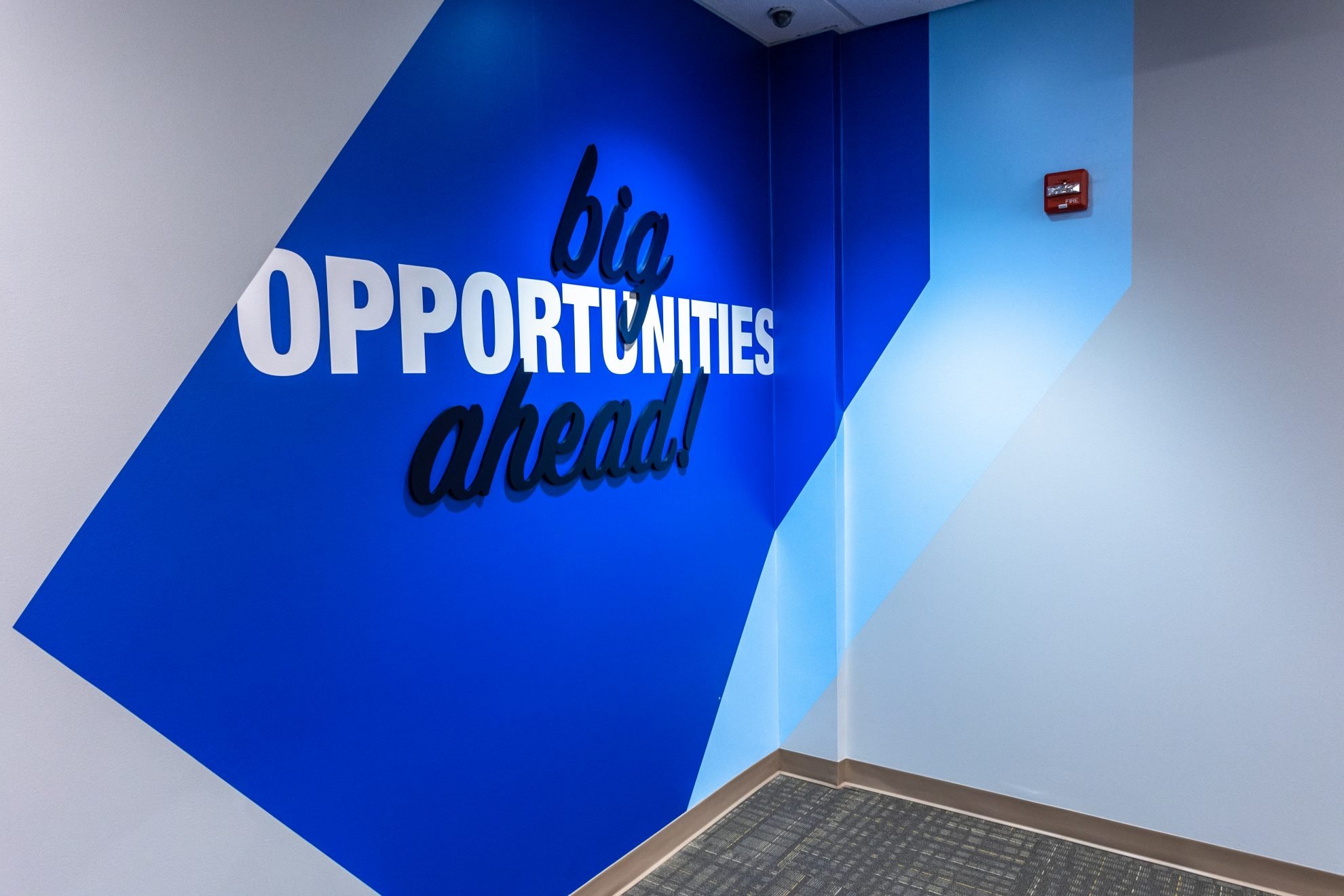
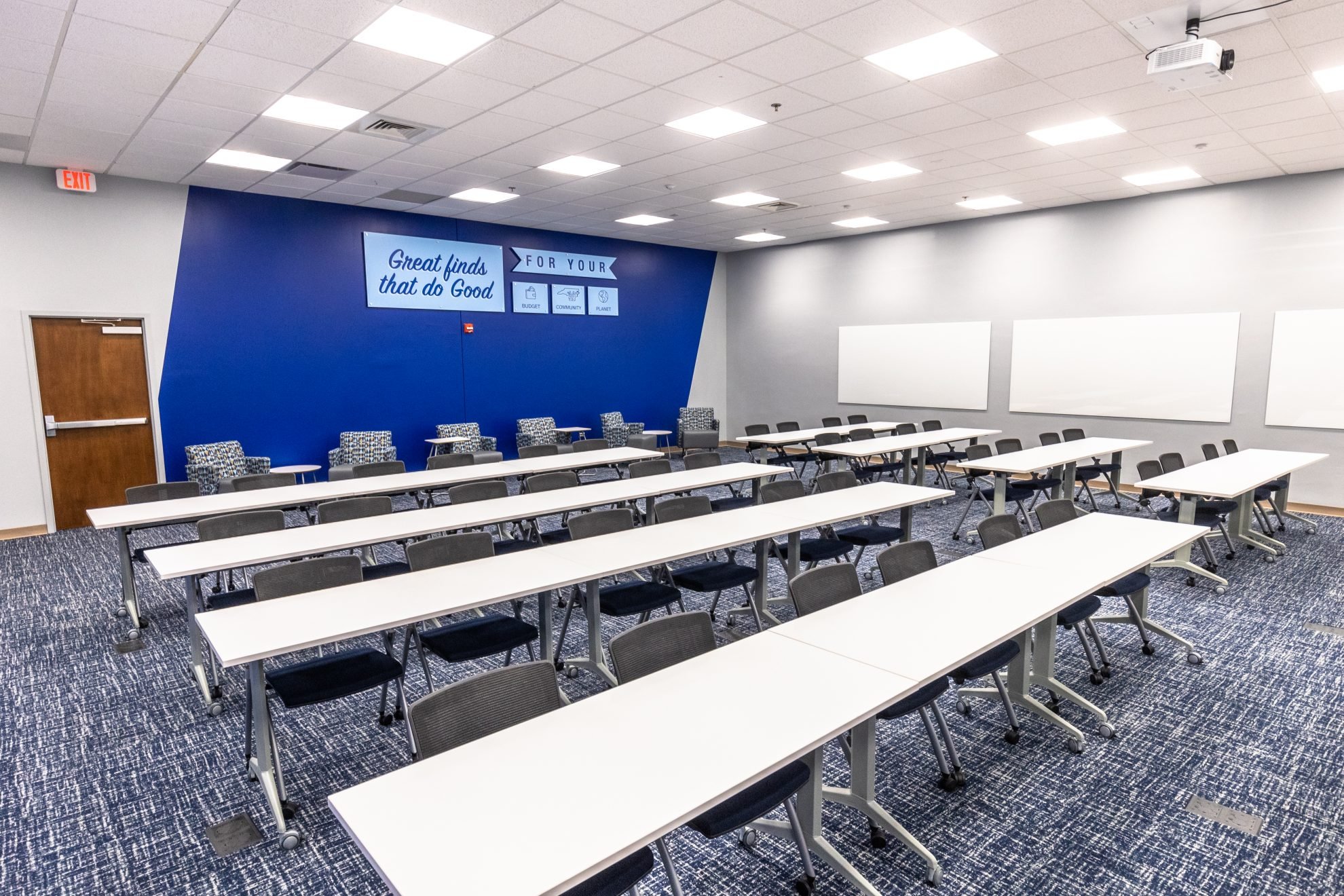
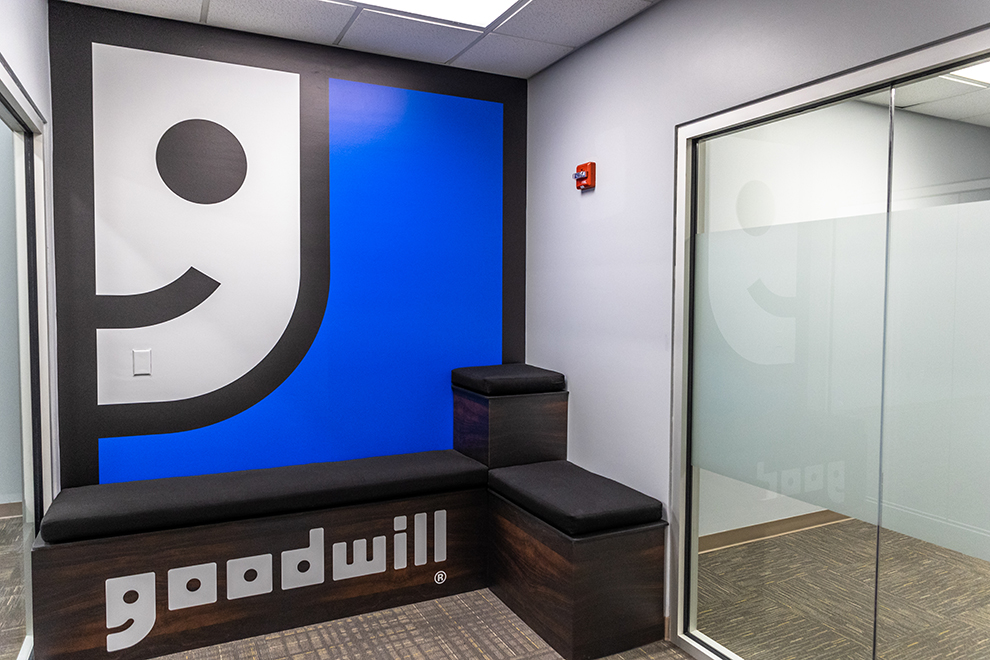
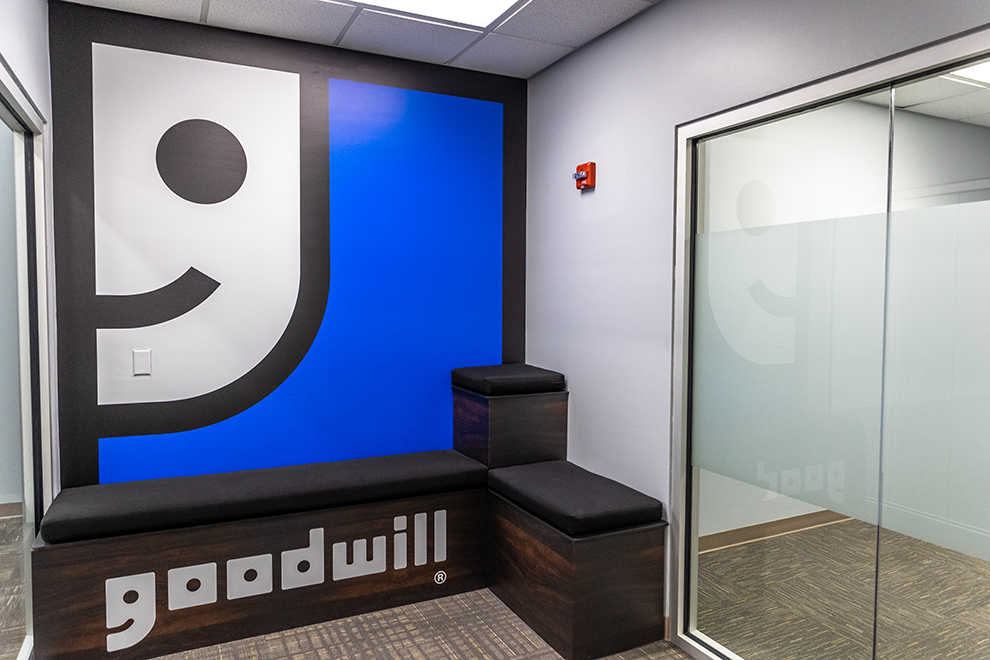
Heritage Signs & Displays collaborated with Goodwill Industries of the Southern Piedmont to transform the Opportunity Campus in Hickory, NC. The project included lenticular wall displays, wall wraps, frosted vinyl, wayfinding signs, and custom wall displays. These elements enhanced the Career & Employment Center, creating an engaging and branded environment that reflects Goodwill's values and mission to support workforce development.