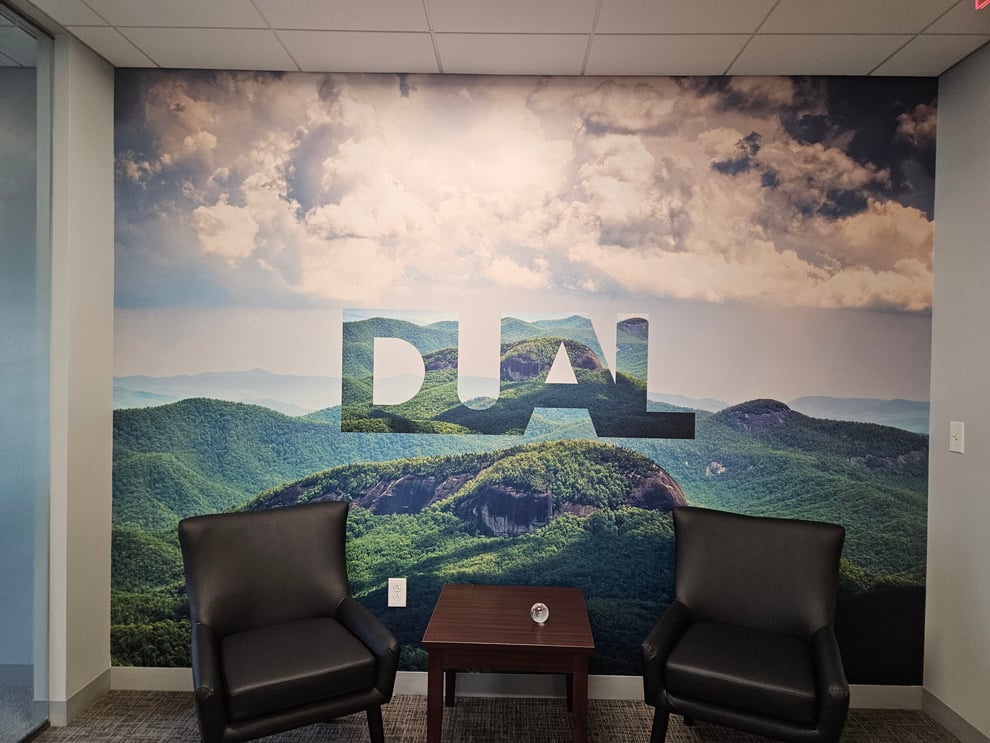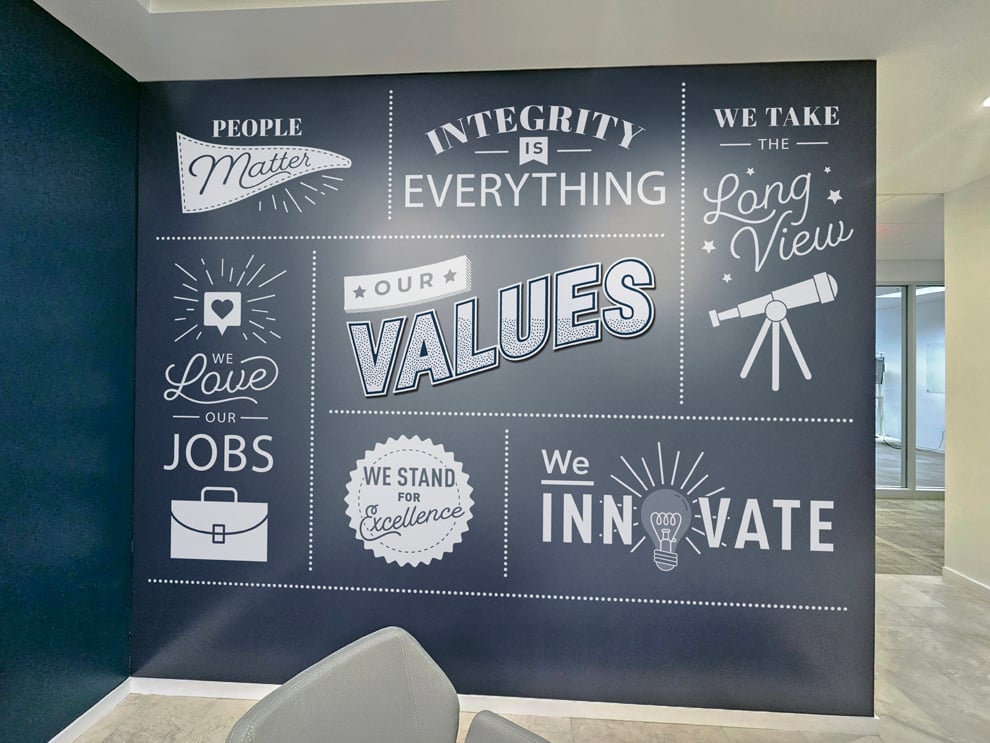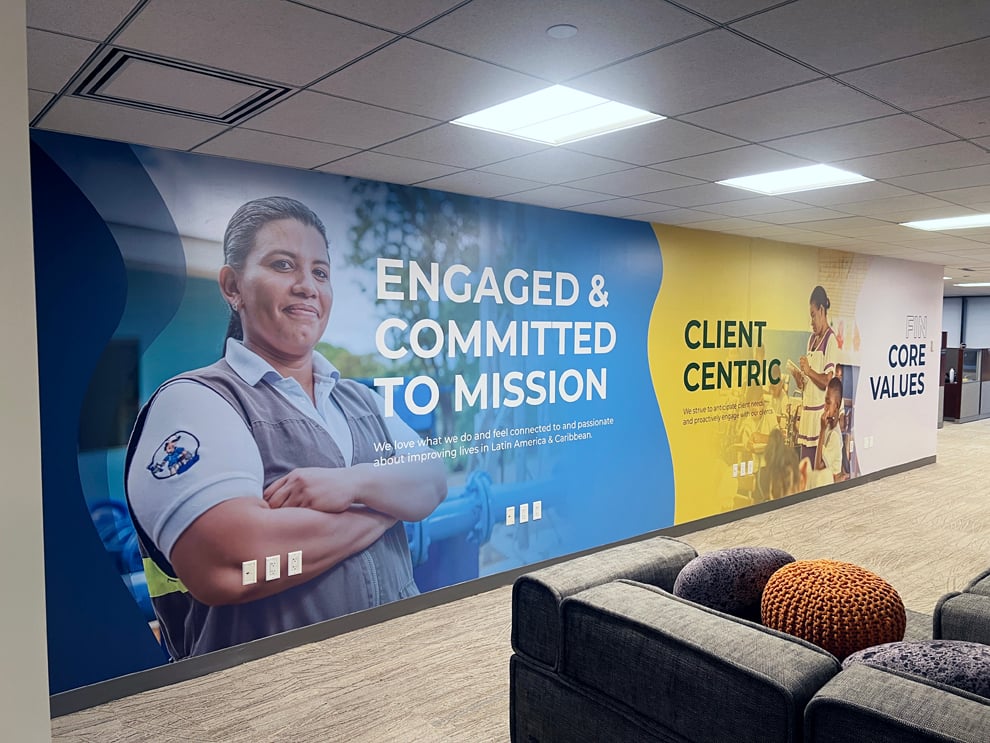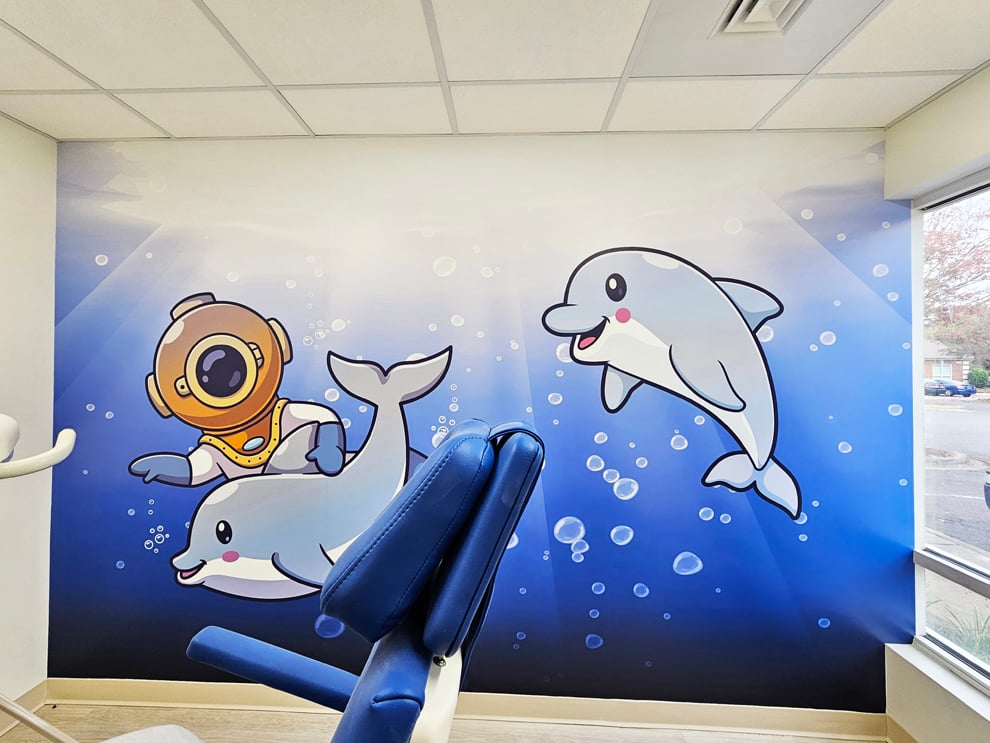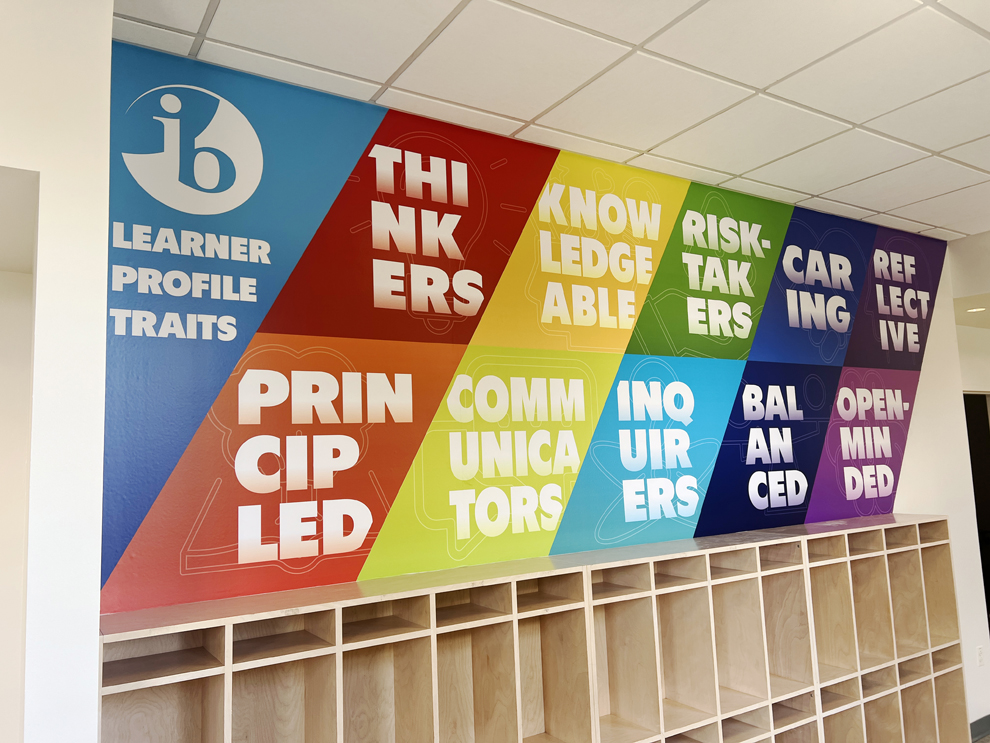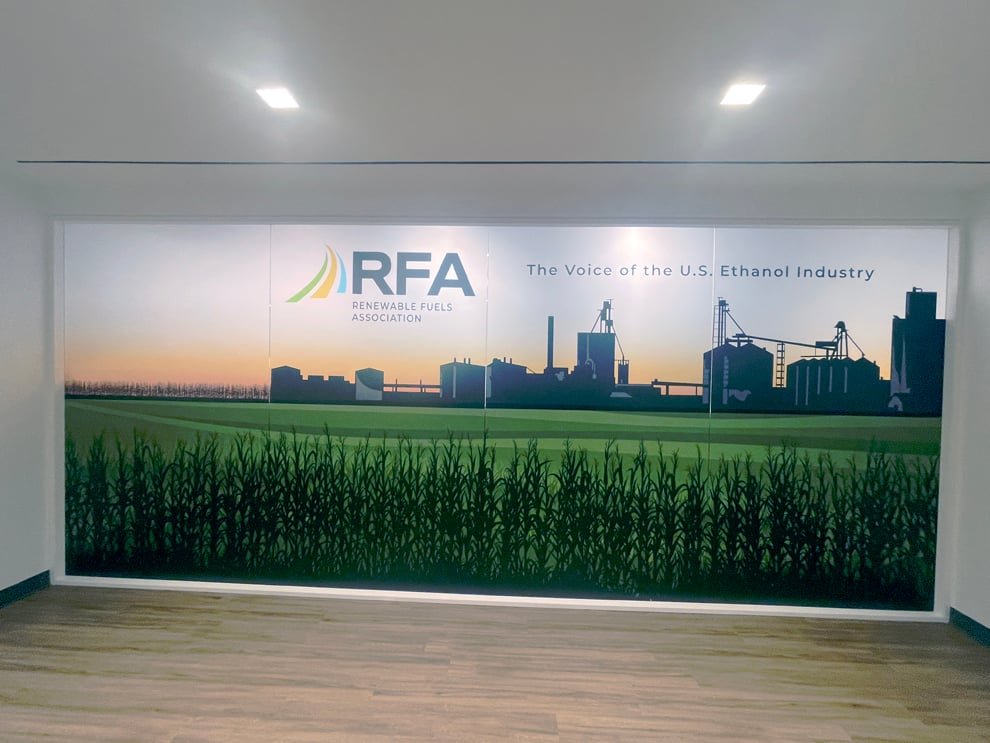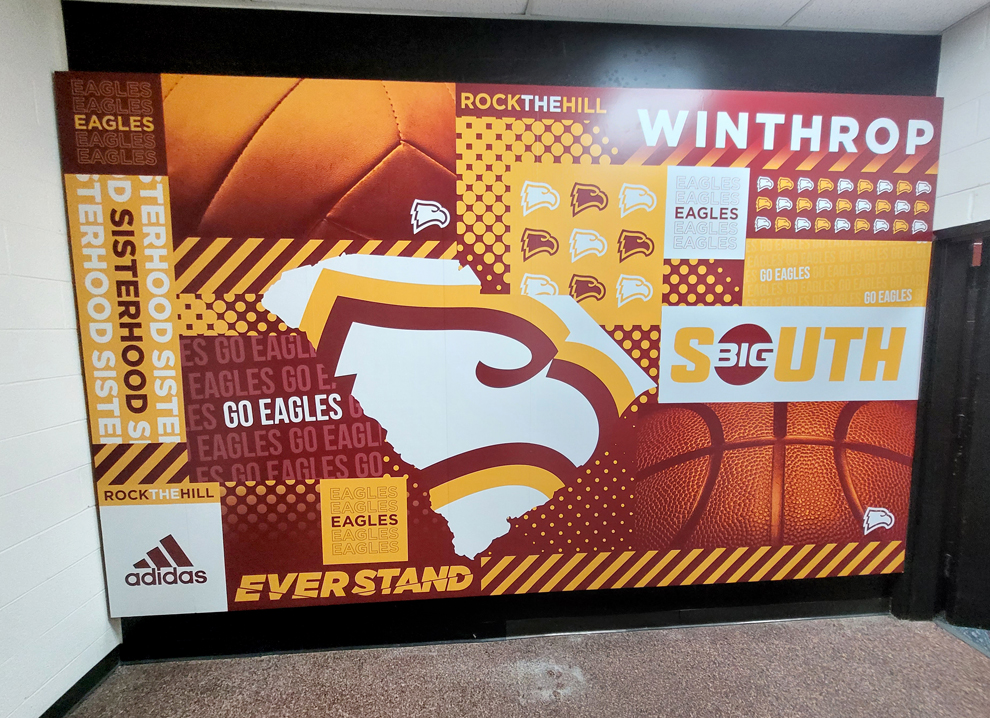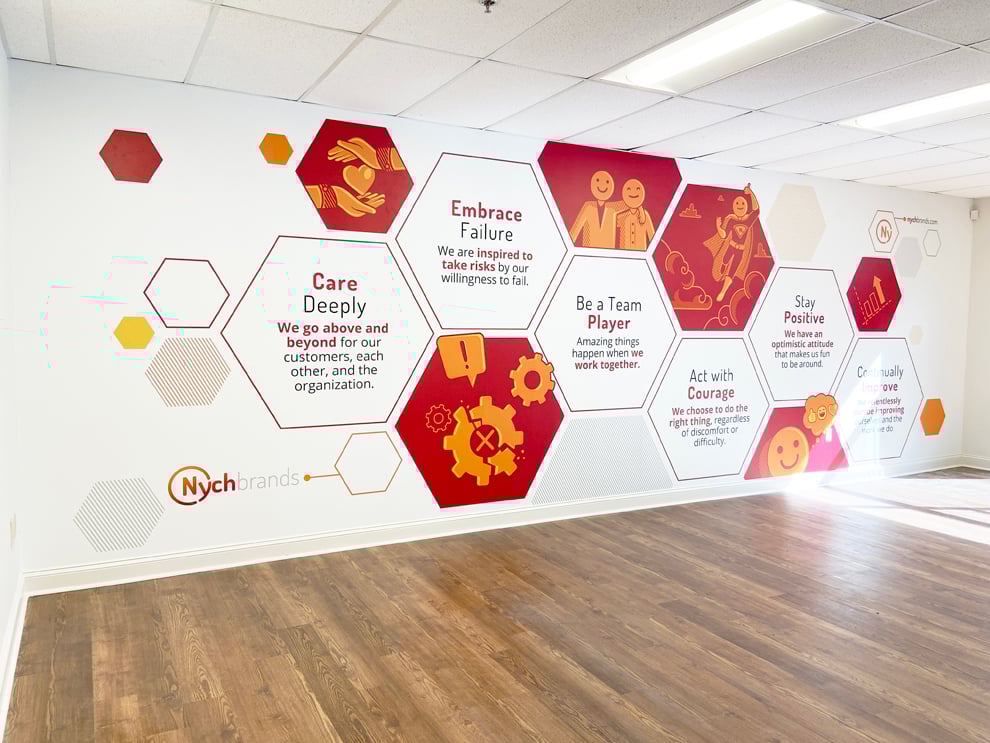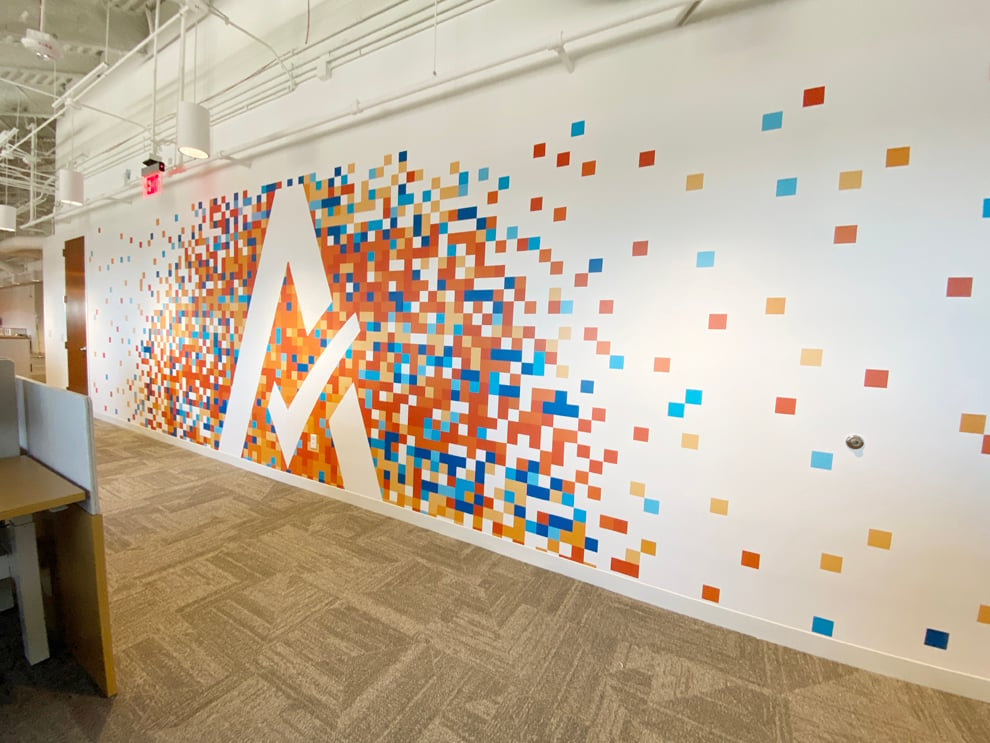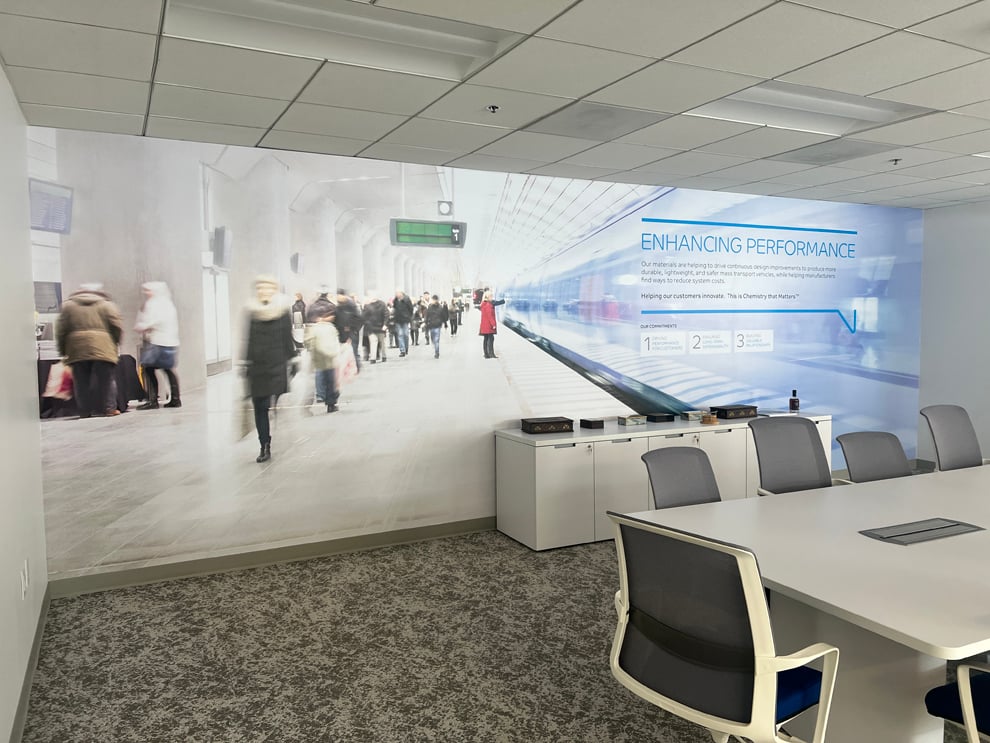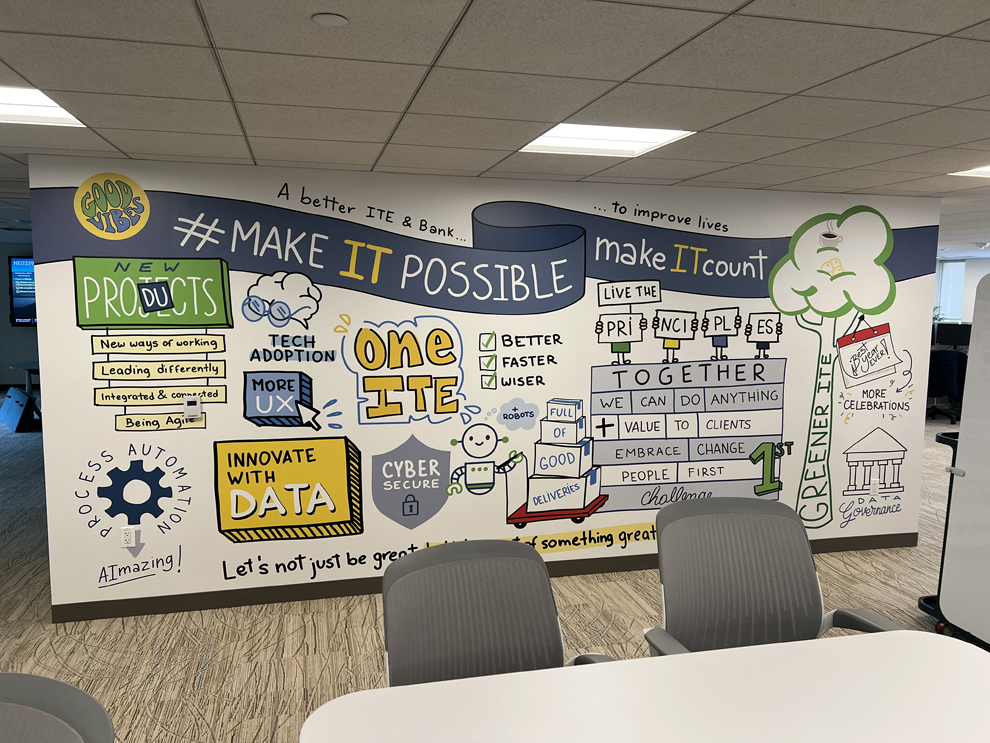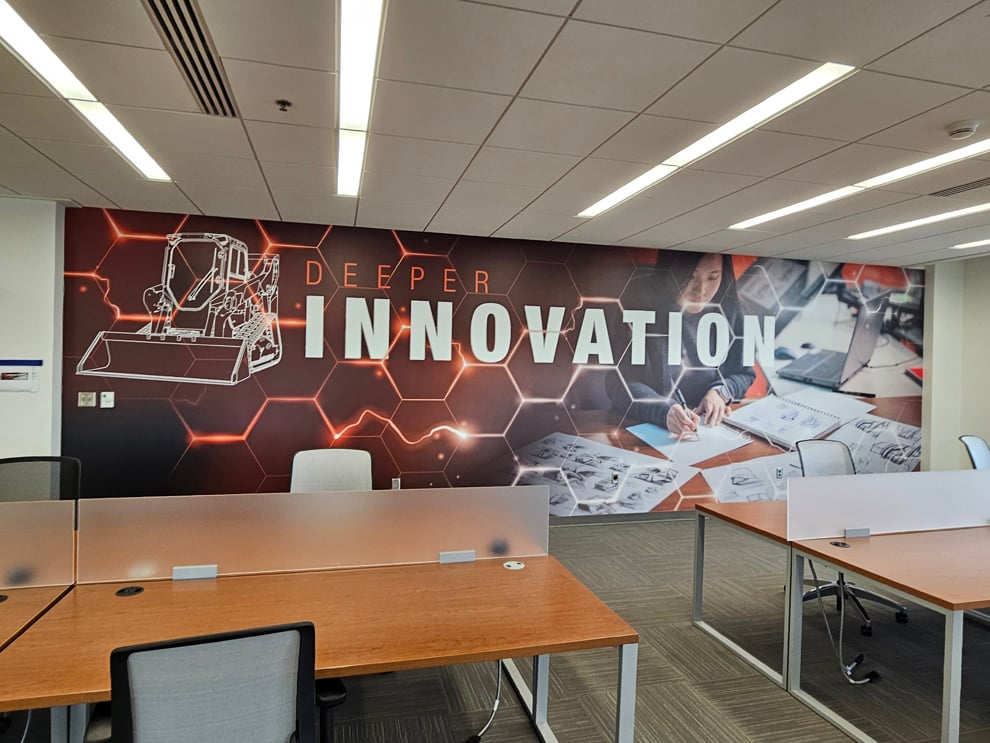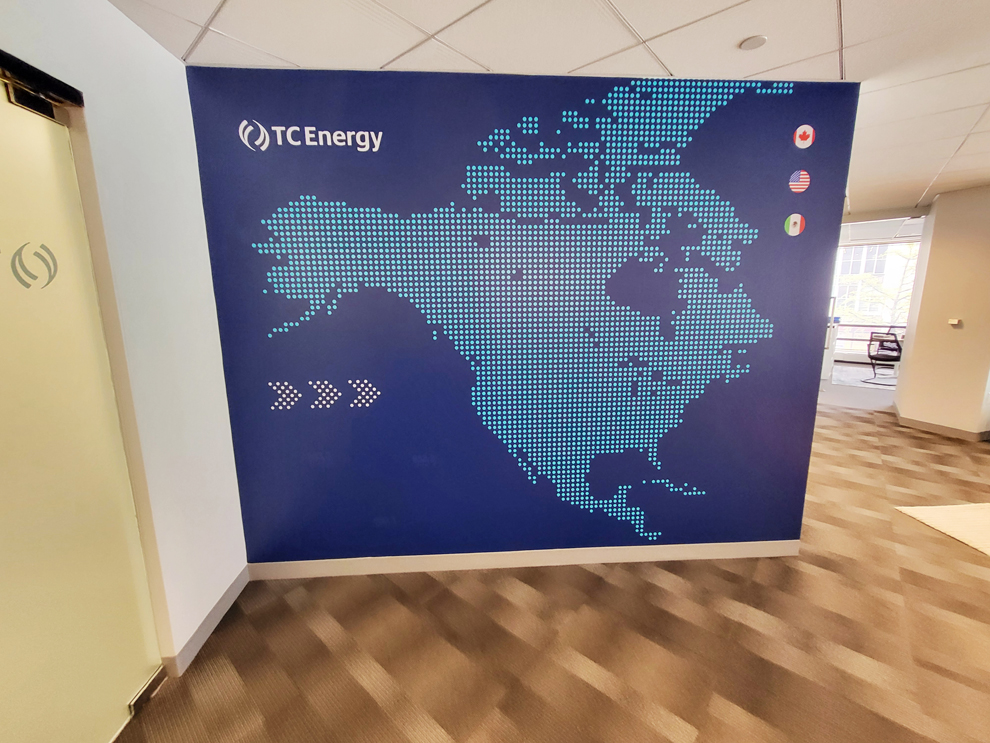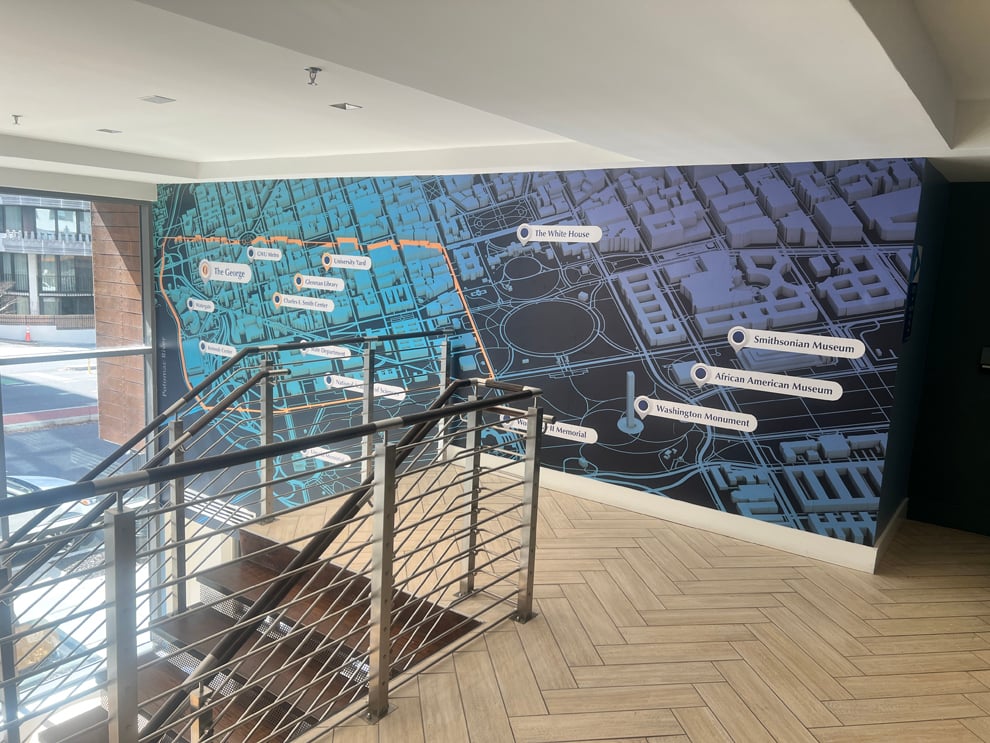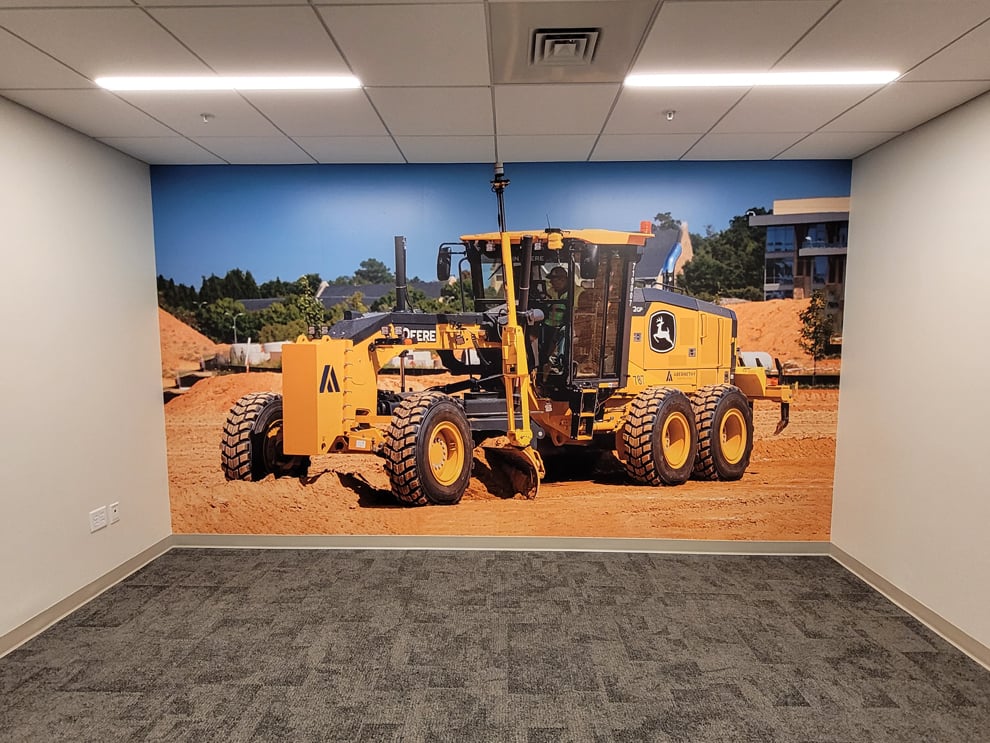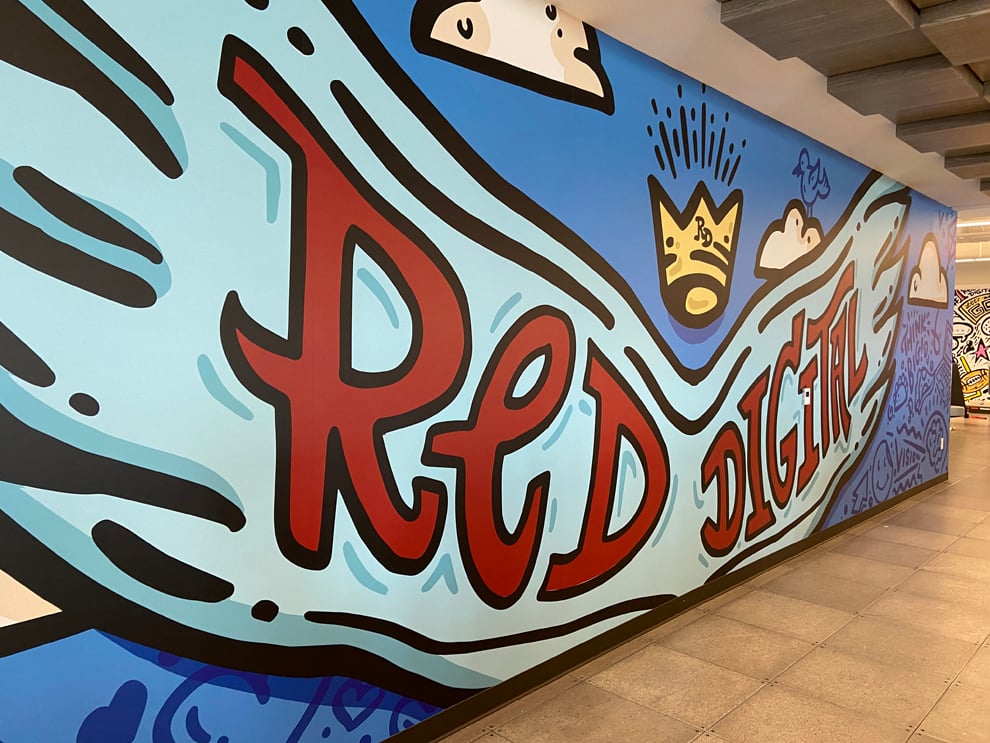
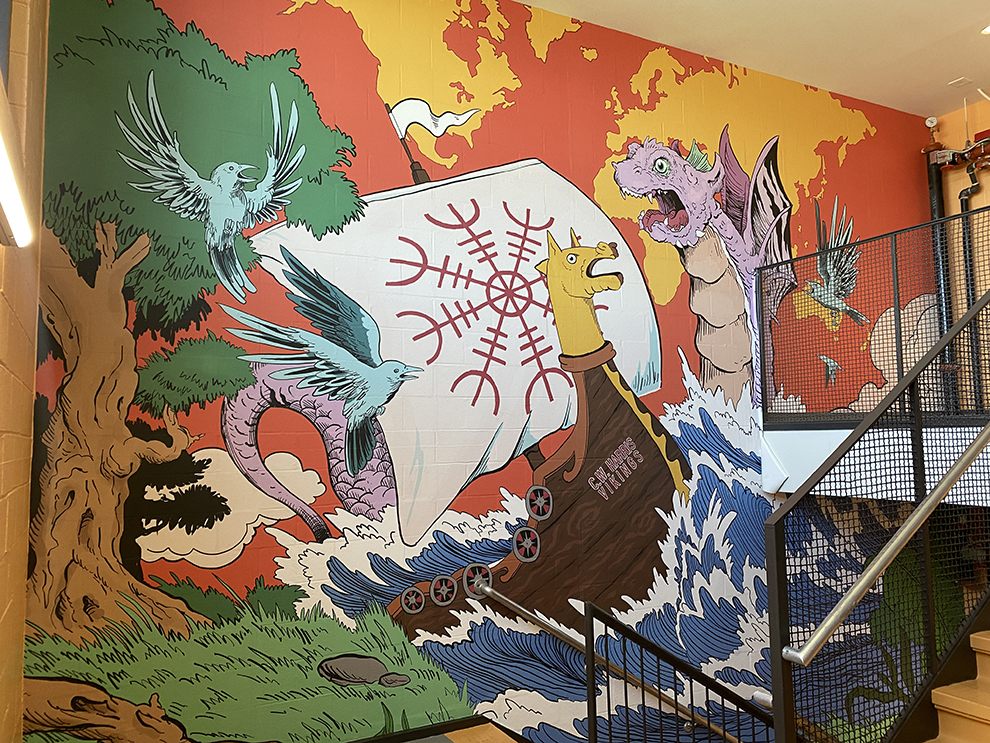
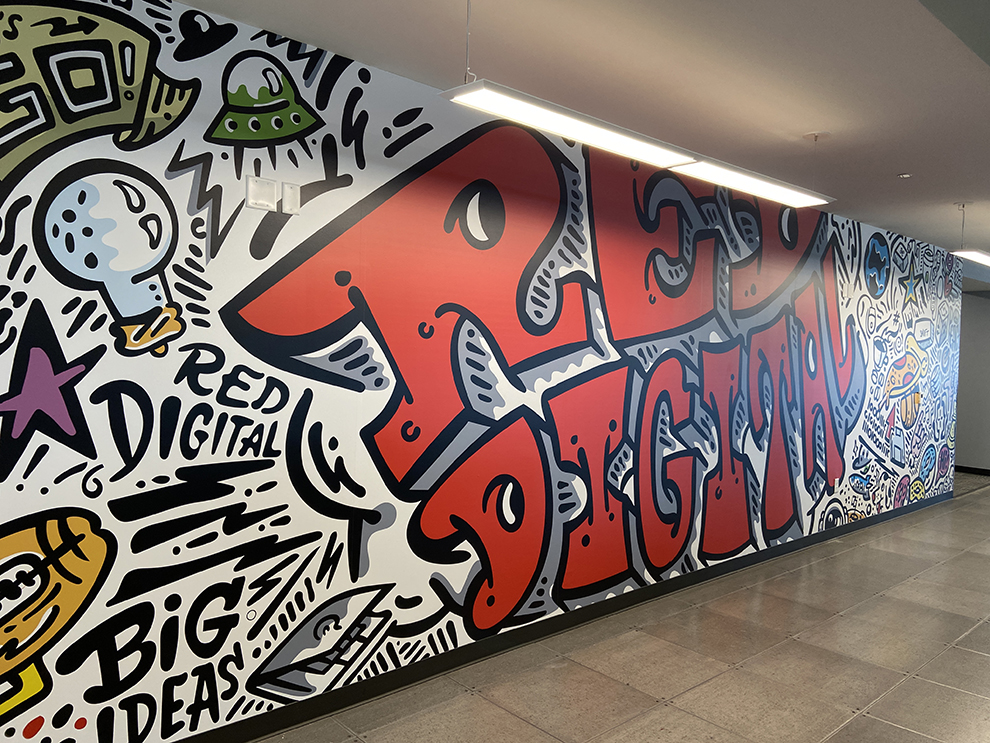
A prominent wall can help people understand an organization before a meeting begins. In Concord workplaces, wall wraps can turn reception areas, corridors, collaboration zones, conference rooms, learning spaces, and selected event environments into purposeful communication surfaces. Large-format wall graphics and workplace murals provide enough scale to express identity, culture, history, recognition, research, or community impact without relying on a series of disconnected signs. The result can become one of the most memorable parts of the environment while still serving a practical communication objective. A single composition can guide attention through the space while connecting messages that would otherwise compete for notice.
Heritage Signs & Displays helps Concord organizations decide what a large wall should communicate, who will encounter it, and how the composition should respond to the building. Environmental graphic design considers scale, sightlines, message hierarchy, image quality, typography, brand color, traffic patterns, furnishings, lighting, and viewing distance. Those decisions shape whether the wall uses photography, illustration, archival material, pattern, concise text, or a coordinated combination. They also establish where content begins, how it moves across the surface, and what should command attention first. The planning can distinguish information intended for a passing audience from details meant for employees or visitors who remain in the space.
Applications may include core values, mission statement displays, company timelines, employee recognition, donor stories, educational content, research narratives, branded corridors, and event messaging. A printed wall can also provide the visual foundation for dimensional letters, acrylic signs, standoff mounted panels, photographs, or backlit features when depth and hierarchy support the concept. Heritage plans those relationships together so mounted elements reinforce the wall graphics rather than fragmenting the presentation. For a suitable exterior wall, printed graphics may be considered after surface, exposure, access, material, approval, and intended service life requirements are evaluated.
Concord clients receive a connected process led by one dedicated Project Manager. For installed projects, the required site survey gives Heritage verified dimensions, painted wall information, openings, access conditions, and installation constraints before production begins. Environmental graphic design, artwork review, production, fabrication, finishing, scheduling, and professional installation then proceed from shared project information. Concord field support connects with Heritage’s headquarters and primary specialty production facility in Charlotte, giving the project team practical access to the people responsible for resolving materials, panel planning, color, schedule, and field questions. This continuity helps approved design intent survive the transition from concept to installed graphics.
Founded in 1977, Heritage is an award-winning, veteran-owned, family-led company approaching its 50th anniversary. That history matters because substantial feature walls and phased programs require disciplined communication, production control, craftsmanship, and dependable follow-through, not simply printed vinyl. Heritage supports Concord through local field coordination, Charlotte production resources, and the broader Heritage network serving the Carolinas and Mid-Atlantic. We seek to honor God by serving clients and communities with excellence. In practical terms, that commitment calls for care, accountability, accurate work, respectful installation, and clear ownership of the finished result.
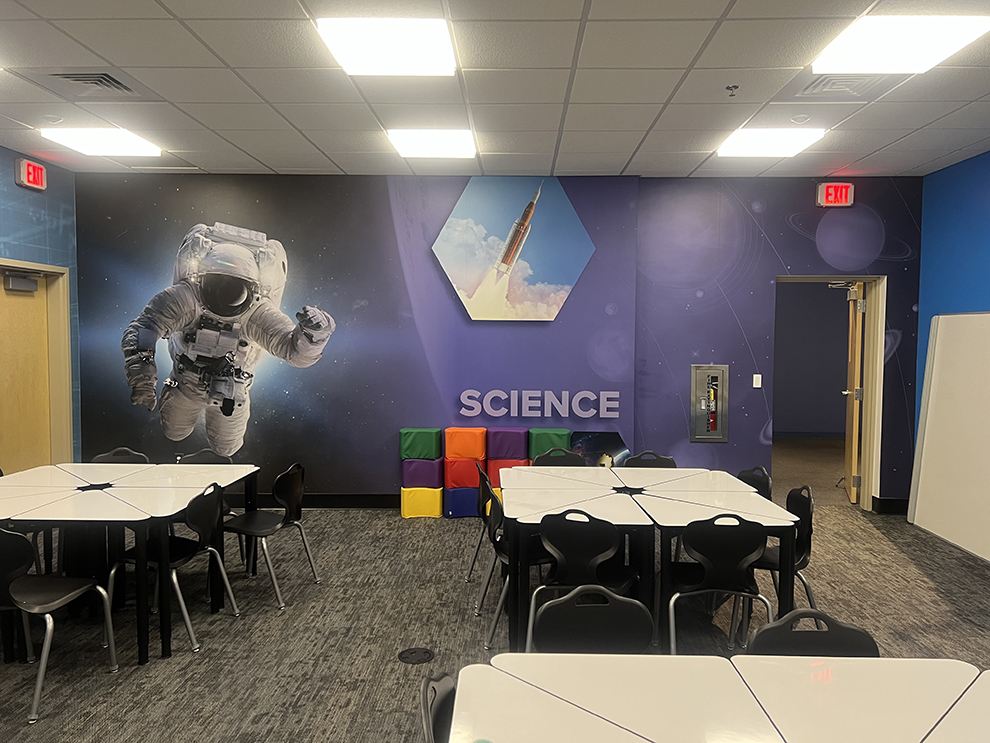
A broad wall changes how a message is encountered because people see it over time and from several distances. Heritage plans visual pacing across the approach, the primary viewing position, and movement through the space, deciding which information should register immediately and which details can reward closer attention. Full coverage may create immersion, while partial coverage can preserve architectural restraint or direct focus toward a specific message.
The composition must also negotiate corners, doorways, outlets, fixtures, control panels, furniture, and other interruptions. Rather than enlarging artwork until it fills the available dimensions, Heritage evaluates how imagery, typography, negative space, and panel transitions should respond to those conditions. A corridor timeline may unfold in sequence, while a reception mural may concentrate attention around a central sign or dimensional logo.
Those choices make the wall an environmental communication system rather than an oversized poster. The final design should maintain clarity from across the room, hold sufficient detail at conversational distance, and feel intentionally integrated with the surrounding workplace.
A successful Wall Wraps project depends on decisions remaining connected from initial planning through final installation. Artwork that appears effective on a monitor may require adjustment for viewing distance, image resolution, wall proportions, panel divisions, seams, obstructions, and adjacent signs. Heritage evaluates those production and field realities before they become installation problems.
Heritage’s One Dedicated Project Manager System gives Concord clients one accountable contact for discovery, site information, environmental graphic design, artwork approvals, production, fabrication, schedule coordination, and professional installation. Designers, production specialists, fabricators, and installers work from shared project requirements rather than separate assumptions. That structure becomes especially valuable when several walls, mounted elements, phased work, or restricted installation windows are involved.
The client is not simply purchasing printed vinyl. The client is relying on Heritage to select an appropriate graphic system, preserve approved design intent, plan panel and seam locations, manage production quality, and coordinate installation around verified conditions. That continuity supports a more predictable schedule and a finished wall that reflects the original communication objective.
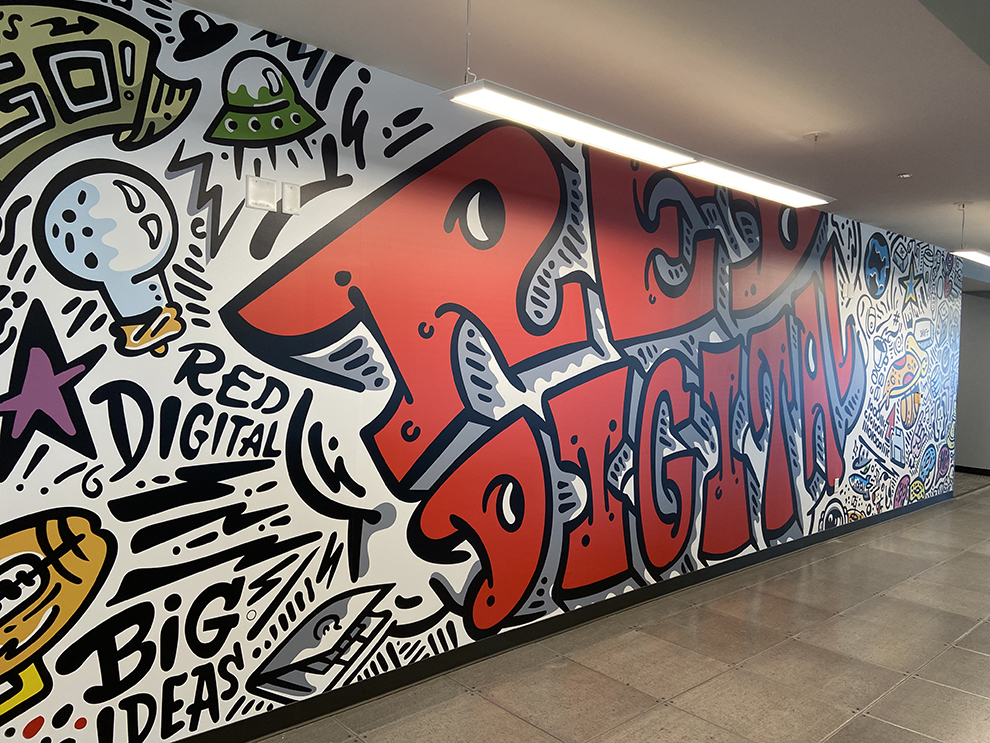
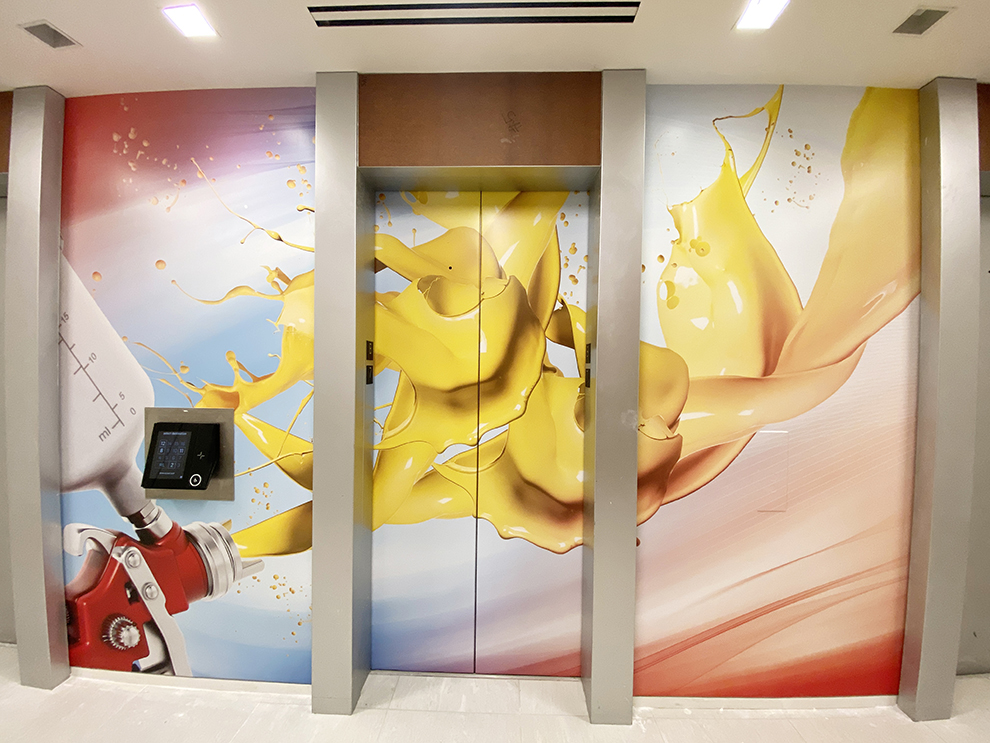
Wall Displays can introduce photographs, milestones, recognition content, or changeable information over a wrapped surface. The Wall Wraps provide the continuous visual setting, while mounted components create depth, hierarchy, and distinct points of attention.
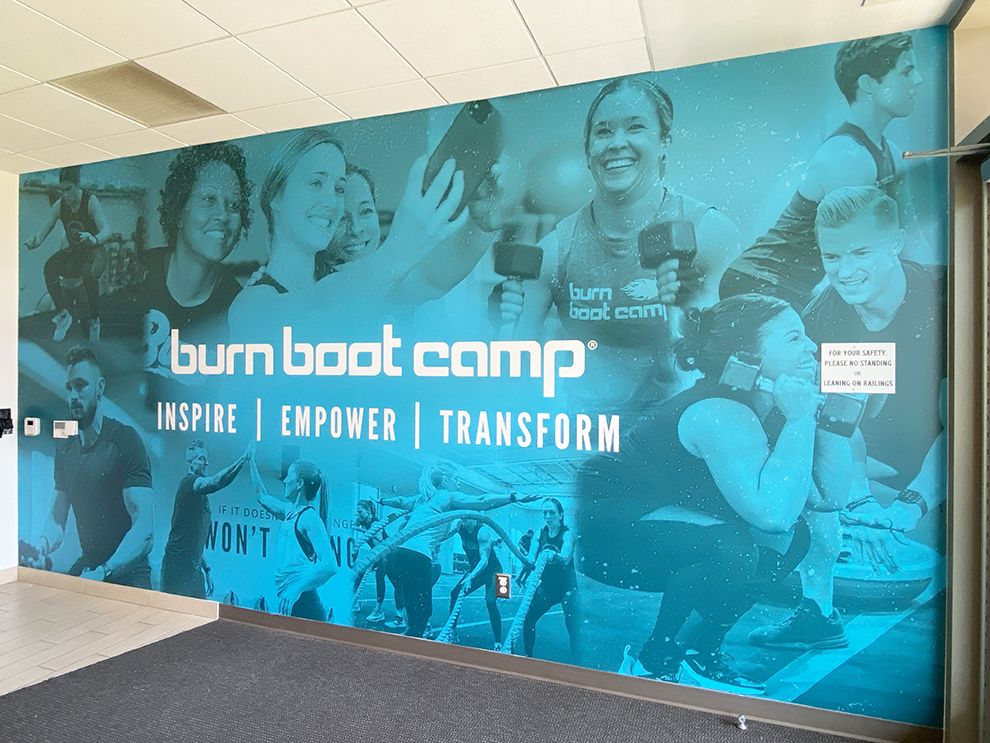
Lobby Signs can serve as the principal identification element within a larger wall graphic. A mural or branded pattern provides context, while dimensional or illuminated identification establishes a clear focal point for employees, clients, and visitors.
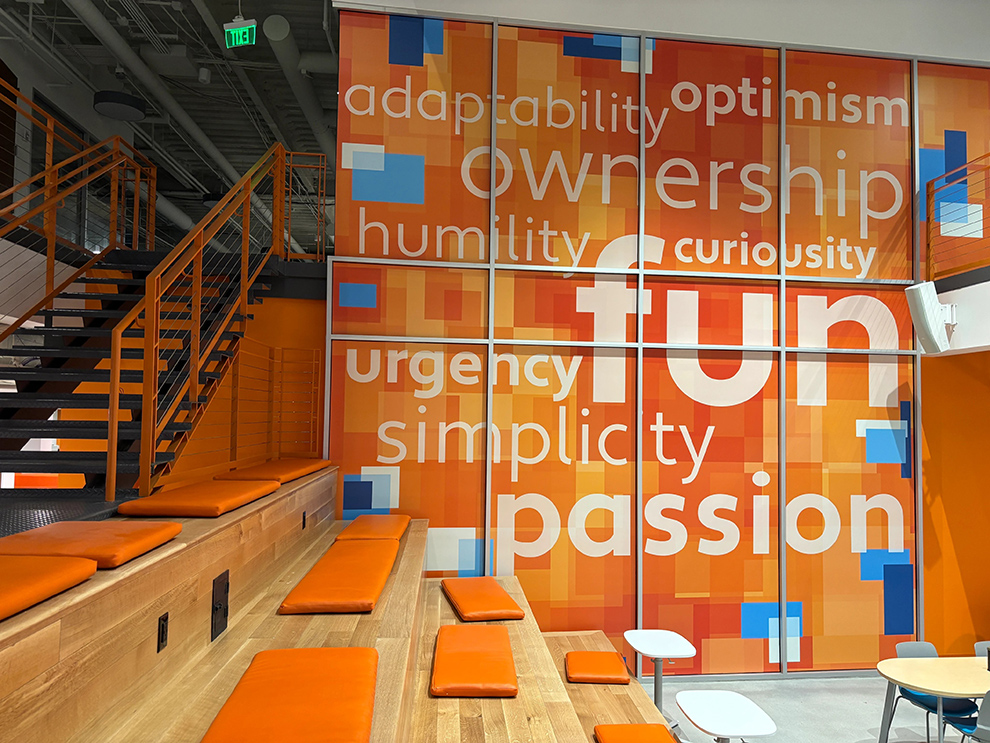
Dimensional Letters can add physical presence over a printed background when the design requires a stronger hierarchy. Heritage plans mounting locations, contrast, scale, color, and spacing with the mural so the lettering remains legible and visually distinct.
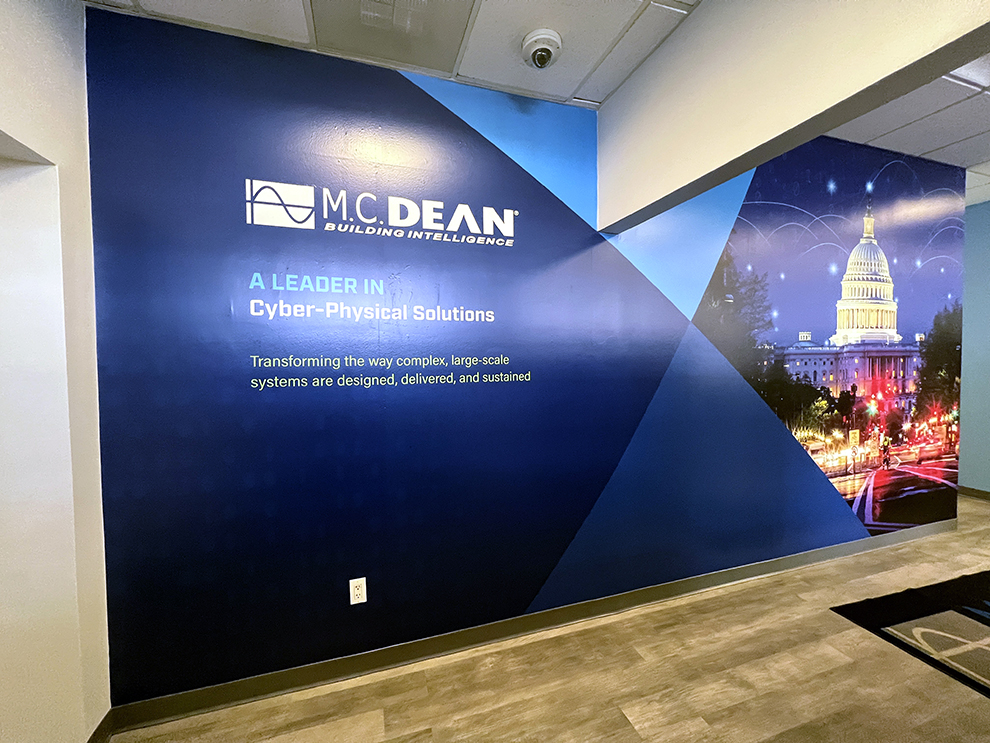
Standoff Mounted Signs can layer recognition, photographs, donor information, or adaptable content above a wall wrap. The printed surface connects the complete presentation, while projected panels organize information and add controlled dimensional depth.
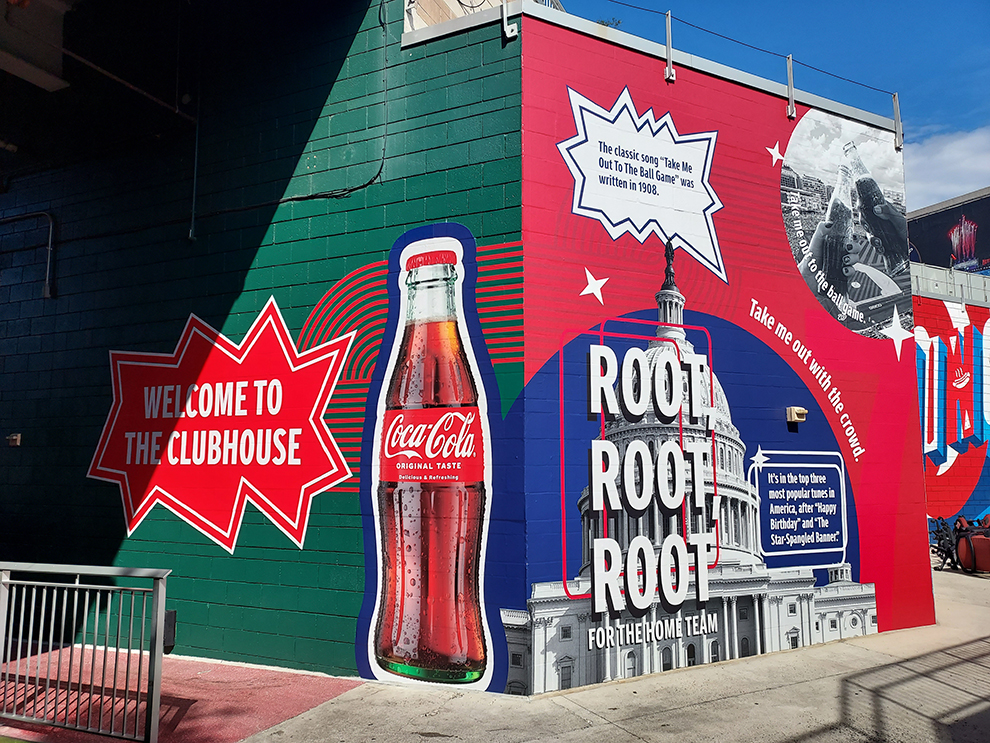
Backlit Signs can establish an illuminated focal point within a wrapped reception or feature wall. The surrounding graphics can provide color, imagery, or storytelling while the lit element receives sufficient contrast and visual emphasis.
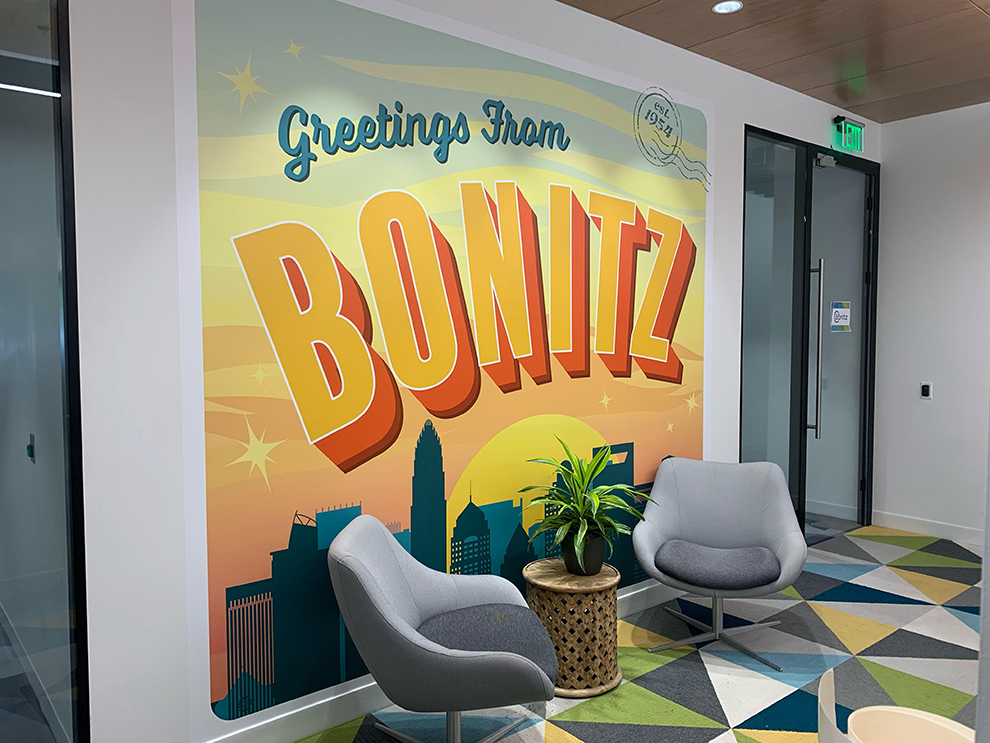
Elevator Wraps can carry workplace messaging, campaigns, event themes, or directional content into a frequently used transition area. Coordinated artwork helps the elevator zone relate visually to nearby wrapped corridors, reception areas, or destination walls.
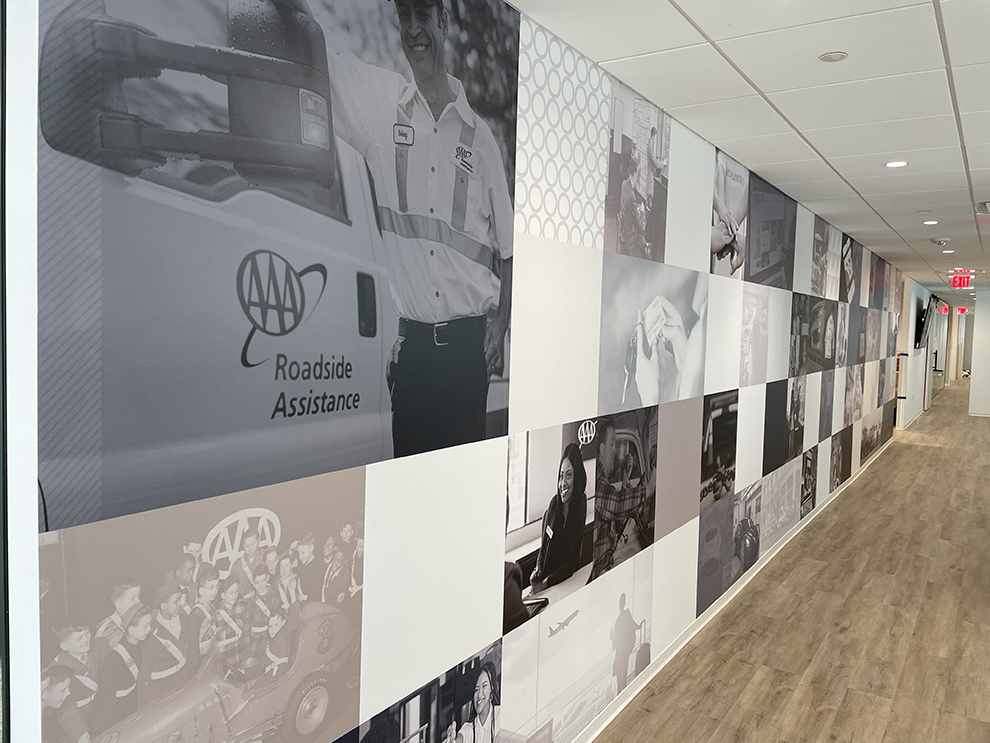
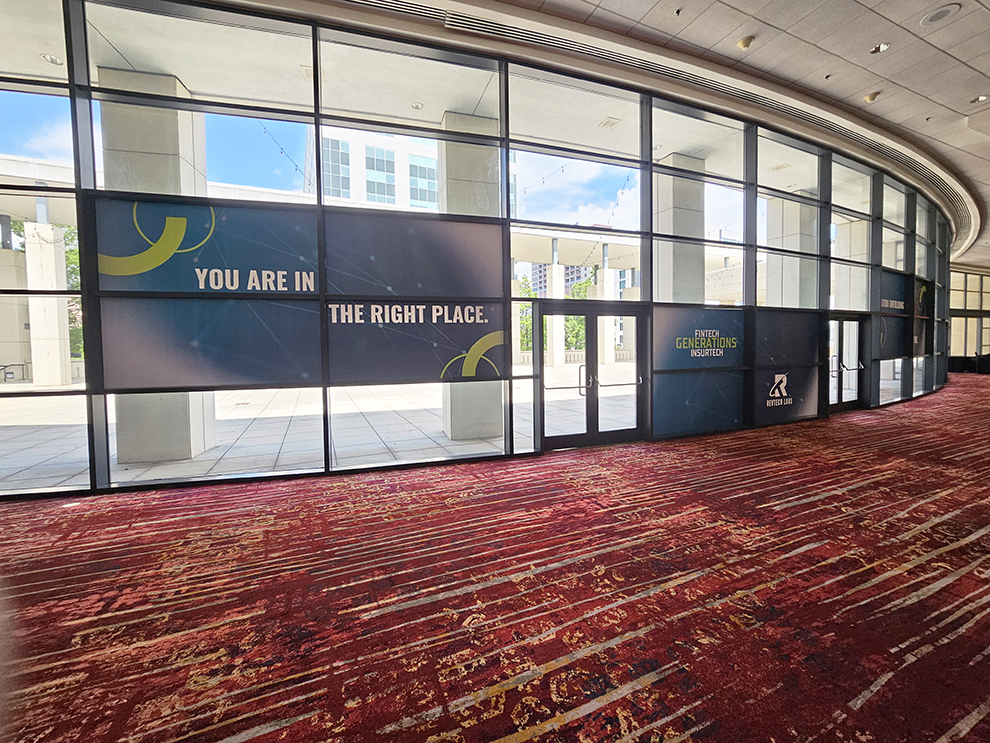
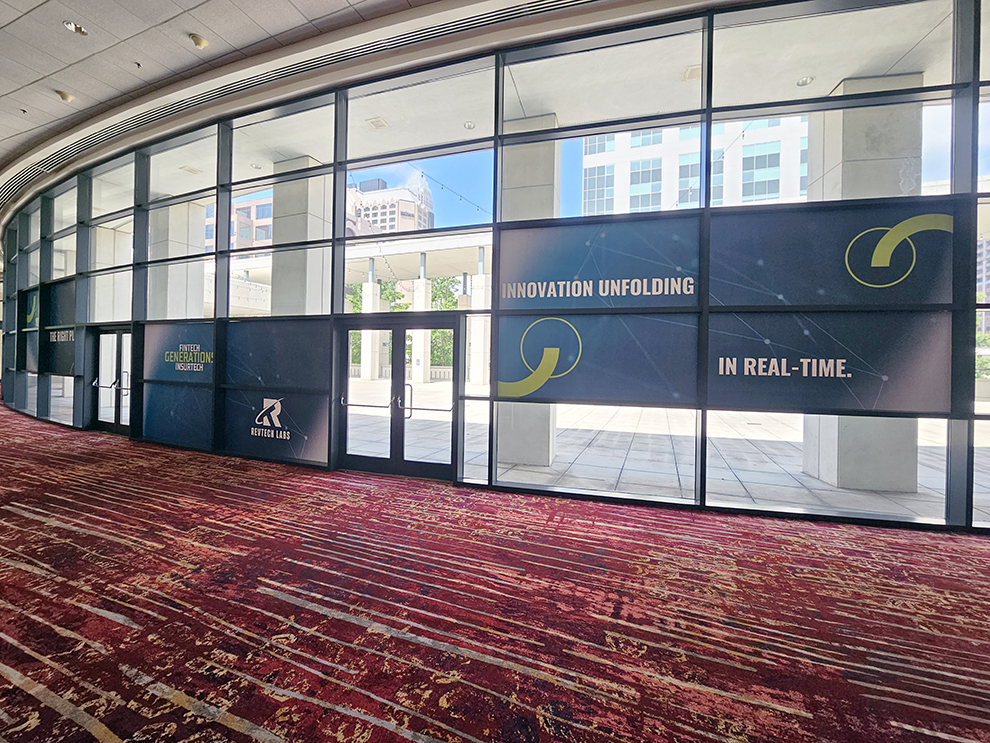
Window Graphics can extend imagery, color, and messaging from a wrapped wall onto nearby glass. Heritage coordinates transparency, privacy, sightlines, and scale so the glass supports the environment without competing with the primary wall composition.
Frosted Vinyl can connect adjacent offices, conference rooms, and glass partitions to the wall graphic program. Privacy patterns, logos, or subtle brand elements can continue the design language while preserving appropriate separation between solid walls and transparent surfaces.
Does a Concord wall need to communicate more clearly with employees, visitors, customers, students, or event audiences? Use Get Started Now to share the address, desired outcome, intended audience, target completion date, anticipated investment, photographs, approximate dimensions, artwork, brand standards, paint information, and known access constraints. Details may be preliminary. One dedicated Project Manager will review the opportunity, identify the next decisions, and coordinate the appropriate site survey, environmental graphic design, production, fabrication, and professional installation resources.
Concord clients receive field support at the project location, including client meetings, the required site survey, wall evaluation, measurement verification, access review, and installation planning. Those activities establish how the design and material system must respond to the actual property rather than relying on photographs or preliminary dimensions alone.
Heritage’s headquarters and primary specialty production facility are located in Charlotte, not Concord. Concord site information can be shared with the Charlotte environmental graphic design, production, fabrication, and installation resources responsible for carrying the project forward. That connection supports timely communication when artwork, materials, panel layouts, installation access, or field conditions require coordinated decisions.
For organizations managing several offices, campuses, or facilities, one dedicated Project Manager can preserve brand standards, approvals, and project history across locations. Each property is still evaluated individually because dimensions, architecture, wall conditions, audiences, access, furnishings, and installation windows may differ. Concord support connects to Heritage resources serving the immediate market, the Carolinas and Mid-Atlantic, and the broader Heritage network without suggesting that every location has its own production facility.
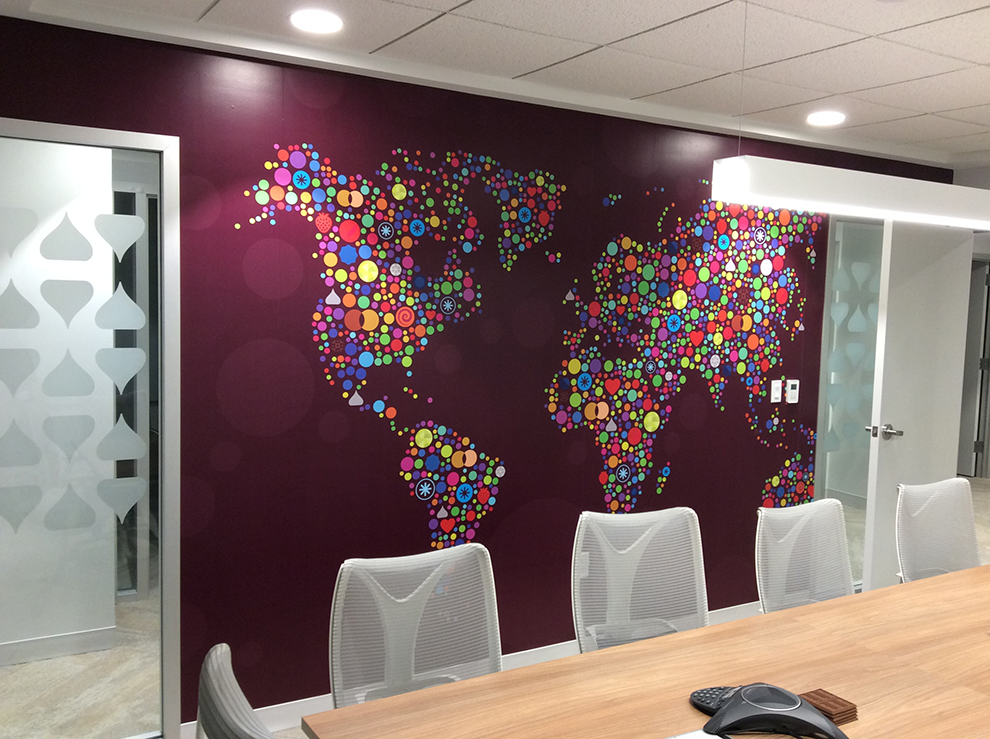
Environmental graphic design begins with what an organization wants people to understand, remember, or do within the space. A Concord employer may need a culture wall that reinforces shared values, a timeline that gives company history visual order, or a branded corridor that connects several departments. An educational, healthcare, nonprofit, or institutional organization may use the wall for research, recognition, donor communication, or community storytelling.
Heritage develops hierarchy, typography, imagery, color, scale, placement, and visual pacing around the audience and the architecture. The composition may need to communicate quickly from a distance, reveal detail during closer viewing, or guide people through a sequence. Dimensional letters, mounted panels, photographs, or illuminated elements can be incorporated when they strengthen the wall’s primary message.
Clients may ask Heritage to develop the environmental graphic concept or implement artwork approved by architects, interior designers, branding agencies, environmental graphic designers, and organizational stakeholders. In either situation, Heritage focuses on translating approved design intent into practical production, fabrication, and installation decisions for the verified wall.
Professional installation begins well before an installer positions the first panel. The required site survey documents dimensions, surface conditions, corners, openings, fixtures, access, work hours, and other constraints before graphics enter production. That information supports material selection, artwork preparation, panel sequencing, seam placement, and installation scheduling.
By installation day, Heritage’s crew should understand how the wall graphics were designed, produced, and intended to align. Installers manage panel order, registration, seams, edges, corners, transitions, doorways, outlets, and other interruptions so the composition reads consistently across the surface. Surrounding floors, furniture, finishes, and occupied areas are protected as appropriate for the work.
Heritage coordinates the installation window with the client and communicates if an unexpected field condition requires a decision. That planning can reduce disruption in active workplaces, institutional facilities, and event environments. Because project management, production, fabrication, and installation remain connected, the client has a clear point of accountability for the completed Wall Wraps project rather than several vendors assigning responsibility to one another.
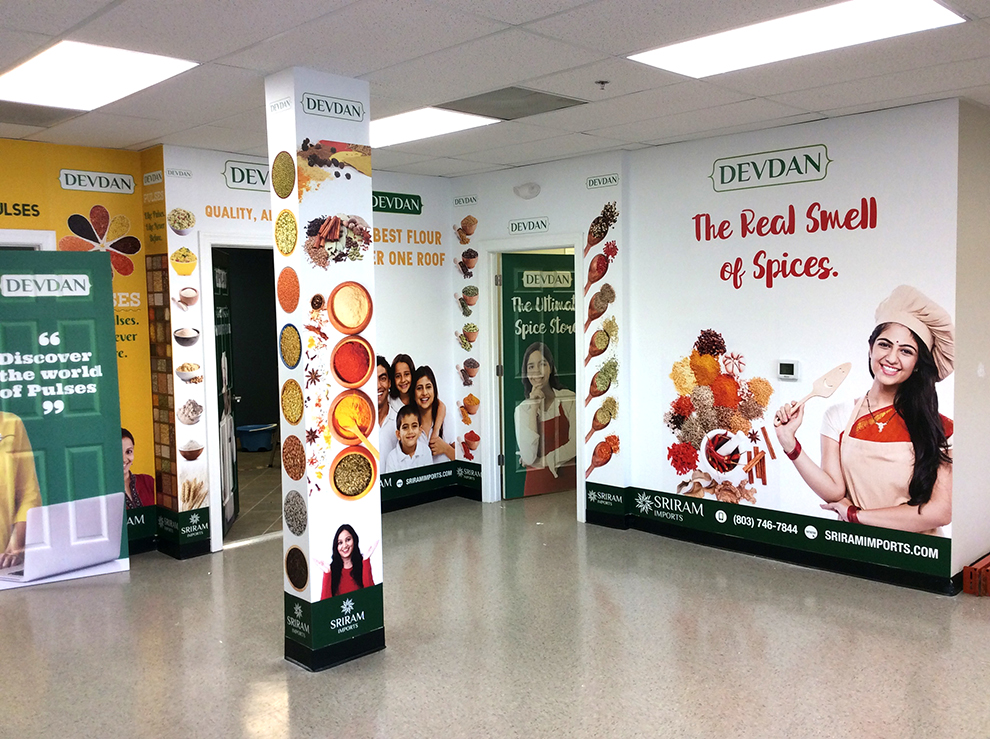
The reliability of an adhesive wall wrap begins with the drywall and coating system beneath it. Before installation, drywall should be sound, smooth, clean, dry, and repaired where needed. Primer and paint should be properly applied, and the final paint layer needs to cure completely.
Fresh paint may appear ready before the curing process has actually finished. Gases or vapors can continue leaving the coating as it cures. If vinyl is installed during that period, the outgassing may become trapped underneath the graphic and contribute to bubbles, blisters, lifting, or premature adhesion failure. Allowing about four weeks is useful planning guidance for many paints, although manufacturer requirements and actual site conditions take priority.
Heritage may test the surface to determine how the selected vinyl behaves against the paint. That process cannot confirm how securely the paint and primer are attached to the drywall itself. When the coating starts peeling or pulling away during testing or ordinary repositioning, Heritage stops instead of risking additional damage. The client or property owner handles and pays for repairs, proper priming, repainting, and full curing before Heritage returns.
Graphic removal later is a separate matter. Heritage removes wall wraps carefully to reduce avoidable damage, but damage-free removal cannot be promised. Paint, primer, or drywall facing can release. Restoration afterward is arranged and paid for by the client or property owner. Wall wraps remain proven, effective branding solutions.
Planning should first establish the desired result, intended audience, coverage area, approval path, completion date, project phases, installation constraints, wall readiness, and anticipated overall investment. Those decisions determine whether the project calls for a single mural, several coordinated walls, fabricated layers, temporary messaging, or a broader workplace graphics program.
Photographs, approximate measurements, brand standards, available artwork, messaging, paint information, the installation address, and known access limitations help Heritage begin. Incomplete information does not prevent an initial conversation. Discovery and the required site survey can resolve dimensions, surface conditions, installation logistics, and other unanswered questions before production.
Many Heritage projects involving production and professional installation range from $10,000 to more than $200,000. That range demonstrates capacity, not a minimum or universal price. Actual investment depends on design development, coverage, image preparation, materials, fabrication, wall conditions, access, schedule, installation complexity, and the number of locations. One dedicated Project Manager keeps scope, approvals, production requirements, installation planning, and client responsibilities aligned as the work progresses.
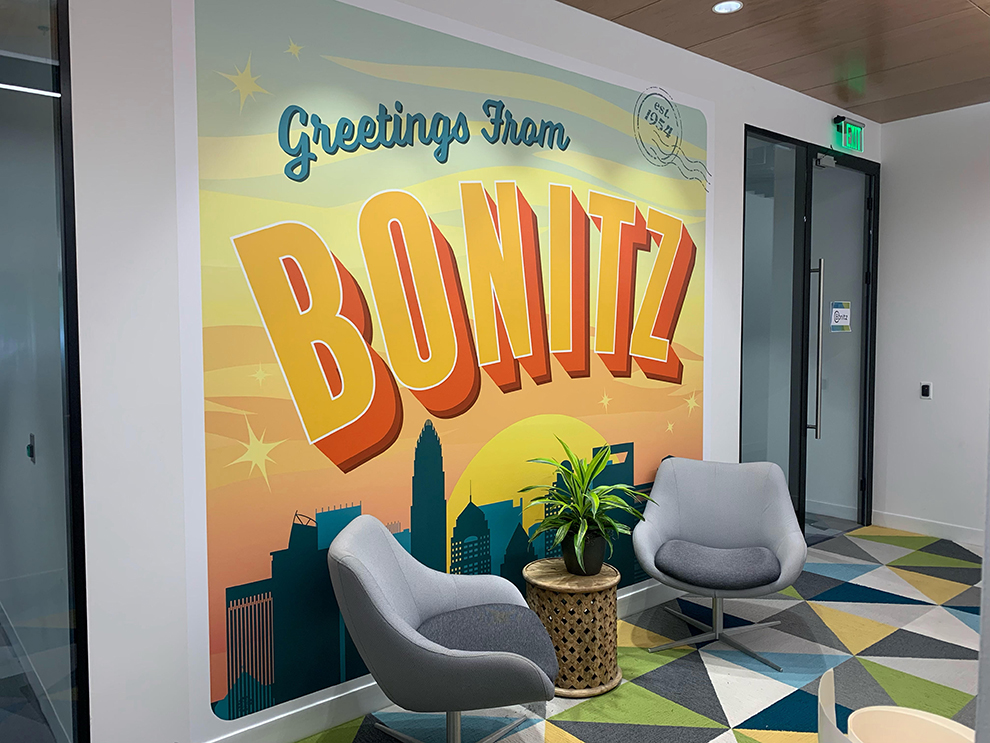
A site survey provides verified information about dimensions, wall conditions, openings, fixtures, access, work hours, and installation constraints. Heritage uses those findings to inform artwork dimensions, panel planning, material selection, seam locations, scheduling, and installation preparation. Photographs and client measurements remain helpful during discovery, but they do not replace direct field verification for an installed project.
Yes. Wall Wraps can establish the primary visual field beneath dimensional letters, acrylic panels, photographs, recognition elements, or backlit signs. Heritage coordinates contrast, scale, mounting locations, imagery, and message hierarchy so the fabricated components remain legible. The added features should support the wall composition rather than divide it into unrelated parts.
They may. Paint formulas within these categories can behave differently, so Heritage does not assume that every washable, low-VOC, or zero-VOC surface requires the same adhesive. Cleaning, a test application, or a different compatible vinyl and adhesive system may be appropriate. The decision depends on the specific finish, wall condition, intended duration, and test observations.
Large-format wall graphics can communicate identity, culture, history, research, recognition, purpose, or visitor guidance across an architectural surface. A Concord organization might create an arrival feature, company timeline, mission statement display, educational wall, branded corridor, or employee recognition environment. Heritage begins with the audience and intended outcome before recommending imagery, typography, coverage, or dimensional layers.
Heritage pauses the work. Large wall panels may need normal lifting and repositioning to achieve alignment, and that movement can reveal weakness within the paint, primer, or drywall system. The Project Manager documents the condition and explains what must be corrected. The client or property owner then arranges and pays for repair, proper priming, repainting, and sufficient cure time before installation resumes.
Yes. One dedicated Project Manager can maintain brand standards, approvals, project history, production expectations, and communication across a multi-location program. Each property still requires individual planning because wall dimensions, architecture, audiences, surfaces, access, and installation schedules vary. Consistent branding does not require identical physical execution at every location.
Being dry to the touch is not enough. Paint should meet the manufacturer's requirements for full cure before adhesive graphics are applied. While curing continues, gases or vapors may still be released from the coating. Vinyl installed too early can trap those emissions and may contribute to blistering, bubbles, lifting, or premature adhesion failure.
About four weeks is a useful planning benchmark for many paints, but the required cure period depends on the paint system, temperature, humidity, wall preparation, and conditions at the site. Since outgassing is only one possible contributor to adhesion problems, manufacturer requirements and actual wall conditions determine readiness.
For new Concord wall wrap and interior branding opportunities generated through the website, Heritage currently plans around an anticipated overall project investment of at least $4,000. This amount is a new-project planning threshold and is separate from Heritage's wider project range.
Many Heritage projects that include production and professional installation range from $10,000 to more than $200,000. Final investment depends on scope, artwork development, materials, fabrication, wall conditions, project schedule, access, and installation requirements. Use Get Started Now to share your Concord project and confirm the current regional investment level.
Yes, but not every wall will be suitable for adhesive graphics. Mild texture may sometimes work with an appropriate material and installation method, while deep texture, rough masonry, porous block, unstable coatings, or irregular concrete may prevent the desired appearance or service life. Heritage evaluates the surface, design, exposure, viewing distance, and intended duration. A mounted panel or another sign system may be recommended when direct application is not appropriate.
No. A test can show how the proposed vinyl interacts with the visible painted surface under the conditions observed. It cannot verify whether the hidden paint and primer layers are securely bonded to the drywall, nor can it guarantee future removal without damage. The test is a useful planning input, not a warranty for the complete wall system.
The client or property owner arranges and pays for required wall repair, primer, repainting, curing, and restoration. That responsibility applies when a surface is unsuitable before installation, when testing or panel repositioning reveals paint failure, and when later graphics removal affects the wall. Heritage does not perform or pay for drywall or paint restoration. Installation can resume after the corrected finish has cured according to applicable guidance.
The wall should be sound, smooth, clean, dry, properly repaired, correctly primed, and covered with fully cured compatible paint. Residue, moisture, unstable repairs, loose paint, deep texture, or contamination may affect fit and adhesion. Heritage reviews visible conditions during the required site survey and may recommend cleaning or testing. Surface preparation and correction remain the responsibility of the client or property owner.
Yes, when the wall, venue, duration, installation window, and removal expectations support the application. Heritage considers the intended removal date when recommending materials and planning production. Temporary or removable adhesive does not guarantee an unchanged painted surface. Wall condition and restoration responsibilities remain relevant even when the graphic is displayed only briefly.
Clients should anticipate careful removal and the possibility of surface restoration. Heritage removes graphics slowly to reduce avoidable damage, but paint, primer, or drywall facing may still release with the vinyl. No removal method can promise an unchanged wall. The client or property owner is responsible for repair, repainting, cure time, and related restoration costs.
No. Heritage does not accept installation only assignments for wall graphics supplied by a client or outside producer. Measurements, panel planning, materials, print quality, finishing, and replacement capability directly affect installation and the finished result. By controlling or managing the graphics it installs, Heritage can remain accountable for quality, coordination, production response, and installation performance.
They may be available when the wall, coating, exposure, access, installation conditions, and intended service life support the application. Heritage evaluates the physical surface and uses protective film laminate as standard practice for printed exterior wall graphics. Heritage does not determine permit requirements or manage permitting. The client, property owner, property manager, or general contractor must confirm and secure required sign permits and property approvals.
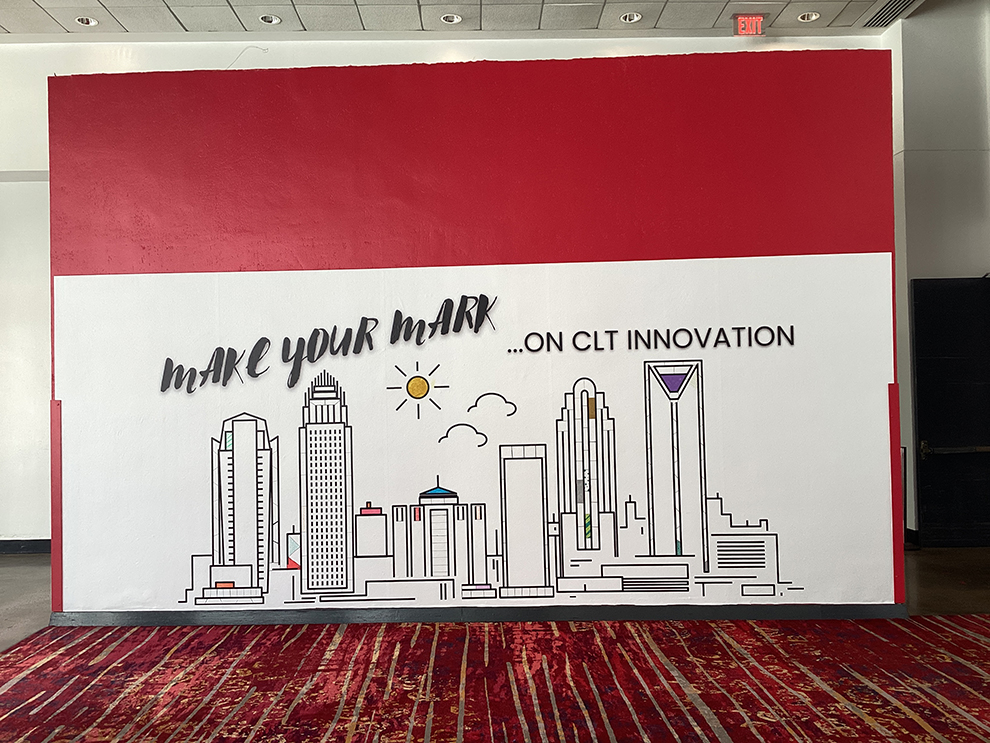
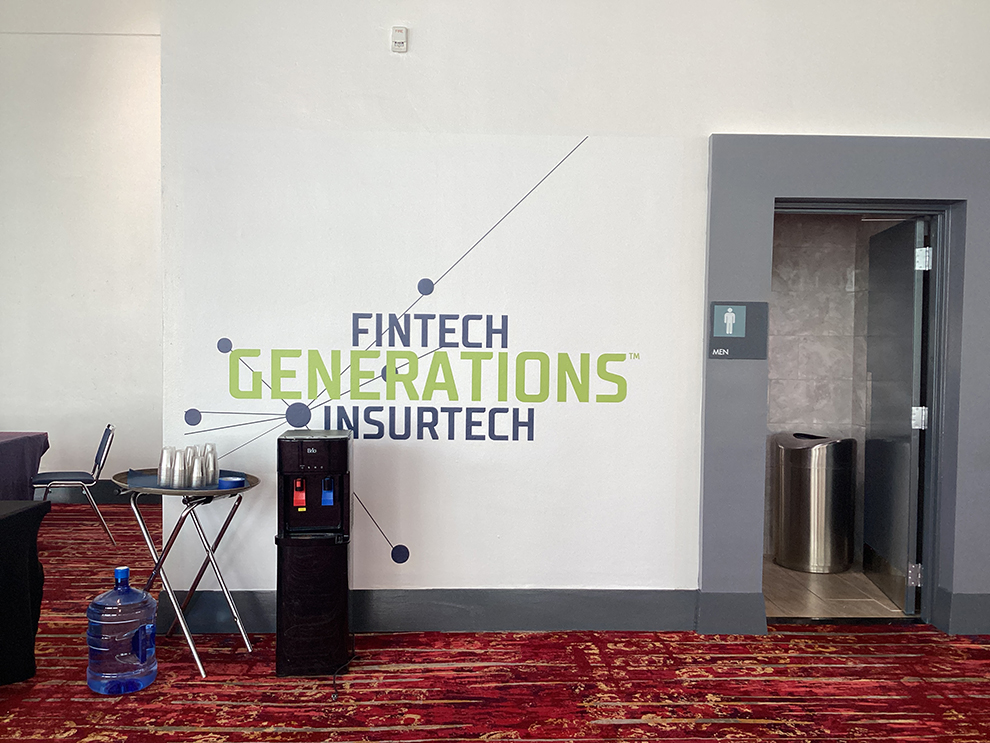
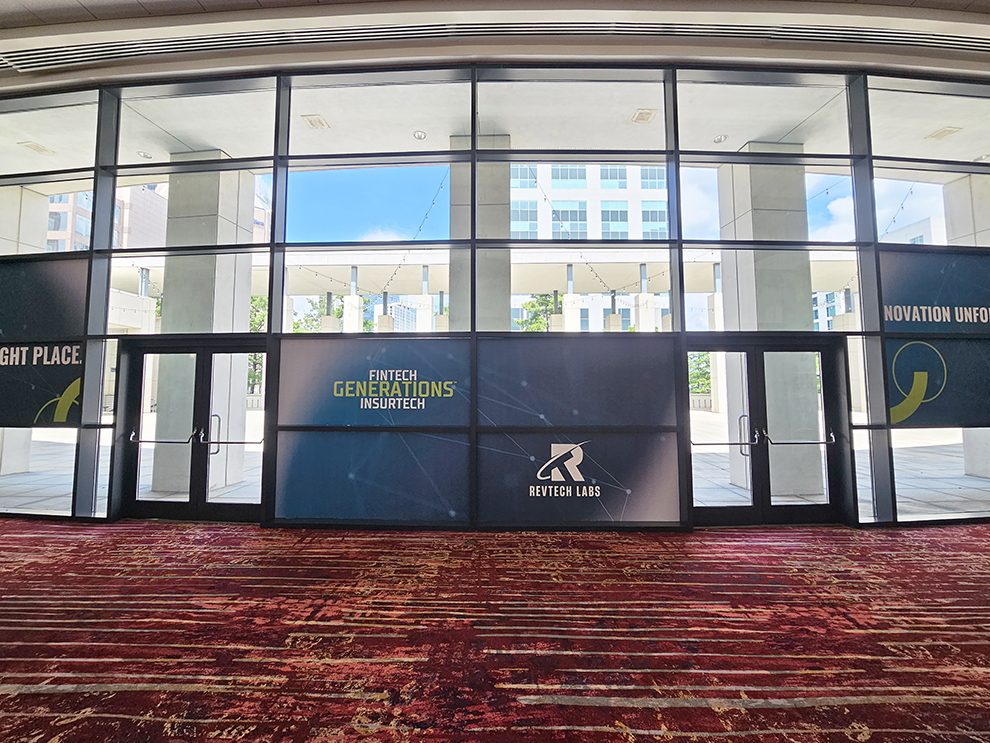
Heritage Signs & Displays collaborated with the Fintech + Insurtech Generations 2023 conference at the Charlotte Convention Center. Heritage worked closely with the client to create an interactive and branded event environment for attendees to network and discuss key topics impacting the financial and insurance sectors. The project enhanced the premier annual conference's atmosphere and engagement.
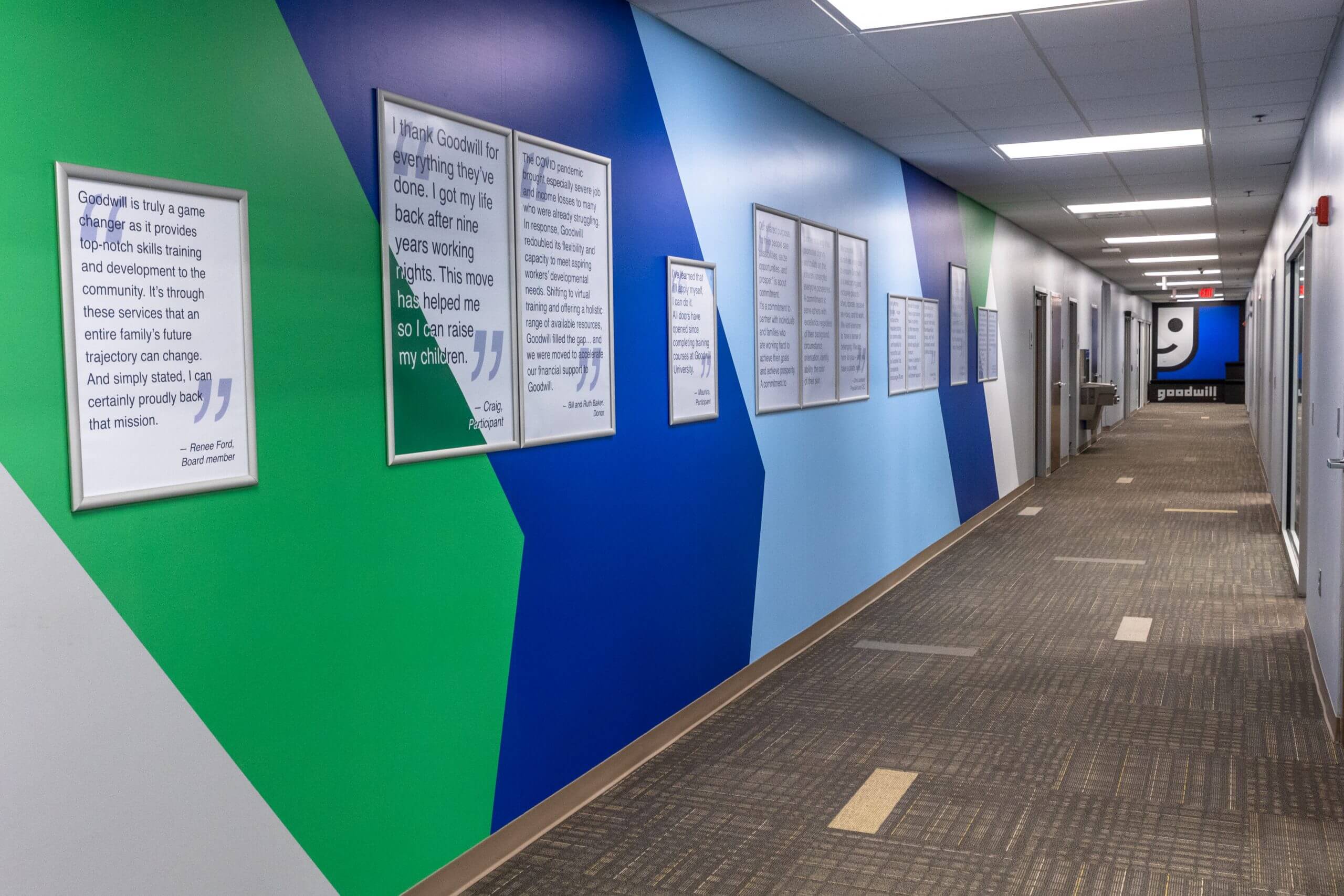
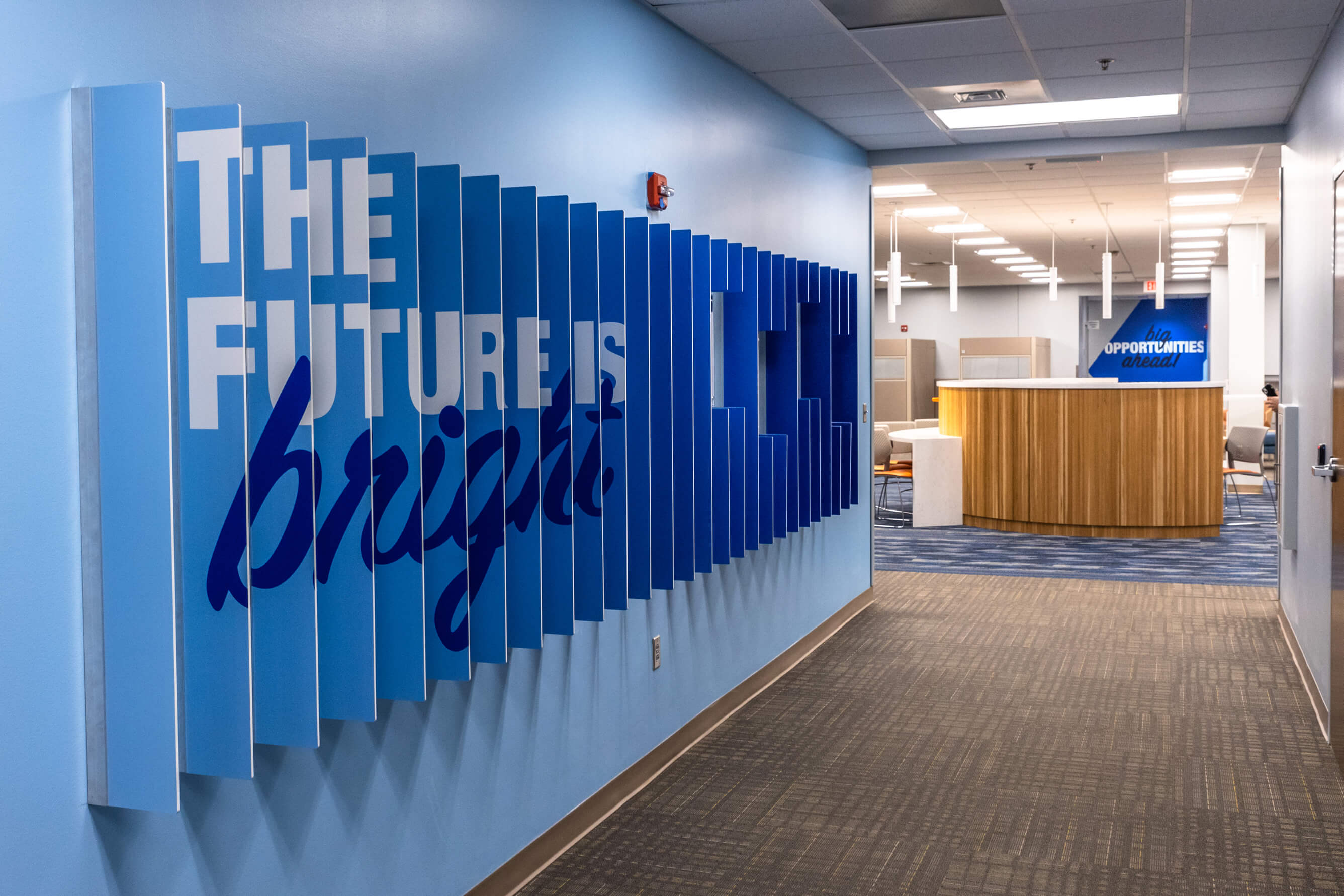
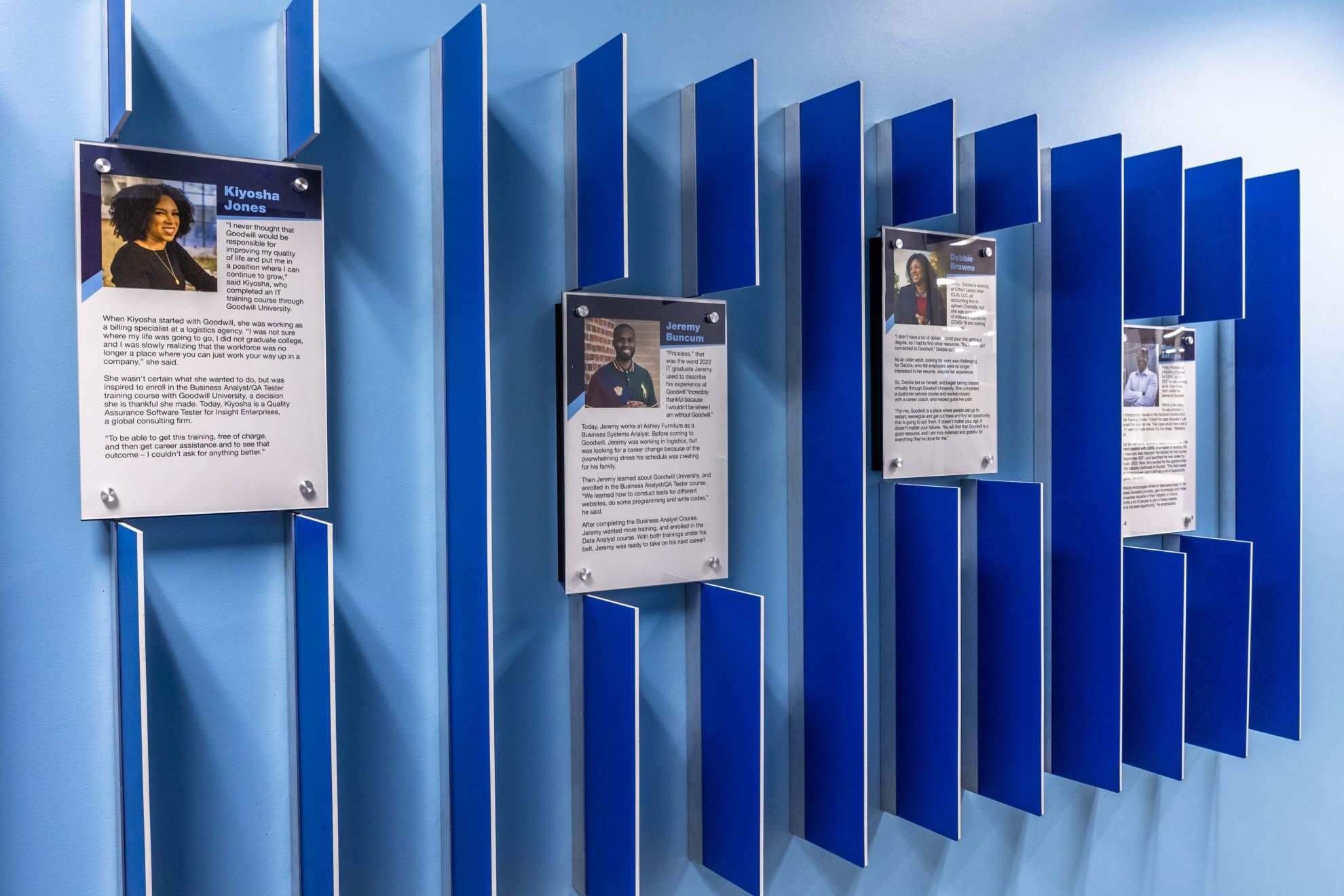
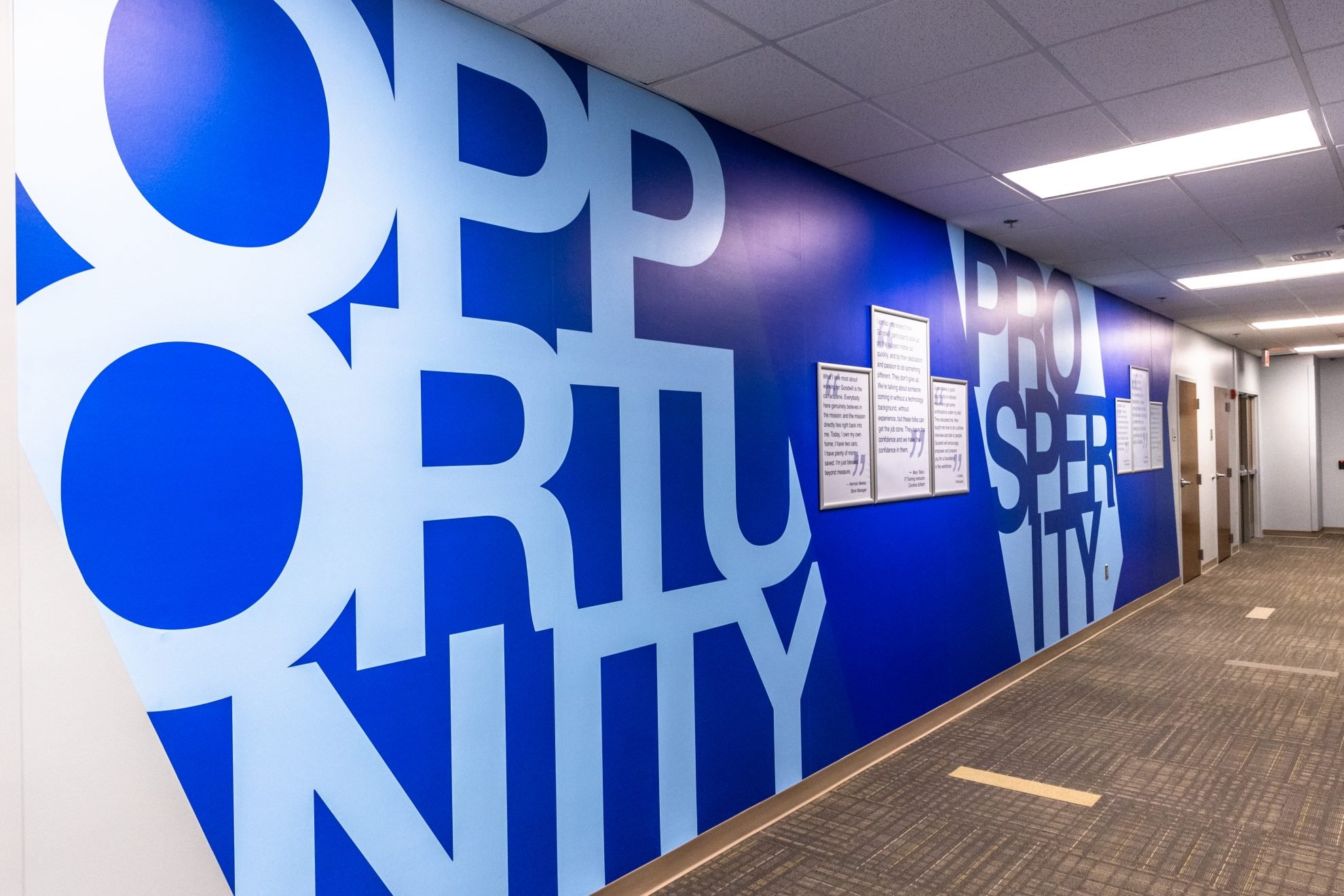
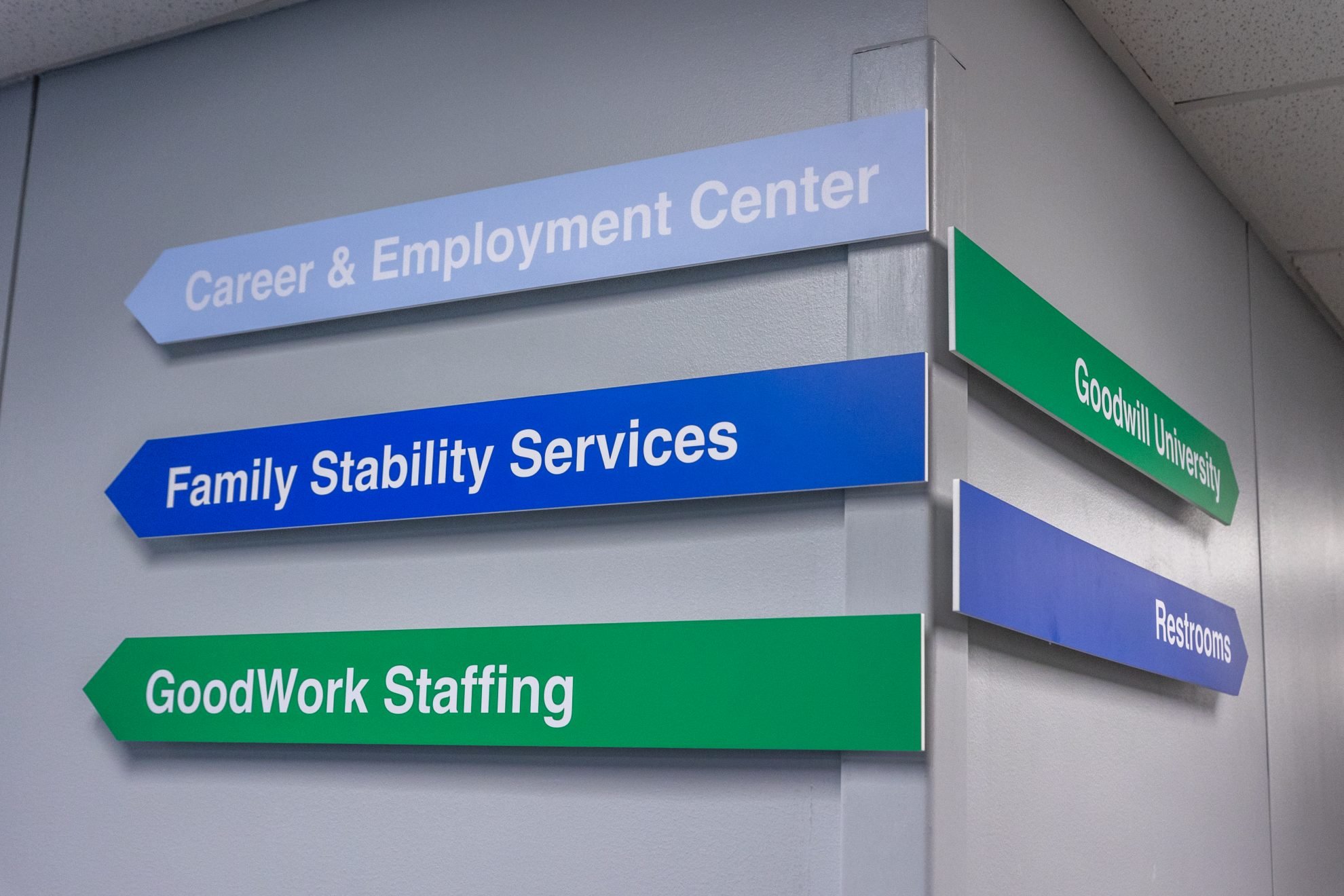
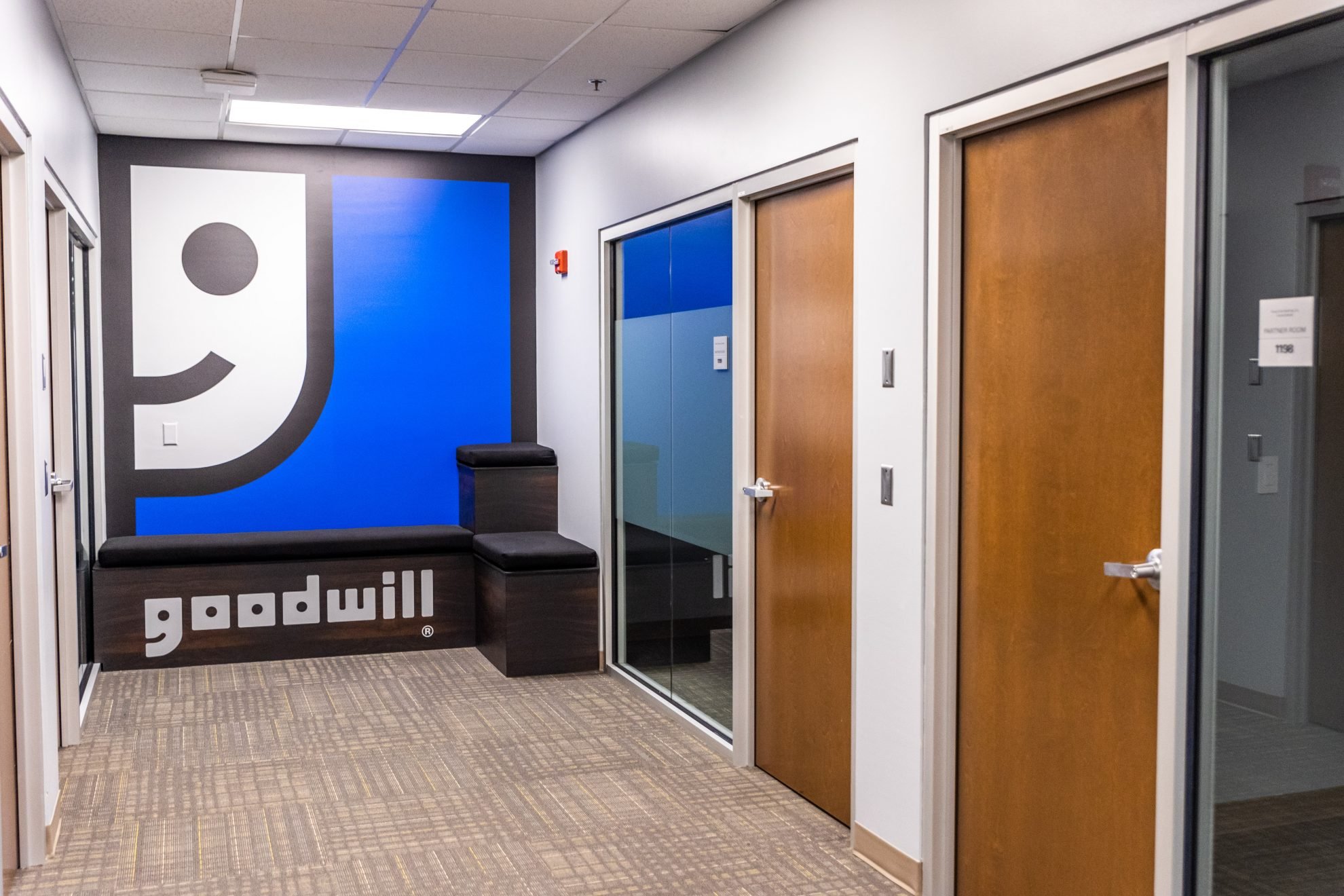
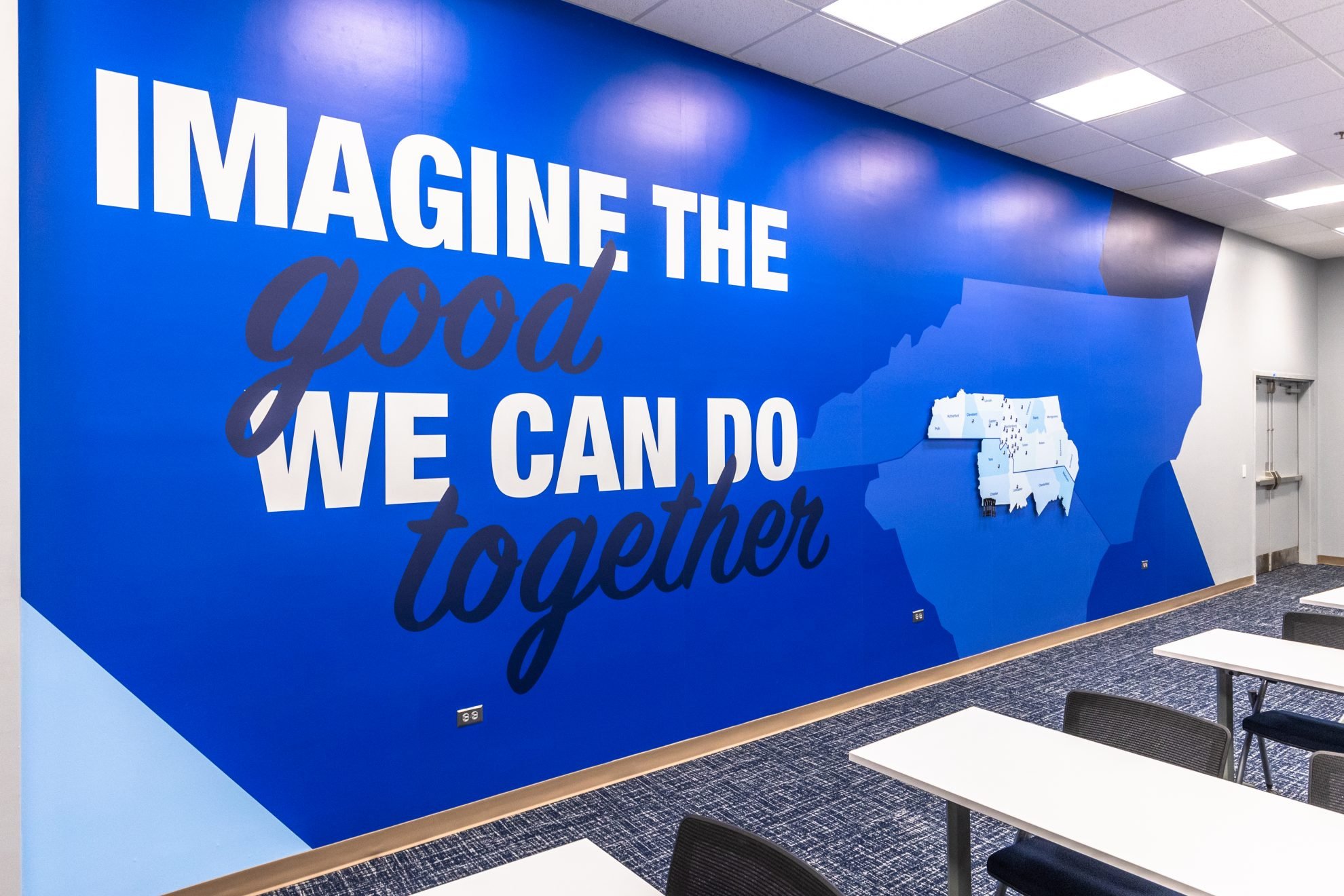
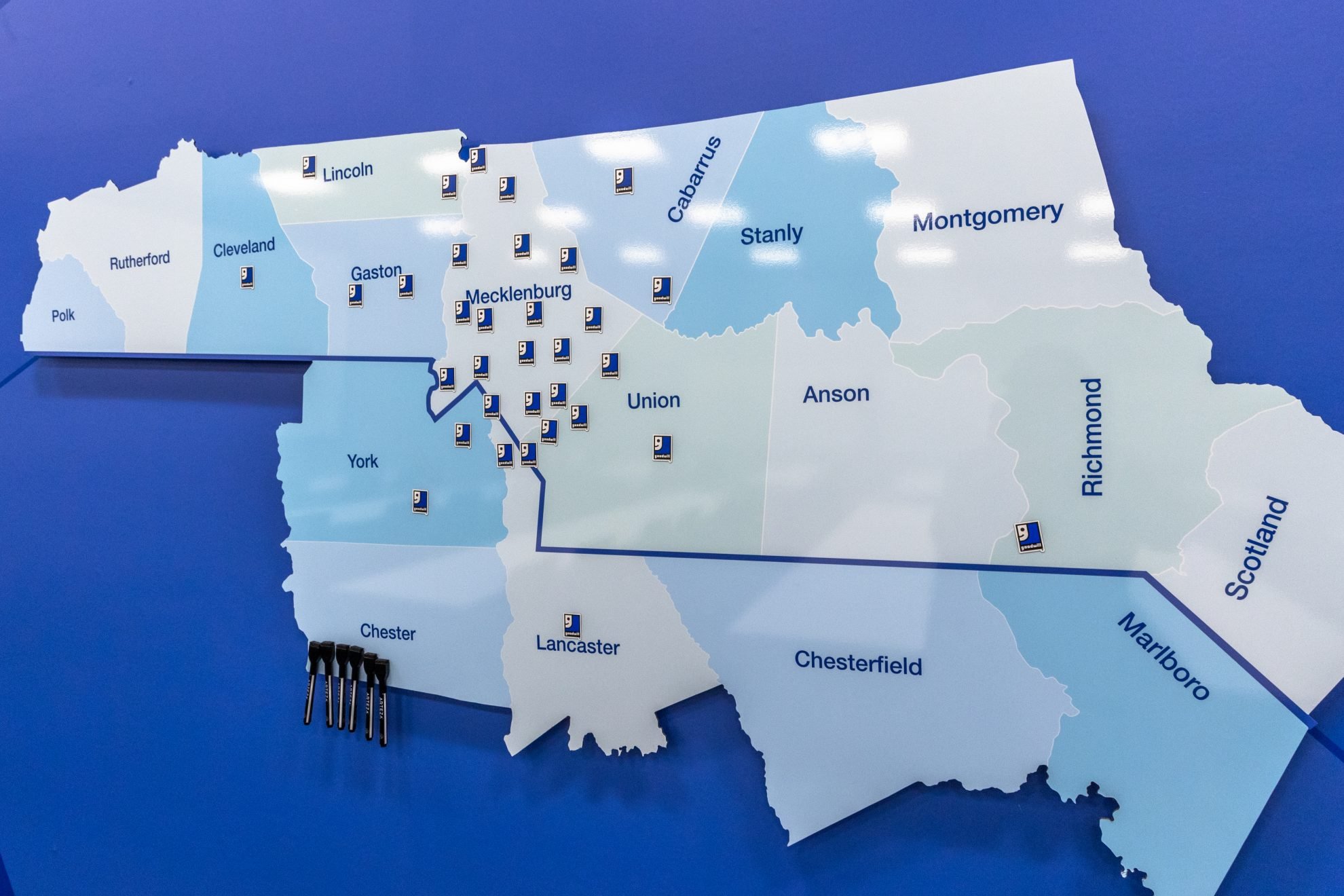
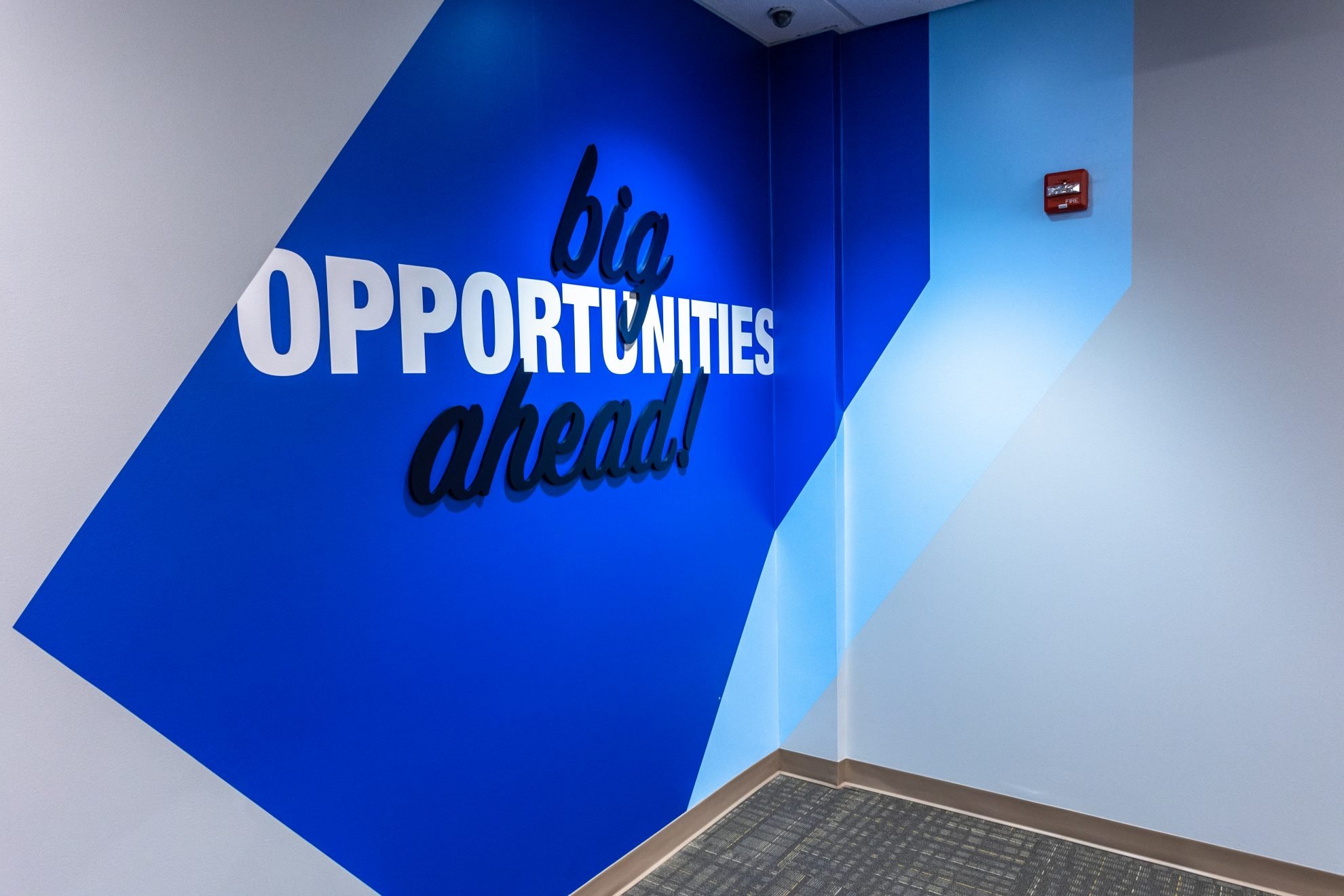
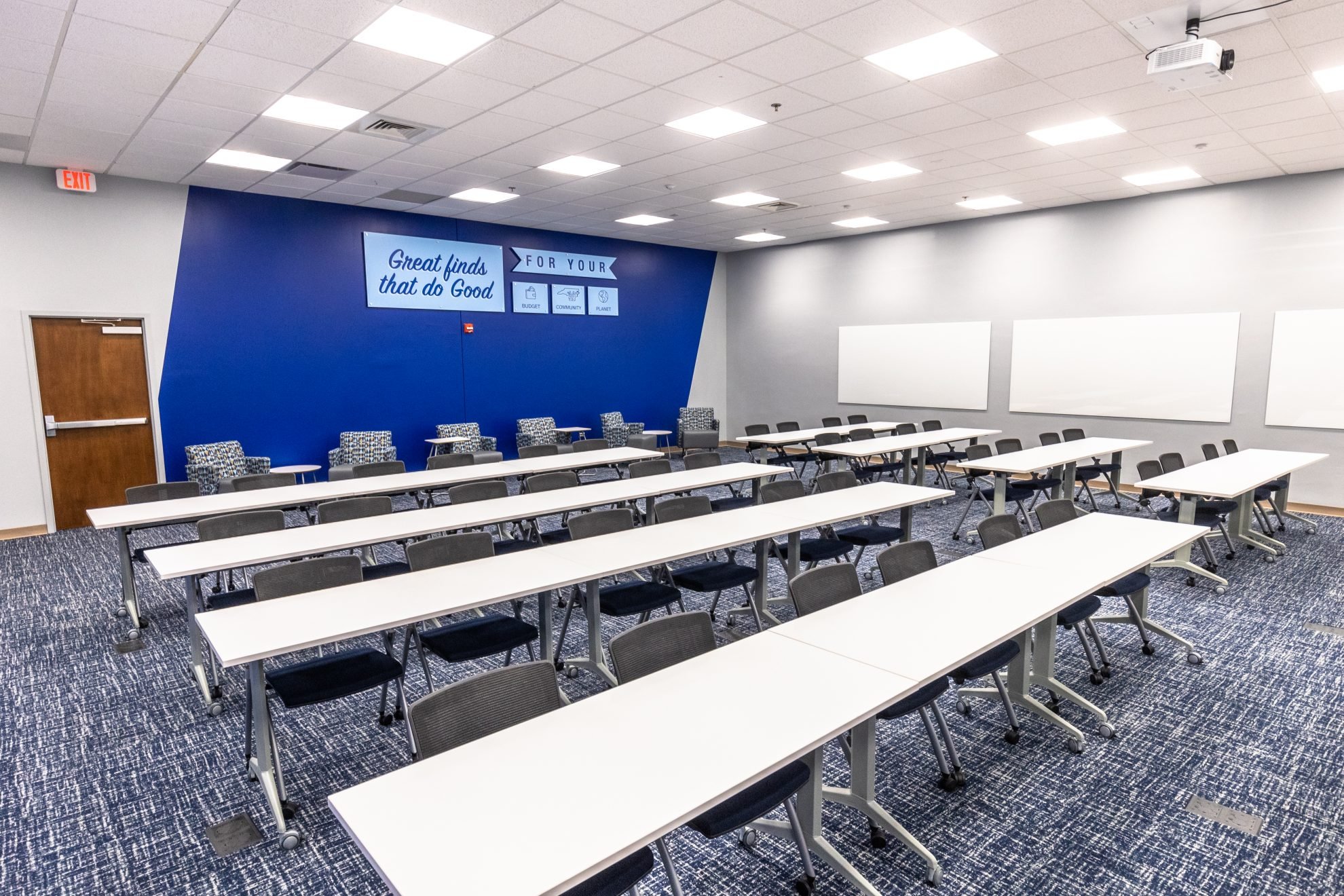
Heritage Signs & Displays collaborated with Goodwill Industries of the Southern Piedmont to transform the Opportunity Campus in Concord, NC. The project included lenticular wall displays, wall wraps, frosted vinyl, wayfinding signs, and custom wall displays. These elements enhanced the Career & Employment Center, creating an engaging and branded environment that reflects Goodwill's values and mission to support workforce development.