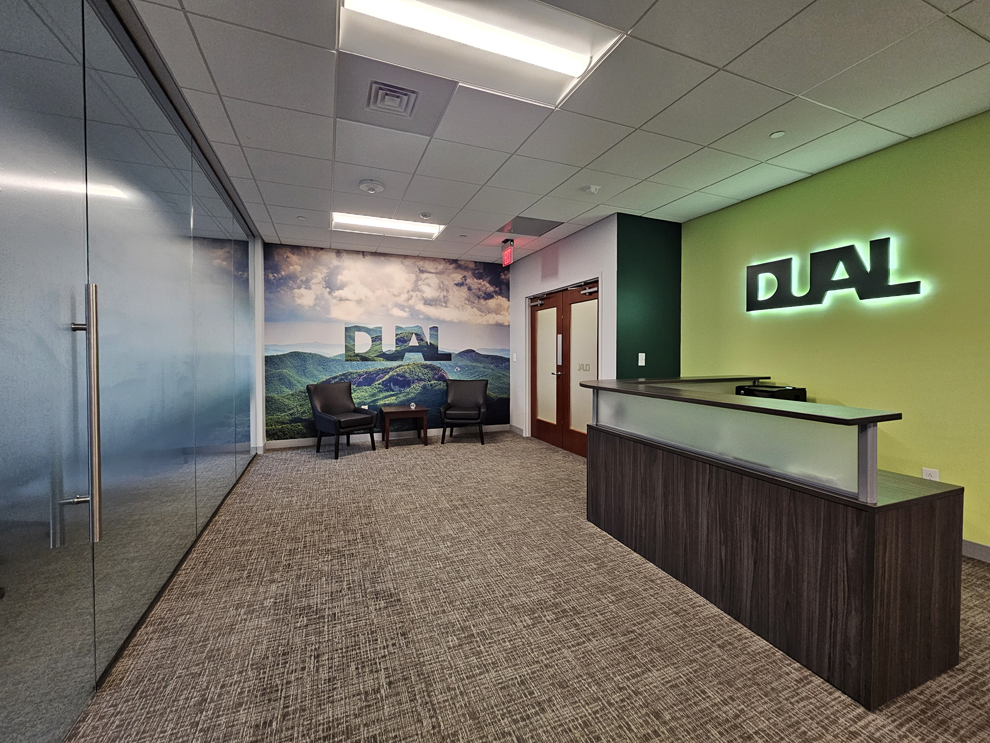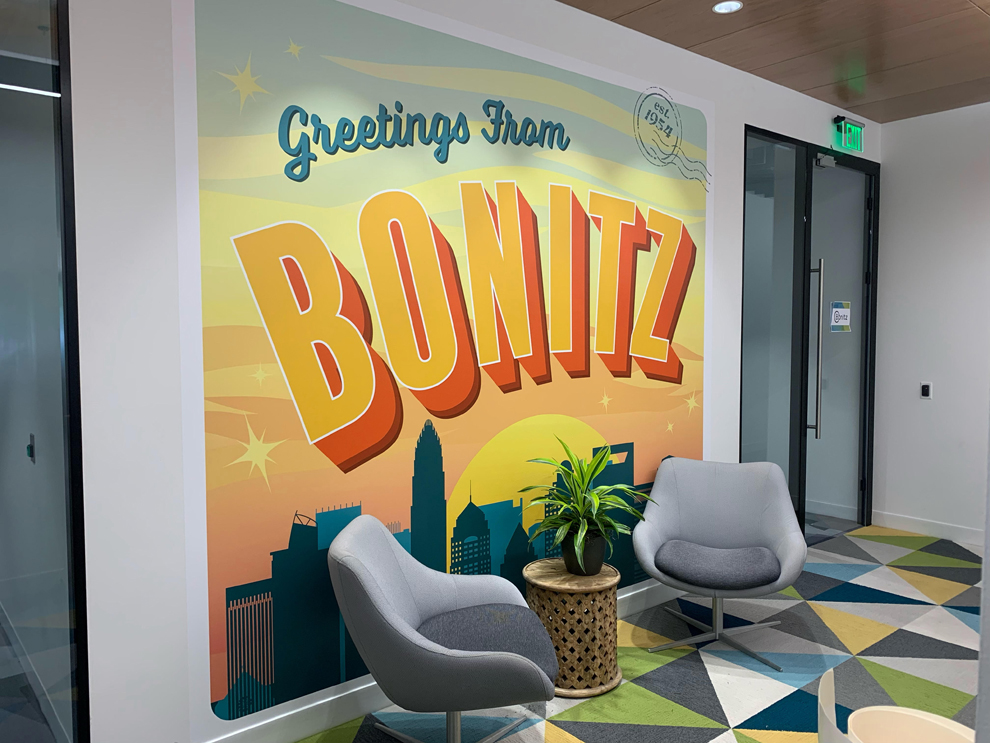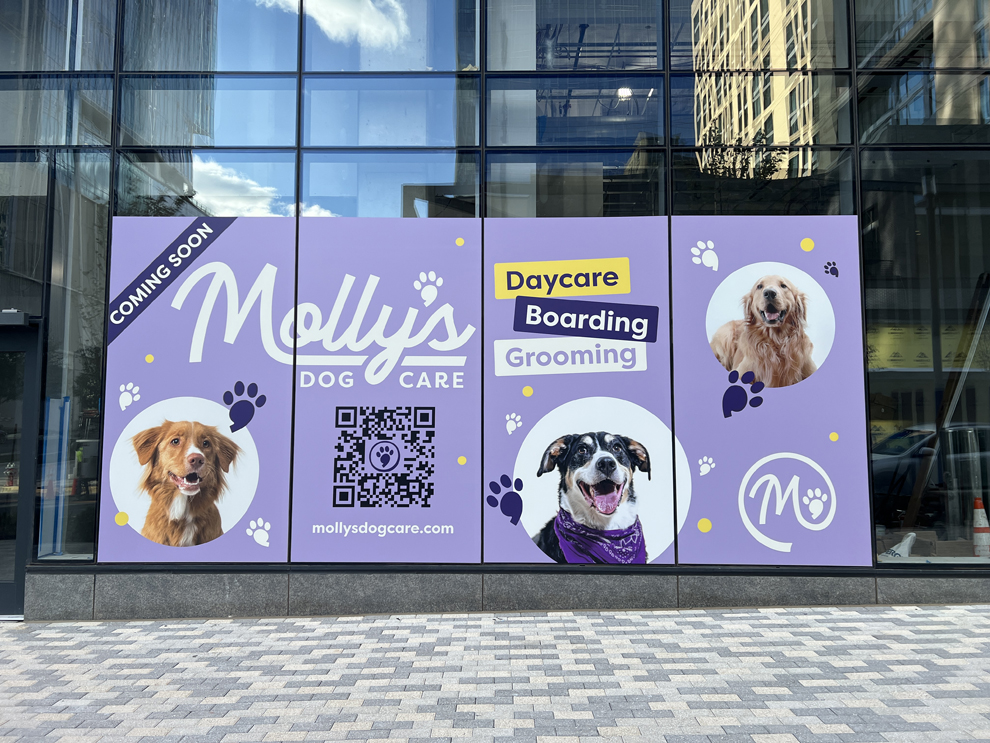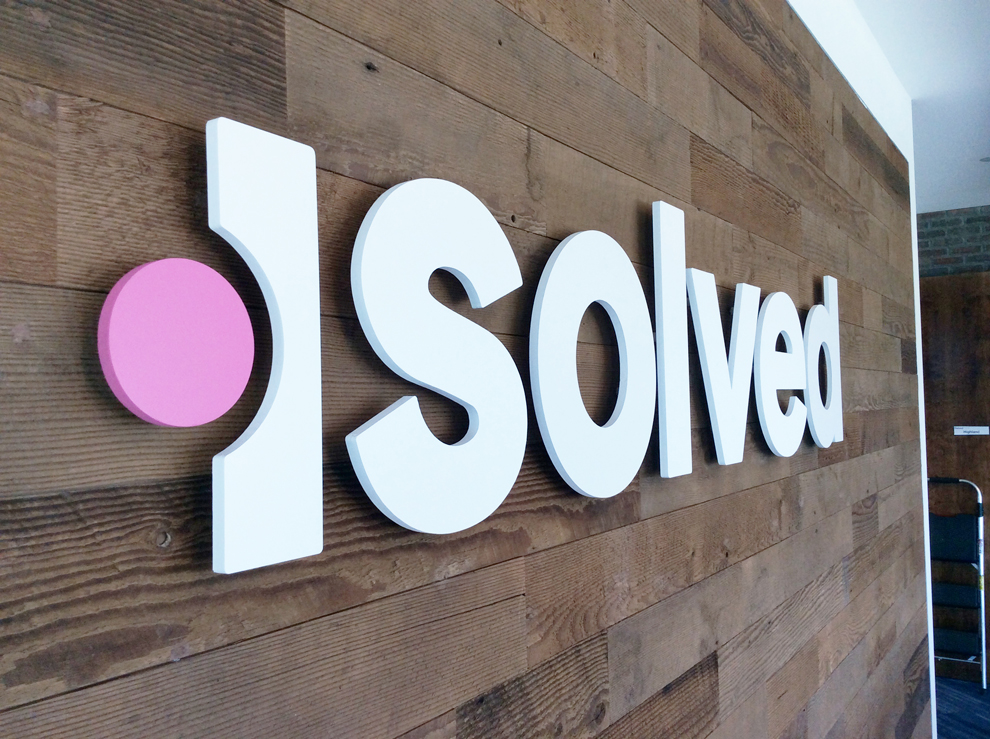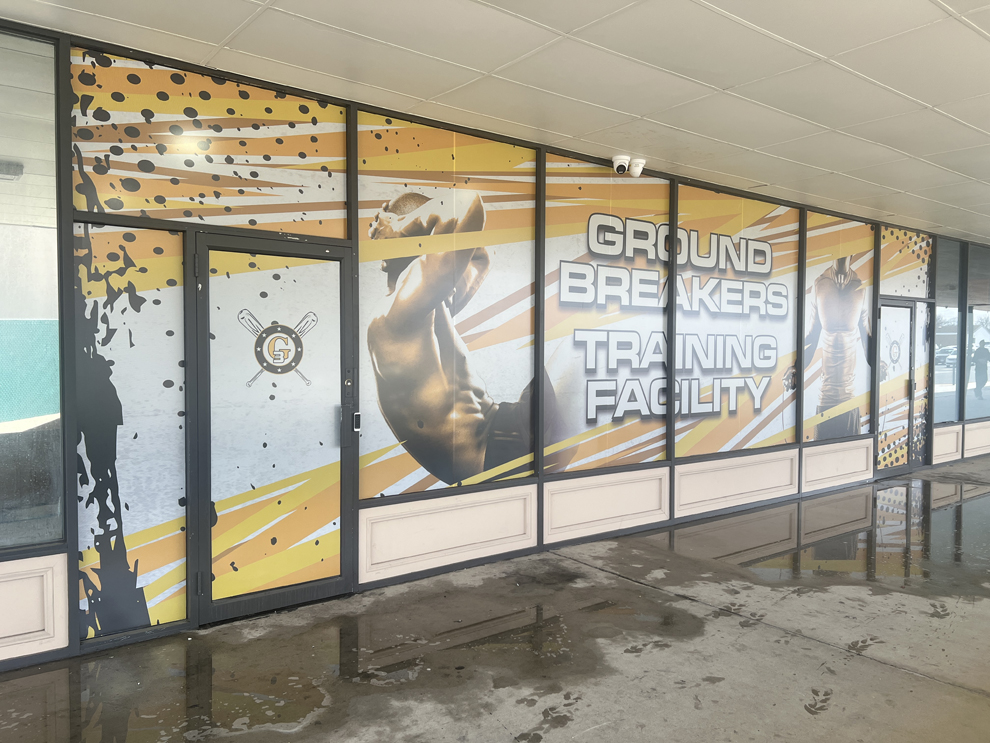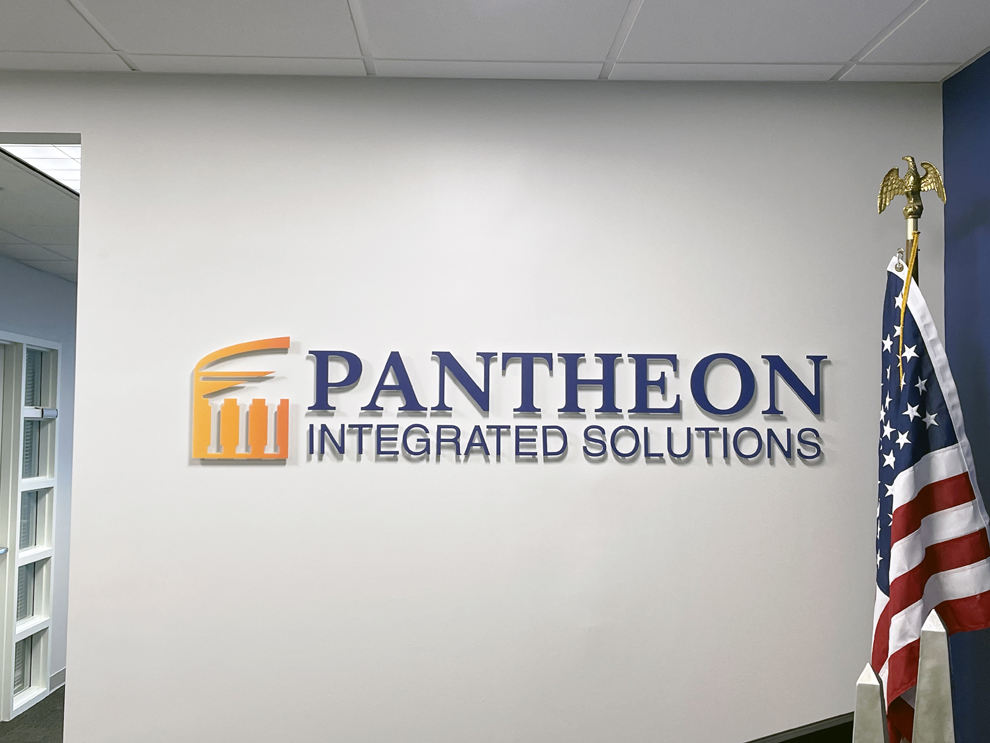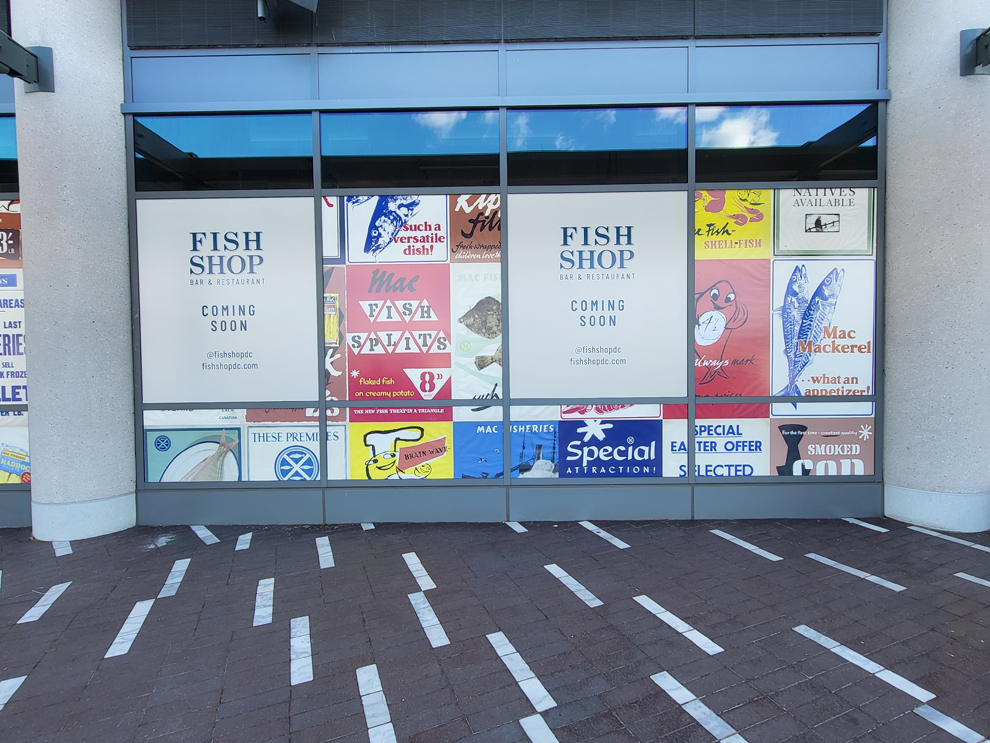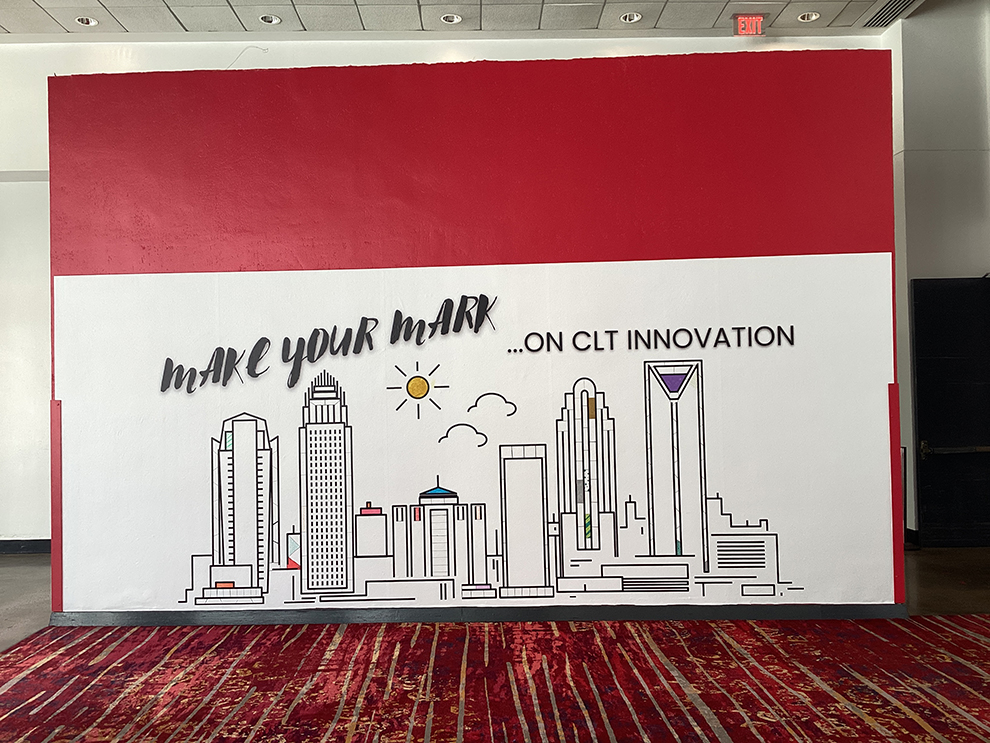
An entrance does its job when people know they are in the right place before they have to ask. Graphics on your storefront glass can announce who you are, mark the way in, screen sensitive areas from view, and give large panes of glass a presence they would otherwise lack against the surrounding building. The point is never to cover every inch of window or door. The point is a clean introduction that sets up the branded interior waiting on the other side.
We help organizations sort out what genuinely belongs at the threshold. Entry glass might call for a logo, posted hours, a directional cue, a privacy band, distraction markers, or a branded pattern that keeps daylight and sightlines intact. Deeper inside, a lobby sign, wall wrap, dimensional feature, or display can carry the longer narrative. The door earns recognition. The interior has the square footage to talk about culture, history, values, services, and the experience you want people to walk away with.
At Heritage Signs & Displays, we treat storefront graphics as the hinge between exterior-facing identity and interior workplace branding. Everything starts with discovery. What should a first-time visitor register immediately? What should your team feel every morning? How does the space actually function, and what surfaces or access limitations shape the work? From there we link environmental graphic design, production, fabrication, and professional installation under one dedicated Project Manager. That single thread keeps project knowledge intact, cuts out needless handoffs, protects the design you approved, and gives you one accountable relationship from first conversation to final walkthrough.
We opened in 1977 as a commercial printing company. In 2009 we shifted our focus toward signs, interior graphics, workplace branding, and event environments. We are veteran-owned, family-led, and closing in on 50 years in business. We have learned that a storefront graphic succeeds on more than good artwork. The design has to respect the architecture, the material has to suit the surface and how it will be used, and the installation plan has to match the real conditions at the property.
For organizations in Salisbury NC, the entrance can serve as chapter one of a branded environment instead of a standalone purchase. We provide client-facing support along with local field and installation resources serving Salisbury, Rowan County, Kannapolis, Concord, China Grove, and the surrounding communities. That nearby coverage plugs into our broader capabilities across the Carolinas and Mid-Atlantic, while one Project Manager keeps details, approvals, and expectations aligned.
Our purpose is to honor God by serving clients and communities with excellence. Day to day, that shows up as honest recommendations, straight communication, careful stewardship, and follow-through on every project we accept.
Your entrance should introduce the organization. It should not try to tell the whole story. A door logo, a window graphic, a privacy treatment, or a dimensional exterior element creates recognition and a more deliberate arrival. Once someone steps inside, the lobby, reception desk, hallways, meeting rooms, and open walls take over the heavy lifting.
We ask clients to view these pieces as one environment rather than a list of purchases. Window graphics can identify you while keeping the view out to Innes Street or your parking lot intact. Frosted vinyl can screen a conference room without making it feel like a bunker. The lobby sign then becomes the true focal point, and wall graphics, displays, and dimensional elements expand the message with room to breathe.
When the door, the windows, the lobby, and the interior walls are decided separately, the result usually looks separate. Planning the sequence as one progression prevents that disconnect, quiets competing messages, and gives every element a defined role. Storefront graphics stay the headline product here, and they perform best when the entry hints at what is coming next.
Most Salisbury businesses need more than vinyl stuck to a door. They need someone who can help decide what the entrance should say, how it should relate to the space inside, and how the approved work will actually get produced, fabricated, and installed. That is the connected model we run, anchored by one dedicated Project Manager.
Your Project Manager stays close to the objectives, the design decisions, the field notes, the material choices, the production requirements, the fabrication schedule, the access plan, and the installation details. Because that history lives in one place, questions get answered before they turn into problems on site. It also keeps approved brand standards consistent when several related signs, graphics, and displays have to work as a set.
We work alongside your stakeholders and professional partners, including architects, interior designers, branding agencies, property managers, and general contractors. Salisbury clients get local field support backed by regional resources across the Carolinas and Mid-Atlantic. That combination handles a single significant project, a phased rollout, or a multi-site program without ever splitting your point of contact.
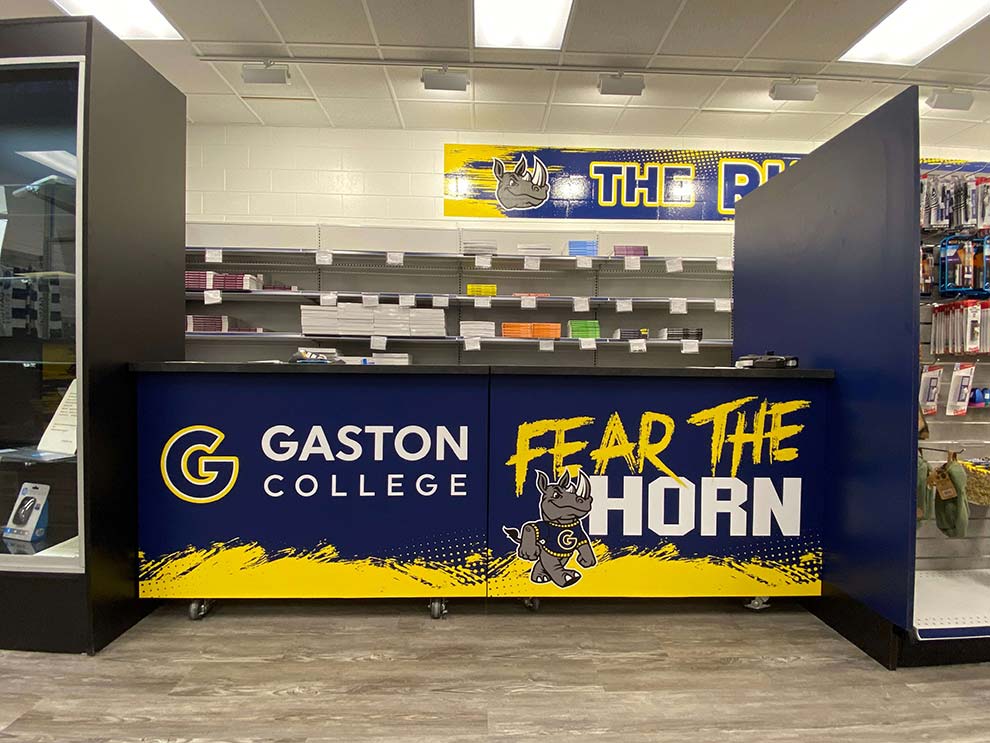
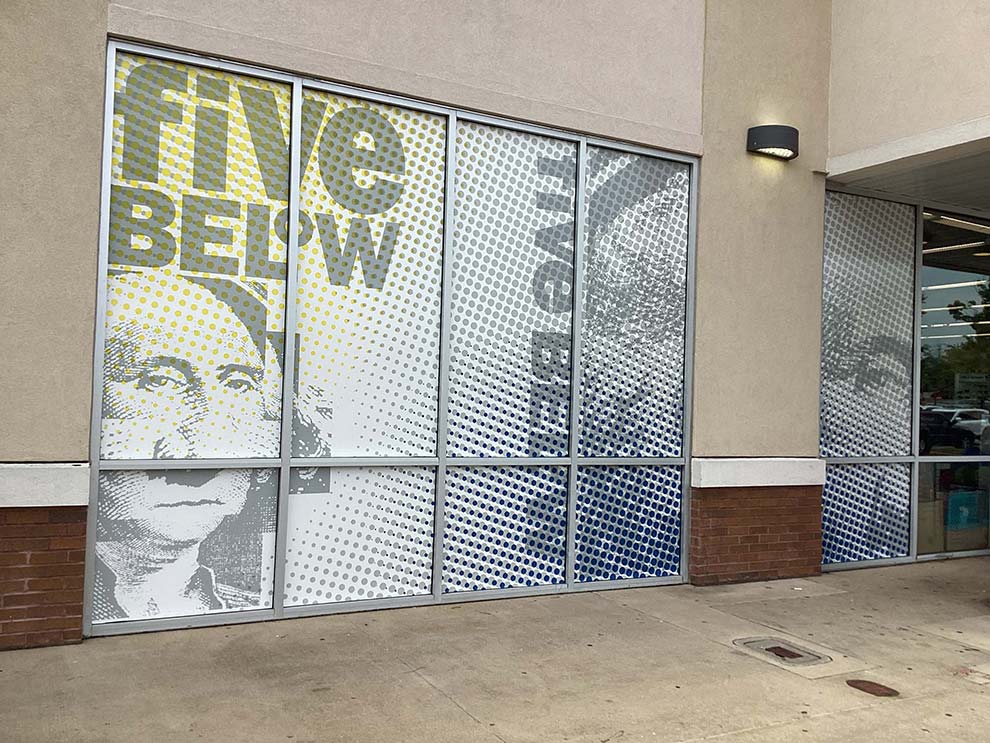
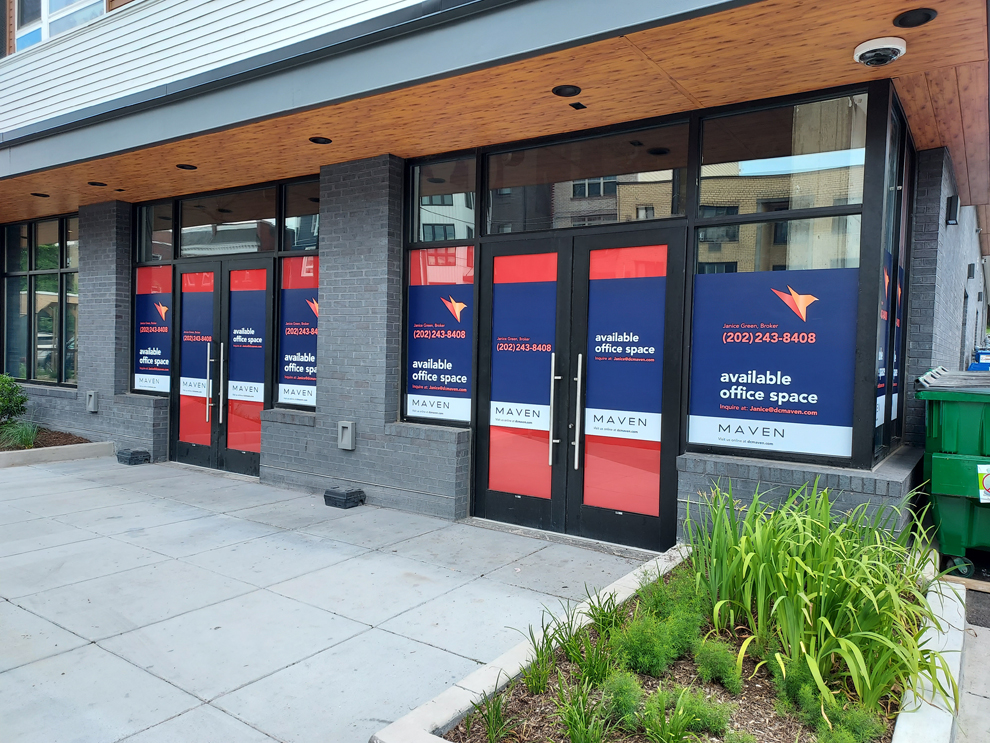
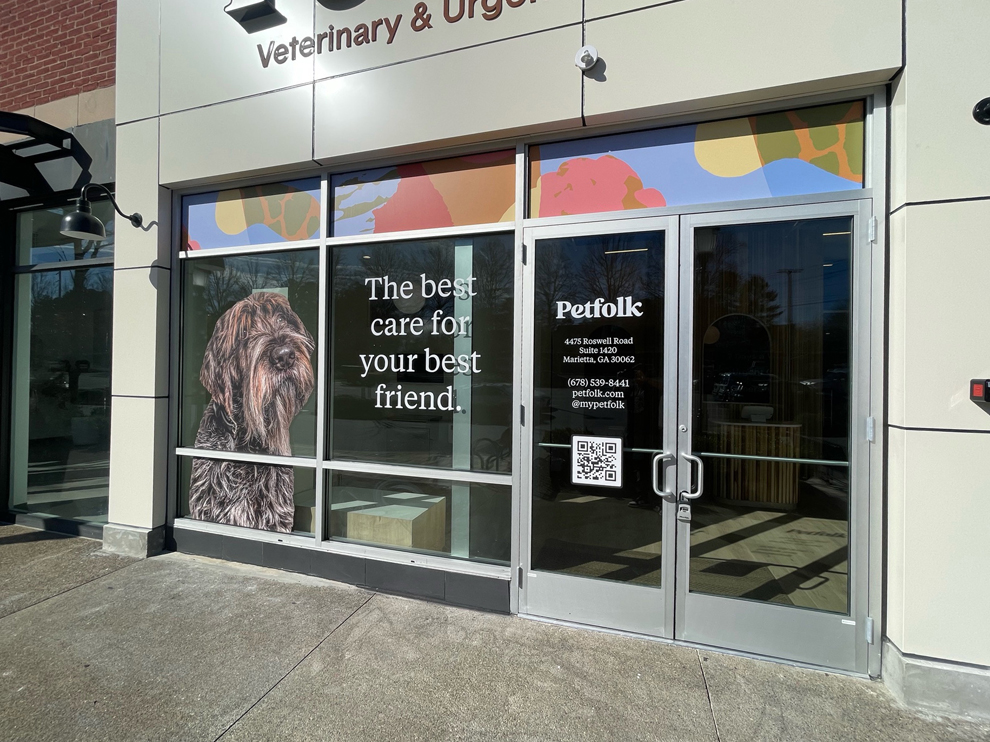
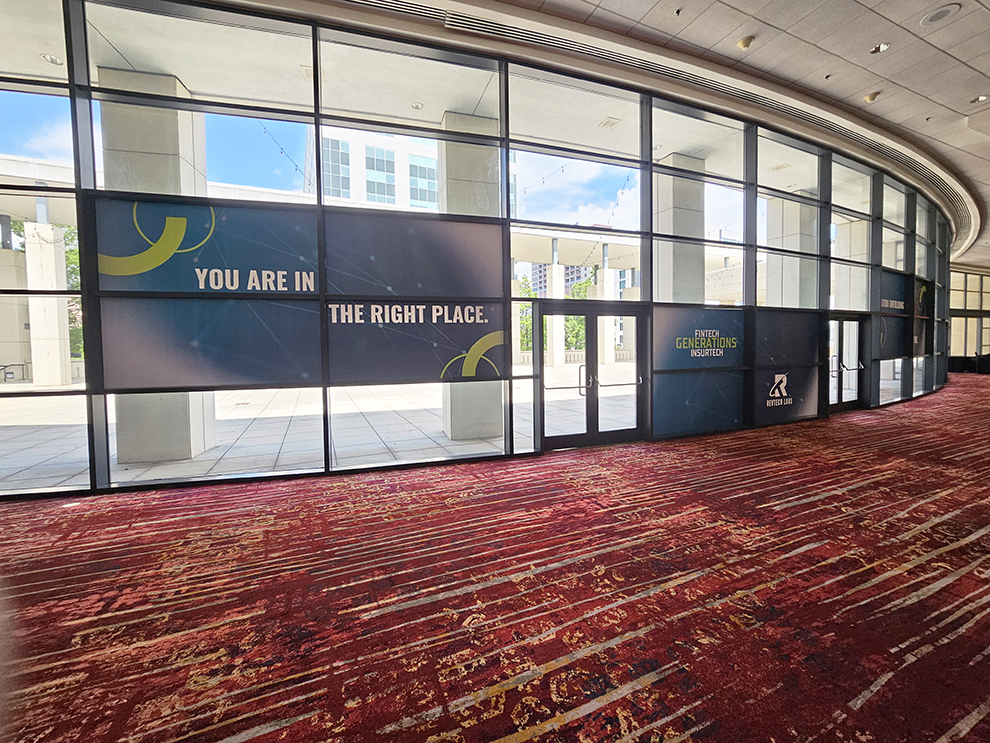
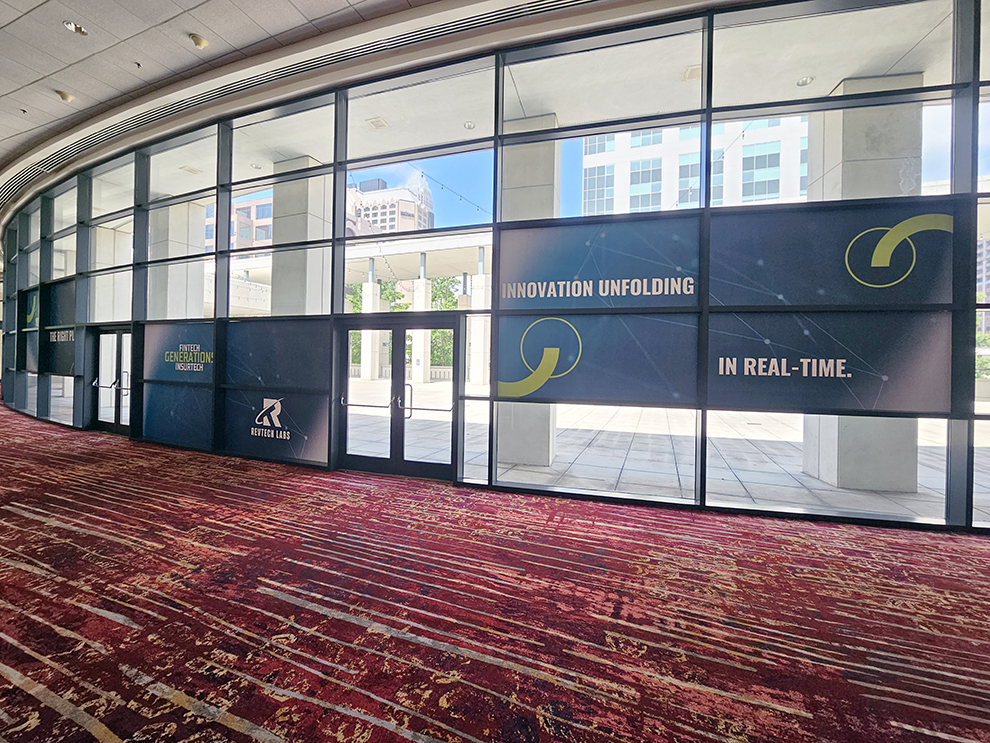
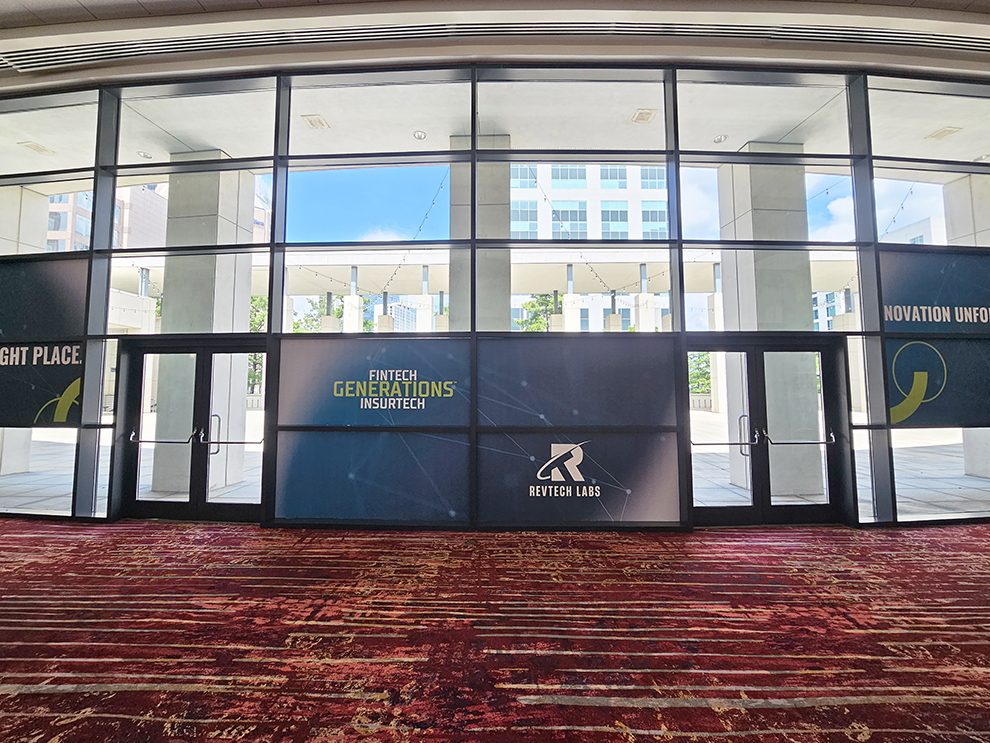
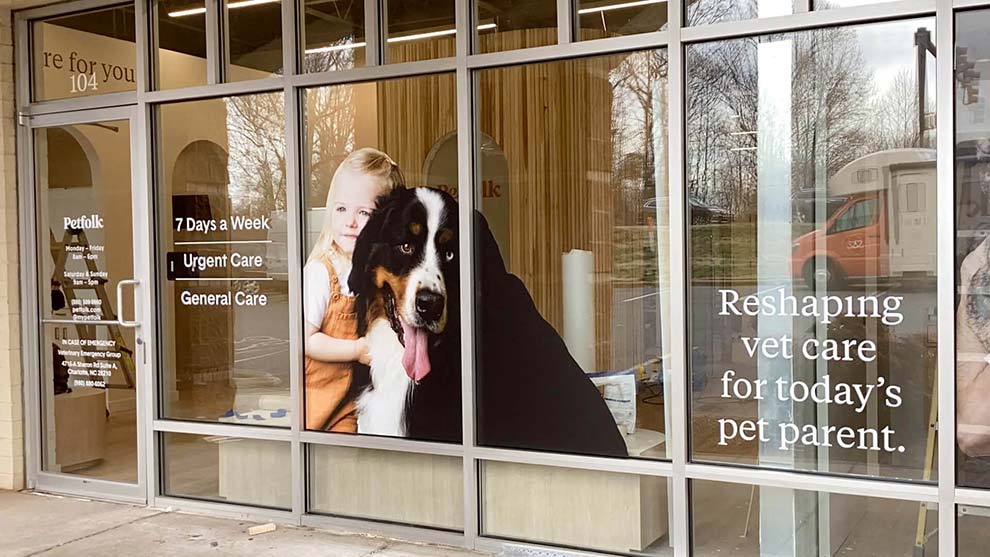
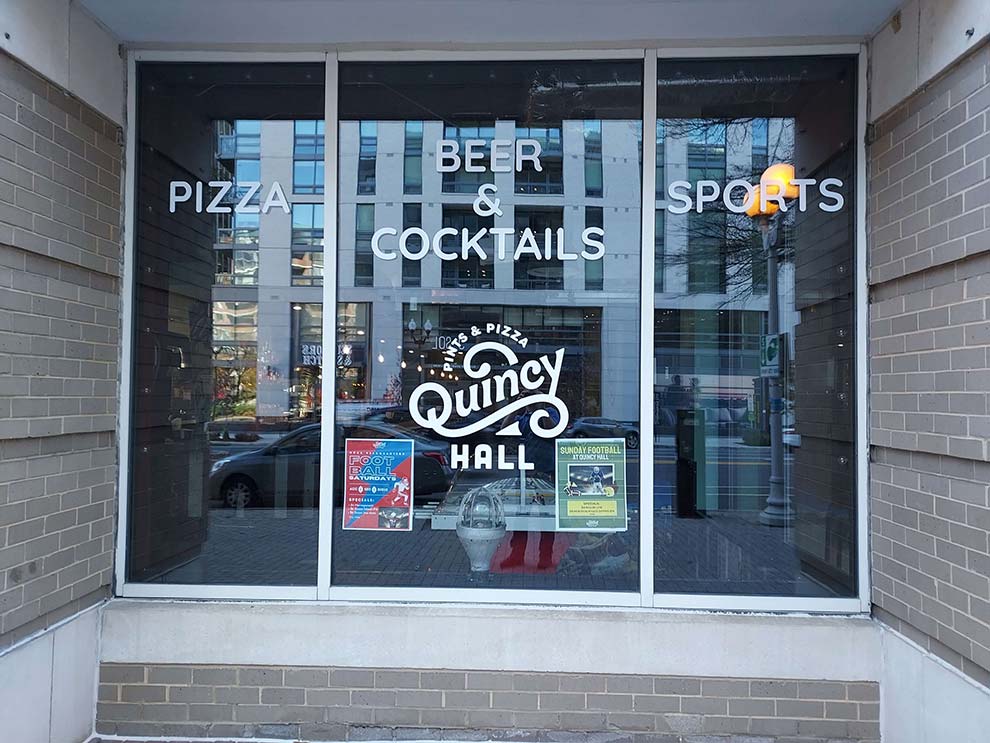
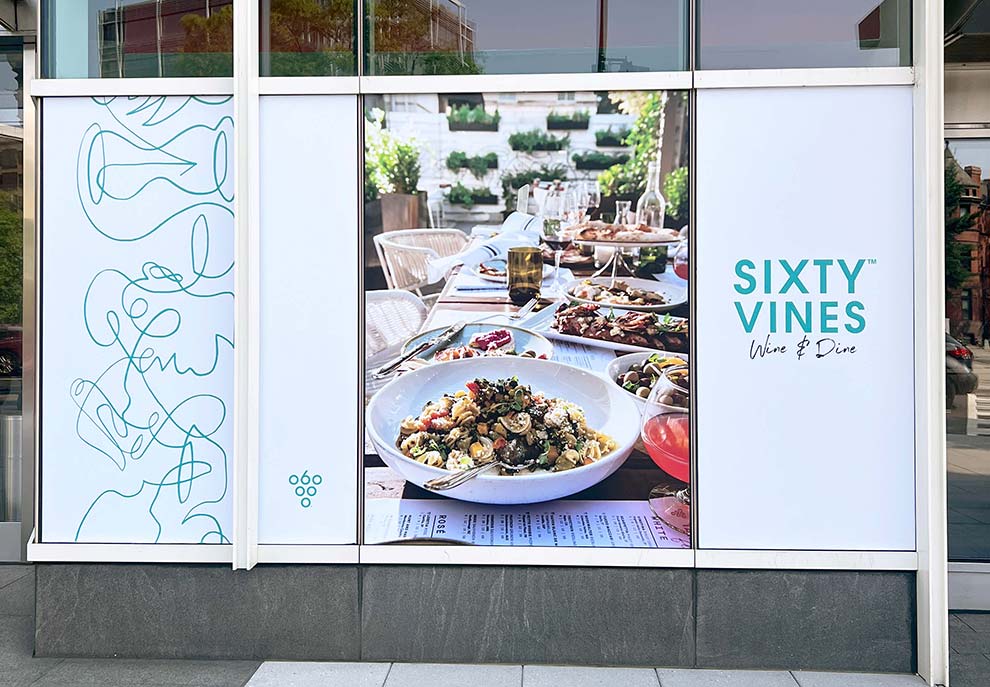
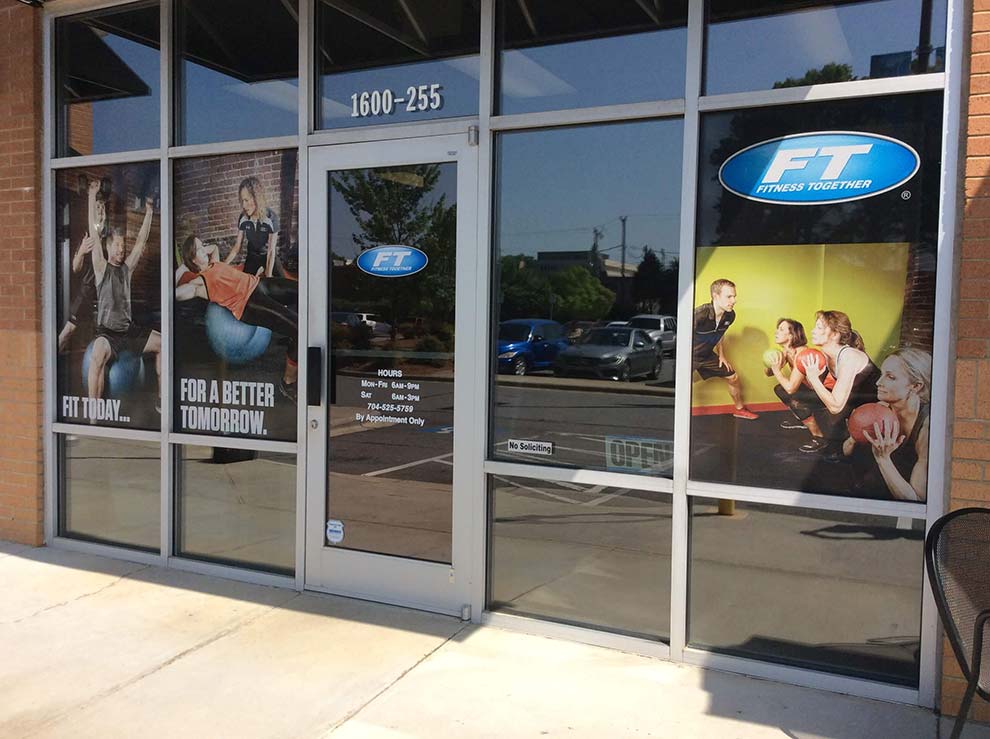
Window and glass graphics identify your organization while putting entry glass, interior partitions, and customer-facing windows to better use. We weigh coverage, visibility, privacy, natural light, and the arrival experience you want so the graphics build recognition without shutting out daylight or valuable views.
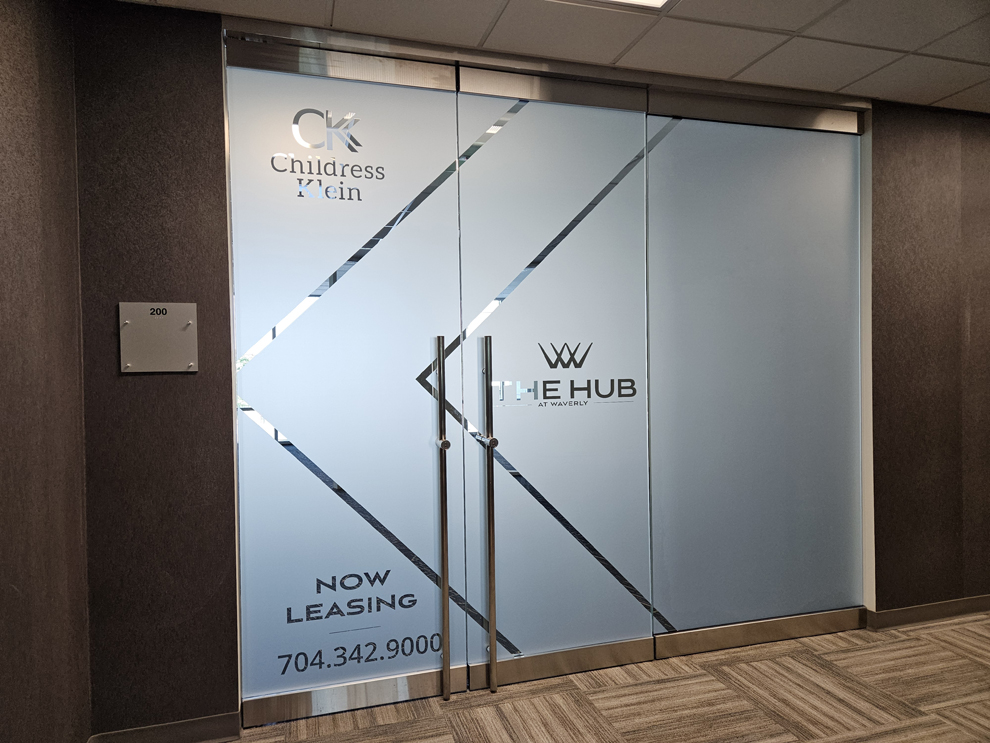
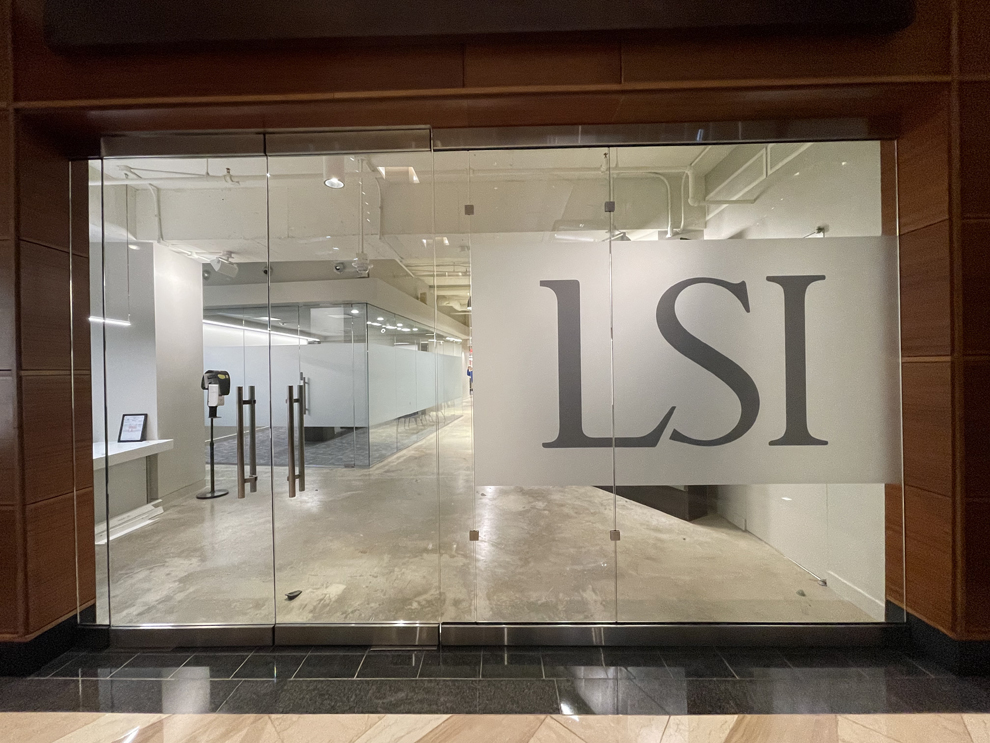
Frosted vinyl and etched-look privacy film create separation on office fronts, conference rooms, and glass partitions while letting daylight through. Custom patterns, logos, and selective coverage keep the treatment on brand instead of looking like an afterthought.
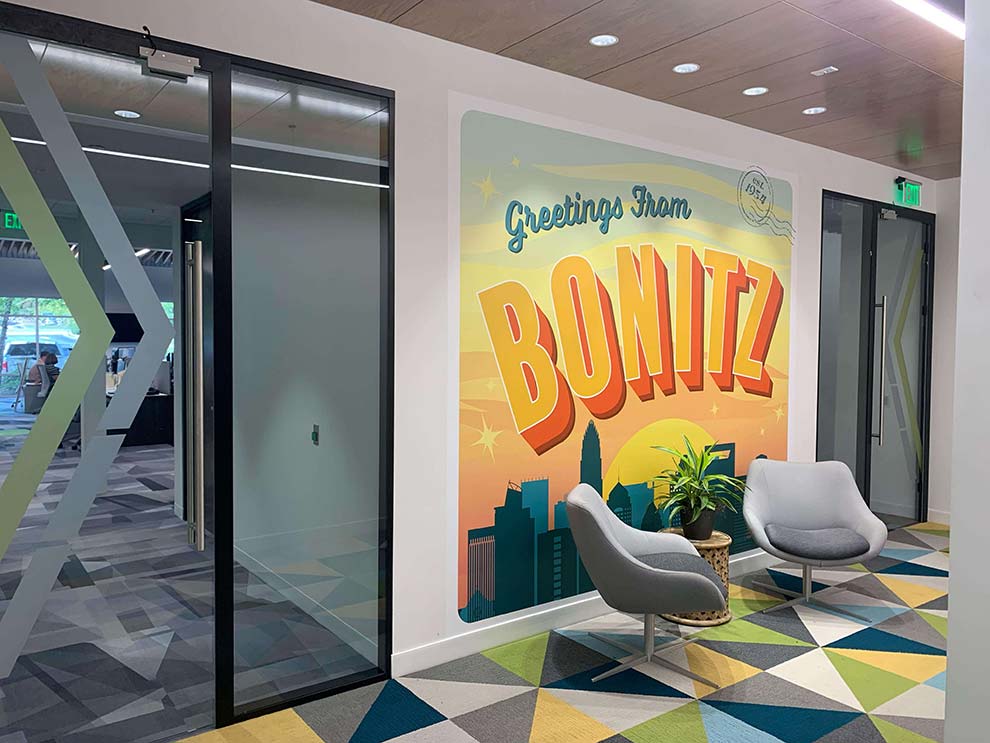
A lobby sign becomes the visual destination after someone walks through an identified entrance. We coordinate scale, placement, material, and its relationship to nearby graphics so the reception area advances the storefront message rather than echoing it.
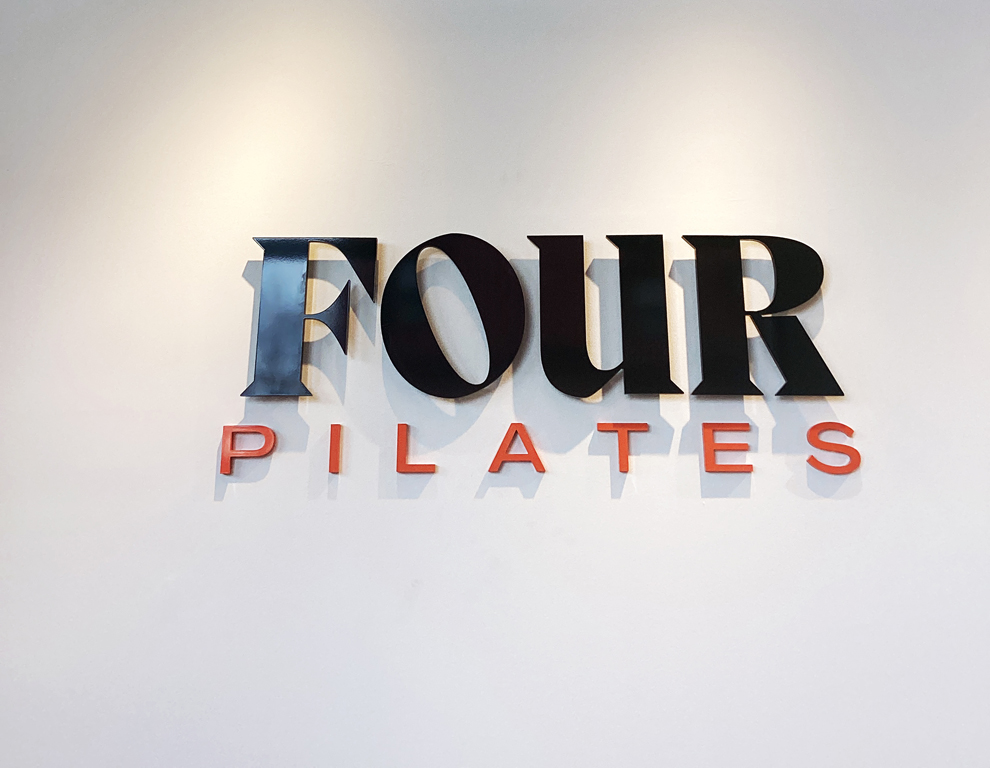
Dimensional letters bring depth and architectural weight to a lobby, reception wall, corridor, or feature area. Paired with storefront graphics, they continue the identity introduced on your entry glass with more presence indoors.
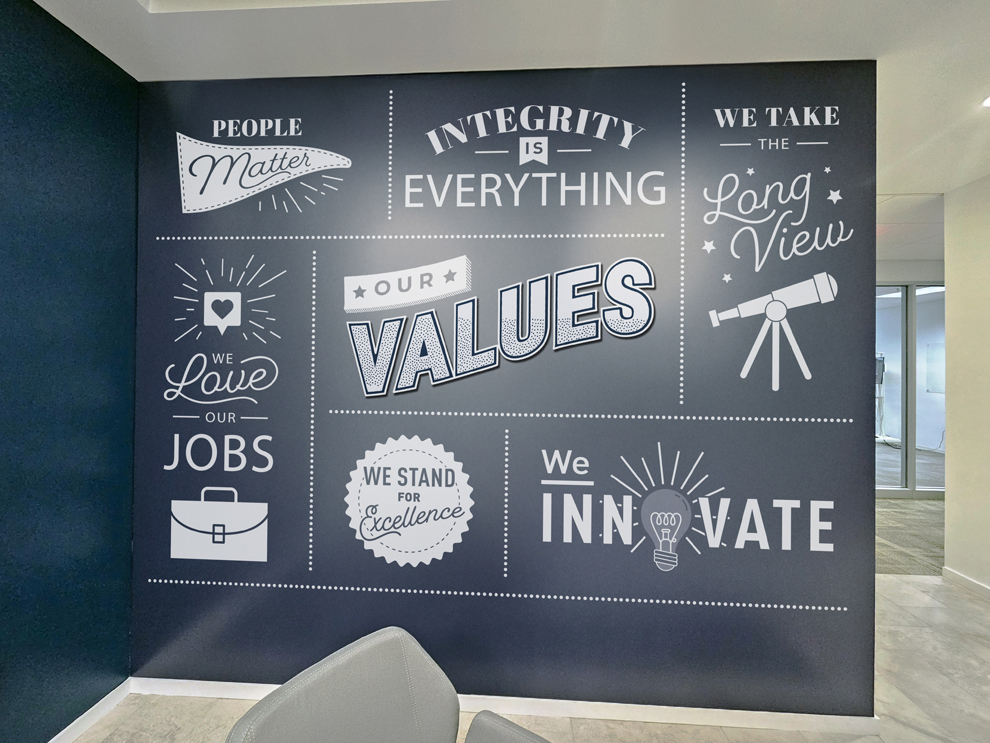
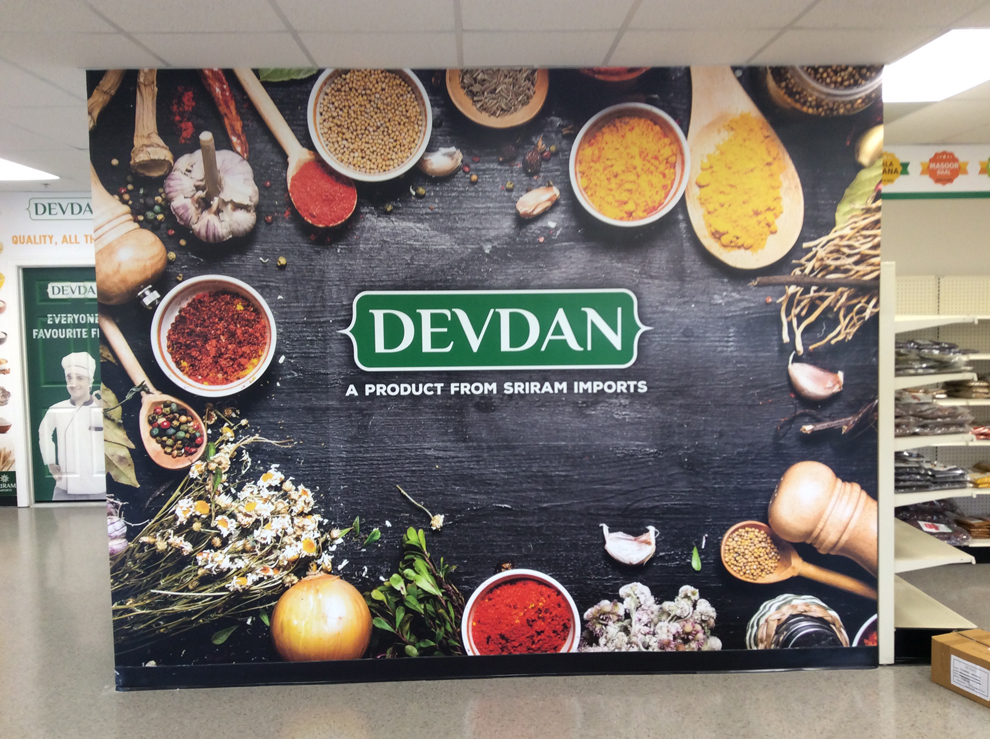
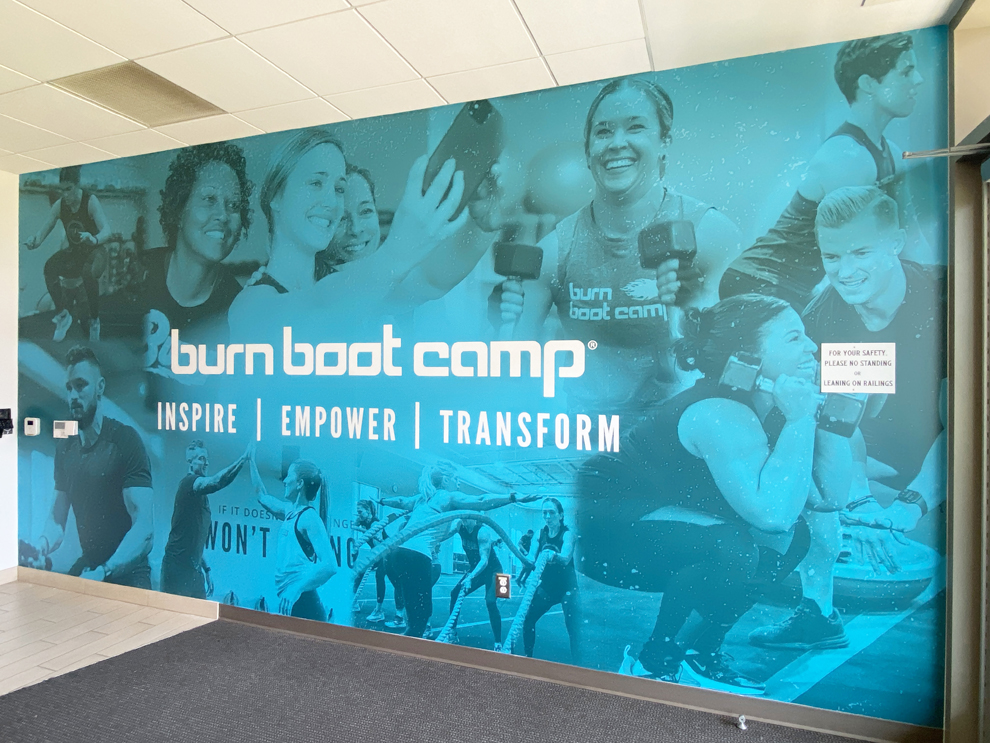
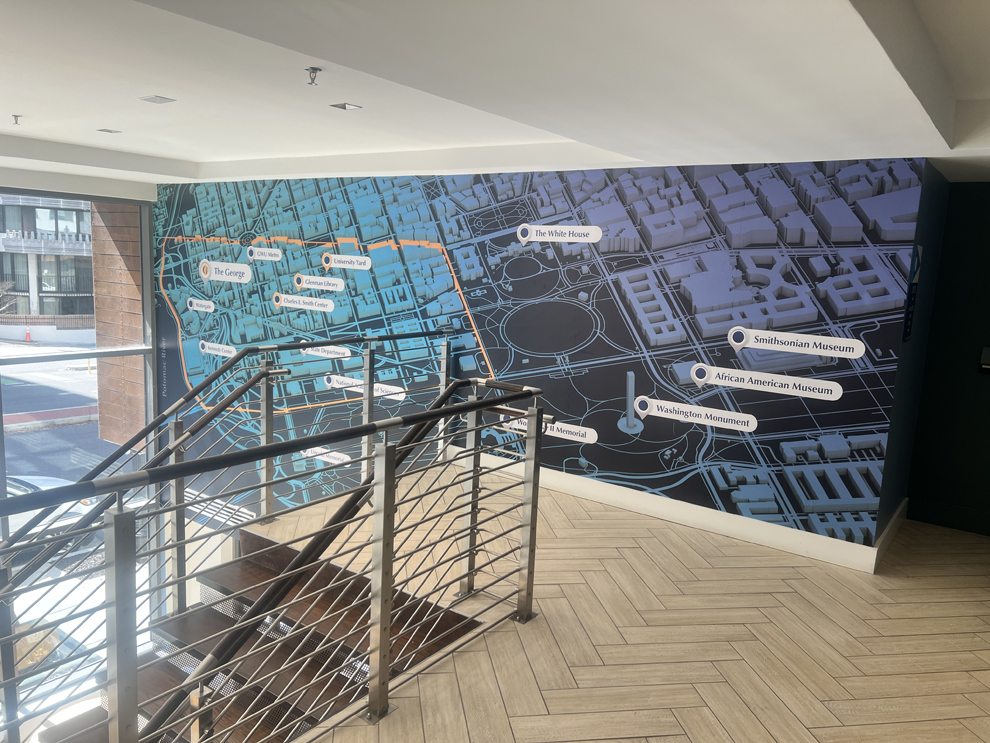
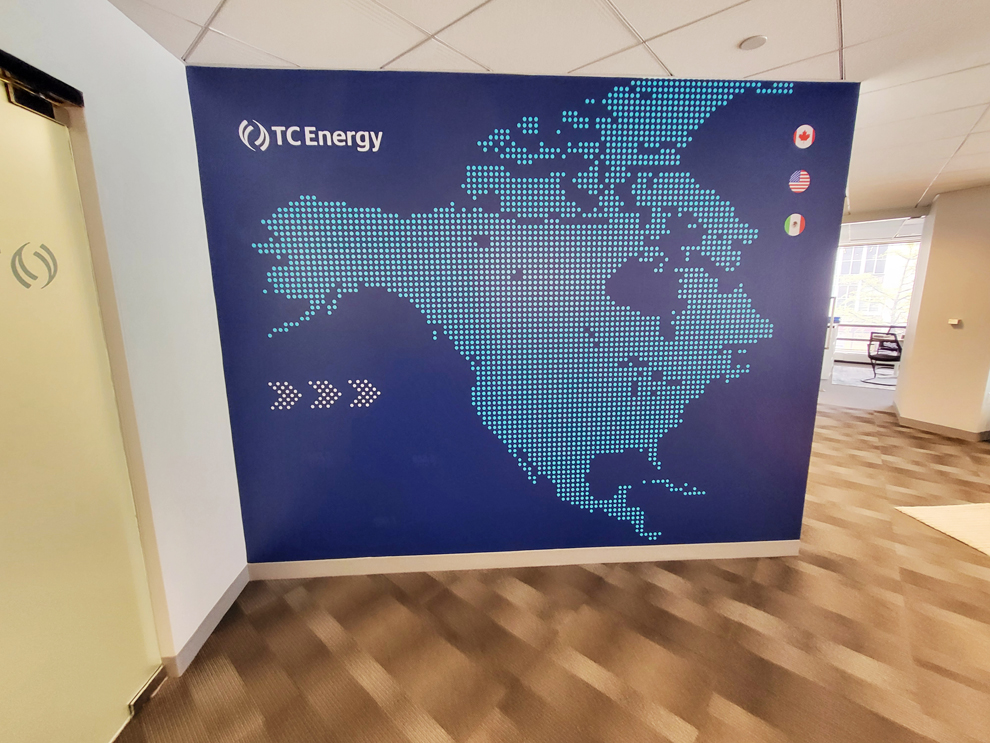
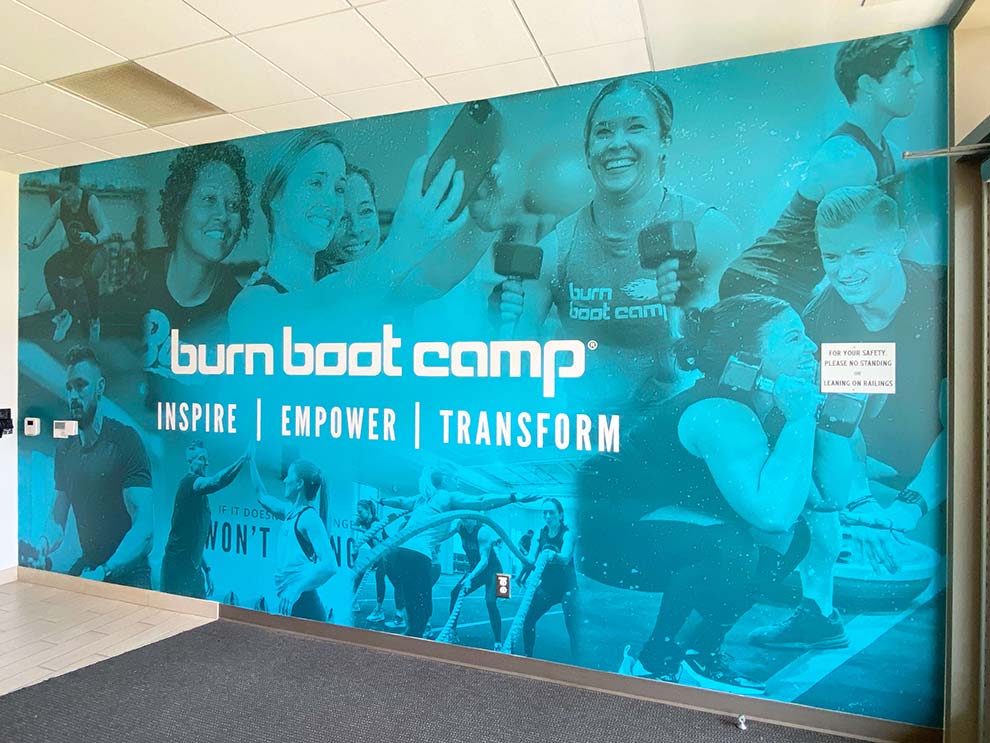
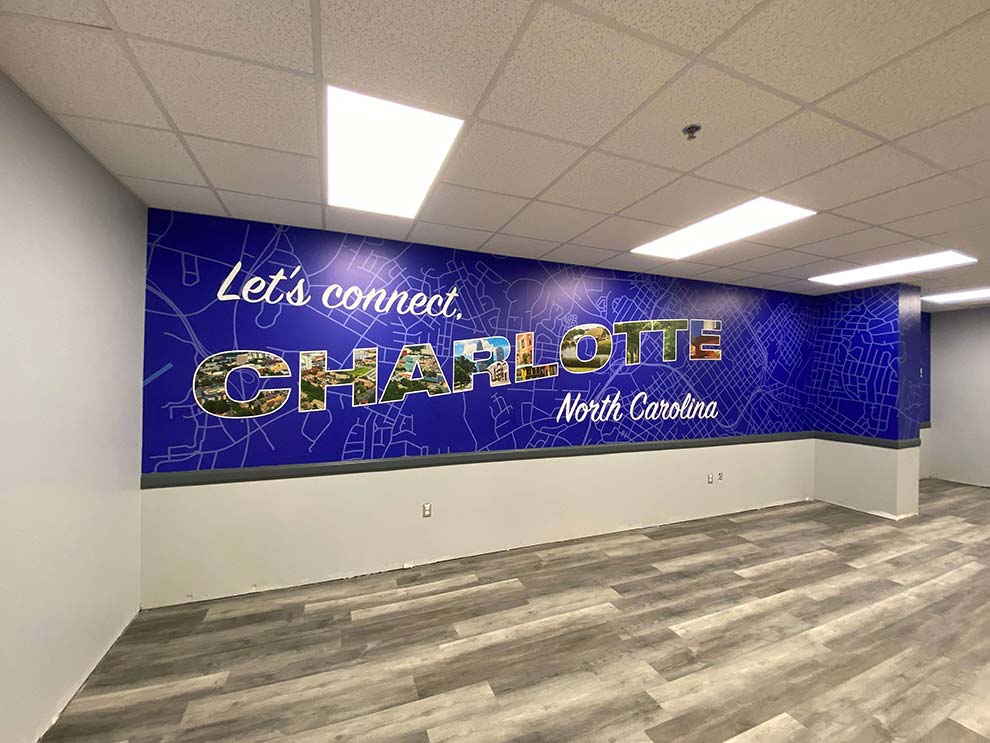
Wall wraps carry the direction set at your entrance across larger interior surfaces. Photography, brand color, pattern, messaging, and custom artwork can tie reception areas, corridors, and meeting rooms back to the impression made at the storefront.
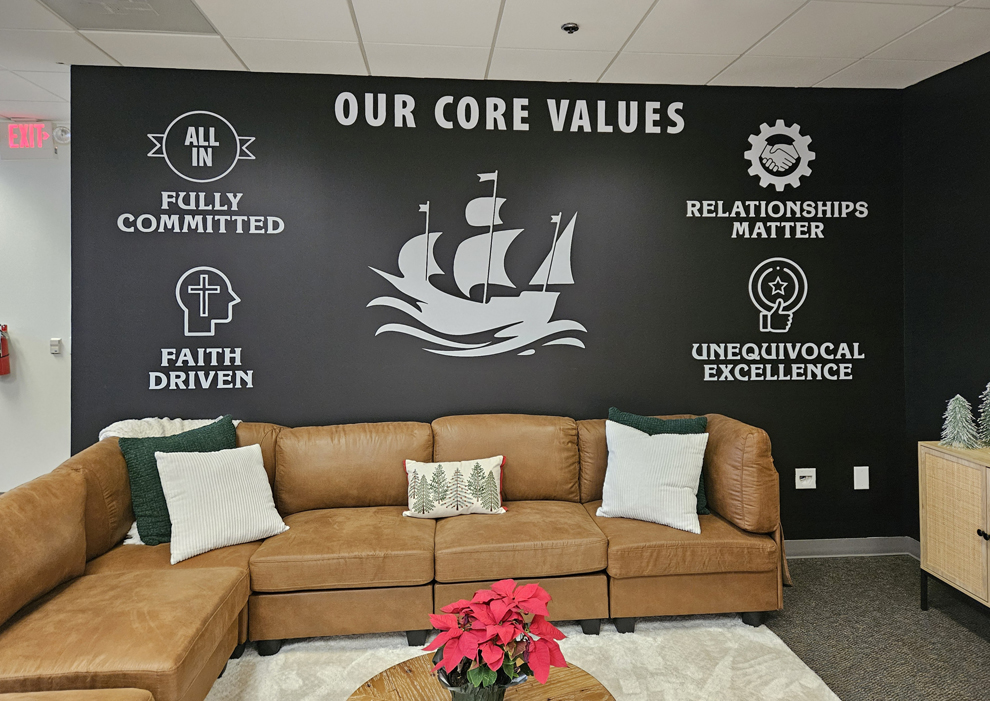
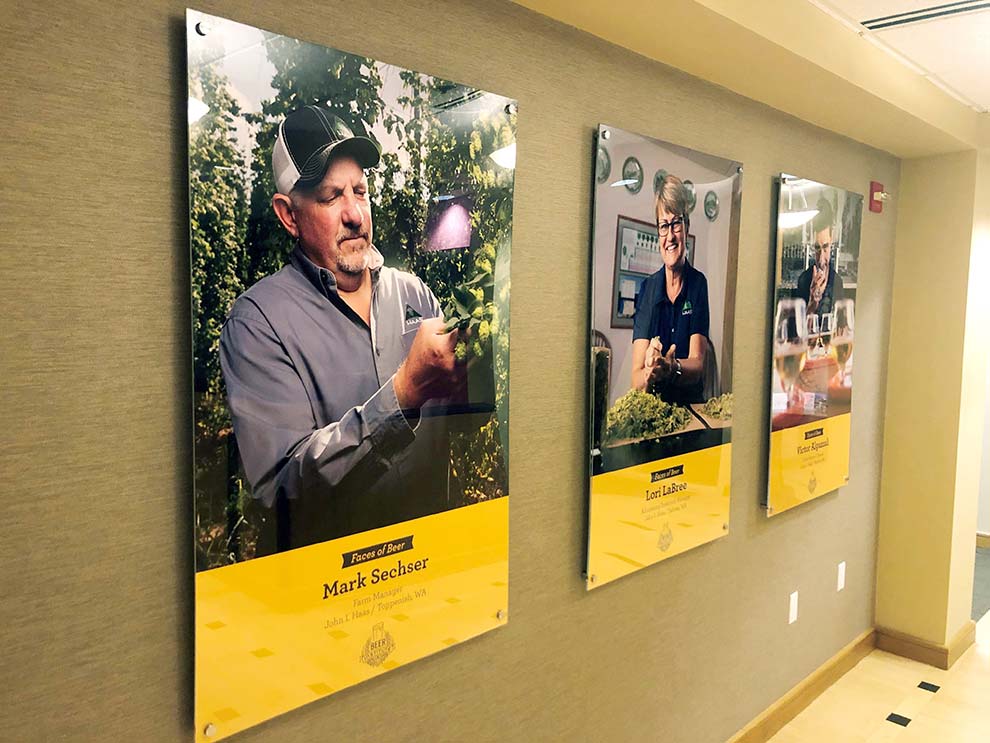
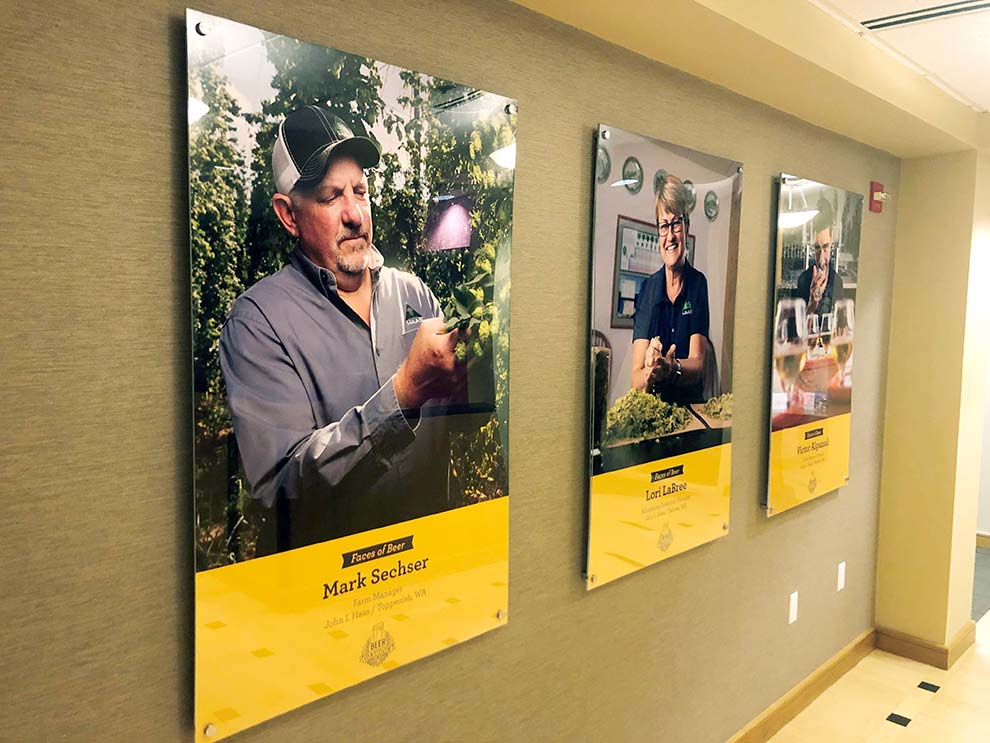
Wall displays give structure to your history, recognition, culture, services, milestones, or mission. Printed graphics, dimensional pieces, and mounted panels can combine into a fuller interior story than any entrance should be asked to carry.
SEG fabric graphics stretch printed fabric inside a slim frame for a crisp, swappable interior display. They suit clients who want a prominent branded feature that can be refreshed later without rebuilding the frame or the wall around it.
Backlit signs give a logo or key message added presence in a lobby or customer-facing interior. We review placement, adjacent surfaces, existing lighting, and nearby graphics so the illumination supports the space instead of overwhelming it.
If your organization in Salisbury, Rowan County, or the surrounding Piedmont is mapping out Storefront Graphics alongside a larger workplace or commercial interior branding effort, click Get Started Now. Tell us the address, your target completion date, the budget you have in mind, and share photos, measurements, brand standards, plans, and artwork if you have them. A dedicated Project Manager reviews everything, flags the decisions that come next, and pulls in the right Heritage teams. You move forward knowing where you stand on entrance design, interior scope, building conditions, fabrication, scheduling, and installation.
Salisbury clients reach us through client-facing support plus local field and installation resources serving Rowan County. That proximity makes discovery meetings at your facility, site surveys, field verification, installation planning, professional installation, and follow-up practical for projects in Salisbury, Kannapolis, Concord, China Grove, Mocksville, and nearby commercial areas.
The Rowan County market covers a wide spread of building types and site conditions. An entrance might face a downtown sidewalk in the historic district, a shared tenant corridor, a medical campus, a school building, a retail center off Julian Road, or an industrial park near I-85. Those conditions shape how storefront graphics should identify you, where privacy matters, and how installation gets scheduled.
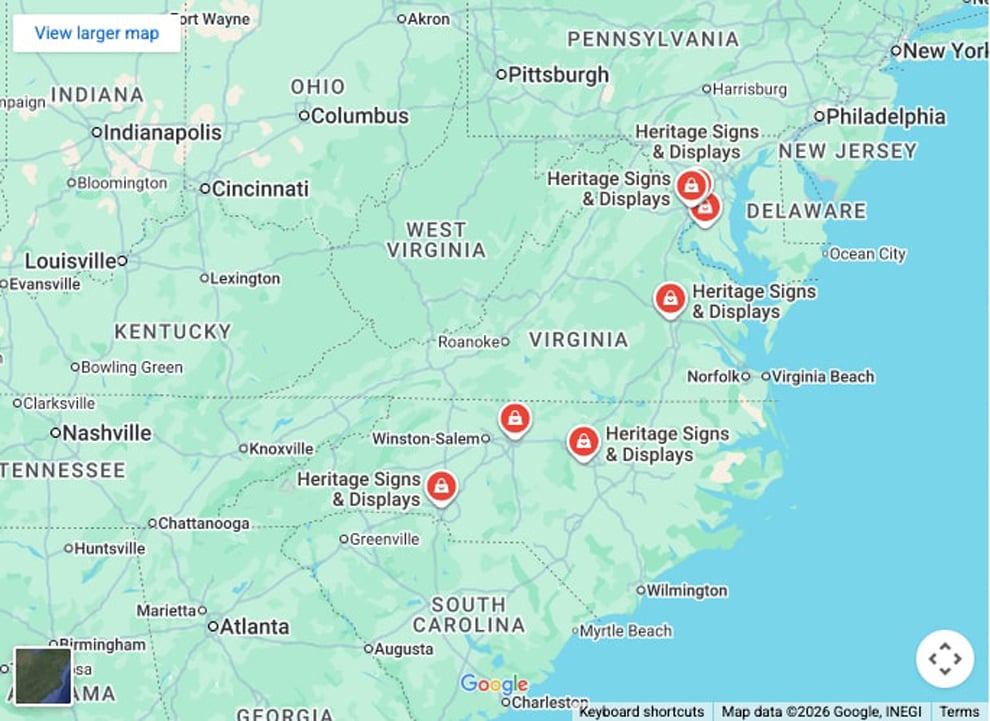
One dedicated Project Manager ties the local team to our wider resources across the Carolinas and Mid-Atlantic. We also support organizations running multiple locations, holding brand standards and project knowledge steady across the portfolio. Even so, we evaluate each property on its own, because architecture, access, surfaces, and schedules rarely repeat exactly.
Environmental graphic design determines what people notice first and how the visual experience unfolds once they step inside. For storefront graphics, that means weighing recognition at the entry, sightlines through glass, privacy needs, architectural details, interior focal points, and the practical handoff between threshold and workplace.
Some clients arrive with finished brand standards and approved artwork. Others bring a goal, a few photos, rough concepts, or a need for design development from scratch. We can work directly with your team or collaborate with architects, interior designers, branding agencies, environmental graphic designers, property managers, and general contractors within our scope.
The outcome is a workable direction ready for production, fabrication, and professional installation. Depending on scope, that might mean a stronger arrival, a branded lobby, a history or timeline wall, a core values display, a mission statement feature, a recognition wall, privacy graphics, or clearer wayfinding through your building. We do not provide licensed architecture, engineering, general commercial interior design, lighting design, or code consulting.
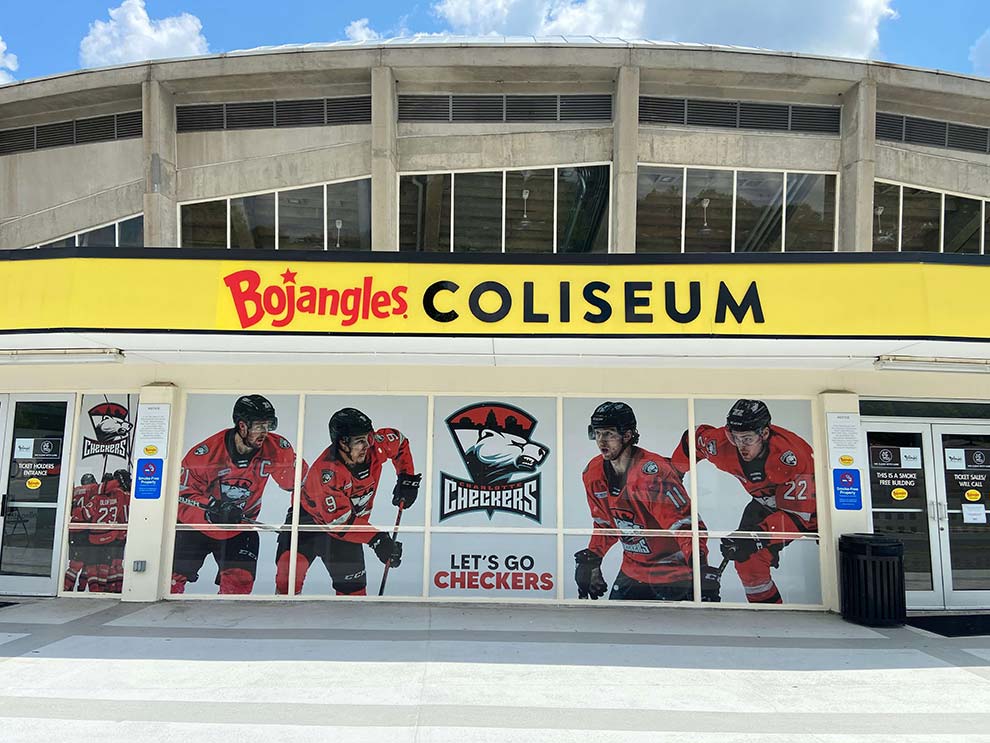
We produce and install non-illuminated exterior elements as part of coordinated storefront graphics and workplace branding projects. Typical scope includes exterior window graphics, exterior wall graphics and wraps, dimensional lettering, dimensional signs, custom sign panels, and related non-illuminated storefront components. These pieces introduce your organization before anyone reaches the door and connect naturally to entry glass, lobby signs, wall graphics, and interior displays.
Printed exterior wall graphics receive a protective film laminate as standard practice for added UV and weather resistance. We review surfaces, sun exposure, attachment requirements, access, and installation conditions for the exterior work we take on. The goal is exterior identity that reads as part of the interior brand, not a disconnected line item.
We do not produce or install channel letters, monument signs, pylon signs, or illuminated exterior signs. We also do not determine whether a sign permit is required, prepare or submit permit documents, communicate with permitting authorities on your behalf, pay permit fees, or pursue approvals. Confirming and securing required permits and property approvals rests with the client, the property owner or manager, or the general contractor.
Every storefront graphics project we take on requires a site survey that connects your objectives to real measurements, surfaces, access points, and installation conditions. The survey tells us what the property is actually like before production and installation decisions get locked in. It also gives you a far more reliable planning path than photos, drawings, or assumptions alone.
From there, one dedicated Project Manager keeps design, production, fabrication, and our full-time installers on the same page. Field notes, approved design intent, material decisions, production requirements, access planning, and scheduling all live in one shared project record. That continuity trims handoffs and lets each team work with information gathered earlier in the process.
We manage installation around craftsmanship, accurate execution, property protection, coordinated scheduling, and open communication with whoever oversees the site. We work to keep disruption low while completing the accepted scope as designed. You get one accountable relationship instead of separate vendors trying to reconcile design, production, fabrication, site conditions, and installation among themselves.
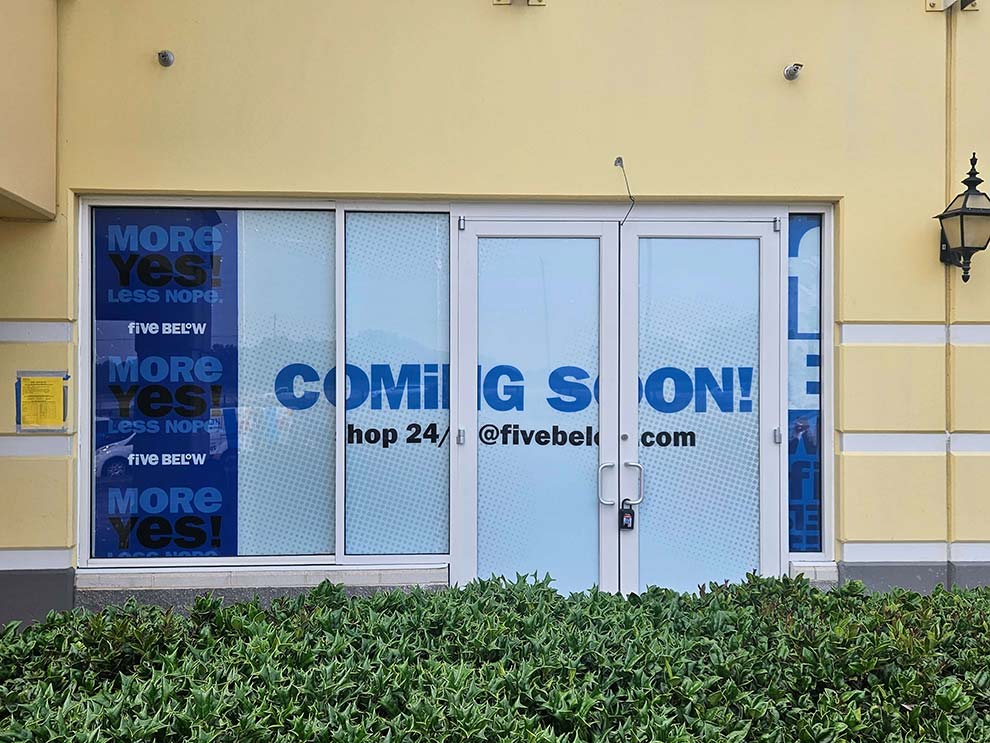
Wall graphics hold up beautifully when the surface is prepared correctly and the schedule allows the site to genuinely be ready. Drywall should be sound and smooth, repairs finished, primer and paint applied properly, and the finish paint fully cured. Dry is not the same as cured. Roughly four weeks is a reasonable planning allowance for many paints, though the manufacturer's specifications and actual site conditions govern readiness.
Washable, scrubbable, stain-resistant, low-VOC, zero-VOC, and other difficult paints may require cleaning, adhesion testing, or a specific vinyl and adhesive approach. Adhesion testing can show how vinyl performs on the painted surface, but it cannot prove how well the paint and primer are bonded to the drywall underneath. If paint peels or pulls away during testing or normal repositioning during installation, Heritage stops rather than making the wall worse.
Wall repair, priming, repainting, full cure time, and any restoration work fall to the client or the property owner, including the cost of that work. We do not perform those repairs and we do not cover them. Removal down the road is its own conversation. Our crews take graphics down slowly and deliberately to avoid unnecessary harm, though no one can promise a damage-free result. Paint can lift, primer can release, and drywall facing can tear. If you are swapping out existing wall graphics, pull the old ones early so any repair needs surface before you lock in an installation date for the new set.
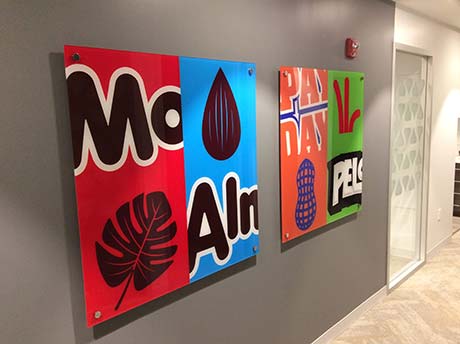
Good Storefront Graphics planning starts by lining up a few things at once: the result you want, who needs to see it, how large the scope really is, whether the work happens in phases, the calendar, the condition of the building, who signs off, what you expect to spend, and what still needs to be figured out. Send us photos, measurements, floor plans, artwork, brand guidelines, and property details. Those inputs tell us what has already been settled and what we still need to confirm in the field.
We work best with professionally managed projects that call for environmental graphic design, production, fabrication, and installation by full-time employees. Most of our production and installation work lands somewhere between $10,000 and $200,000 or more. Where a specific project falls depends on total scope, material choices, building conditions, fabrication demands, how difficult the install access is, and whether we are handling one address, a staged series of upgrades, or a wider rollout.
A Storefront Graphics project might stop at one strong entrance or keep going through the entire interior. Either way, a single Project Manager stays with the job so responsibilities, approvals, decisions, dates, and next steps never get muddy while we move the approved direction through production, fabrication, and installation.
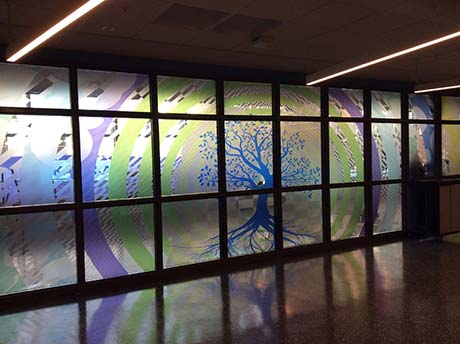
Storefront graphics announce who you are at the door and set up a smooth handoff into the branded space behind it. The category covers window graphics, glass door lettering, privacy treatments, distraction markers, exterior-facing graphics, and other visual pieces that help people identify your organization on arrival.
The best projects link the threshold to whatever comes next. A lobby sign, a wall graphic, a display, or a dimensional feature keeps the story going inside while the entrance handles the introduction.
Not at all. Offices, medical and dental practices, schools, nonprofits, showrooms, hotels and restaurants, law firms, accounting practices, and plenty of other commercial spaces use them. If you have a visible entrance, glass your customers walk past, a shared lobby, a reception desk, or an interior worth branding, a coordinated arrival experience pays off.
Nothing about this product is retail-only. The real question is how visitors, staff, clients, and partners recognize your organization and move from the sidewalk into your space.
Distraction markers are decorative or branded vinyl graphics applied to clear glass so people notice the surface is there. Bands, dots, repeating patterns, logos, and similar elements all work, and many double as privacy or branding elements.
We plan markers around the architecture, the sightlines, and the look you are after. Keep in mind that applied vinyl does not create building-code compliance, safety-glazing compliance, certification, or approval of any kind.
Yes, and you can keep most of your daylight in the process. Frosted vinyl, etched-look film, branded patterns, and well-placed graphics all cut direct sightlines on entrance glass, conference room walls, office fronts, and interior partitions while letting light through.
The right treatment comes down to what you need that glass to do. We weigh privacy, visibility, lighting, brand appearance, and the actual conditions on site before recommending coverage levels and materials.
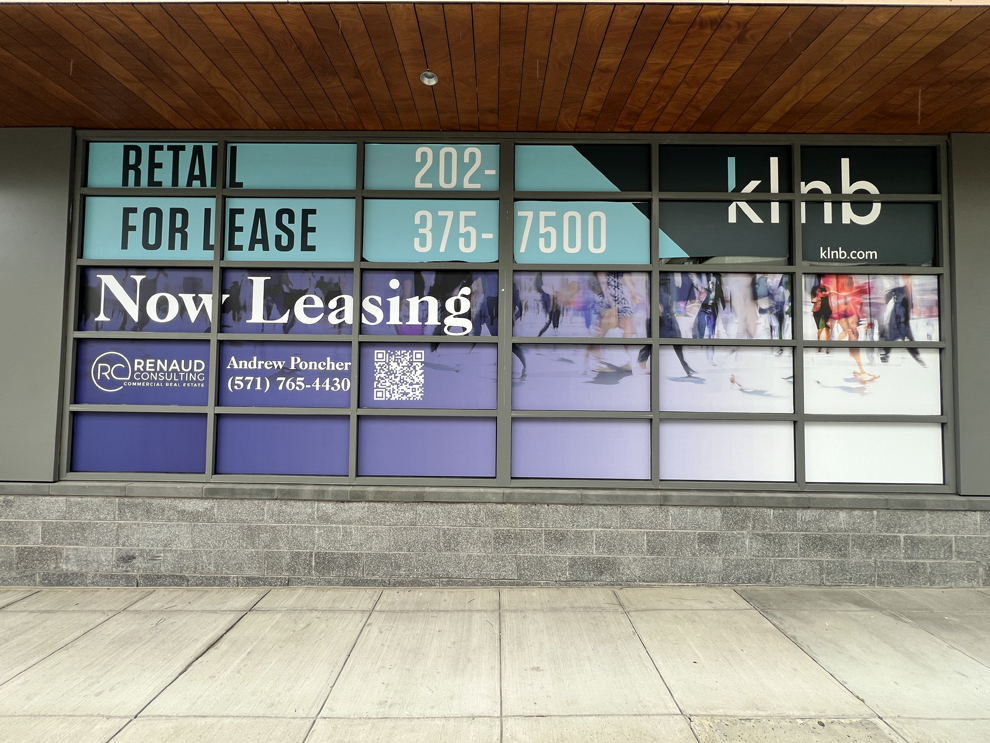
We build window graphics around your goal, your visibility needs, your privacy needs, material performance, and site conditions. Cut vinyl lettering, printed vinyl, frosted vinyl, privacy graphics, logos, custom patterns, and perforated window graphics are all on the table when they suit the project.
Perforated window graphics are printed on vinyl with tiny openings that preserve a measured amount of see-through visibility. Just know their appearance shifts depending on how much light hits each side of the glass.
Painted walls need to be sound, smooth, properly repaired, primed, painted, and fully cured before vinyl goes up. Four weeks is a reasonable planning window for many paints, but the manufacturer's stated cure time and the conditions in your building are what actually determine readiness.
Washable, scrubbable, stain-resistant, low-VOC, and zero-VOC paints can complicate things. Some require cleaning, adhesion testing, or a specific vinyl and adhesive pairing. Testing shows us how the surface behaves, but it cannot tell us how firmly the paint and primer are bonded to the drywall underneath.
If paint peels or lifts during testing or while we reposition a panel during installation, we stop instead of making the wall worse. Repair, priming, repainting, full cure time, and restoration are arranged and paid for by the client or property owner before we come back.
It can. We remove graphics slowly and carefully to limit avoidable damage, but a damage-free result is never guaranteed. Paint or primer can come away with the vinyl, and drywall facing can tear depending on the wall's condition and how well the paint and primer bonded to it in the first place.
Repair, priming, repainting, cure time, restoration, and related surface costs belong to the client or property owner. We do not perform or fund that work.
"Removable" refers to the adhesive system and its intended use. It is not a promise of damage-free removal. If replacement graphics are in the plan, take the old ones down early so repair needs show up before you schedule the new installation.
Yes. We produce and install non-illuminated exterior window graphics, exterior wall graphics and wraps, dimensional lettering, dimensional signs, custom sign panels, and related storefront pieces as part of full Storefront Graphics and workplace branding projects.
Those exterior elements introduce your organization before anyone reaches the door, and they should connect visually to your entrance glass, lobby sign, wall graphics, and interior displays. Printed exterior wall graphics get a protective film laminate as standard for added UV and weather resistance.
We do not produce or install channel letters, monument signs, pylon signs, or illuminated exterior signage.
Material choice follows the design, the substrate, the intended use, visibility requirements, exposure, maintenance expectations, and installation conditions. Depending on the application we may specify adhesive vinyl, acrylic, dimensional materials, printed graphics, tensioned-fabric systems, or aluminum composite material, known as ACM.
ACM delivers a durable metal look at a fraction of the weight of solid metal. We do not print on or cut solid aluminum or solid steel as a sign substrate.
Yes. Every Storefront Graphics project we take on includes one. The survey ties your objectives to real measurements, surfaces, access points, installation conditions, and other field details that shape design, production, fabrication, scheduling, and installation.
Those findings stay with your Project Manager and the teams handling environmental graphic design, production, fabrication, and installation. Fewer handoffs means fewer surprises.
Absolutely. We collaborate with architects, interior designers, branding agencies, environmental graphic designers, property managers, general contractors, and internal stakeholders. Some clients hand us finished brand standards and approved artwork. Others need us to develop environmental graphic design concepts within our scope.
Once the visual direction is approved, we carry it through production, fabrication, and installation. We do not provide licensed architecture, engineering, general commercial interior design, lighting design, or code consulting.
Our own full-time professional installers do. Installation happens after the required site survey and stays connected to your Project Manager, the design work, production, fabrication, site conditions, access requirements, the schedule, and the approved design intent.
Because our installers see project information before they arrive in Salisbury, execution stays accurate, your property stays protected, communication stays clear, disruption stays minimal, and accountability for the finished result stays with us.
Yes. We support multi-location Storefront Graphics and interior branding programs throughout the Carolinas and the Mid-Atlantic. One Project Manager remains your single point of contact while we coordinate field support, site surveys, production, fabrication, and installation at each property.
Brand standards and project knowledge travel with the program, but we never assume every building needs the same physical solution. Dimensions, architecture, surfaces, access, schedules, and installation conditions differ from one address to the next.
Timing hinges on total scope, approved design direction, what the site survey turns up, material and fabrication requirements, site readiness, property access, approvals, and installation scheduling. A single focused project moves faster than a phased workplace program or a multi-site rollout.
We commit to a realistic schedule once we have reviewed your information and understand the building. Your Project Manager keeps you current on the decisions and dependencies that affect the path to installation day.
Send what you already have. Helpful items include the project address, the outcome you want, your target completion date, the budget you have in mind, photos, measurements, plans, artwork, brand standards, property details, and any known access or approval requirements.
If pieces are still coming together, submit what exists through Get Started Now. A dedicated Project Manager will review it, identify the decisions that come next, and explain what needs verification before the project moves into production, fabrication, and installation.
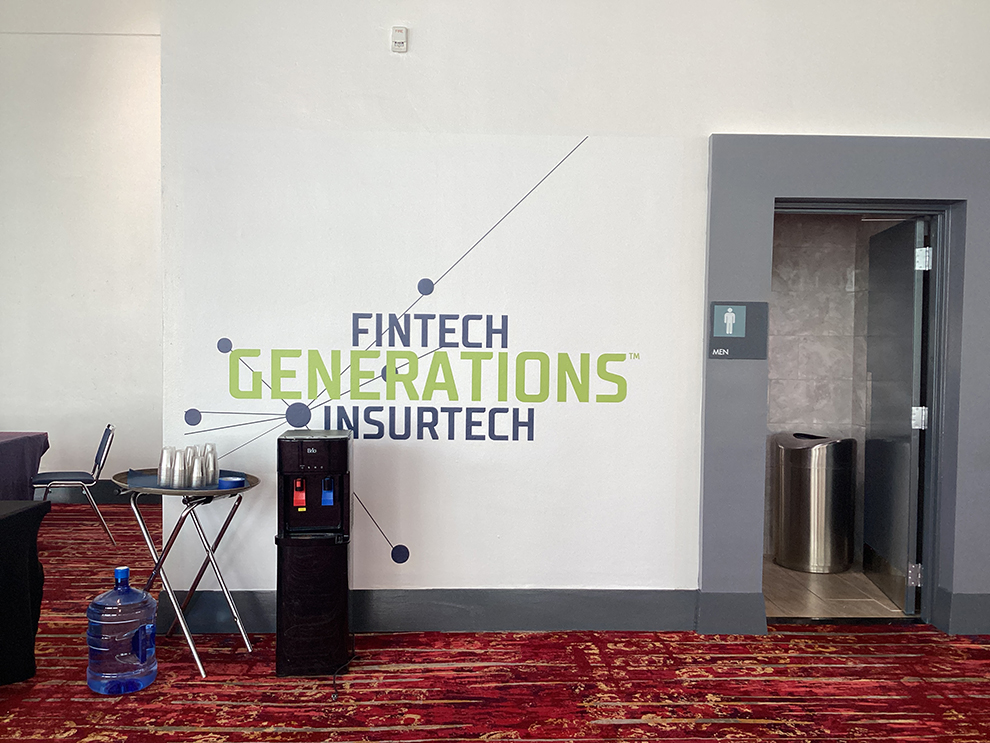
Heritage Signs & Displays collaborated with the Fintech + Insurtech Generations 2023 conference at the Charlotte Convention Center. Heritage worked closely with the client to create an interactive and branded event environment for attendees to network and discuss key topics impacting the financial and insurance sectors. The project enhanced the premier annual conference's atmosphere and engagement.
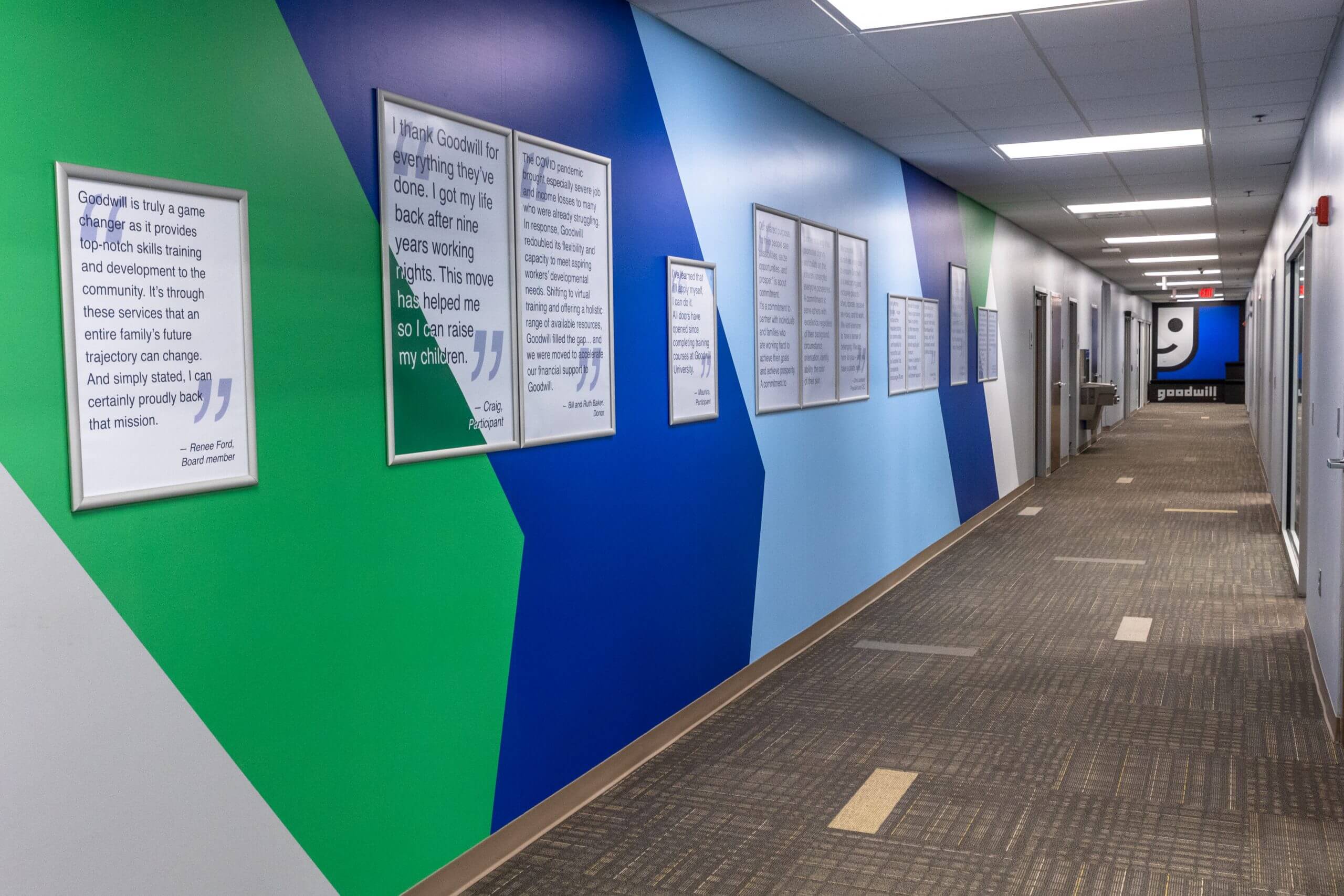
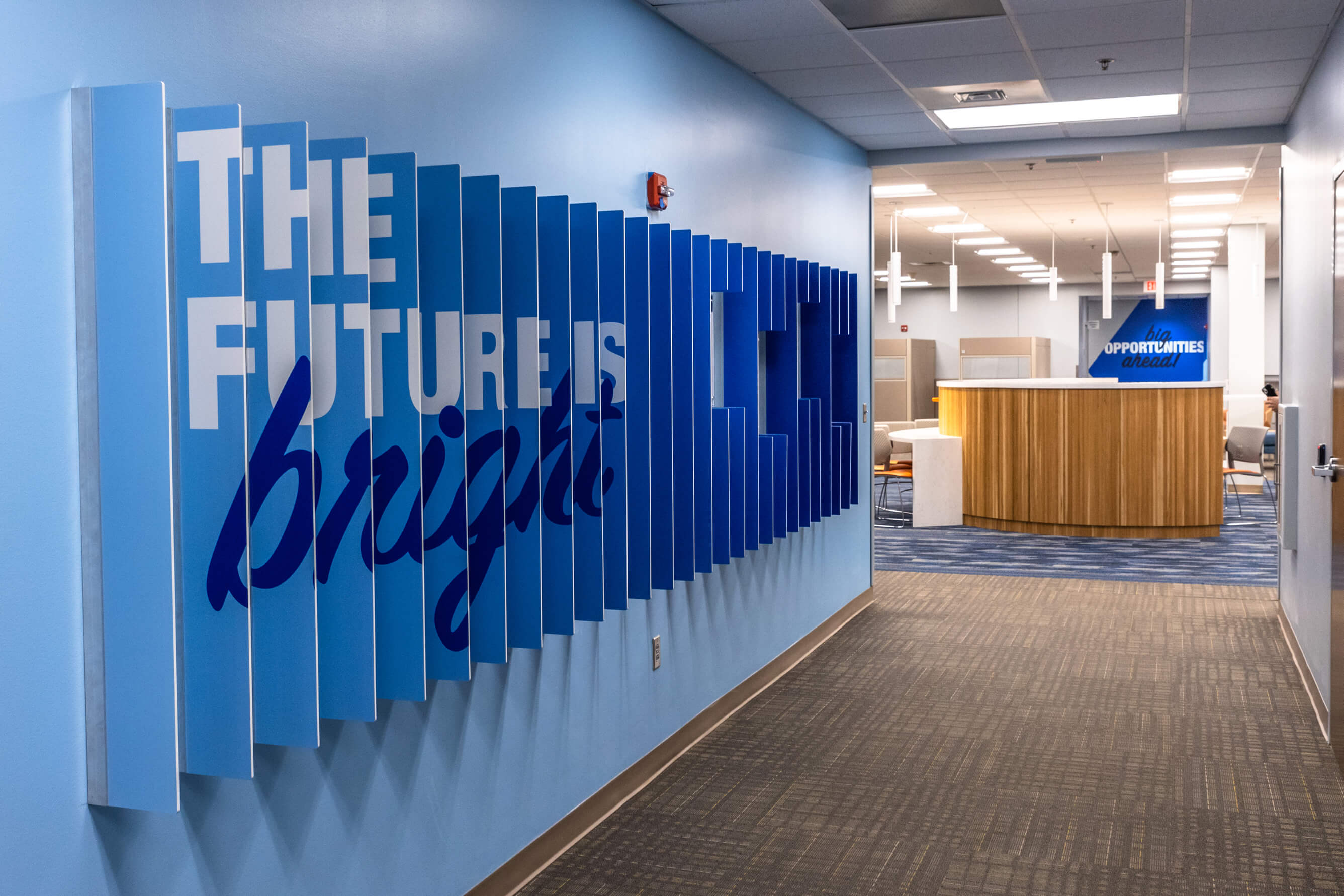
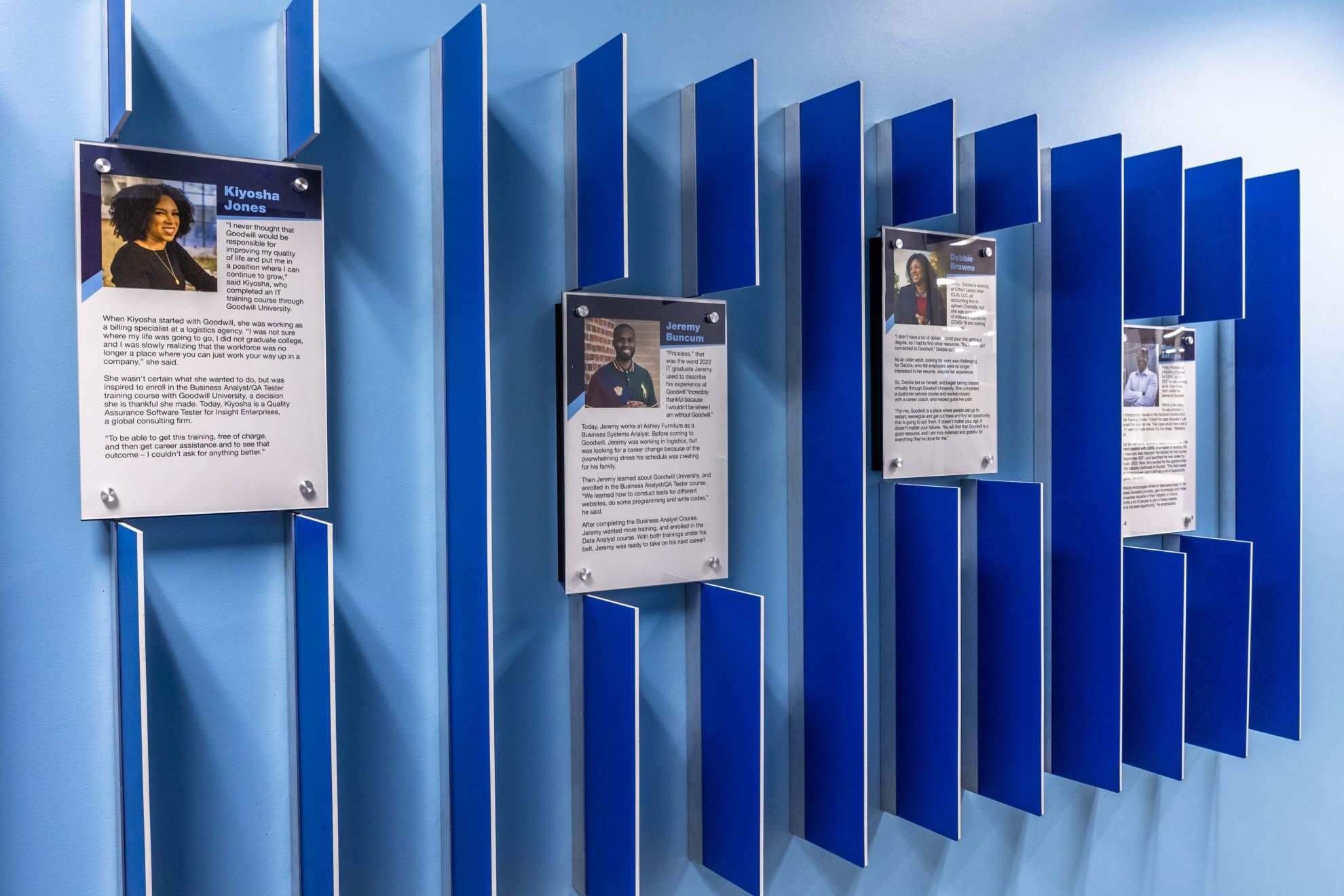
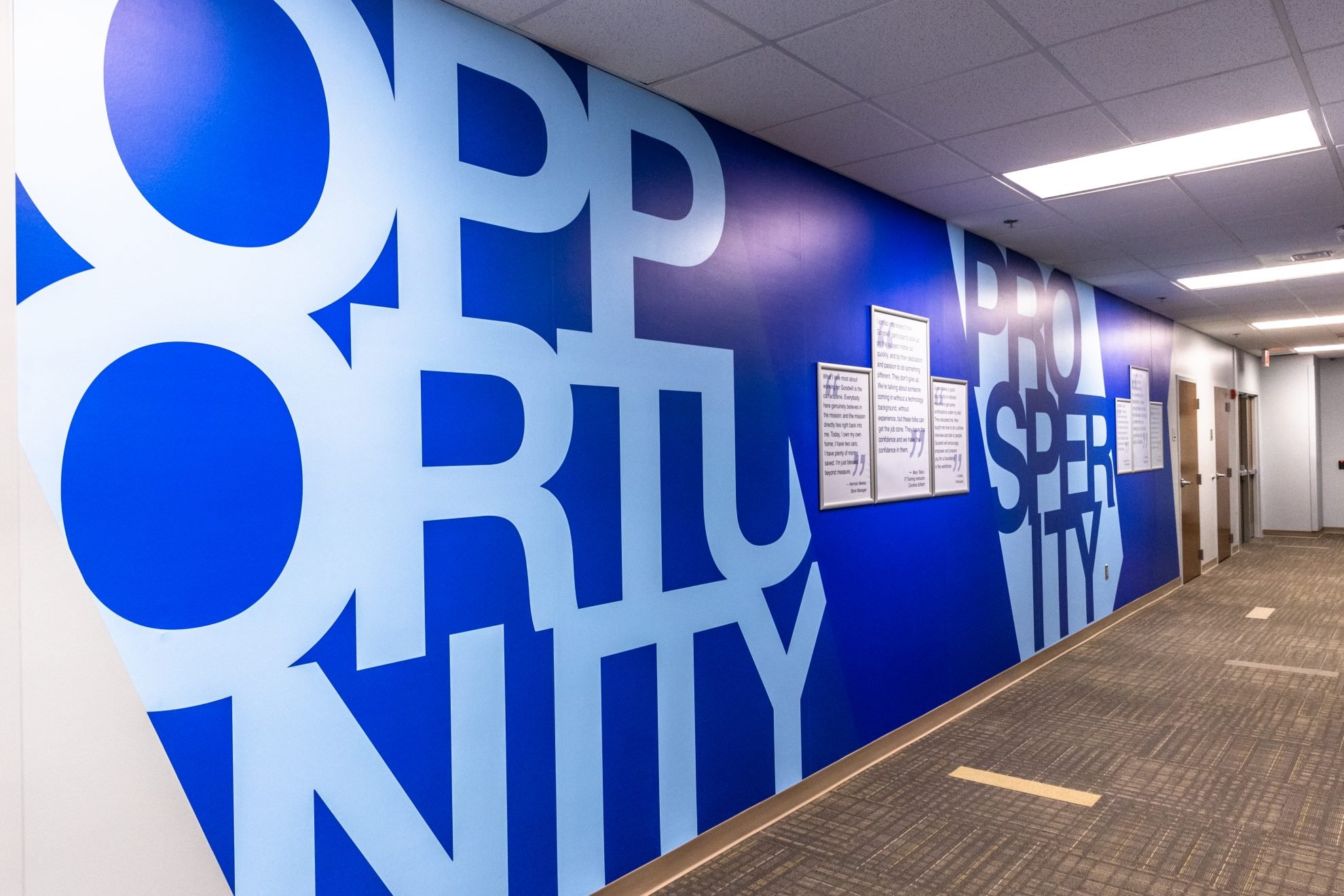
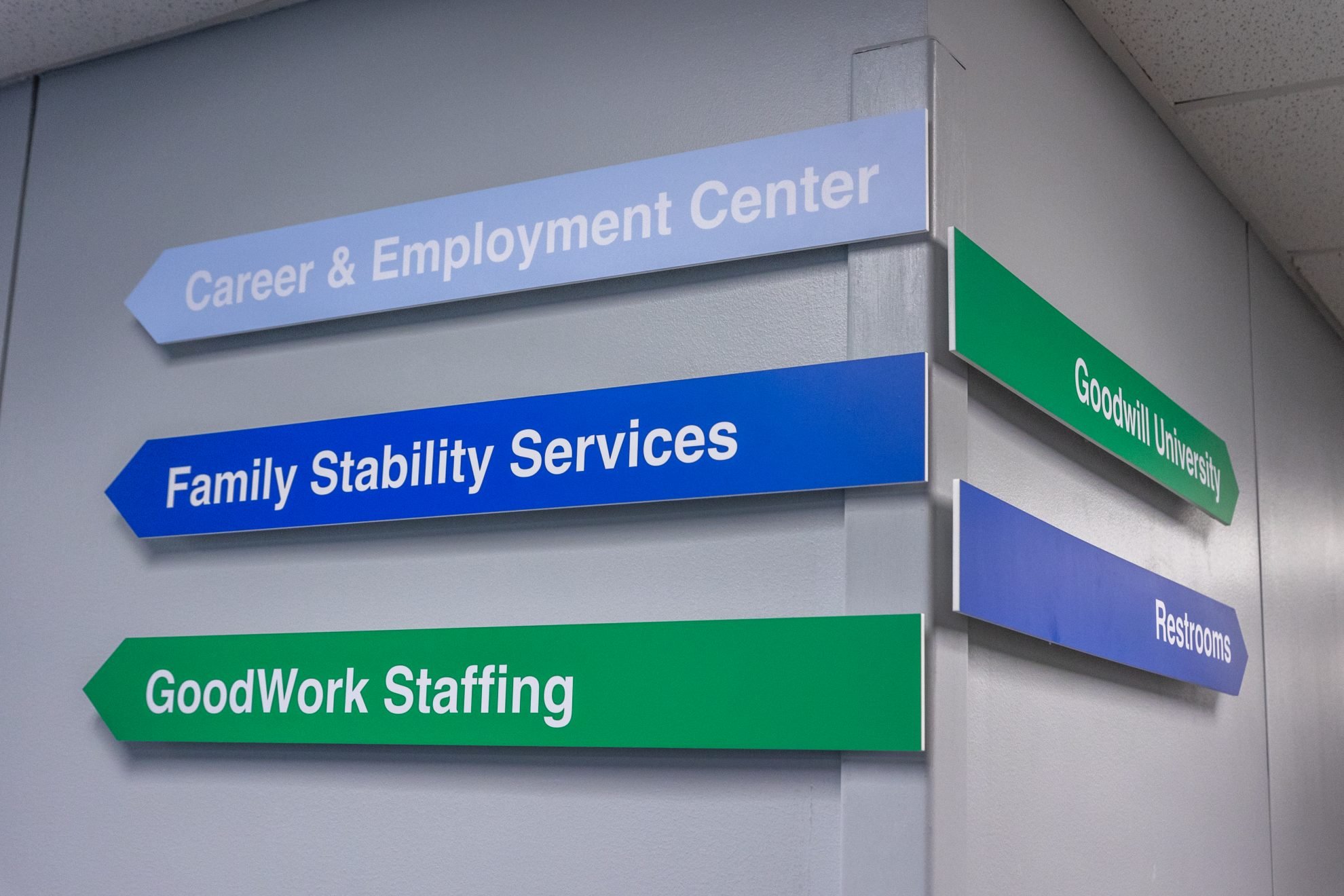
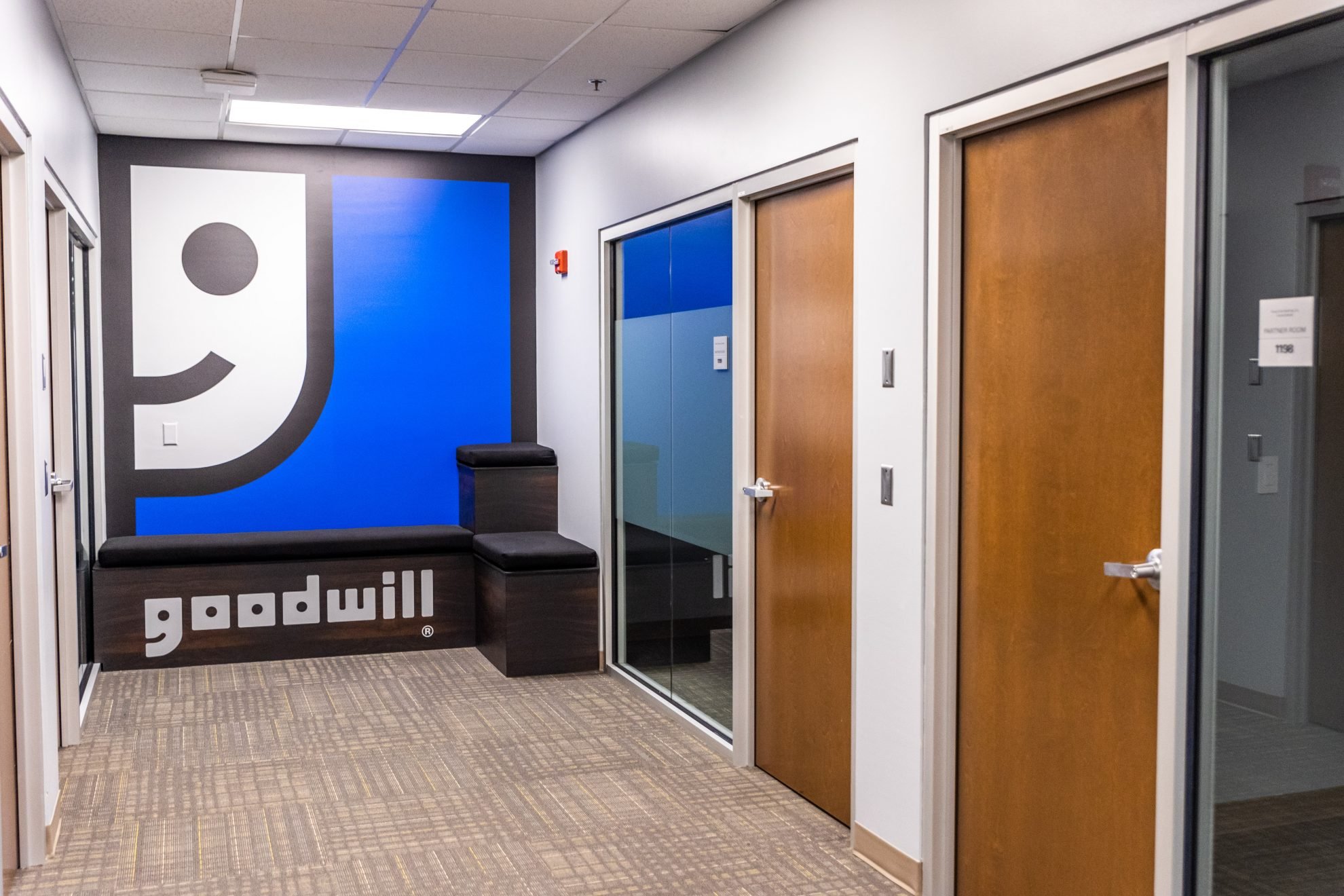
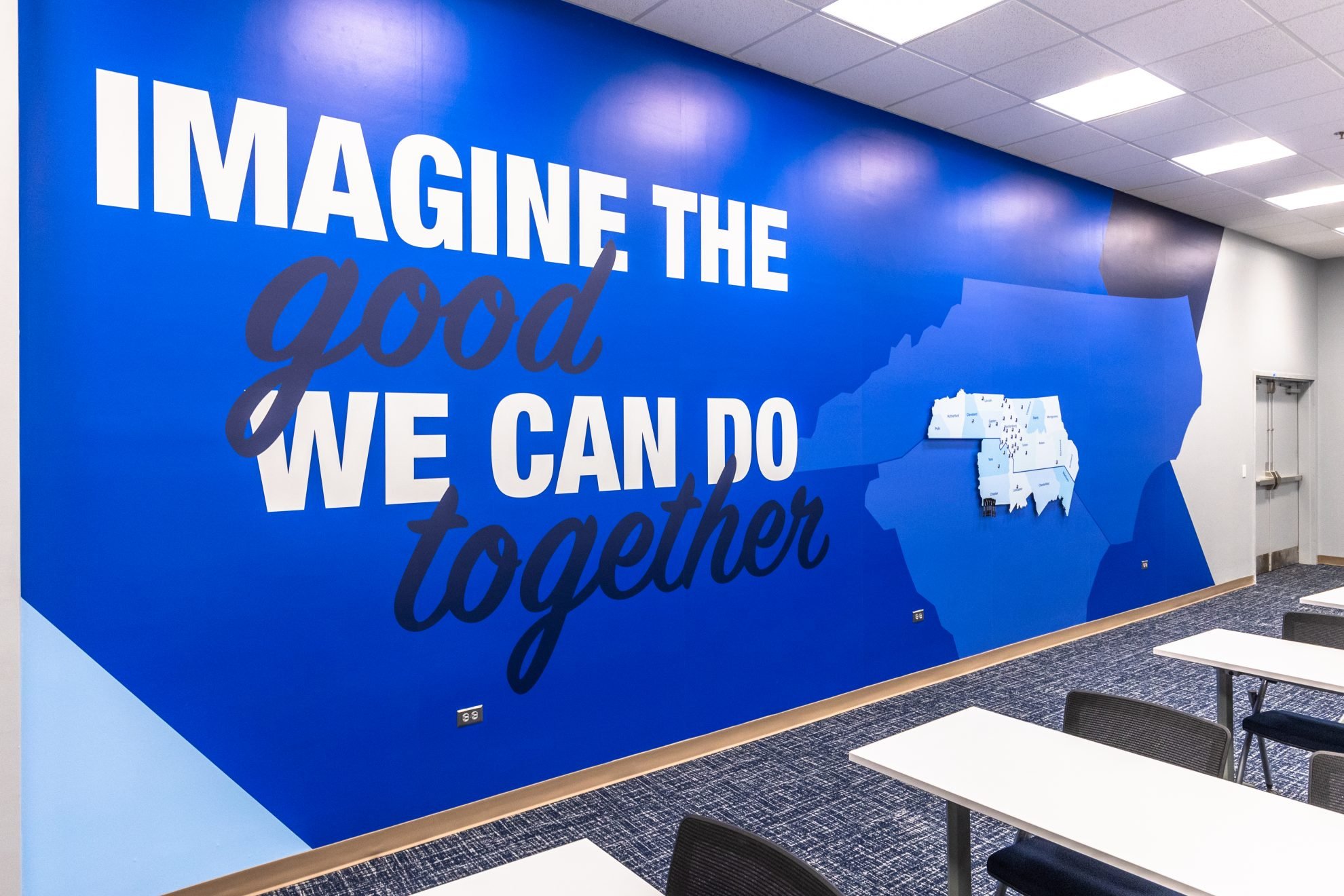
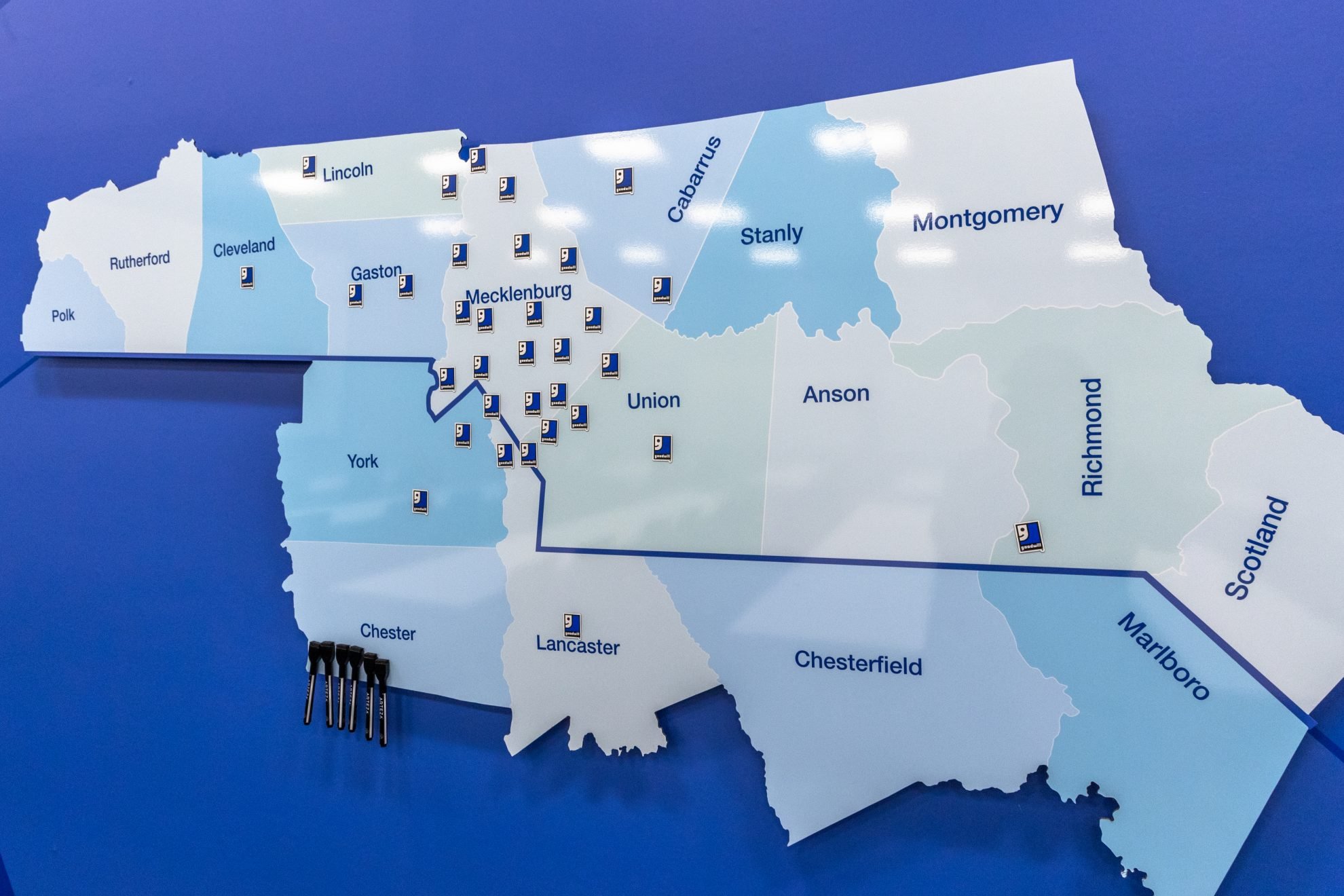
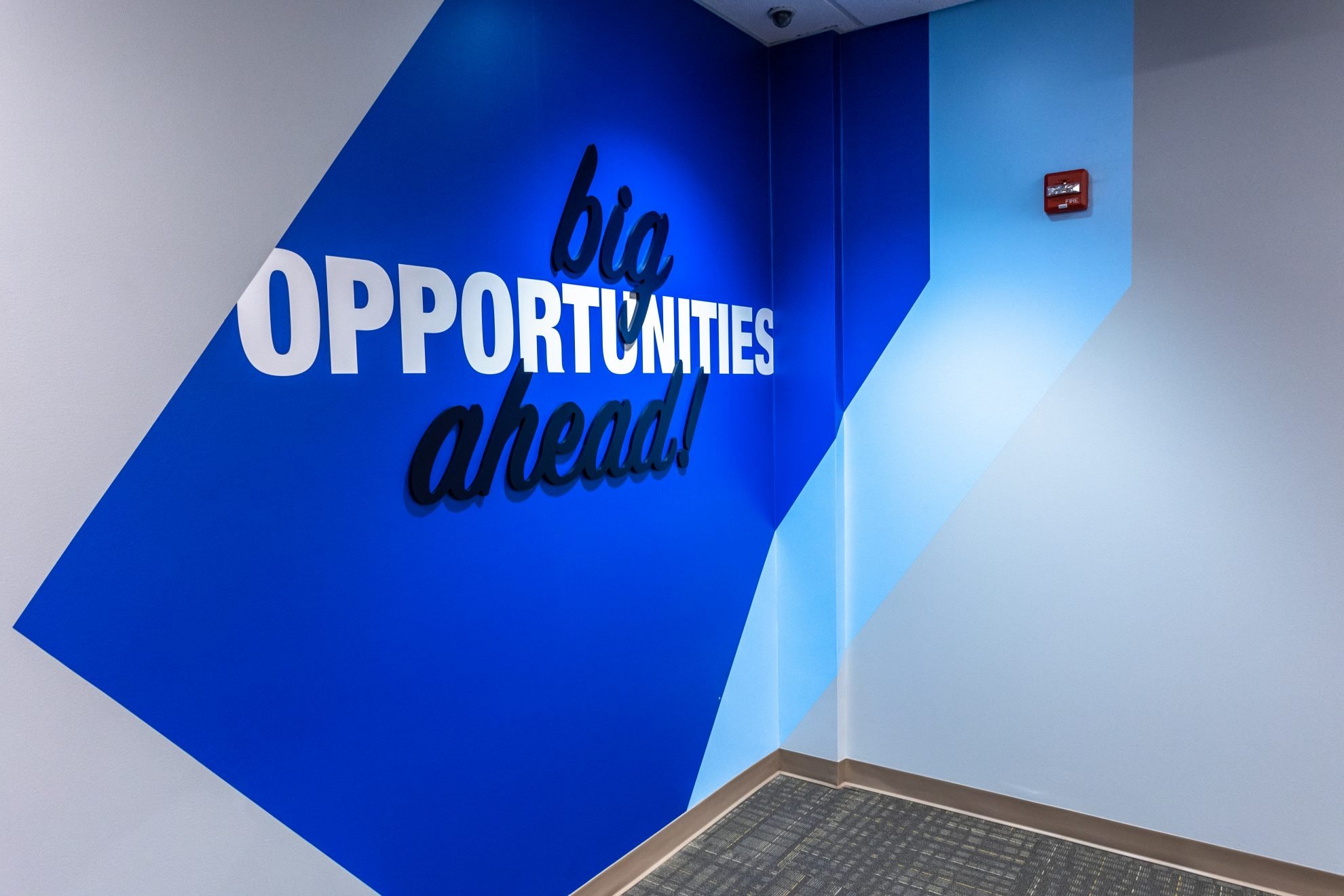
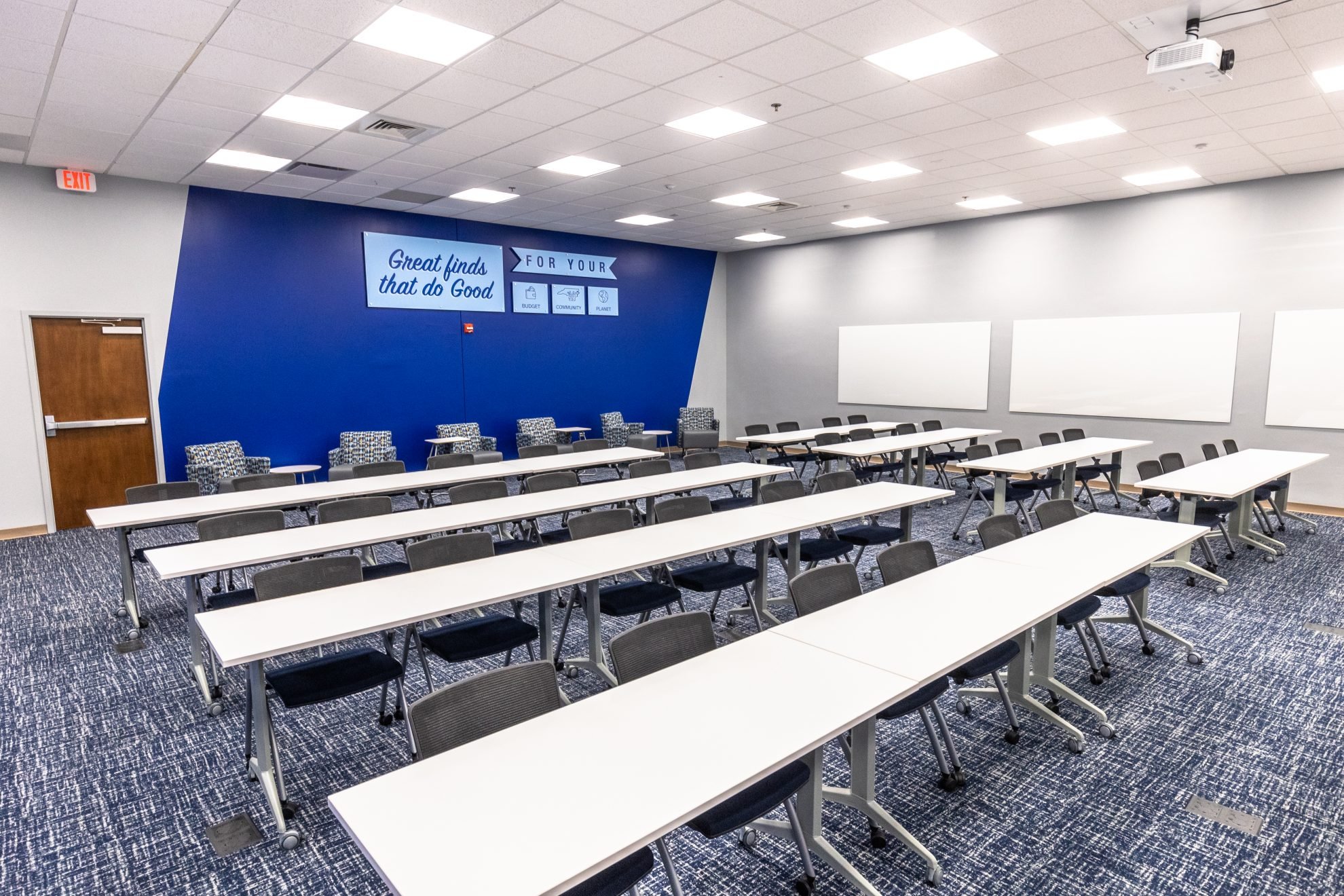
Heritage Signs & Displays collaborated with Goodwill Industries of the Southern Piedmont to transform the Opportunity Campus in Statesville, NC. The project included lenticular wall displays, wall wraps, frosted vinyl, wayfinding signs, and custom wall displays. These elements enhanced the Career & Employment Center, creating an engaging and branded environment that reflects Goodwill's values and mission to support workforce development.