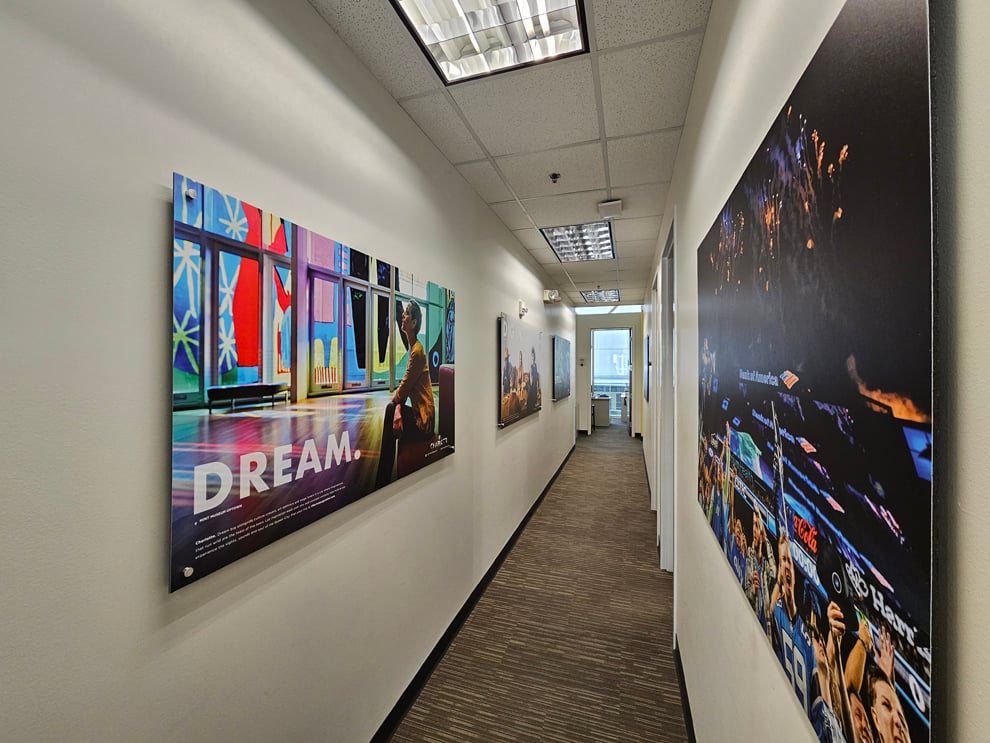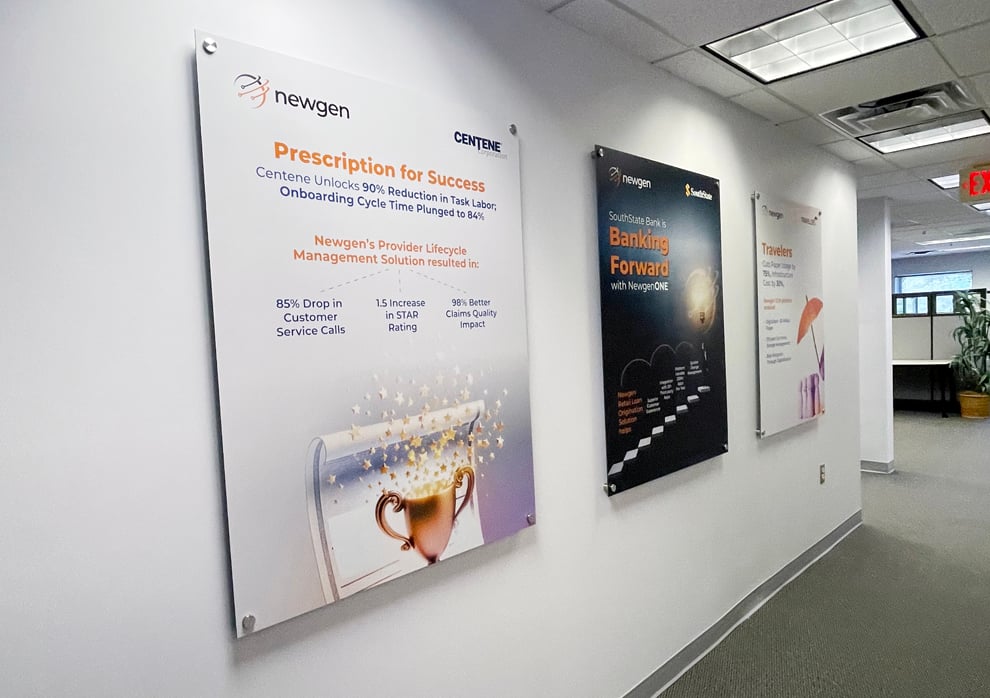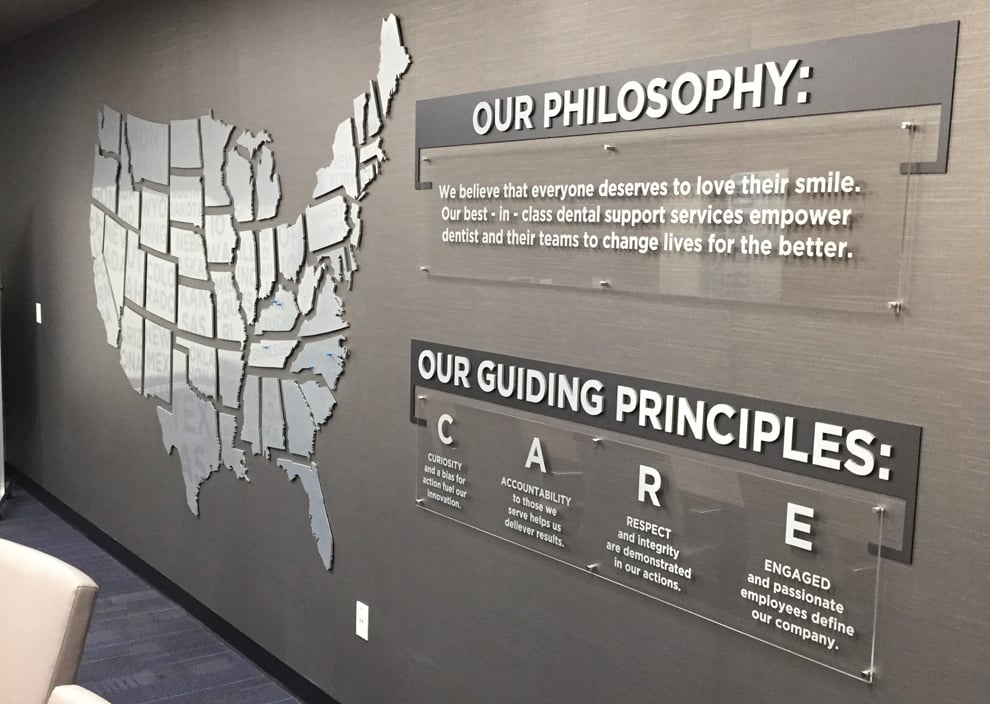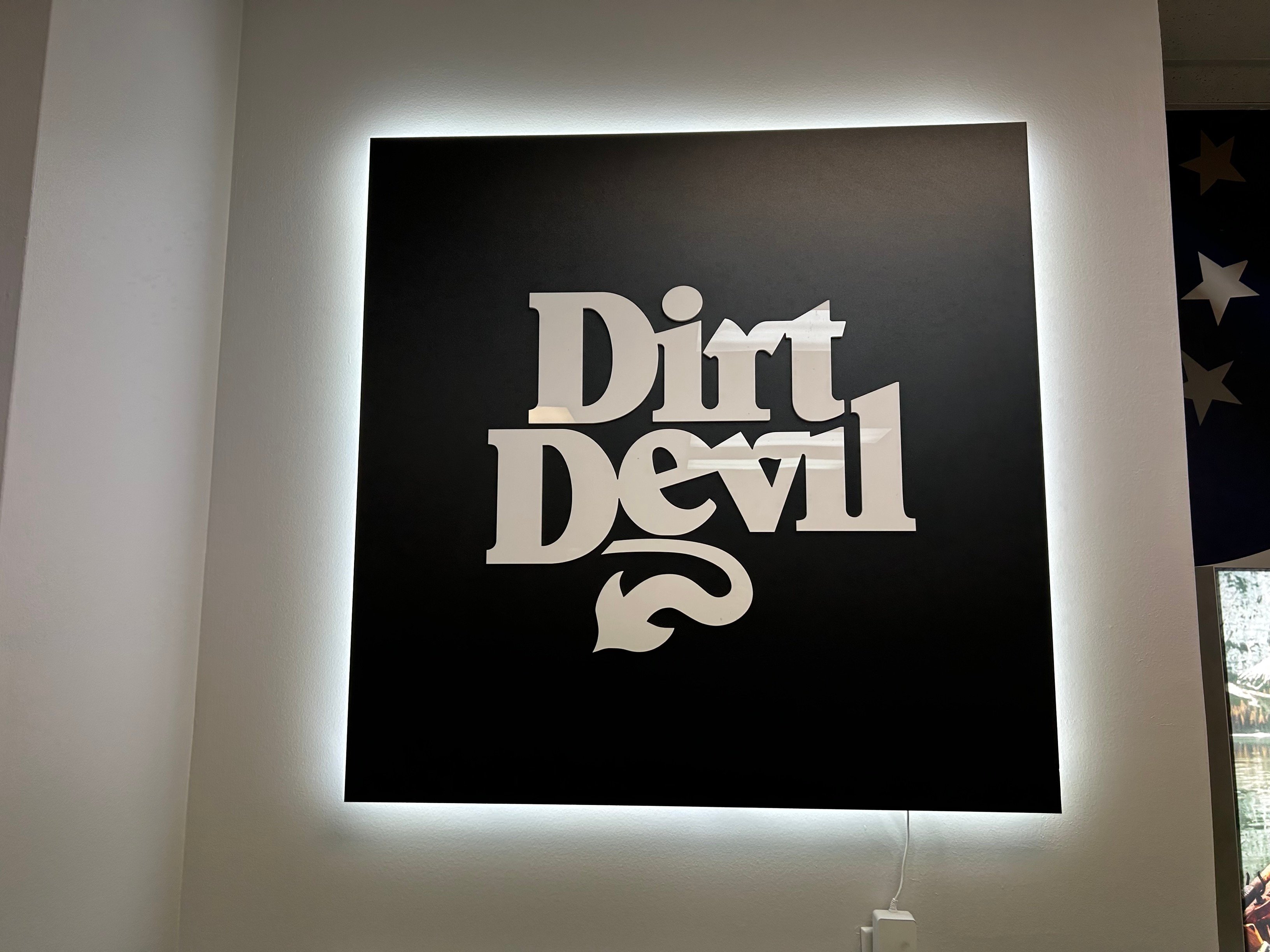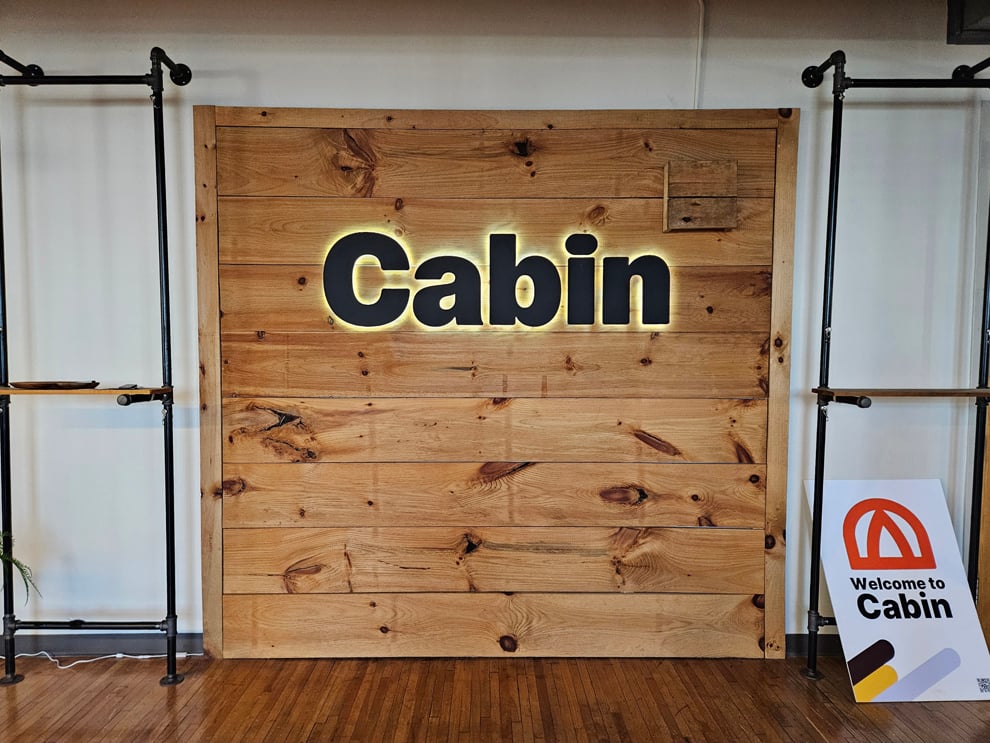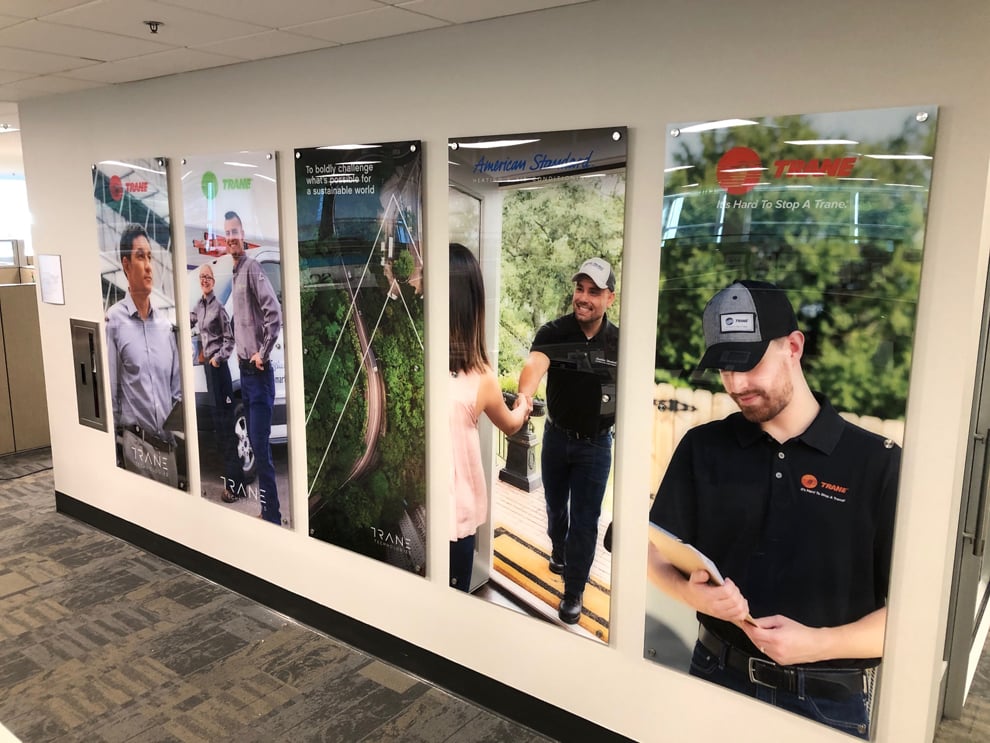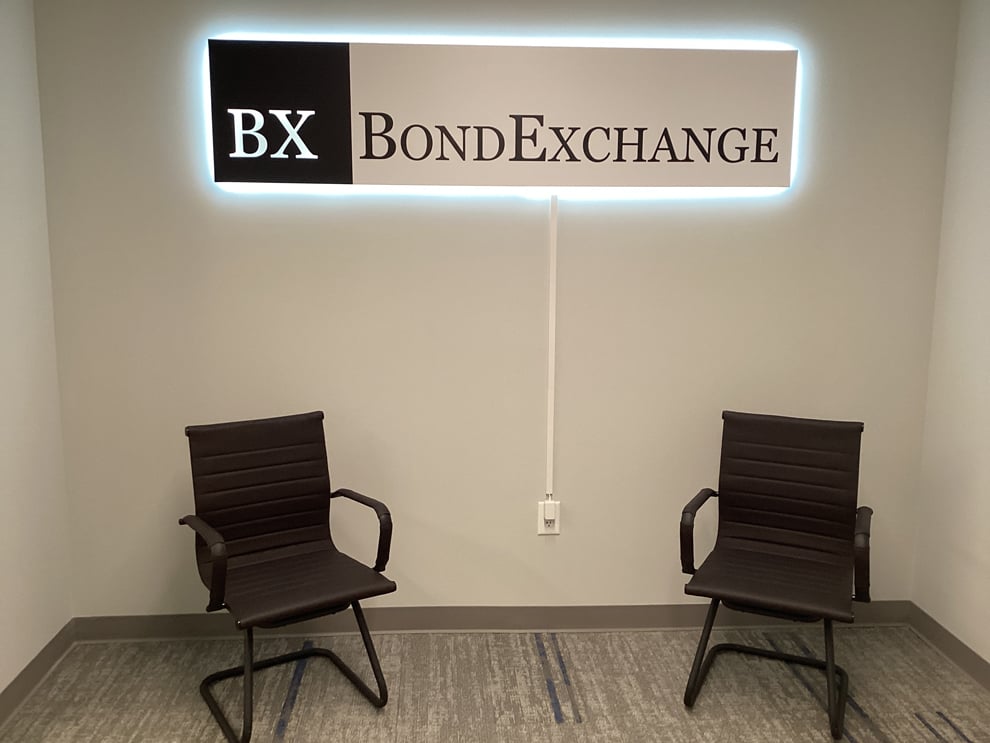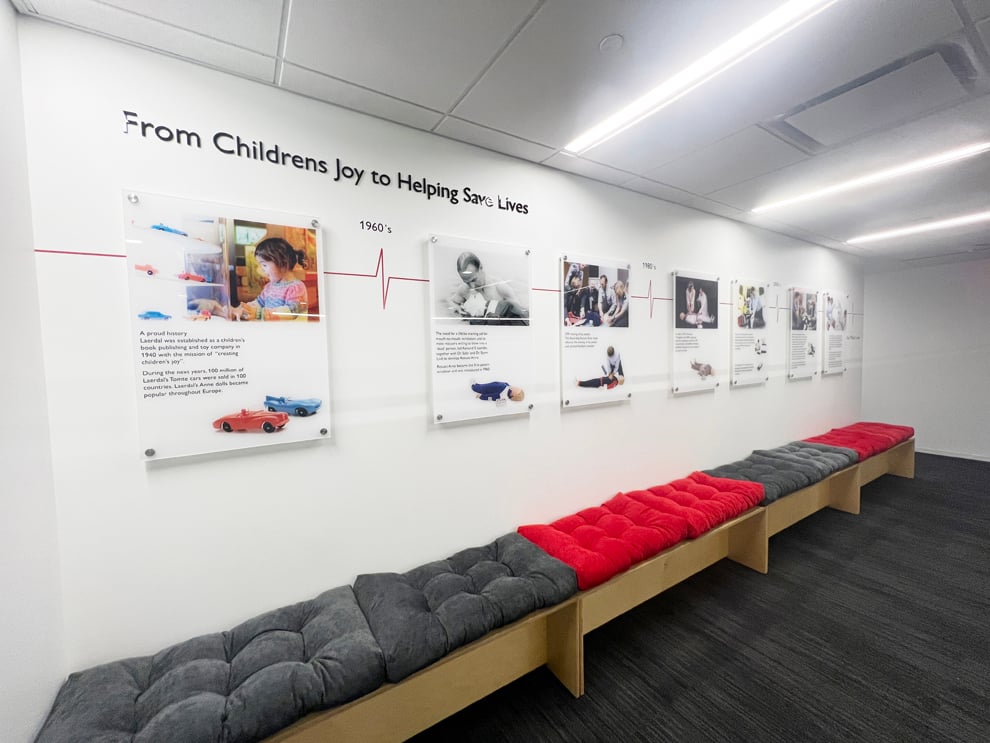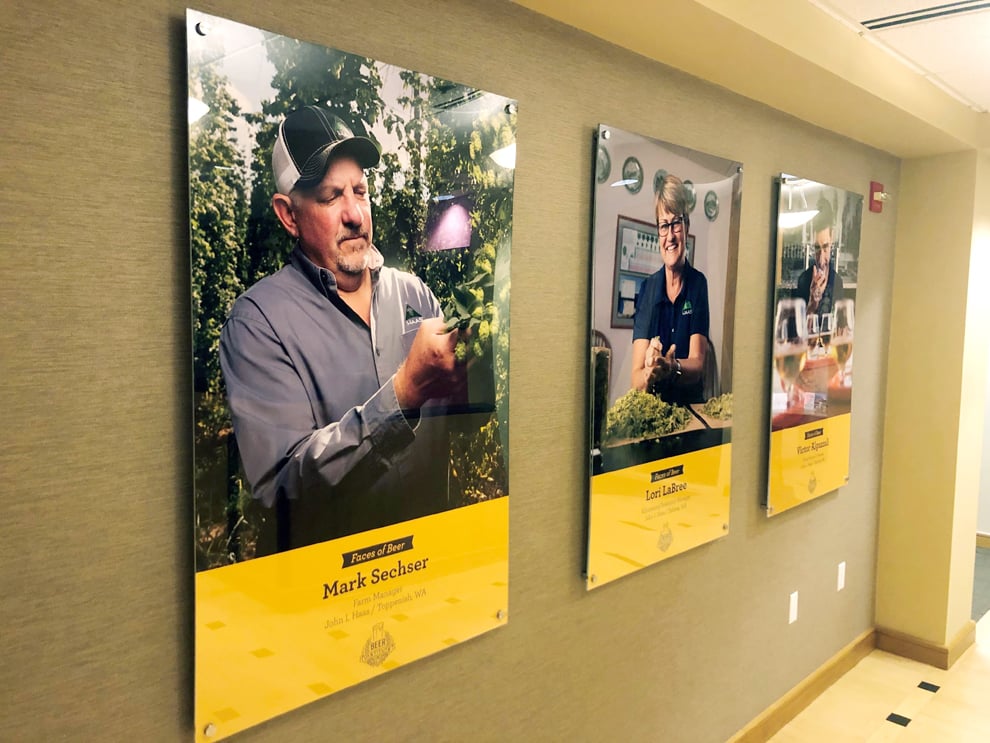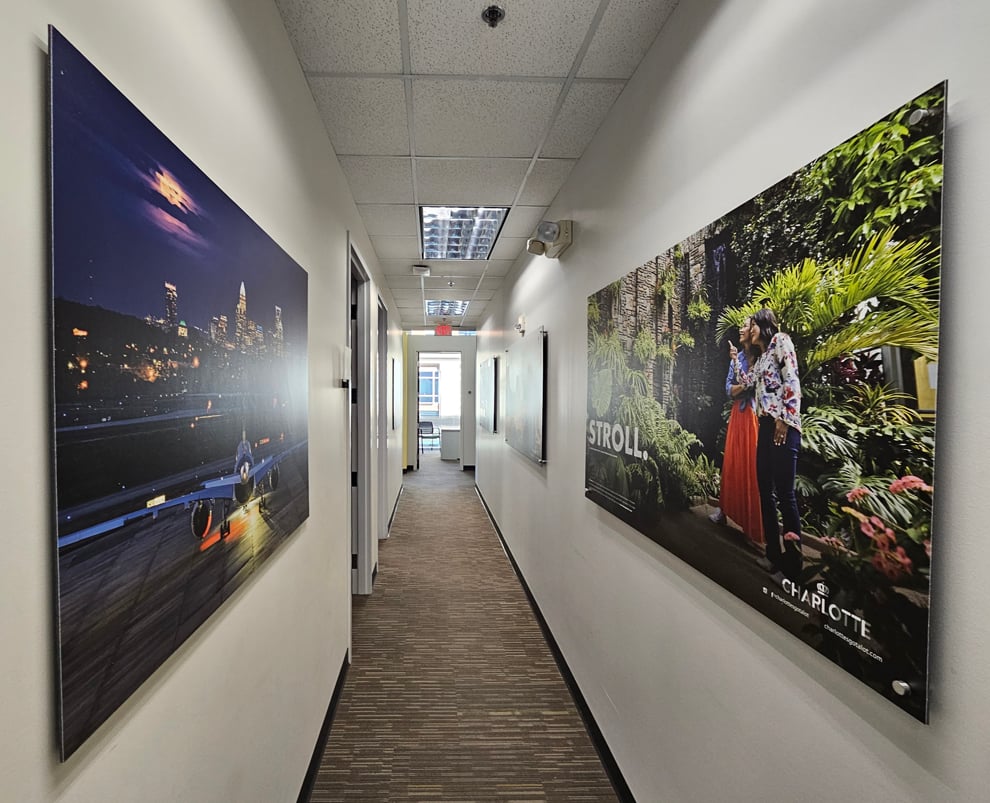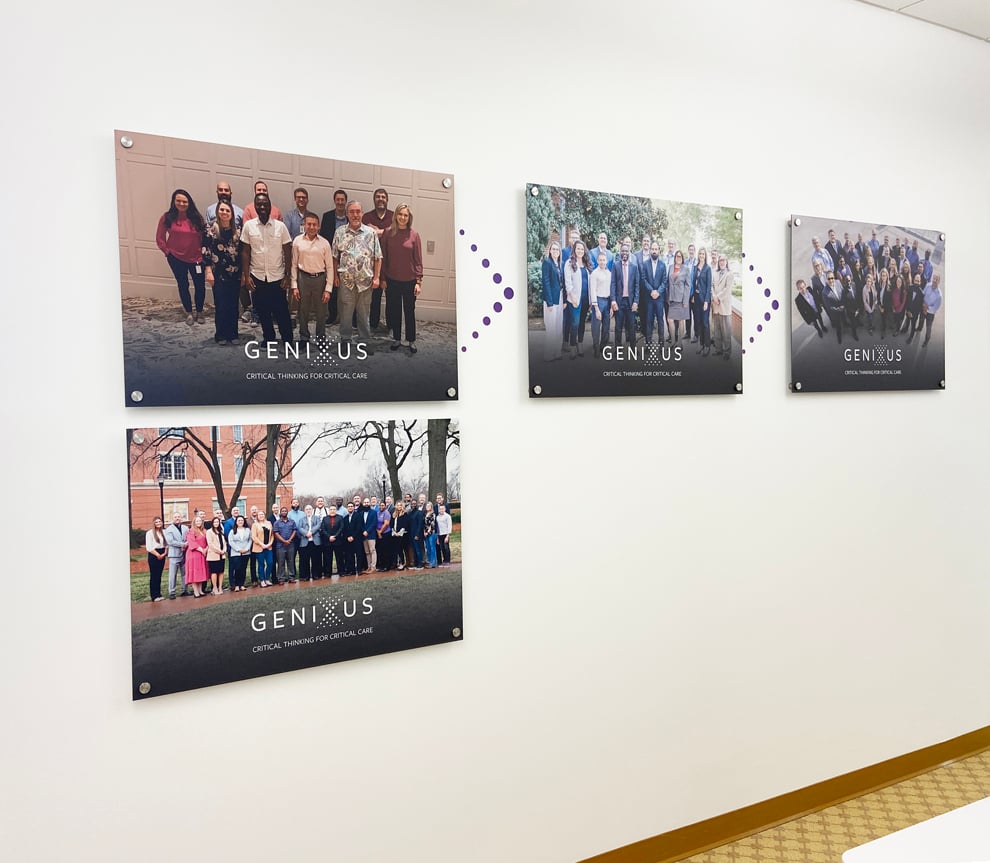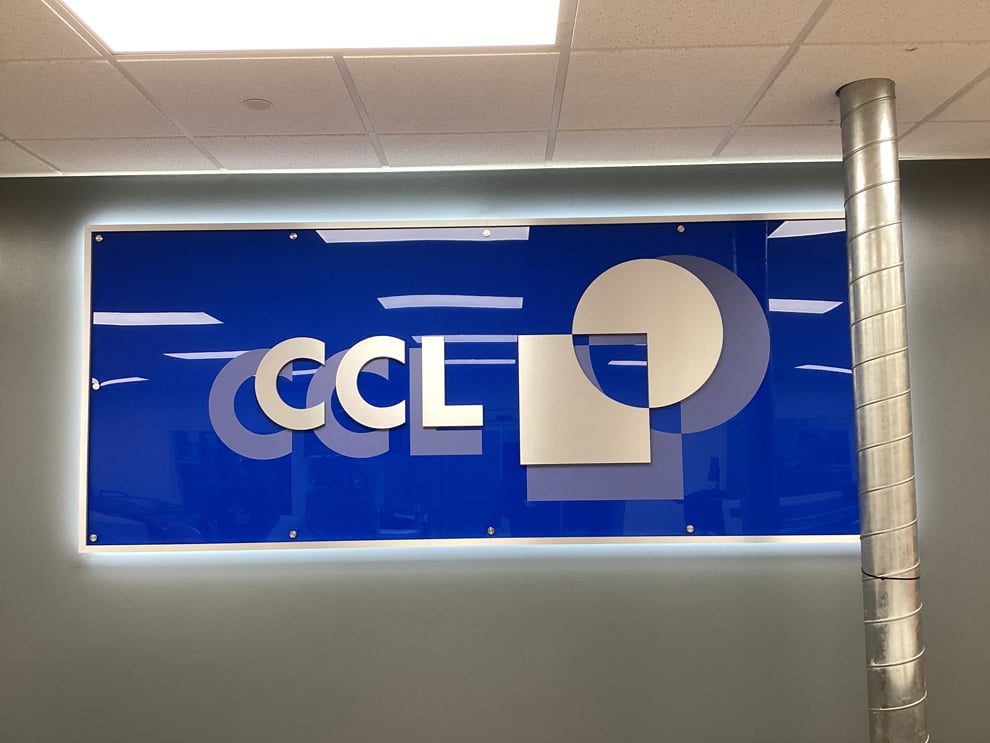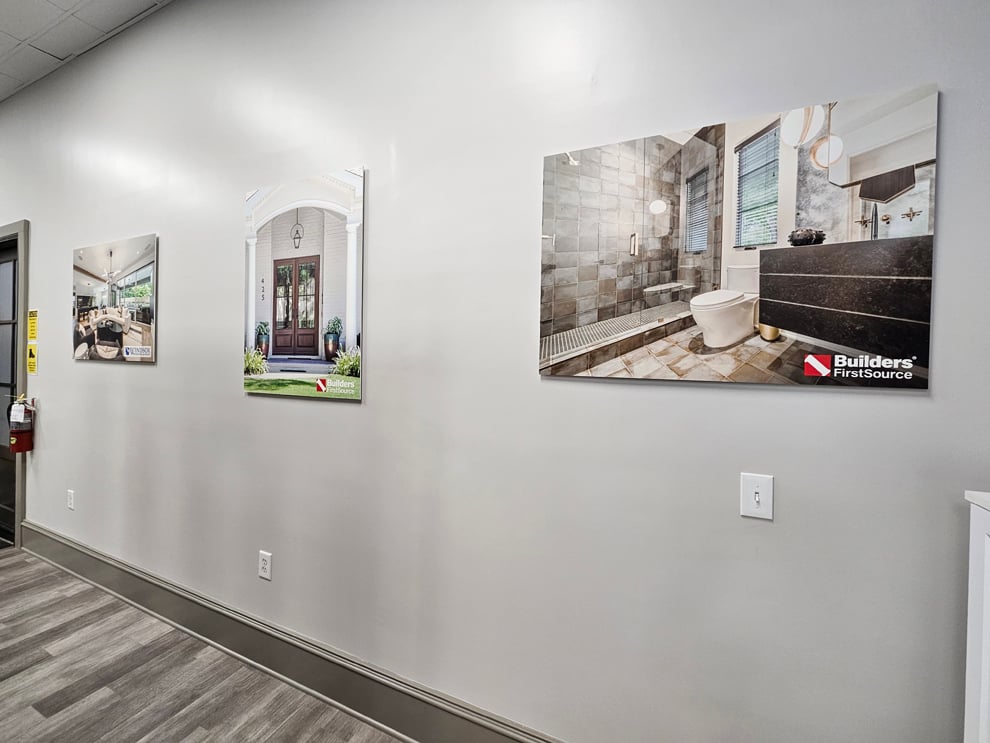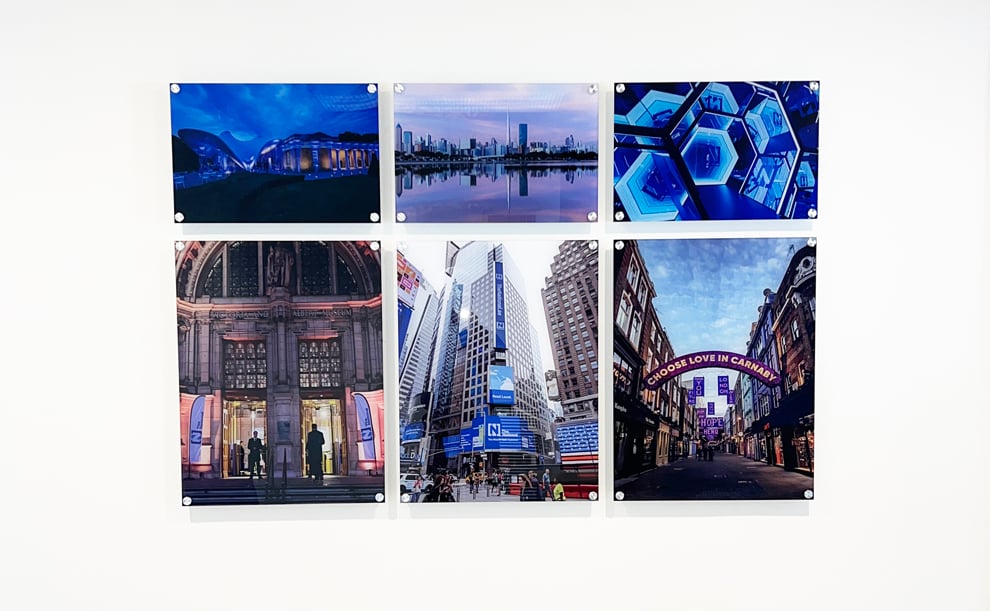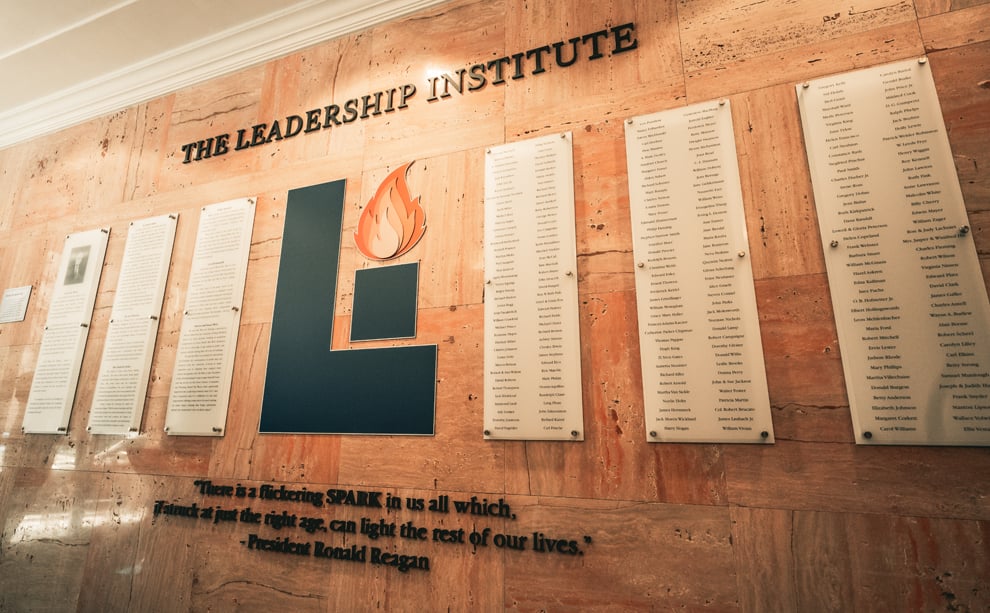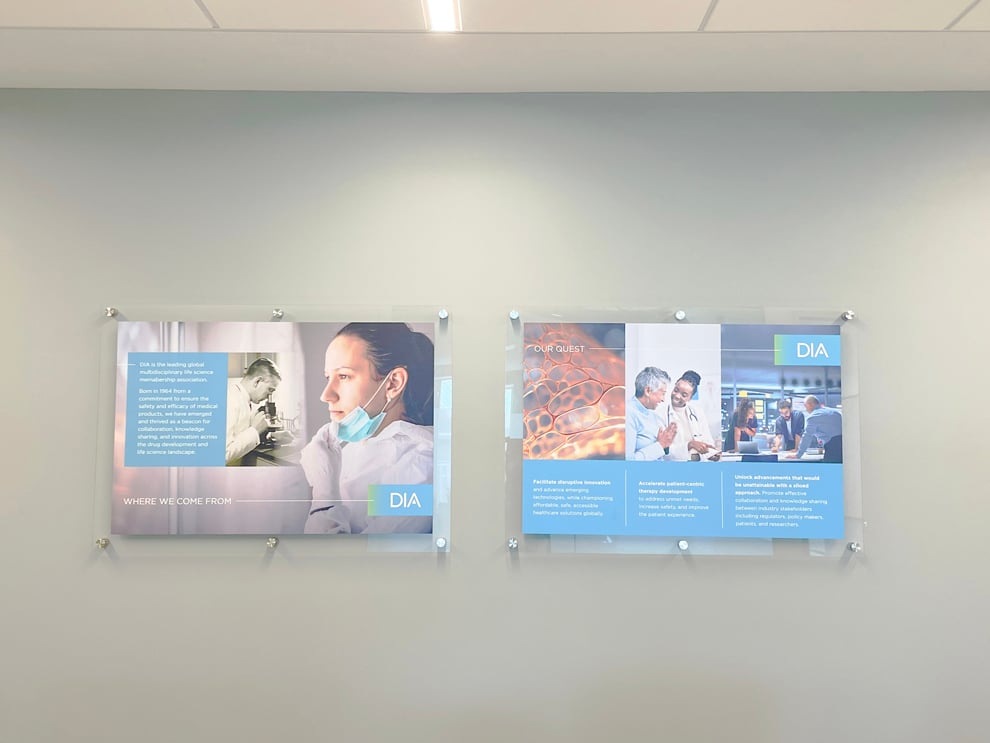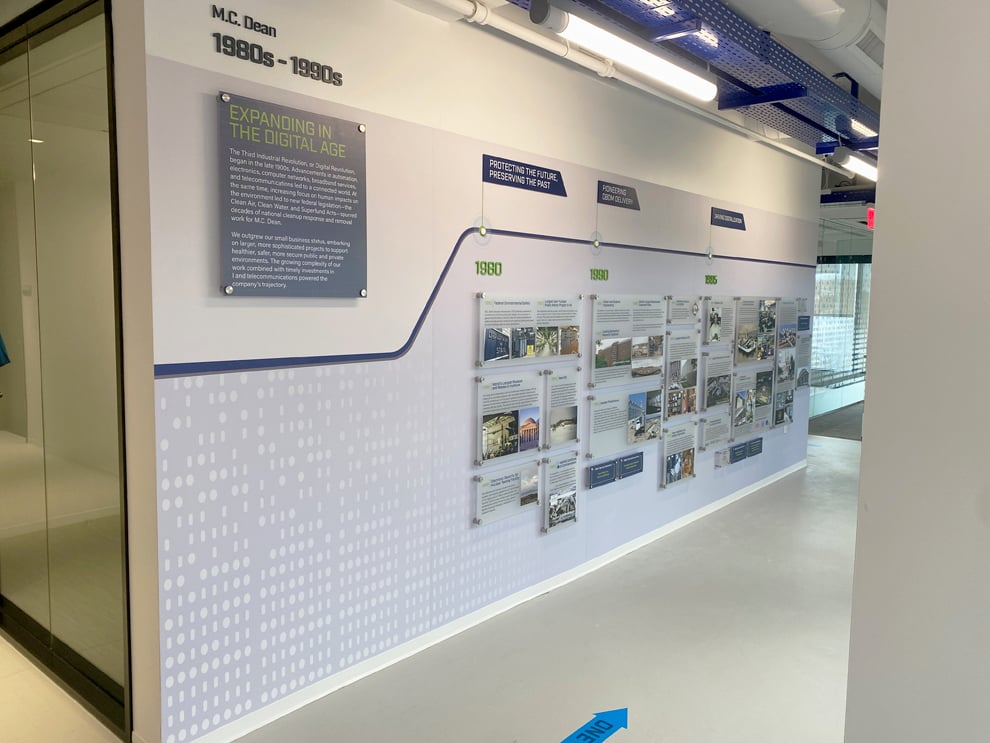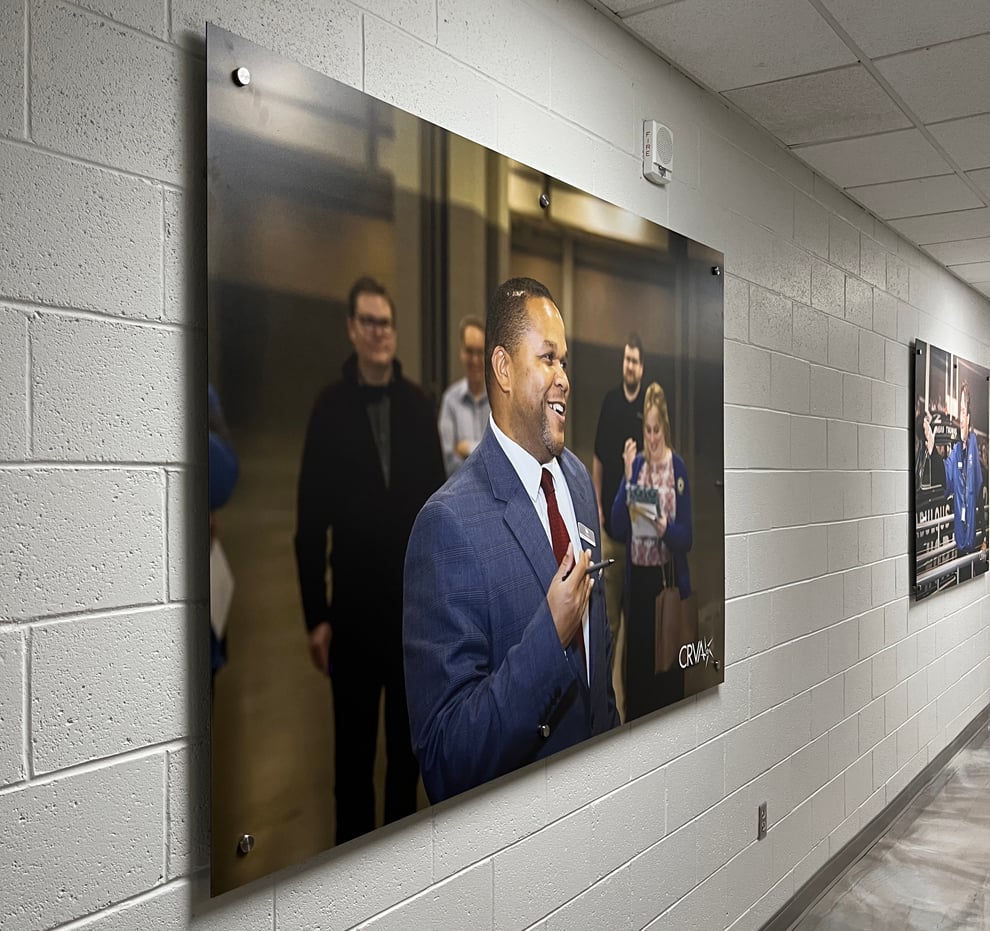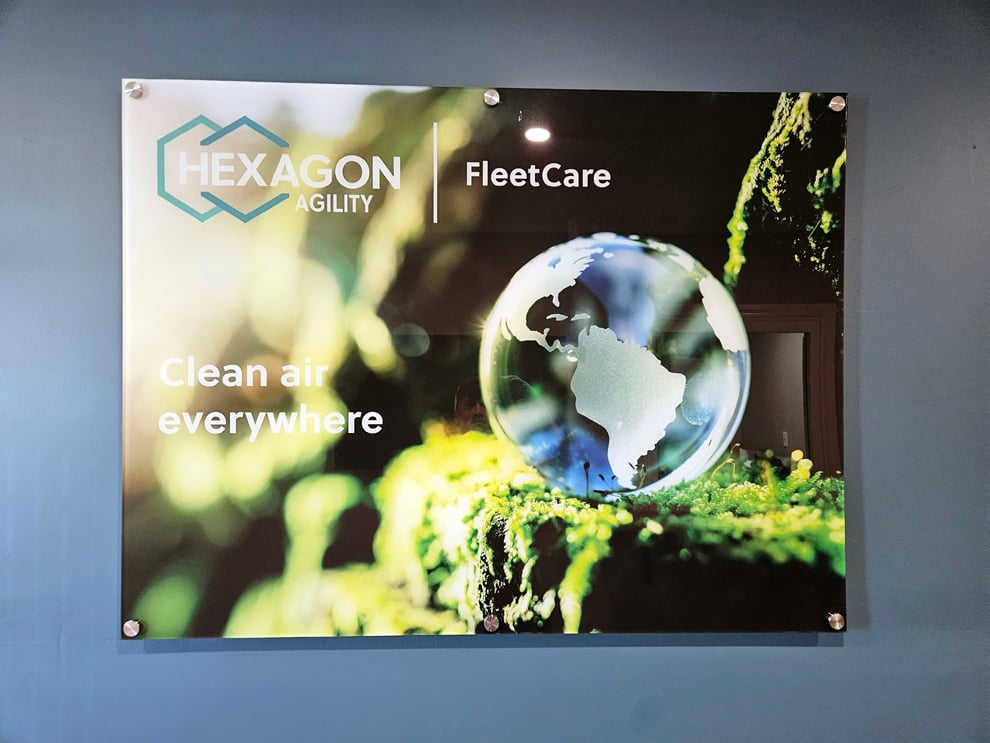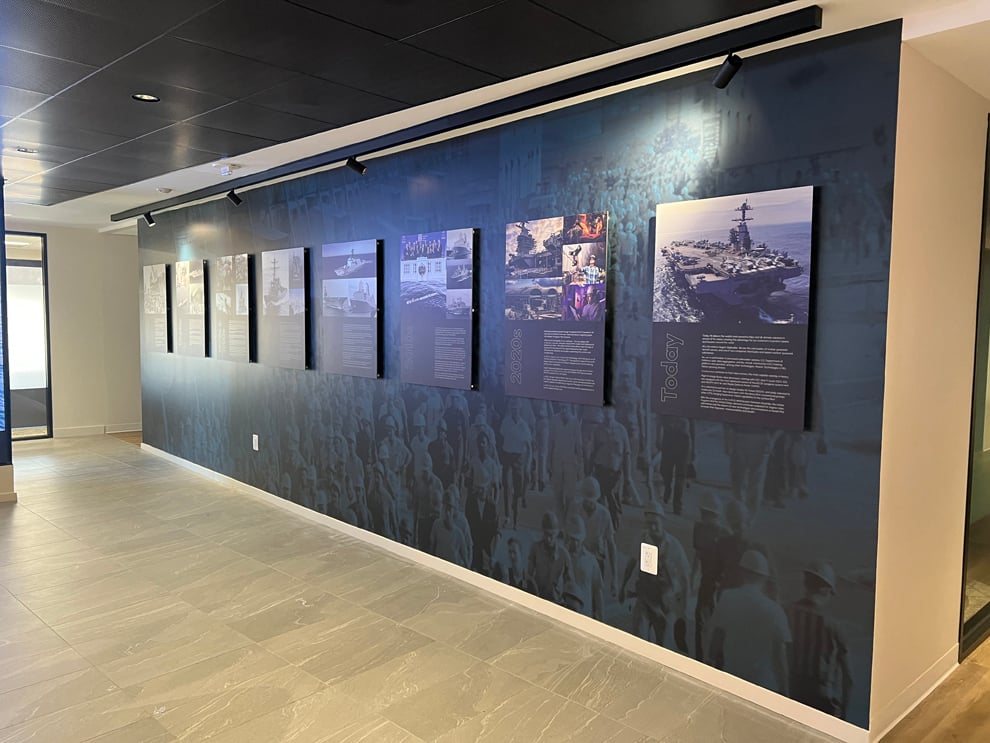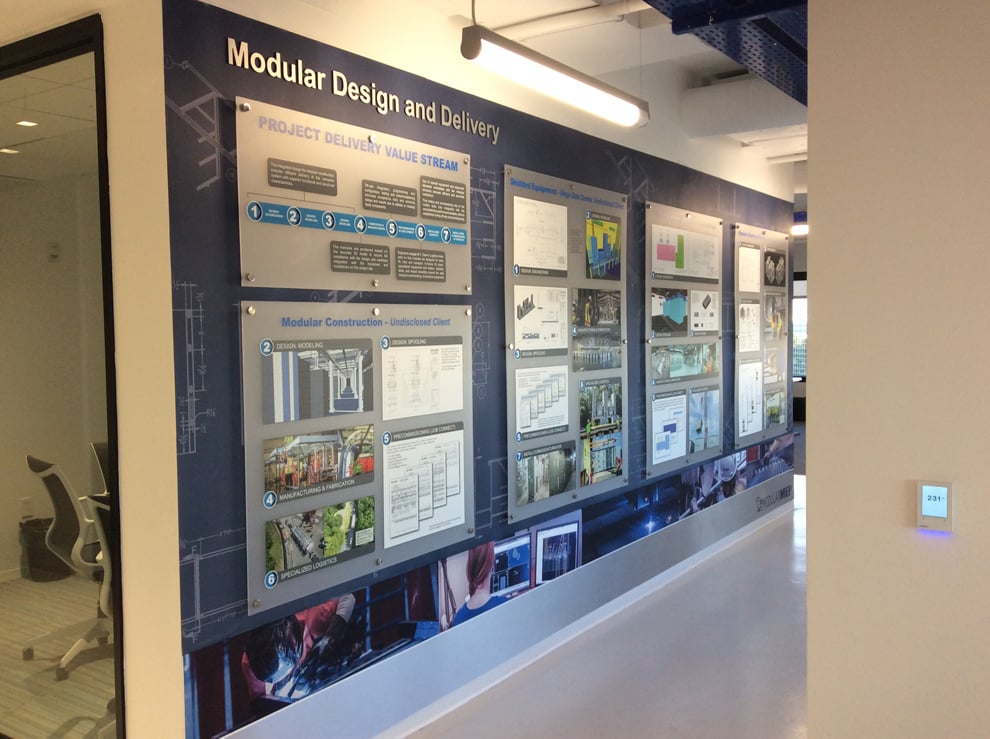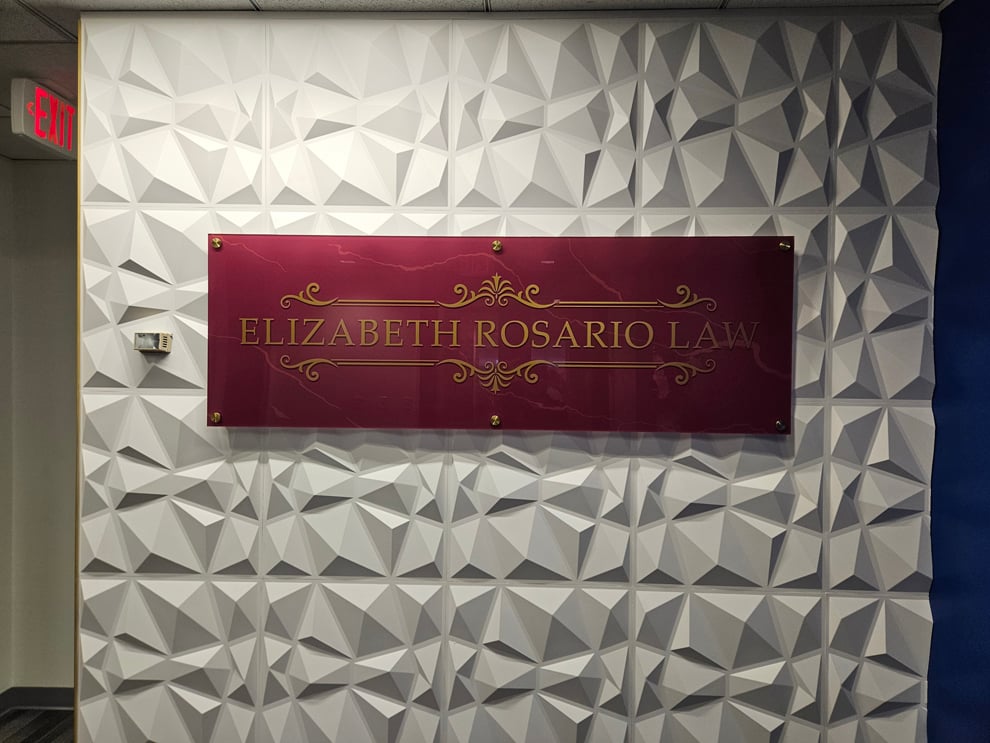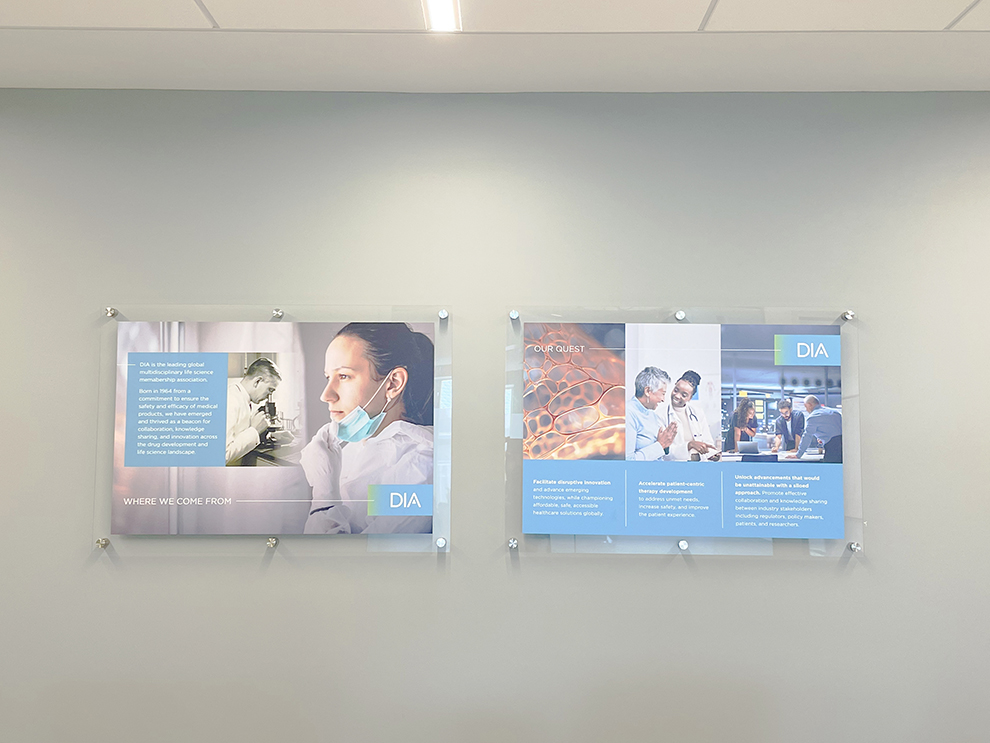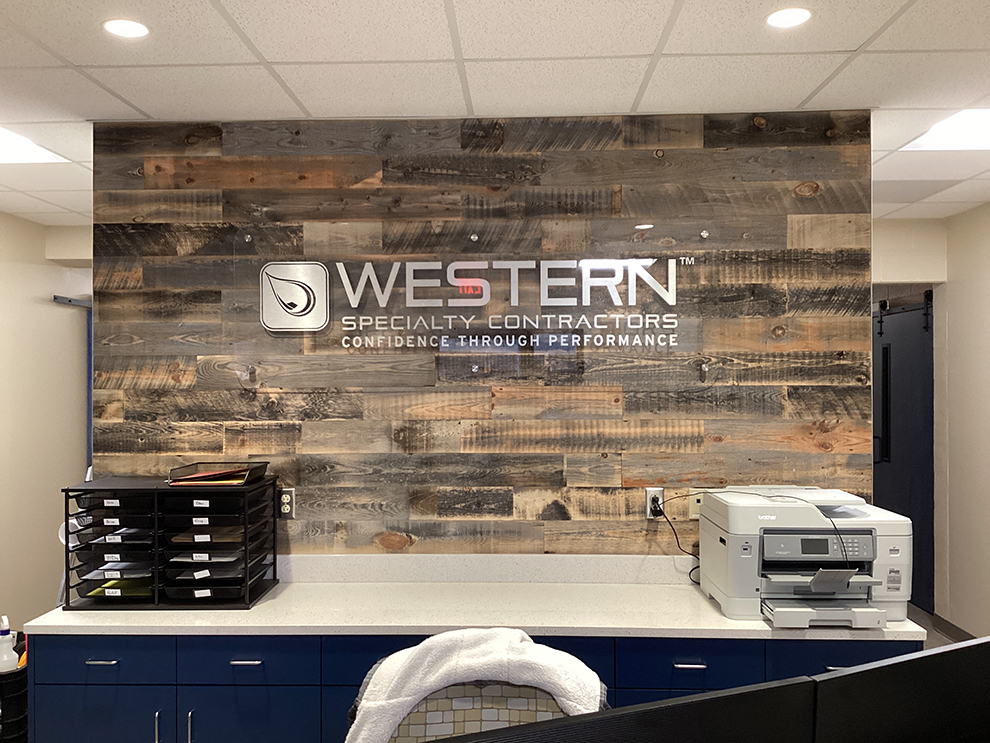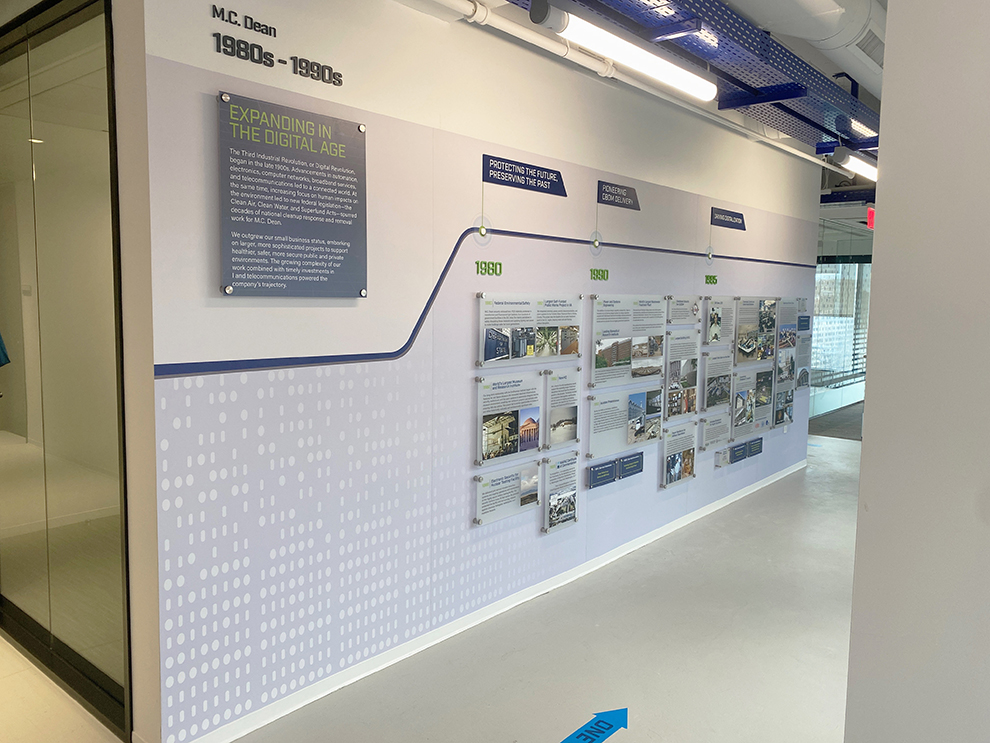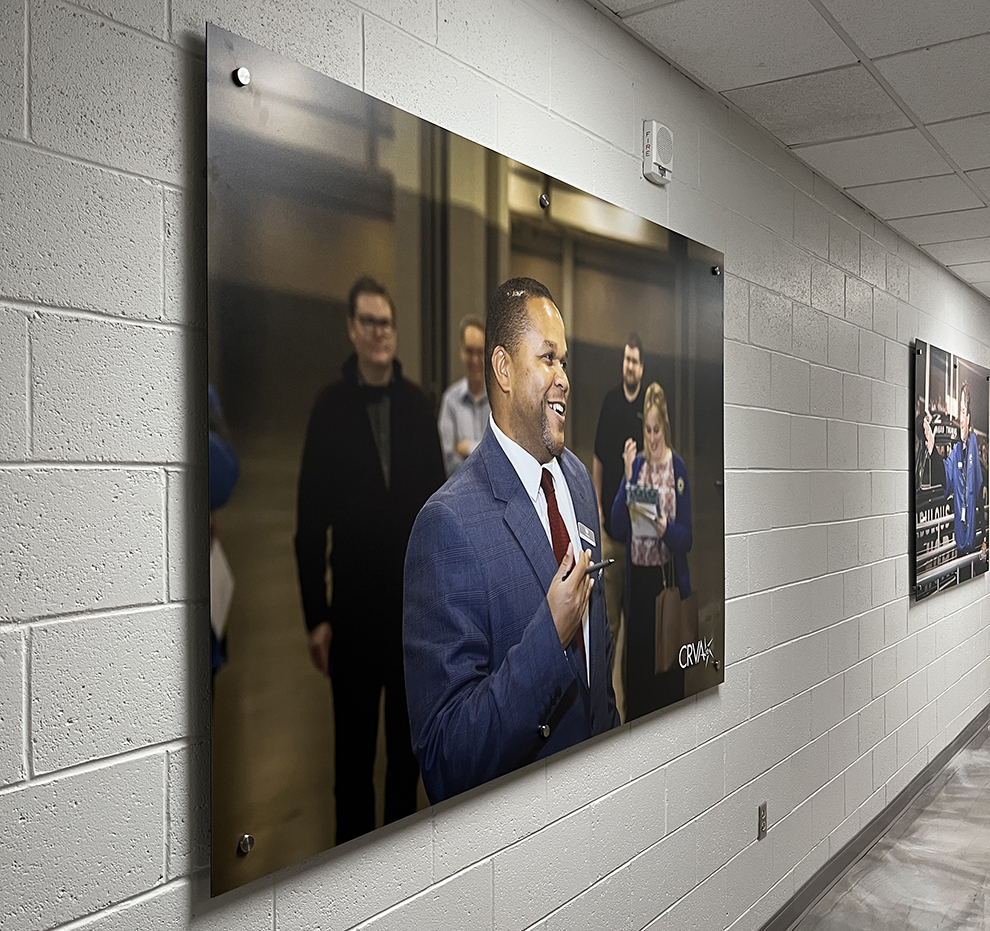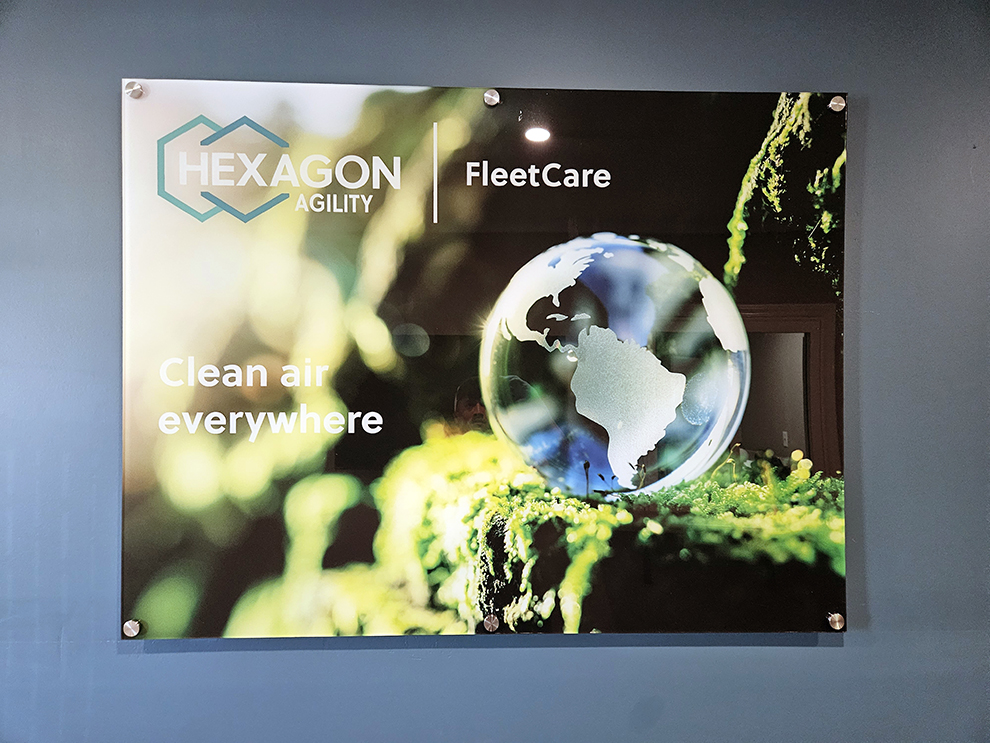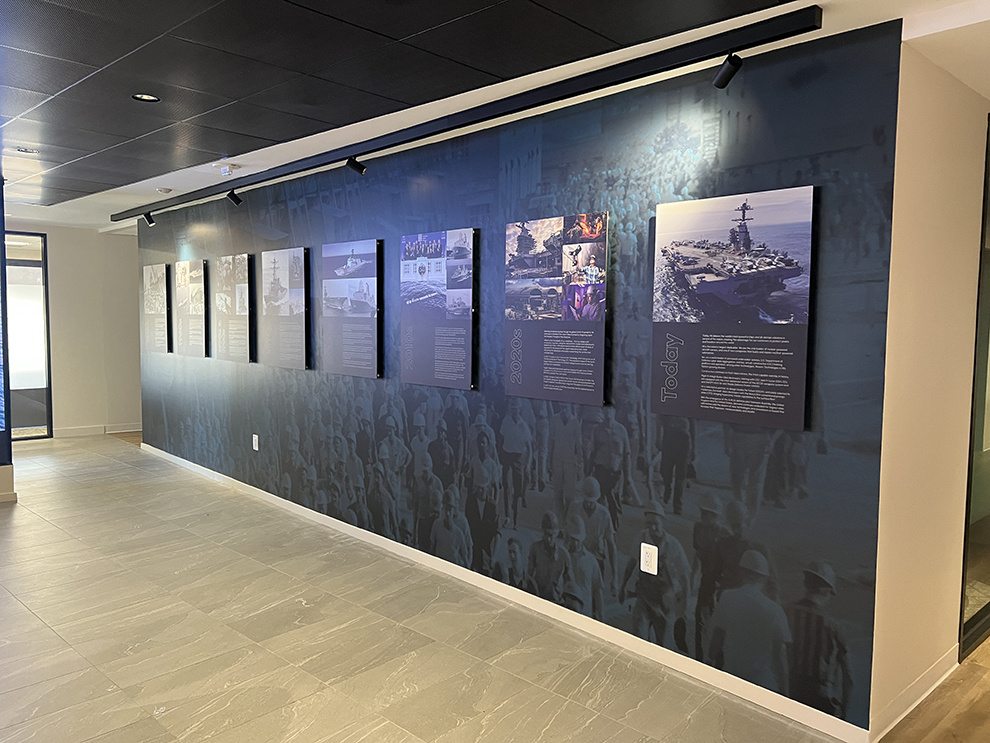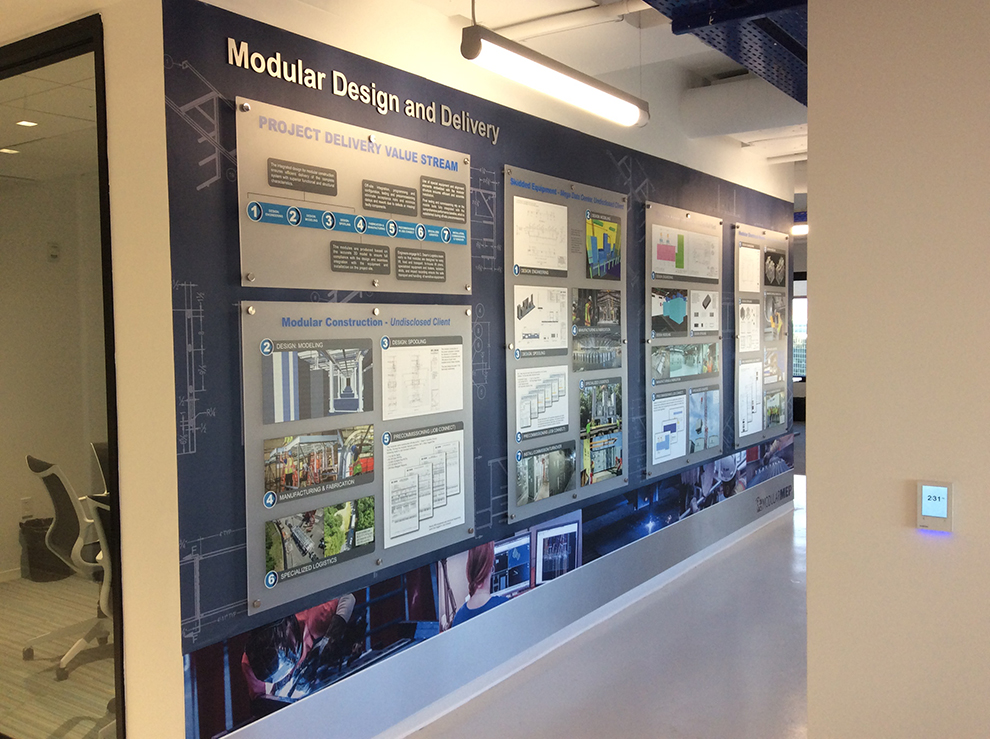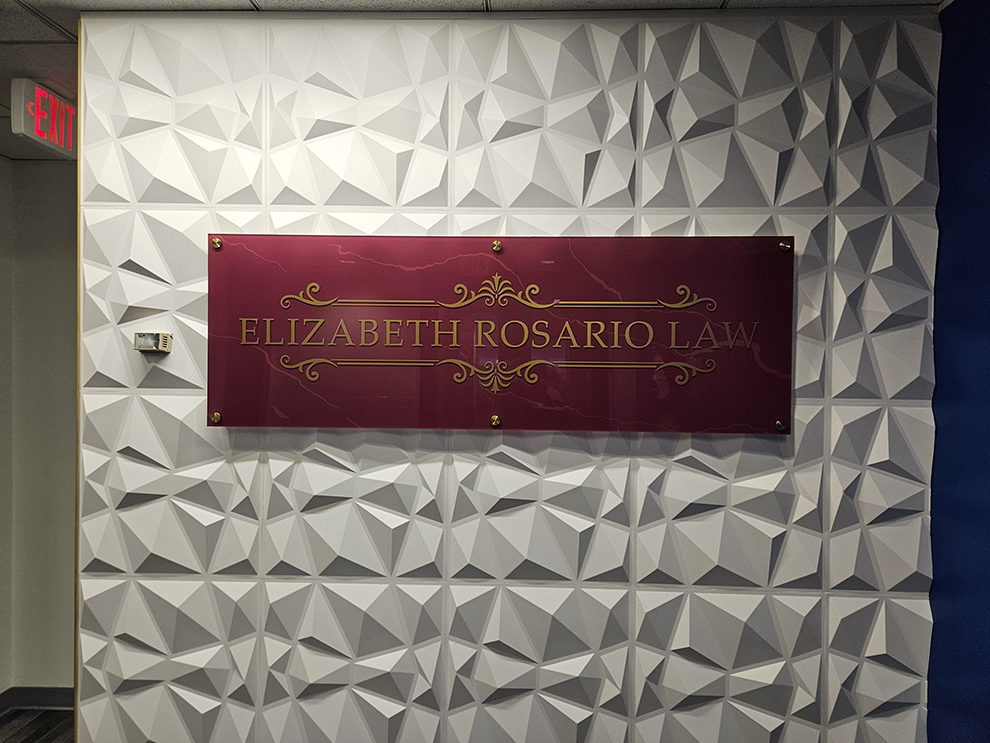
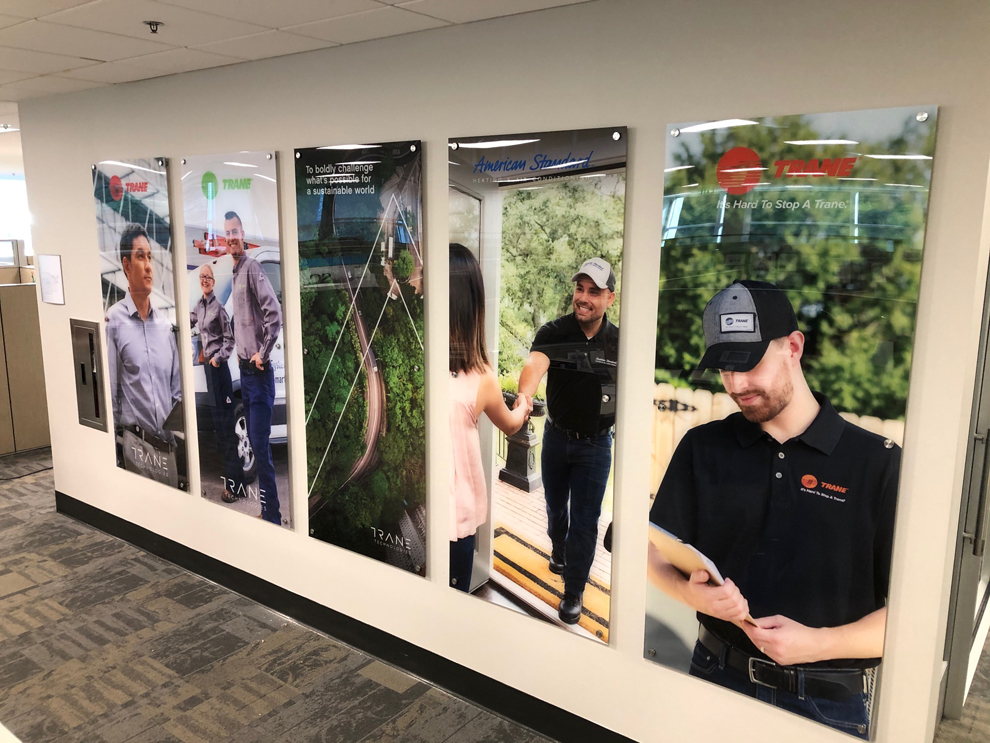
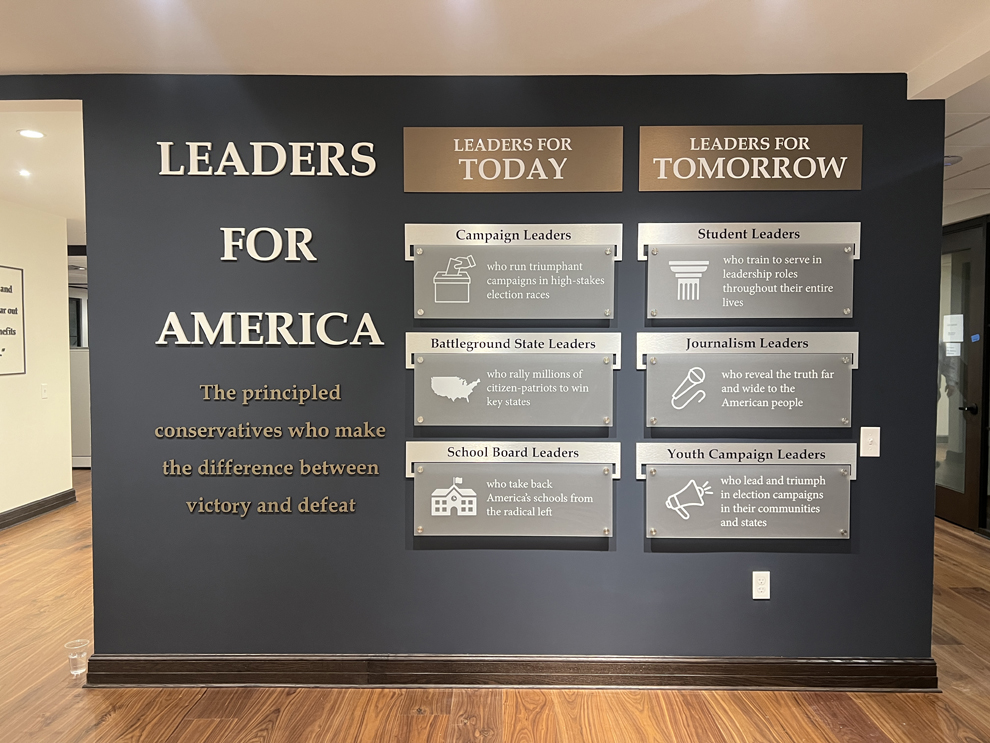
Standoff mounted signs create a polished, dimensional presentation by positioning a face panel away from the wall with visible metal supports. The space behind the panel produces subtle shadows and gives the display a floating appearance. Because the barrels and caps remain visible, the hardware becomes part of the design alongside the graphics, lettering, colors, and panel materials.
Organizations in Rock Hill, SC often select standoff mounted signs for permanent interior features that need to convey credibility and purpose. Heritage Signs & Displays is a veteran-owned, family-led company founded in 1977. We serve companies, healthcare organizations, educational institutions, nonprofits, churches, professional firms, associations, and public-serving organizations throughout Rock Hill and the Charlotte metropolitan area. Rather than beginning with a standard product, we consider the building, audience, brand, and communication goal before recommending a solution.
A new standoff sign may be part of an office relocation, facility renovation, organizational rebrand, donor campaign, corporate expansion, or significant anniversary. Common applications include lobby logo signs, mission and values displays, donor walls, employee recognition features, historical timelines, department markers, and permanent directories. We begin by defining what the wall needs to communicate. That purpose guides the dimensions, visual hierarchy, panel construction, hardware, and installation location.
Heritage coordinates environmental graphic design, project management, production, fabrication, and installation through one integrated process. A dedicated project manager guides each Rock Hill project through consultation, site verification, design development, client approval, production scheduling, and installation. This continuity helps ensure that approved designs can be fabricated accurately and installed securely on the actual wall surface.
Although acrylic is frequently used, the term standoff mounted describes how a display is attached rather than what it is made from. A sign may feature clear, frosted, or opaque acrylic, aluminum composite material, printed rigid panels, dimensional lettering, layered graphics, or replaceable inserts. The size, finish, placement, and projection of the standoff hardware influence how the completed display relates to the surrounding architecture.
Proper installation requires accurate drilling and fasteners selected for the wall substrate and panel weight. Removing or relocating the sign will typically leave holes that must be patched and refinished. For this reason, standoff mounting is most appropriate for permanent and semi-permanent displays. Temporary promotions, seasonal announcements, and event graphics generally benefit from a more flexible display system.
As a veteran-owned business, Heritage strives to honor God by serving our clients and communities with excellence. We put that commitment into practice by listening carefully, preparing responsible estimates, producing graphics accurately, protecting occupied facilities, and remaining accountable through final approval. Our goal is to create an interior feature that supports the organization and communicates effectively to everyone who enters the space.
The signature floating appearance comes from a complete mounting system. Barrels control the distance between the panel and wall, caps secure the face, and fasteners transfer the load into anchors appropriate for the substrate. Since the mounting hardware remains visible, its finish, diameter, spacing, and projection should complement the panel proportions and interior finishes.
This construction method is durable because it relies on mechanical attachment. Drilled mounting points and anchors provide stability, but they also make the installation difficult to move without repairs. A relocated panel may not align with the original holes, even when it remains on the same wall.
Organizations expecting regular content revisions should consider modular sections, replaceable inserts, or interchangeable face panels. These options can preserve the dimensional standoff appearance while making future names, dates, departments, or messages easier to update.
Before releasing a project for production, we evaluate panel weight, edge treatment, hardware spacing, drilling templates, anchor requirements, cleaning clearance, and component tolerances. Even a small alignment error can become noticeable when several polished caps appear in a straight row. Careful planning is what separates a refined standoff display from an ordinary panel attached to a wall.
An effective interior display begins with a clear purpose. A company near Knowledge Park may need a strong reception feature, a Winthrop University department may need a recognition display, a healthcare provider may need consistent identification, and a York County nonprofit may want to share its history with visitors and supporters. Understanding the objective allows us to recommend the right materials, scale, and construction.
Every decision affects the next. Message length influences panel dimensions. Panel dimensions influence hardware placement. Hardware placement affects anchor selection and access behind the wall. Installation access can also influence production schedules and building coordination. We address these details together to reduce preventable conflicts.
Our consultative process considers:
Keeping consultation, environmental graphic design, fabrication, and installation within one Heritage-managed project provides practical continuity. Questions about color, materials, tolerances, hardware, or wall conditions are handled by a team that understands the approved design. Rock Hill clients have one accountable point of contact rather than coordinating separate designers, fabricators, and installers.
Standoff mounting is one of several ways to create a dimensional branded environment. These related sign and display options can be used independently or combined with a standoff system.
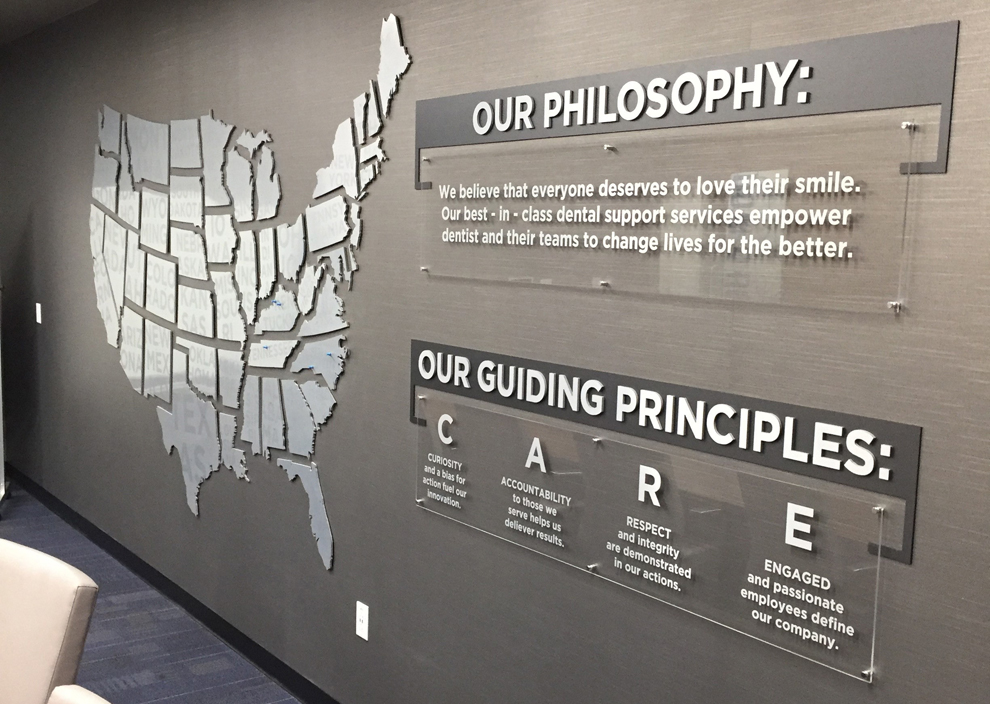
Lobby signs introduce an organization at the primary point of arrival. A standoff mounted panel can give a reception area depth, visible structure, and a professional focal point.
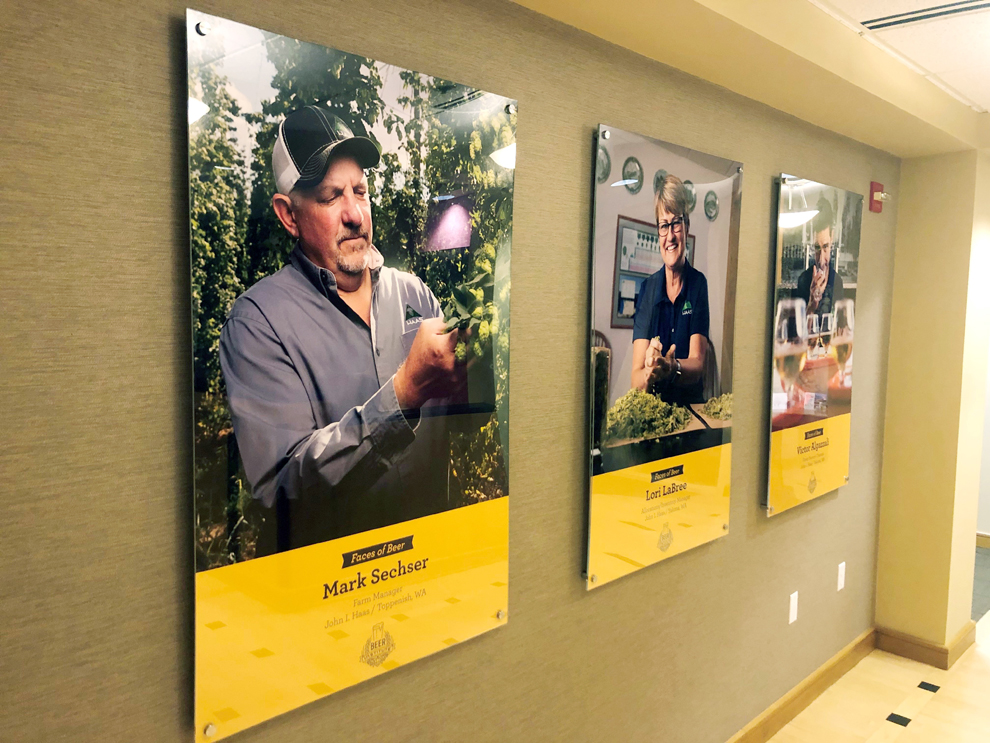
Acrylic signs may be transparent, frosted, opaque, printed, or layered. They can be mounted with visible standoffs or installed using concealed attachment methods, depending on the desired appearance and wall conditions.
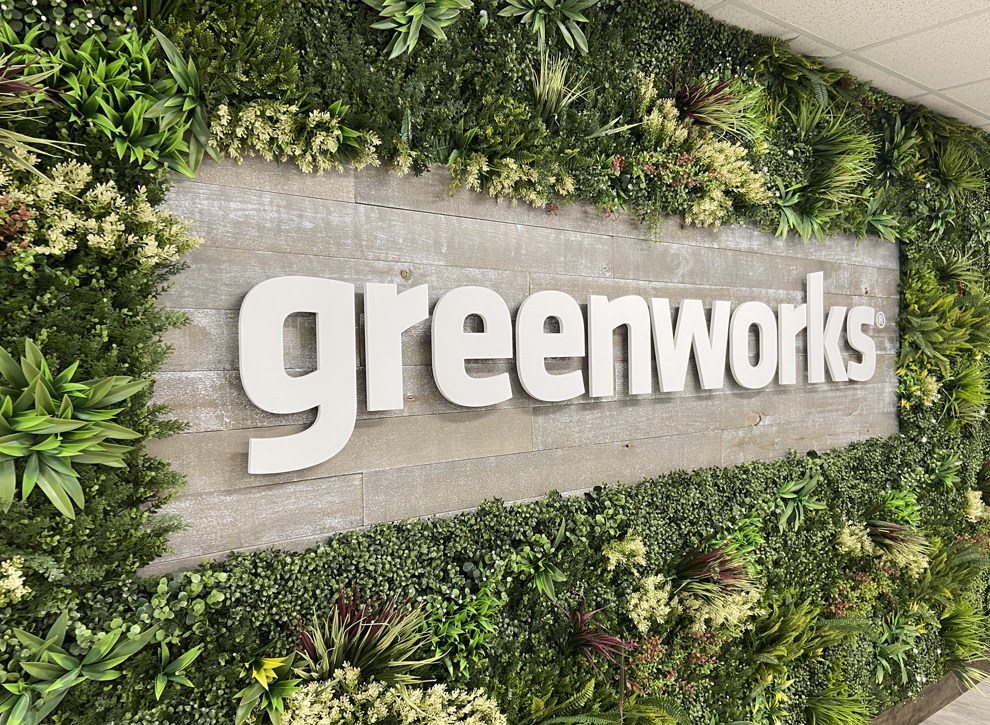
Dimensional letters and logo elements provide depth without requiring a full background panel. They may be mounted directly to the wall or incorporated into a layered standoff display.
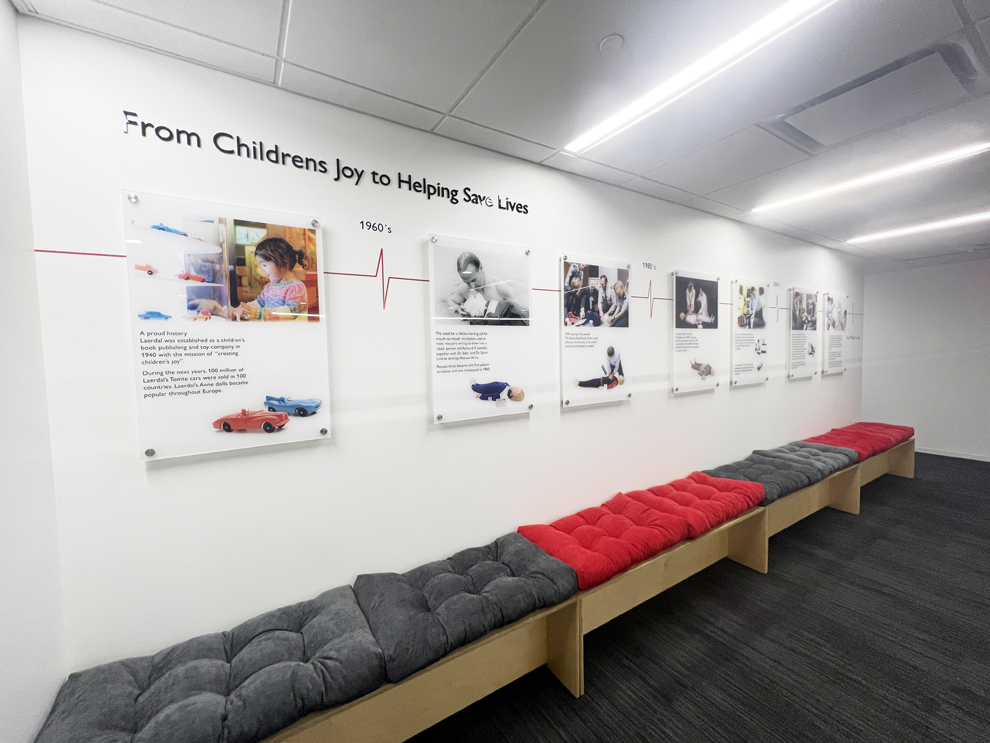
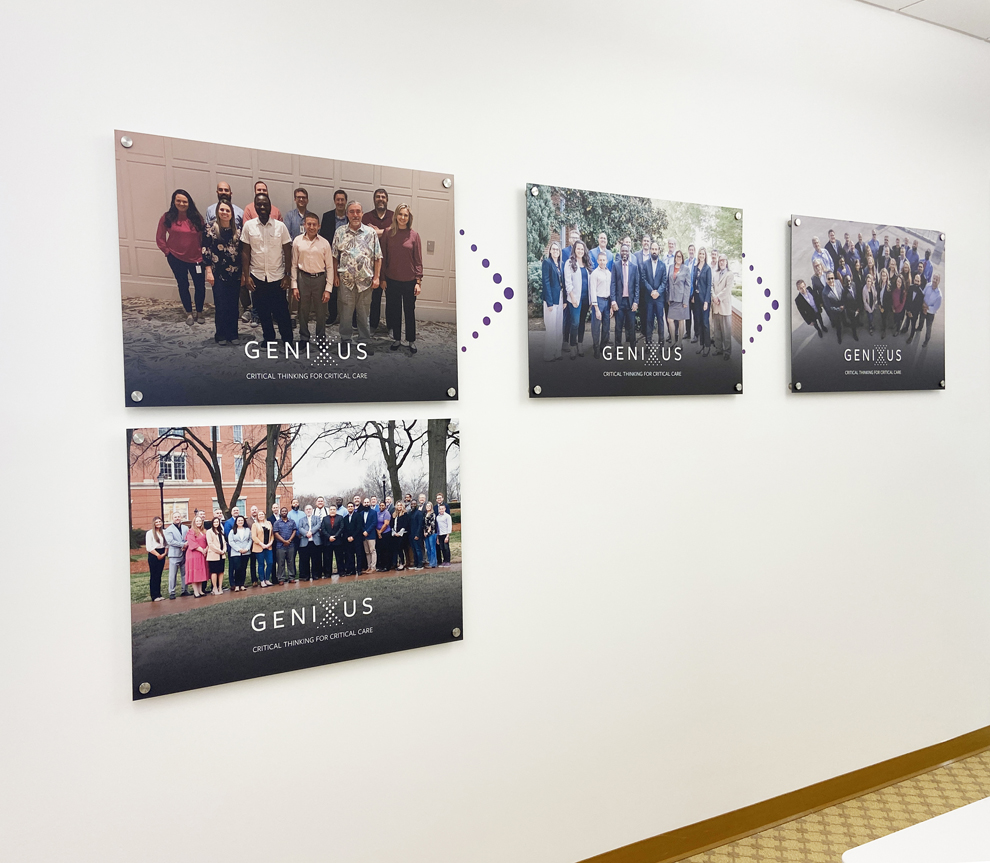
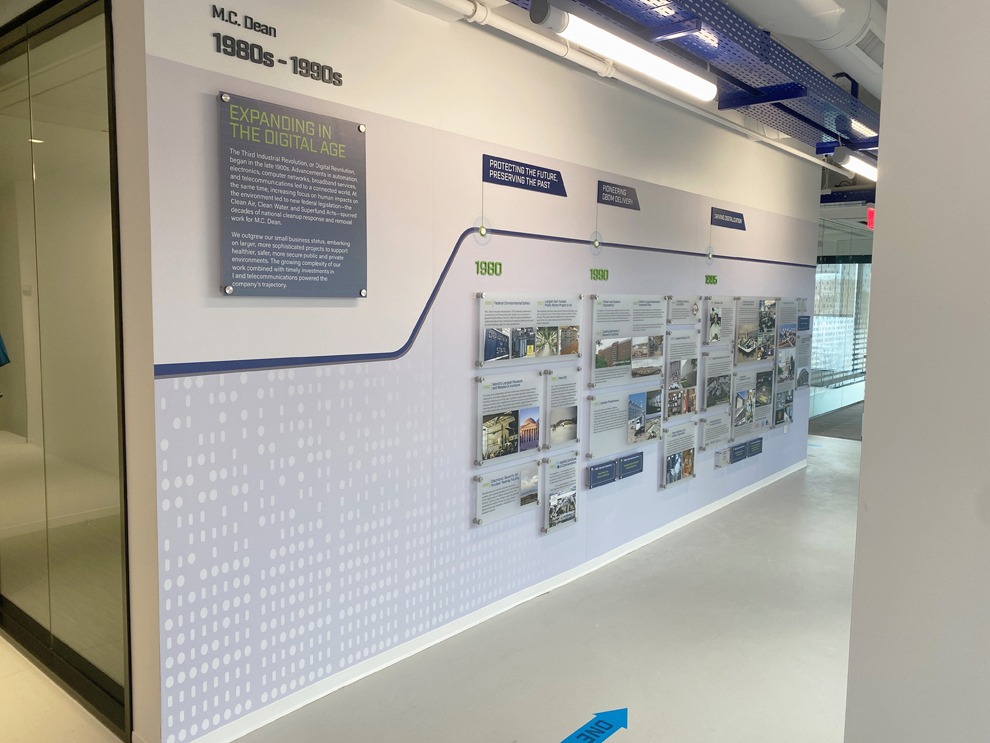
Custom wall displays can combine company history, photographs, organizational values, recognition content, and branded graphics. Modular standoff panels help organize complex information and can provide room for future expansion.
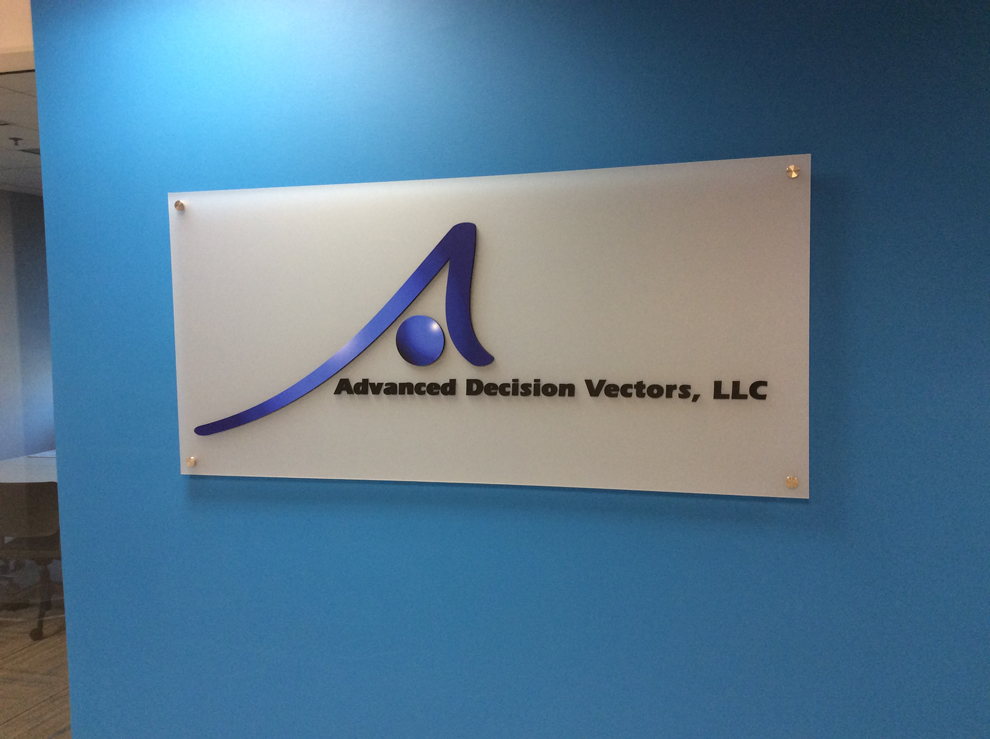
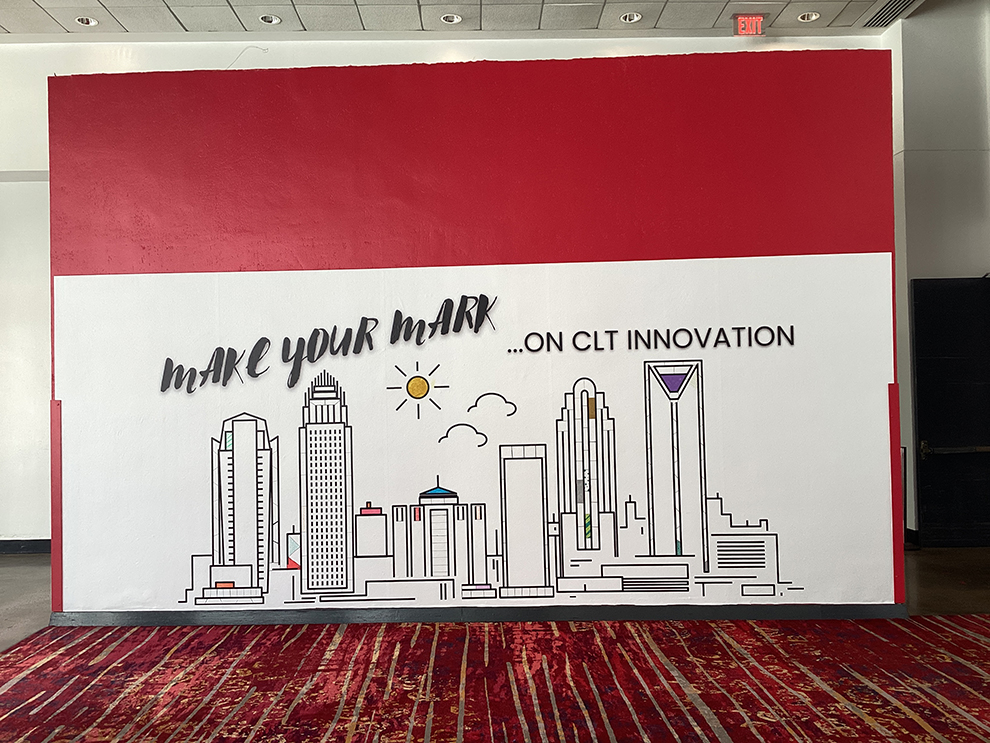
Wall murals cover larger surfaces with branded imagery, colors, or storytelling graphics. A mural can also serve as a visual background that connects several projected panels into one coordinated installation.
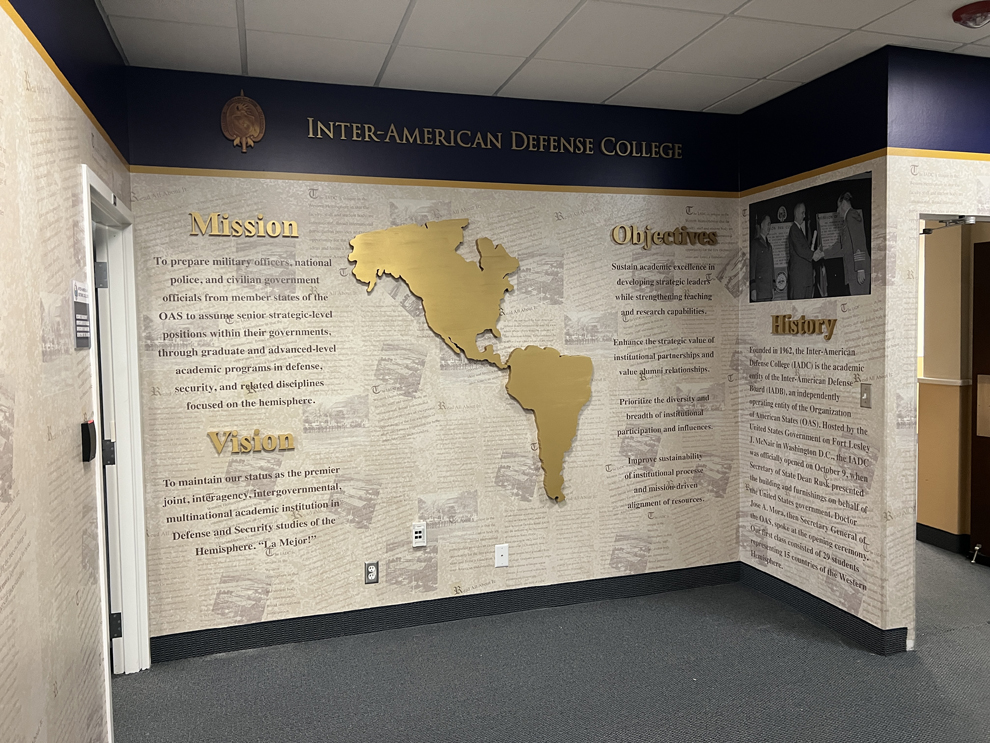
Backlit signs make illumination a central part of the presentation. When lighting is the primary design feature, a purpose-built illuminated sign is often more effective than adding lighting to a standard standoff panel.
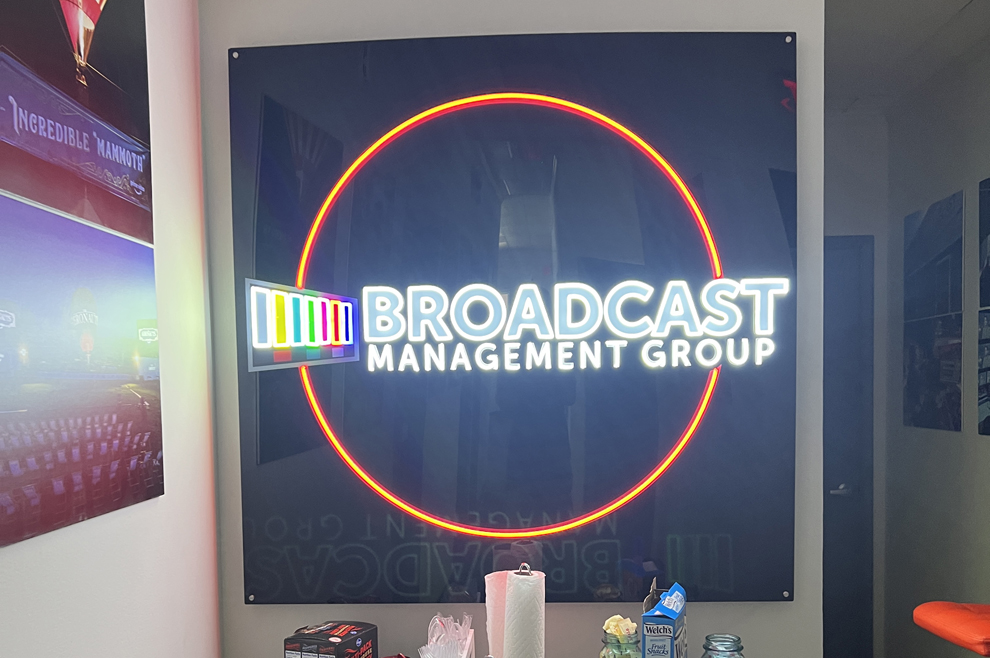
Frosted vinyl adds privacy and understated branding to glass doors, office fronts, and conference rooms. It can complement nearby standoff signs while maintaining a consistent interior design.
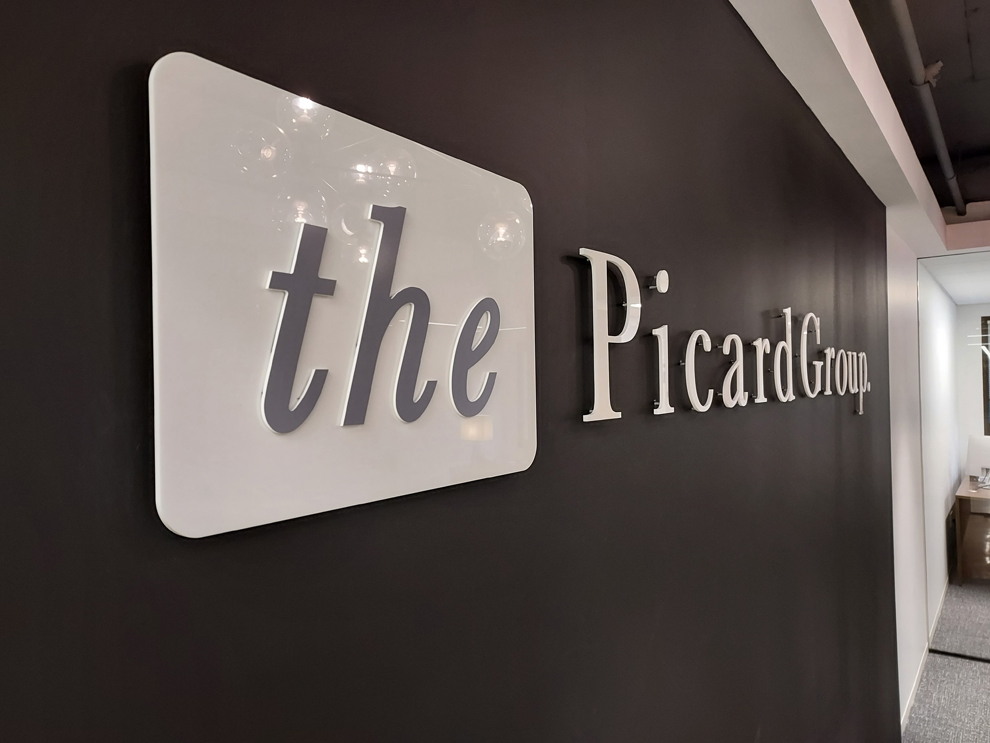
Elevator wraps transform high-traffic spaces with branded visuals, company messaging, and promotional graphics. They can also extend the visual story established by lobby signage or wall displays.
If you are planning an office relocation, facility renovation, donor program, rebrand, or new reception area, Heritage Signs & Displays can develop a standoff mounted feature tailored to your Rock Hill location. We design the display with fabrication and installation requirements in mind from the beginning.
Submit the Get Started Now form with as much information as possible, including: Installation address, Desired completion date, Intended message and audience, Brand standards or vector artwork, Photographs of the wall, Approximate dimensions, Known wall construction, Building access restrictions, Expected future content changes, Anticipated overall investment
Our team will review the scope, identify any missing site information, and explain the next step for your Rock Hill standoff sign project.
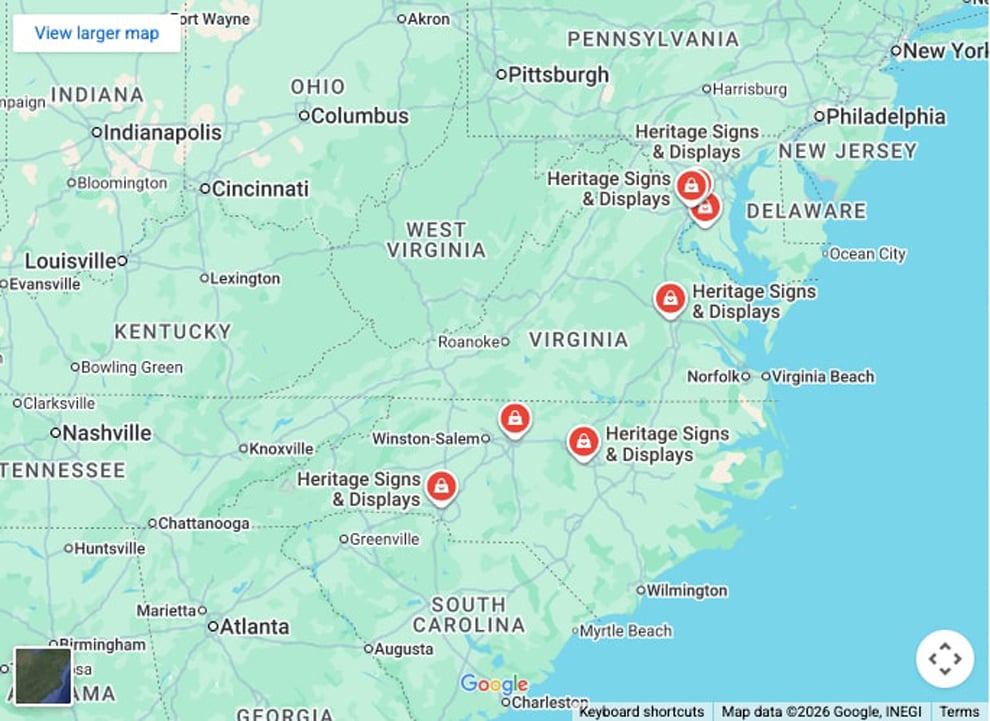
Heritage serves organizations throughout Rock Hill, York County, and the greater Charlotte area. We support projects in Old Town Rock Hill, Knowledge Park, Riverwalk, Newport, India Hook, and surrounding commercial areas. Our service area also includes Fort Mill, Tega Cay, York, Lancaster, Indian Land, Pineville, and Charlotte.
Rock Hill includes a diverse mix of corporate offices, healthcare facilities, educational environments, industrial operations, churches, nonprofits, and growing businesses. Each type of organization uses interior signage differently. A professional office may want a restrained lobby display, while a community organization may need a recognition wall that celebrates supporters and local impact. A manufacturing facility may require coordinated identification and company values displays across administrative areas.
Projects can range from one signature reception panel to a coordinated group of displays installed throughout multiple floors or locations. For organizations with facilities across South Carolina and North Carolina, one Heritage project manager can help maintain consistent materials, colors, typography, and hardware standards.
Consistency does not mean treating every building the same. Each location requires an individual review of dimensions, substrates, access, lighting, sightlines, and audience needs. A display designed for a historic Old Town property may require a different installation approach than one intended for a newer office near Riverwalk or a corporate facility along the Interstate 77 corridor.
Environmental graphic design connects information and branding to the physical space where people experience them. A visitor entering a Rock Hill lobby should quickly understand whose facility they have entered and where they need to go. Employees who pass the same display every day should encounter content that reinforces organizational identity without overwhelming the environment.
We translate those communication goals into practical design decisions. Our designers evaluate the wall dimensions, viewing distance, typography, contrast, content sequence, imagery, panel arrangement, material selections, hardware finishes, projection depth, and available lighting. When future names or milestones are expected, space for expansion can be incorporated from the beginning.
Designing for the environment also means accounting for physical limitations. Panel tolerances, seams, mounting locations, cleaning access, wall finishes, visual obstructions, and architectural alignments can all affect the final layout. These issues are addressed before fabrication whenever possible.
Because our designers coordinate with our production and installation teams, feasibility questions can be resolved early. This integrated approach helps protect brand standards while ensuring the final concept can be manufactured and mounted successfully.
A standoff display makes alignment especially visible. Uneven spacing, inconsistent projection, or an out-of-level panel can be noticed from across a room. For that reason, the mounting layout is established as part of the project plan instead of being improvised during installation.
Before arriving on site, we review available drawings, photographs, measurements, and information about the wall. Depending on the project, our team may also assess:
Large, layered, illuminated, or multi-panel installations may require a site survey before fabrication. Field verification helps confirm dimensions, architectural alignments, mounting surfaces, and access conditions.
Heritage installs standoff signs and displays that we produce, fabricate, or procure as part of a Heritage-managed project. We do not provide installation-only services for signs purchased from another manufacturer. Keeping design, production, hardware selection, and installation under one responsibility helps us protect the quality of the completed display.
Heritage is a strong fit for organizations seeking a professionally managed interior signage project. The scope may involve one prominent reception sign or a broader program combining identification, history, recognition, and branded wall graphics.
Heritage-managed projects begin with an anticipated overall project investment of $3,000. This amount applies to the complete project, not to each panel, letter, or piece of standoff hardware. A qualifying project might include a custom-designed lobby panel with field verification and professional installation. It could also involve a modular donor wall with replaceable sections.
Final pricing depends on factors such as:
We communicate service boundaries early so organizations can evaluate whether Heritage is the right partner. We do not provide traditional exterior sign programs such as monument signs, pylon signs, or channel letters. Exterior standoff mounted panels may be possible when the wall, anchoring method, materials, graphics, weather exposure, and applicable requirements support the installation. Every exterior application must be evaluated individually.
Standoff mounting is also not recommended for short-term messaging. Since the system requires drilled attachment points, removing the display will permanently affect the wall surface.
Yes. A true standoff installation requires drilled mounting points and anchors or fasteners appropriate for the substrate and total panel load. Adhesive alone cannot provide the mechanical support needed for the barrels and projected panel.
The hole pattern must align with the fabricated panel and hardware. Accurate drilling keeps the sign level, evenly spaced from the wall, and securely attached.
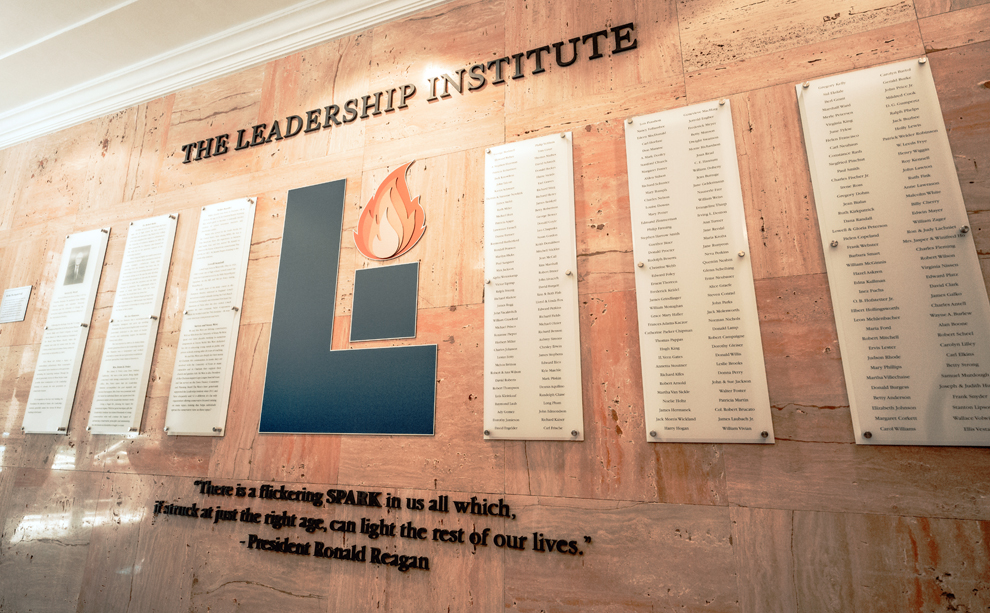
Standoff panels can organize contributors by campaign, giving level, program, date, or other categories. The dimensional construction creates a distinguished presentation suitable for educational institutions, healthcare organizations, churches, foundations, and nonprofits.
If additional names are expected, modular panels or replaceable inserts can simplify future updates. The original design should account for expansion capacity, reading distance, update procedures, and material consistency.
Heritage-managed projects begin with an anticipated overall project investment of $3,000. This is a starting point for the complete project rather than the cost of an individual panel, letter, or standoff.
The final investment depends on dimensions, design requirements, materials, fabrication complexity, wall conditions, access, installation, and any related interior graphics. Clients can use the Get Started Now form to indicate the budget range anticipated for the full scope.
Many interior wall surfaces can support standoff signs when the construction and load capacity are understood. Possible substrates include drywall, drywall with blocking, wood, concrete, masonry, tile, and certain specialty finishes.
Each surface requires an appropriate drilling and anchoring method. Panel weight, hardware position, edge distance, and concealed electrical or mechanical systems may also affect the installation. Fragile, uneven, or undocumented surfaces can require additional evaluation.
Certain standoff displays can incorporate halo lighting, backlighting, or illuminated dimensional elements. The design must account for electrical access, wiring, mounting depth, ventilation, service access, wall construction, and applicable codes.
When illumination is intended to be the primary visual feature, a dedicated backlit sign system may provide a better result than a standard panel with supplemental lighting.
No. Heritage does not offer installation-only services for signs or displays manufactured by another provider. Successful installation depends on panel tolerances, hardware compatibility, templates, anchor requirements, fabrication quality, and the assumptions established during design.
We install signs that we produce, fabricate, or procure within a Heritage-managed project. This keeps responsibility connected from initial planning through final placement.
Yes, if updateability is incorporated into the original design. Replaceable inserts, removable face panels, modular sections, and planned expansion areas can support future donor names, employee recognition, department changes, or company milestones.
The update strategy affects panel divisions, mounting hardware, production files, and installation templates. Planning for changes at the beginning is usually more efficient than modifying a fixed display later.
A site survey is recommended when measurements, wall construction, architectural alignment, electrical conditions, mounting access, lighting, or building procedures cannot be confirmed from drawings and client-provided information.
Large, illuminated, layered, or multi-panel displays often benefit from field verification. The findings allow the project manager to coordinate fabrication templates, anchoring plans, installation access, and scheduling around actual site conditions.
Service life depends on material quality, fabrication accuracy, hardware selection, wall stability, sunlight, moisture, temperature changes, physical contact, and cleaning practices. Interior standoff signs made with suitable materials are intended for long-term use.
Modular or replaceable content can extend the display’s usefulness. Abrasive cleaning, wall damage, unsuitable mounting surfaces, or unplanned modifications may reduce its appearance or service life.
Heritage Signs & Displays is a veteran-owned, family-led company founded in 1977. Rock Hill clients work with environmental graphic designers, project managers, production specialists, fabricators, and professional installers through one coordinated process.
This structure allows brand standards, materials, wall conditions, mounting hardware, schedules, and installation details to be addressed together. We also support organizations with locations throughout South Carolina, North Carolina, and the Charlotte metropolitan area while adapting every installation to the conditions of its specific building.
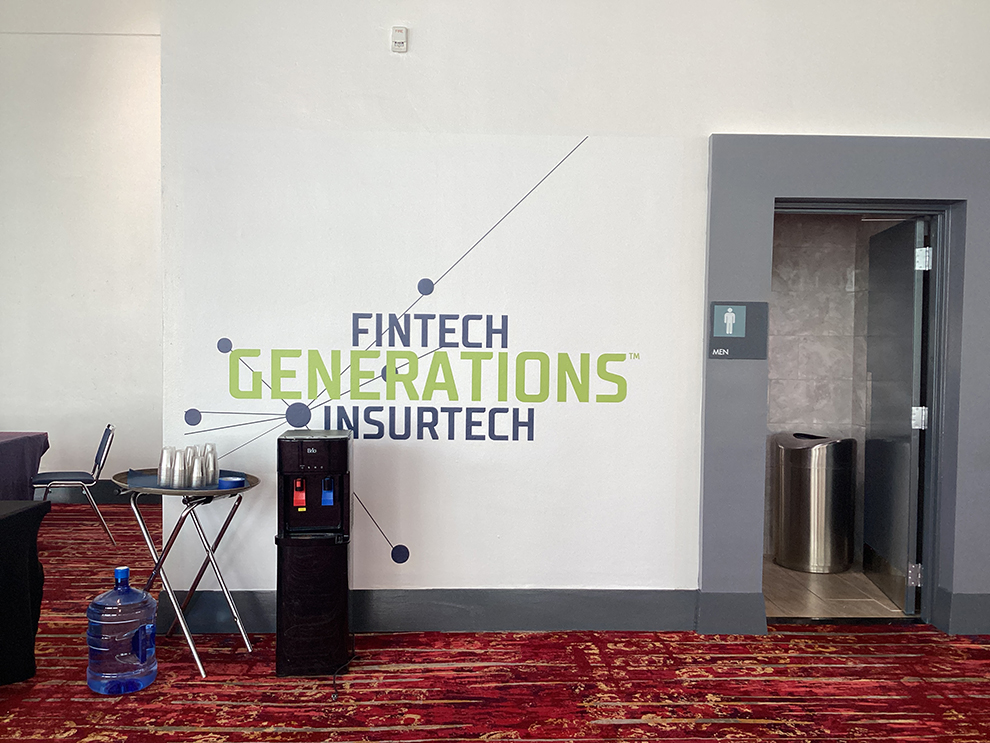
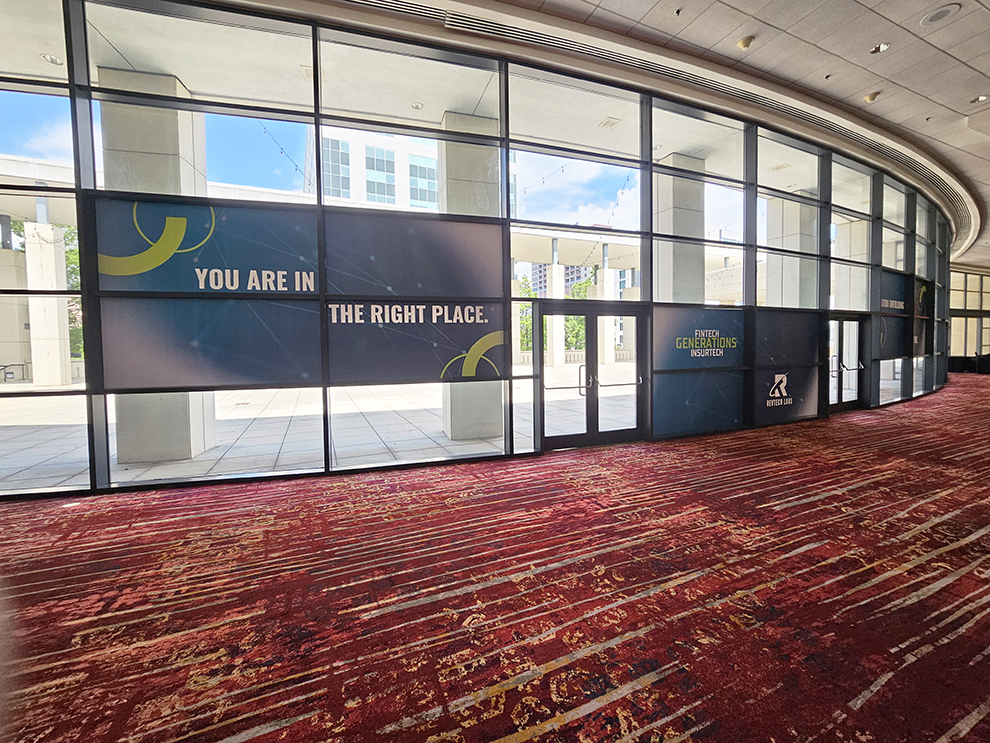
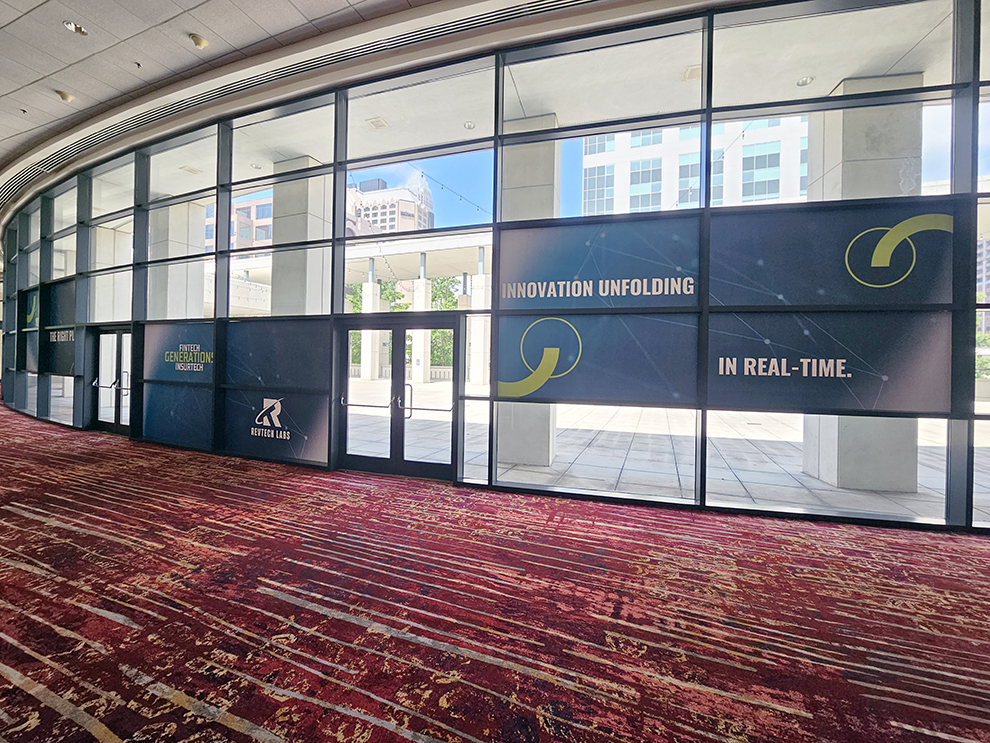
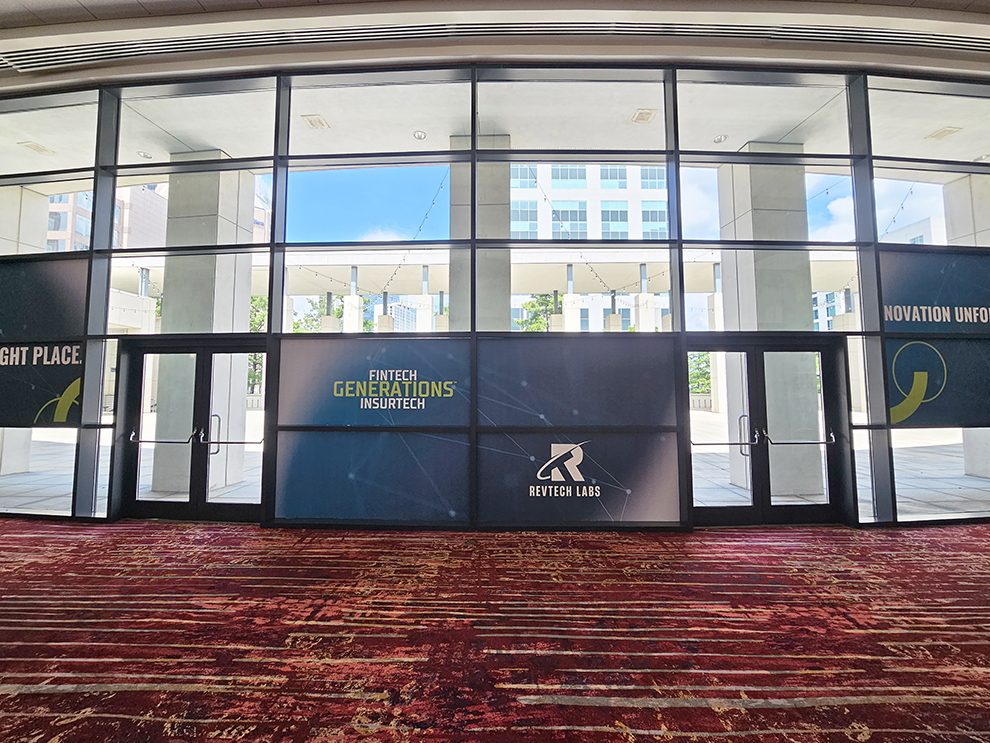
Heritage Signs & Displays collaborated with the Fintech + Insurtech Generations 2023 conference at the Charlotte Convention Center. Heritage worked closely with the client to create an interactive and branded event environment for attendees to network and discuss key topics impacting the financial and insurance sectors. The project enhanced the premier annual conference's atmosphere and engagement.
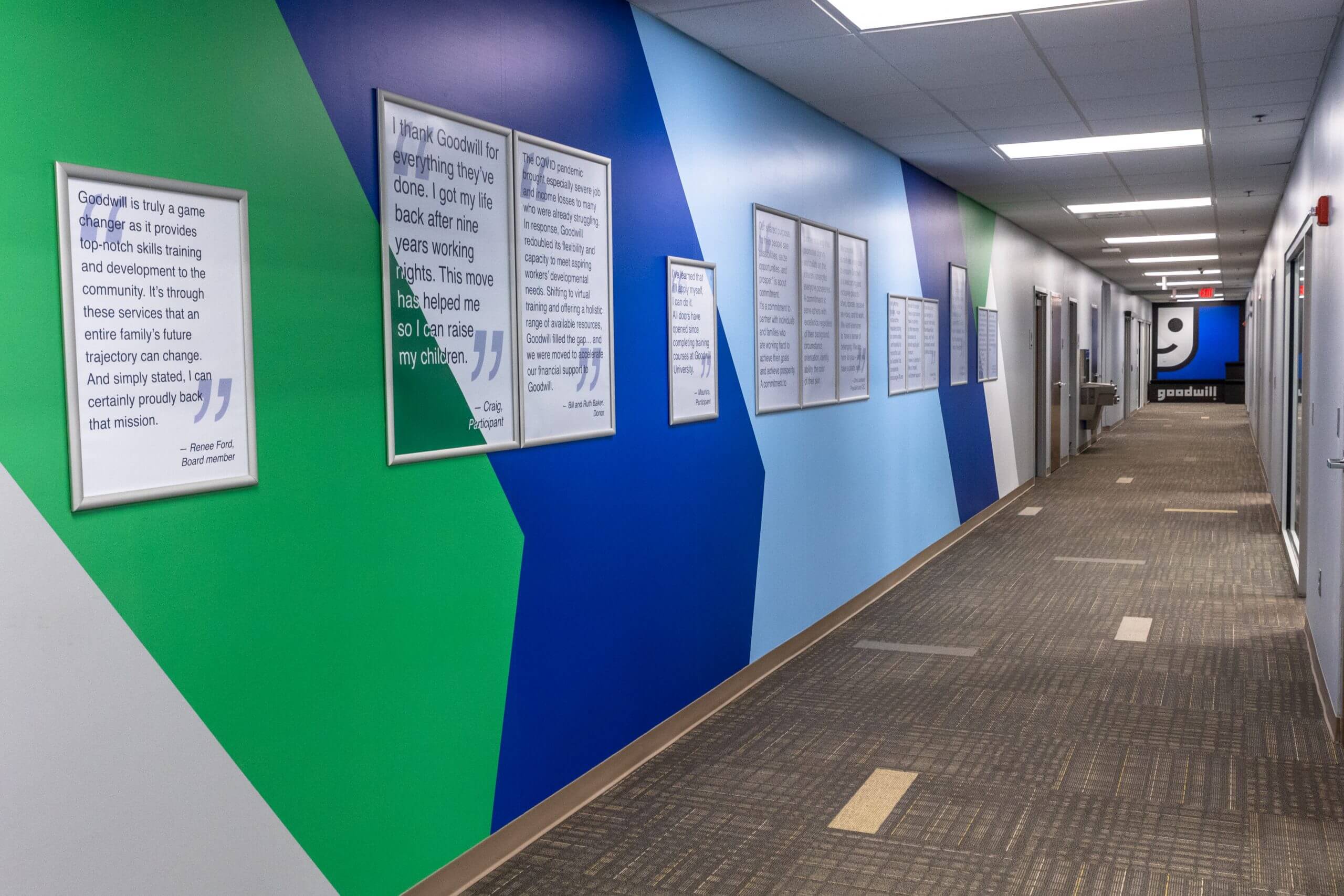
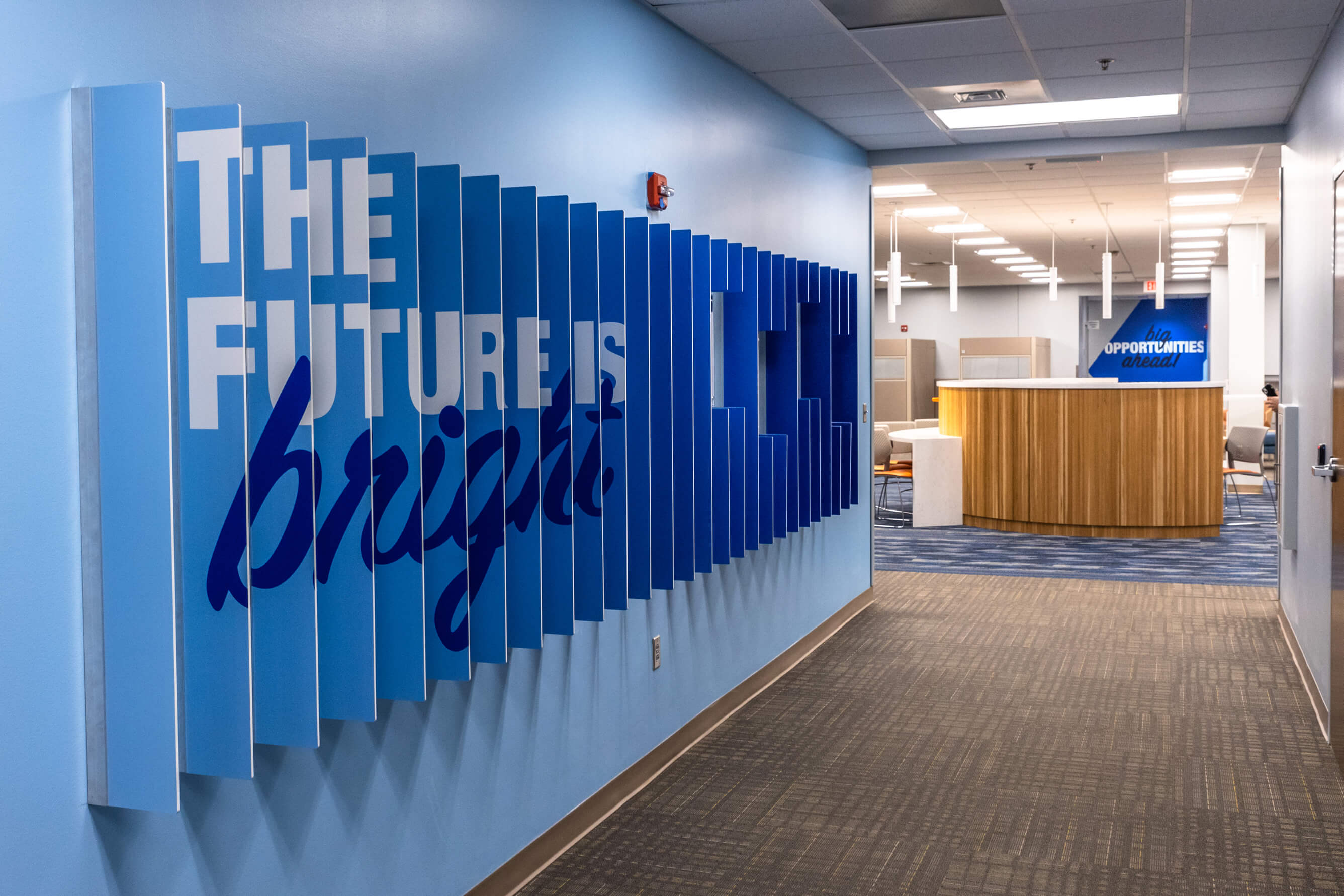
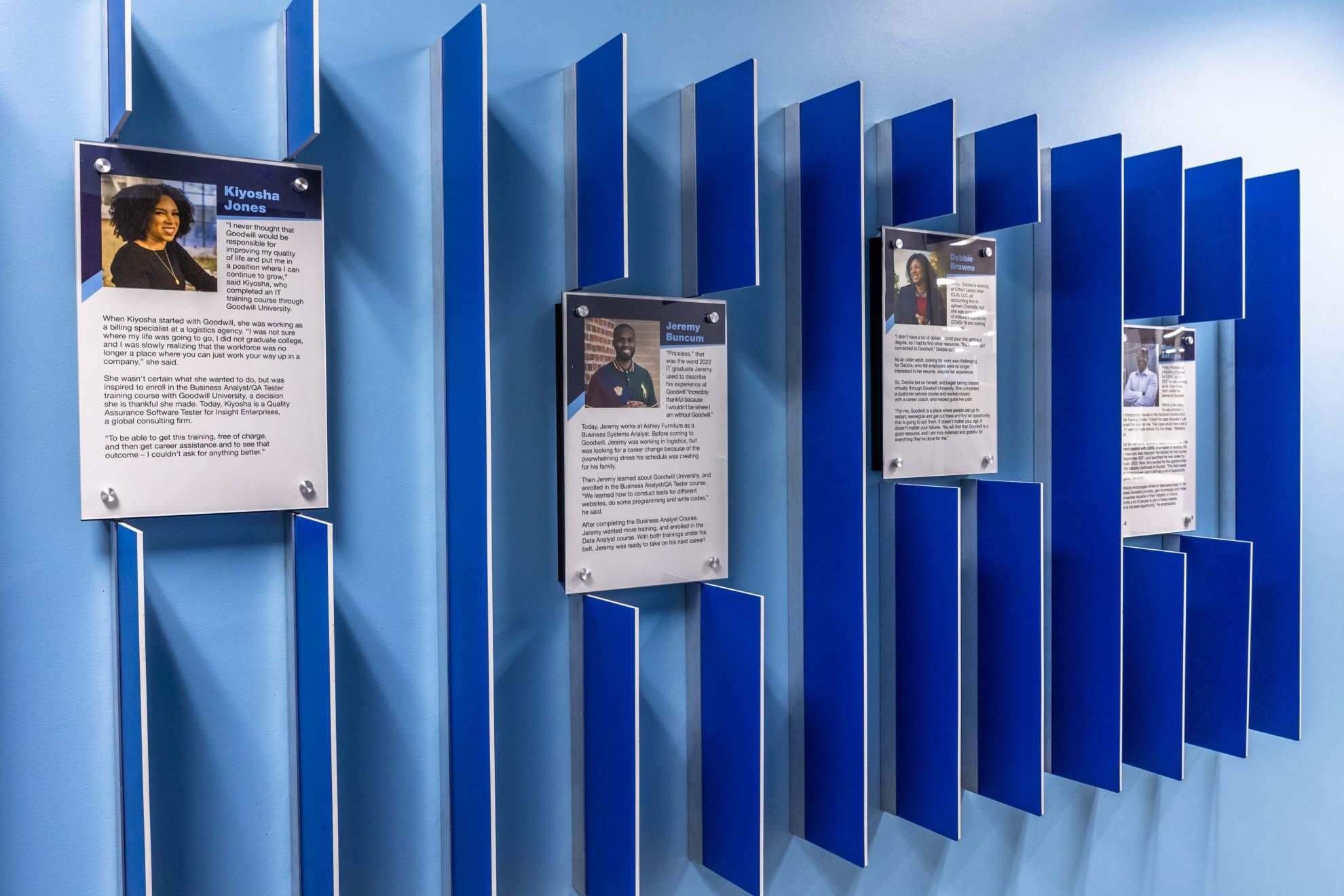
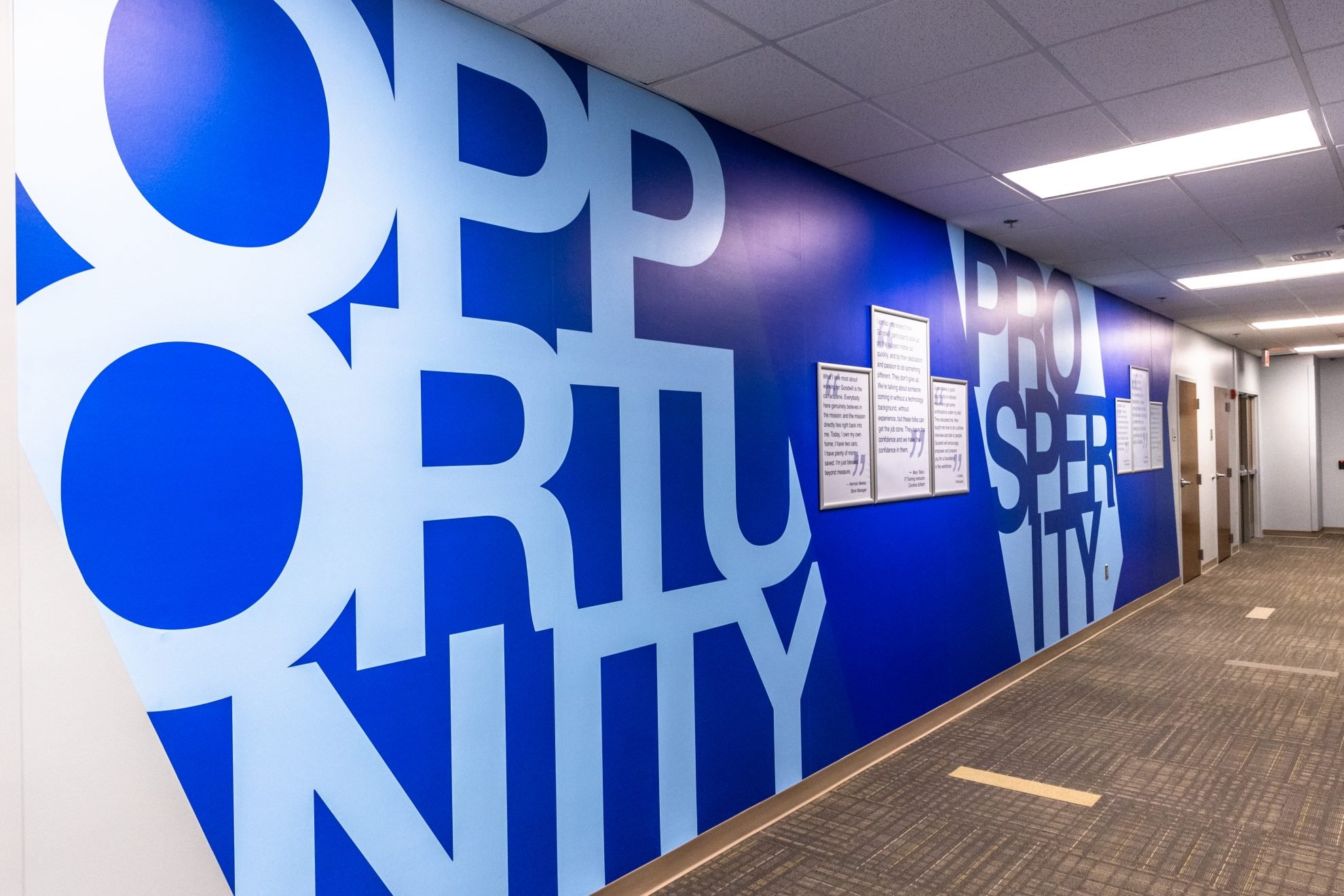
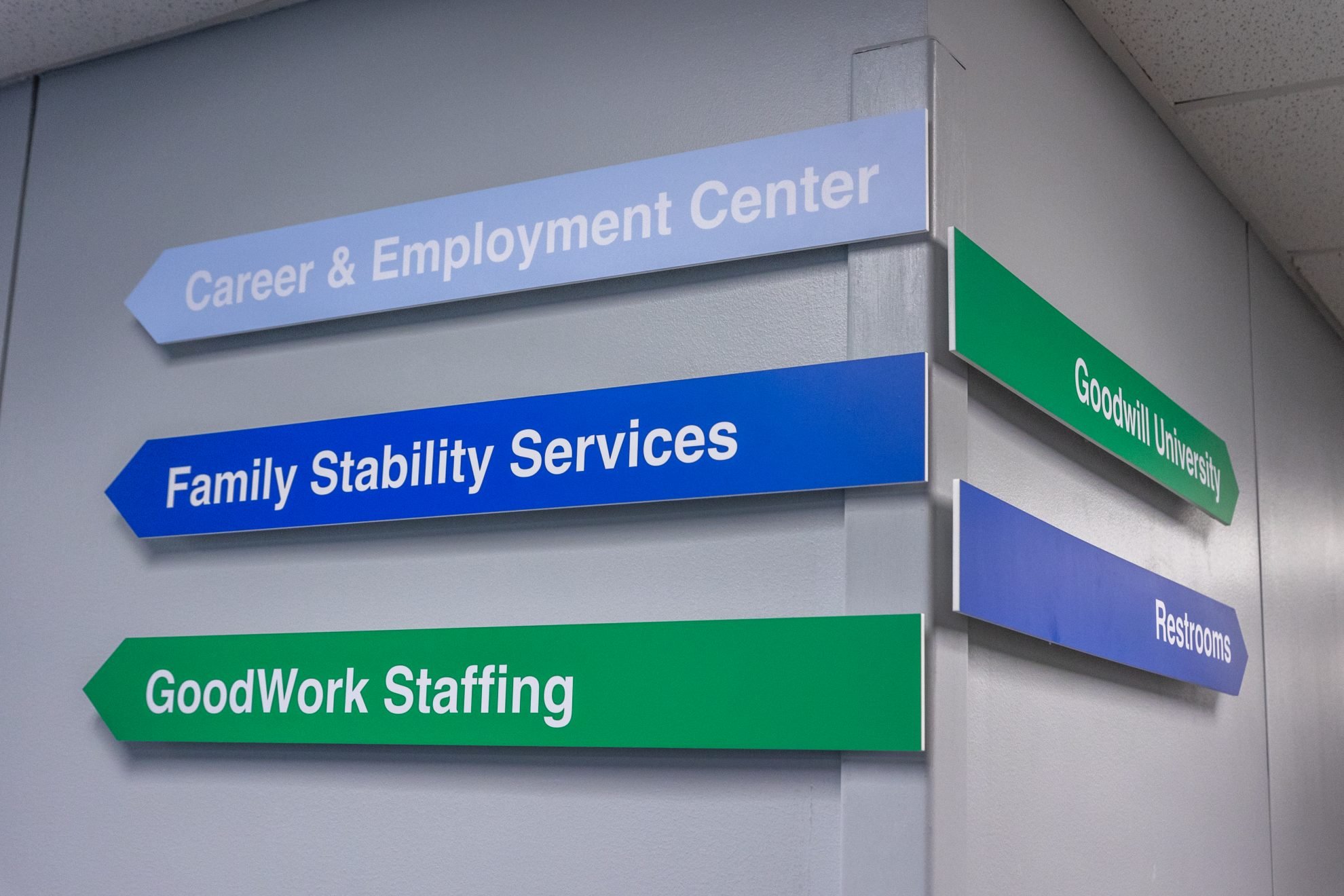
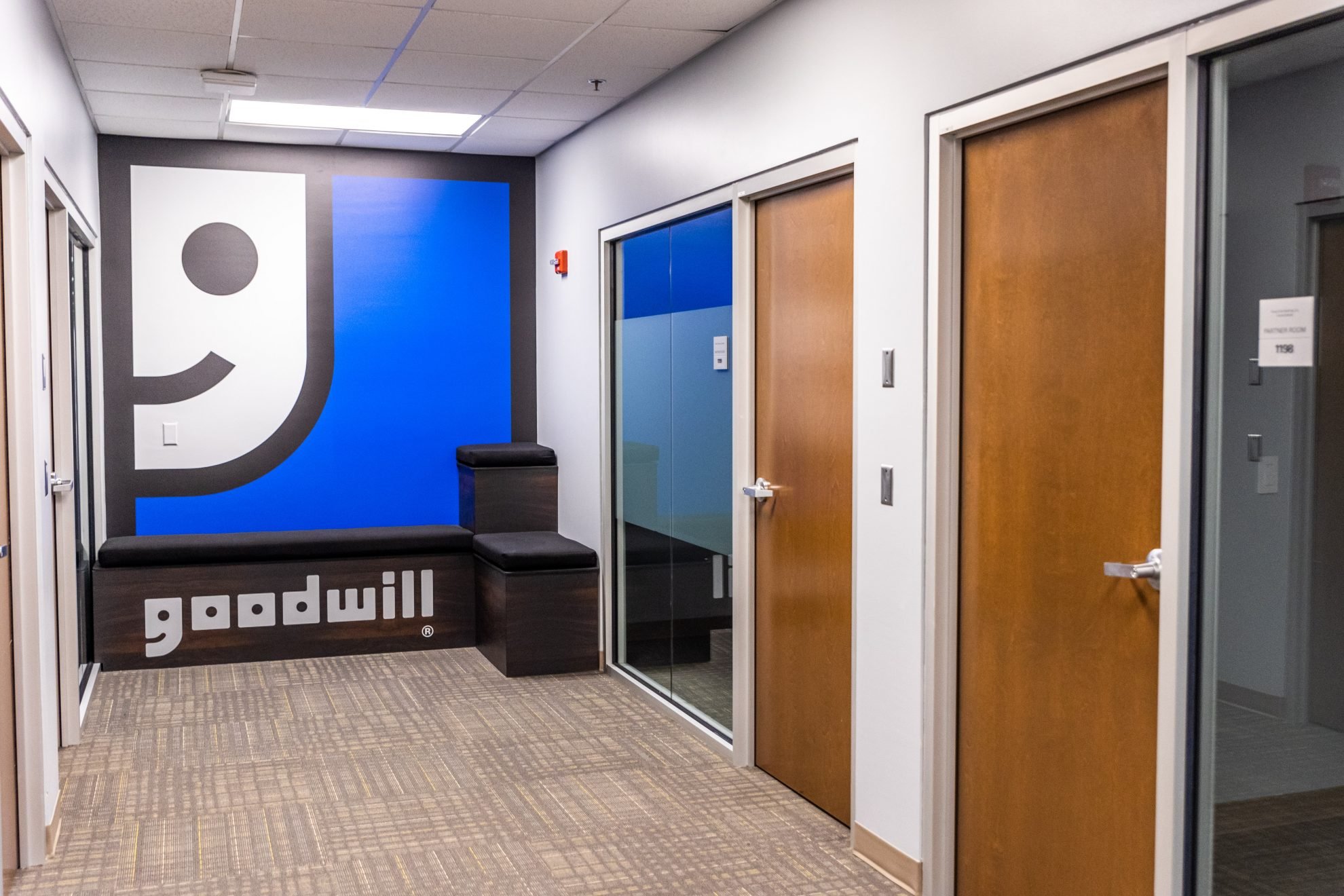
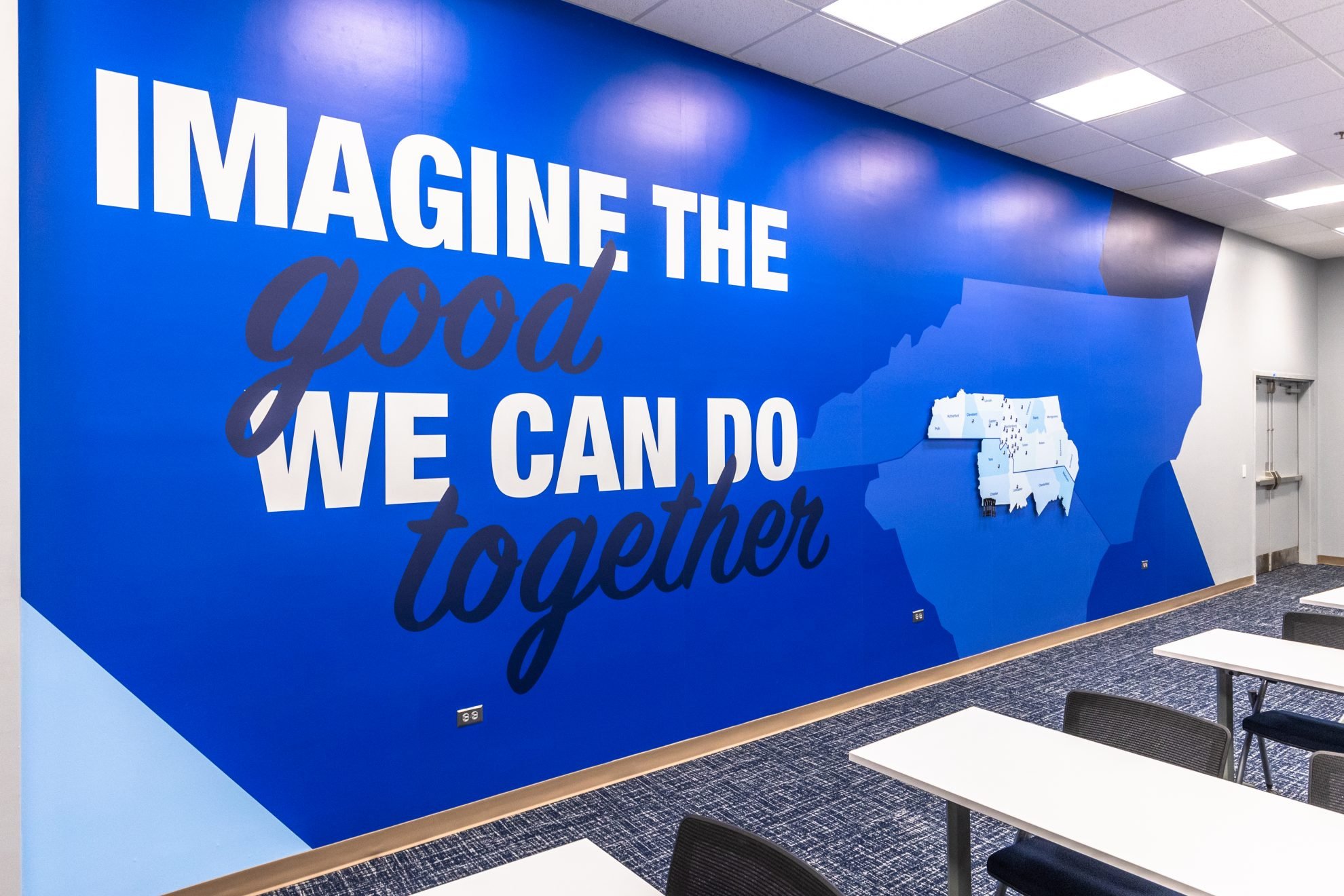
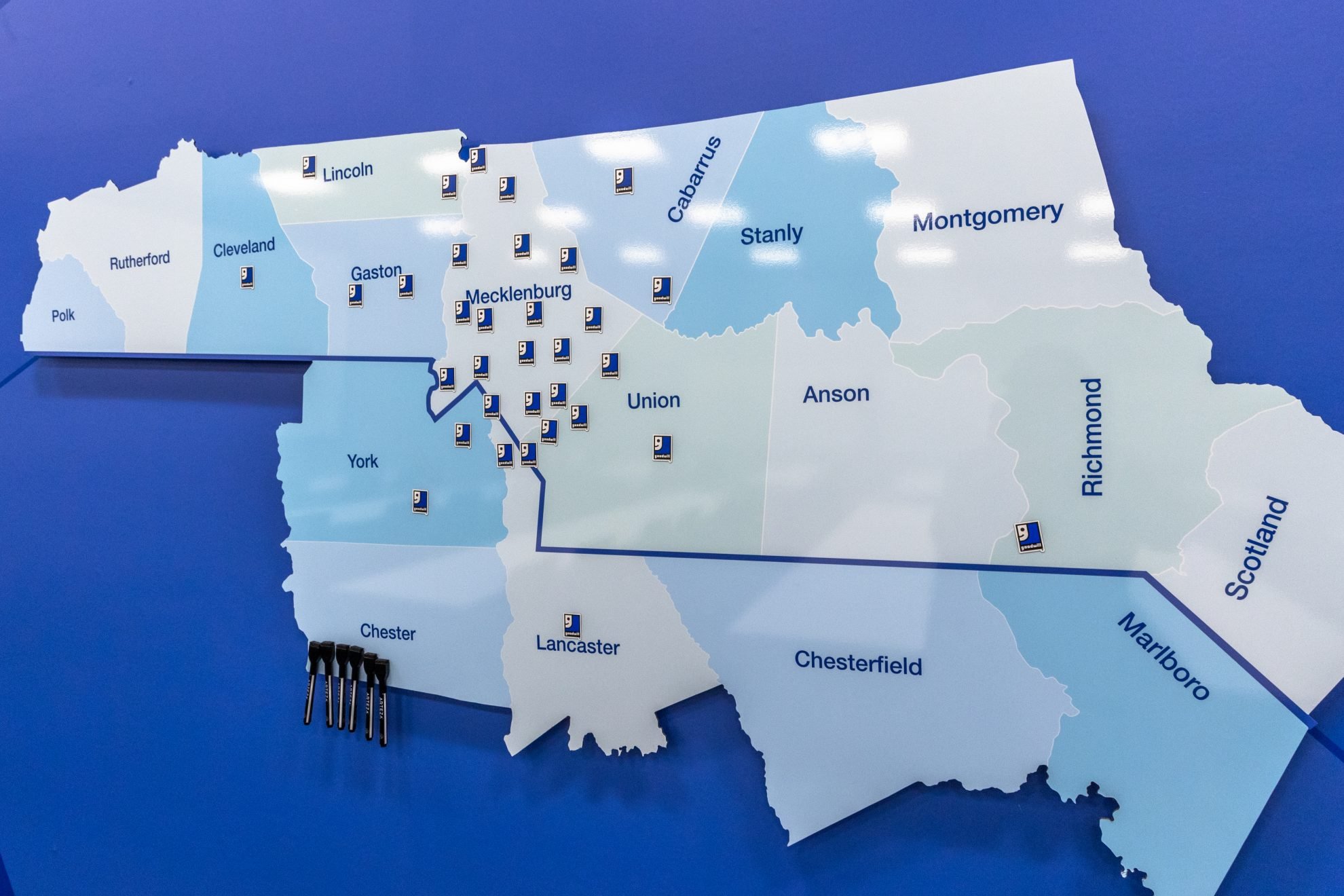
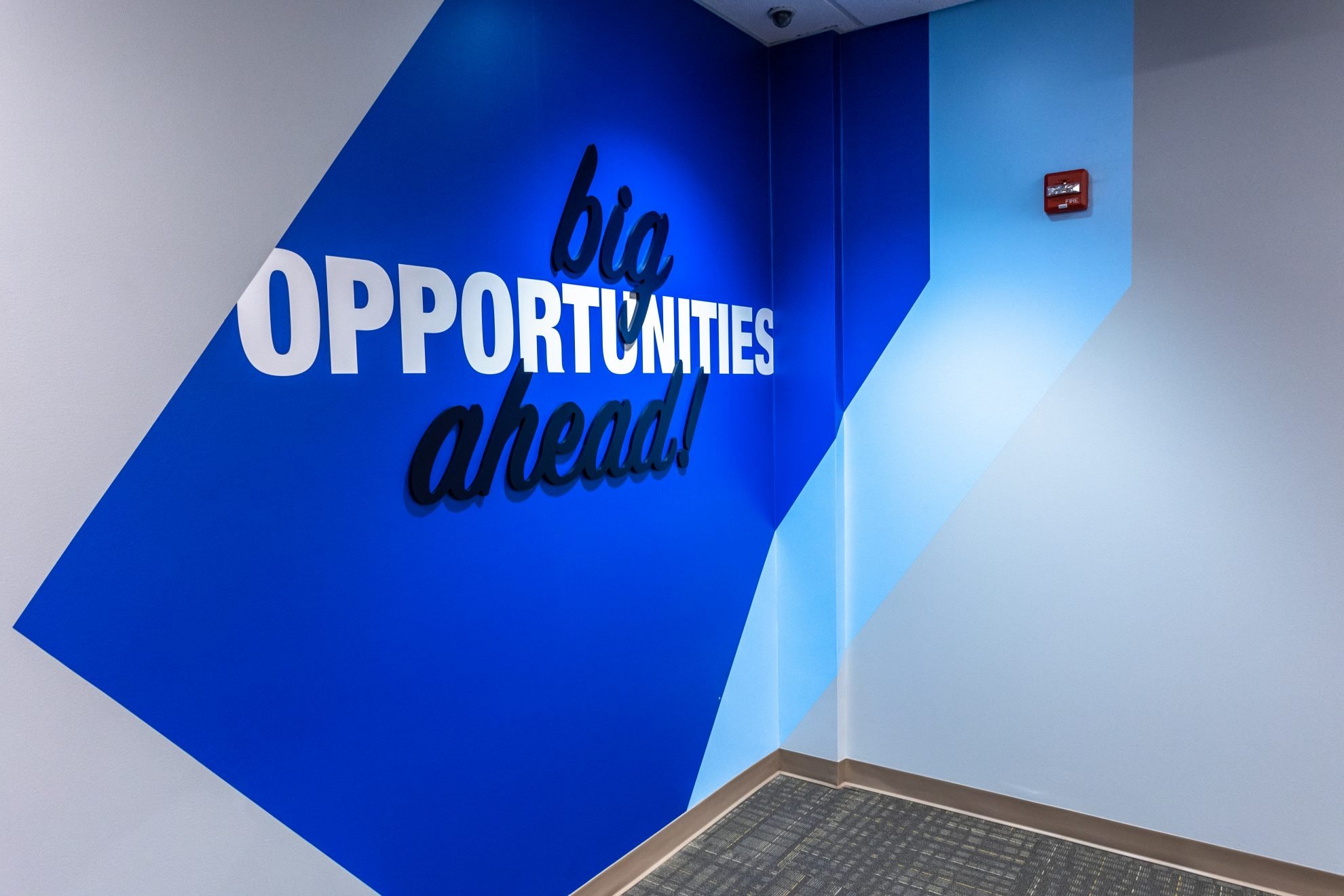
Heritage Signs & Displays collaborated with Goodwill Industries of the Southern Piedmont to transform the Opportunity Campus in Rock Hill, SC. The project included lenticular wall displays, wall wraps, frosted vinyl, wayfinding signs, and custom wall displays. These elements enhanced the Career & Employment Center, creating an engaging and branded environment that reflects Goodwill's values and mission to support workforce development.