 A Veteran Owned Business
A Veteran Owned Business
A Veteran Owned Business

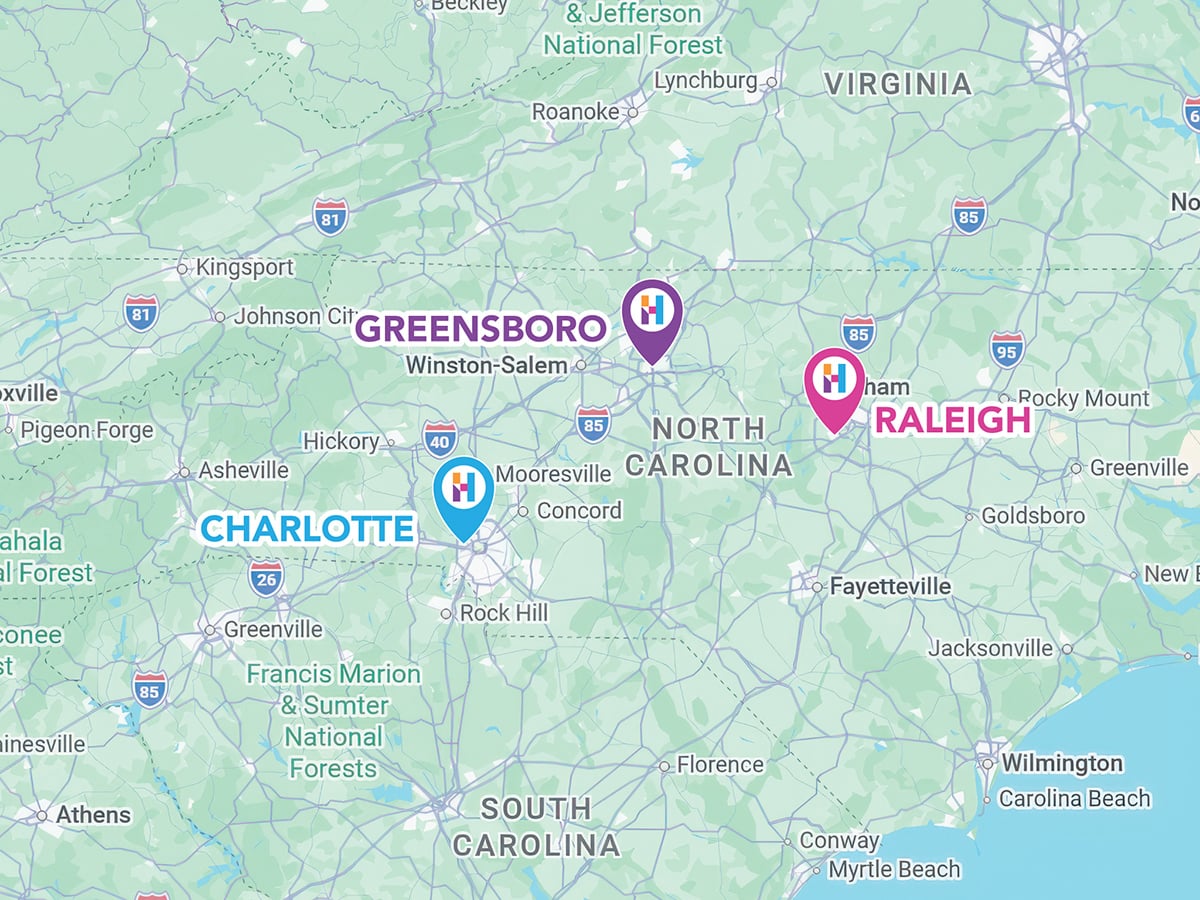
Charlotte headquarters, local field resources, and coordinated production connect planning through installation.
A Charlotte Location Built Around More Than Proximity
Charlotte clients have a local advantage that is unusual in Heritage's network: the same market is home to Heritage's headquarters, primary specialty production facility, and Charlotte-region client, project, field, and installation resources. That proximity helps connect discovery, environmental graphic design, project management, production, fabrication, and professional installation without requiring the client to coordinate separate companies or repeatedly transfer project information. The value is not simply that production happens in Charlotte. It is that important questions about materials, fabrication, scale, scheduling, site conditions, and installation can be resolved through one Heritage team while the project is still being shaped. Heritage directly serves the Charlotte marketplace, including Charlotte, Statesville, Salisbury, Concord, Gastonia, Rock Hill, and comparable close-in communities. Raleigh and Greensboro remain separate Heritage locations serving other Carolinas markets, while the broader Mid-Atlantic network adds support when a client has facilities beyond the Charlotte region. This page shows how those different resources work together without pretending every Heritage location has the same role as the work develops.
Heritage serves clients through seven locations across North Carolina, Washington, DC, Virginia, and Maryland. This footprint includes Carolinas-focused offices that support site reviews, field verification, and local installation needs, supported by production resources that help manage fabrication, scheduling, quality control, and regional coordination.
Please note: Heritage locations are available by scheduled appointment. Because many projects depend on field conditions, our team typically evaluates spaces, surfaces, access needs, timelines, and project requirements at the client’s location.
Charlotte, North Carolina
Headquarters, primary specialty production facility, and Charlotte-region client, project, field, and installation resources
This location anchors the Charlotte marketplace and Heritage's Carolinas production system.
Raleigh, North Carolina
Client-facing Heritage office and field and installation hub for the Research Triangle
Raleigh supports discovery at client facilities, site surveys, field verification, installation planning, and professional installation.
Greensboro, North Carolina
Client-facing Heritage office supporting the Piedmont Triad
Greensboro keeps discovery, site review, installation planning, and professional installation closer to projects in Greensboro, Winston-Salem, High Point, and surrounding Triad communities.
The Charlotte location anchors Heritage's Charlotte-region service and the Carolinas production system. It is Heritage's headquarters and primary specialty production facility, with client, project, field, and installation resources serving the Charlotte market. For a local client, that means the people helping define the project can work closely with the teams responsible for production, fabrication, scheduling, quality control, and professional installation. When a project involves several materials, dimensional elements, graphics, displays, or tight sequencing, that proximity can help resolve practical questions earlier and keep the approved direction connected to how the work will actually be built. Charlotte production may also support more robust or specialized work for the broader Heritage network when its equipment, expertise, capacity, or workflow is the best fit. That wider role does not make Charlotte the local office for every Carolinas market. Raleigh and Greensboro provide their own genuine local field presence, and production can be assigned according to project needs rather than website ownership alone. That coordination also supports schedule-sensitive projects.
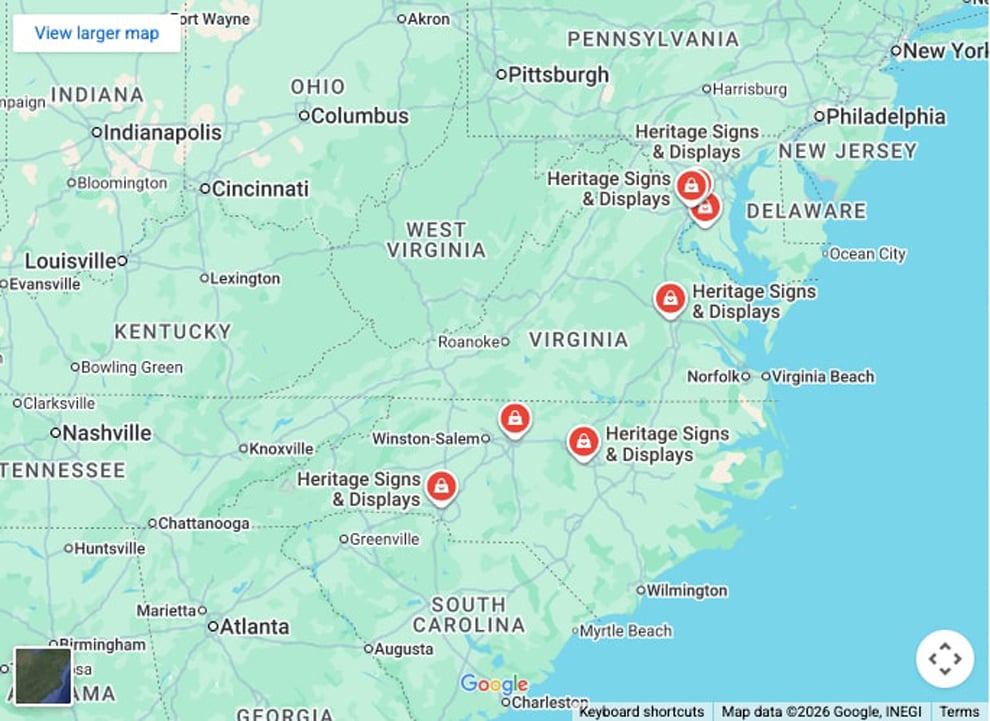
Heritage's Carolinas coverage is strongest when local field support and regional production are described accurately. Raleigh is a client-facing office and local field and installation hub for Raleigh, Durham, Chapel Hill, Cary, Morrisville, Research Triangle Park, and the broader Research Triangle. Greensboro provides client-facing field and installation support for Greensboro, Winston-Salem, High Point, and the Piedmont Triad. Greenville-Spartanburg and Upstate South Carolina, along with Columbia and the South Carolina Midlands, are served through coordinated Carolinas resources with Charlotte production supporting the work. South Carolina is service geography, not a current Heritage office state. That distinction matters because proximity should be real, not implied by a city-targeted webpage. Clients should understand which Heritage people can support discovery, site surveys, field verification, installation planning, professional installation, and follow-through close to their project, and which production resource will build the work. The result is a more useful regional model than simply labeling every market as local or suggesting every office manufactures every product. That clarity supports better client decisions.
Washington, DC
Local client and field support for Washington, DC and the DC metro.
Arlington, Virginia
Local client, field, and installation support for Northern Virginia and the DC metro.
Richmond, Virginia
Local field and installation support for Richmond and Central Virginia, with reach toward Hampton Roads and Tidewater.
Waldorf, Maryland
Heritage's primary Mid-Atlantic production resource. This production-only facility is not a sales office or showroom.
A Charlotte-based organization may start locally and still need the same brand carried into offices, campuses, facilities, or events elsewhere. Heritage's One Dedicated Project Manager System keeps that expansion under one connected project relationship. Instead of handing the client from market to market, the Project Manager carries the approved direction, communication history, production expectations, schedule, and key decisions forward. Heritage teammates nearer each property then contribute site knowledge, field verification, installation planning, and local execution as the work requires. That structure is useful because a second location rarely duplicates the first. Architecture, dimensions, surfaces, access, audiences, and installation windows can change while the brand standard remains constant. Heritage's seven-location network gives the client access to additional field and production resources without creating a new vendor relationship for every city. The advantage is continuity: one Heritage relationship can remain accountable while local execution changes intelligently from property to property, giving the client regional reach without sacrificing the knowledge and site-specific judgment that make local support valuable.
Charlotte combines Heritage headquarters, the primary specialty production facility, and Charlotte-region client, field, project, and installation resources. That gives local clients close coordination between planning and the teams responsible for building and installing the work.
They provide their own genuine local presence. Raleigh anchors the Research Triangle, while Greensboro anchors the Piedmont Triad. Their field roles keep site knowledge and installation planning close to those markets instead of treating Charlotte as the local office for every Carolinas project.
Heritage serves Upstate South Carolina and the South Carolina Midlands through coordinated Carolinas resources. Charlotte production supports the work, while field and installation planning are organized around the actual project location and scope.
Yes. Charlotte may produce robust or specialized work for the wider Heritage network when its equipment, expertise, capacity, or workflow is the best fit. Production assignment does not change which local team supports the client or site.
Not necessarily. For multi-location work, one dedicated Project Manager can preserve the project history, approved standards, production expectations, scheduling, and installation plan while Heritage teammates closer to each property handle local requirements.
Meetings can be scheduled with the Charlotte team, but many discovery conversations and site surveys are most useful at the client's facility. Seeing the actual environment helps Heritage understand dimensions, surfaces, access, placement, and installation conditions before production.
If your project is in Charlotte or another close-in Charlotte-market community, tell Heritage what you want the space or event to accomplish and where the work will take place. Our Charlotte team can connect the project with local field resources, environmental graphic design, production, fabrication, and professional installation through one coordinated Heritage process. If your organization also has locations elsewhere in the Carolinas or Mid-Atlantic, include them at the beginning so one dedicated Project Manager can help plan the broader program from the start.