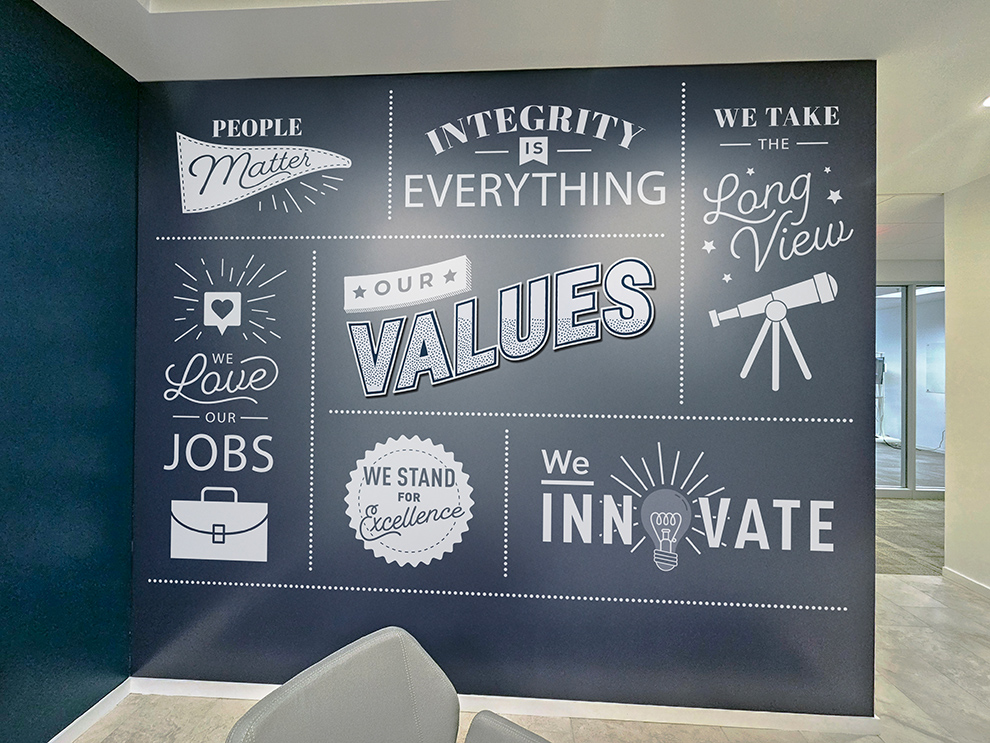
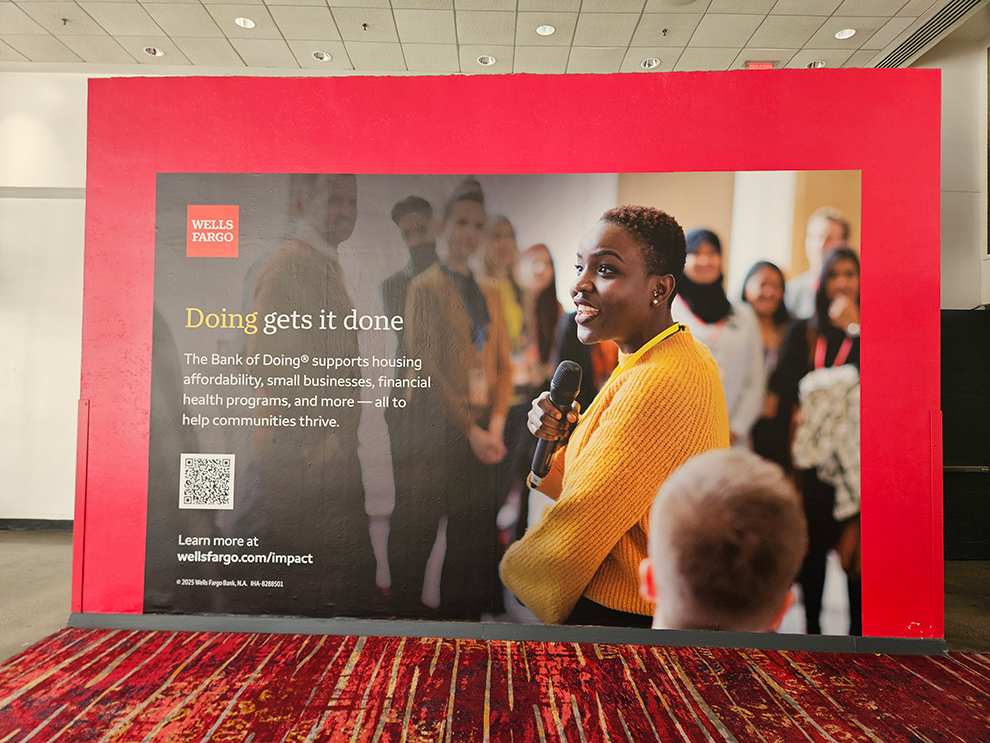
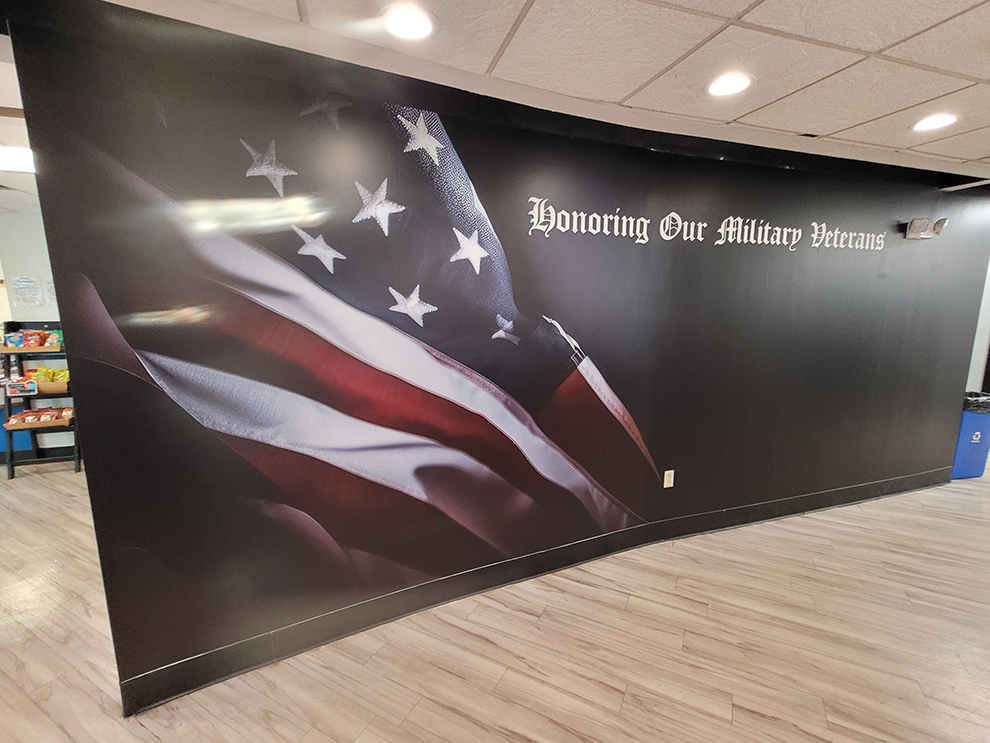
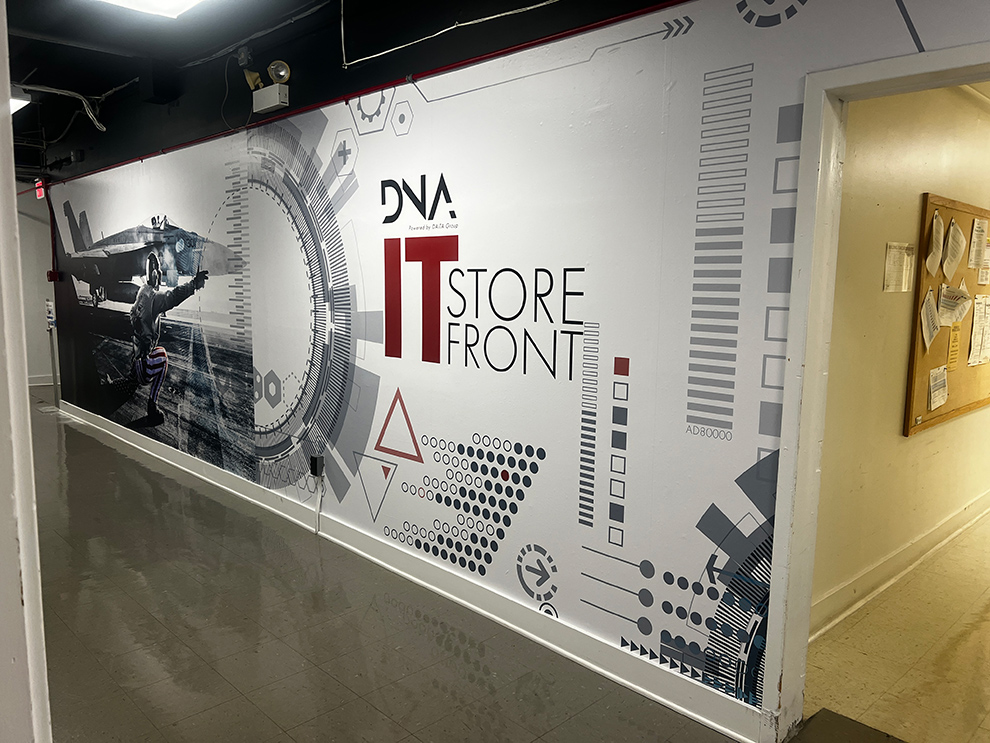
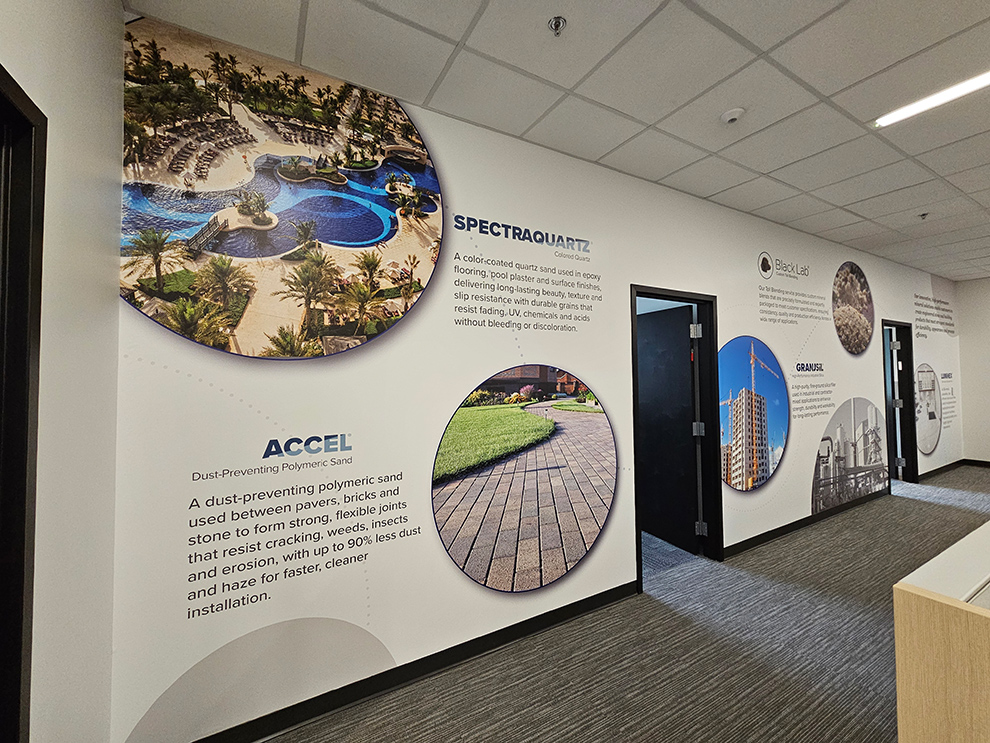
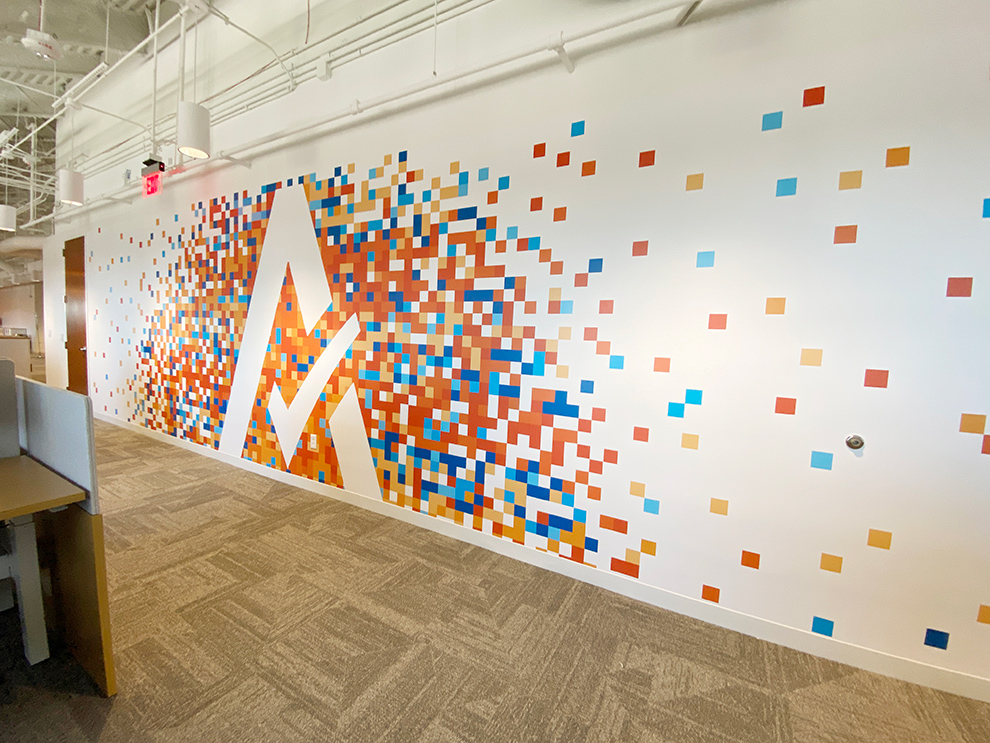
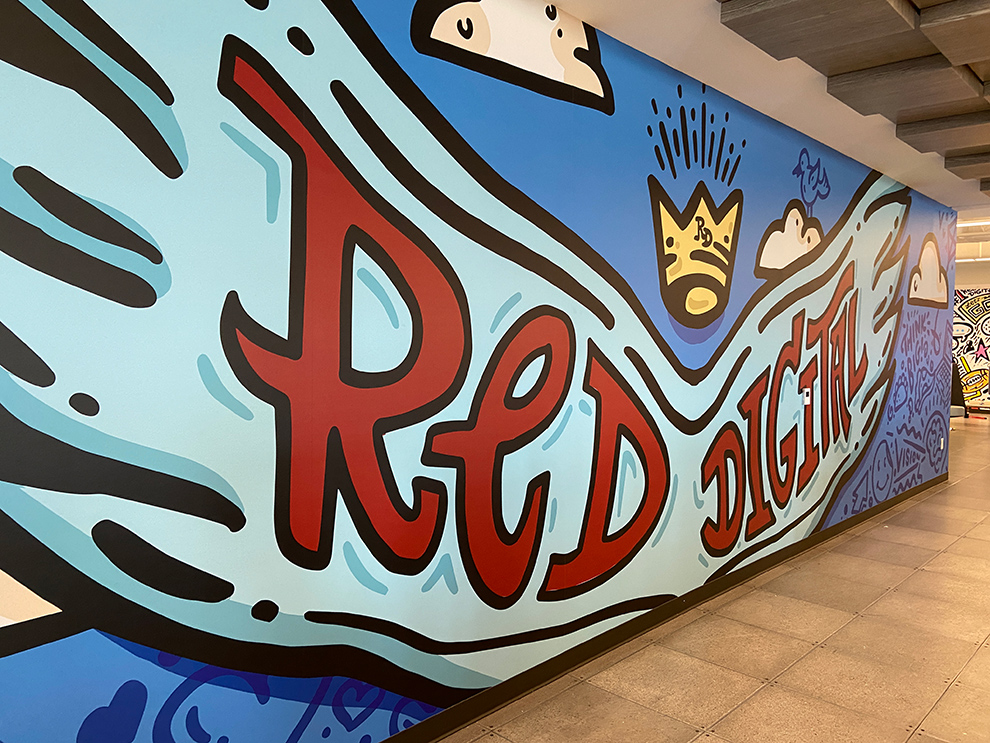
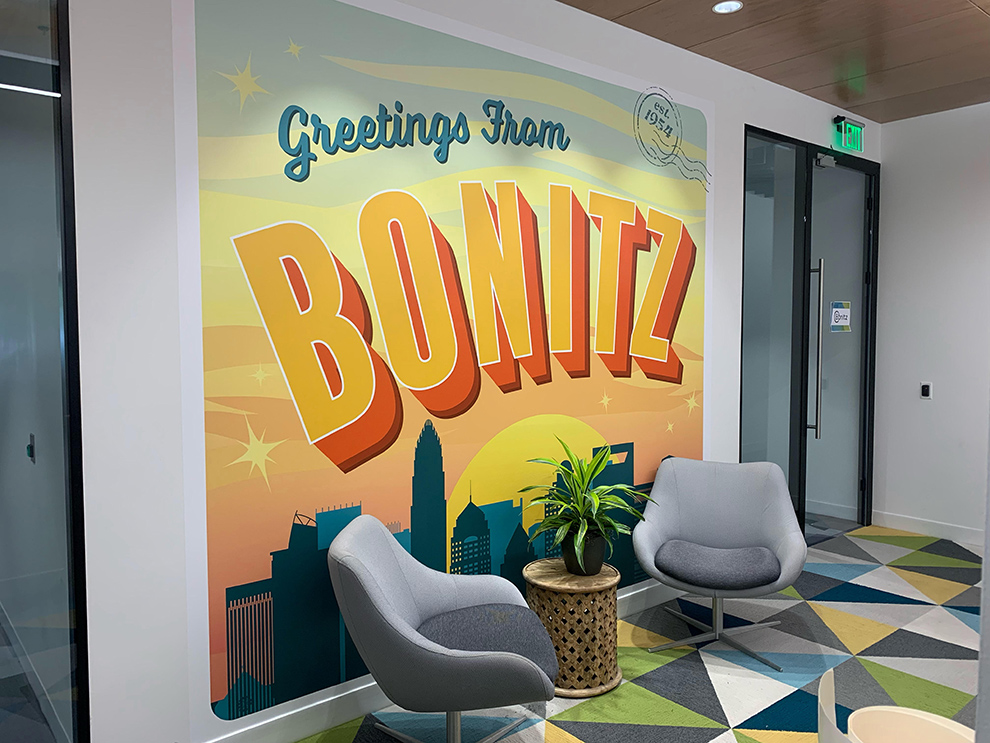
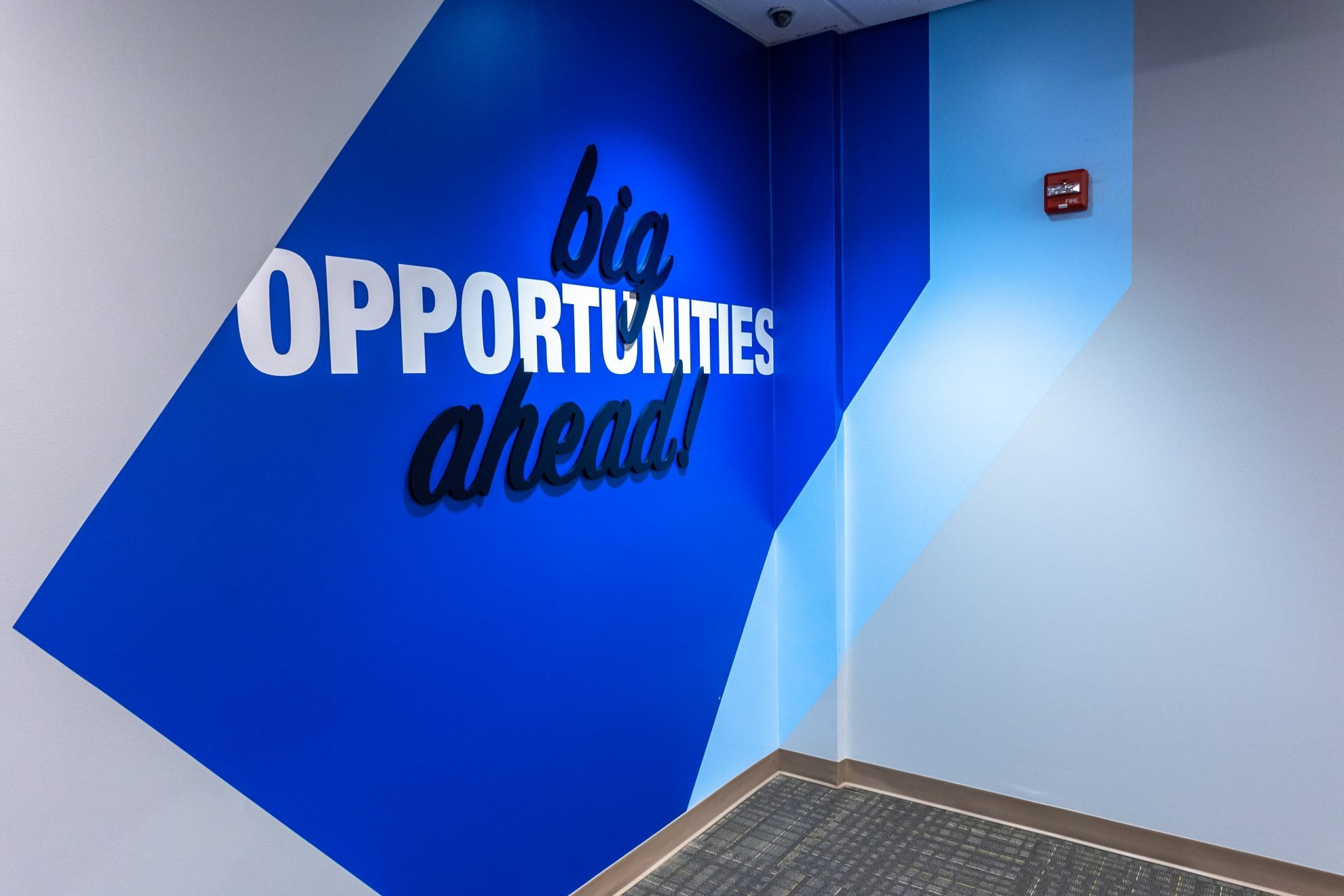
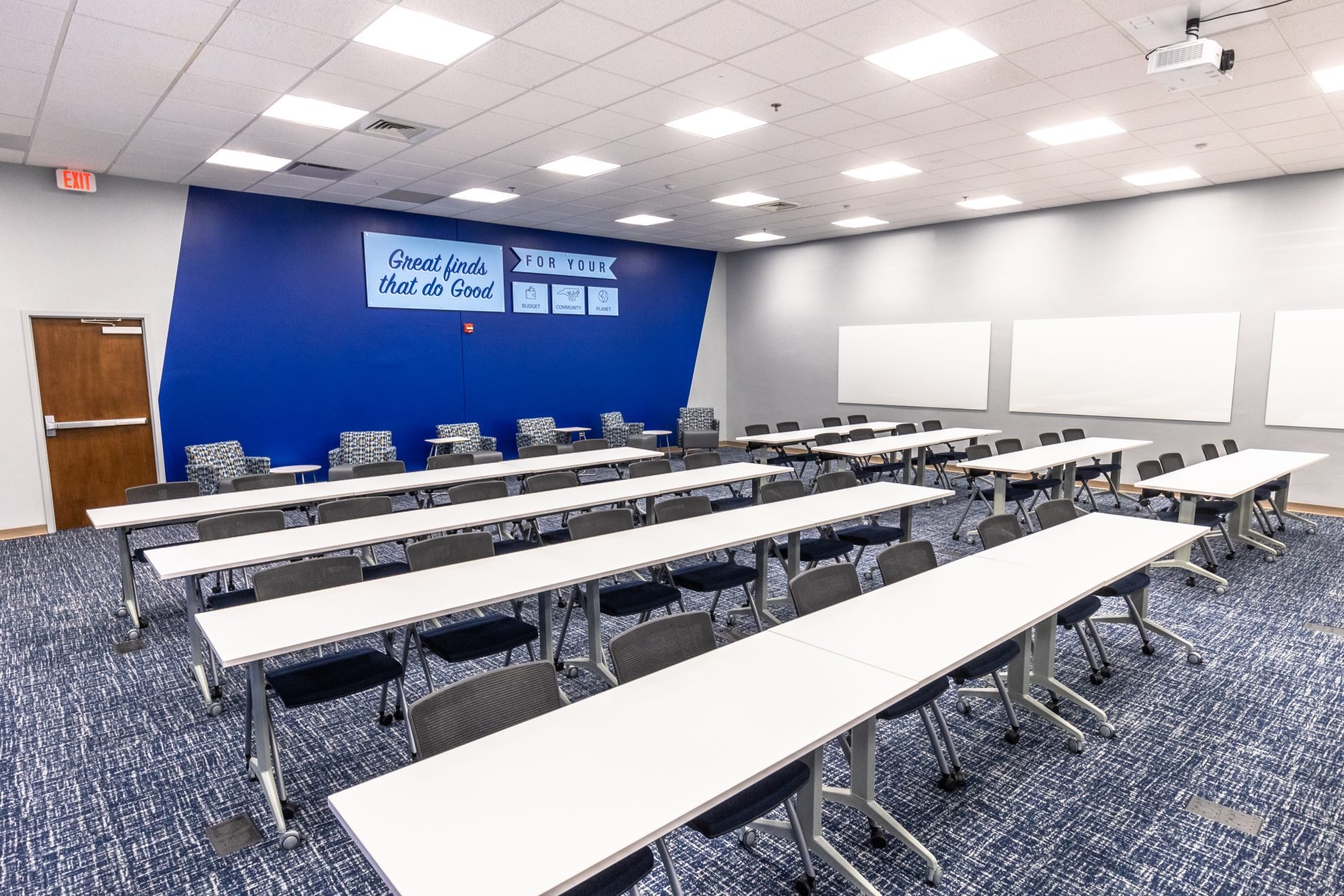
Large walls offer organizations an opportunity to communicate at a scale that smaller signs and displays cannot provide. A carefully planned wall wrap can introduce visitors to an organization, reinforce workplace culture, recognize achievements, explain a history, present educational information, or give an otherwise ordinary interior surface a defined communication purpose. For High Point businesses and organizations, wall graphics can combine photography, typography, color, branded elements, and informational content into one architectural presentation.
Heritage Signs & Displays creates and installs custom wall graphics for corporate offices, professional organizations, showrooms, nonprofits, healthcare environments, educational facilities, associations, event spaces, and other commercial interiors. Environmental graphic design helps determine how the message should function within the physical setting. The process considers viewing distance, circulation, available wall area, image quality, existing architecture, lighting, adjacent signage, audience behavior, and the locations from which people will first see the graphics. These factors influence how the finished wall communicates both from across the room and at closer viewing distances.
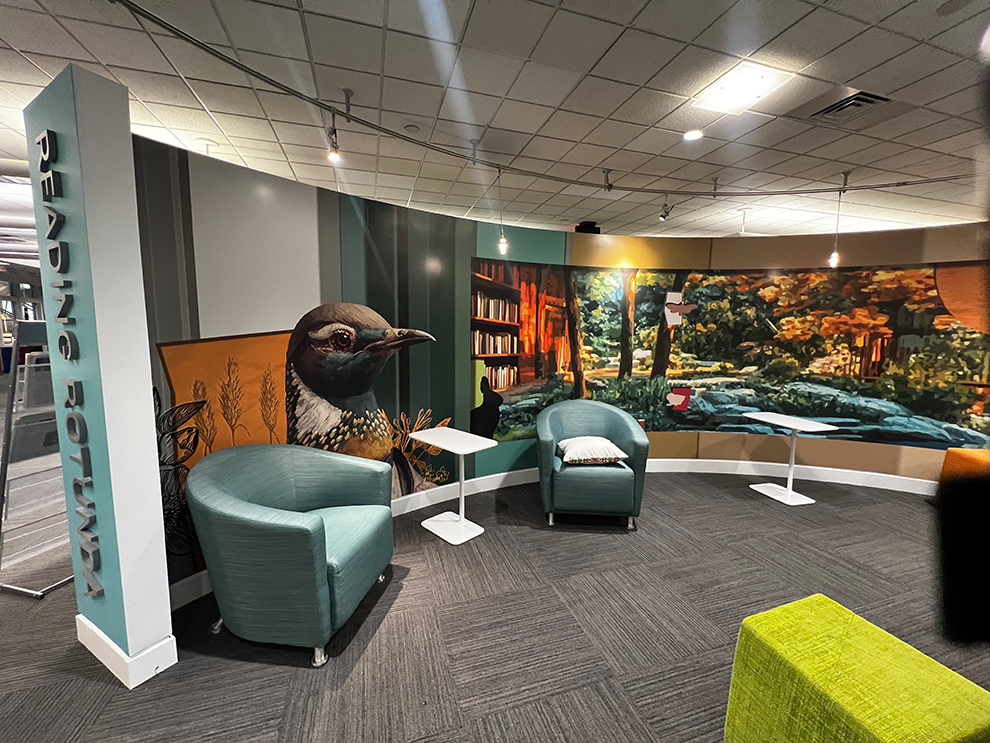
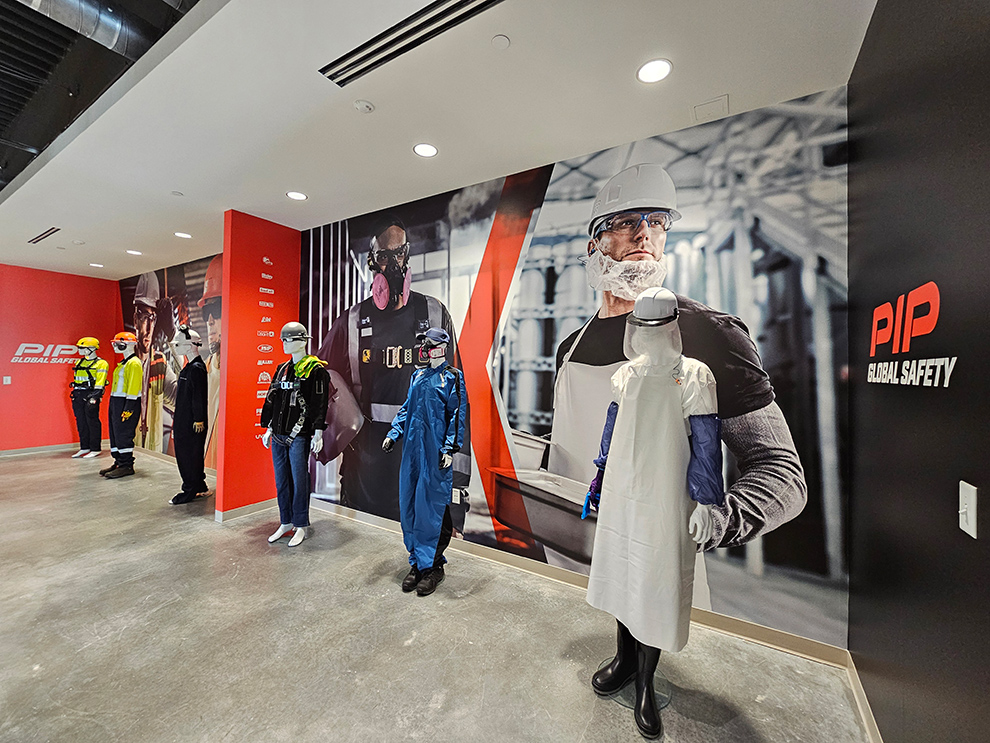
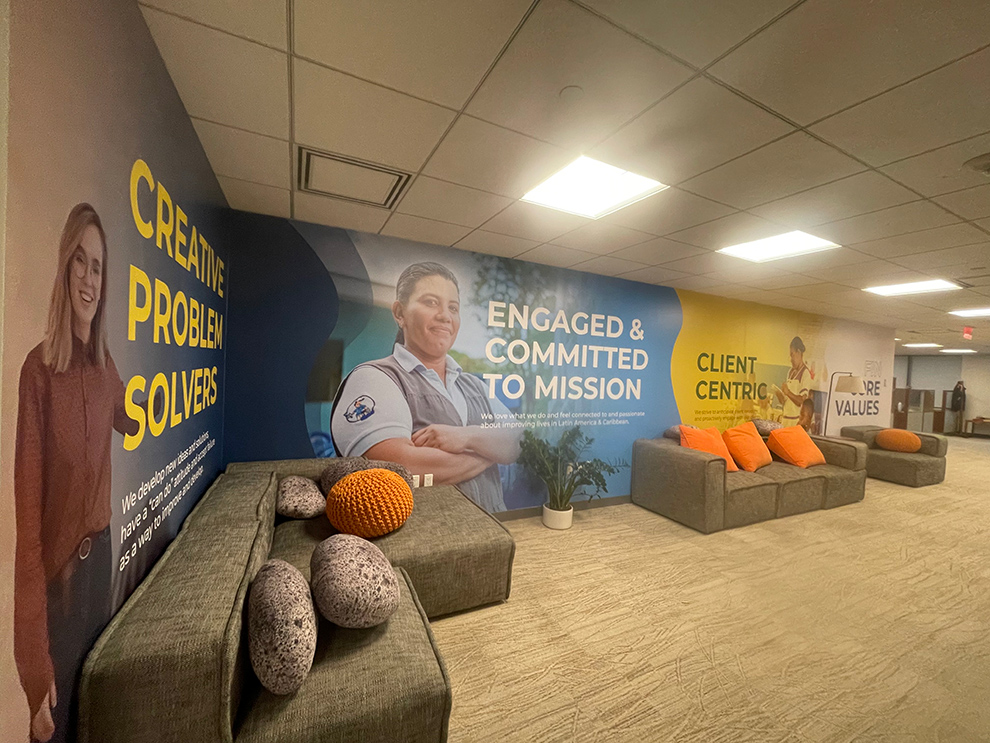
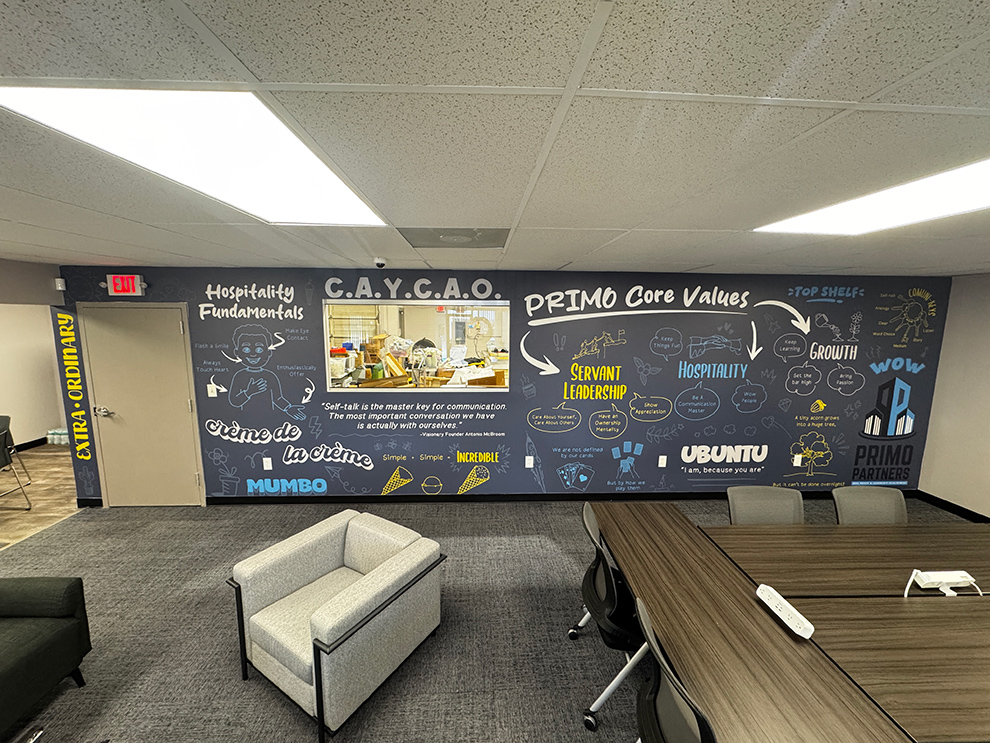
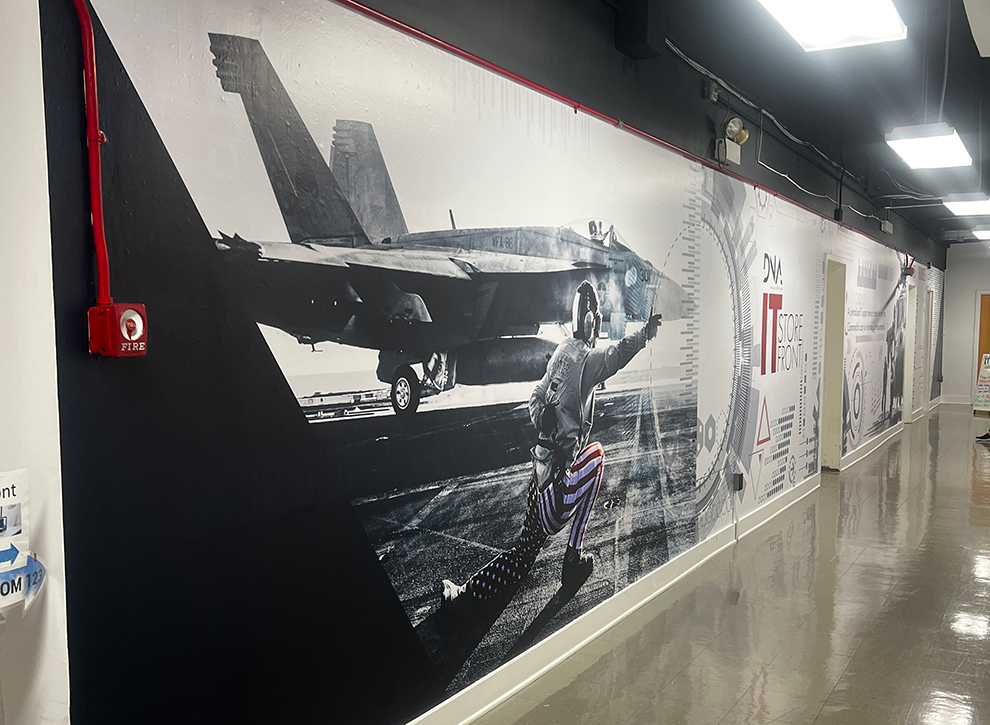
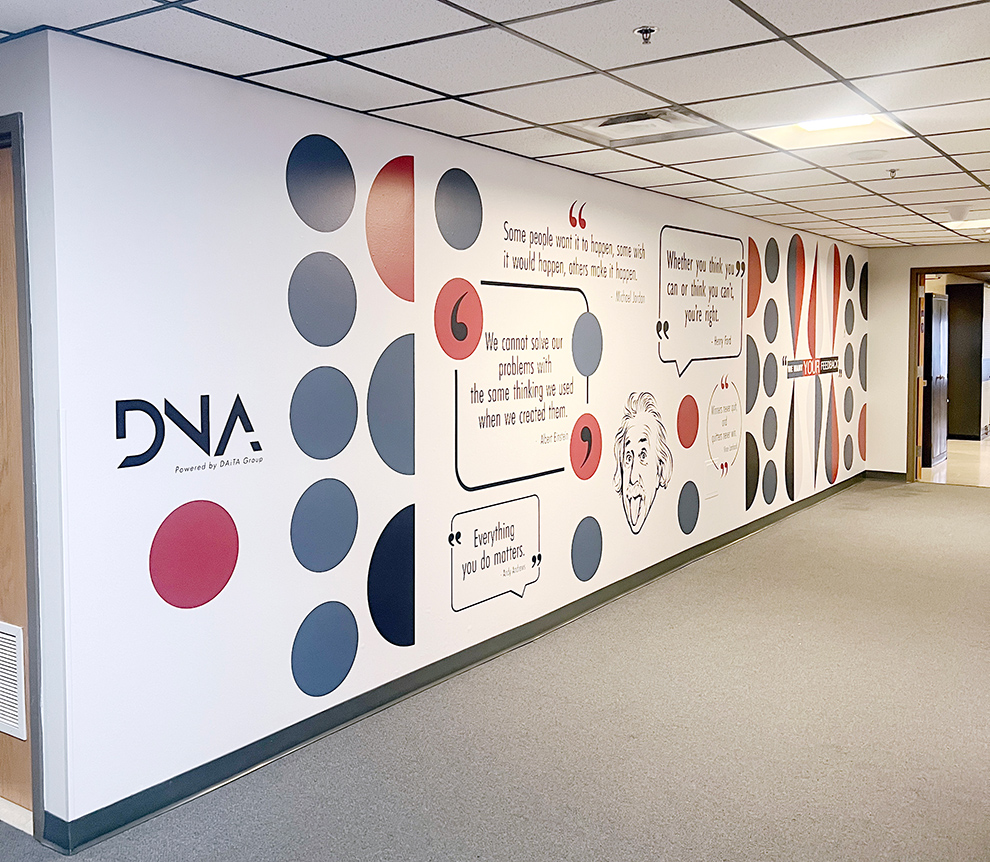
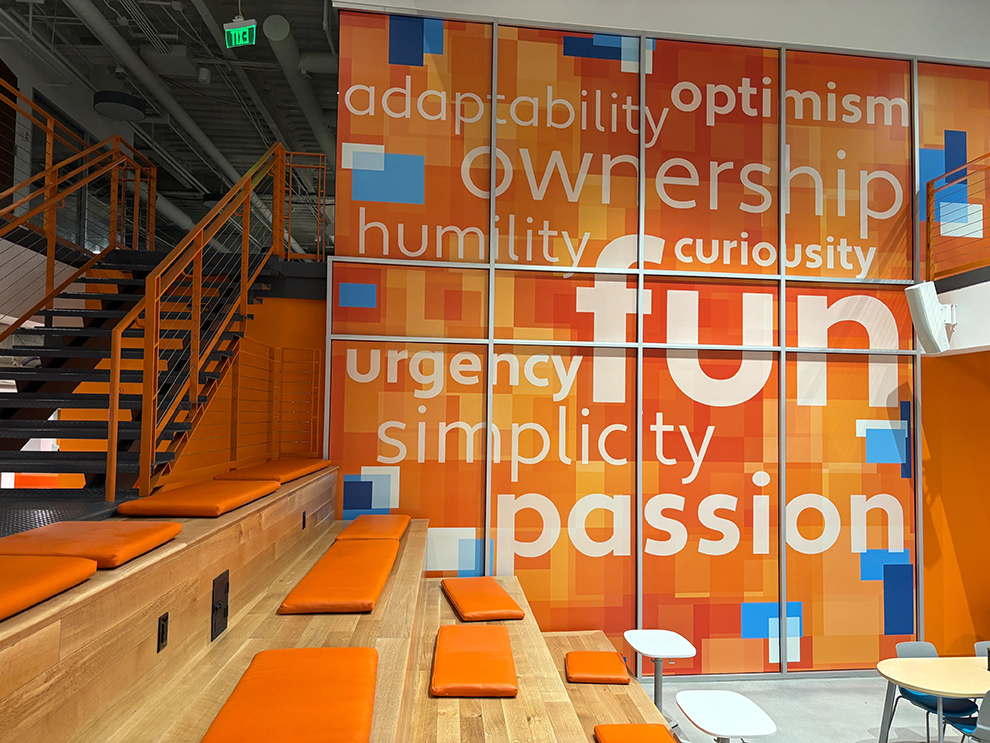
Wall wraps can support many different communication objectives. Organizations may use them for corporate histories, mission and values displays, employee recognition, research presentations, cultural messaging, milestones, branded photography, educational exhibits, or temporary campaigns. The wall graphic can remain the principal visual element, or it can serve as a foundation for dimensional lettering, mounted photographs, acrylic panels, standoff signs, backlit signs, and other fabricated components. A corridor may organize a sequence of historical moments, while a reception wall may use restrained graphics to support a prominent dimensional logo. Coverage should respond to the purpose of the display and the architecture rather than treating every available wall as a surface that must be filled.
The success of an installed wall graphic also depends on practical conditions that are not visible in the artwork itself. Accurate measurements, paint condition, wall preparation, property access, security requirements, loading procedures, stakeholder approvals, work-hour restrictions, and required completion dates may all influence the project. Heritage assigns one dedicated Project Manager and requires a site survey for installed wall-wrap projects. Information gathered during that process remains connected through environmental graphic design, production, fabrication, installation planning, and professional installation.
Heritage began as a printing company in 1977 and continues to operate as a veteran-owned and family-led company. Its purpose is to honor God by serving clients and communities with excellence. For organizations in High Point, this commitment is reflected in thoughtful preparation, clear communication, disciplined craftsmanship, and dependable project coordination. The goal is not simply to cover a wall with printed vinyl. It is to deliver a completed installation that supports the approved communication objective, works with the physical setting, and reduces preventable surprises during production and installation.
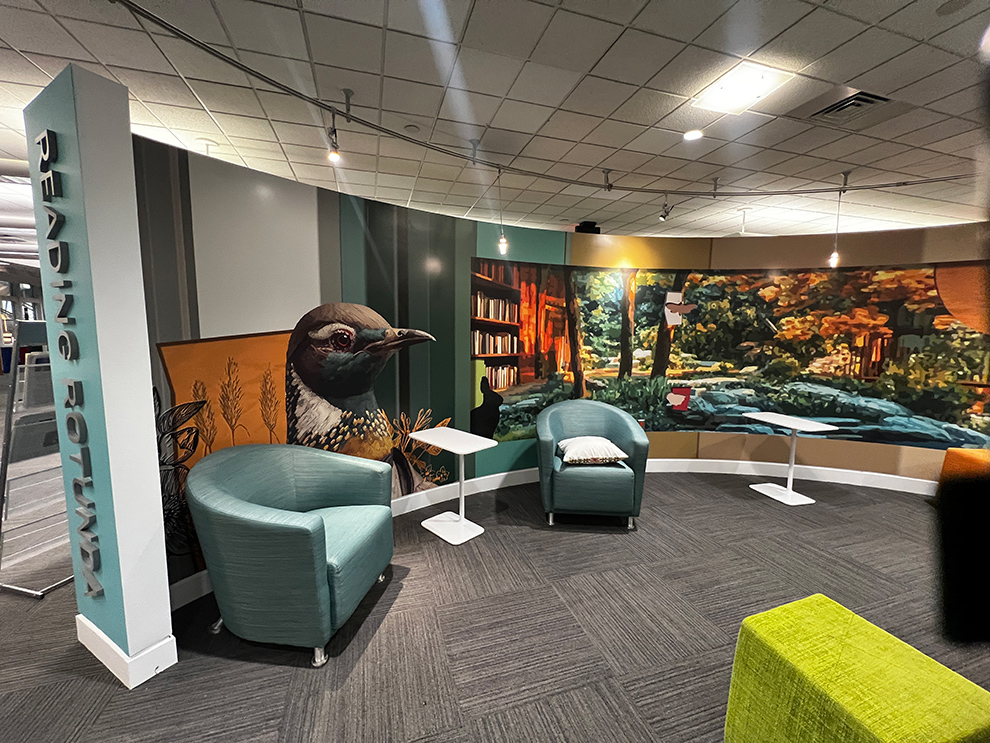
A large wall can organize information that might otherwise become fragmented across multiple smaller displays. An organization can use a corridor to present archival images, milestones, dates, and concise supporting information in a logical sequence. A workplace feature wall can communicate values or culture while providing a visual foundation for photographs and recognition elements. A visitor-facing wall can use large-scale imagery to establish context while reserving the strongest typographic emphasis for a limited number of important messages.
Heritage evaluates the entire surface and its surroundings before determining the appropriate amount of graphic coverage. A partial wall wrap may provide stronger visual balance than a full-wall application when architectural features, furnishings, doors, corners, electrical outlets, fixtures, or mounted displays need additional space. The way people approach, stop near, or move past the wall also affects the composition.
Temporary wall graphics may support events, campaigns, exhibitions, seasonal programs, or other limited-duration applications when the surface, paint system, planned service period, installation access, and removal expectations are appropriate. Exterior wall graphics can also be considered when the substrate and environmental conditions support the application. Material selection and coverage should follow the intended message and verified site conditions in every case.
Producing an effective wall wrap involves considerably more than sending artwork to a printer. Incorrect measurements, weak image resolution, overlooked wall conditions, poorly positioned seams, unsuitable materials, or unresolved installation access can create problems even when the original design concept is strong. Heritage connects these decisions throughout the project so the graphics that enter production reflect both the approved creative direction and the realities of the installation environment.
The One Dedicated Project Manager System provides clients with one consistent point of coordination throughout the engagement. The Project Manager maintains information about approvals, site conditions, scheduling requirements, brand standards, installation restrictions, and stakeholder decisions as the project advances. Clients do not have to repeatedly reestablish project context as work moves between environmental graphic design, production, fabrication, and installation.
This continuity can be particularly important when marketing teams, executives, facility managers, property representatives, agencies, designers, contractors, and other decision-makers participate in the same project. The required site survey provides verified information for scaling, material recommendations, production planning, panel layouts, and field execution. Heritage installers then work from information collected and maintained within the Heritage-managed process.
For graphics Heritage produces, fabricates, procures, or manages, the result is a connected project structure with defined accountability rather than a collection of unrelated vendors making critical decisions independently.
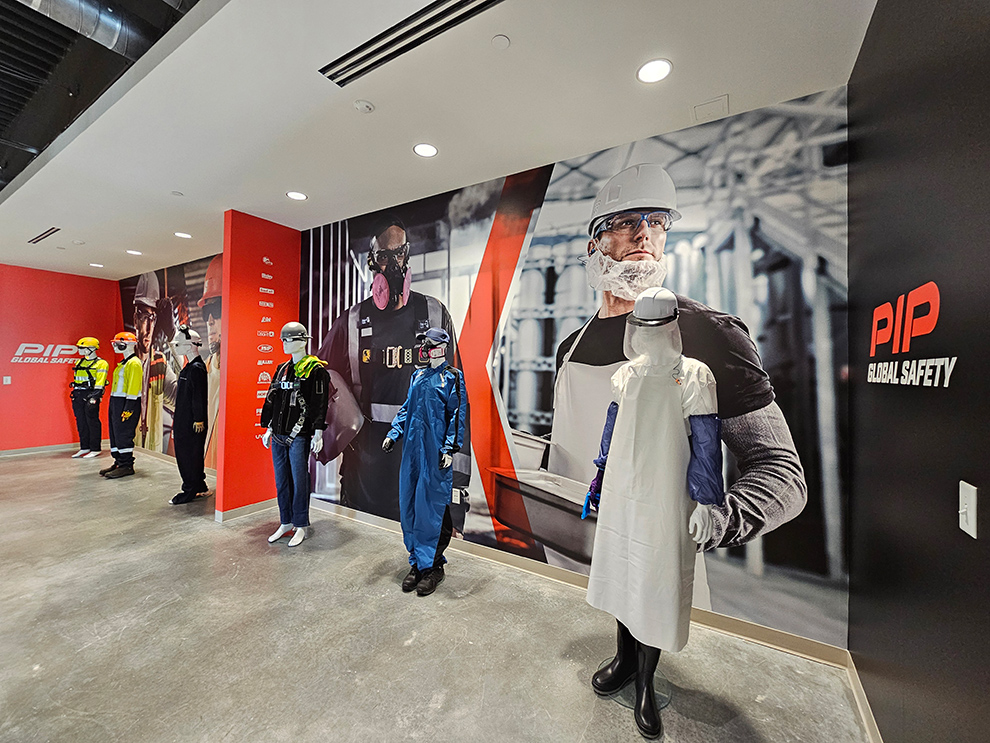
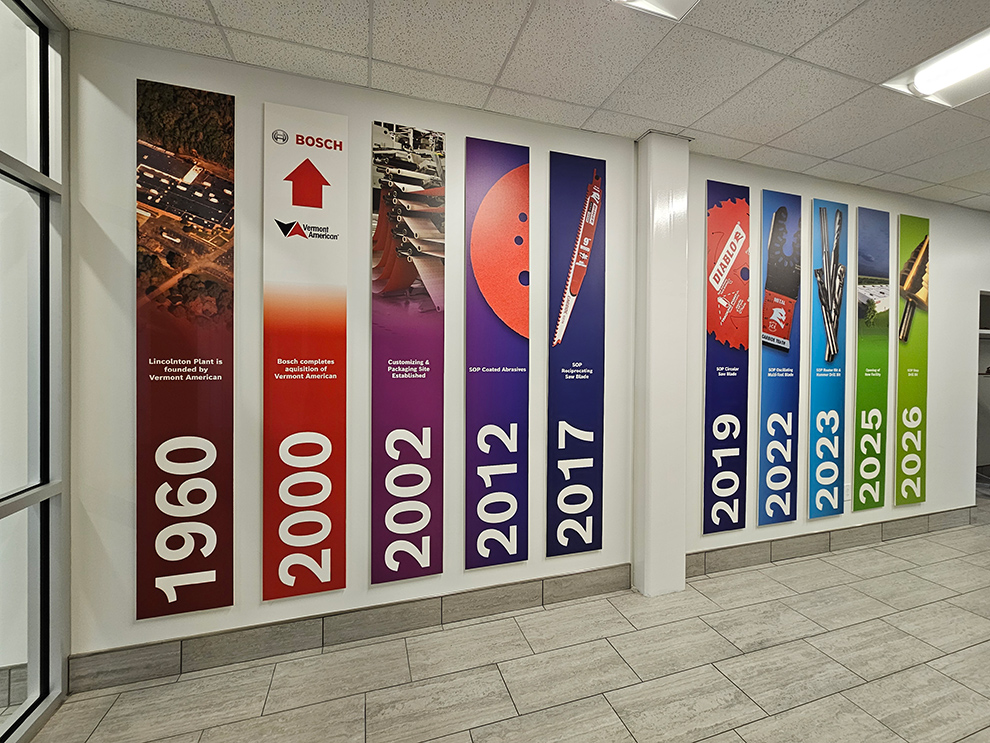
Wall displays can layer photography, recognition content, historical information, timelines, or replaceable panels over a large printed background. The wall wrap creates visual continuity across the installation, while mounted elements organize detailed information and give selected content greater emphasis.
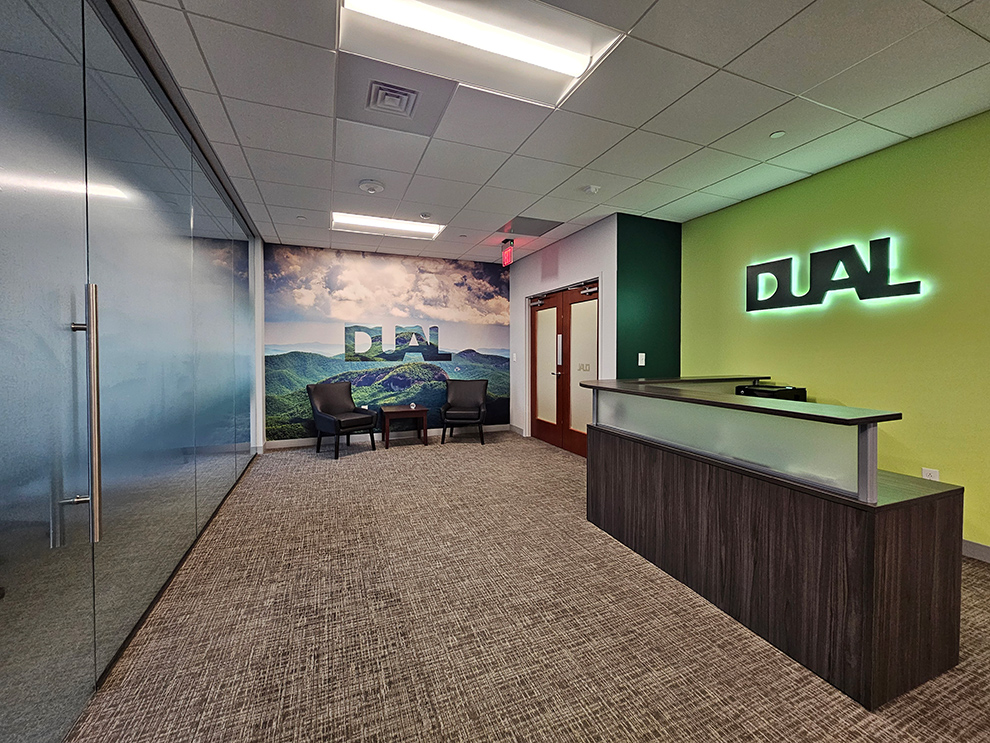
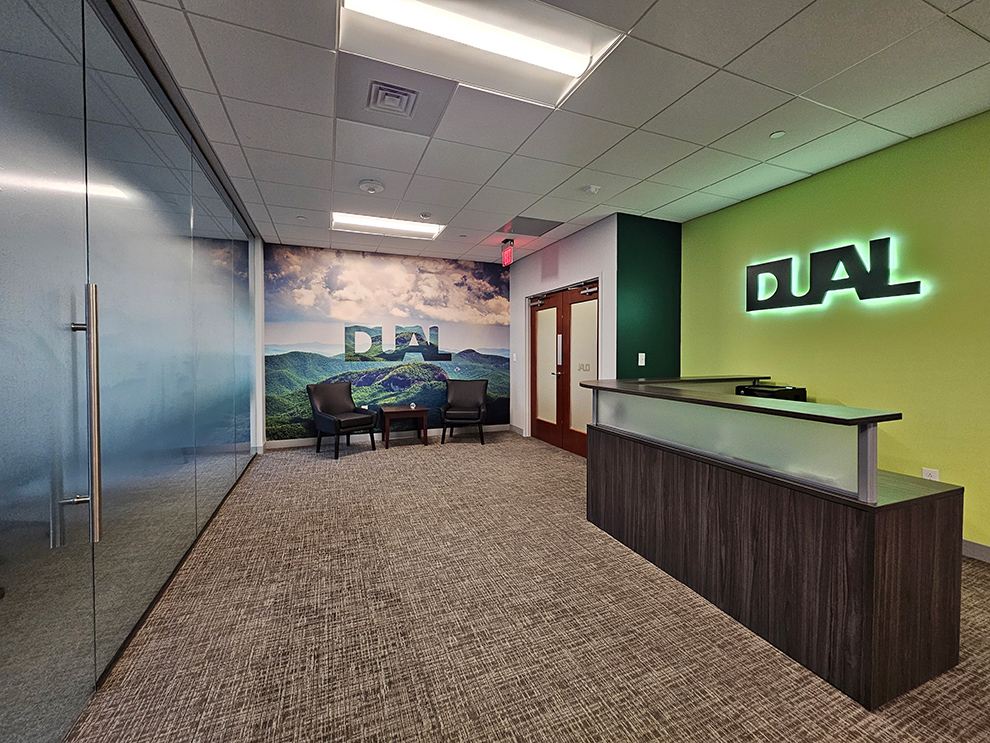
Lobby signs can establish primary identification within an entrance enhanced by coordinated wall graphics. The mural can introduce brand color, imagery, pattern, or organizational context, while dimensional or illuminated signage gives visitors a clear point of orientation when entering the space.
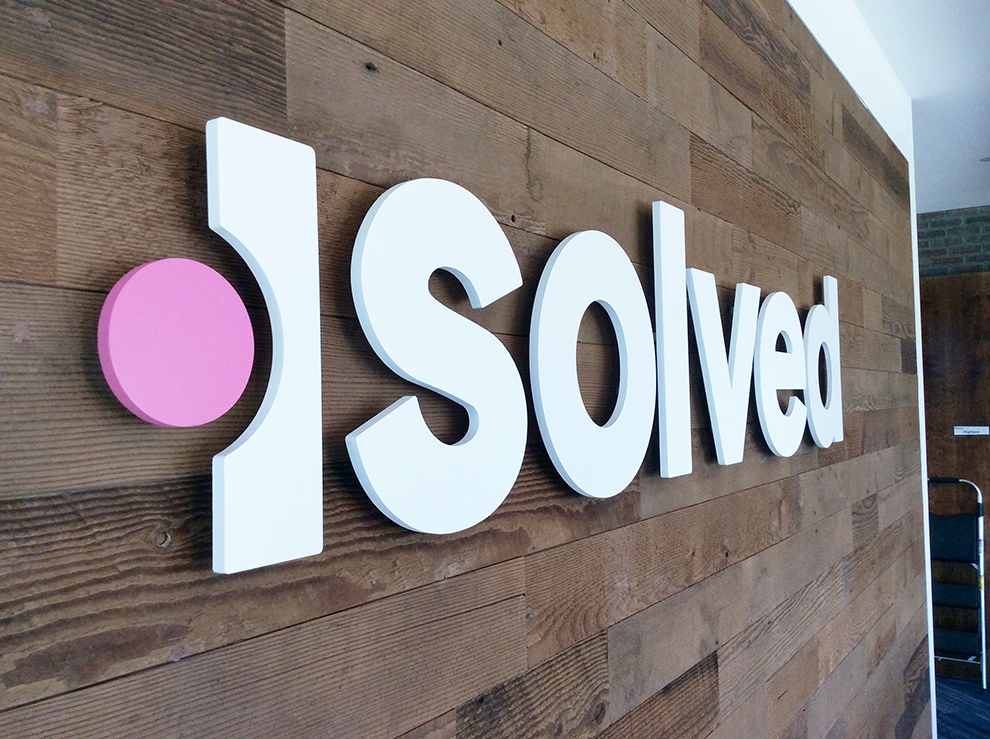
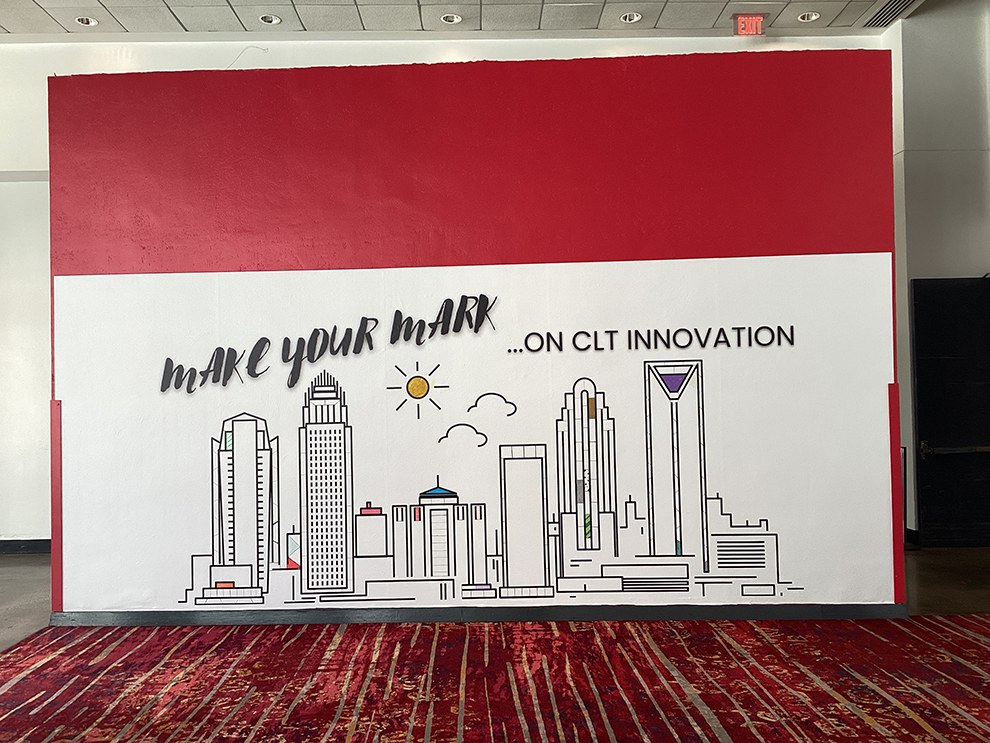
Dimensional lettering can bring additional depth to a name, value, date, statement, or other concise message placed over a printed wall. Heritage considers scale, spacing, projection, mounting positions, contrast, imagery, and viewing distance so the lettering remains distinct without appearing disconnected from the larger composition.
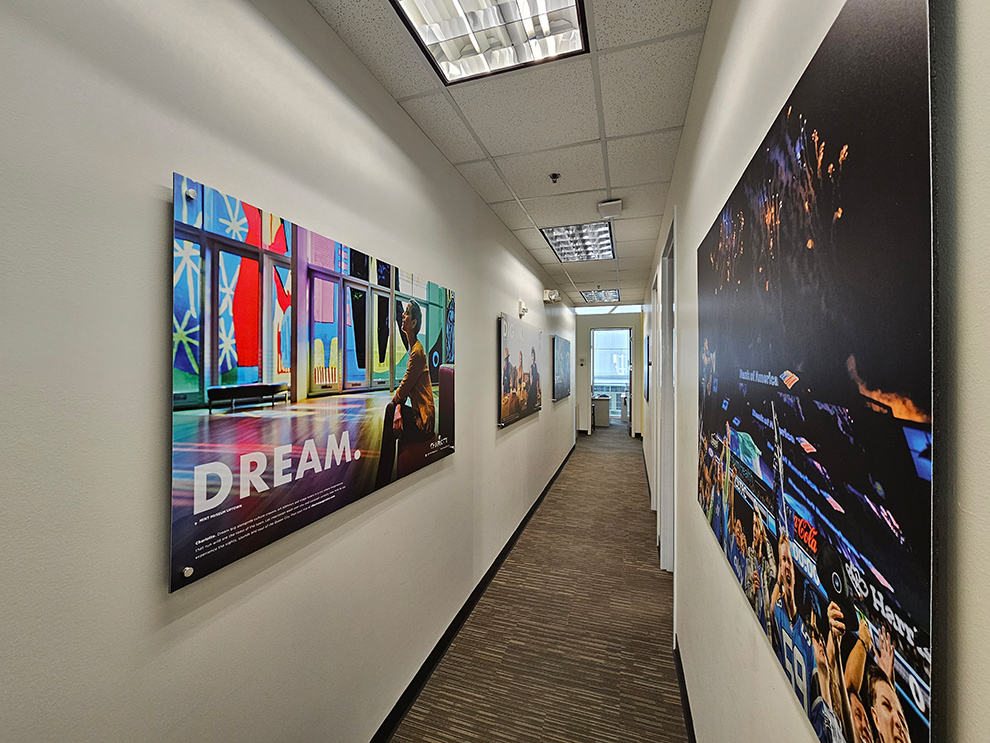
Standoff mounted panels can present donor recognition, photography, milestones, educational information, or content that may be updated in the future. Their projection creates a separate visual layer for detailed material while the printed graphic continues to connect the overall display.
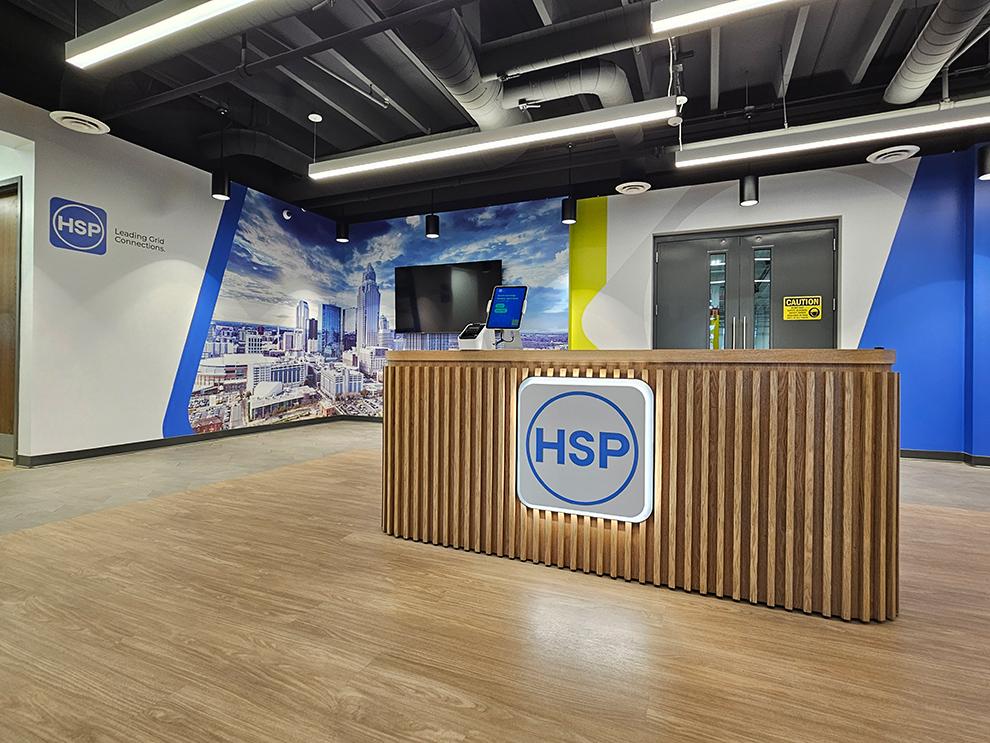
Backlit signs can create a strong visual anchor within a lobby or feature wall when illumination suits the architecture and surrounding lighting conditions. Heritage coordinates sign dimensions, brightness, placement, mounting, sightlines, and neighboring imagery so the illuminated component receives emphasis without overpowering the rest of the wall.
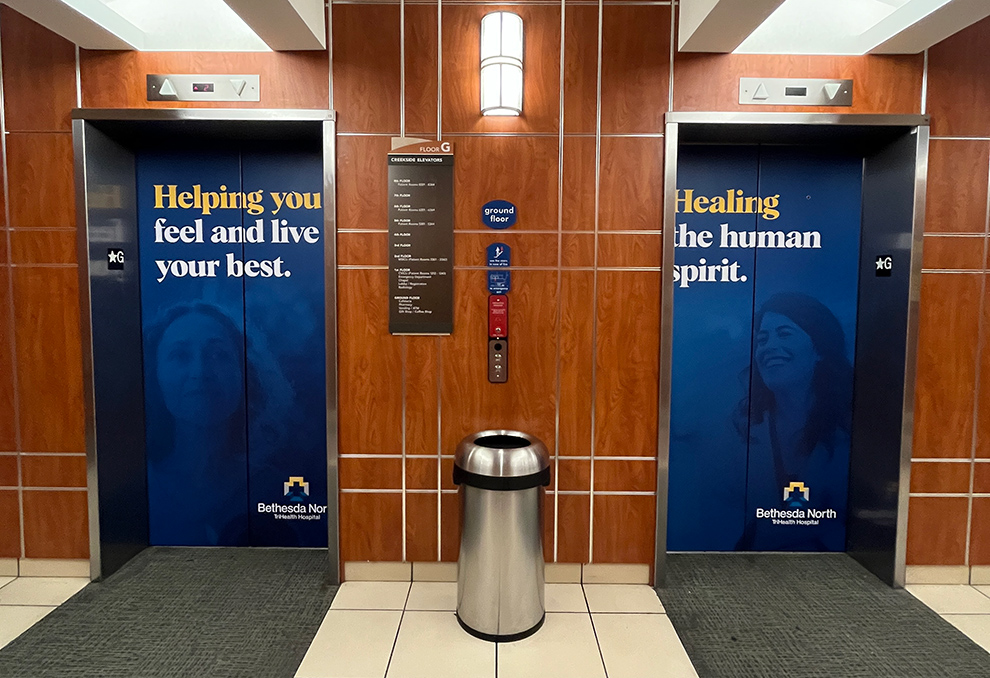
Elevator graphics can extend branded imagery, campaigns, events, or organizational messaging into frequently traveled circulation areas. Door graphics and other appropriate elevator surfaces can coordinate visually with nearby wall wraps while being designed around movement, seams, controls, required information, and the functional characteristics of the elevator.
Window graphics can introduce related colors, patterns, privacy treatments, or secondary messaging onto glass near a feature wall. Heritage considers transparency, daylight, interior visibility, viewing direction, and graphic density so the glass treatment complements the wall graphics while serving its own communication purpose.
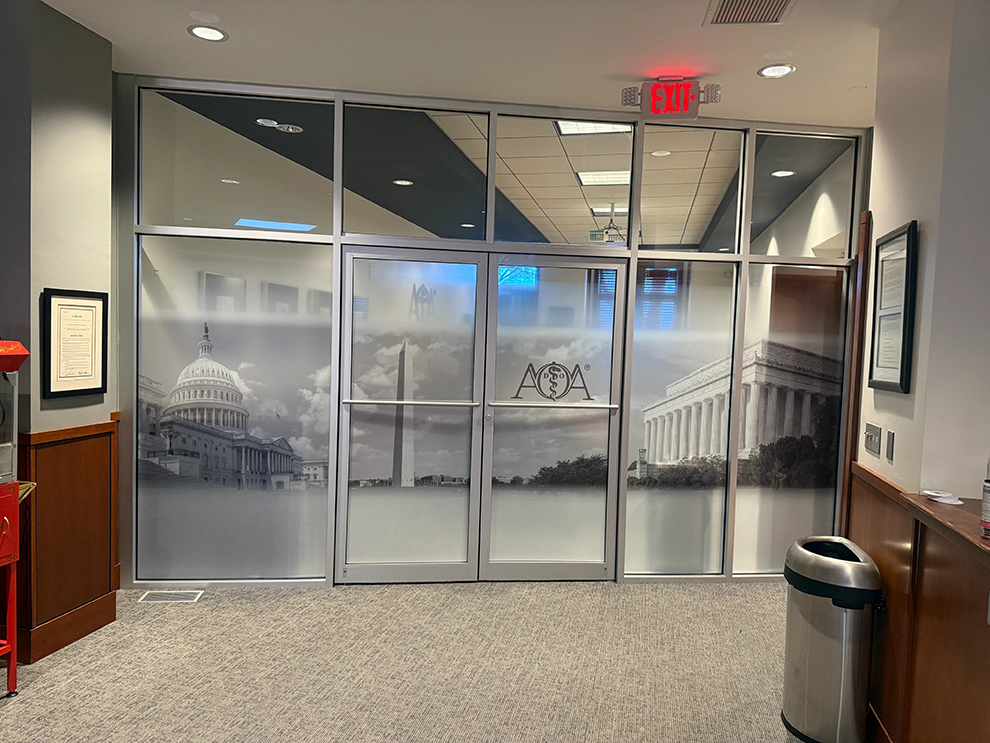
Frosted vinyl can provide privacy and subtle brand expression on office, conference-room, and corridor glass positioned near wall graphics. Custom bands, patterns, logos, and other restrained treatments can reference the surrounding environment without competing with the wall as the primary storytelling surface.
A successful wall wrap starts with a defined communication goal and accurate information about the space where the graphics will be installed.
Use Get Started Now to provide the High Point project address, intended audience, desired result, target completion date, anticipated overall investment, photographs, approximate dimensions, available brand standards, artwork, paint information, and known access restrictions.
One dedicated Project Manager or another Heritage team member will review the initial information, identify what still needs to be confirmed, and outline the appropriate next steps. The purpose of this process is to connect the communication objective, physical wall, production requirements, property conditions, and installation schedule before completed graphics arrive at the site.
High Point wall-wrap projects begin with attention to the actual property where the graphics will be installed. Heritage personnel can conduct the required site survey, confirm dimensions, document painted-wall conditions, identify architectural interruptions, and review access requirements before graphics enter production. This direct site knowledge gives the project team information that photographs, preliminary measurements, or architectural drawings may not reveal on their own.
Commercial properties can introduce a wide range of installation considerations. Occupied offices, showrooms, institutional interiors, healthcare spaces, event environments, and other facilities may have specific loading procedures, protected finishes, controlled entrances, security requirements, limited work periods, or installation schedules built around normal business operations. The Project Manager uses verified field information to connect these conditions with design development, material selection, production scheduling, and installation planning.
For organizations managing graphics across multiple properties, one dedicated Project Manager can also preserve brand standards, approved messaging, production history, and project decisions across the program. Each property is still evaluated independently because wall dimensions, surfaces, architecture, access, audiences, and schedules can vary significantly from one location to another.
The objective is consistent execution without assuming that every wall or property should receive an identical treatment.
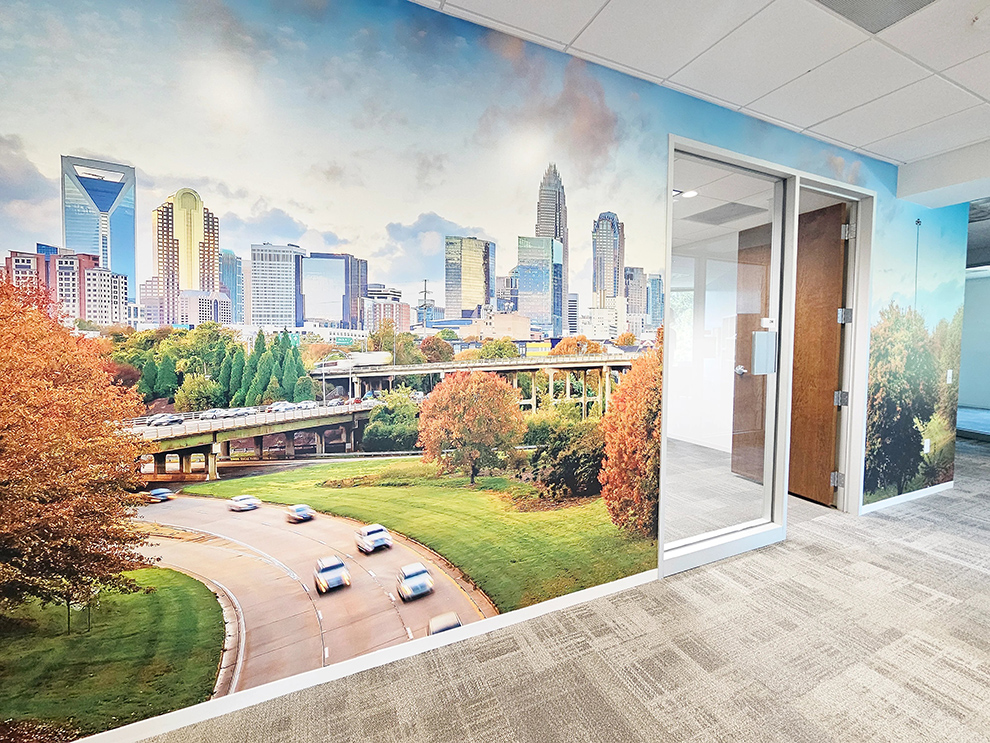
A High Point organization may want a wall to establish a strong arrival experience, explain its history, reinforce workplace culture, showcase accomplishments, present research, recognize employees, or communicate a mission. Environmental graphic design helps determine how that message should be organized within the actual interior rather than treating the wall as an isolated piece of artwork.
The process begins by identifying the audience, communication objective, information hierarchy, and way people encounter the surface. A visitor walking toward a reception wall may require a different composition than an employee viewing a detailed timeline from a nearby corridor. Large typography may be appropriate for information intended to be understood quickly, while photography and smaller interpretive content may reward closer viewing.
Heritage can develop environmental graphic concepts with client stakeholders or prepare wall graphics from existing brand standards, approved artwork, photography, and messaging. The team can also coordinate with architects, interior designers, branding agencies, environmental graphic designers, marketing departments, and other professional partners responsible for the broader space or identity program.
Heritage does not represent this work as licensed architecture, engineering, general interior design, lighting design, or code consulting. Its role is to translate approved communication and creative direction into a producible graphic solution.
Typography, imagery, panel divisions, seams, openings, corners, mounted elements, resolution, materials, and viewing conditions are evaluated against verified site information so the approved concept can move through production and installation without losing the intended hierarchy.
Professional installation should not be treated as a separate decision made after printing is complete. Heritage requires a site survey for installed wall wraps so dimensions, wall conditions, architectural interruptions, access routes, security requirements, work-hour restrictions, loading conditions, and other property details can be documented before production.
This information affects environmental graphic design, material selection, panel sizing, seam placement, scheduling, fabrication, and the final installation sequence. Early planning becomes especially important when work must take place in occupied spaces or around meetings, events, business operations, protected finishes, elevators, or narrowly defined access periods.
Heritage installers receive the project information developed during the engagement, including approved artwork, selected materials, panel plans, known field conditions, and site-access requirements. Once installation begins, the team manages panel alignment, registration, seams, transitions, corners, openings, doors, outlets, fixtures, and other interruptions in the wall.
Nearby finishes and surfaces are protected according to the installation plan. Heritage provides installation for signs and graphics it produces, fabricates, procures, or manages as part of the project, preserving a connected line of responsibility when field conditions require coordinated decisions.
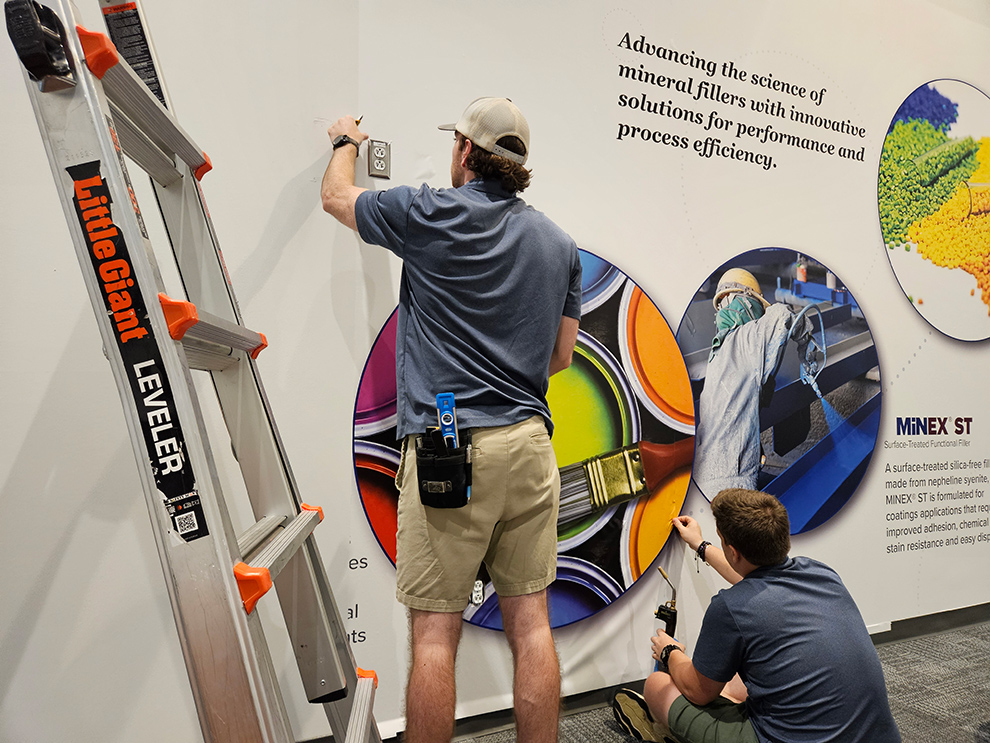
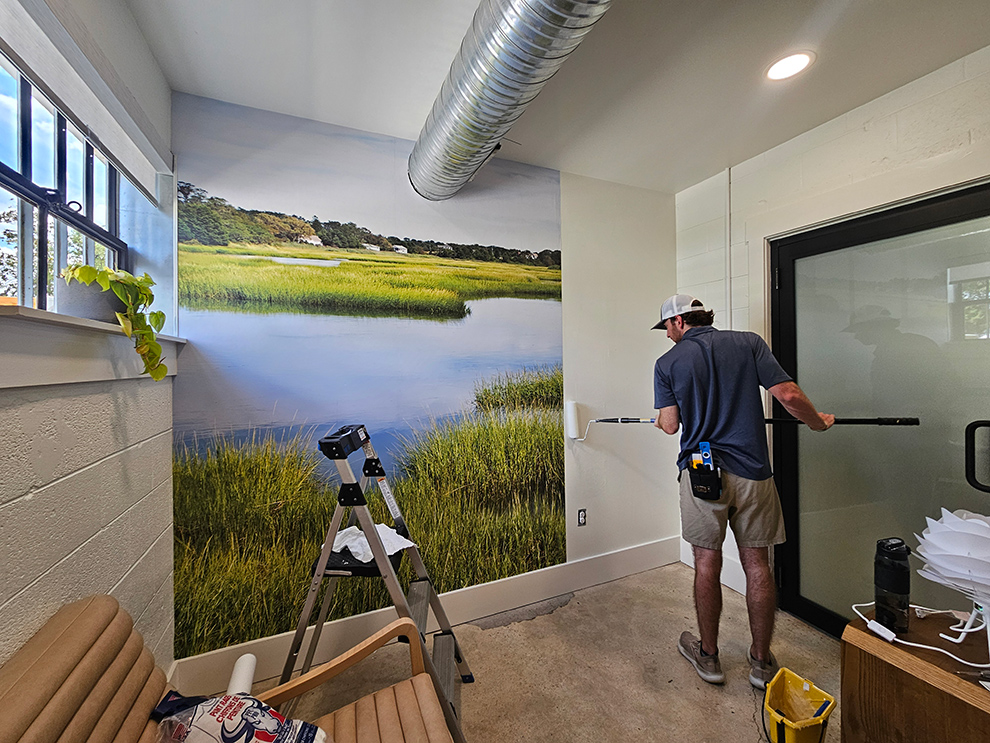
Wall wraps rely on the quality of the finished wall beneath them. Before installation, drywall should be solid, smooth, clean, dry, and appropriately repaired. Primer and paint should be applied properly, and the finish paint must complete its curing process before vinyl is installed.
A freshly painted wall may feel dry even though the coating is still curing. Paint can release gases or vapors during this period. Covering the surface too quickly with adhesive vinyl can trap that outgassing and may contribute to bubbling, blistering, lifting, or premature loss of adhesion. Allowing about four weeks is useful planning guidance for many paints. Even so, manufacturer requirements and conditions at the installation site control actual readiness.
Heritage may test the surface to see how vinyl behaves on the finished paint. That test cannot determine whether the paint and primer are securely bonded to the drywall below. If any coating pulls away or peels during testing or normal repositioning, Heritage stops rather than risk increasing the damage. Repair work, proper priming, repainting, and adequate curing are arranged and paid for by the client or property owner before Heritage returns.
Later removal has its own considerations. Heritage takes care to reduce unnecessary damage when graphics are removed, but no damage-free guarantee can be made. Paint, primer, and drywall facing can release from the surface. Restoration is arranged and funded by the client or property owner. Wall wraps remain established and effective solutions for branding interior spaces.
Effective wall-wrap planning should establish the desired result before artwork progresses too far. The organization should identify the intended audience, approximate coverage, approval process, completion date, property-access requirements, wall readiness, installation schedule, and anticipated overall investment.
These factors help determine whether the wall should be completed as one installation, divided into phases, coordinated with other signs and graphics, or scheduled around construction, renovation, an event, a showroom opening, or another operational milestone.
Helpful preliminary information includes the High Point installation address, current wall photographs, approximate measurements, desired messaging, available brand standards, existing artwork, known paint information, target date, and building-access requirements. The required site survey then verifies conditions that preliminary information may not capture accurately.
Many Heritage projects that combine production and professional installation range from approximately $10,000 to more than $200,000. The actual investment for a wall-wrap project depends on factors such as graphic development, square footage, image preparation, material system, fabrication, access, surface condition, installation windows, schedule requirements, and overall coordination.
Because investment requirements may change, organizations should use Get Started Now to discuss the current anticipated project investment rather than treating a published range or threshold as a fixed quotation.
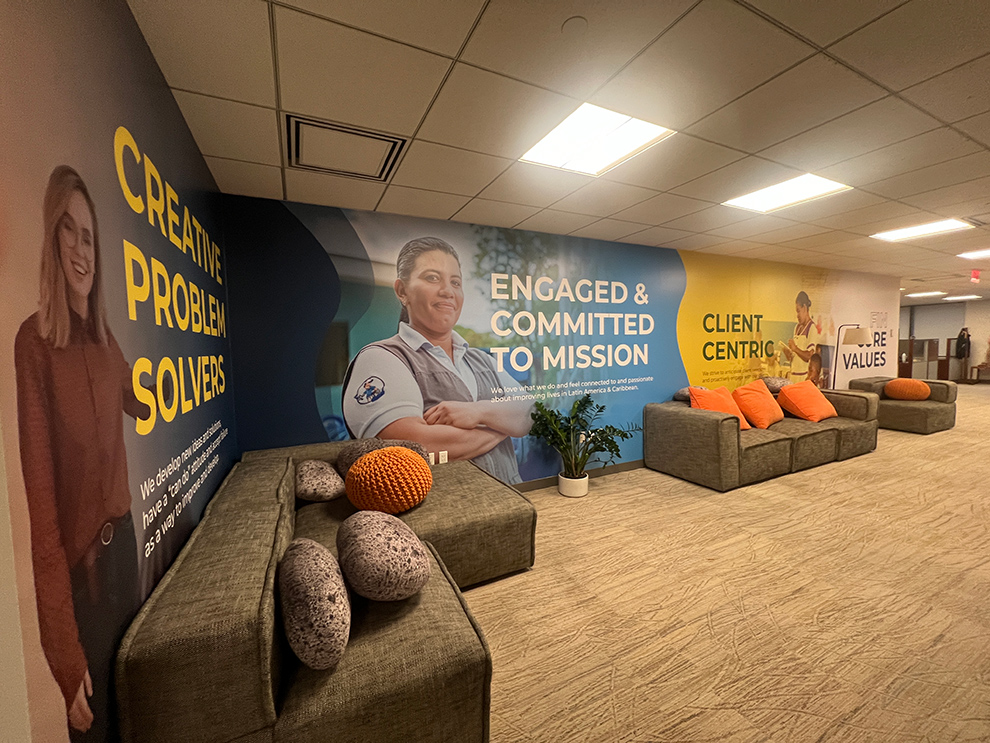
Wall wraps can give an architectural surface a specific communication function. High Point organizations may use large-format wall graphics to create a stronger arrival experience, reinforce workplace culture, present organizational history, recognize employees or donors, display research, communicate a mission, support an event, or transform a corridor into an informational environment. The appropriate approach depends on the audience, available wall area, viewing distance, architecture, brand requirements, content volume, and condition of the installation surface.
The site survey confirms conditions that directly affect design, production, and installation. Heritage can document accurate wall dimensions, surface condition, texture, doors, openings, outlets, fixtures, access paths, loading requirements, elevators, work-hour restrictions, security procedures, and other relevant property conditions. Verified information can then guide artwork scaling, material selection, panel planning, fabrication, installation sequencing, and scheduling. This process helps prevent avoidable field problems from being discovered only after completed graphics have reached the property.
The paint manufacturer's full-cure requirement should guide the schedule. Dryness at the surface does not necessarily mean the coating is ready for vinyl. As paint cures, gases or vapors may continue to escape. Vinyl installed too soon can trap these emissions and potentially contribute to blisters, bubbles, lifting, or premature adhesion failure.
Approximately four weeks is useful as a general planning benchmark for many paint products, but curing varies with the coating system, temperature, humidity, wall preparation, and site conditions. Outgassing is only one possible reason for adhesion difficulties, so the manufacturer's specifications and actual wall conditions remain the deciding factors.
Yes. Heritage can develop environmental graphic concepts with client stakeholders or prepare production-ready wall graphics from approved brand standards, messaging, photography, artwork, and other supplied materials. Heritage may also coordinate with architects, interior designers, branding agencies, environmental graphic designers, marketing departments, and other professional partners involved in the broader project. Graphic development considers information hierarchy, typography, resolution, scale, architectural interruptions, panel divisions, and viewing distance so the approved design can be produced and installed successfully.
Some can. Washable, scrubbable, stain-resistant, low-VOC, zero-VOC, and related coatings may have surface characteristics that make vinyl adhesion more difficult. Heritage evaluates the specific painted surface rather than applying one material recommendation to every paint in a category. Cleaning, adhesion testing, or an alternative compatible vinyl and adhesive system may be recommended when conditions warrant it. Sharing paint manufacturer and product information early can help the project team evaluate the wall before production.
An adhesion test helps evaluate how a selected vinyl interacts with the visible painted surface during the test period. It may reveal initial adhesion behavior, lifting characteristics, or the need to consider another material system. Testing cannot determine the strength of concealed bonds between drywall, primer, and finish paint. It also cannot guarantee future performance or damage-free removal. The test is useful for reducing uncertainty about the visible surface, but it cannot certify the entire wall assembly.
If normal controlled lifting or repositioning causes paint, primer, or drywall facing to separate, Heritage stops work rather than continuing on an unstable surface. Installers may need to lift and reposition material to maintain alignment, registration, and panel placement. Failure of the wall assembly during that process indicates that the surface needs correction. The client or property owner is responsible for arranging and paying for repair, priming, repainting, curing, and related restoration before Heritage resumes installation.
Some textured and masonry surfaces may support wall graphics, but the decision depends on the specific substrate. Heritage evaluates texture depth, porosity, surface stability, moisture, existing coatings, access, service period, visual expectations, and available material systems before recommending an application. Mild texture may remain visible beneath installed graphics even when an appropriate specialty material is available. Deep texture, rough masonry, irregular concrete, unstable paint, or moisture conditions may make a mounted display system more appropriate than an adhesive wall wrap.
Interior printed wall graphics do not automatically require protective laminate. Heritage may recommend laminate when the installed surface will experience repeated physical contact, frequent cleaning, abrasion, or another condition that creates a practical need for additional protection. The decision should reflect how the graphics will actually be used. Exterior printed wall graphics are evaluated differently and receive protective film laminate for UV and weather resistance when the surface, exposure, material system, and installation conditions support an exterior wall application.
Property owners should allow for the possibility that wall restoration may be necessary. Heritage uses controlled removal practices intended to reduce unnecessary damage, but no removal technique can guarantee that paint, primer, or drywall facing will remain completely unchanged. The result can be influenced by the age and condition of the wall, adhesion between paint layers, previous repairs, adhesive type, environmental exposure, and length of service. Any required repair, priming, repainting, curing, or restoration is the responsibility of the client or property owner.
Yes, provided the wall construction, mounting method, graphic hierarchy, and overall concept support the additional components. Dimensional lettering, acrylic signs, photographs, standoff mounted panels, recognition elements, and illuminated signage can provide depth while the printed wall remains the primary graphic surface. Heritage coordinates spacing, contrast, mounting locations, imagery, and anticipated content changes so mounted components and printed graphics function as a coordinated display.
Yes. One dedicated Project Manager can help maintain brand standards, approval history, messaging, production requirements, scheduling information, and other project decisions across multiple locations. Each property still needs individual evaluation because wall dimensions, paint conditions, architecture, audiences, property rules, installation access, and completion schedules may differ. Consistency across a multi-location program comes from controlled standards and coordinated project management rather than reproducing an identical wall layout at every property.
No. Temporary or removable adhesive describes the intended performance characteristics of the material but does not guarantee that the underlying paint, primer, or drywall will remain unaffected. Temporary wall graphics can work well for events, campaigns, exhibitions, seasonal messages, and limited-duration installations when the substrate, paint, service period, access, and removal plan support the application. Property owners should still anticipate the possibility of repair or repainting after removal.
Exterior wall graphics may be possible when the substrate, exposure, texture, access, material system, environmental conditions, and intended service period are suitable. Heritage evaluates surface stability, moisture, sunlight, weather exposure, access requirements, texture, and viewing conditions before recommending an exterior application. Printed exterior wall graphics receive protective film laminate for UV and weather protection when appropriate. Required property approvals and applicable sign permits remain the responsibility of the client, property owner, property manager, or general contractor.
Useful starting information includes the High Point installation address, communication objective, intended audience, approximate wall dimensions, photographs, desired completion date, anticipated overall investment, available brand standards, messaging, artwork, paint information, and known property-access requirements. Every detail does not need to be resolved before the first conversation. The initial information should provide enough context to establish the general scope, after which Heritage can identify what requires additional discovery and what must be verified during the required site survey.
For new High Point and Piedmont Triad wall wrap and interior branding opportunities generated through the website, Heritage currently plans around an anticipated overall project investment of at least $5,000. This is a planning threshold for new website opportunities rather than the full range of Heritage project values.
Many Heritage projects that combine production with professional installation range from $10,000 to more than $200,000. Scope, artwork development, materials, fabrication, existing wall conditions, project schedule, access, and installation requirements all affect the investment. Use Get Started Now to share the High Point opportunity you are considering and confirm the current regional investment level.
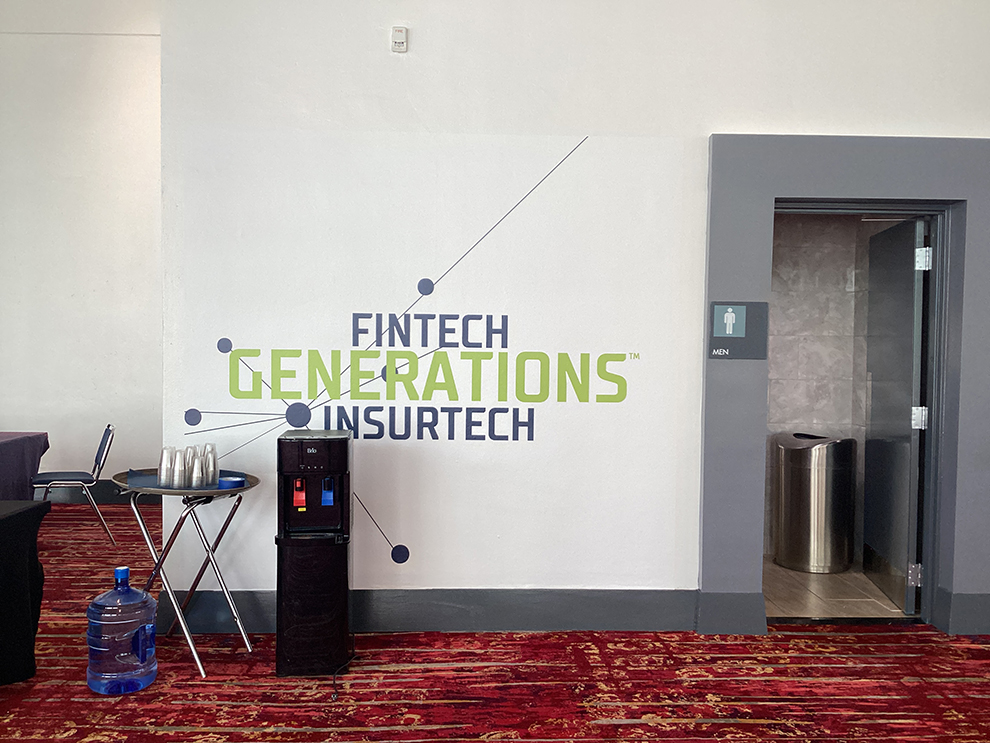
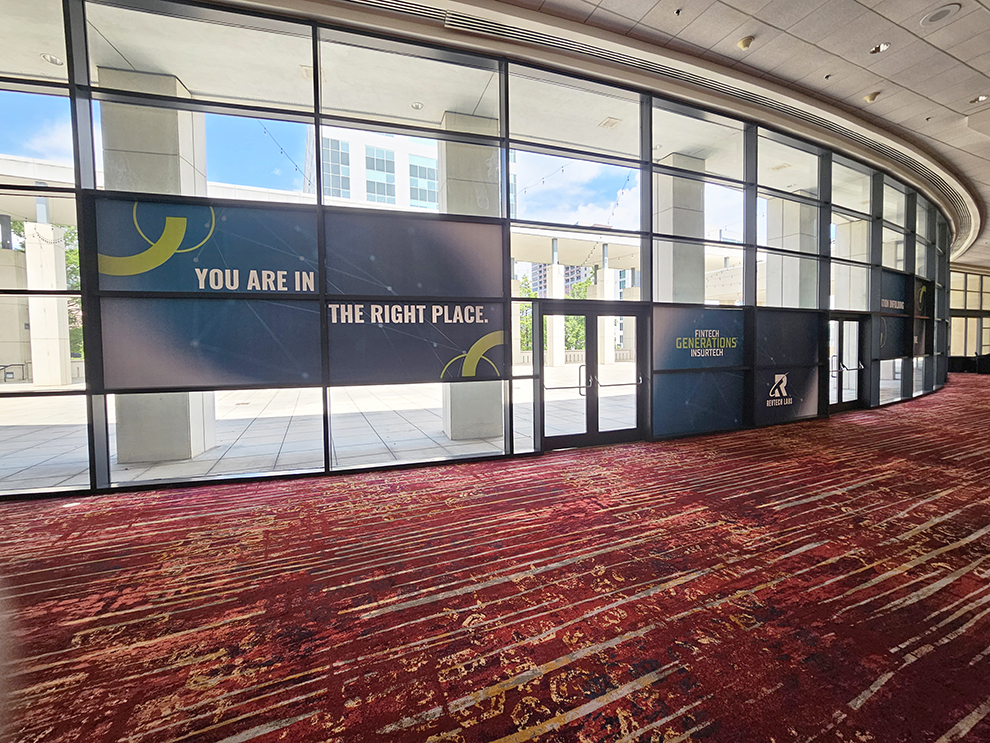
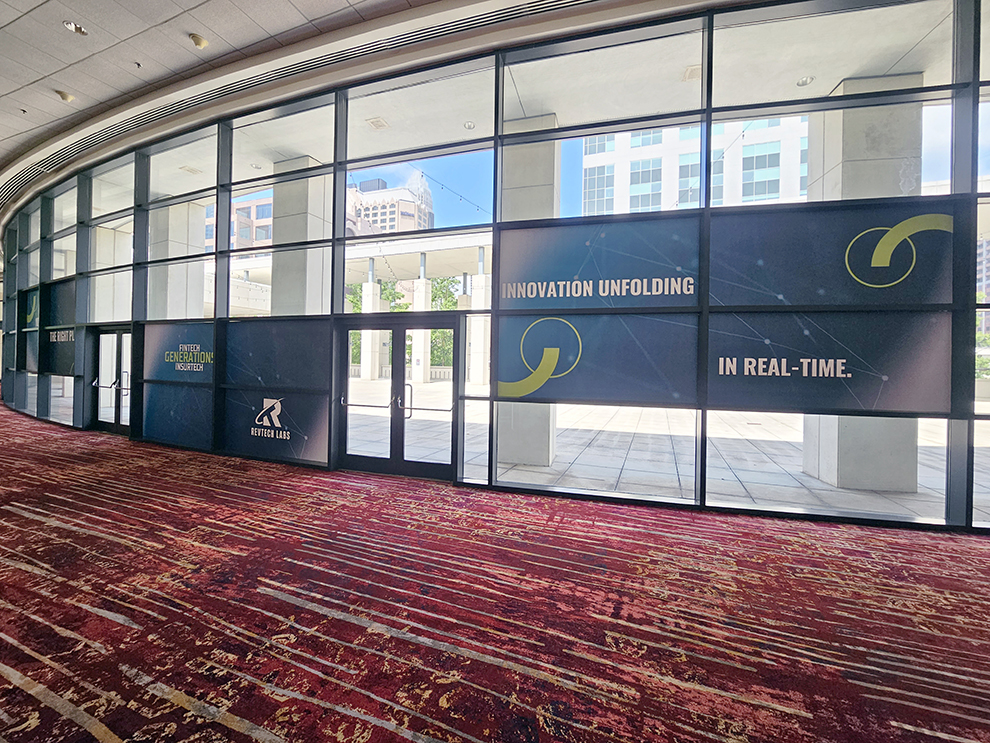
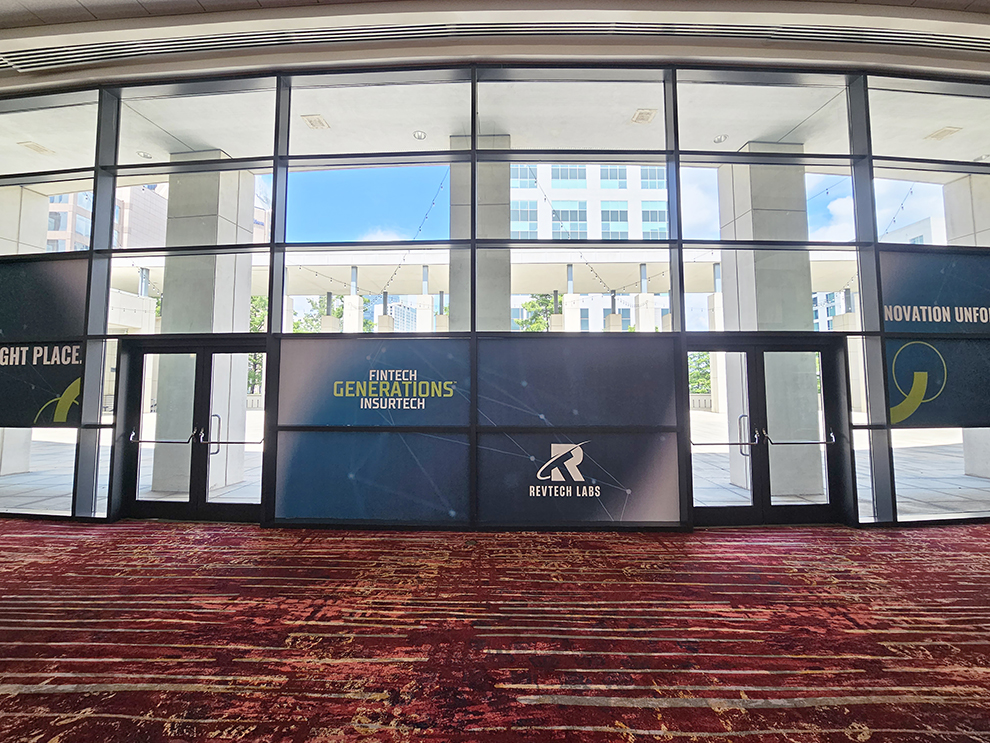
Heritage Signs & Displays collaborated with the Fintech + Insurtech Generations 2023 conference at the Charlotte Convention Center. Heritage worked closely with the client to create an interactive and branded event environment for attendees to network and discuss key topics impacting the financial and insurance sectors. The project enhanced the premier annual conference's atmosphere and engagement.
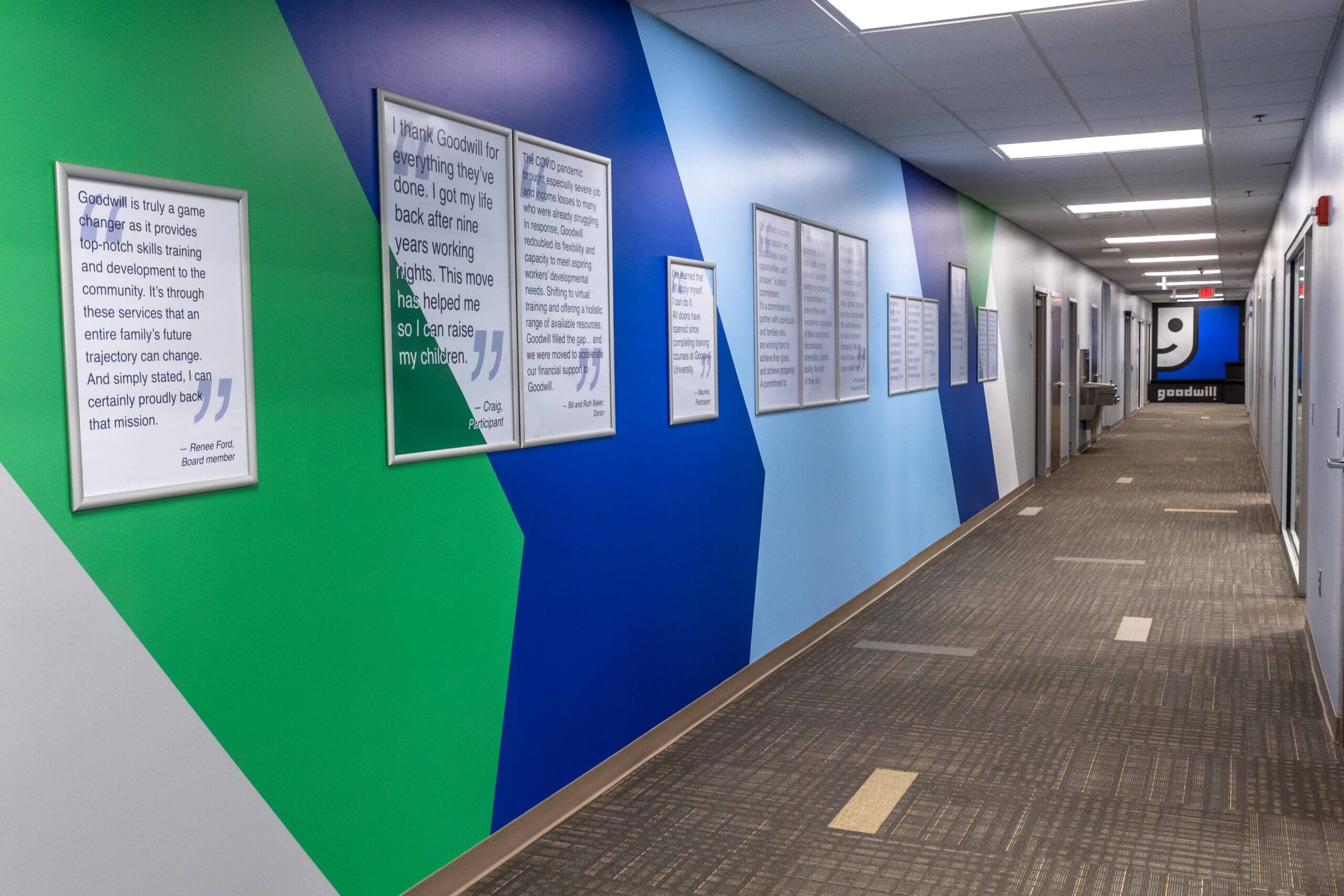
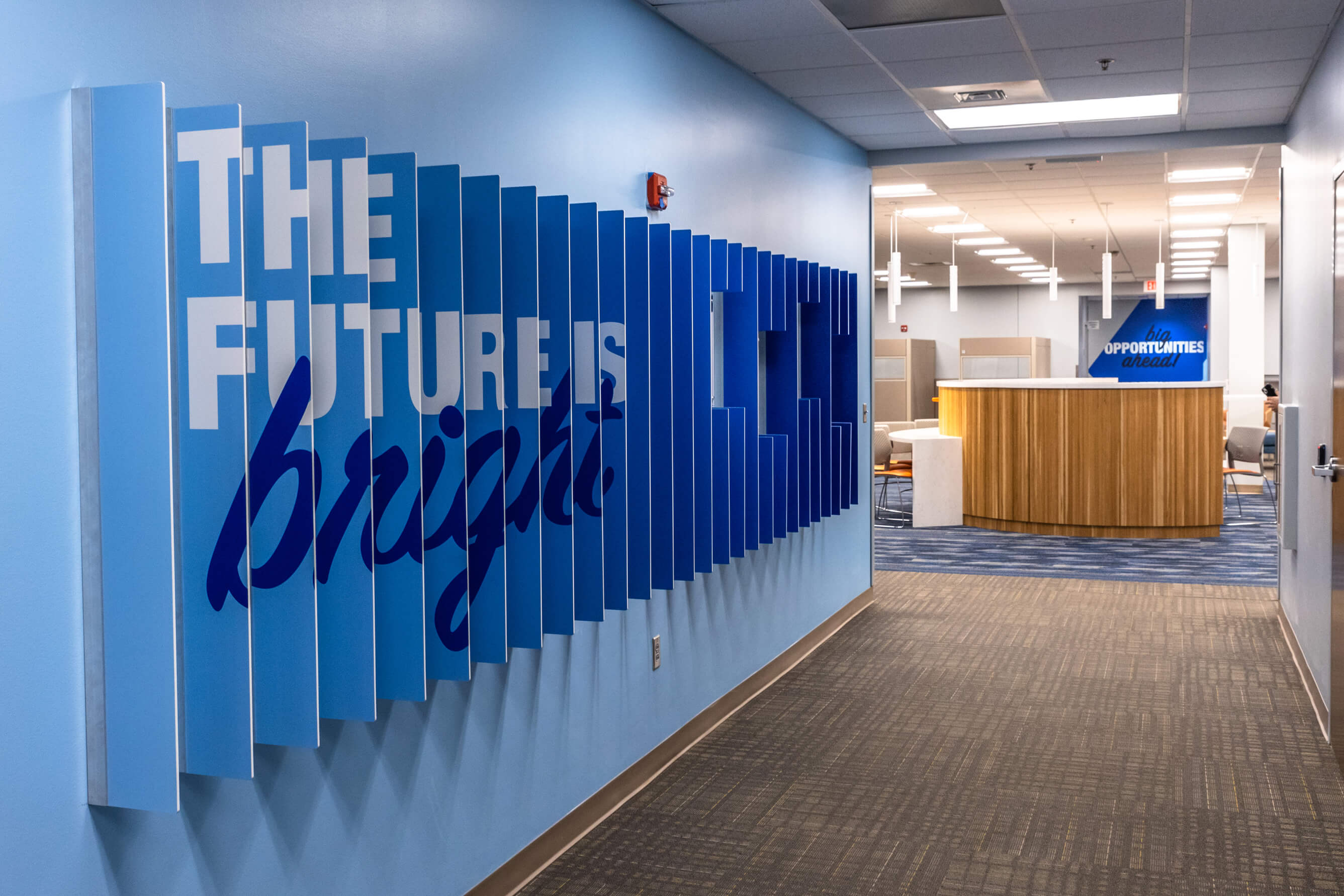
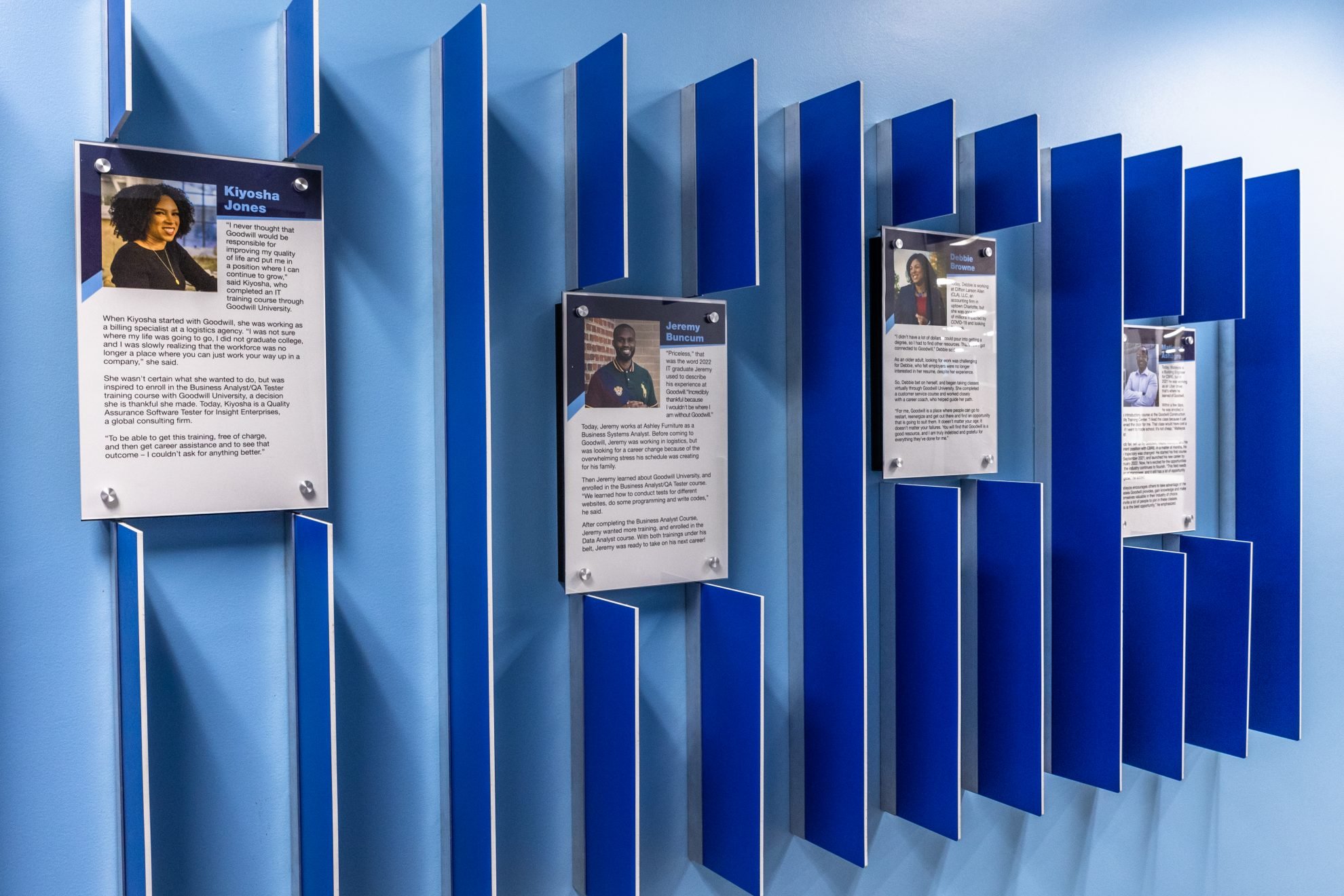
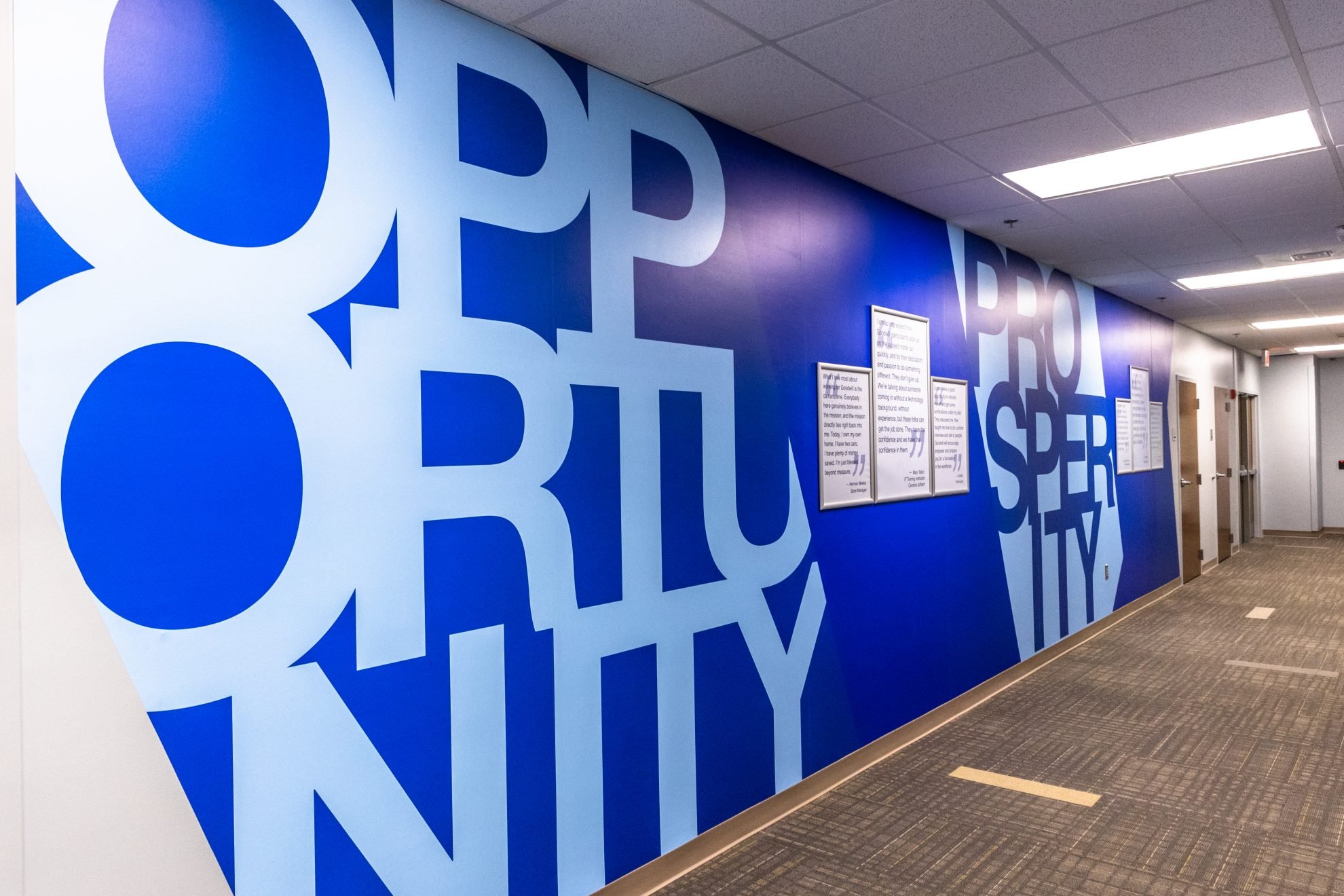
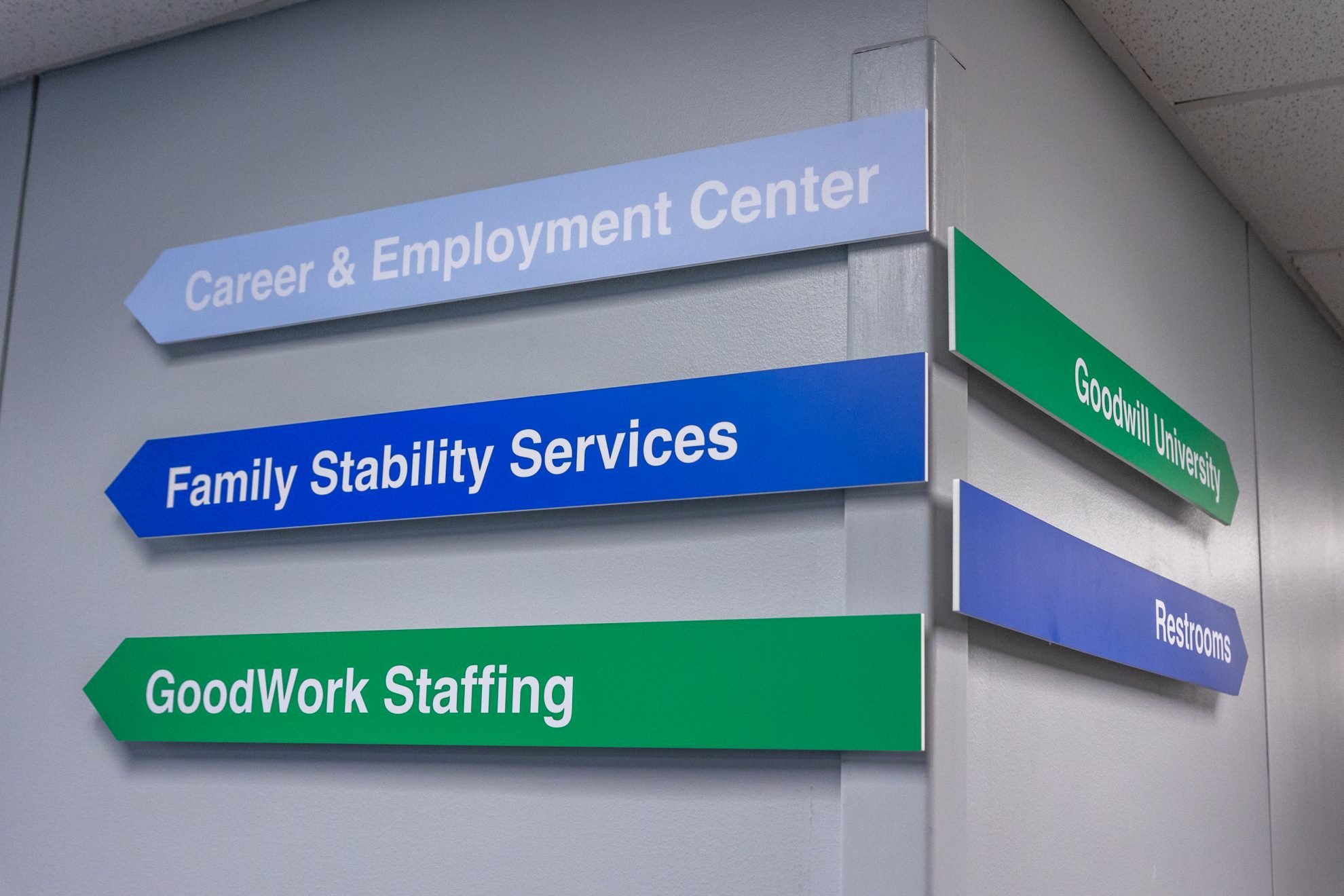
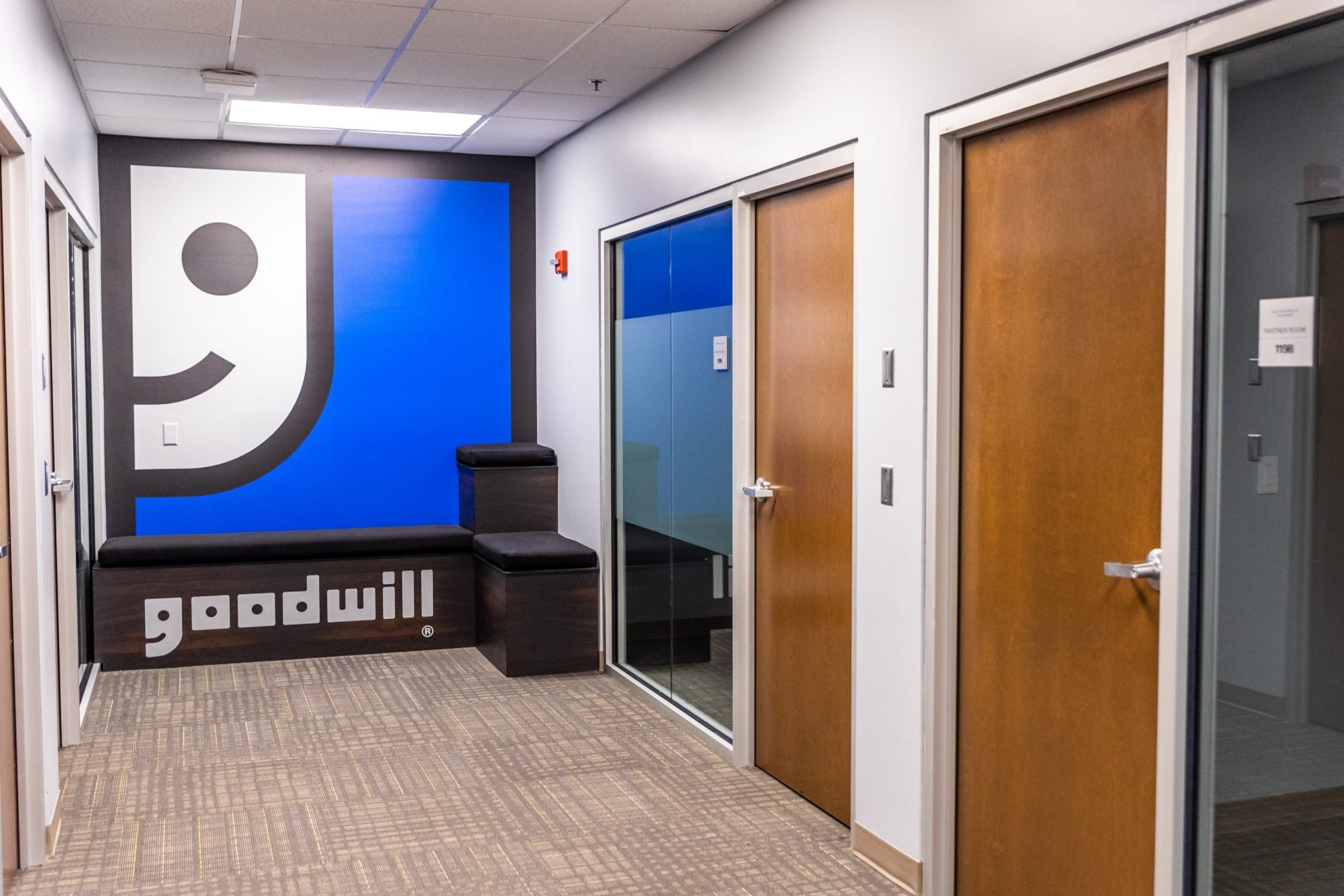
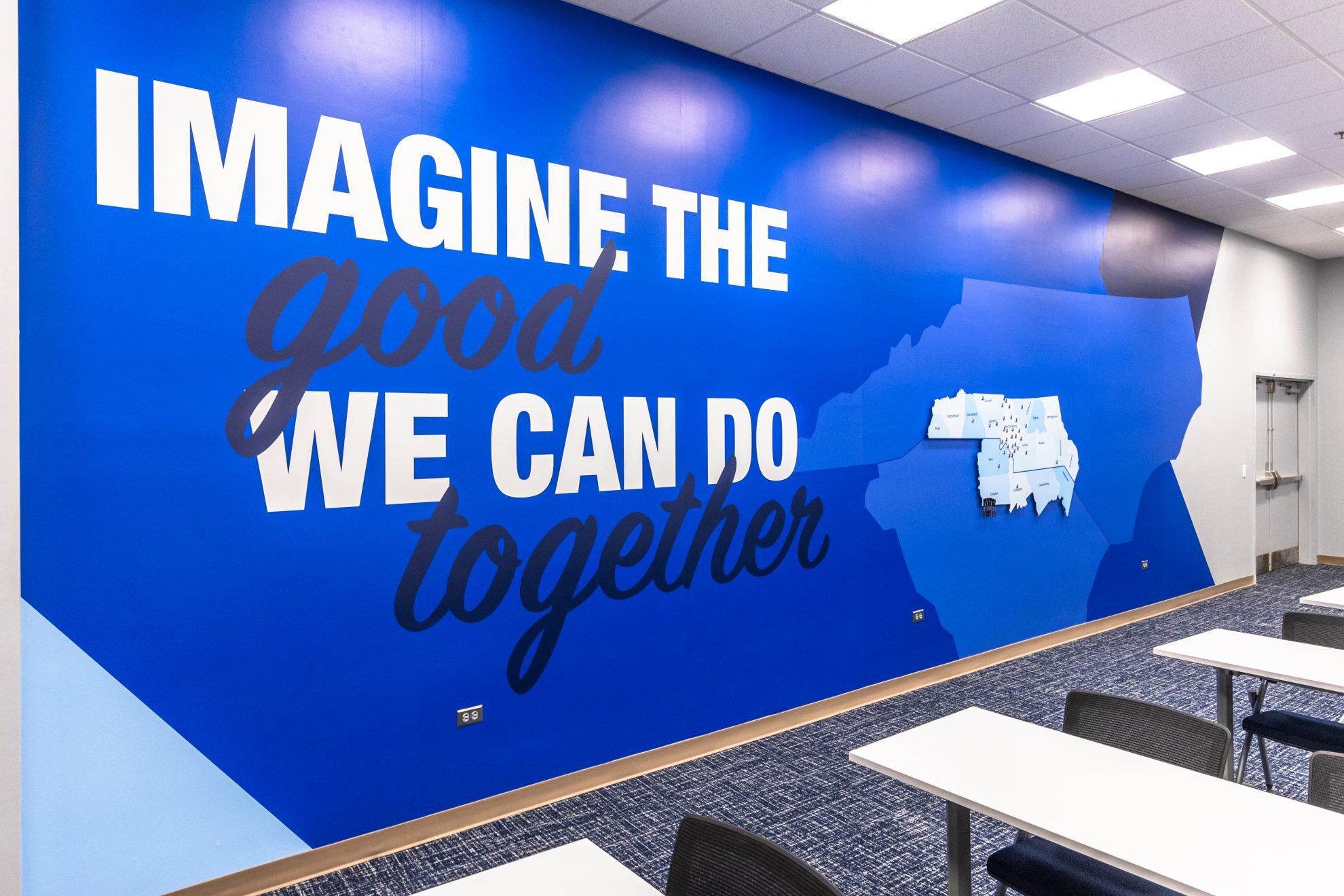
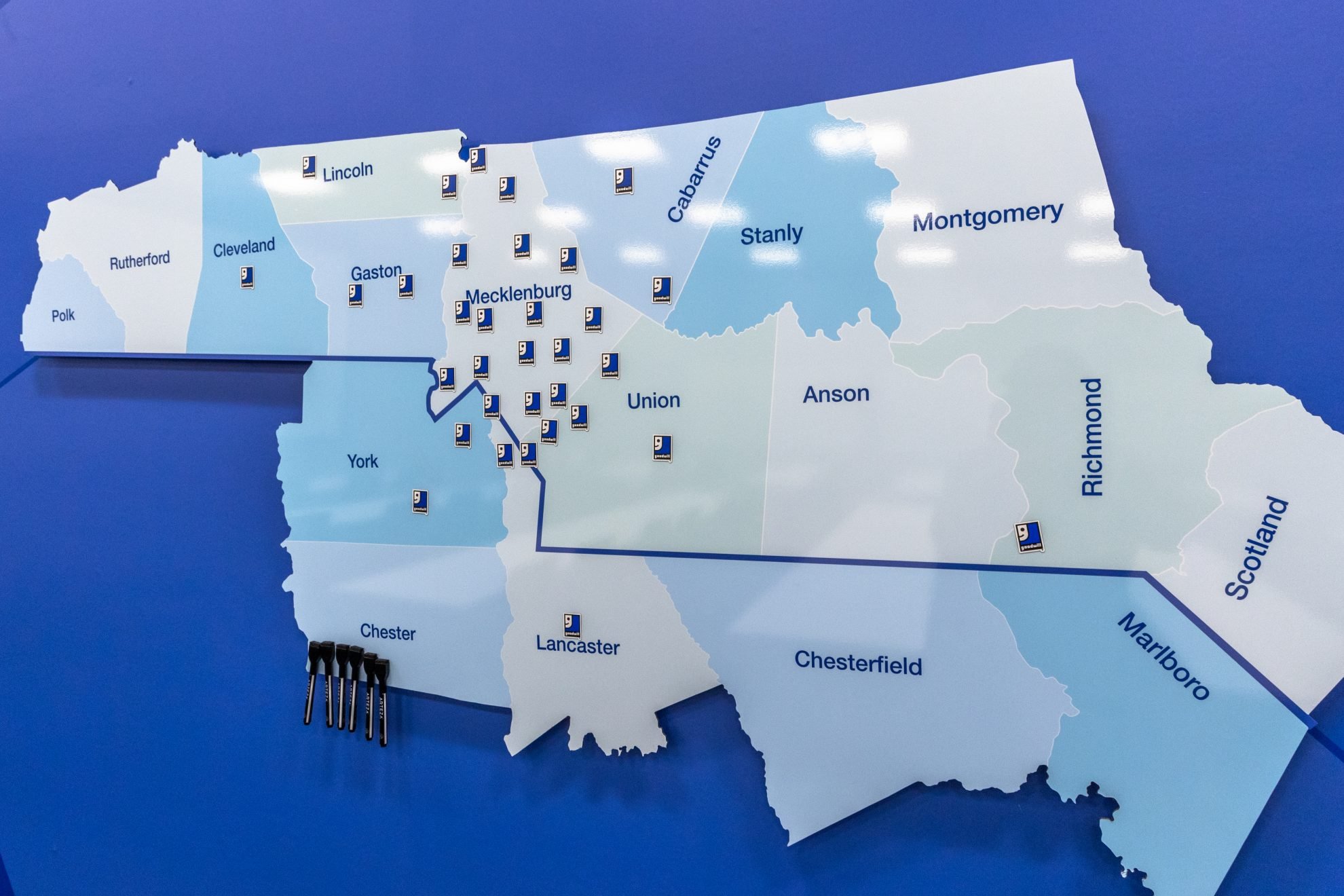
Heritage Signs & Displays collaborated with Goodwill Industries of the Southern Piedmont to transform the Opportunity Campus in High Point, NC. The project included lenticular wall displays, wall wraps, frosted vinyl, wayfinding signs, and custom wall displays. These elements enhanced the Career & Employment Center, creating an engaging and branded environment that reflects Goodwill's values and mission to support workforce development.