Signs, displays, and environmental graphics shape how people understand and move through a physical space. A well-planned visual system can introduce an organization, communicate its purpose, simplify navigation, create privacy, and make an environment more memorable. In workplaces, branded elements can highlight company culture, distinguish departments, share milestones, and create a polished welcome for clients and prospective employees. At conferences, sporting events, corporate gatherings, and other venues, coordinated graphics can clarify entrances, guide attendees, showcase sponsors, identify activity zones, and bring temporary spaces into alignment with the event brand.
Heritage Signs & Displays provides custom signs and graphics for organizations in Kannapolis, NC. Founded in 1977, Heritage is a veteran-owned, family-led company that has concentrated on interior signs, workplace branding, environmental graphics, and event environments since 2009. Our Charlotte headquarters at 2744 Yorkmont Road houses project management, environmental graphic design, production, fabrication, and professional installation resources serving Kannapolis, the greater Charlotte area, and communities across the Carolinas.
Every project starts by defining what the space should communicate and how employees, customers, visitors, or attendees will interact with it. Heritage evaluates brand guidelines, organizational goals, architectural conditions, available surfaces, access restrictions, project deadlines, and required messages. Those details are developed into visual elements that can be produced and installed successfully. The resulting scope may include a single reception sign, an office-wide branding update, several floors of coordinated graphics, a multi-location rollout, or a temporary installation for an event.
Depending on the environment, Heritage can create dimensional lobby signs, wall wraps, window graphics, privacy films, acrylic displays, standoff-mounted panels, directional signs, history walls, donor recognition features, room identification signs, sponsor graphics, branded backdrops, and reusable display systems.
Kannapolis organizations serve a wide range of employees, customers, patients, students, visitors, and community members. Manufacturing and distribution facilities may prioritize durable identification, clear visitor routes, safety communication, and consistent branding between administrative and operational areas. Healthcare providers, research organizations, educational institutions, financial firms, nonprofits, professional offices, sports groups, and event teams may focus more heavily on privacy, recruiting, accessibility, donor recognition, storytelling, guest engagement, or sponsor exposure. An effective sign and graphics plan should respond to the needs of each facility instead of applying the same products and materials everywhere.
Heritage assigns one project manager to oversee discovery, site documentation, estimating, design development, material selection, approvals, production, fabrication, scheduling, installation, and project closeout. Environmental graphic designers, production specialists, fabricators, and full-time installers work within the same coordinated process. Kannapolis clients receive one primary point of contact rather than having to manage separate designers, printers, fabricators, and installation contractors.
This level of coordination is especially valuable when an office must remain operational, an opening date cannot change, event access is limited, or consistent branding is required at multiple facilities. Heritage pairs knowledge of the Charlotte and Cabarrus County region with a seven-location network serving the Carolinas and Mid-Atlantic. Our purpose is to honor God by serving our clients and communities with excellence. That commitment is reflected in practical recommendations, organized planning, detailed execution, and finished environments that support the people who use them.
Every audience enters a commercial or institutional environment with different expectations. Employees may want a stronger connection to organizational values, culture, and purpose. Clients and visitors need a welcoming entrance and clear directions. Patients, students, recruits, donors, fans, sponsors, and event attendees may need to find a destination, understand a story, recognize a partnership, or interact with important information.
A coordinated visual plan brings these needs together. Instead of treating each sign or graphic as a separate decoration, Heritage considers how every component contributes to the complete experience.
Our team reviews brand standards, communication priorities, architectural features, traffic flow, surface materials, viewing distances, lighting, mounting conditions, and nearby visual elements. These observations help determine whether a location needs dimensional lettering, printed wall graphics, privacy film, directional signs, display panels, or a combination of products. They also guide decisions about scale, color contrast, placement, substrates, finishes, and installation methods.
For offices, medical facilities, research environments, schools, manufacturing workplaces, corporate interiors, venues, and events in Kannapolis, the goal is not to fill every empty surface. The goal is to select the right combination of signs, displays, and graphics. Each element should improve communication, make navigation easier, represent the organization accurately, and create a consistent experience from arrival through departure.
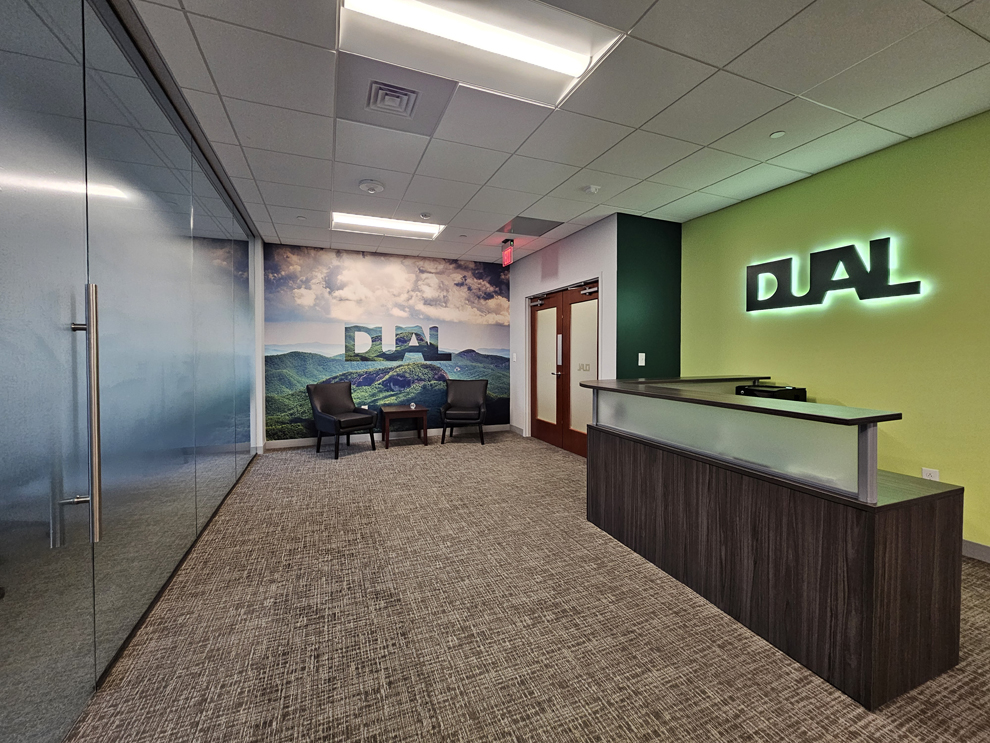
Kannapolis clients turn to Heritage when they need reliable project control as well as high-quality finished graphics. One dedicated project manager maintains continuity throughout discovery, estimating, design, approval, production, fabrication, scheduling, installation, and closeout. This approach establishes clear responsibilities and gives stakeholders a dependable communication path as the project develops.
Heritage project managers collaborate directly with environmental graphic designers, production professionals, fabricators, and installers. Before complex projects enter production, the appropriate team members review field measurements, colors, substrates, mounting conditions, building access, installation sequencing, and deadline requirements. This preproduction review allows potential conflicts to be identified before materials are fabricated or crews arrive on site.
Heritage was founded in 1977 and remains veteran-owned and family-led as it approaches 50 years in business. Our Charlotte headquarters, in-house capabilities, multiple production facilities, and seven-location regional network support office transformations, phased installations, temporary event environments, and branding programs across multiple locations.
Kannapolis organizations benefit from decades of experience combined with the convenience of a nearby regional team. Design, production, fabrication, project management, and installation remain connected instead of being distributed among unrelated vendors.
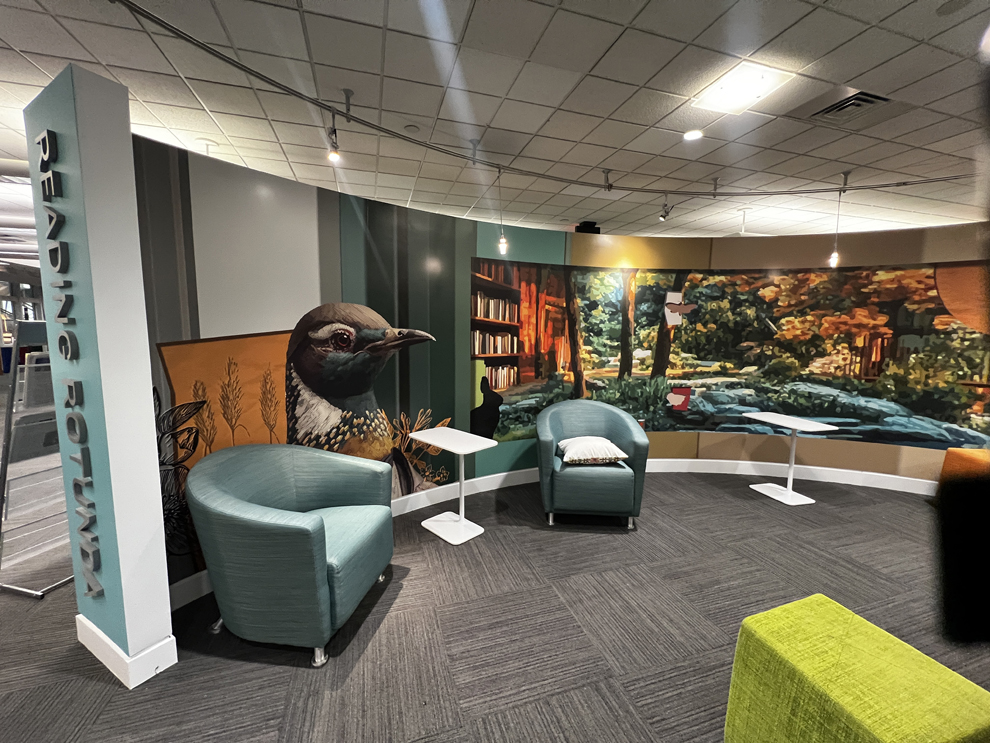
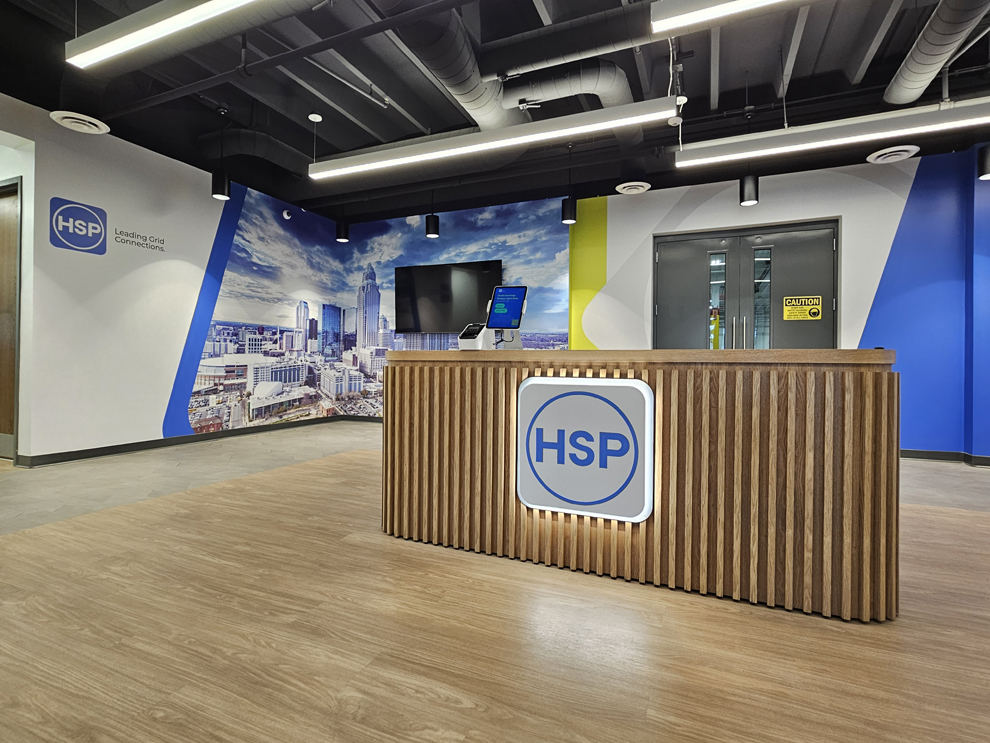
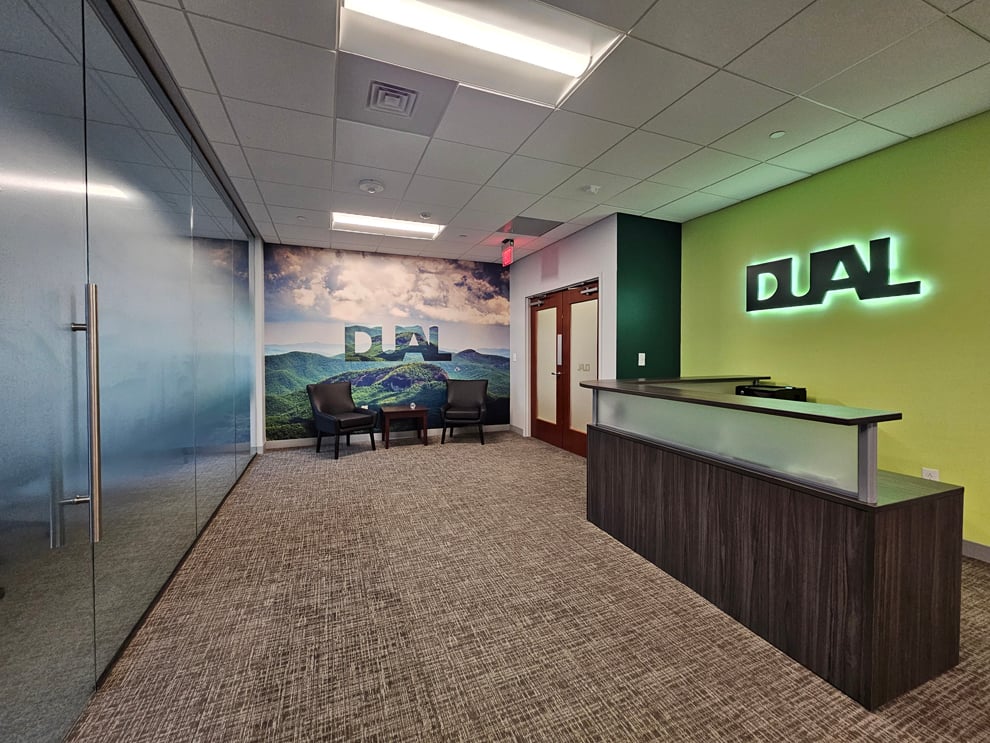
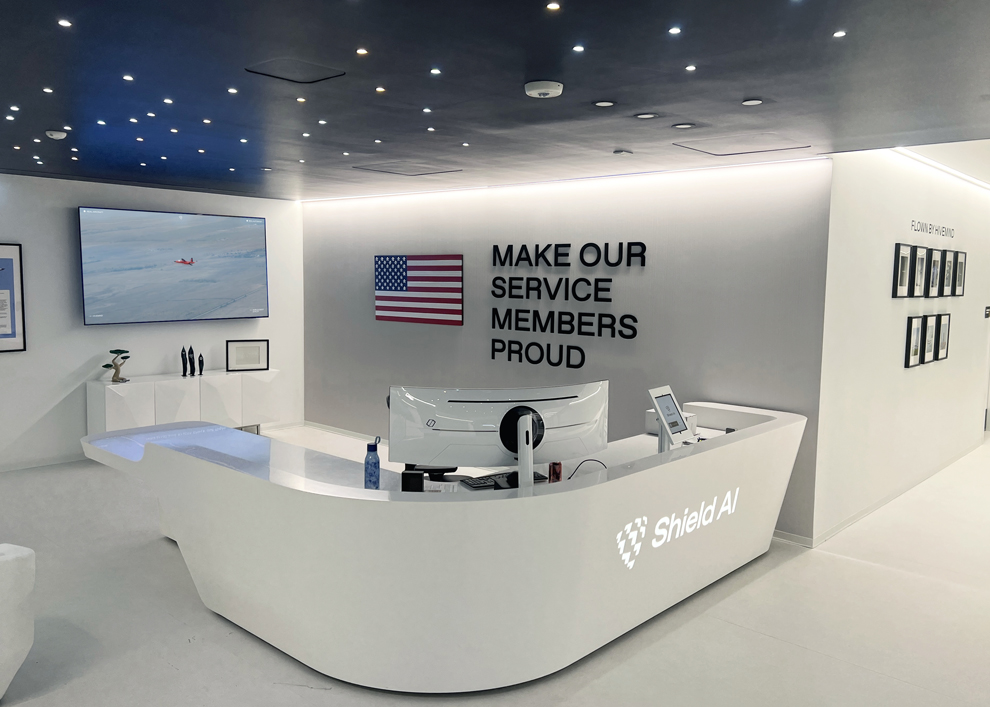
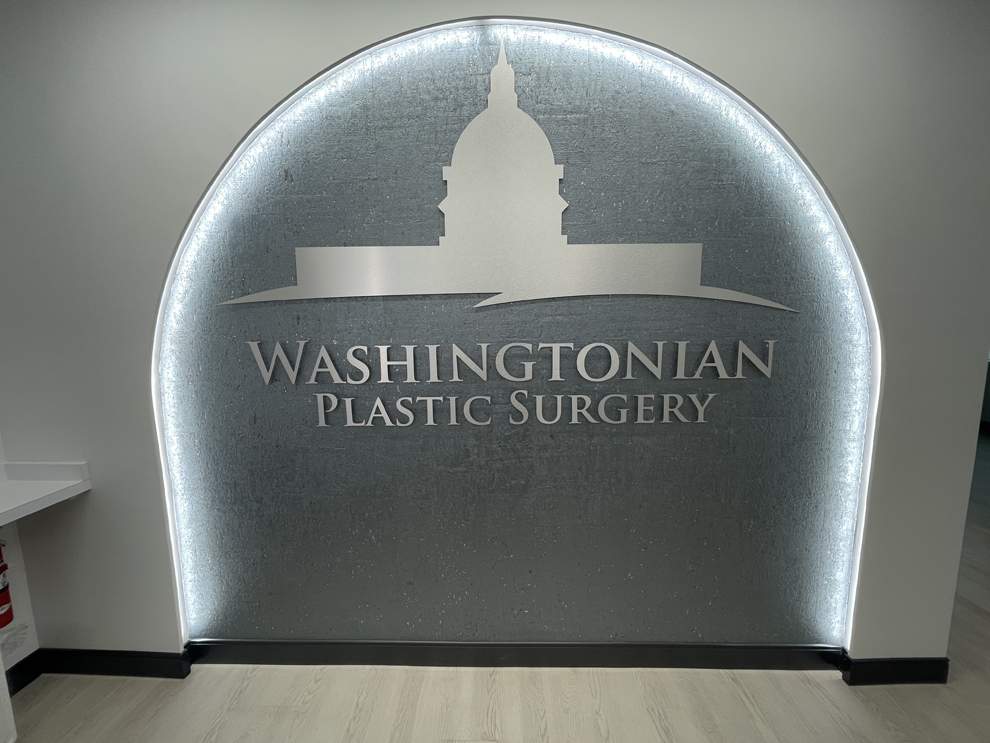
Custom lobby signs establish a strong visual identity in reception areas, entrances, and other first-impression spaces. Heritage can combine dimensional logos, custom lettering, acrylic panels, specialty finishes, lighting, and branded background treatments to complement the surrounding architecture.
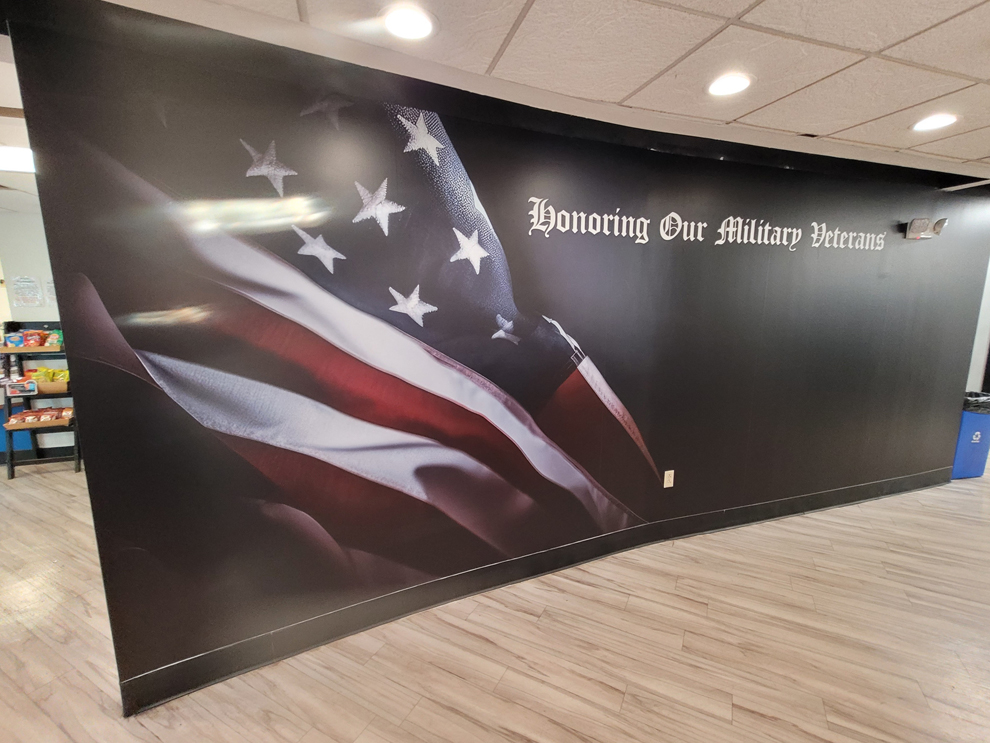
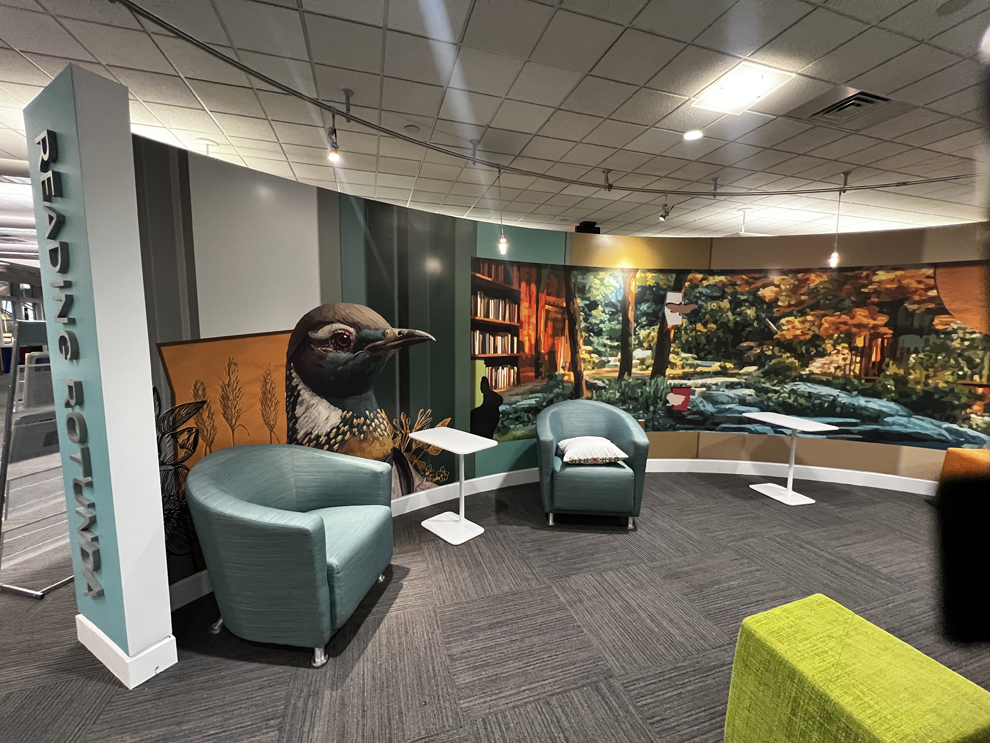
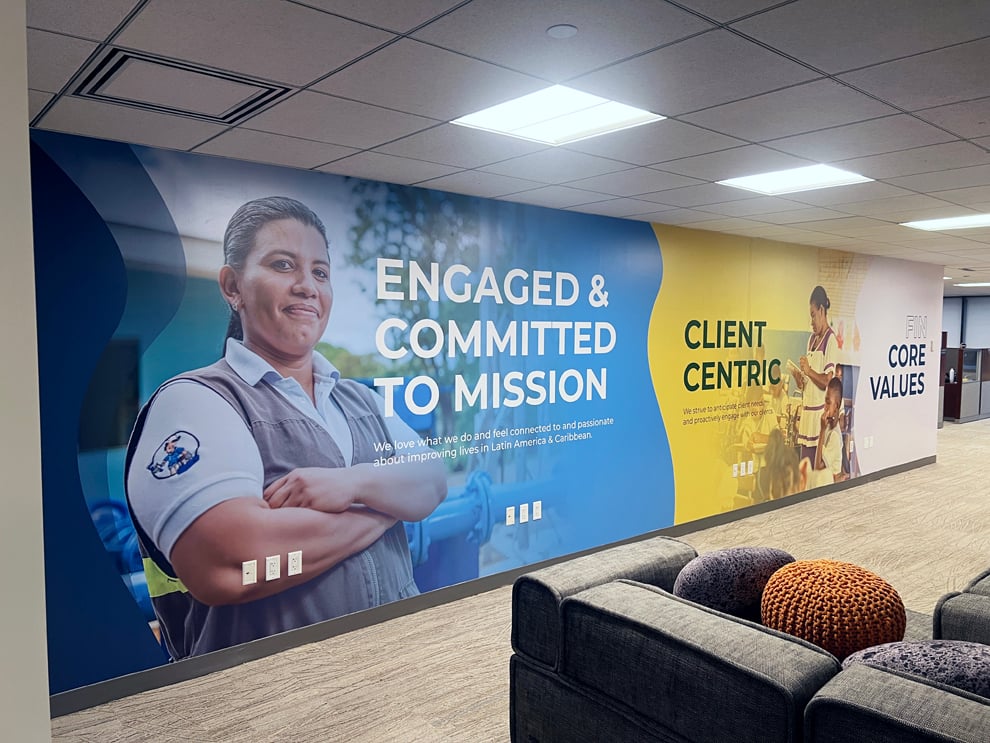
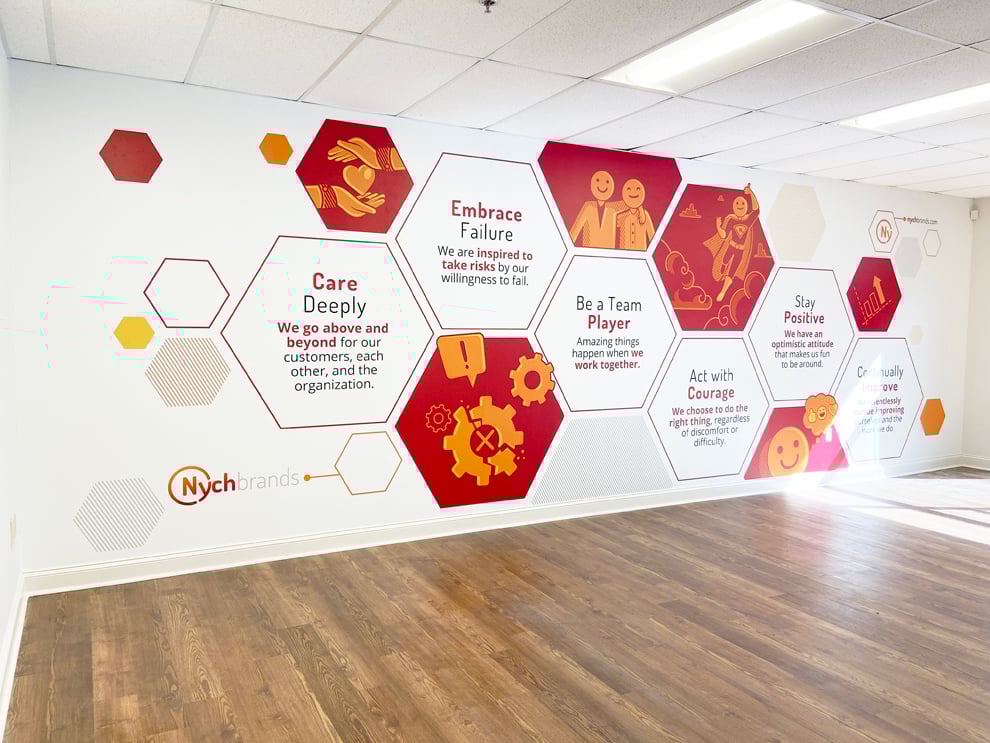
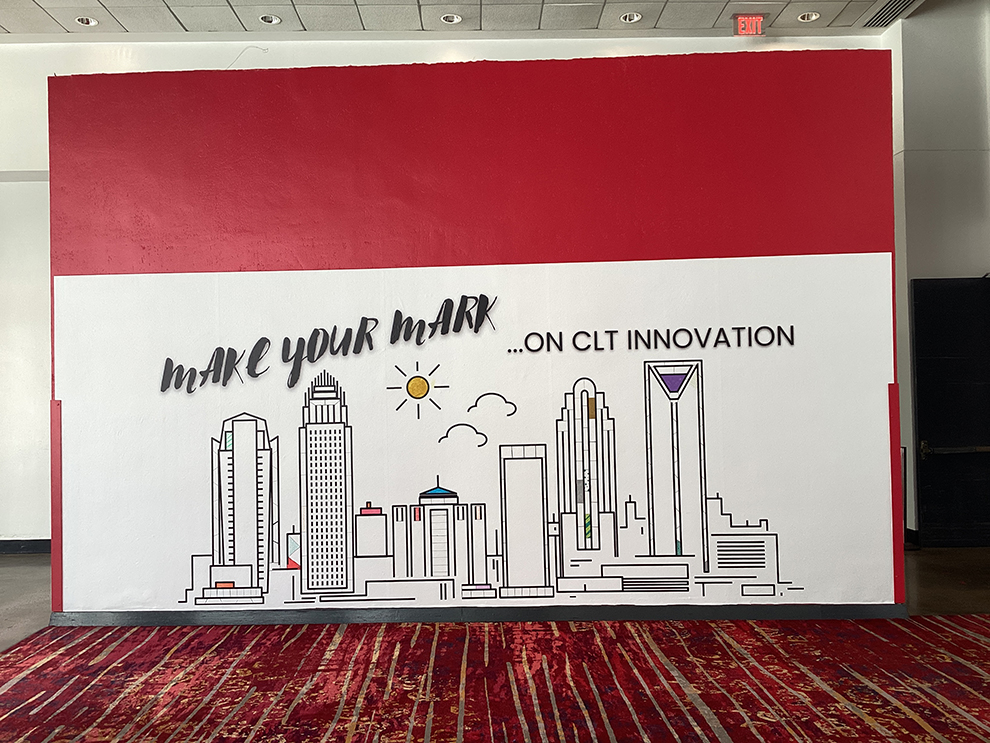
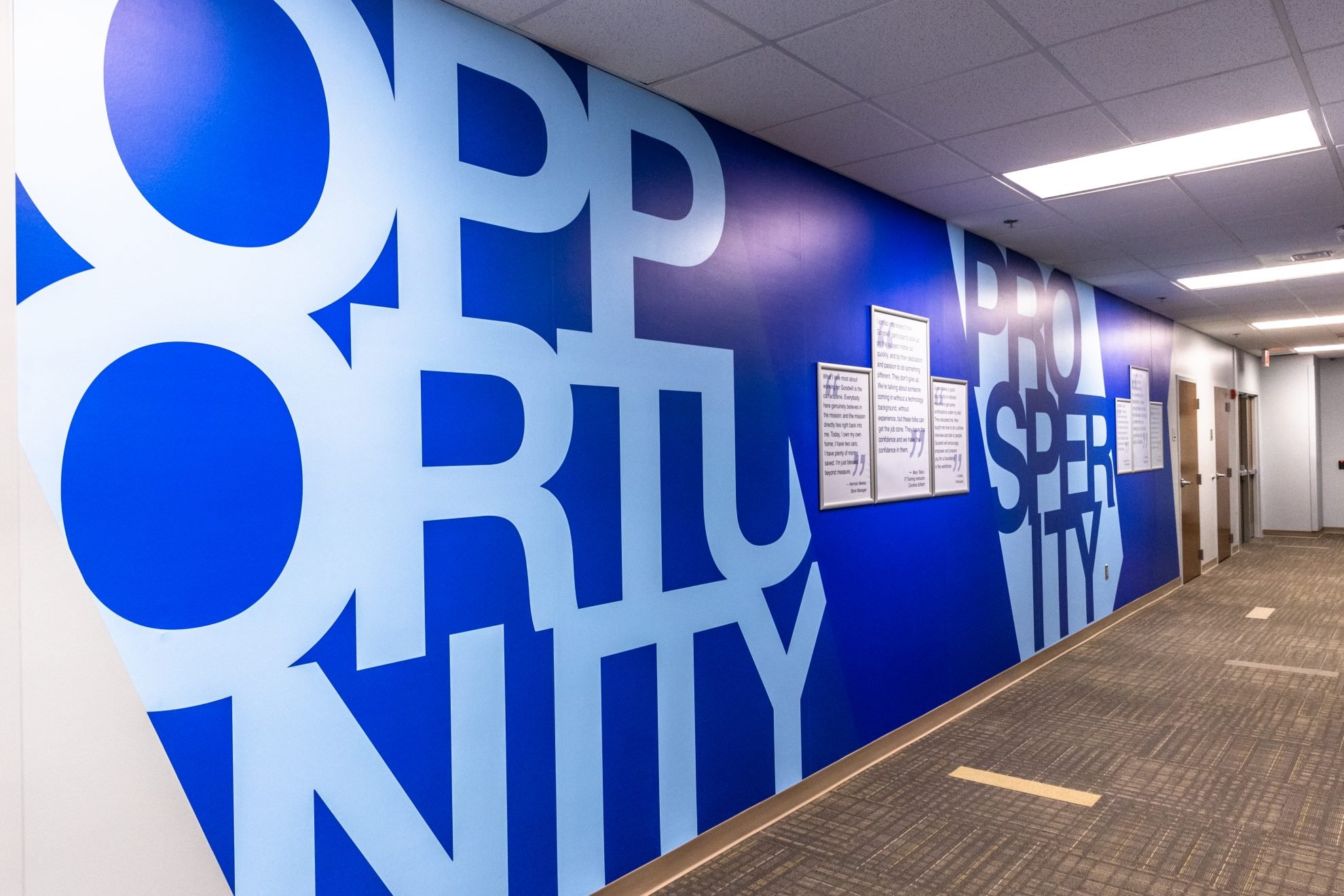
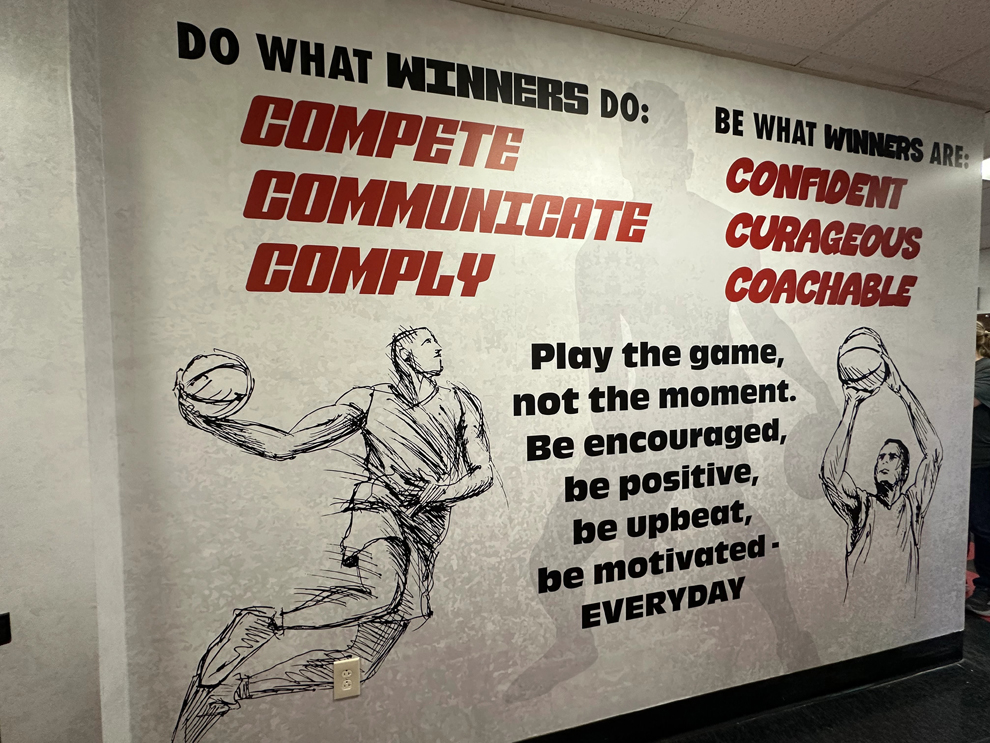
Wall wraps convert plain interior surfaces into branded communication features. Custom imagery, patterns, colors, photography, and messaging can be applied throughout offices, corridors, collaboration areas, meeting spaces, venues, and customer-facing environments.
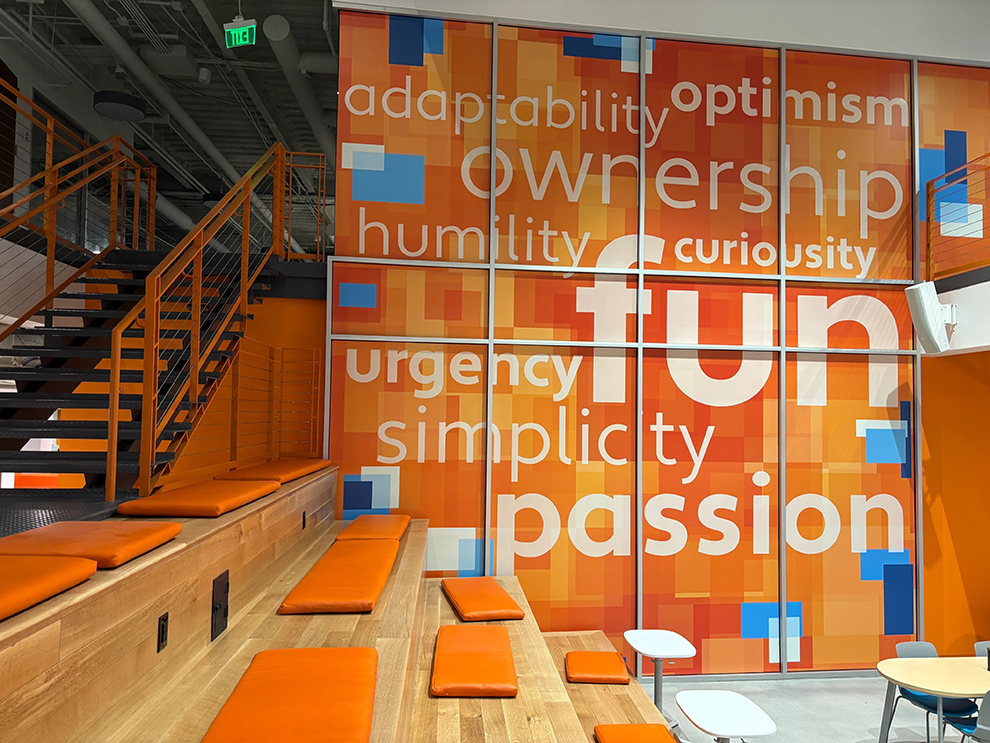
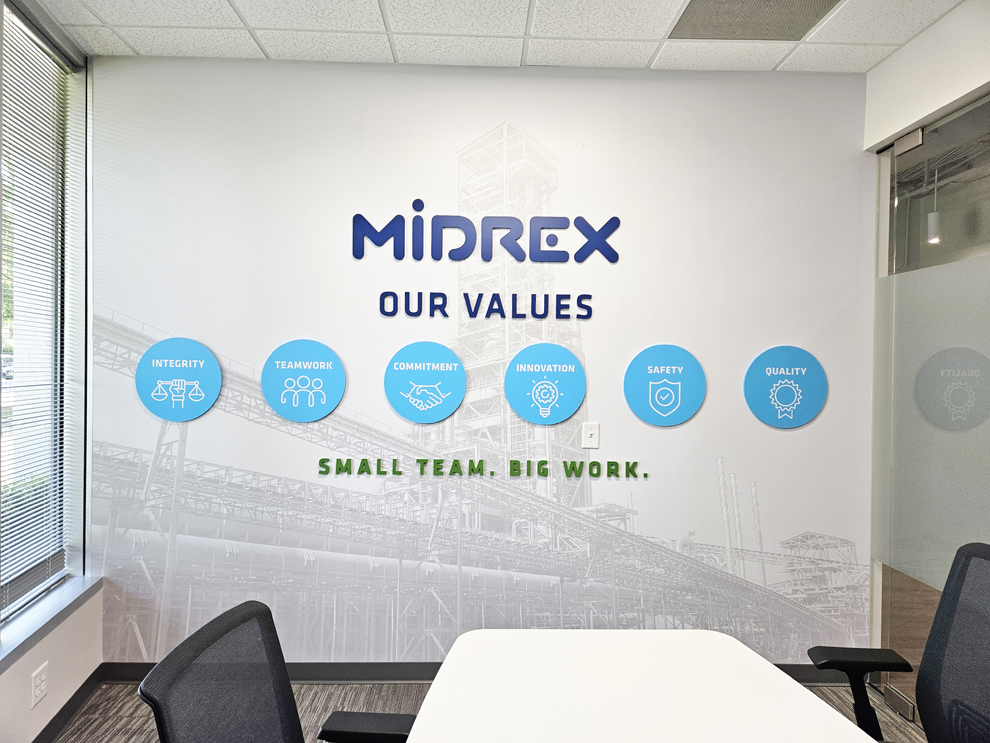
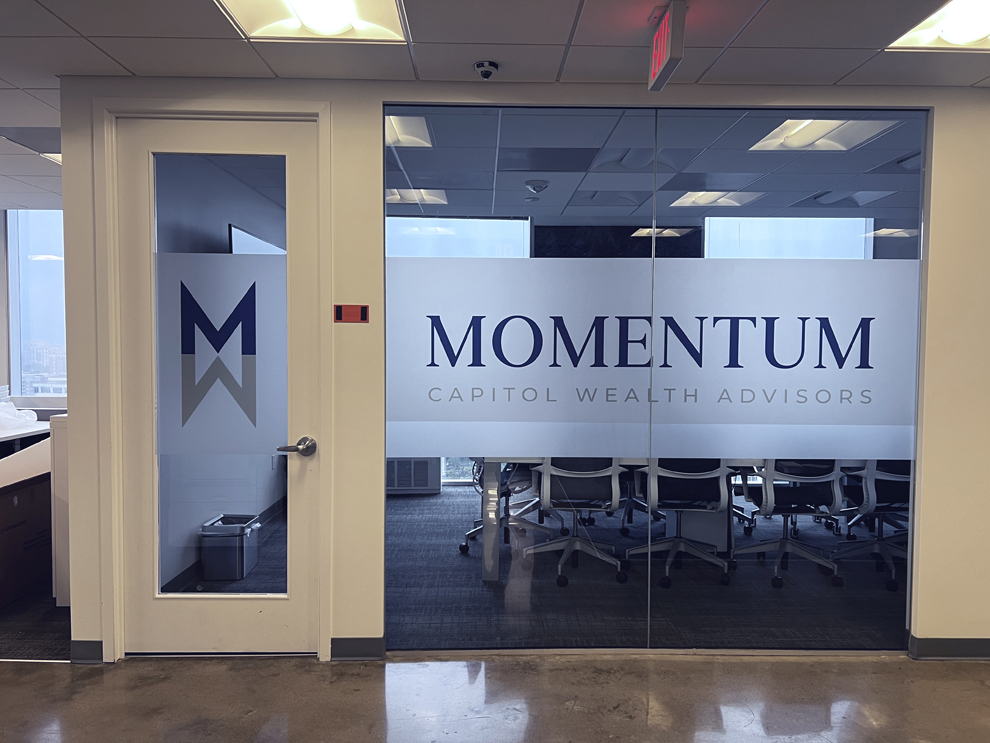
Window graphics and privacy films can add branding, decorative patterns, identification, and controlled visibility to conference rooms, office doors, exterior windows, and interior glass partitions. They can also reduce visual distractions without eliminating natural light.
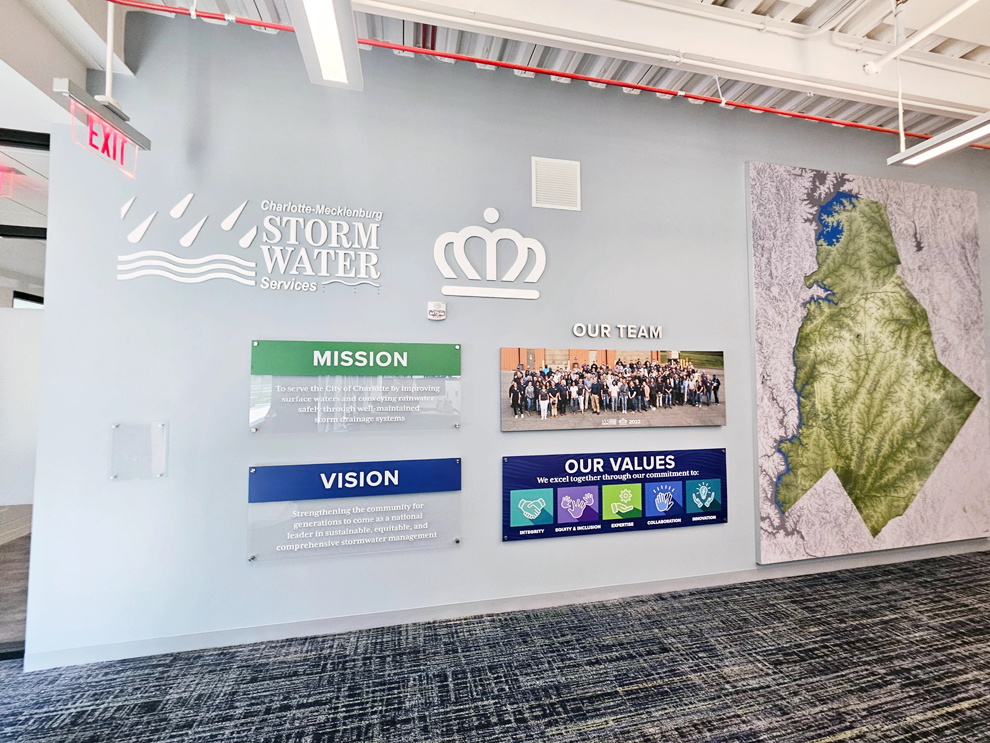
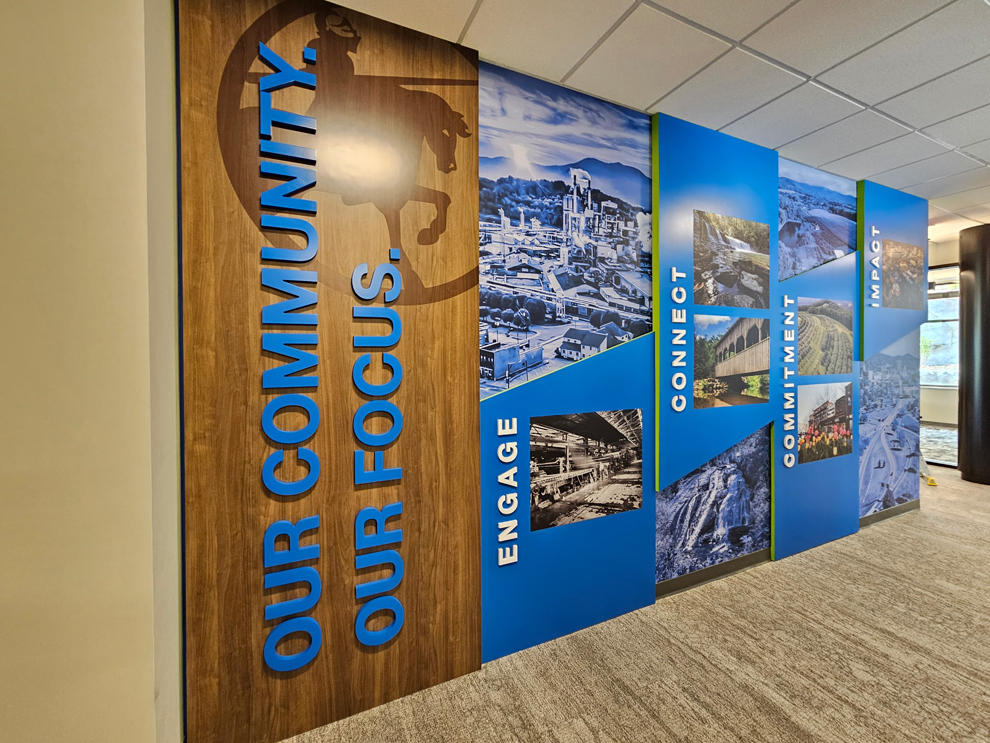
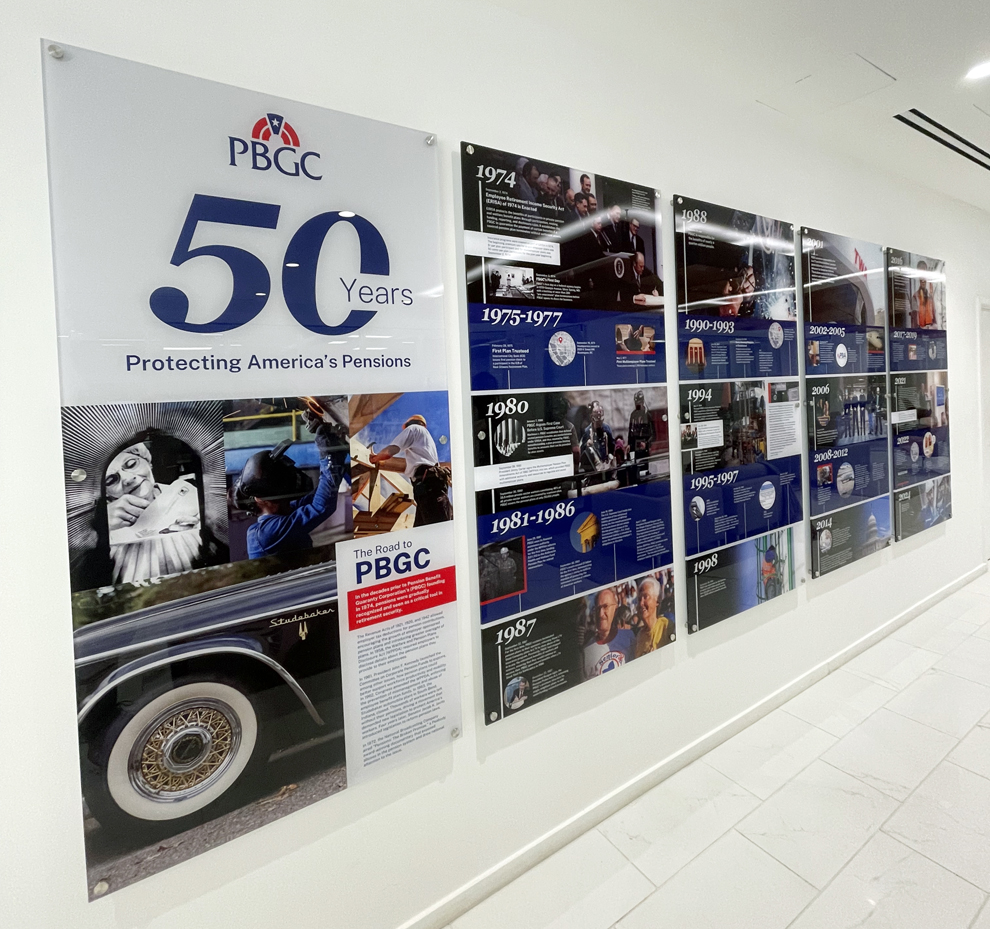
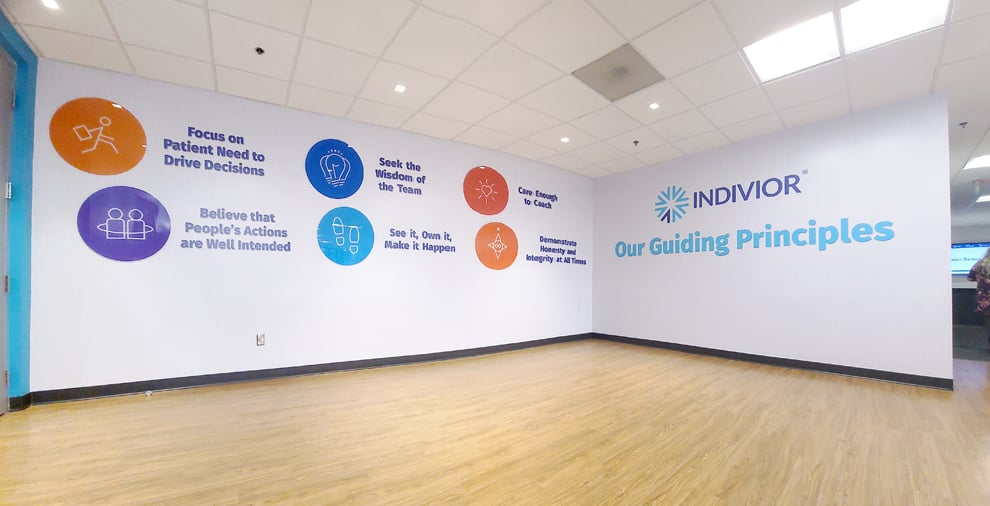
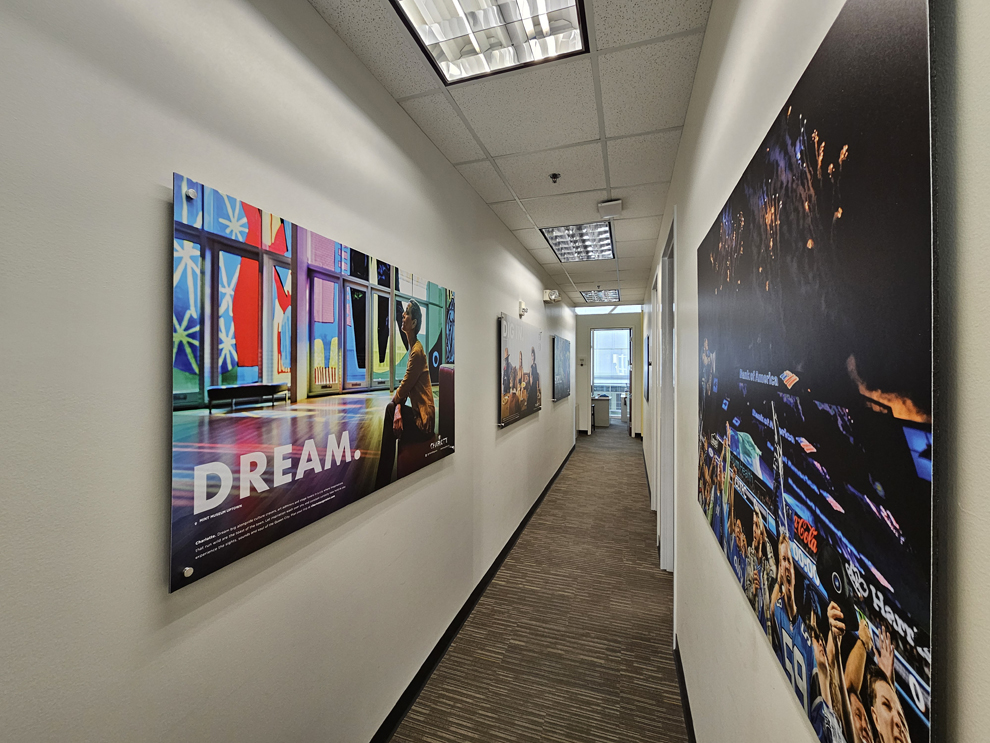
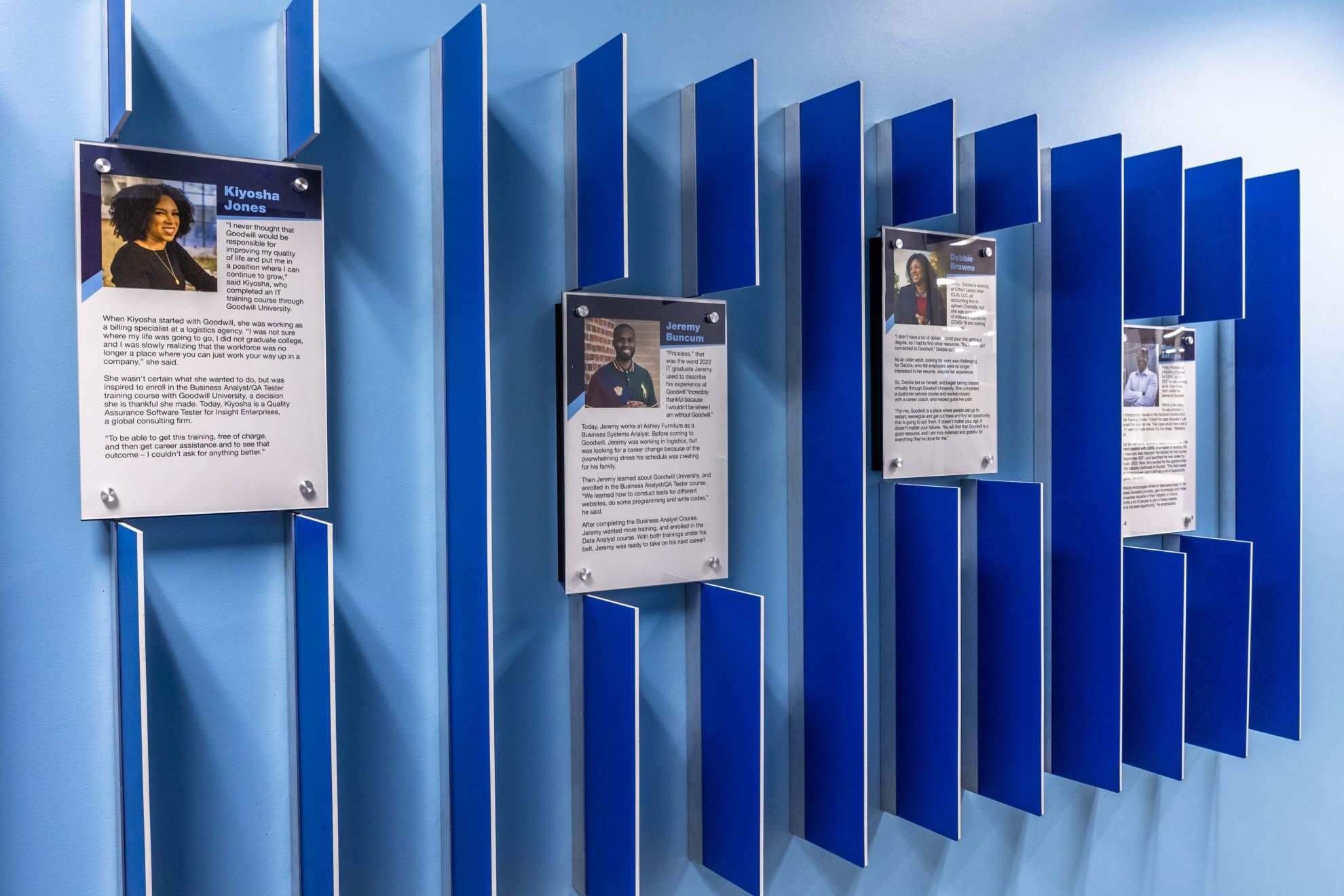
Wall displays combine photographs, printed panels, dimensional components, lettering, and architectural hardware into an organized presentation. These displays can communicate company history, employee achievements, core values, donor recognition, local involvement, or community impact.
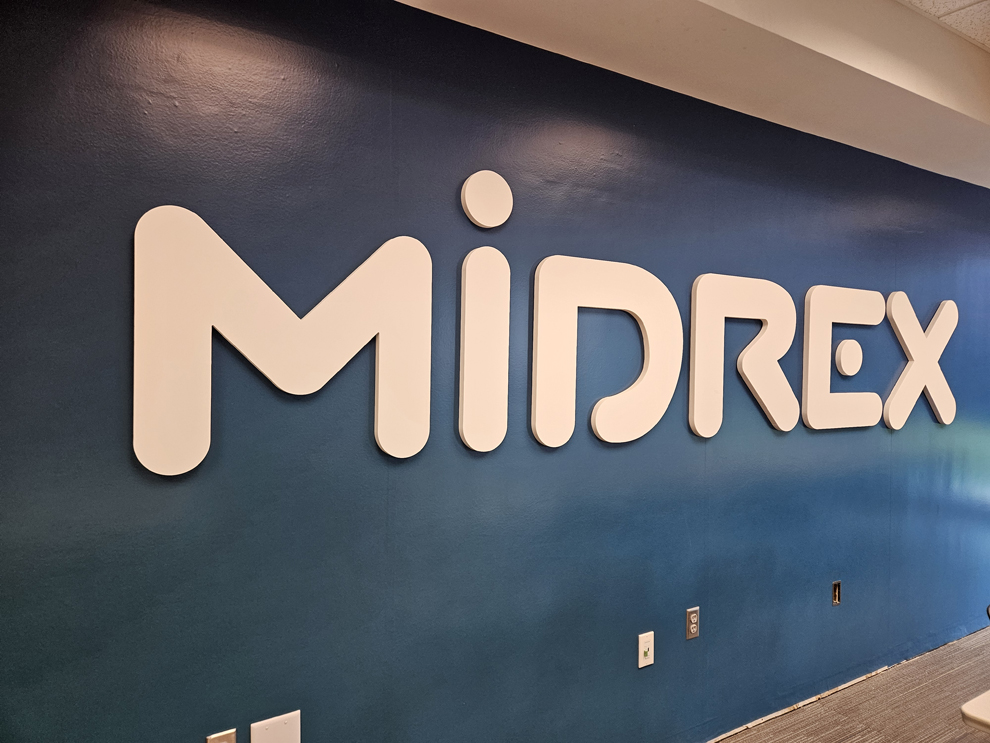
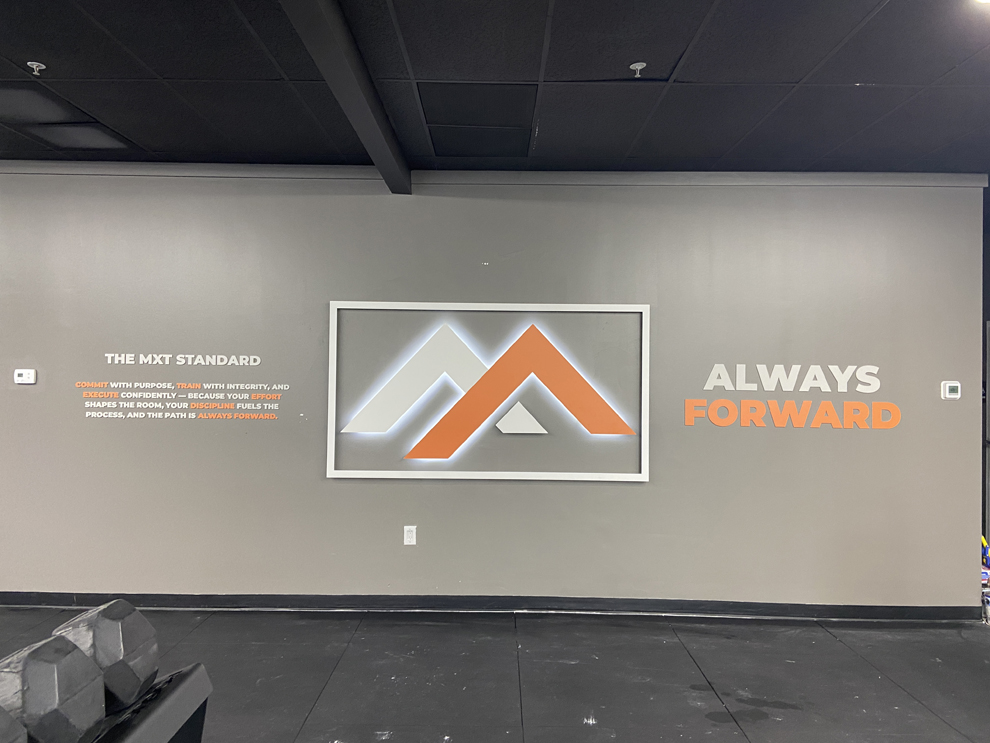
Dimensional letters give names, logos, values, and identification signs greater depth and architectural presence. They are suitable for professional offices, corporate interiors, educational facilities, healthcare environments, and public-facing spaces.
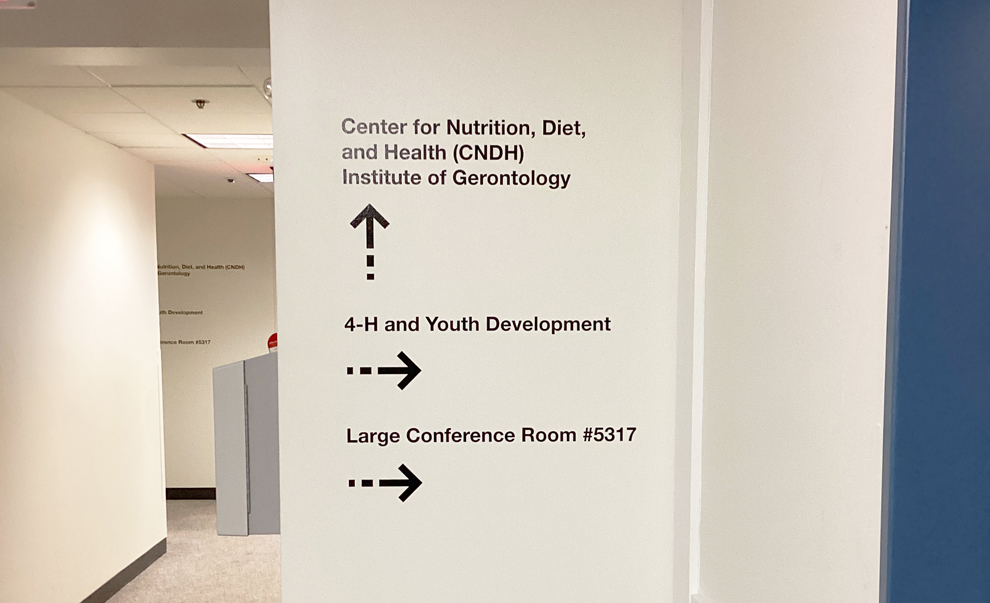
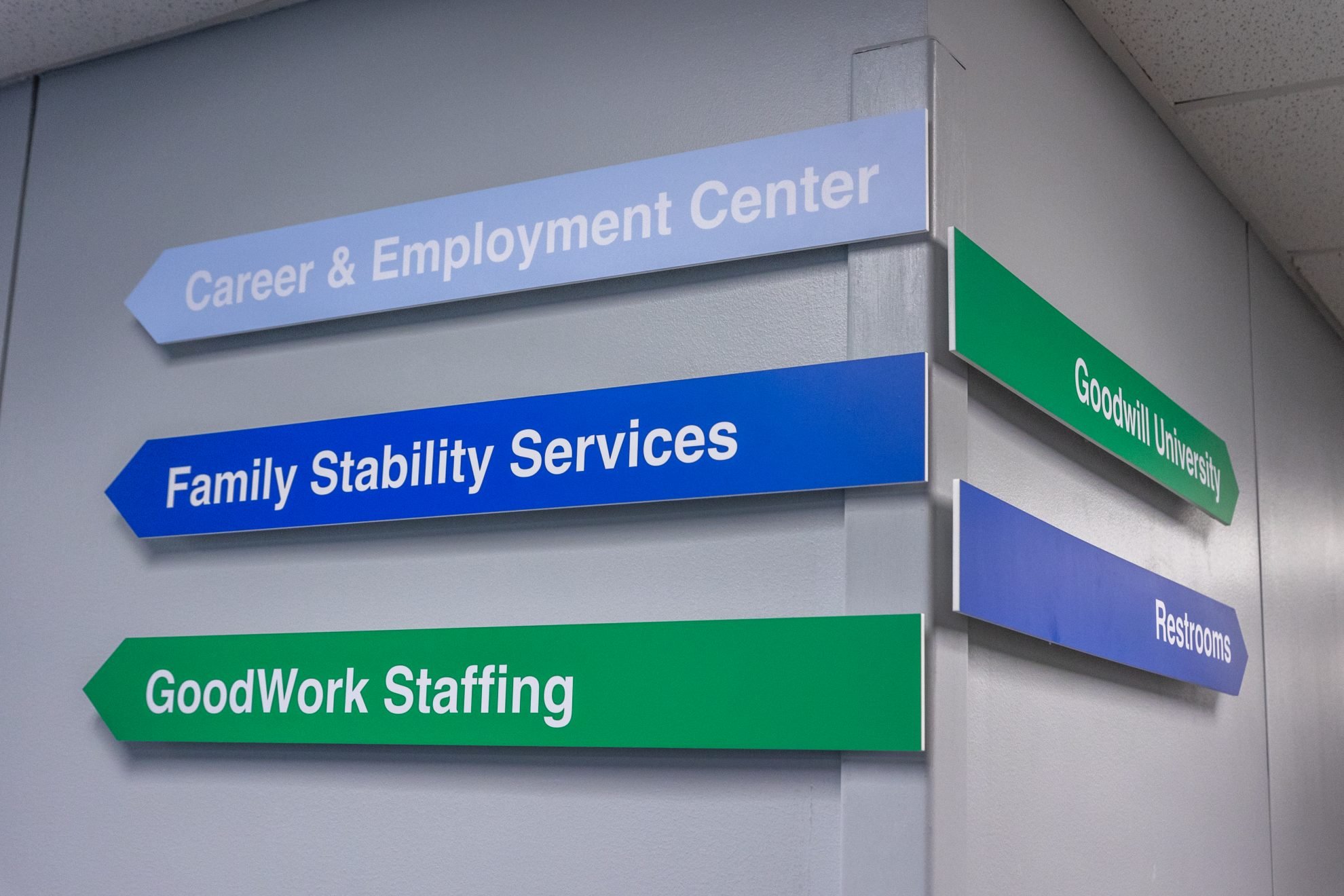
Wayfinding systems organize destinations, room identification, directional messages, and decision points. A coordinated system helps employees, clients, patients, visitors, and event guests navigate complicated environments with less uncertainty.
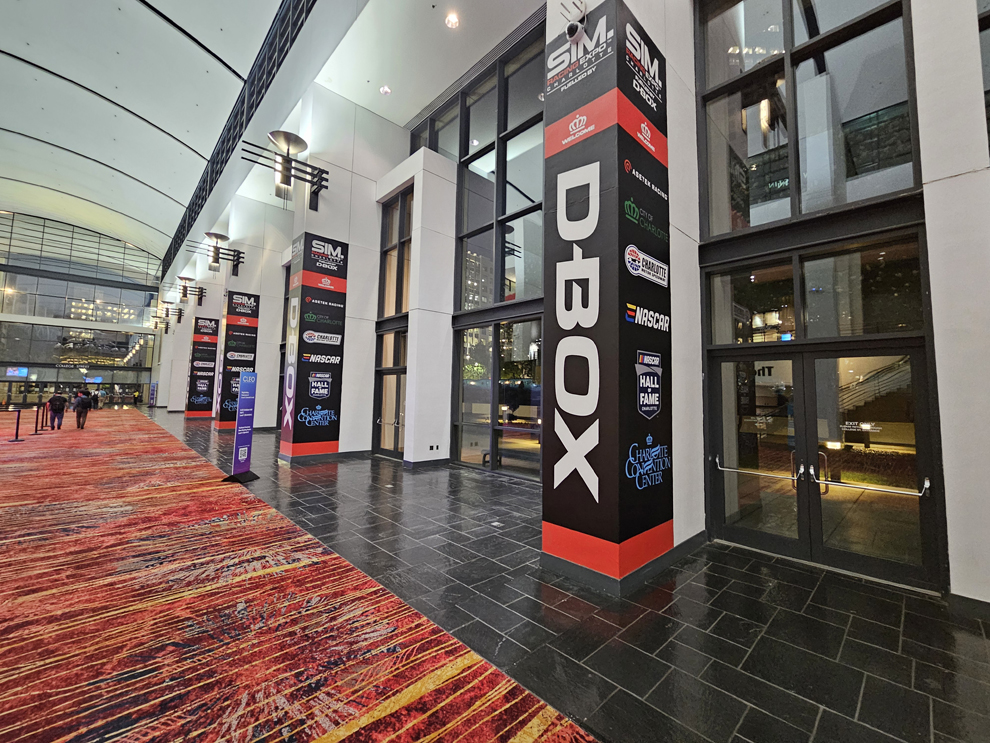
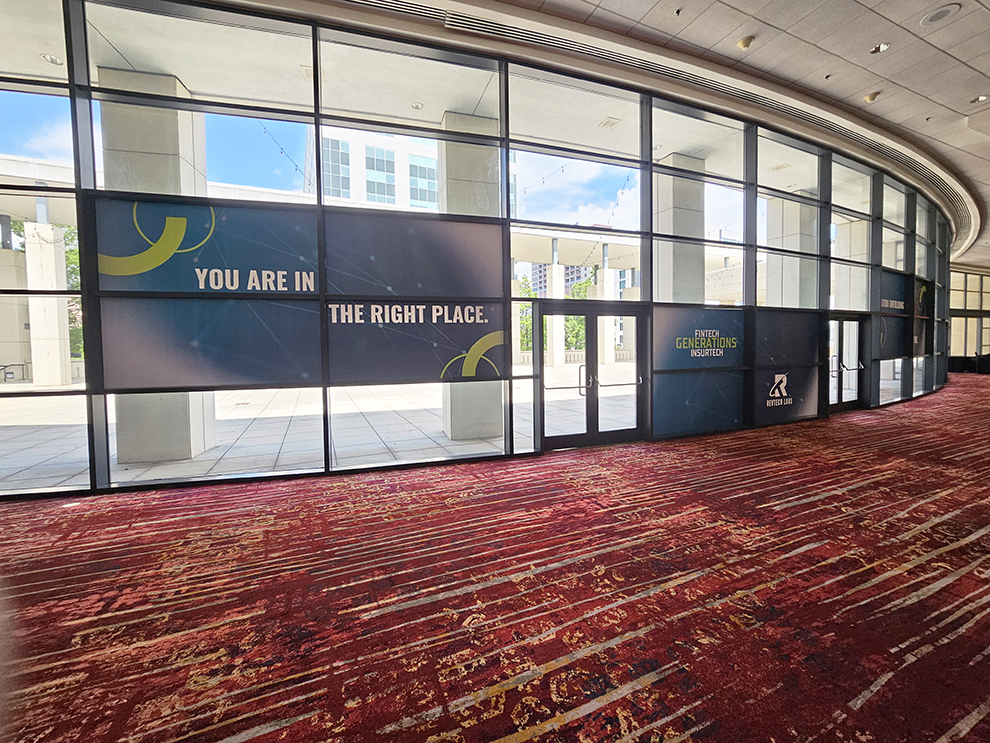
Heritage creates event environments using entrance graphics, sponsor displays, stage elements, branded backdrops, directional signs, registration features, and modular structures. These components work together to support communication and brand visibility throughout the attendee experience.
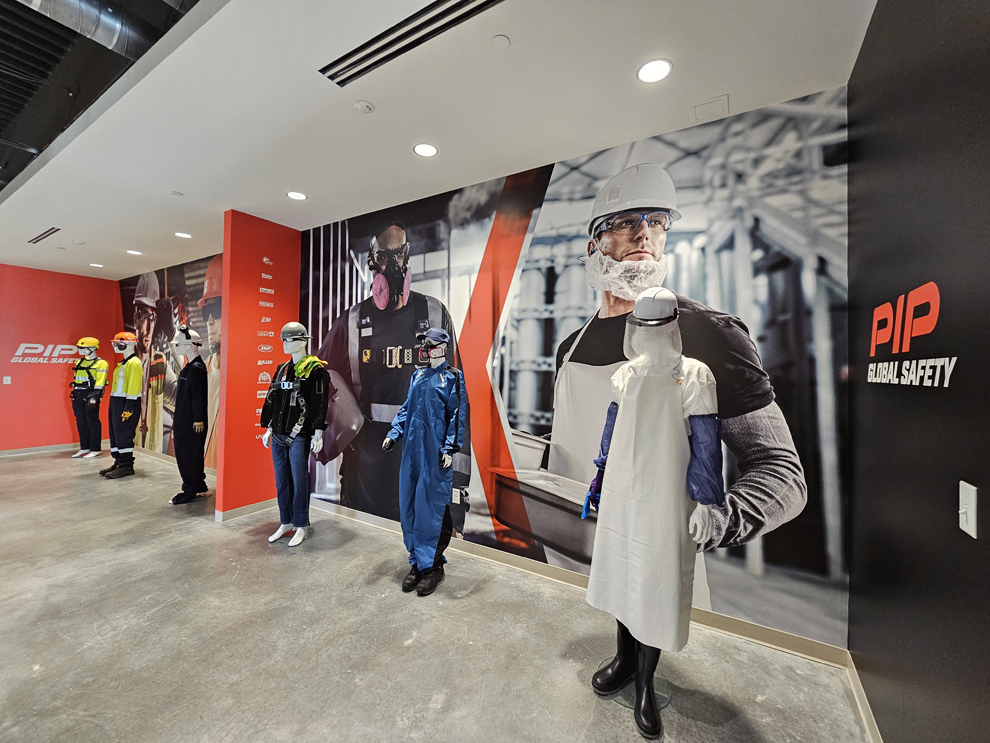
Environmental graphic design connects branding, imagery, information, materials, scale, circulation, and placement. The objective is to make signs and graphics function as an integrated part of the architecture rather than as disconnected additions.
A successful lobby sign, workplace transformation, privacy graphics program, donor display, wayfinding system, event environment, or multi-location branding initiative begins with detailed project information.
Use the Get Started Now form to share the Kannapolis address, project goals, desired completion date, anticipated investment, photographs, floor plans, architectural drawings, brand standards, event details, access restrictions, and any firm opening or installation dates.
Our local team will review the information, identify unresolved requirements, and recommend the appropriate next step. Heritage can coordinate environmental graphic design, project management, production, fabrication, and professional installation through one organized process.
Heritage serves Kannapolis from its headquarters at 2744 Yorkmont Road in Charlotte. This location supports environmental graphic design, project management, administration, production, fabrication, and professional installation. Our team works throughout the greater Charlotte area, including Uptown, South End, Ballantyne, University City, and the airport corridor. We also regularly serve nearby communities such as Concord, Huntersville, Mooresville, Gastonia, Fort Mill, and Rock Hill.
Kannapolis is positioned within a growing regional economy that includes manufacturing, logistics, healthcare, research, education, professional services, nonprofits, sports, hospitality, and corporate operations. Each type of organization presents different operational and installation conditions.
An occupied office may require quiet work periods, protected pathways, and careful coordination around employees. Healthcare and research settings may place greater emphasis on privacy, cleanliness, controlled access, and clear identification. Manufacturing or distribution facilities may require durable materials and scheduled entry into restricted areas. Event projects often involve firm production deadlines, venue credentials, limited staging space, and tightly controlled installation windows.
Regional work completed for Charlotte Douglas International Airport and Radiant Smiles in Pineville illustrates Heritage’s experience with public-facing graphics and coordinated healthcare interiors. These examples are not represented as projects located in Kannapolis. They demonstrate how our team adjusts design, materials, fabrication, access planning, and installation methods for different audiences and operational requirements.
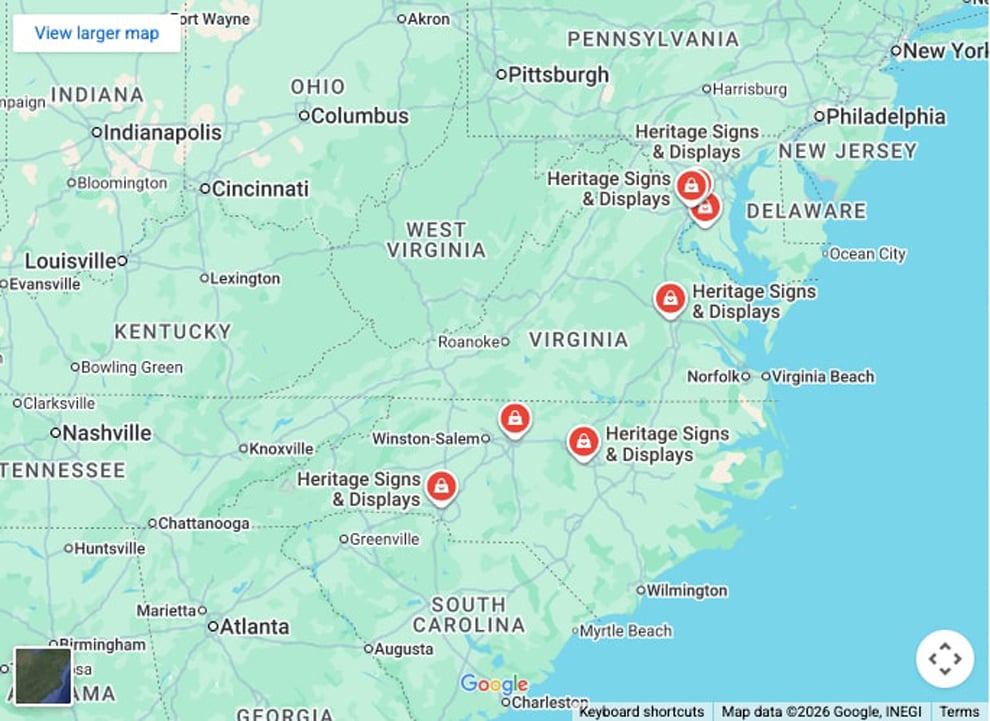
Heritage’s seven-location network can also support organizations with facilities throughout the Carolinas and Mid-Atlantic. Brand standards can remain consistent while drawings, materials, mounting systems, and installation plans are adapted to the architecture and working conditions at each site.
Environmental graphic design integrates brand identity, imagery, information, color, materials, scale, and placement within a physical setting. Its purpose is to ensure that signs, displays, and graphics communicate as one organized system.
Experiential graphic design considers the impressions people form as they enter a building, travel through it, encounter organizational stories, and interact with visual information. Together, these disciplines help Kannapolis organizations connect their messages with the architecture and the practical needs of their audiences.
A project may begin with brand guidelines, floor plans, architectural drawings, photographs, field measurements, existing artwork, event layouts, or a preliminary idea. Heritage designers use these materials to develop producible concepts for lobby signs, dimensional lettering, wall graphics, privacy films, recognition displays, wayfinding systems, sponsor installations, and modular event components.
Design decisions account for factors such as viewing distance, lighting, accessibility requirements when applicable, surface changes, installation access, fabrication methods, future updates, and the intended lifespan of each product. Considering these conditions early helps reduce unexpected complications during production and installation.
The design and approval process gives stakeholders an opportunity to evaluate the proposed appearance before fabrication begins. It also supplies production and installation teams with accurate information about dimensions, materials, finishes, mounting, and placement. Heritage focuses on the physical branded elements that our team designs, produces, fabricates, manages, and installs. We do not act as an event planning agency, event marketing company, architecture firm, or engineering practice.
Even the strongest design can be undermined by poor installation. Alignment, wall preparation, mounting locations, graphic tension, trimmed edges, site access, safety procedures, and installation order all influence the final appearance and long-term performance of a sign or graphic.
Heritage addresses installation requirements during the planning stage. Connecting site conditions with design, production, and fabrication decisions helps ensure that approved concepts can be installed properly at the Kannapolis location.
Each Heritage-managed installation project begins with a site survey. Our team documents dimensions, wall and window materials, obstructions, doors, elevators, loading access, traffic patterns, security procedures, and existing lighting conditions. The site visit also allows the project manager to confirm the intended audience, desired results, operational concerns, installation schedule, and any conditions that may not be visible in photographs or construction drawings.
Full-time Heritage installers work with the project manager, designers, production specialists, and fabricators assigned to the project. In active workplaces, installation planning may include approved work hours, protected access routes, employee proximity, building requirements, furniture placement, and coordination with other contractors.
Event installations require comparable attention to credentials, staging areas, loading schedules, venue rules, removal deadlines, and access limitations. Heritage installers work with signs, graphics, displays, and components that Heritage has created, produced, fabricated, procured, or managed. We do not offer installation-only services for customer-supplied products.
Successful planning begins with clear information about the audience, objectives, anticipated scope, completion date, site conditions, and available investment. Kannapolis clients should provide the project address, photographs, floor plans, architectural drawings, brand guidelines, approved messaging, event layouts, and known access requirements whenever possible.
If some details are not yet available, the assigned project manager can identify what remains unresolved and explain which decisions are necessary before estimating, design, production, fabrication, or installation can move forward.
Clients should anticipate a minimum investment of $3,000 for the complete Heritage-managed project scope. This amount applies to the combined project rather than every individual sign or graphic. Many Heritage projects range from $10,000 to more than $200,000.
Larger investments may involve complete workplace transformations, several floors of interior branding, detailed recognition installations, event environments, phased implementation, or coordinated graphics for multiple facilities. Final pricing depends on the scope of design, product quantities, selected materials, fabrication methods, site conditions, scheduling, access, installation requirements, and geographic coverage.
Heritage is best suited for organizations seeking one accountable partner for substantial interior signs, graphics, displays, workplace branding, or event environment components. Appropriate non-illuminated exterior graphics or signs may be included as part of a broader Heritage-managed interior project.
Heritage does not produce or install standalone monument signs, pylon signs, channel letters, conventional exterior sign packages, or fleet graphics. We also do not provide repair services for failed lighting or damaged components. These service boundaries allow our team to remain focused on coordinated physical environments that can be managed from initial concept through final installation.
Yes. Every Heritage-managed installation begins with a site survey. Our team records measurements, surface materials, obstructions, loading conditions, access routes, security procedures, traffic patterns, and relevant lighting conditions.
The survey also helps Heritage understand what the Kannapolis client wants the finished environment to accomplish. This information guides design, estimating, material selection, fabrication, mounting methods, scheduling, and installation preparation.
Heritage provides coordinated visual branding solutions for Kannapolis offices, commercial facilities, institutional environments, public-facing interiors, and event venues. Available services include environmental graphic design, project management, site surveys, production, fabrication, and professional installation.
Products may include custom lobby signs, dimensional lettering, wall wraps, privacy graphics, history walls, recognition displays, wayfinding signs, architectural signage, sponsor graphics, and event displays. These services are coordinated through a single managed process.
Yes. Heritage supports multi-location branding programs throughout the Carolinas and Mid-Atlantic through a seven-location regional network and multiple production resources.
One project manager can coordinate brand standards, site information, design adaptation, production, fabrication, scheduling, and installation. Each location is evaluated separately because its architecture, surfaces, audiences, access requirements, and operating conditions may differ.
Provide the Kannapolis project address, goals, intended audience, expected scope, completion date, anticipated investment, and any fixed opening or event dates. Helpful supporting materials include photographs, measurements, floor plans, architectural drawings, logos, brand guidelines, approved messages, event layouts, and access information.
If some details have not been determined, the project manager can identify the decisions needed to evaluate the request and recommend a responsible next step.
A dedicated Heritage project manager acts as the client’s primary contact from discovery through completion. The project manager coordinates estimates, site details, design development, material recommendations, approvals, production, fabrication, scheduling, installation, and closeout.
This structure gives clients one clear communication path while keeping designers, production professionals, fabricators, and installers aligned with the approved scope and schedule.
No. Heritage does not offer installation-only services for signs, graphics, or displays supplied by clients or third parties. Our installation team works with components that Heritage has created, produced, fabricated, procured, or managed.
Keeping production and installation responsibilities connected allows Heritage to address material compatibility, wall preparation, mounting, fit, access, scheduling, and final presentation through one accountable process.
Kannapolis clients should expect a minimum combined project investment of $3,000. Many Heritage projects range from $10,000 to more than $200,000, especially when the scope includes office transformations, multiple floors, complex displays, event environments, phased installations, or several facilities.
The final investment is influenced by design complexity, quantities, materials, production methods, custom fabrication, access conditions, scheduling, geographic scope, and professional installation requirements.
Yes. Heritage develops wayfinding systems for offices, healthcare facilities, educational environments, manufacturing and logistics workplaces, venues, and events.
A successful wayfinding system considers destinations, decision points, room identification, message hierarchy, circulation, viewing distance, brand standards, and accessibility requirements when applicable. The goal is to help people navigate confidently without adding unnecessary visual clutter.
Heritage specializes in workplace interiors, environmental graphics, and event environments rather than standalone exterior sign programs. Suitable non-illuminated exterior signs, dimensional features, or exterior window and wall graphics may be included in a larger Heritage-managed interior project.
Heritage does not produce or install monument signs, pylons, channel letters, traditional exterior sign packages, or fleet graphics.
Heritage gives Kannapolis organizations access to nearly 50 years of company experience, a nearby Charlotte headquarters, a seven-location regional network, and a dedicated project manager.
Our veteran-owned, family-led company coordinates environmental graphic design, project management, production, fabrication, and professional installation with experienced in-house team members. We are committed to practical guidance, careful planning, responsive communication, and dependable execution from the first conversation through the completed environment.
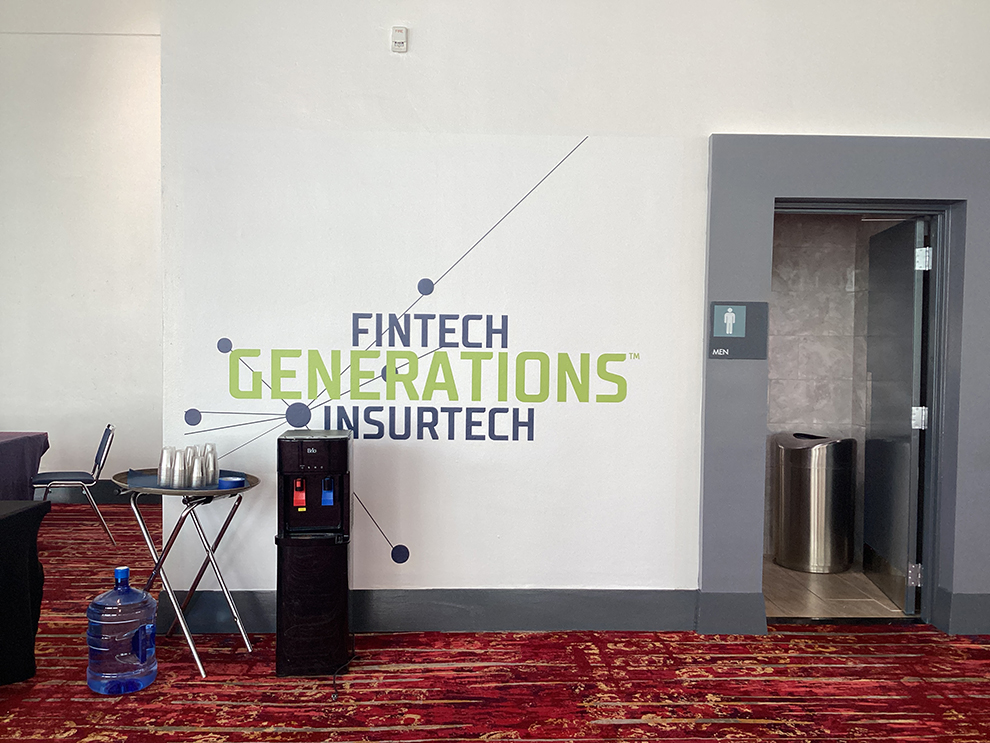
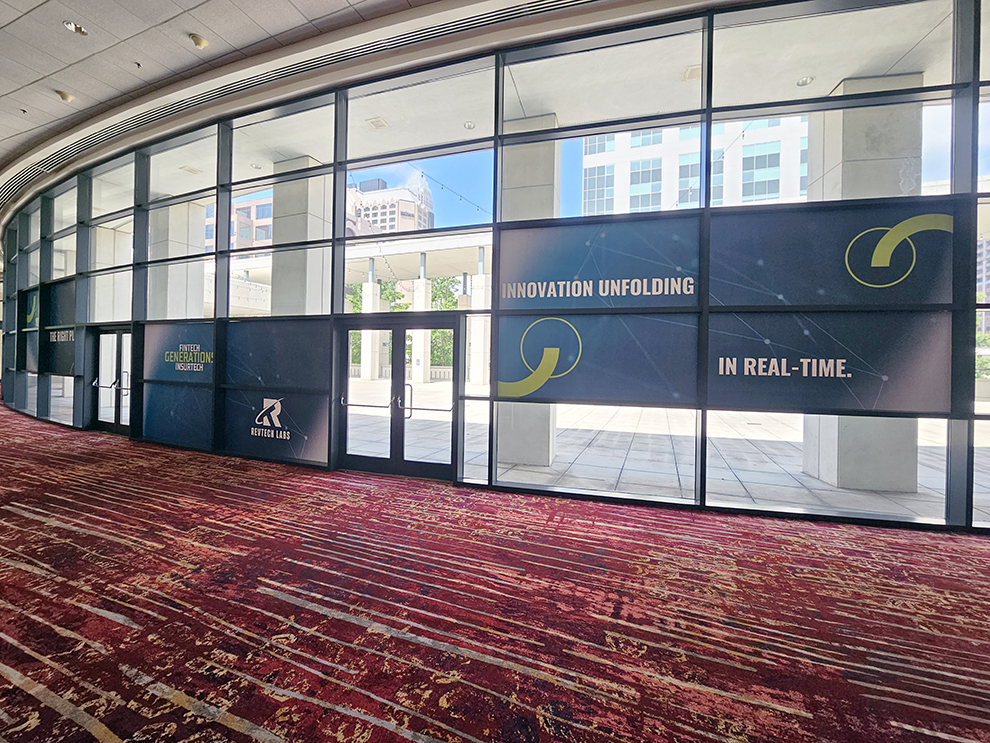
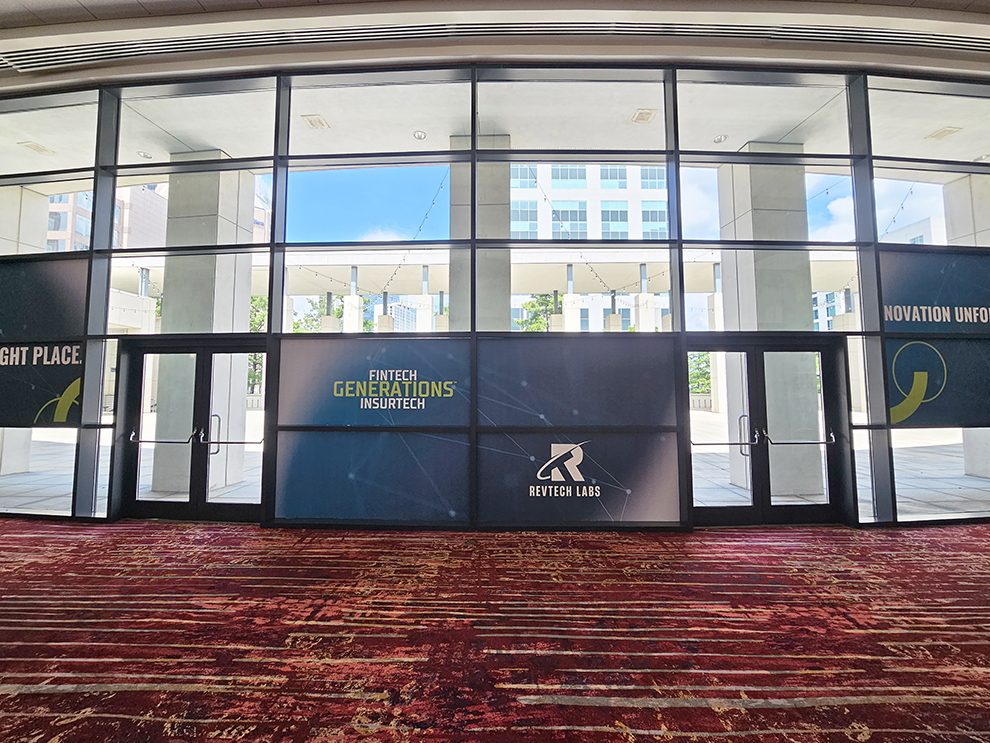
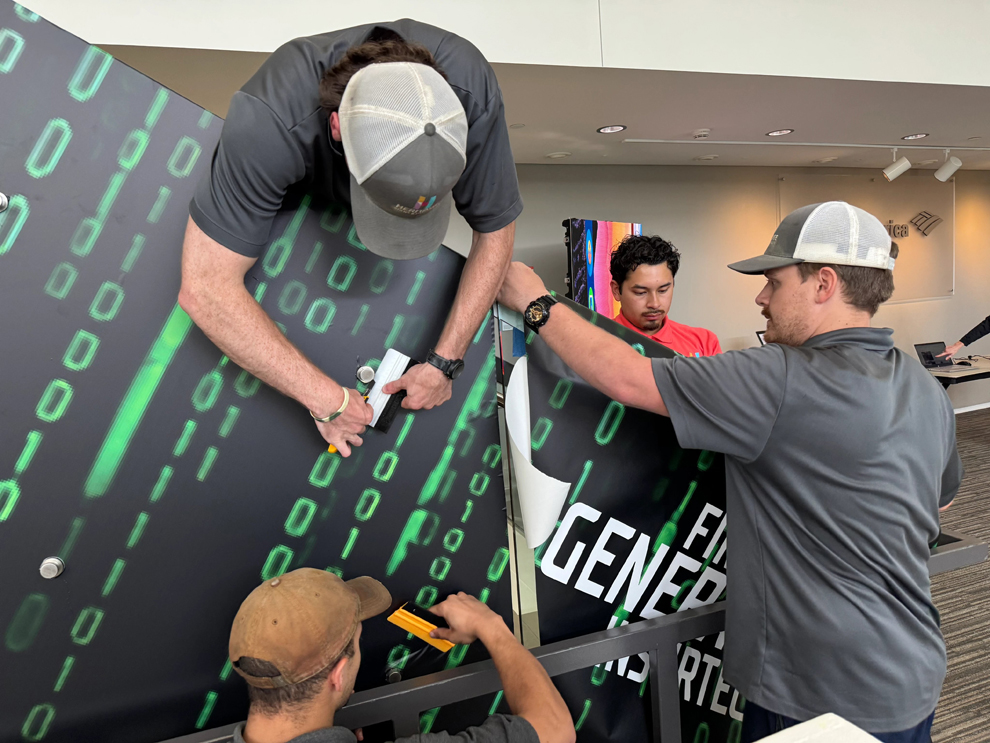
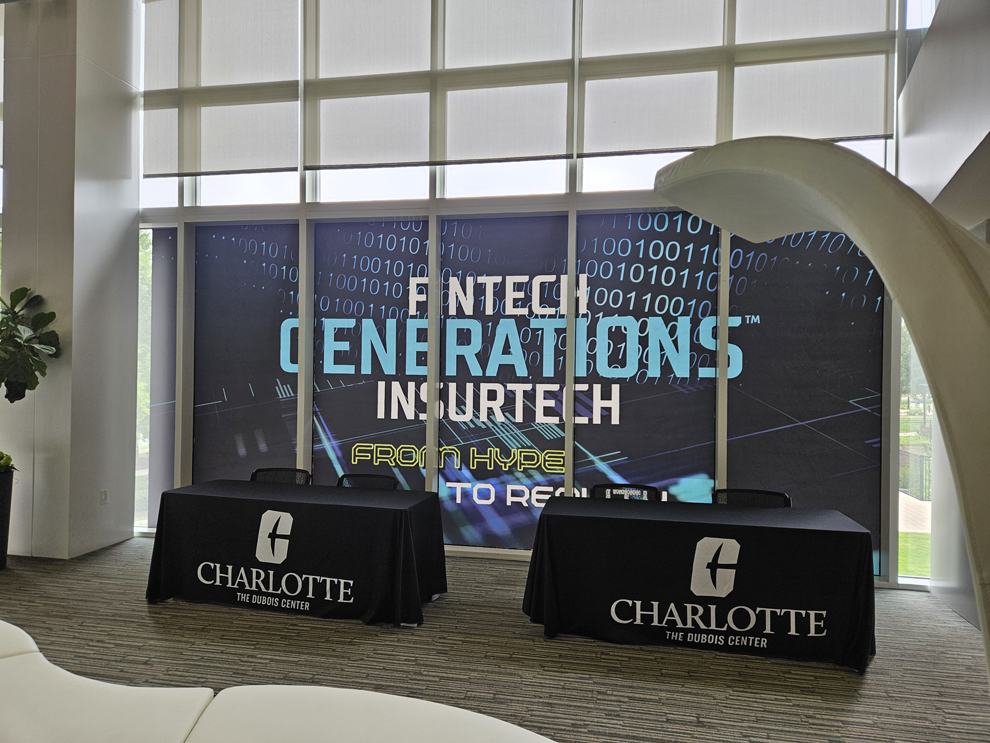
Heritage Signs & Displays collaborated with the Fintech + Insurtech Generations 2023 conference at the Charlotte Convention Center. Heritage worked closely with the client to create an interactive and branded event environment for attendees to network and discuss key topics impacting the financial and insurance sectors. The project enhanced the premier annual conference's atmosphere and engagement.
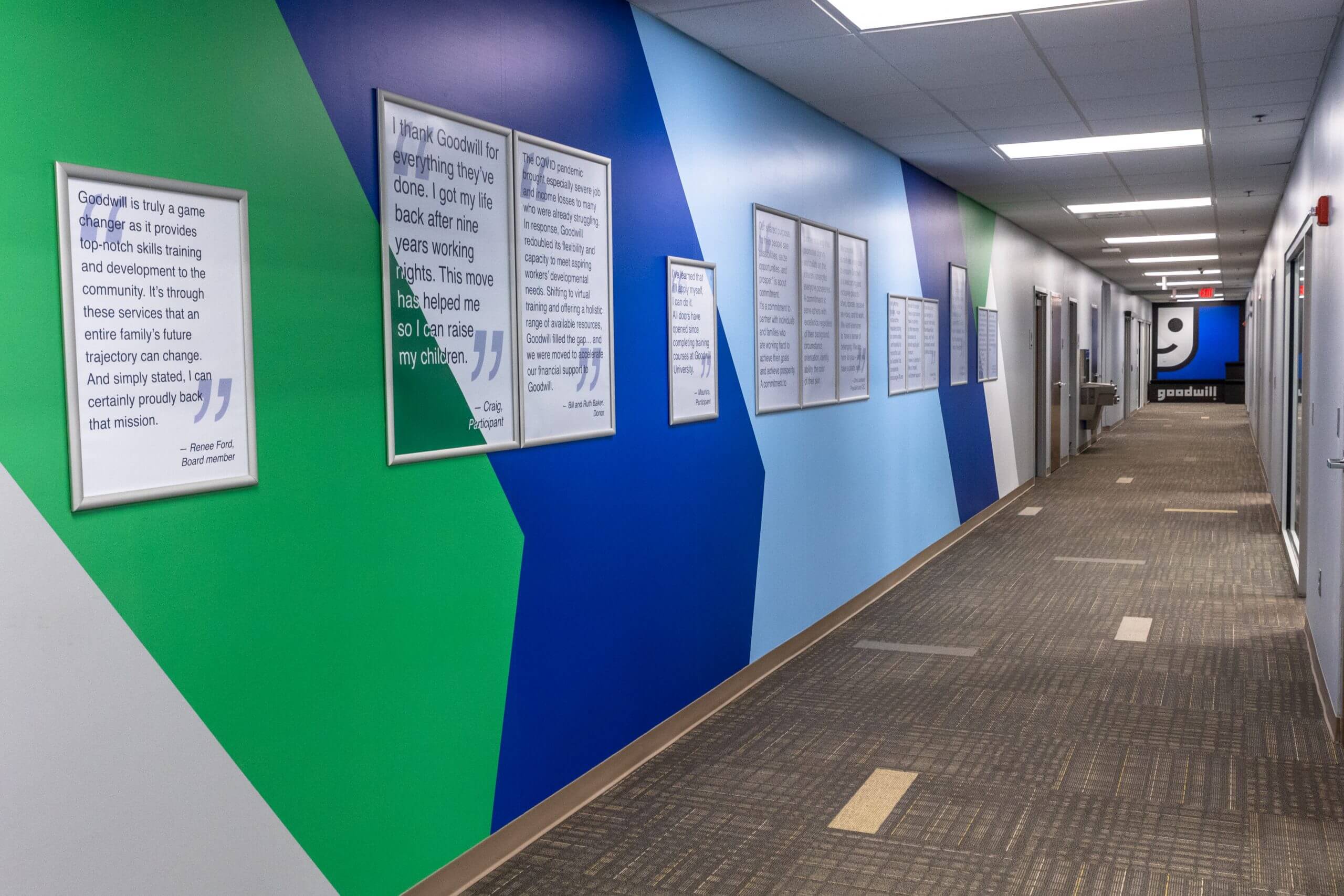
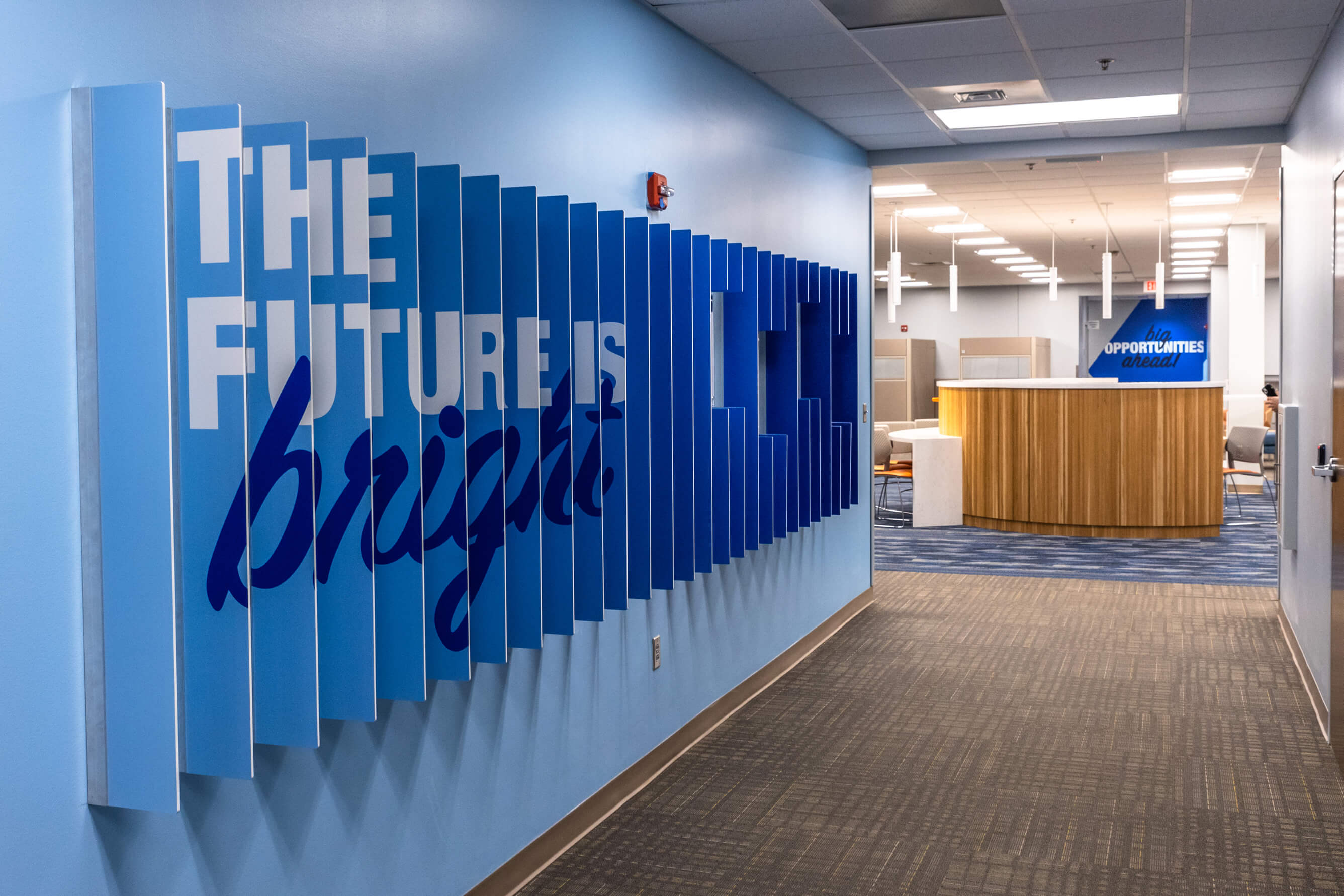
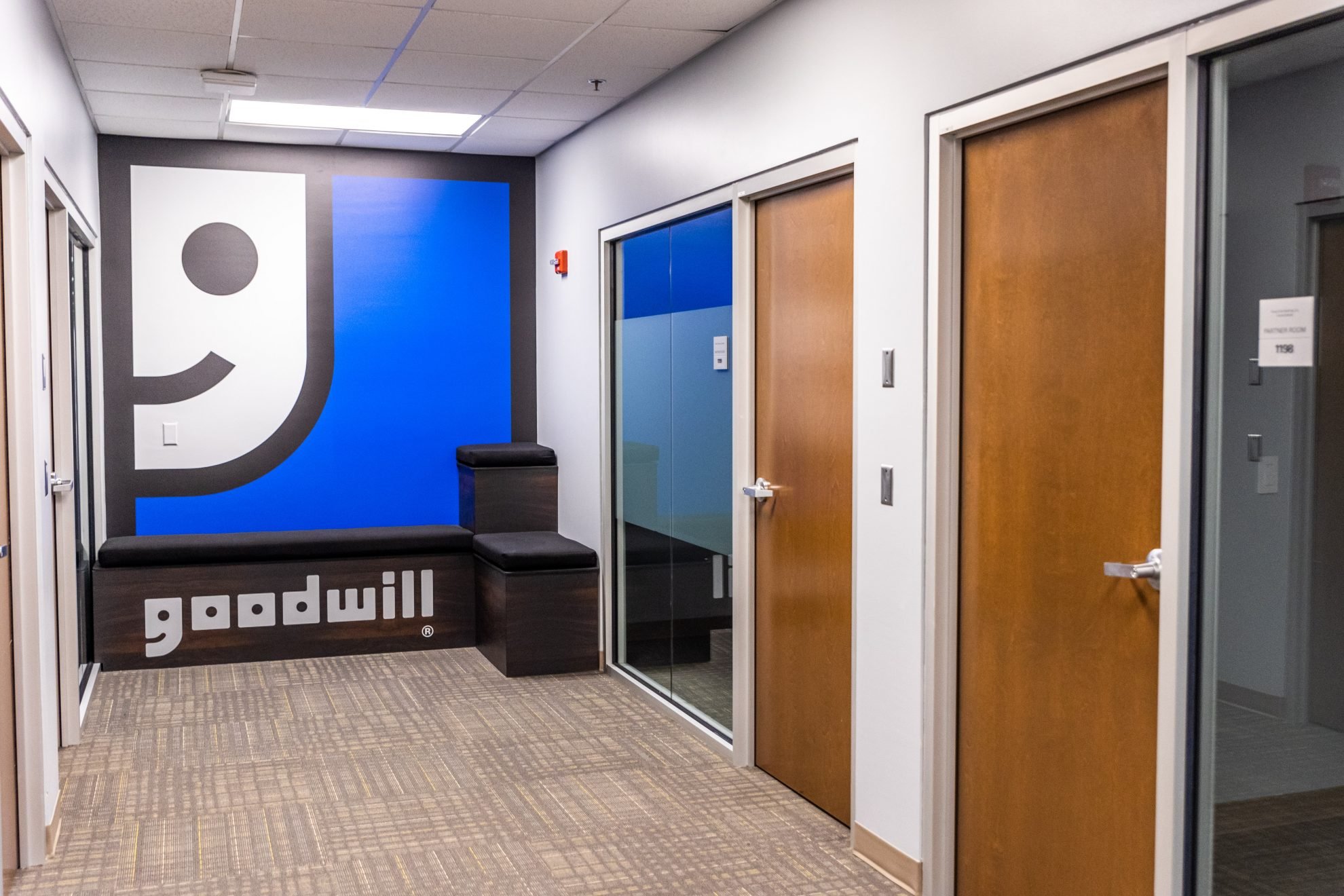
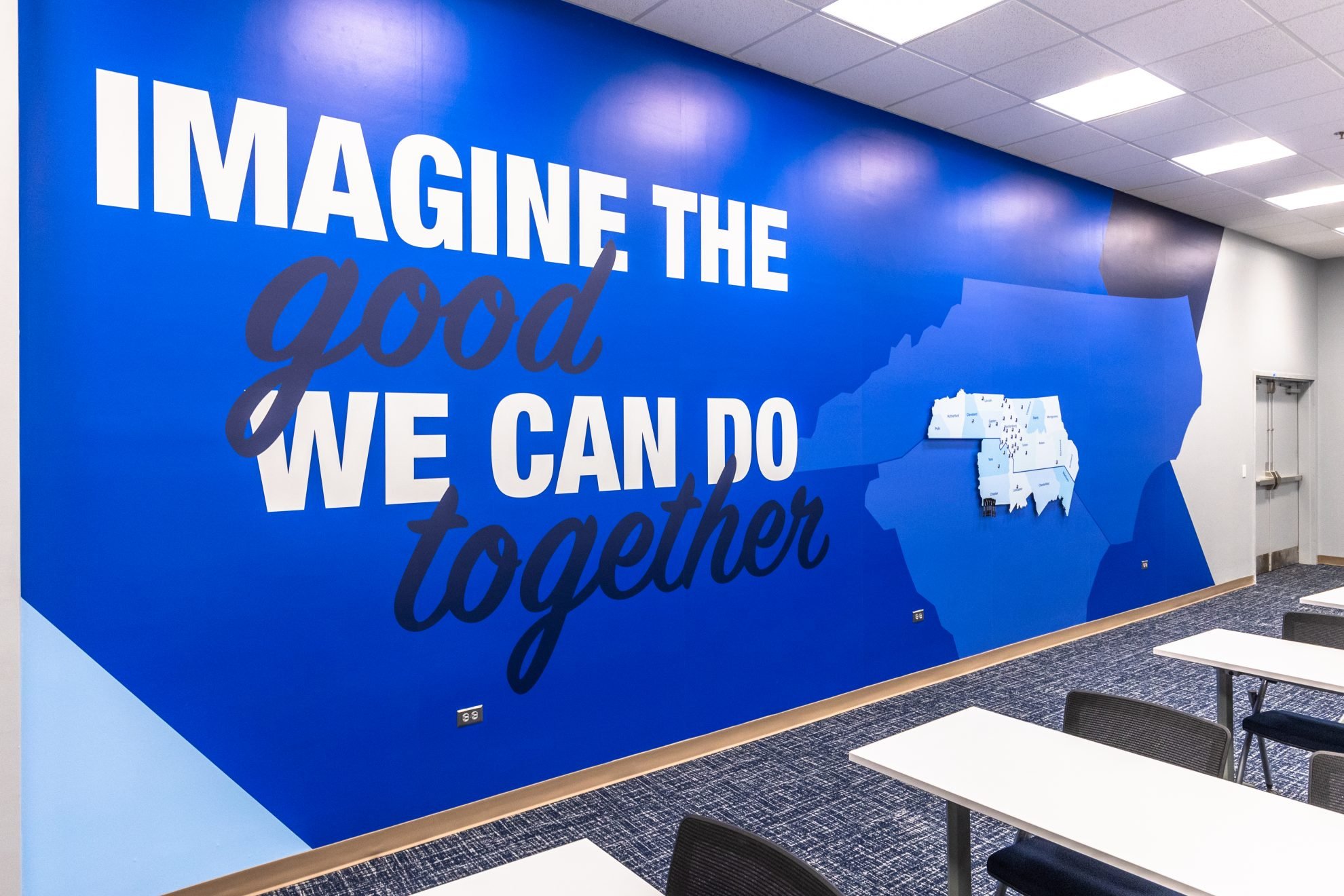
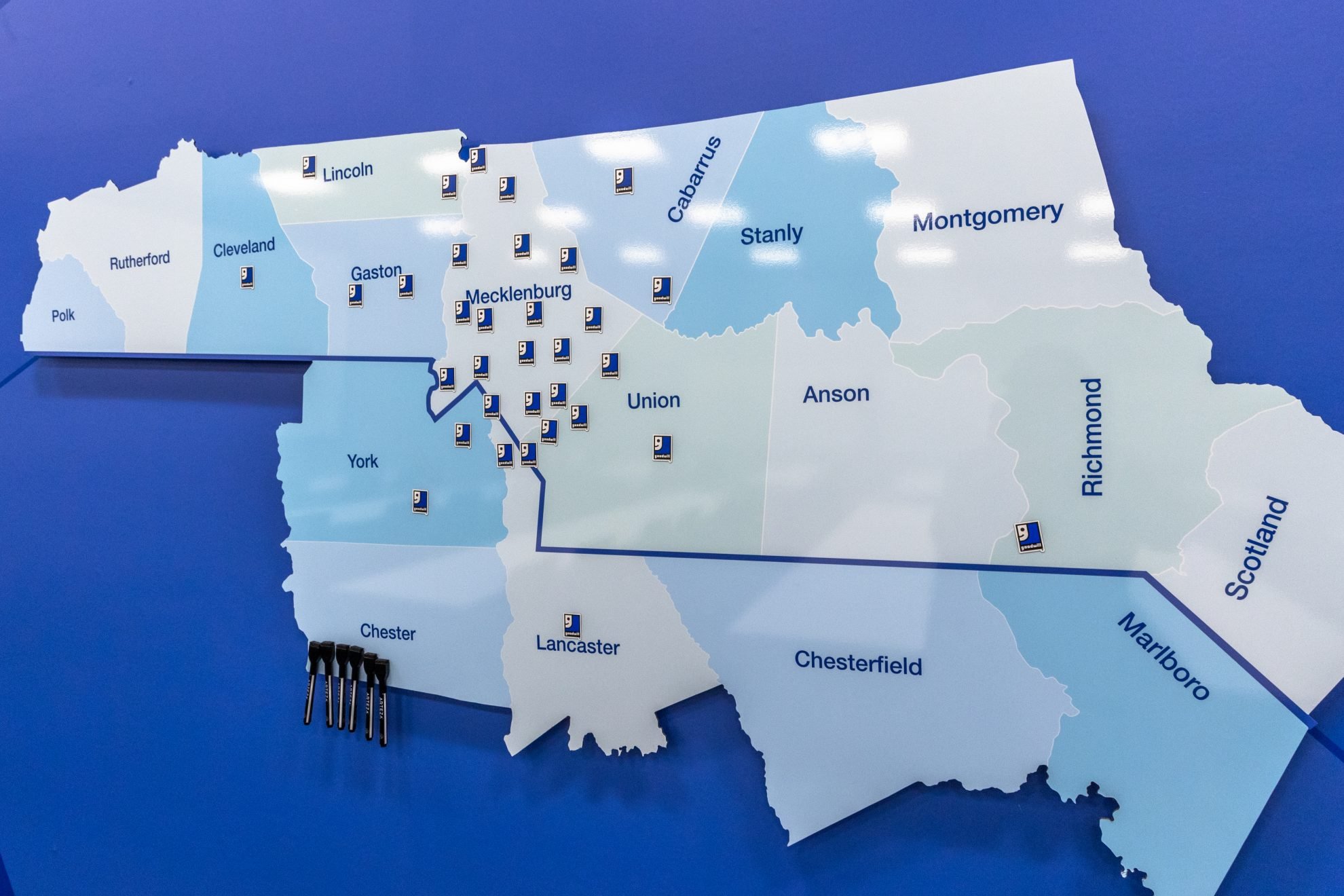
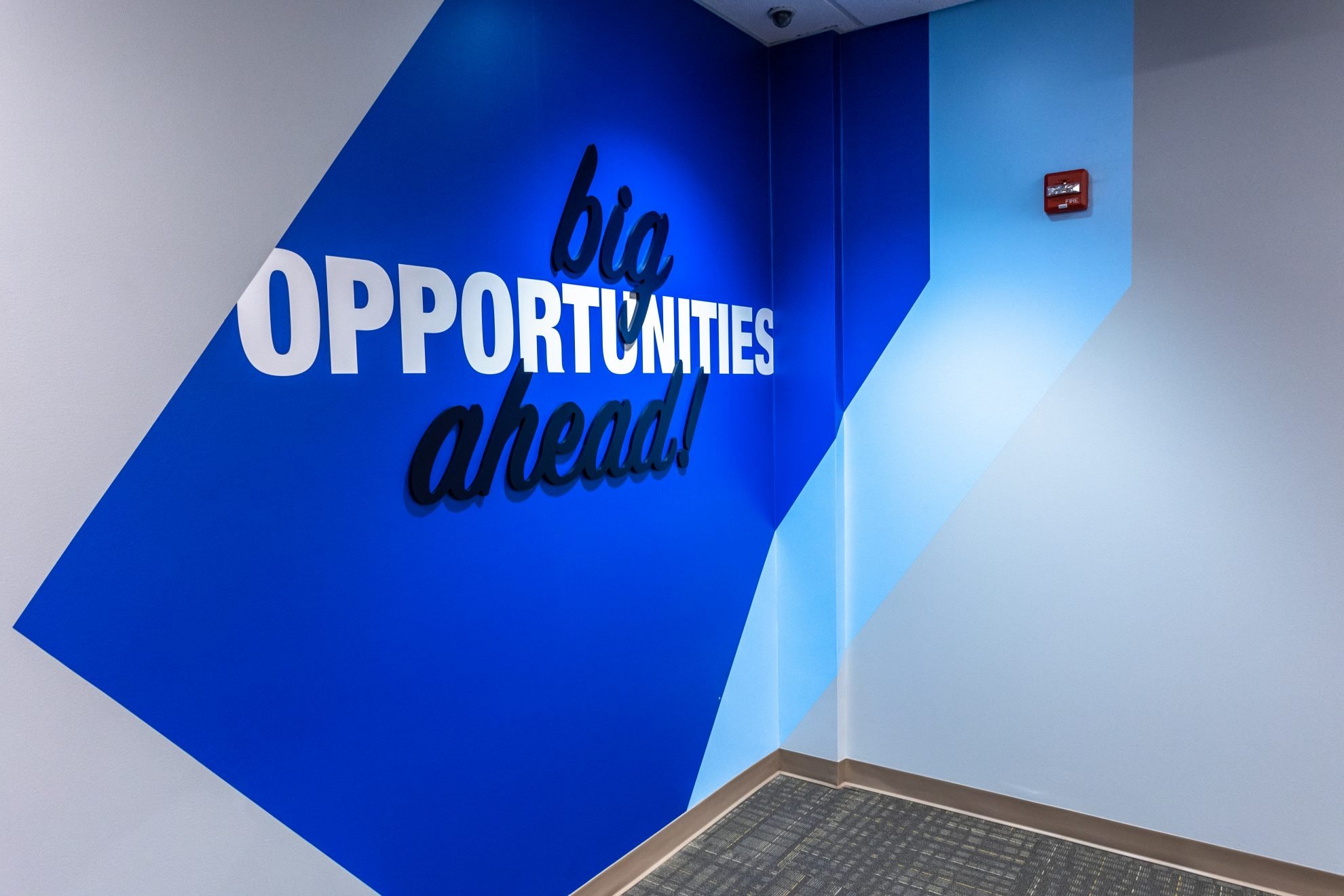
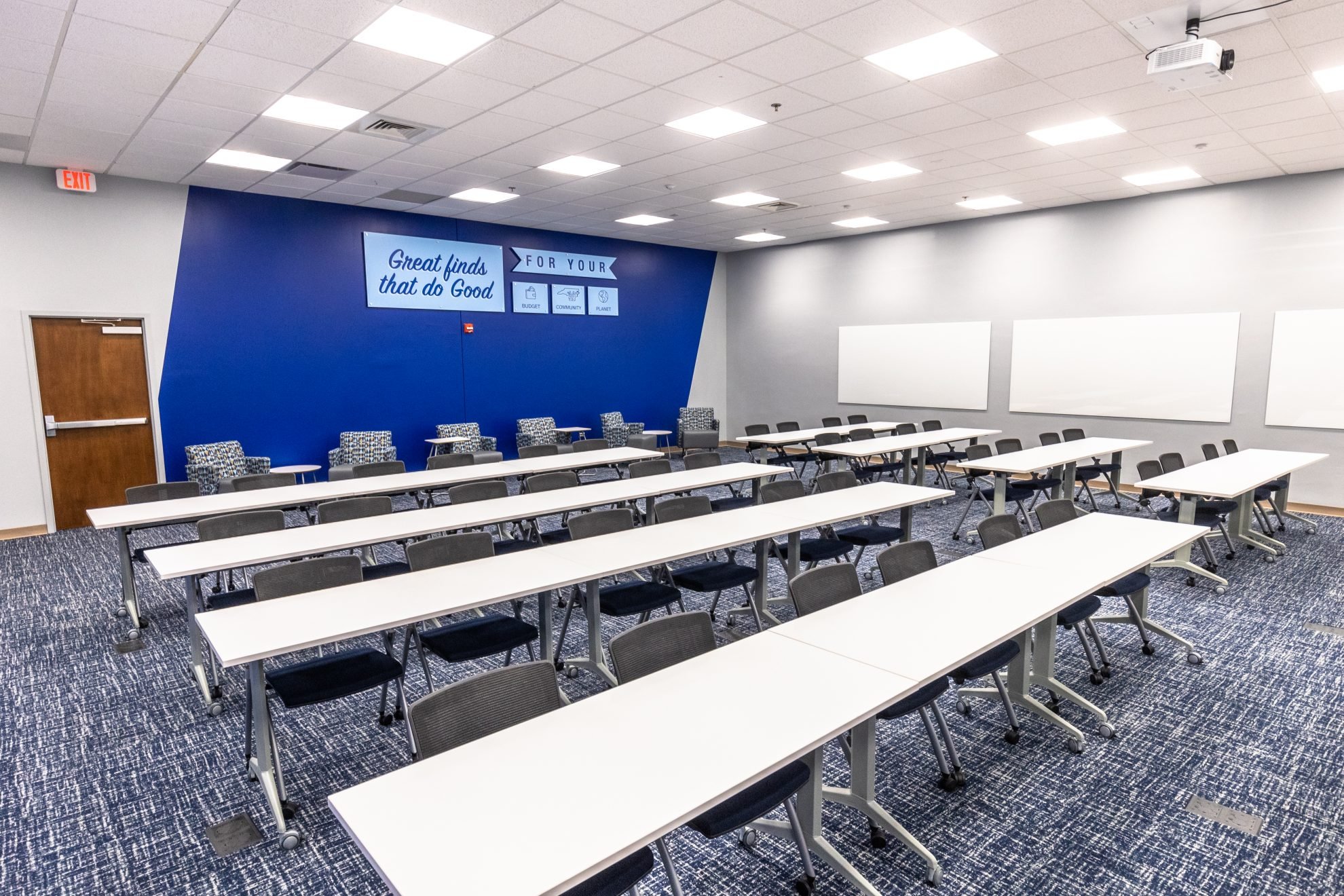
Heritage Signs & Displays collaborated with Goodwill Industries of the Southern Piedmont to transform the Opportunity Campus in Statesville, NC. The project included lenticular wall displays, wall wraps, frosted vinyl, wayfinding signs, and custom wall displays. These elements enhanced the Career & Employment Center, creating an engaging and branded environment that reflects Goodwill's values and mission to support workforce development.