

How Wall Murals Transform Charlotte Workplace Interiors
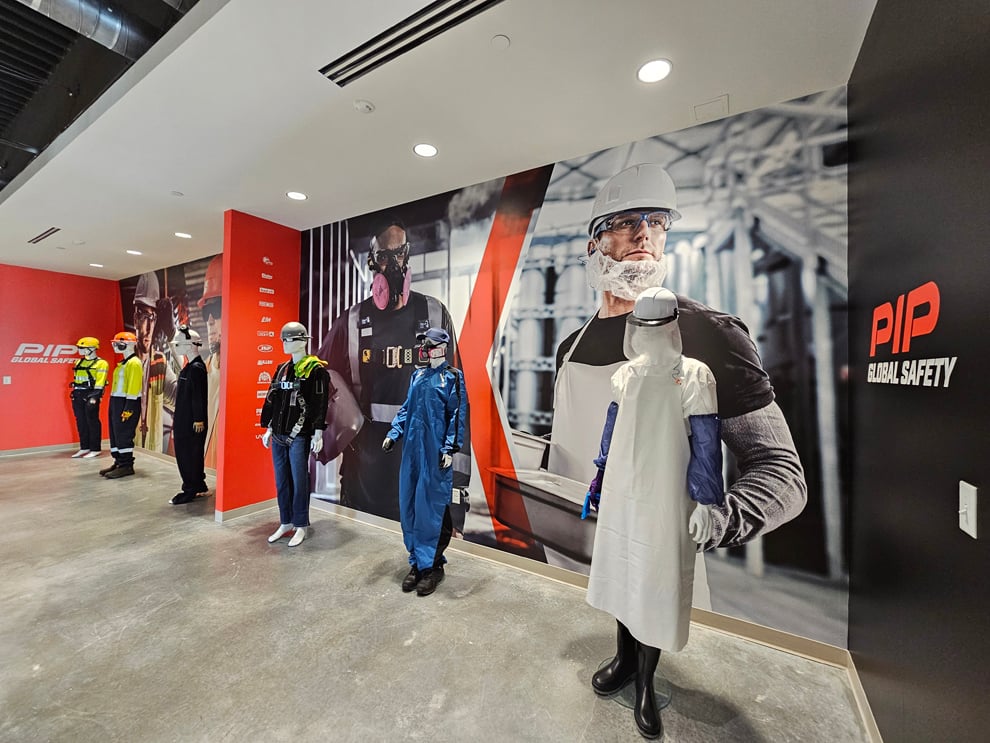
A large blank wall can become one of the most memorable features in a workplace when it is given a clear communication purpose. Custom wall murals allow Charlotte organizations to use photography, illustration, typography, patterns, maps, historical imagery, and branded messaging at architectural scale, turning an ordinary surface into an intentional part of the employee and visitor experience. The term wall mural can describe many visual styles, but in commercial interiors the finished application is often produced with large-format adhesive vinyl graphics installed across part or all of a wall. This makes it possible to create detailed imagery and precisely controlled brand colors while integrating the graphic with the surrounding workplace. A wall mural might establish a dramatic reception feature, bring company history into a corridor, reinforce culture in an employee area, celebrate a Charlotte landmark, communicate organizational achievements, or provide a visual backdrop for dimensional lettering and mounted displays. The strongest murals do more than decorate the wall. They help explain who the organization is, what it values, and what it wants employees, visitors, clients, recruits, donors, or other stakeholders to remember.
Wall Murals Can Tell Stories at Architectural Scale
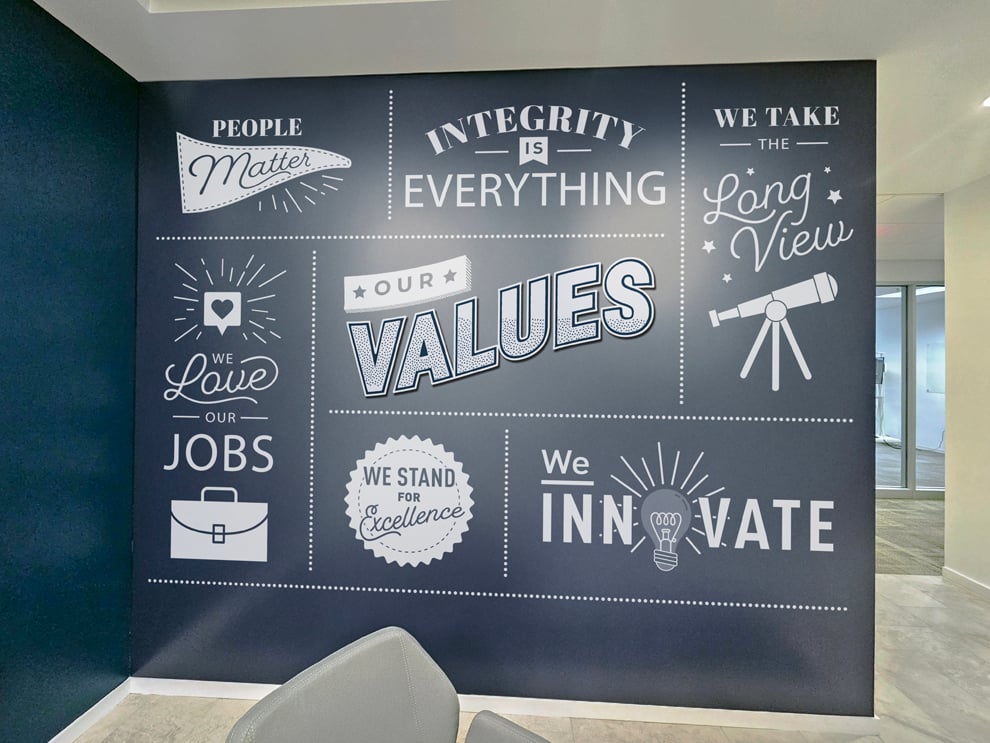
Individual signs are well suited for identification, direction, and focused messages. Wall murals can communicate differently because they allow a story to unfold across a much larger surface. Photography can place employees or visitors directly into the work an organization performs. Archival imagery can turn a hallway into a visual history. Illustrations and patterns can create energy in shared spaces. Maps can explain geographic reach, while typography can give an important statement the scale it deserves. Charlotte organizations can also use murals to connect their workplace with the city, industry, people, history, or communities they serve. Corporate headquarters, healthcare organizations, universities, nonprofits, professional firms, sports organizations, manufacturers, and growing regional businesses may all have different stories to communicate, which is why the mural should begin with the message rather than a predetermined visual formula. Environmental graphic design helps determine how that story should fit the architecture, viewing distance, circulation, furnishings, lighting, surrounding surfaces, and other signs and displays within the space. That planning helps the mural become part of the workplace instead of an oversized image applied without context.
Wall Graphics Can Work with Dimensional Signs and Displays
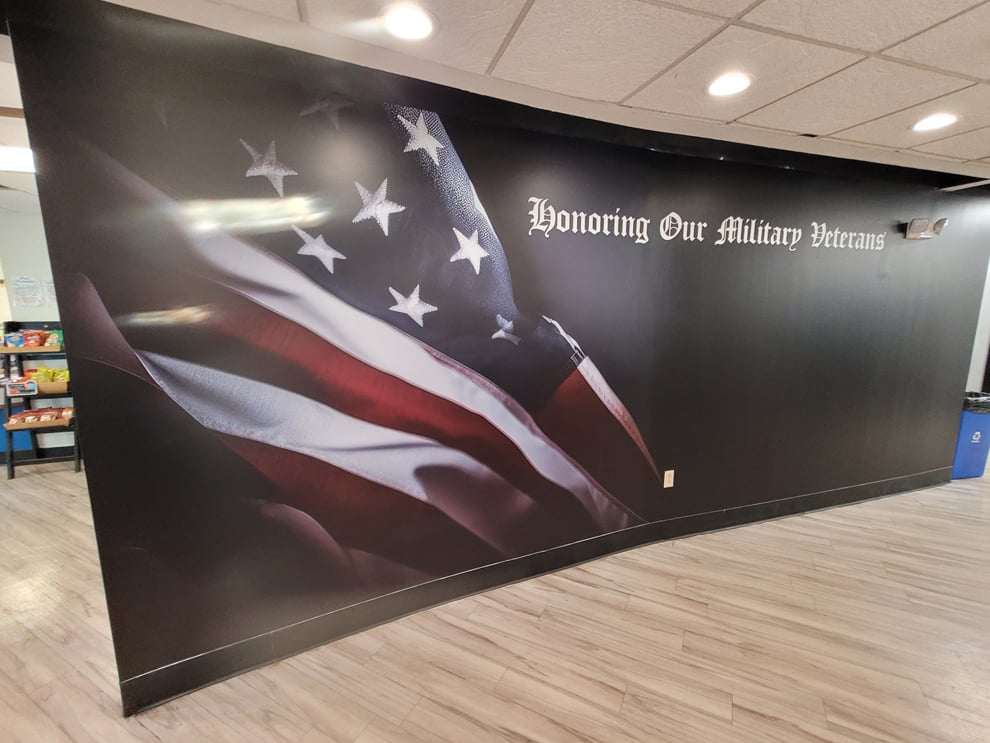
A mural does not have to carry the entire presentation by itself. Some of the most engaging feature walls combine large-format graphics with physical sign and display elements that add depth, emphasis, and visual hierarchy. A dimensional logo can project from a graphic background. Acrylic panels can carry photographs or informational content. Standoff mounted signs can add layers to a timeline or recognition wall. Dimensional lettering can highlight major dates, values, names, or messages while the mural provides visual context. This combination can be particularly effective for company history walls, mission statement and core values presentations, donor recognition displays, employee recognition, cultural storytelling, and lobby features. Planning the graphic and fabricated elements together helps establish what should be noticed first and what details should reward a closer look. Some information should be visible from across the room, while other content invites people to move closer. When scale, imagery, typography, dimensional depth, materials, and placement work together, the wall becomes one complete display rather than a collection of unrelated pieces competing for attention.
The Wall Must Be Ready Before the Mural Is Installed
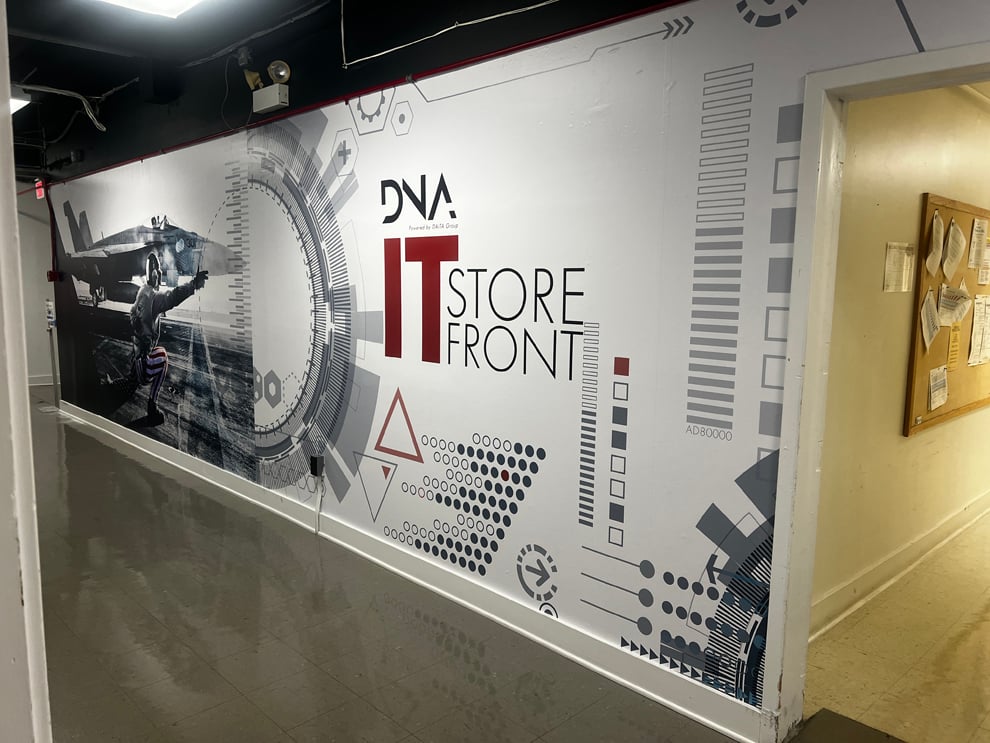
A successful mural depends on more than the quality of the artwork and printing. The underlying wall must be suitable for adhesive vinyl and stable enough to support the installation. Painted wallboard should be smooth, sound, properly repaired, primed, painted, and fully cured before installation. Approximately four weeks is a useful planning expectation for many paints, although the coating manufacturer’s requirements and actual site conditions determine readiness. Low- and zero-VOC paints can sometimes require additional cleaning, adhesion testing, or a different vinyl and adhesive system. Testing can identify certain compatibility concerns, but it cannot guarantee the strength of the primer, paint, or paint-to-wall bond beneath the surface. If primer or paint peels, chips, or pulls away during testing or installation, Heritage stops rather than applying graphics to an unstable wall. The assigned project manager works with the client and its facilities team or contractor to explain what occurred and coordinate next steps. The client or property representative is responsible for the necessary repair, priming, repainting, and curing before the installation can be rescheduled and completed.
Planning for Eventual Removal Is Part of Responsible Wall Mural Planning
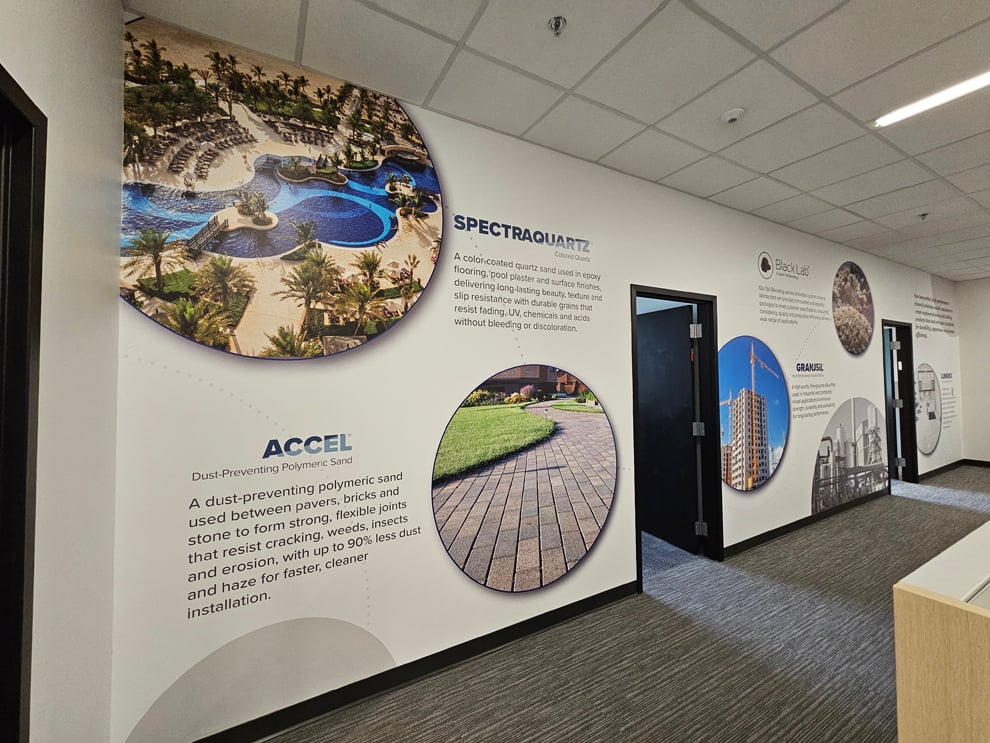
Wall murals can serve for different lengths of time depending on the organization, material, environment, and communication goal. Some become long-term workplace features. Others support a defined campaign, renovation cycle, event, leasing period, or temporary branding need. The word removable should be understood in that context. A removable adhesive system may make future removal more practical, but it does not guarantee that the wall will look unchanged afterward. Paint loss, adhesive residue, ghosting, or damage to the drywall facing may occur during removal, even when the original installation was performed correctly. The likelihood and extent depend on the paint system, wall preparation, age, installation duration, adhesive, environmental conditions, and other factors. For planning purposes, clients should assume that painted walls may require repair and repainting after wall-applied graphics are eventually removed. Heritage may include removal of existing graphics in a new Heritage production and installation project, while surface restoration, refinishing, and repainting remain the client’s responsibility. Planning for the end of the mural’s service life helps organizations make better decisions at the beginning of the project.
Professional Installation Helps Protect the Visual Result
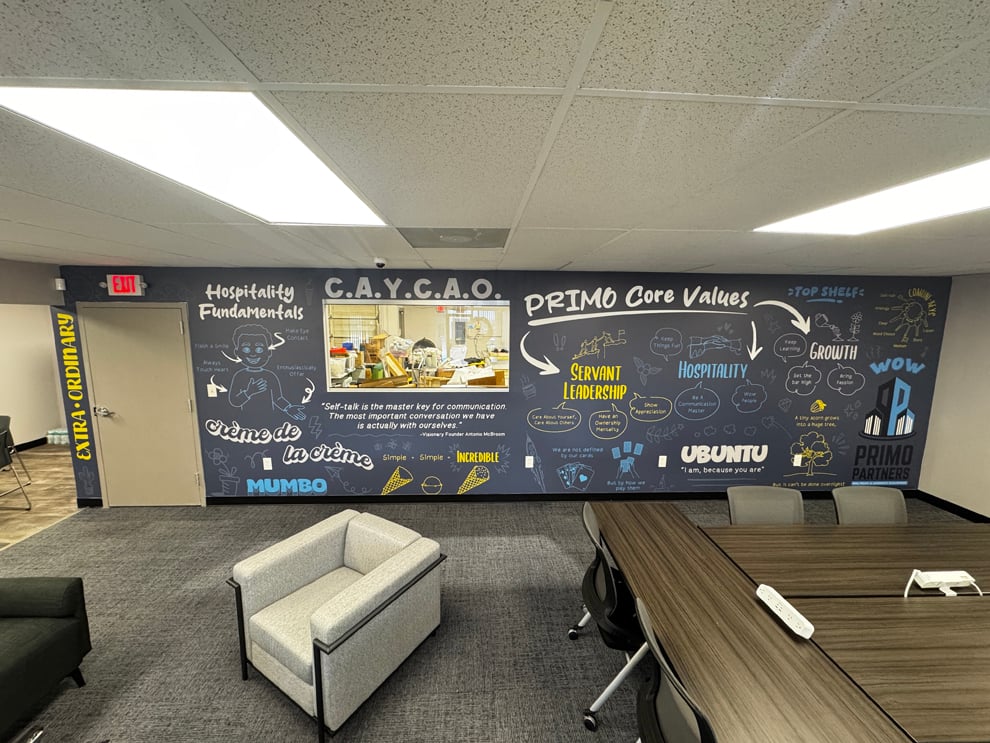
Large wall murals are typically produced in multiple panels that must align accurately across the surface. Photography, typography, repeating patterns, architectural lines, edges, seams, corners, outlets, doors, fixtures, and wall transitions can all affect how the graphic is divided and installed. This makes installation planning part of the design and production process rather than a separate final task. Heritage Signs & Displays connects client discovery, site surveys, environmental graphic design, project management, production, fabrication, and professional installation through one coordinated process. One assigned project manager helps maintain continuity between the client’s goals, artwork, measurements, material selection, surface information, production requirements, scheduling, site access, and installation. Heritage installation team members arrive with an understanding of the approved design, selected materials, panel layout, wall conditions, and finish expectations. For Charlotte organizations with multiple offices or facilities, the same approach can help maintain visual standards across locations while adapting each mural to the dimensions, architecture, audience, and operating conditions of the individual space. That continuity helps protect both the visual concept and the finished installation.

Wall Murals Should Give the Space Something Worth Remembering
A successful workplace mural does not need to be loud or complicated. It needs to have a reason for being there and a clear relationship to the people who use the space. For one organization, that may mean an immersive photograph behind a reception desk. For another, it could be a timeline of growth across Charlotte and the Carolinas. A nonprofit might communicate community impact. A university could celebrate students and achievements. A company may want employees and visitors to feel a stronger connection to its culture, people, purpose, or history. Heritage Signs & Displays is a veteran-owned and family-led company founded in 1977. Our team helps Charlotte-area organizations translate those ideas into wall graphics and layered displays through environmental graphic design, project management, production, fabrication, and professional installation. If your organization is considering a custom wall mural, wall wrap, or workplace branding project, Get Started Now and share your goals, photographs, approximate wall dimensions, location, timing, available artwork, and project information. We can help determine the next planning decisions needed to turn the wall into a meaningful part of the workplace experience.
Frequently Asked Questions About Wall Murals
What is the difference between a wall mural and a wall wrap?
The terms often overlap. Wall mural usually describes the visual result, especially a large image, illustration, or artistic composition. Wall wrap generally describes a large-format adhesive vinyl application covering a substantial portion of a wall. Many commercial wall murals are produced and installed using the same materials and techniques associated with wall wraps.
Can Heritage design the wall mural for our organization?
Yes. Heritage can work with client-provided artwork and brand standards or collaborate with stakeholders to develop the environmental graphic design. The process considers the message, imagery, scale, wall dimensions, viewing distance, architecture, surrounding signs and displays, production requirements, and installation conditions before final artwork is approved.
Can a wall mural be installed immediately after a room is painted?
Usually not. Painted wallboard should be smooth, sound, properly primed, painted, and fully cured before adhesive vinyl is installed. Approximately four weeks is a useful planning expectation for many paints, but it should not be treated as a universal cure period. The paint manufacturer’s requirements, coating formulation, wall preparation, environmental conditions, and actual site conditions determine readiness. Low- and zero-VOC paints may sometimes require additional cleaning, adhesion testing, or a different adhesive system. A wall that feels dry to the touch may still not be fully cured or suitable for installation.
Will the wall need repainting when a mural is removed?
Clients should plan as though repair and repainting may be required after a wall mural is removed. A removable adhesive system can make future removal more practical, but it does not guarantee that the painted surface will remain unchanged. Paint loss, adhesive residue, ghosting, or damage to the drywall facing may occur depending on the primer, paint system, wall preparation, adhesive, installation duration, environmental conditions, and strength of the underlying wall system. Heritage may include graphic removal as part of a new Heritage production and installation project, while restoration, surface repair, priming, and repainting remain the client’s responsibility.