Signs, graphics, and displays shape how people understand and move through a physical space. A well-planned visual environment identifies destinations, simplifies navigation, communicates organizational values, and creates a more cohesive experience for employees, customers, visitors, and guests. In a workplace, branded elements can strengthen the reception area, add privacy, highlight company milestones, and connect separate departments through a consistent identity. At events and venues, they can guide foot traffic, showcase sponsors, distinguish activity zones, support speakers, and reinforce the central message.
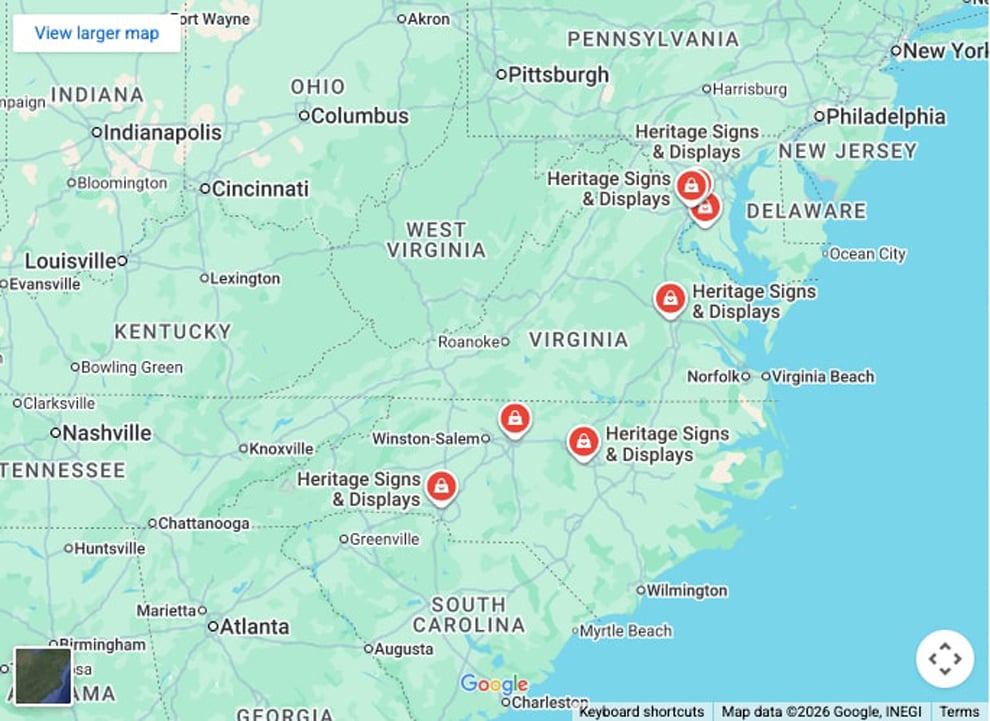
Heritage Signs & Displays provides Huntersville organizations with a coordinated approach to commercial signs, graphics, displays, and branded environments. Established in 1977, Heritage is a veteran-owned, family-led company that has specialized in custom signs, interior graphics, workplace branding, and event environments since 2009. Clients in Huntersville receive access to environmental graphic design, project management, production, fabrication, and professional installation through the company’s Charlotte headquarters and regional network serving the Carolinas and Mid-Atlantic.
Every project begins with the client’s goals, brand standards, messaging, architectural features, and site conditions. Heritage converts those details into physical elements that can be produced and installed effectively. A project might include a single dimensional lobby sign, a complete office rebrand, graphics across multiple floors, a temporary event environment, or a standardized program for several regional locations. Possible solutions include wall wraps, dimensional lettering, acrylic signs, standoff-mounted panels, frosted privacy film, window graphics, timeline walls, donor recognition displays, room signs, directional systems, architectural signage, sponsor installations, backdrops, and modular exhibits. Each component is selected to solve a specific communication or environmental need.
Organizations throughout Huntersville and the Lake Norman area serve different audiences and operate in a wide range of facilities. Manufacturing and logistics companies may require durable identification, clear visitor routes, organized safety messaging, and consistent branding between offices and operational areas. Healthcare providers, financial institutions, schools, technology companies, professional firms, nonprofits, sports organizations, and event teams may prioritize privacy, recruitment, culture, donor recognition, navigation, sponsor exposure, or guest engagement. An effective visual program responds to these needs while remaining faithful to the organization’s established brand.
A dedicated Heritage project manager oversees discovery, site information, design development, estimating, material selection, approvals, production, fabrication, scheduling, installation, and final completion. This creates one reliable line of communication for the client while connecting the designers, production professionals, fabricators, and installers involved in the work. Instead of coordinating multiple vendors with separate expectations and schedules, the client works with one accountable project partner.
This level of coordination is especially valuable when a Huntersville workplace must remain operational, a venue provides a limited installation period, an opening date cannot move, or several facilities must follow shared standards. Heritage combines familiarity with the Charlotte and Lake Norman markets with the resources of a seven-location regional network. Our purpose is to honor God by serving our clients and communities with excellence. We pursue that purpose through thoughtful recommendations, careful planning, dependable communication, and finished environments designed to serve the people who use them.
Everyone who enters a facility has both practical and emotional expectations. Employees may want a stronger connection to the organization’s culture and mission. Visitors need to recognize that they have arrived at the correct location and understand where to go next. Customers, recruits, patients, students, donors, fans, sponsors, and event attendees may each require different information. A successful branded environment considers the full experience rather than treating each sign or graphic as a separate purchase.
Before recommending materials or placements, Heritage evaluates the branding, messages, architecture, surfaces, circulation patterns, viewing distances, installation requirements, and available lighting. These observations help determine whether a lobby sign needs additional depth, whether glass graphics should combine privacy with branding, where directional decisions occur, and how storytelling displays should be positioned for comfortable viewing.
For Huntersville offices, healthcare settings, educational facilities, manufacturing workplaces, athletic environments, and events, the objective is not to cover every open surface. The objective is to choose the right combination of signs, graphics, and displays to improve communication, support the brand, and make the space easier to navigate. A focused visual strategy typically creates a stronger and more unified result than a collection of unrelated elements added over time.
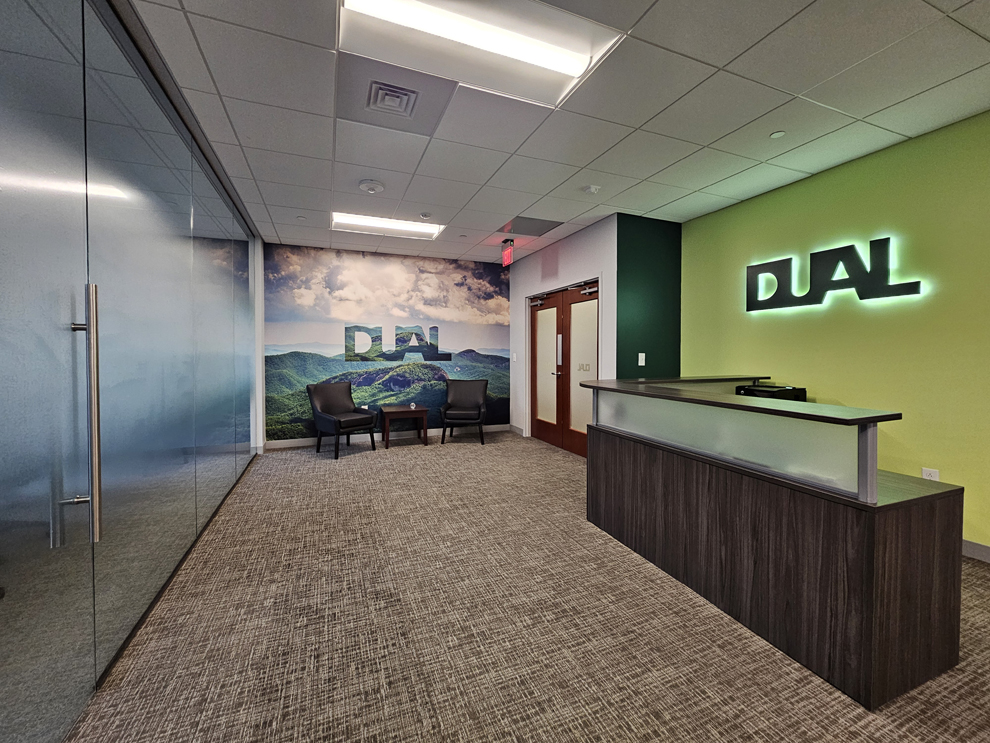
Huntersville clients turn to Heritage when reliable project management is as important as the appearance of the finished installation. One project manager coordinates discussions, surveys, concepts, estimates, materials, approvals, production, fabrication, installation dates, and completion requirements. This continuity minimizes communication gaps and gives stakeholders a clear source of responsibility from the initial consultation through installation.
Heritage’s environmental graphic designers, project managers, production specialists, fabricators, and installers operate as one connected team. Before complex work moves into production, the appropriate team members review measurements, colors, substrates, mounting systems, access limitations, installation order, and schedule requirements. This preproduction review helps uncover potential conflicts while they can still be resolved efficiently, rather than after materials arrive at an occupied office or deadline-driven venue.
As Heritage approaches its 50th anniversary, the company remains veteran-owned and family-led. Huntersville organizations are supported by the Charlotte headquarters, multiple production facilities, and a seven-location network throughout the Carolinas and Mid-Atlantic. These resources make it possible to coordinate workplace transformations, phased installations, event environments, and multi-location branding programs while maintaining practical oversight of design, production, fabrication, and installation.
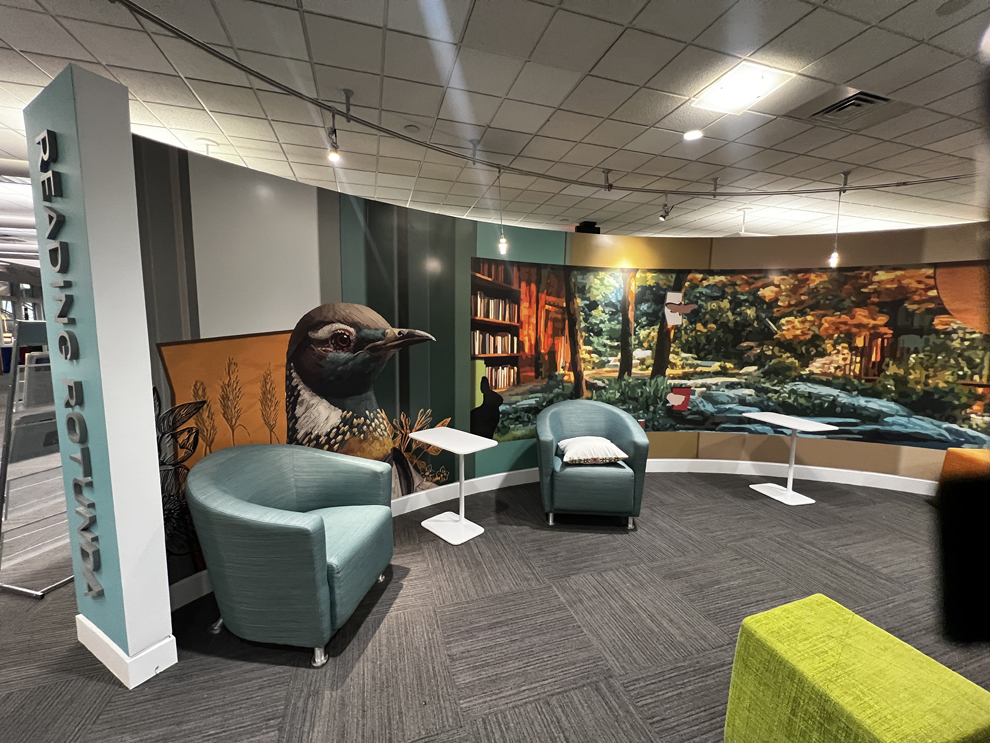
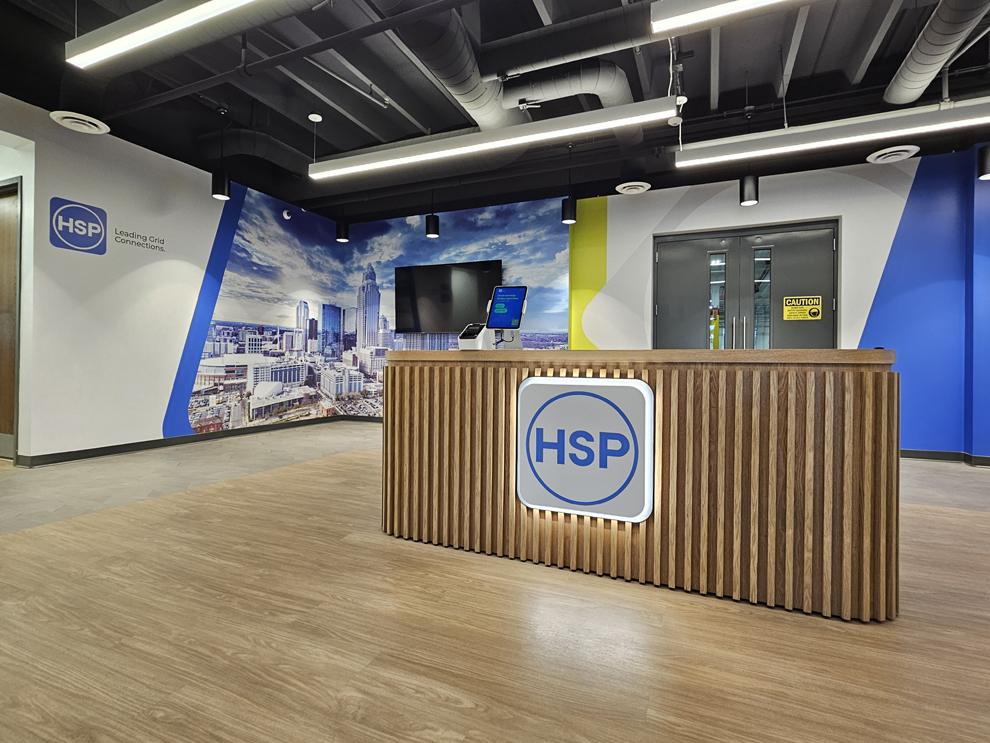
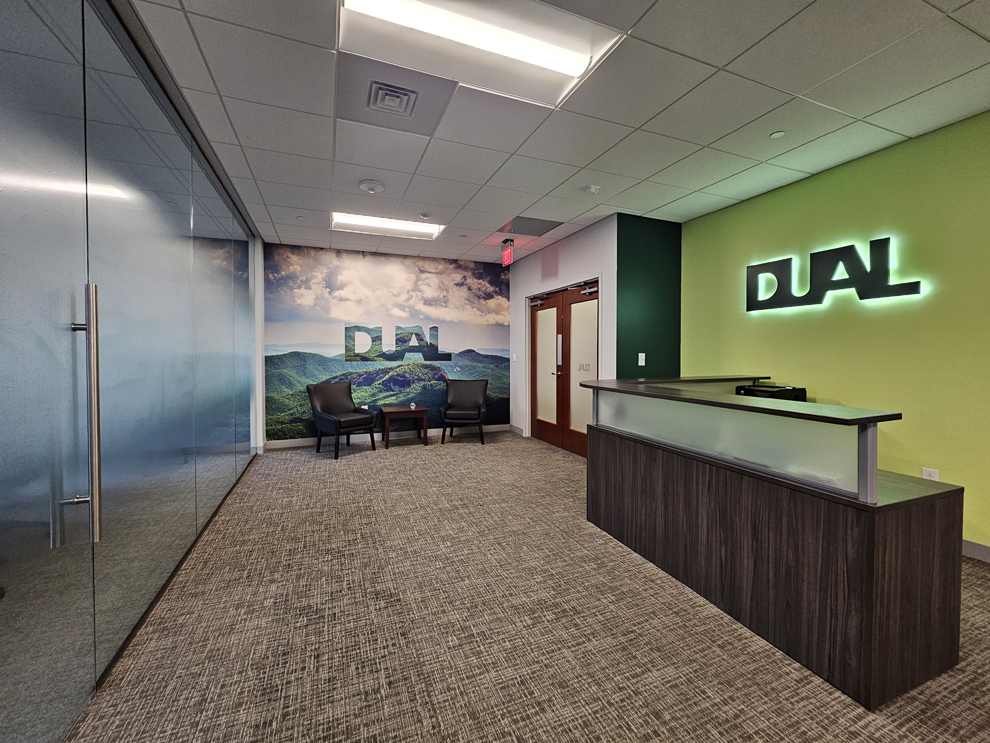
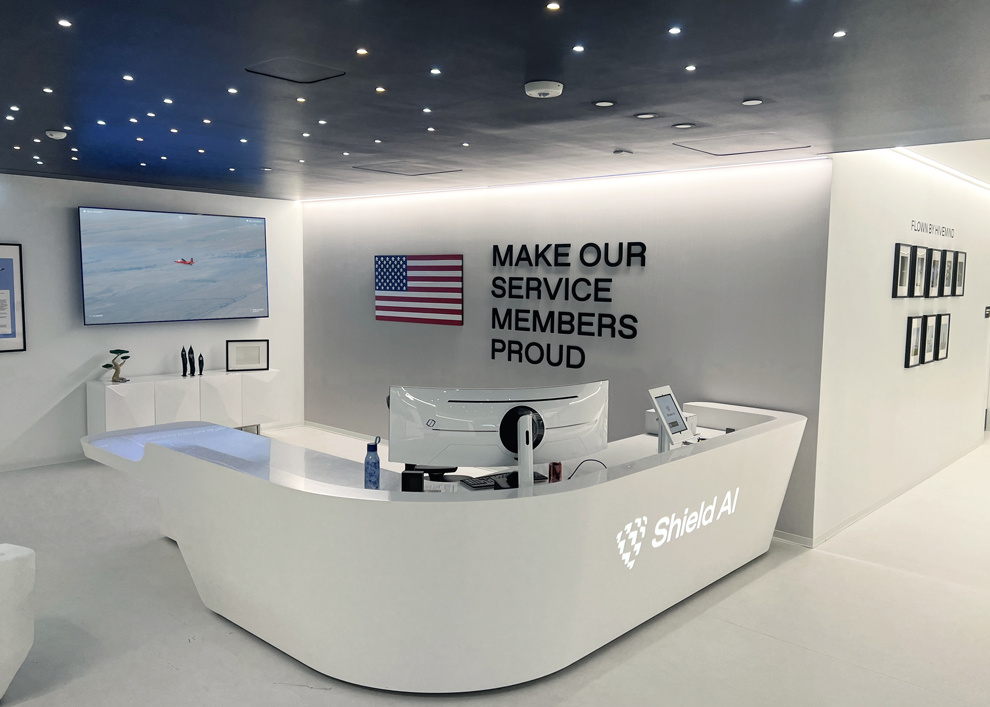
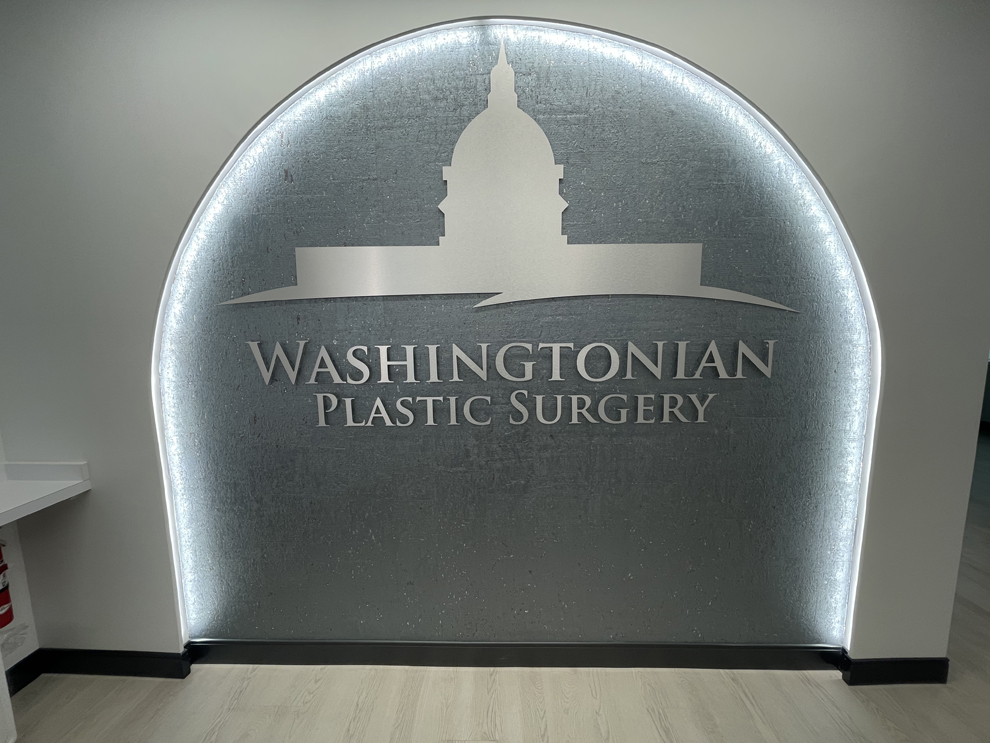
Custom lobby signs use dimensional logos, lettering, acrylic, specialty finishes, and coordinated background features to create a professional focal point in reception and arrival areas.
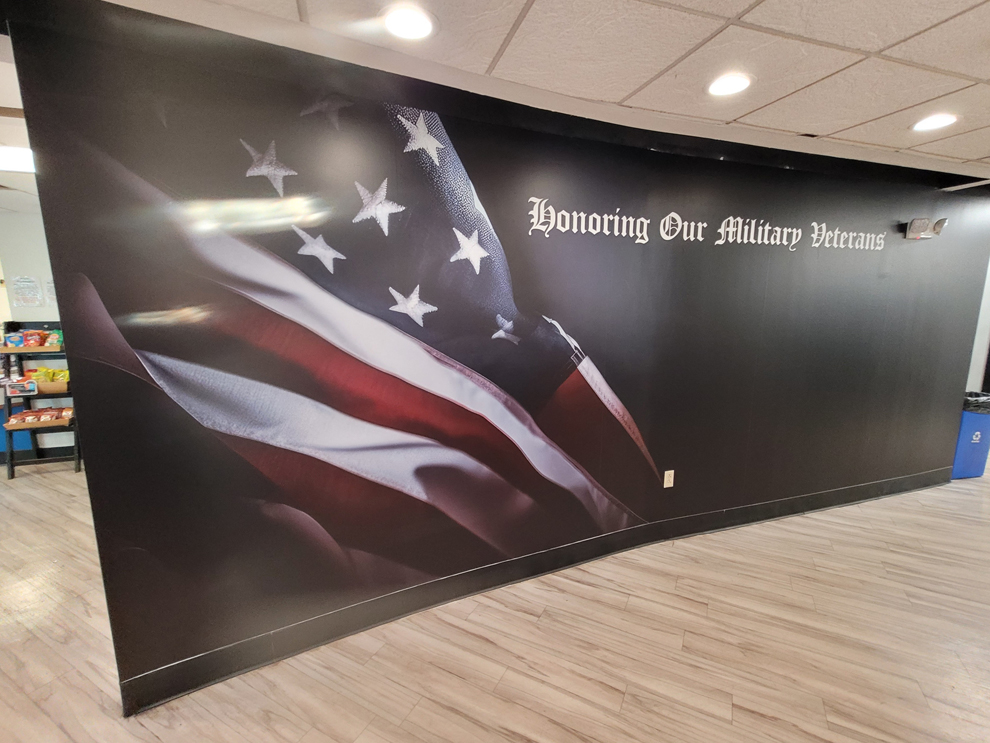
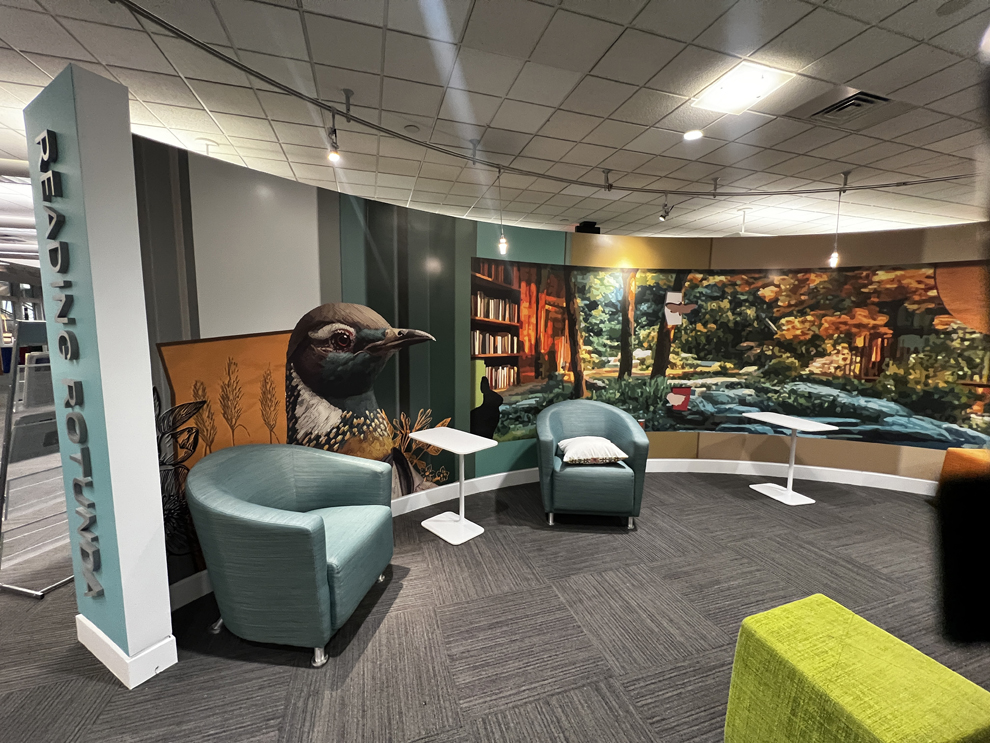
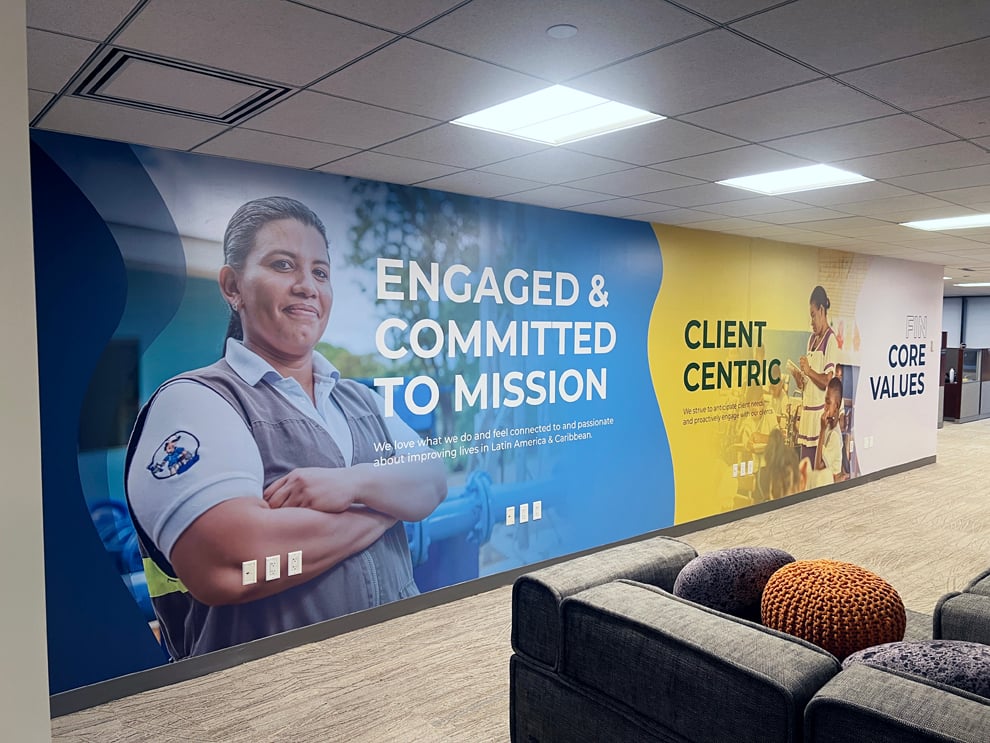
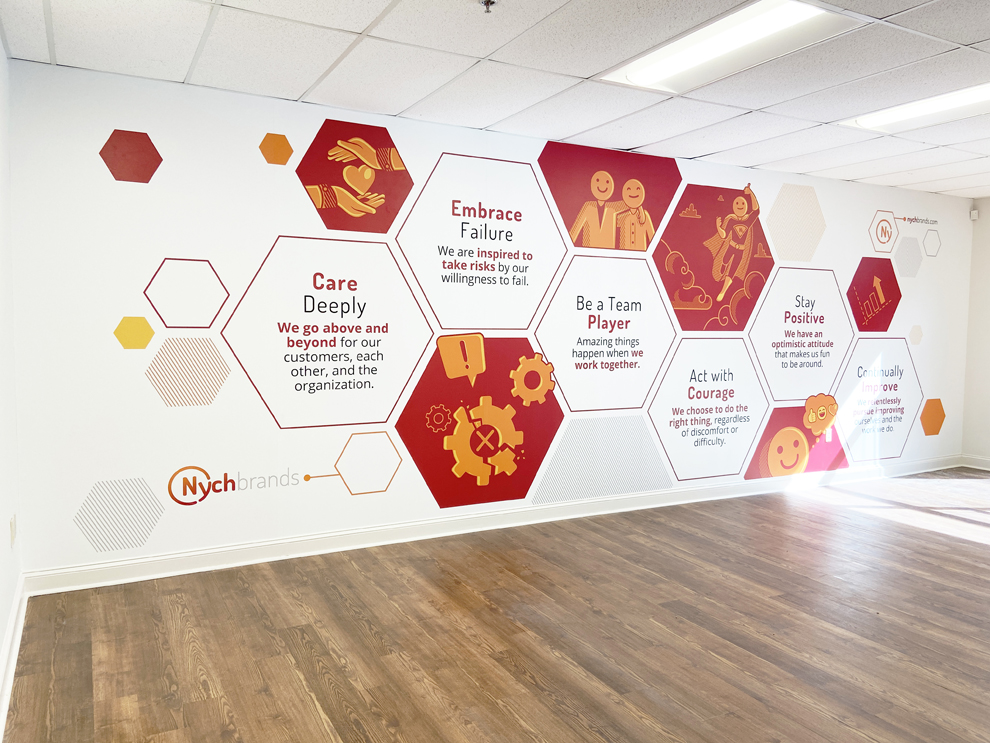
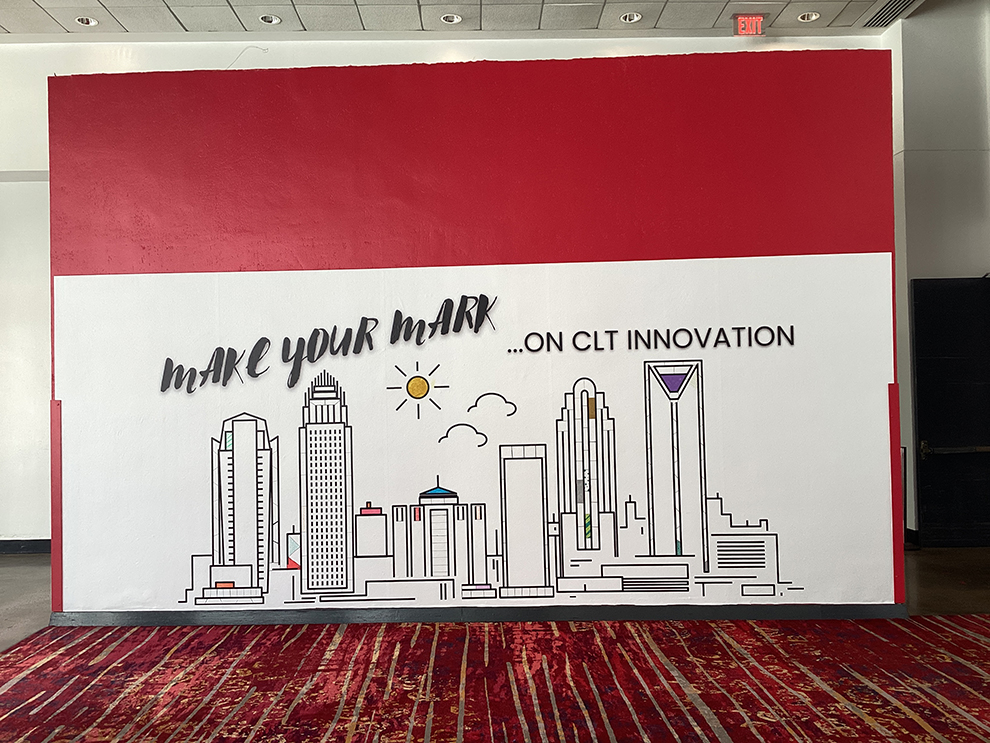
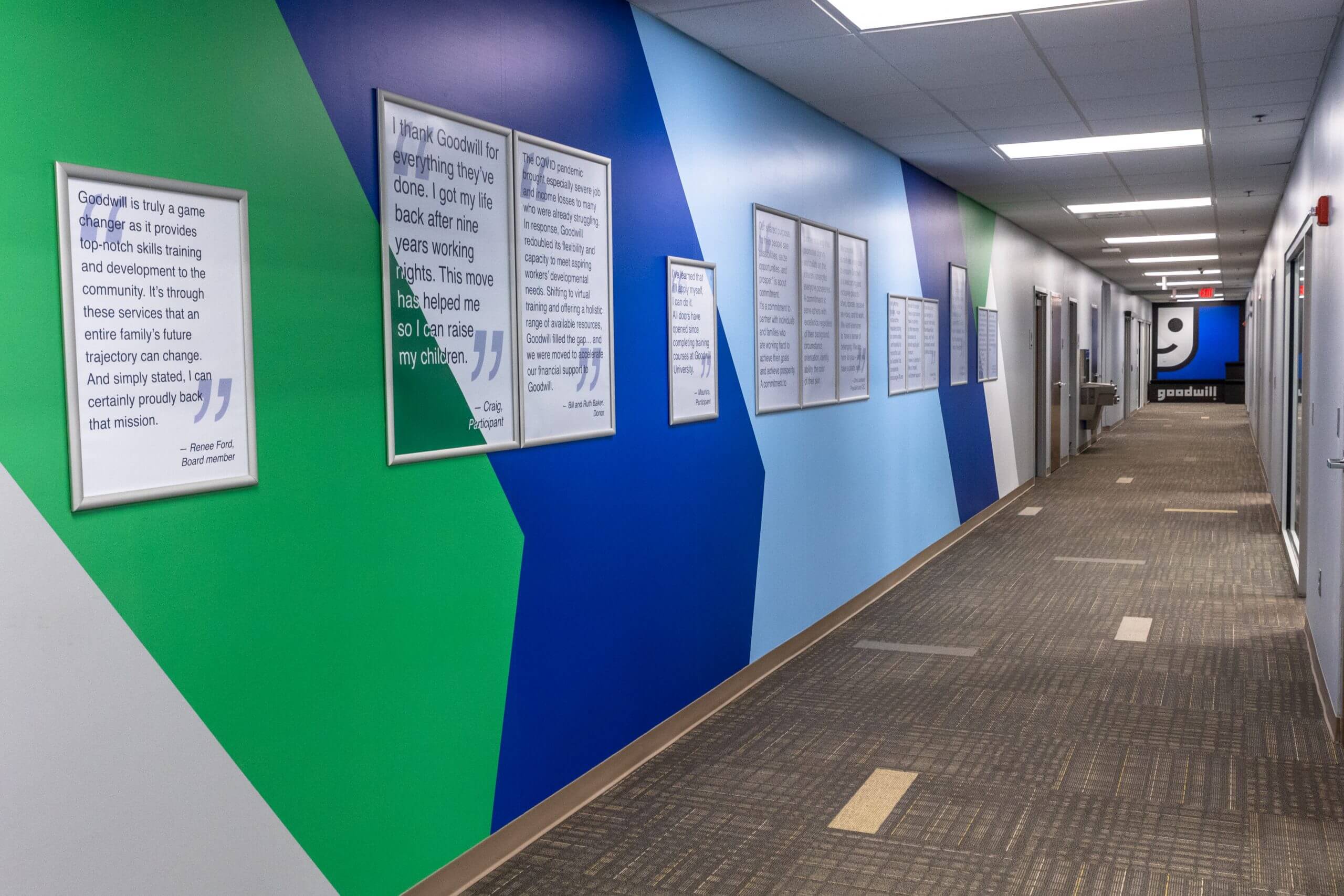
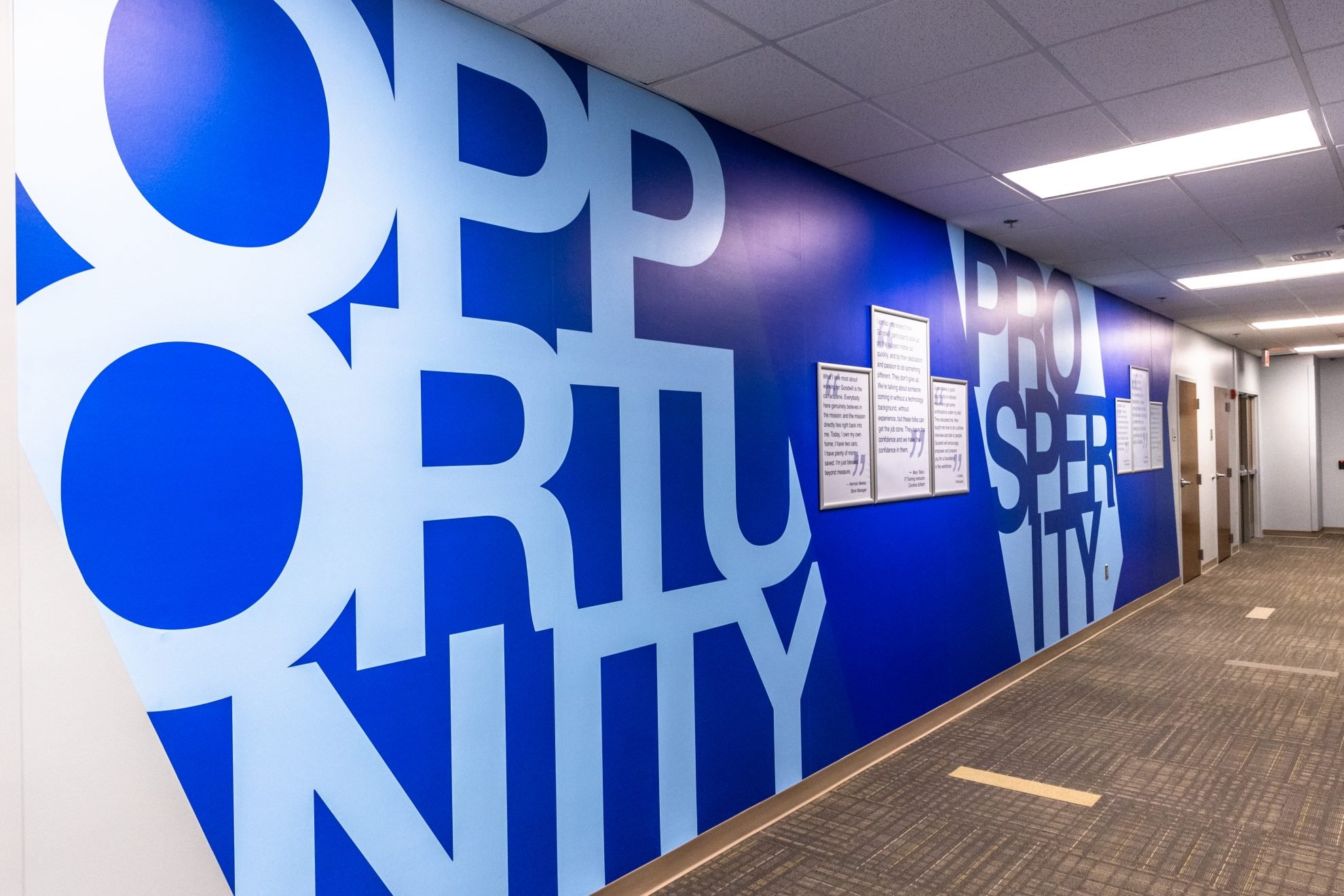
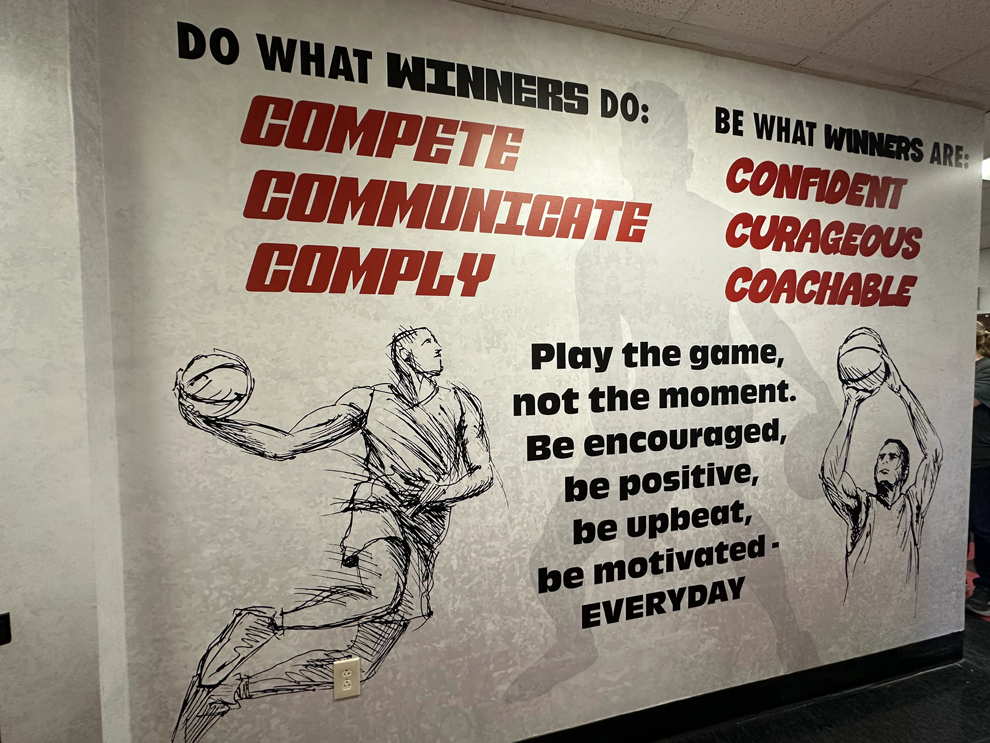
Wall wraps introduce branded colors, photography, patterns, typography, and messaging to corridors, conference rooms, offices, event venues, and other compatible interior surfaces.
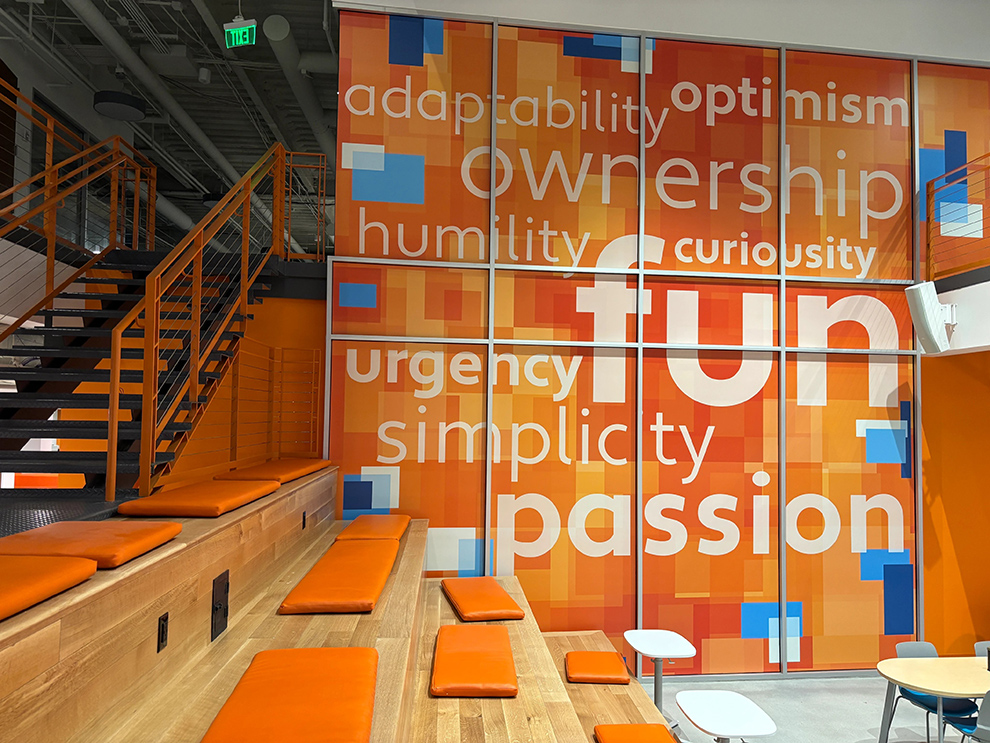
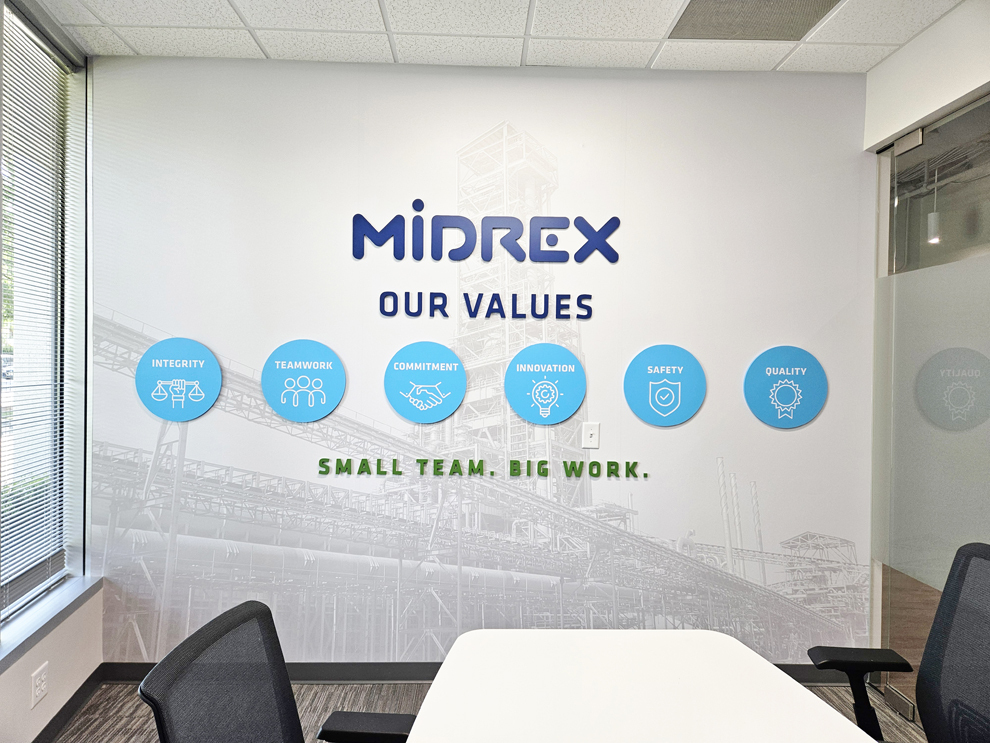
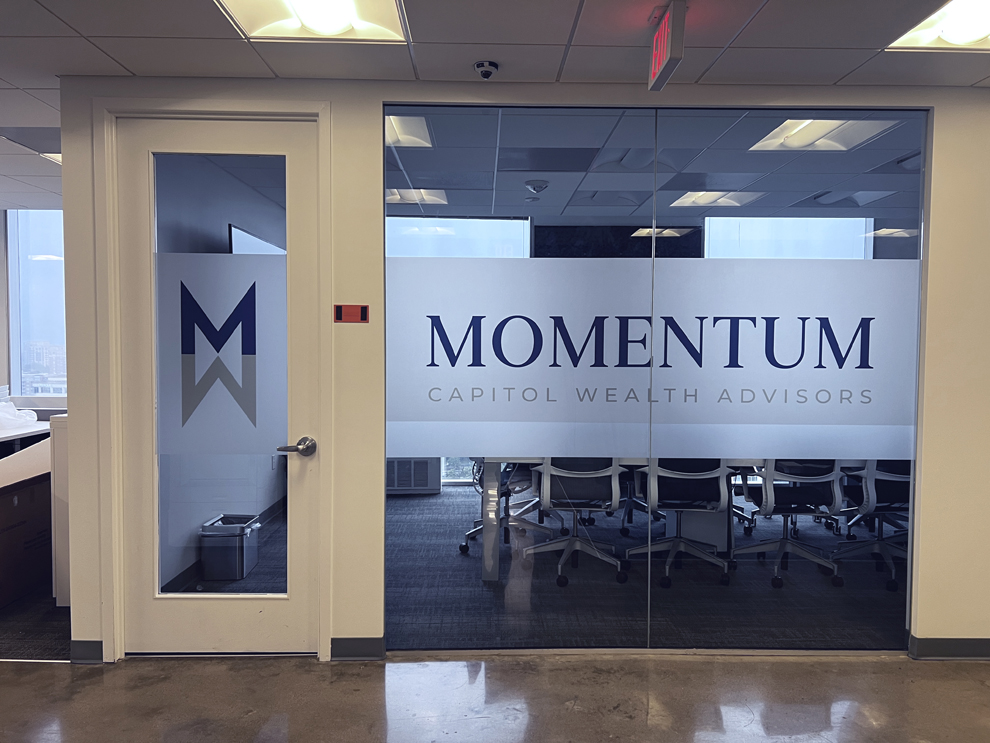
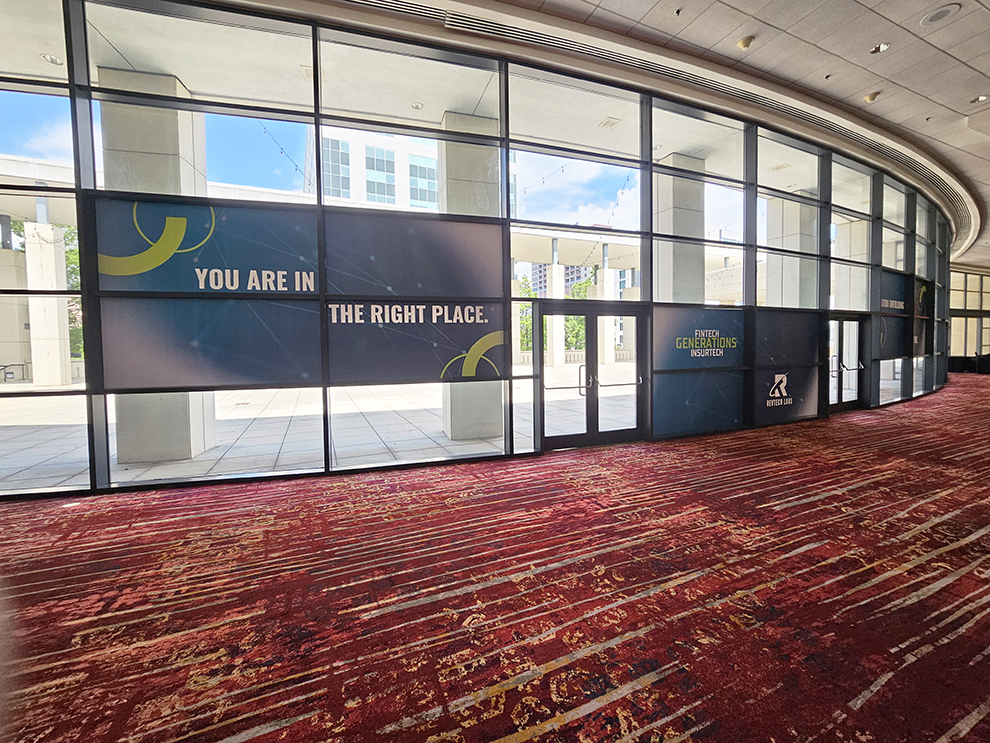
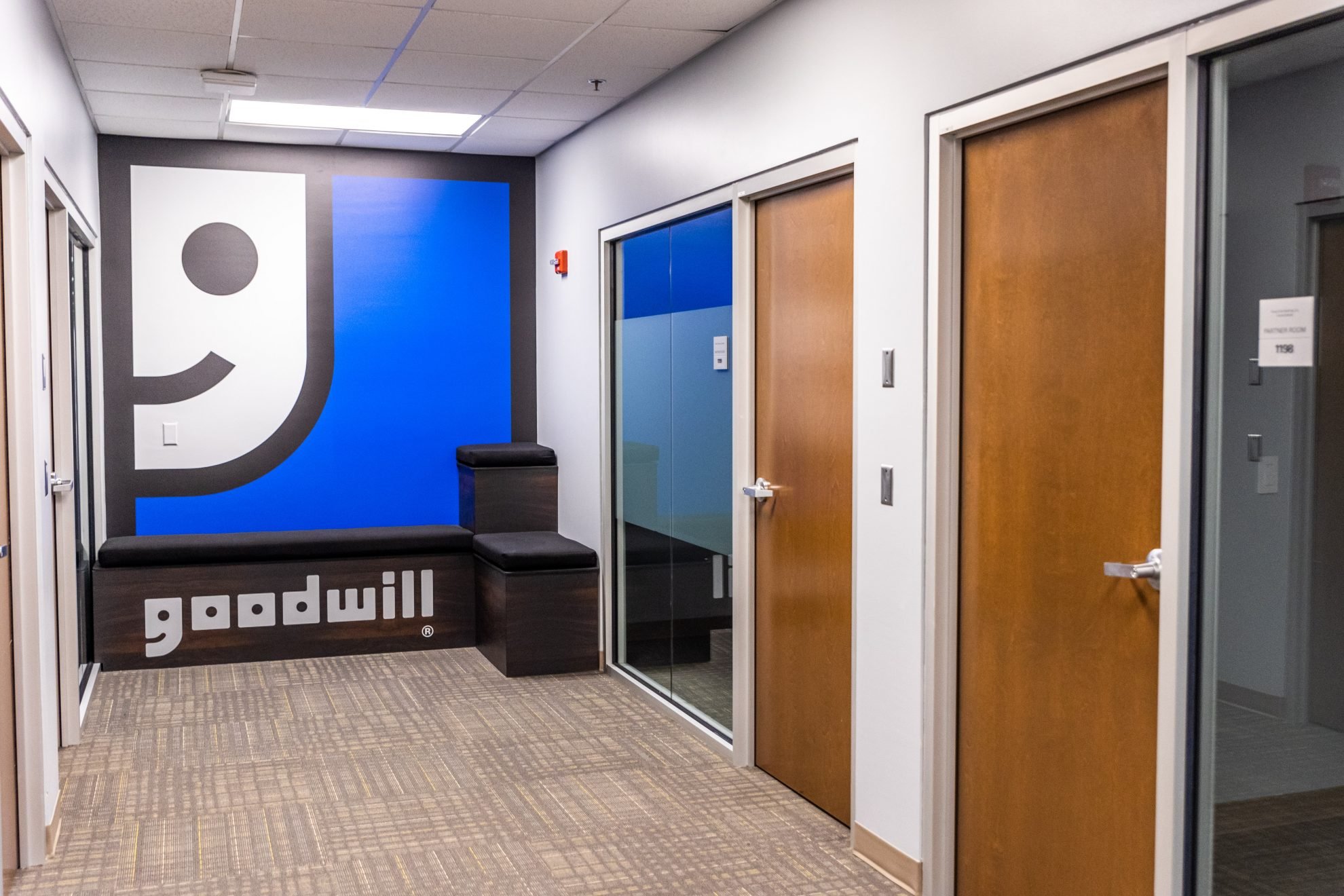
Window graphics and frosted films can add brand identity, decorative detail, visual separation, and distraction control to conference rooms, doors, partitions, storefronts, and exterior-facing glass.
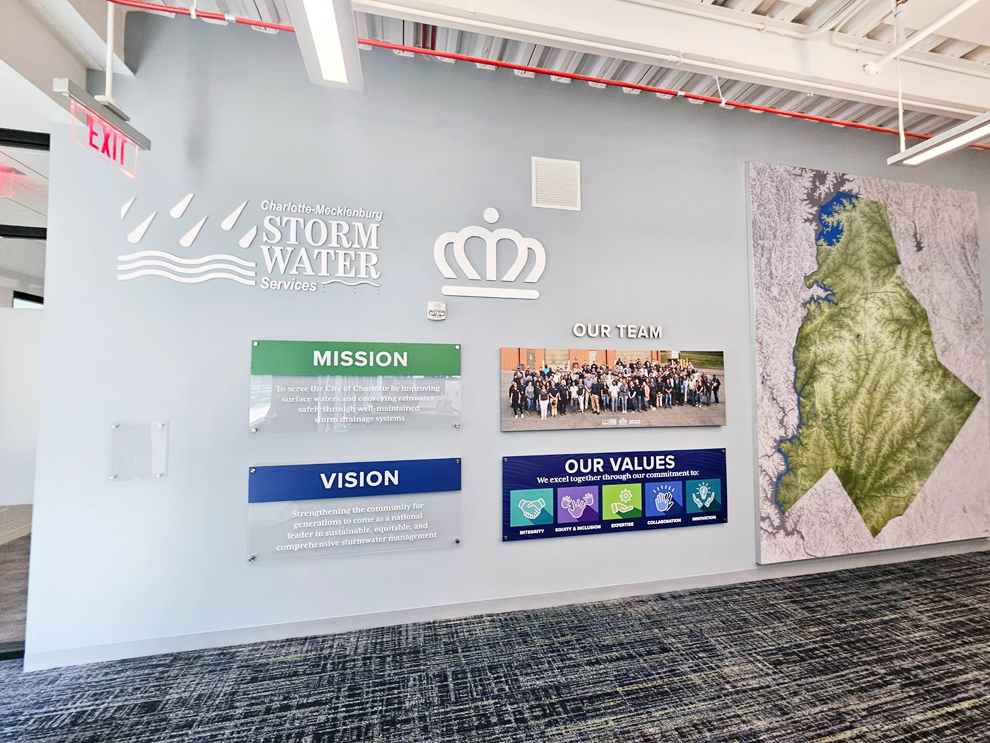
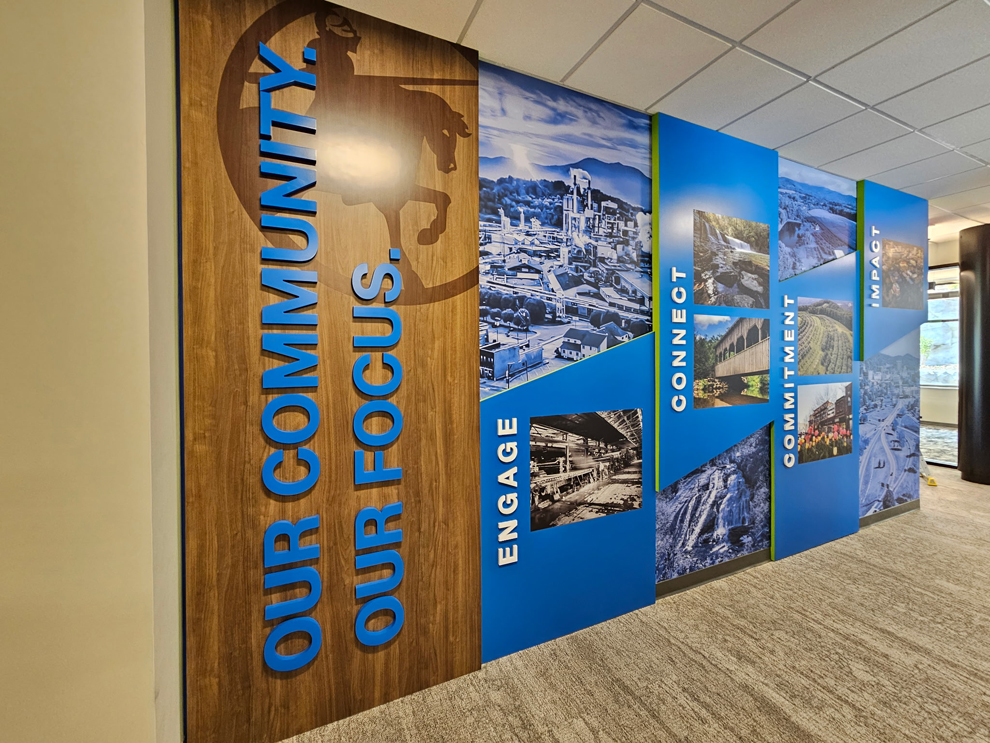
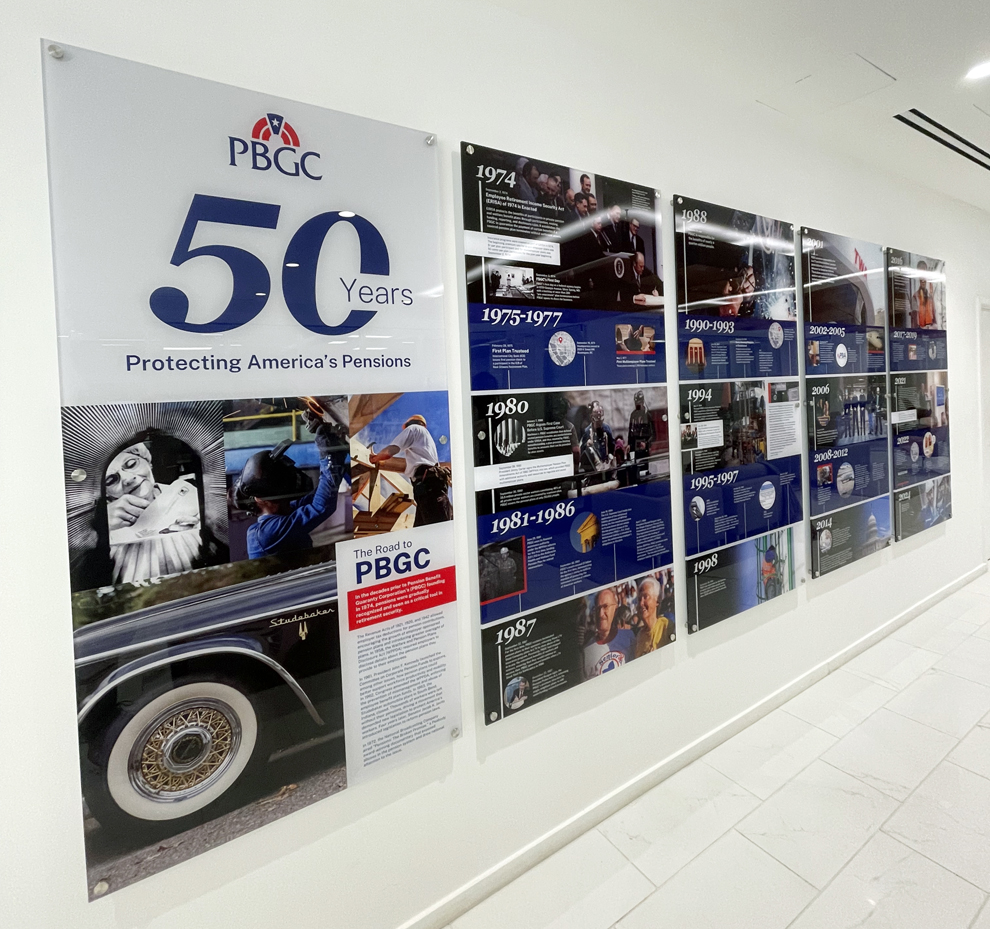
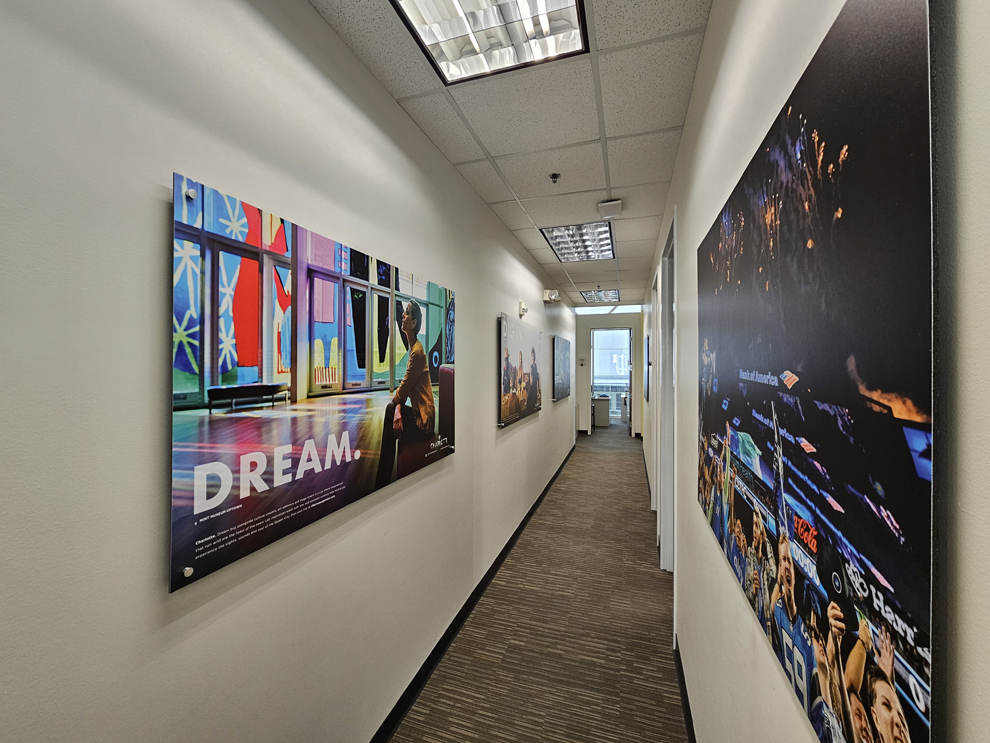
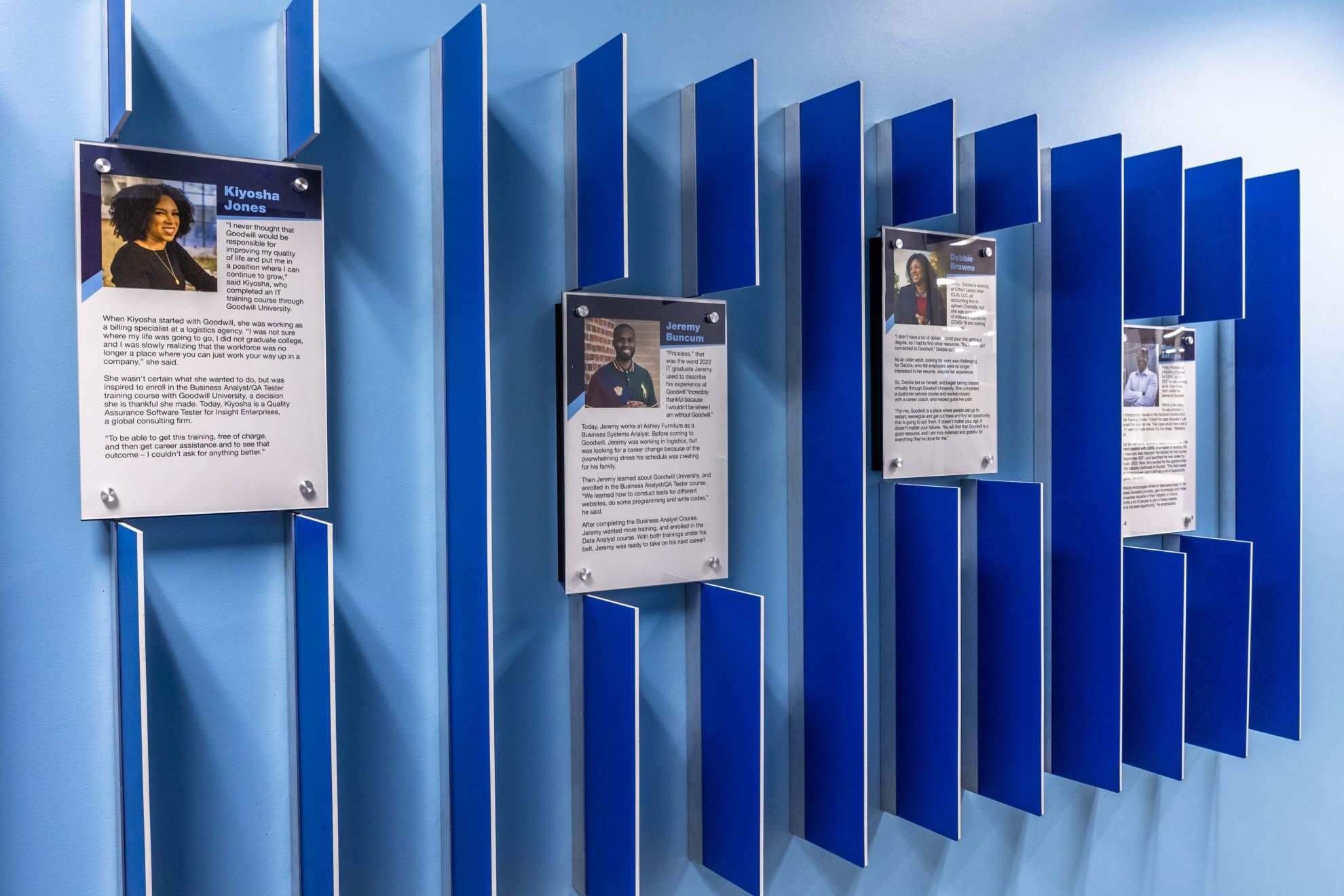
Custom wall displays combine photographs, printed graphics, dimensional elements, panels, and architectural hardware to present company history, values, achievements, employee recognition, or donor contributions.
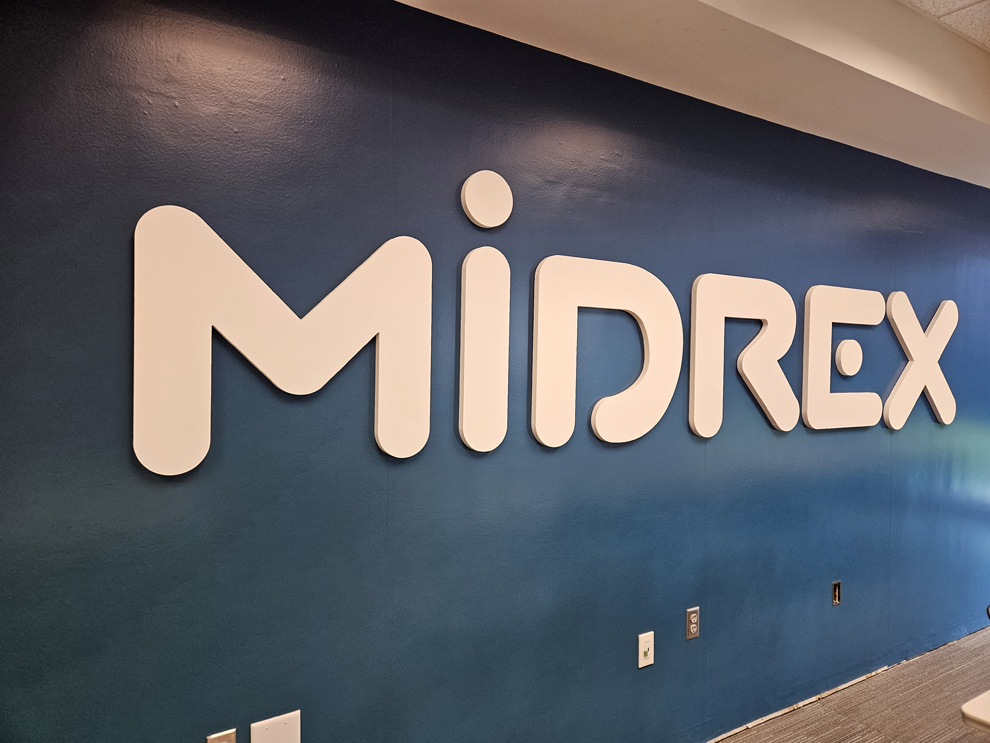
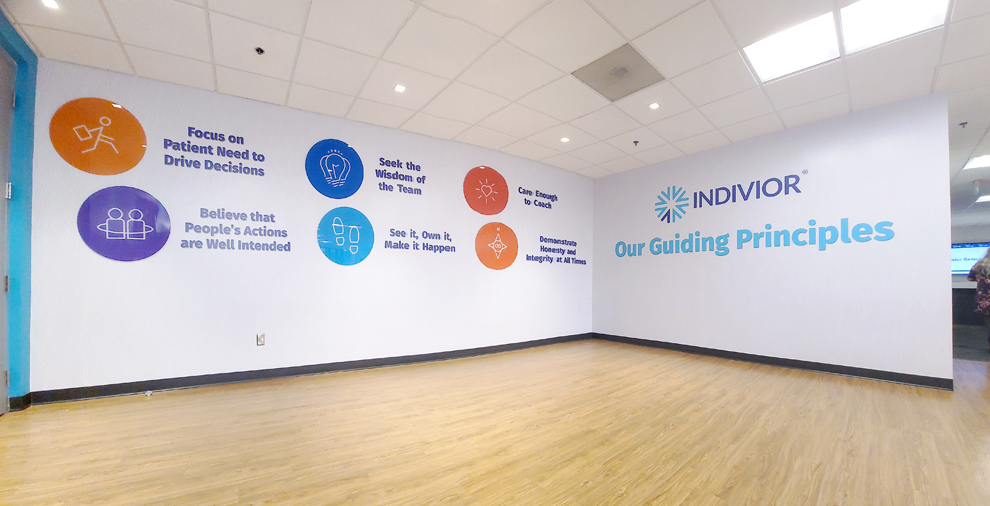
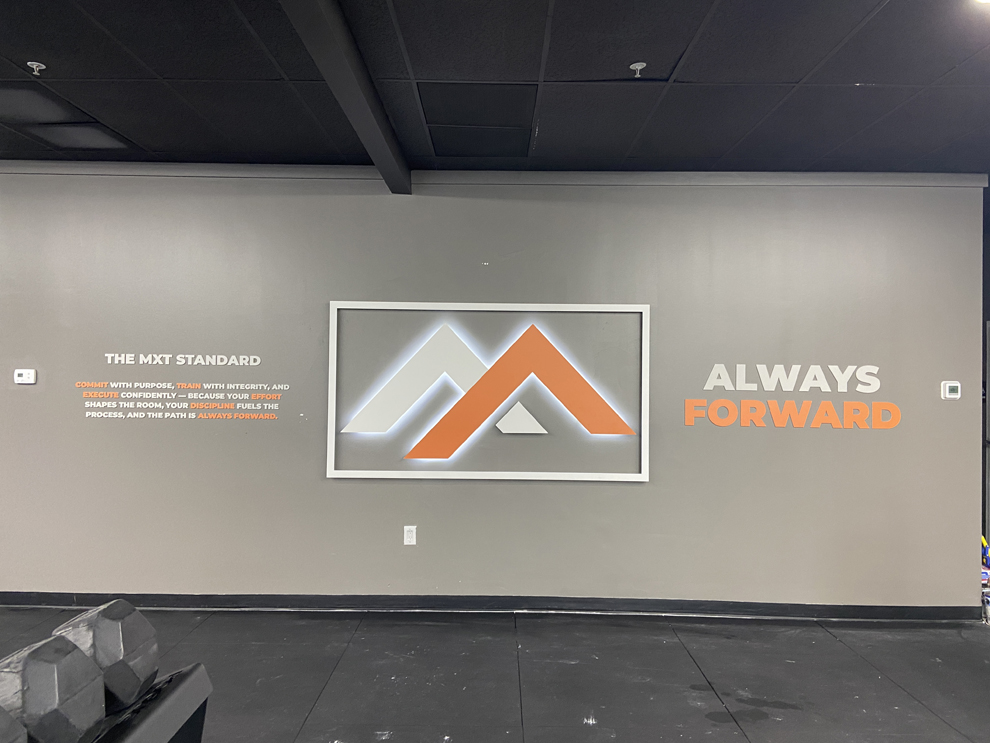
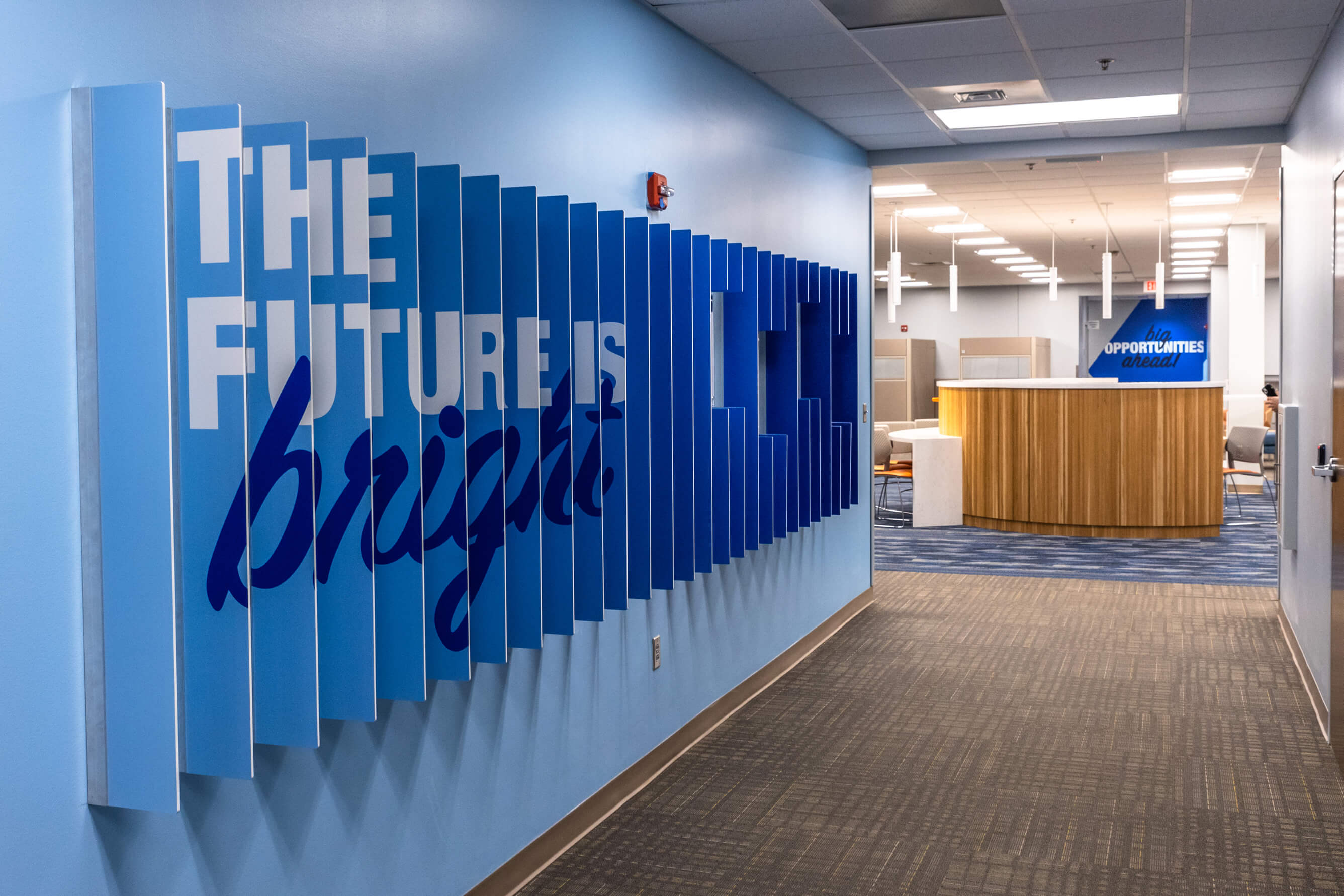
Dimensional letters give names, logos, values, and identification features greater depth and architectural impact within workplaces, campuses, venues, and shared interiors.
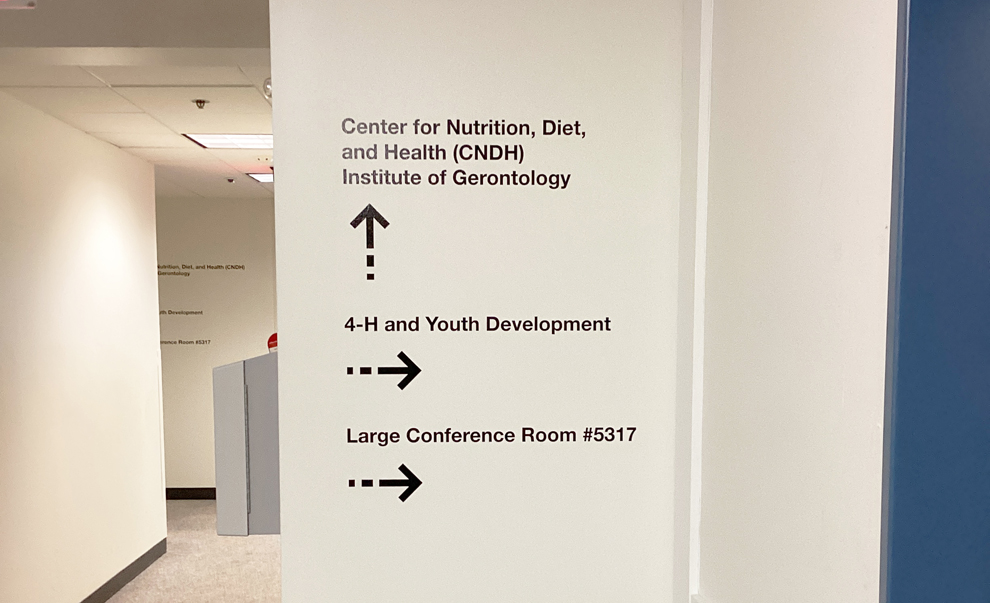
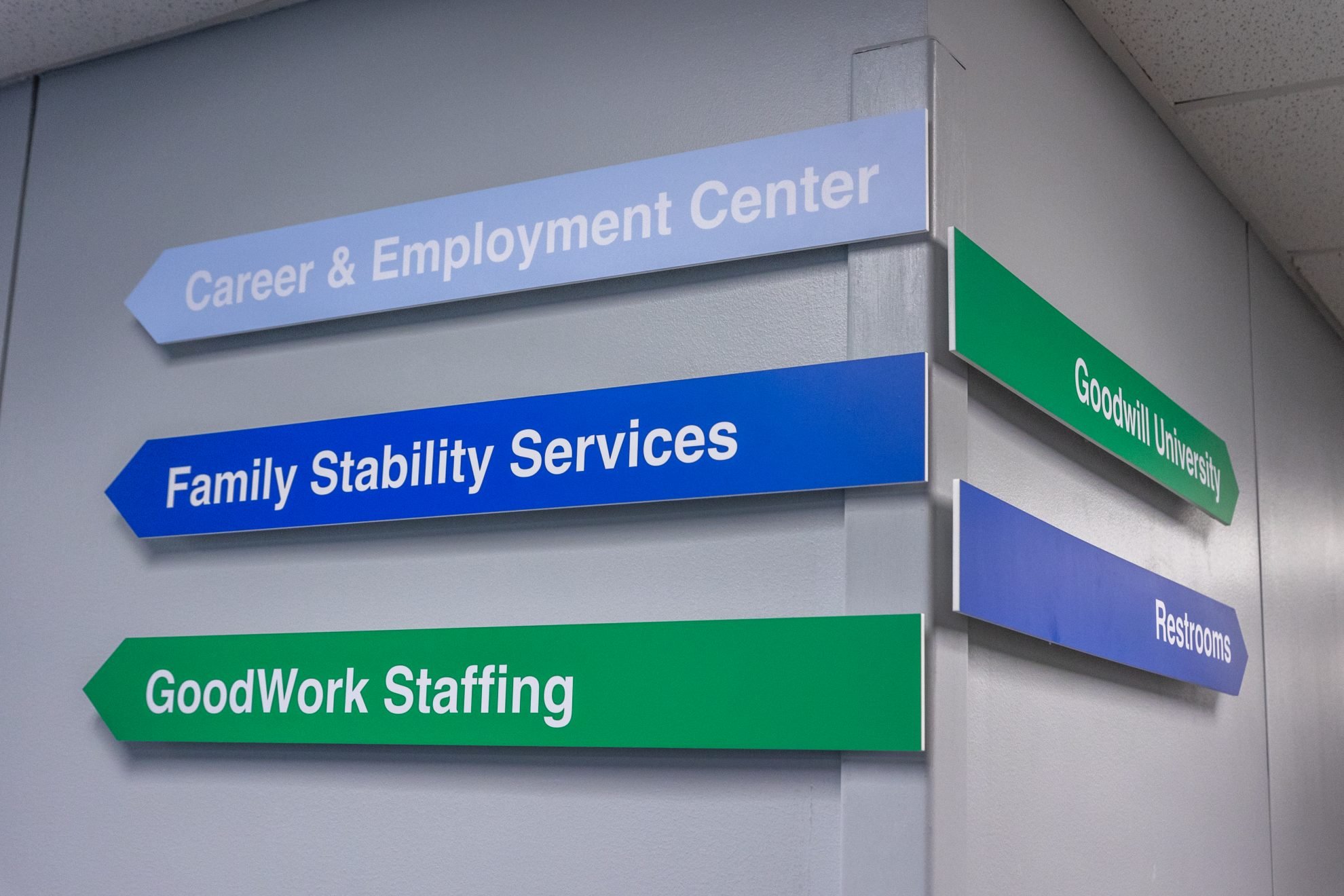
Wayfinding systems organize destinations, directional decisions, room identification, and other essential information so visitors, employees, and event attendees can navigate with confidence.
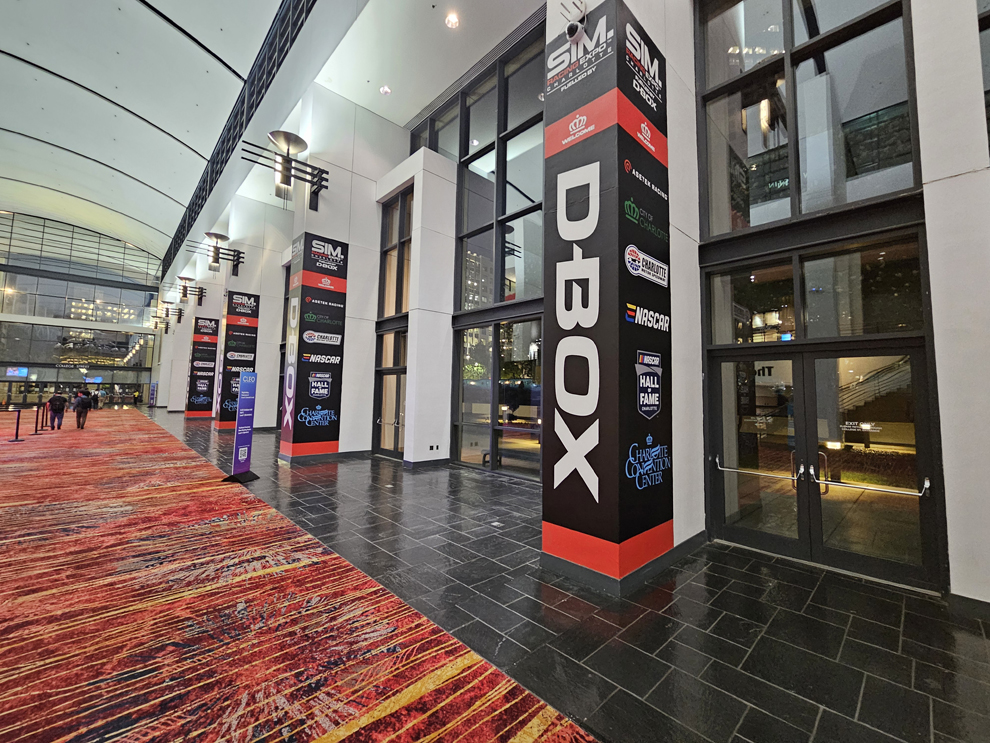
Branded event environments can include entrances, sponsor features, stage graphics, backdrops, directional signs, floor graphics, and modular structures coordinated around the attendee experience.
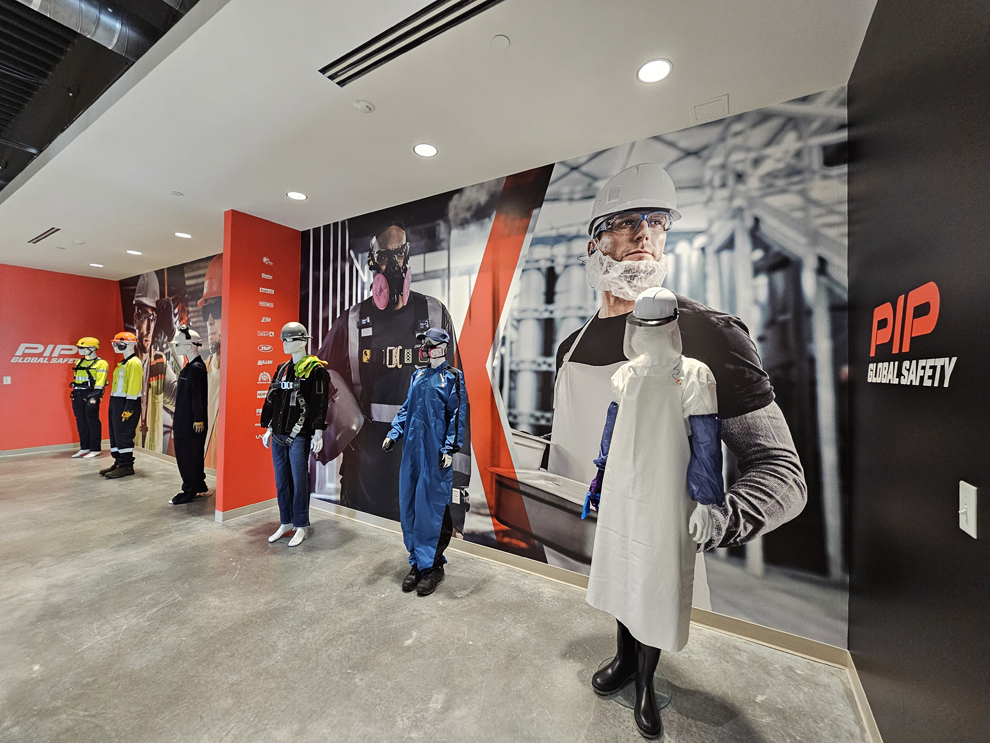
Environmental graphic design brings together brand identity, information, imagery, materials, scale, circulation, and placement so every physical element contributes to a consistent experience.
Planning a dimensional lobby sign, branded office interior, recognition feature, wayfinding system, event environment, or multi-location rollout starts with clear project information. Use the Get Started Now form to share the location, objectives, timeline, anticipated investment, photographs, plans, drawings, brand standards, event details, site access requirements, and any fixed opening or installation dates. The Huntersville-area team will review the information, identify unresolved details, and recommend the next step for environmental graphic design, project management, production, fabrication, and professional installation.
Heritage serves Huntersville from its headquarters at 2744 Yorkmont Road in Charlotte. This location brings leadership, project management, design, production, fabrication, and installation resources together to support work throughout the region. Its position within the Charlotte metropolitan area provides convenient access to Huntersville, the Lake Norman corridor, University City, Uptown Charlotte, South End, Ballantyne, and the airport area. The team can also coordinate projects in Cornelius, Davidson, Mooresville, Concord, Gastonia, Fort Mill, Rock Hill, and other communities throughout the Carolinas.
Huntersville and the broader Lake Norman region include corporate offices, healthcare providers, manufacturers, logistics operations, professional services, financial institutions, schools, nonprofits, sports organizations, and event venues. Each environment creates different demands. A production facility may need durable materials and installation planning that does not disrupt active operations. A corporate office may emphasize recruitment, executive presentation, privacy, and brand consistency. An event venue may require strict load-in times, sponsor visibility, temporary materials, and fast installation. Heritage combines regional scheduling knowledge with disciplined production and installation capabilities.
Heritage’s regional network also supports organizations with offices or facilities outside Huntersville. Project managers can coordinate surveys, design adjustments, production, fabrication, packaging, scheduling, and installation while maintaining consistent colors, materials, messages, and brand standards. Consistency does not require every location to look exactly the same. Each facility must still be evaluated according to its architecture, audience, lighting, circulation, access requirements, surfaces, and daily operations.
Environmental graphic design determines how branding, information, imagery, color, scale, materials, and placement should work within a built environment. It considers how signs and graphics interact with the architecture and how people encounter them while moving through the space. Experiential graphic design focuses on the impressions and interactions created along that journey, including arrival, navigation, storytelling, privacy, recognition, and participation.
Projects may begin with brand guidelines, architectural plans, photographs, field measurements, event layouts, approved messaging, or an early idea that requires further development. Heritage designers transform these inputs into production-ready concepts for lobby installations, dimensional letters, wall wraps, glass graphics, recognition features, directional systems, sponsor displays, and modular event structures. Their planning considers viewing distance, accessibility when applicable, installation access, future content updates, transitions between materials, and the methods required to fabricate and mount each element.
Early design coordination allows stakeholders to review the proposed content and appearance before production starts. It also provides project managers, estimators, production professionals, fabricators, and installers with the details needed for pricing, scheduling, construction, and site preparation. Heritage focuses on the physical branded elements it designs, produces, fabricates, manages, and installs. The company does not serve as an architect, engineering firm, event planner, or event marketing agency.
Professional installation is essential to achieving the approved appearance and supporting the service life of the finished work. Surface conditions, wall preparation, alignment, mounting points, hardware, access equipment, safety procedures, and installation sequence can all affect the result. Heritage incorporates installation planning into project development so field conditions can influence design, material, and fabrication decisions before production begins.
Every Heritage-managed installation starts with a site survey. The team documents dimensions, surfaces, obstructions, loading routes, traffic patterns, security procedures, access limitations, and the effect of existing lighting on visibility. This information supports technical planning and helps the project manager better understand the facility’s operations, audience, objectives, and desired experience.
Heritage’s full-time installation professionals coordinate directly with the project manager, designers, production specialists, and fabricators who understand the approved project scope. Work in occupied facilities may require planning around business hours, elevators, protected areas, noise restrictions, construction trades, and phased access. Venue installations may involve credentials, assigned loading periods, tight sequencing, and scheduled removal. Heritage installs components that it has designed, produced, fabricated, procured, or managed. Installation-only services for customer-supplied signs and graphics are not available.
Effective planning starts with the audience, business goals, project scope, schedule, site conditions, and anticipated total investment. Helpful materials may include photographs, floor plans, architectural drawings, brand guidelines, approved copy, event layouts, and the installation address. If some details have not yet been determined, the project manager can identify the missing measurements, decisions, approvals, or site information and recommend the most practical order for addressing them.
Huntersville organizations should expect a starting investment of at least $3,000 for the complete Heritage-managed scope. This amount applies to the combined project rather than each individual sign, display, or graphic. Many projects range from $10,000 to more than $200,000. Larger investments may involve complete workplace transformations, multi-floor graphics, coordinated event installations, phased facility improvements, or branded elements deployed across several locations. Final pricing depends on design requirements, dimensions, quantities, materials, fabrication methods, schedule, access, and installation conditions.
Heritage is best suited for organizations seeking coordinated design, project management, production, fabrication, and professional installation for a substantial interior or event environment. Non-illuminated exterior signs or graphics may be included when they are part of a broader Heritage-managed interior project. Heritage does not provide standalone monument signs, pylon signs, channel letters, or traditional exterior sign programs. Fleet graphics are not offered, and the company does not repair failed lighting or damaged customer-supplied sign components.
Yes. Heritage manages programs involving multiple offices, campuses, facilities, and venues throughout the Carolinas and Mid-Atlantic. A dedicated project manager can coordinate standards, surveys, location-specific design modifications, production, packaging, scheduling, and installation. Every location is still assessed individually because architecture, surfaces, audiences, operating hours, and access conditions can vary. This process maintains brand consistency while allowing each environment to receive an appropriate solution.
Submit the installation address, intended audience, project goals, target completion date, anticipated overall investment, and any fixed event or opening deadline. Photographs, measurements, floor plans, architectural drawings, logos, brand guidelines, approved messaging, event layouts, and access details are also helpful. If the scope is still evolving, provide the information currently available. A project manager can identify what is missing and recommend the next planning step.
Heritage creates coordinated signs, graphics, displays, branded workplaces, and event environments for organizations in Huntersville. Its service model combines environmental graphic design, dedicated project management, production, fabrication, site surveys, and professional installation. Common elements include lobby signs, wall wraps, privacy films, dimensional lettering, directional signs, recognition displays, and event graphics. The goal is to manage the physical branded environment through one connected process.
Yes. Heritage regularly works with architects, interior designers, general contractors, facilities professionals, marketing teams, workplace strategists, event producers, and outside branding agencies. The team can evaluate concepts for production feasibility, develop environmental graphic details, recommend materials, prepare files, fabricate approved components, and coordinate installation. Heritage respects the responsibilities of each partner and does not represent itself as the project architect, engineer, event planner, or event marketing agency.
Huntersville clients should plan for a minimum overall investment of $3,000 for the complete Heritage-managed scope. The minimum applies to the entire project, not each individual component. Heritage frequently manages projects ranging from $10,000 to more than $200,000, including workplace transformations, event installations, phased programs, and multi-location initiatives. Design development, materials, quantities, dimensions, fabrication, access, timing, and installation requirements determine the final cost.
No. Heritage does not offer installation-only services for customer-provided signs, graphics, or displays. Its installation professionals work with components that Heritage has designed, produced, fabricated, procured, or otherwise managed as part of the approved project. Keeping these responsibilities connected allows the team to confirm dimensions, material compatibility, surface preparation, mounting methods, schedule requirements, and site conditions before installation.
A site survey confirms measurements, surfaces, obstructions, lighting, circulation, loading access, security requirements, and other field conditions that affect production and installation. Every Heritage-managed installed project begins with this evaluation. The collected information informs estimating, material selection, fabrication, equipment planning, mounting, and installation sequencing. It also helps the project manager understand how the Huntersville facility functions and how people should experience the completed environment.
Yes. Heritage develops physical branding for conferences, corporate meetings, fundraising events, sponsor programs, athletic environments, venues, and brand activations. Solutions may include branded entrances, directional graphics, stage features, backdrops, sponsor displays, floor or wall graphics, and modular structures. Heritage can manage environmental graphic design, production, fabrication, installation, and removal when included in the scope. It does not provide event planning or event marketing.
The timeline depends on the scope, design readiness, approval process, materials, fabrication methods, site access, and installation requirements. A focused project may take several weeks, while a workplace transformation, renovation, or multi-location rollout may continue for several months. Heritage establishes decision dates and responsibilities with the client. Newly primed and painted walls may require approximately four weeks to cure and release trapped gases before certain graphics can be installed.
Heritage combines nearly 50 years of company experience with a veteran-owned, family-led structure, a Charlotte headquarters, and a seven-location regional network. Huntersville clients work with one dedicated project manager supported by environmental graphic designers, production professionals, fabricators, and full-time installers. The company emphasizes clearly defined scopes, practical recommendations, coordinated execution, and service boundaries that protect quality. Heritage strives to serve every client and community with excellence, accountability, care, and dependable follow-through.
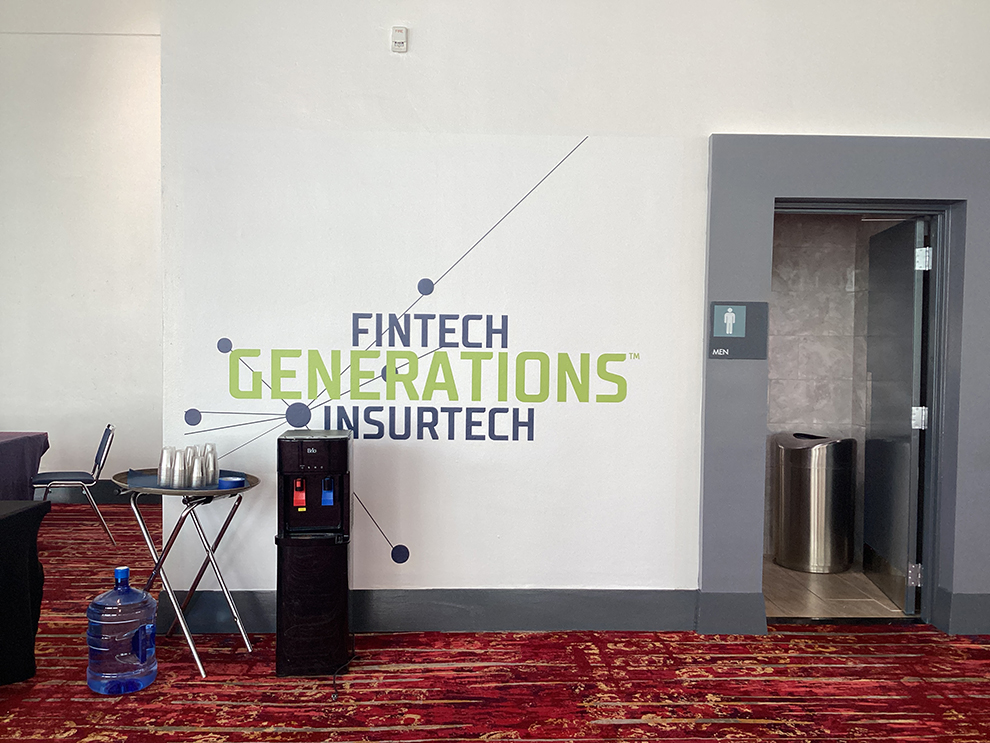
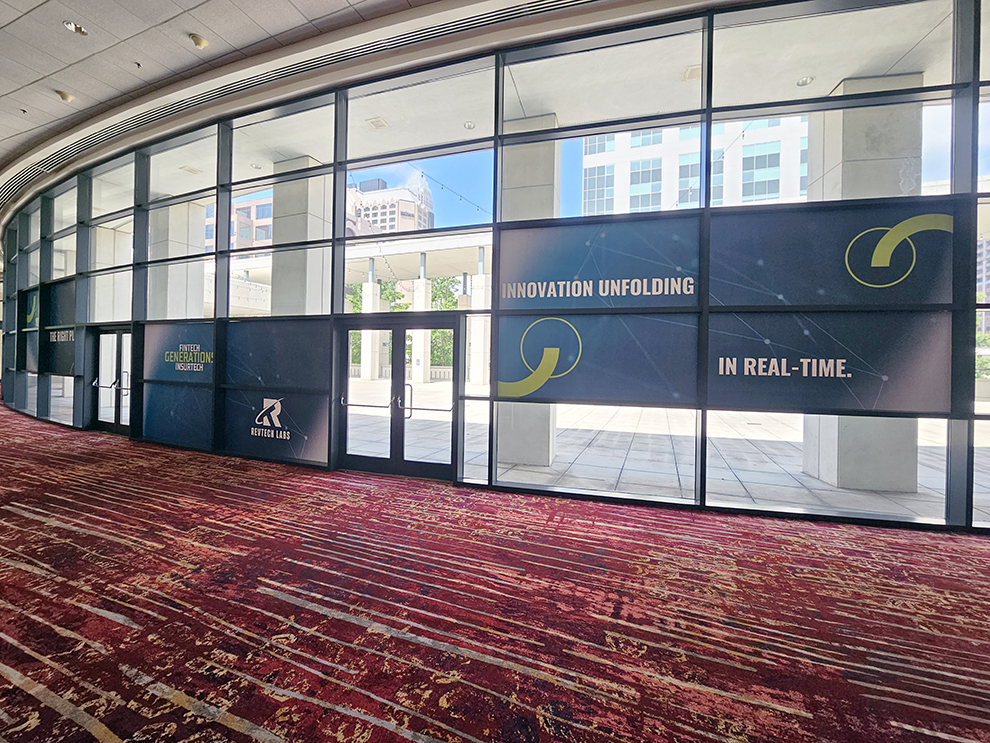
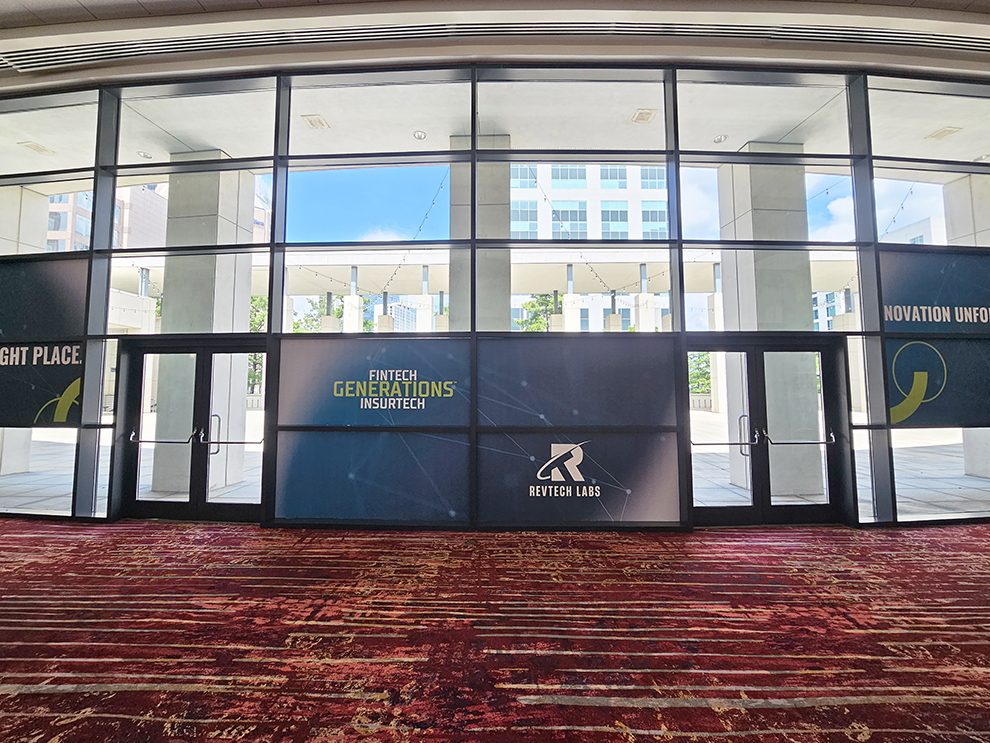
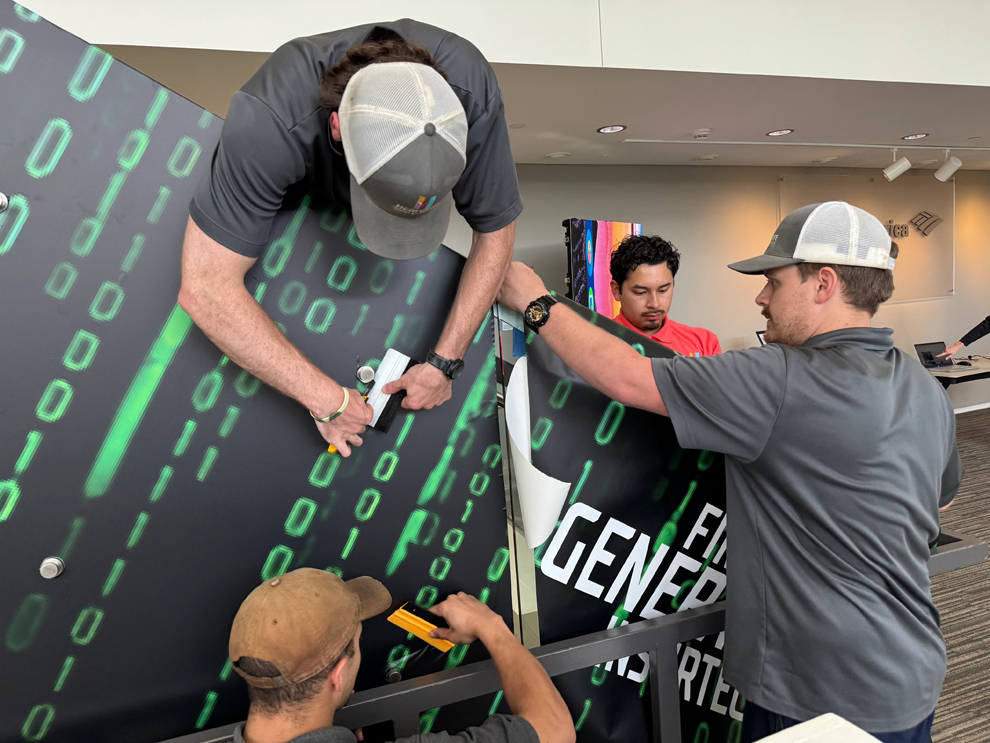
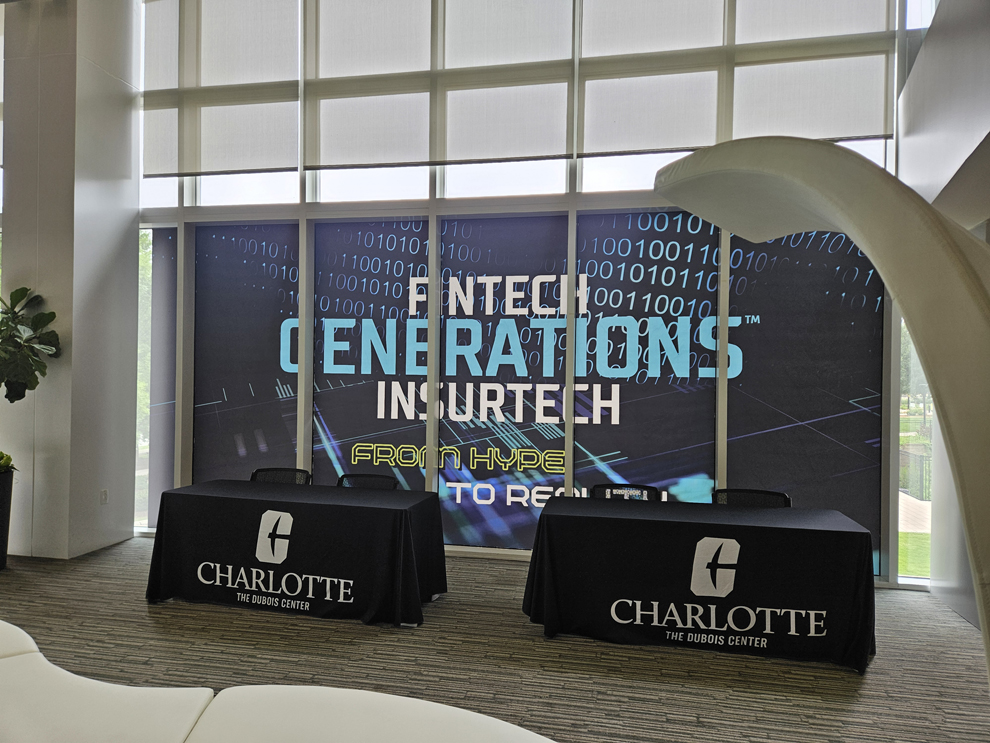
Heritage Signs & Displays collaborated with the Fintech + Insurtech Generations 2023 conference at the Charlotte Convention Center. Heritage worked closely with the client to create an interactive and branded event environment for attendees to network and discuss key topics impacting the financial and insurance sectors. The project enhanced the premier annual conference's atmosphere and engagement.
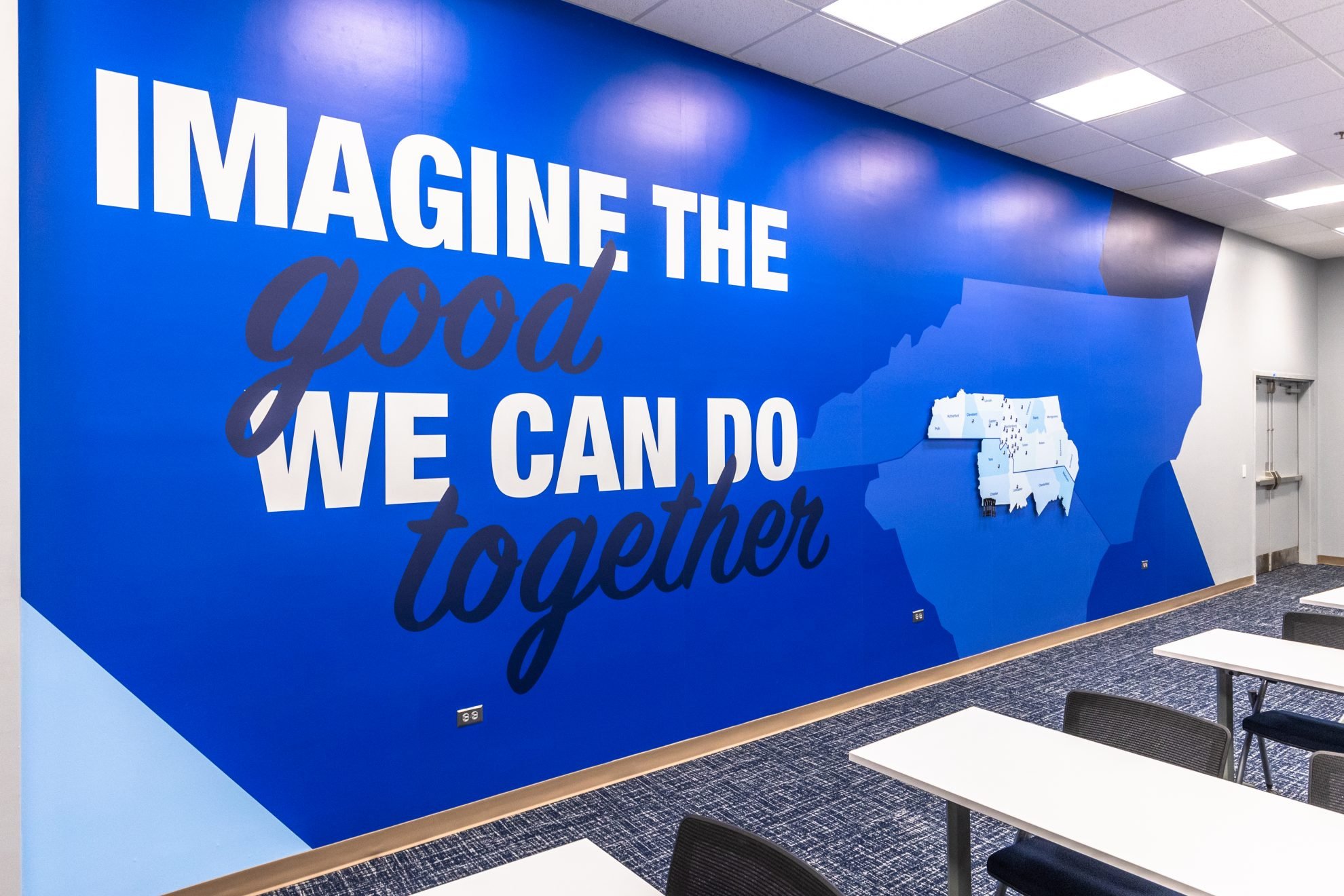
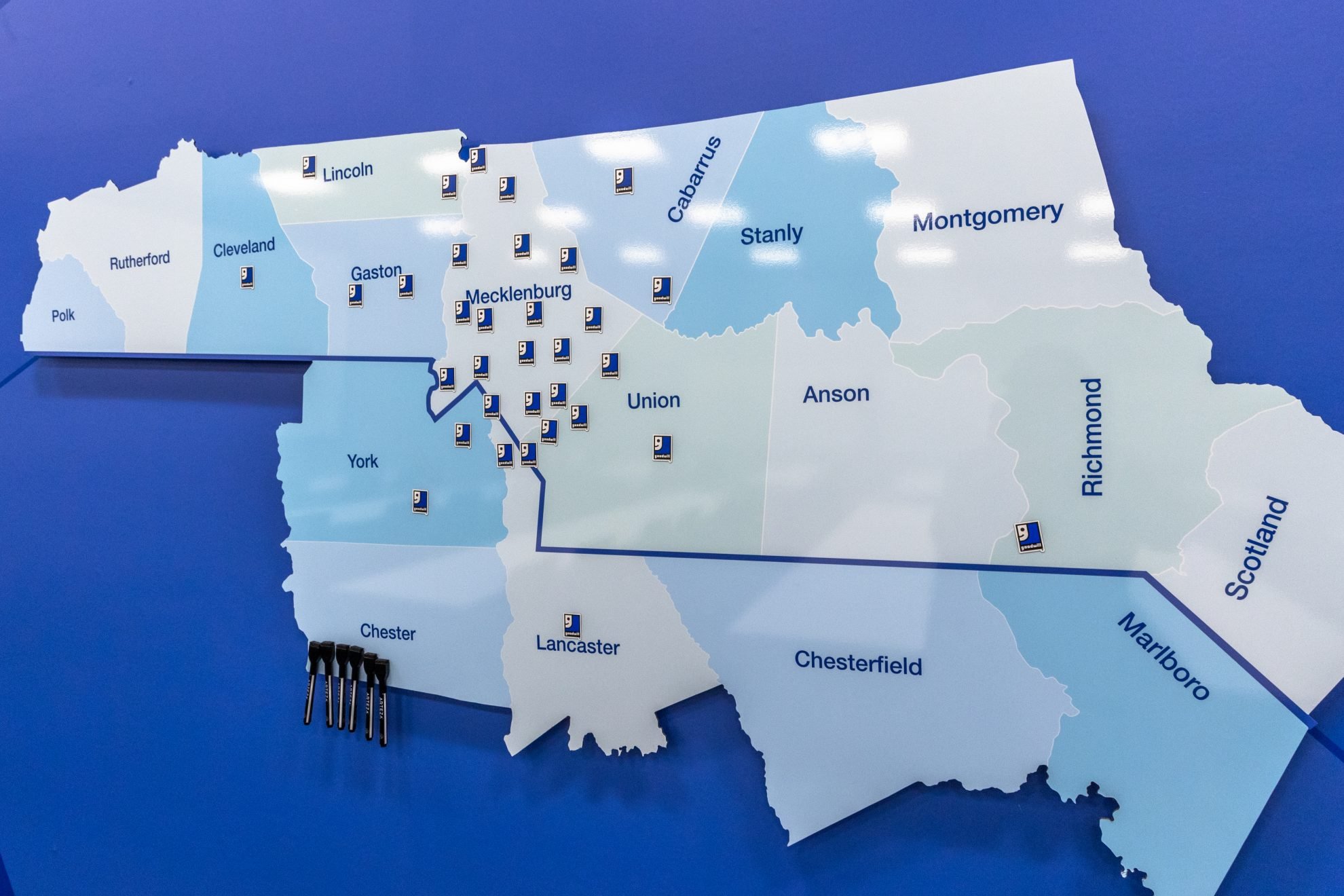
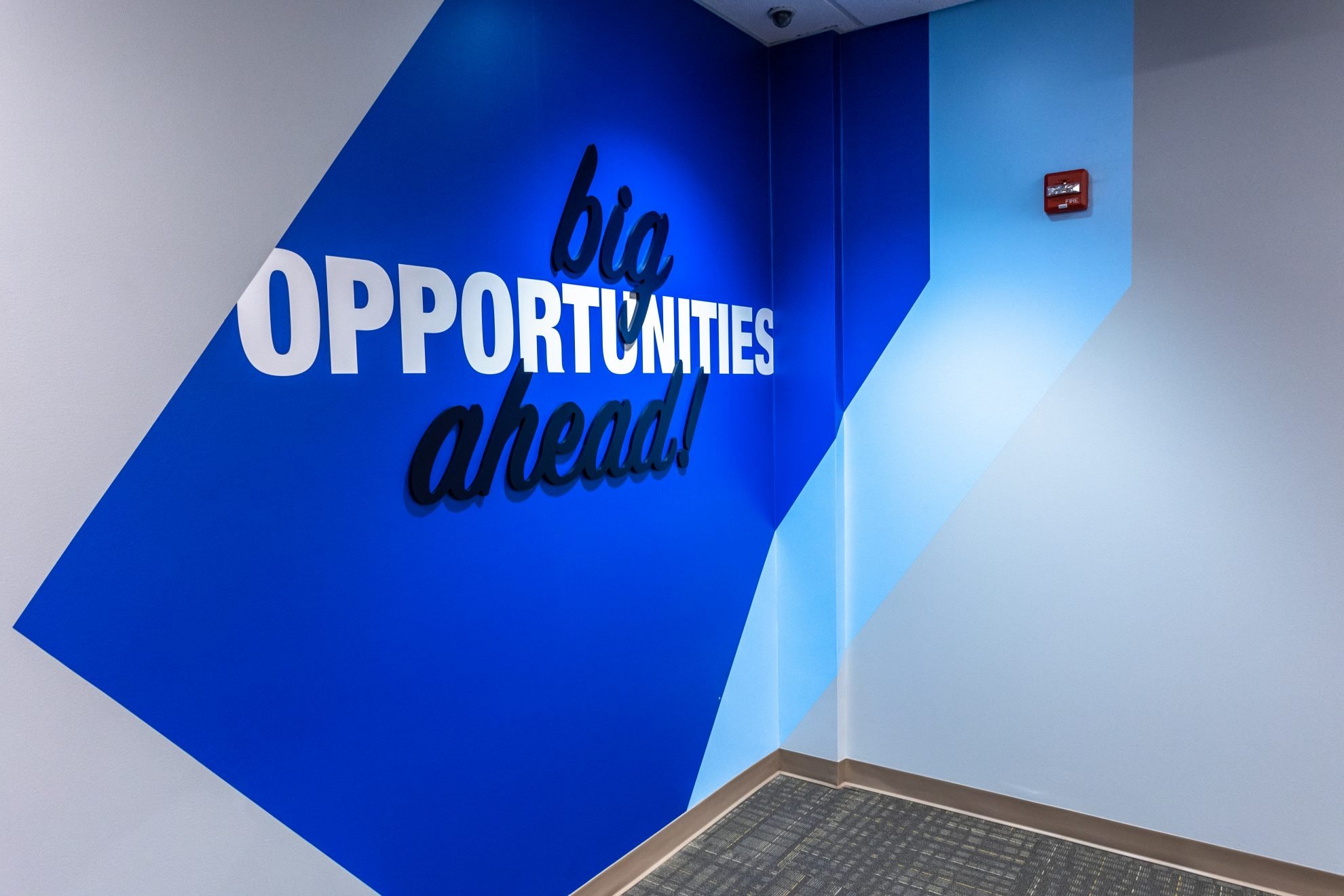
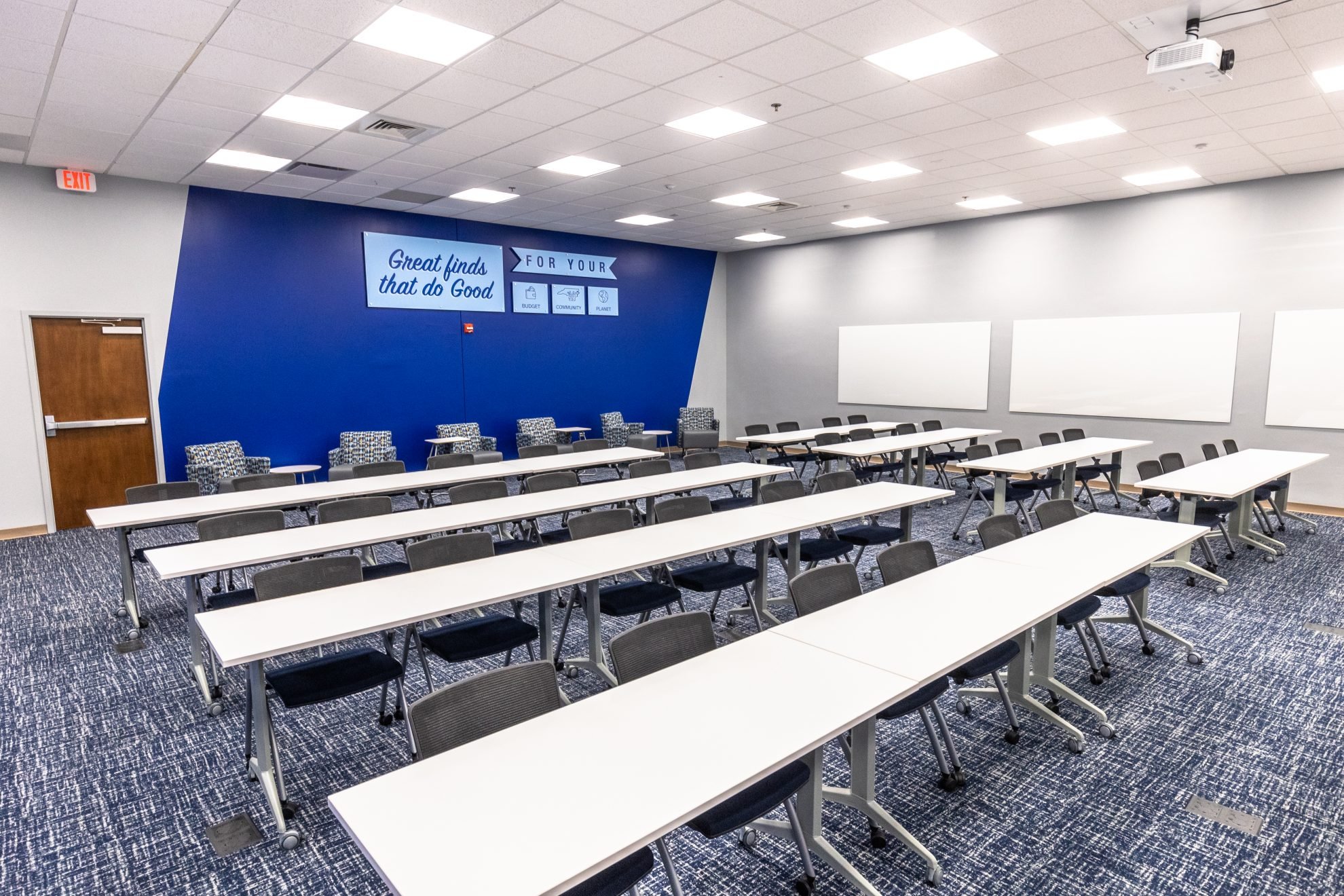
Heritage Signs & Displays collaborated with Goodwill Industries of the Southern Piedmont to transform the Opportunity Campus in Statesville, NC. The project included lenticular wall displays, wall wraps, frosted vinyl, wayfinding signs, and custom wall displays. These elements enhanced the Career & Employment Center, creating an engaging and branded environment that reflects Goodwill's values and mission to support workforce development.