


How Can You Bring Your Organization’s Story to Life Across Multiple Locations?
How Can You Bring Your Organization’s Story to Life Across Multiple Locations?
How shared history, values, and local stories become meaningful experiences across different offices and facilities.
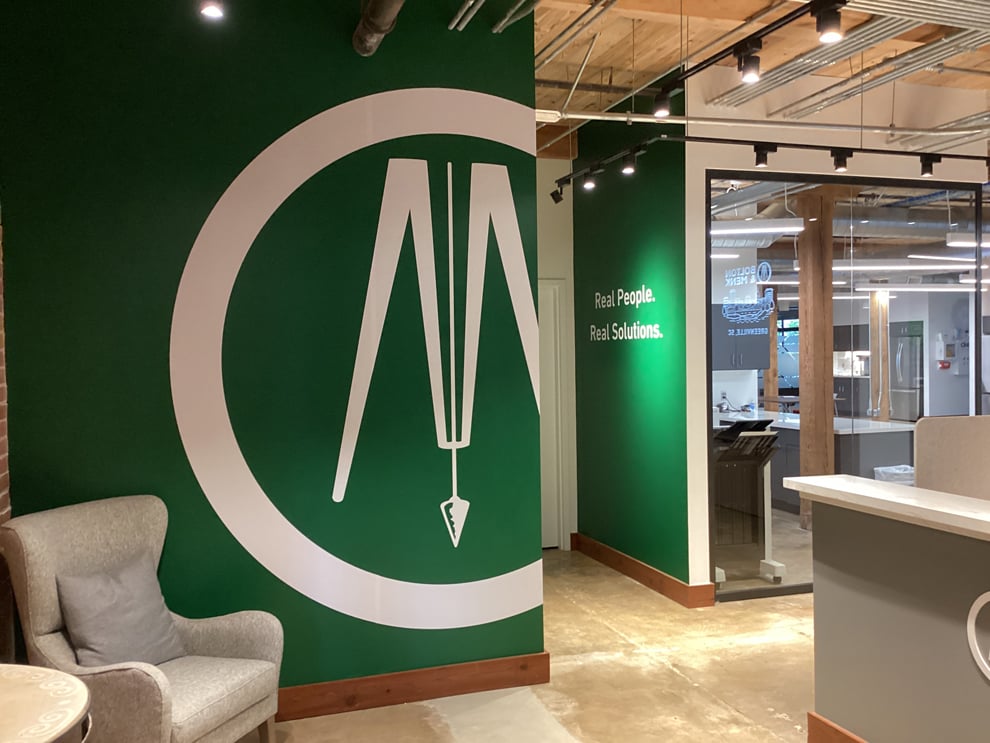
A visitor who knows your Charlotte headquarters should encounter more than a familiar logo at your next location. They should recognize the people, purpose, and story behind your organization. What began years ago, the milestones that shaped it, and the values it strives to practice should not disappear when the address changes. Yet each building can share that story in its own way.
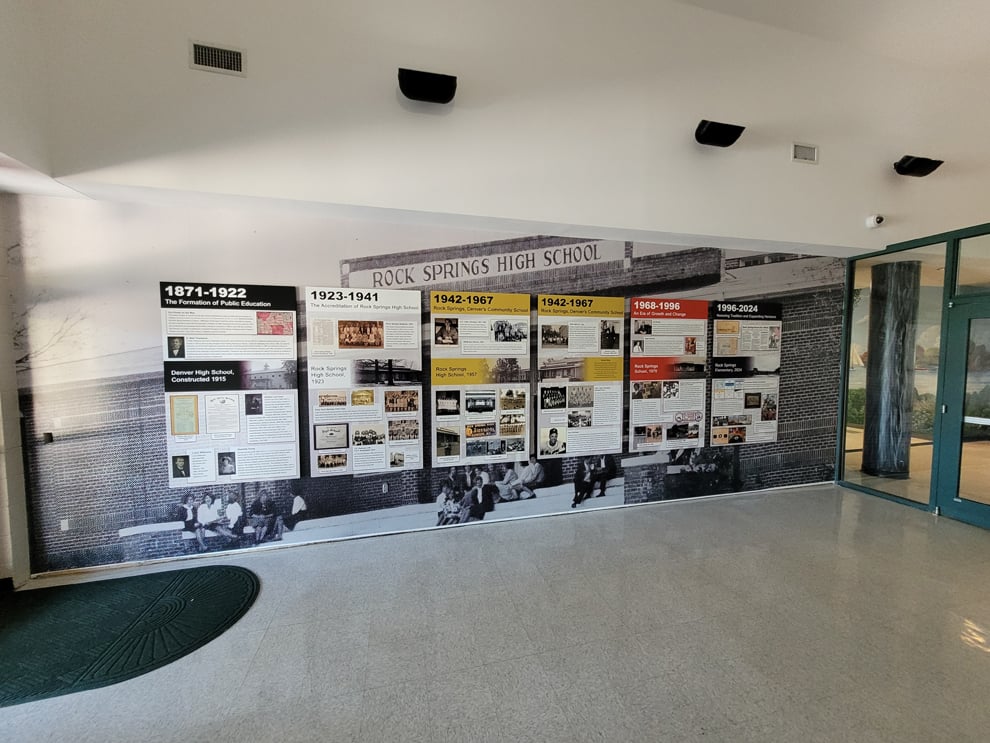
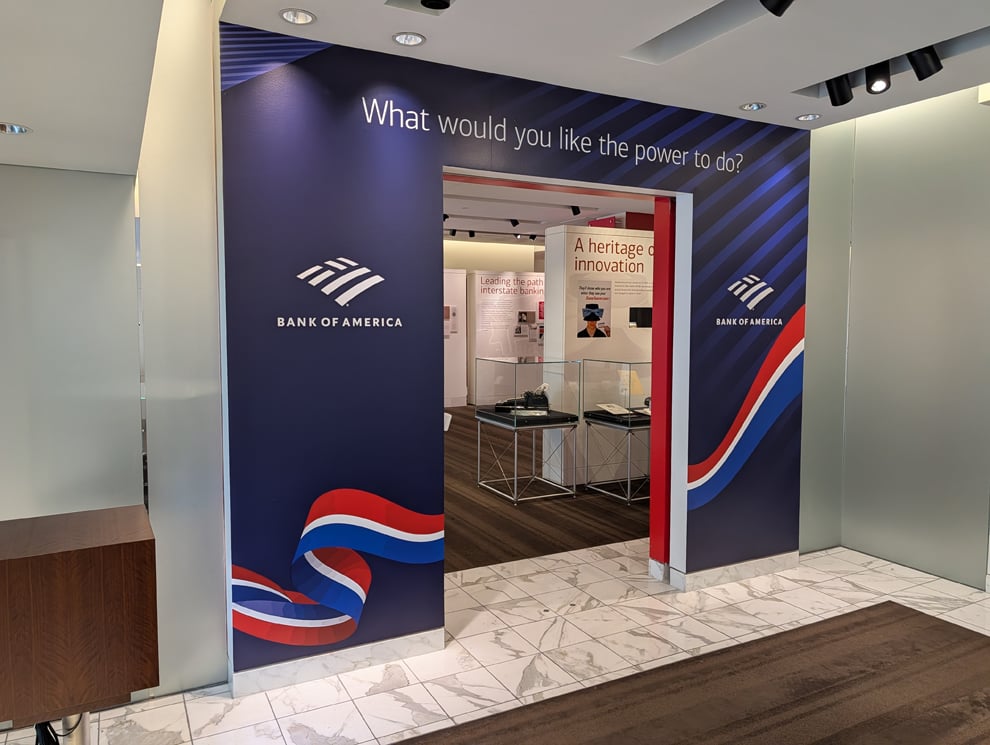
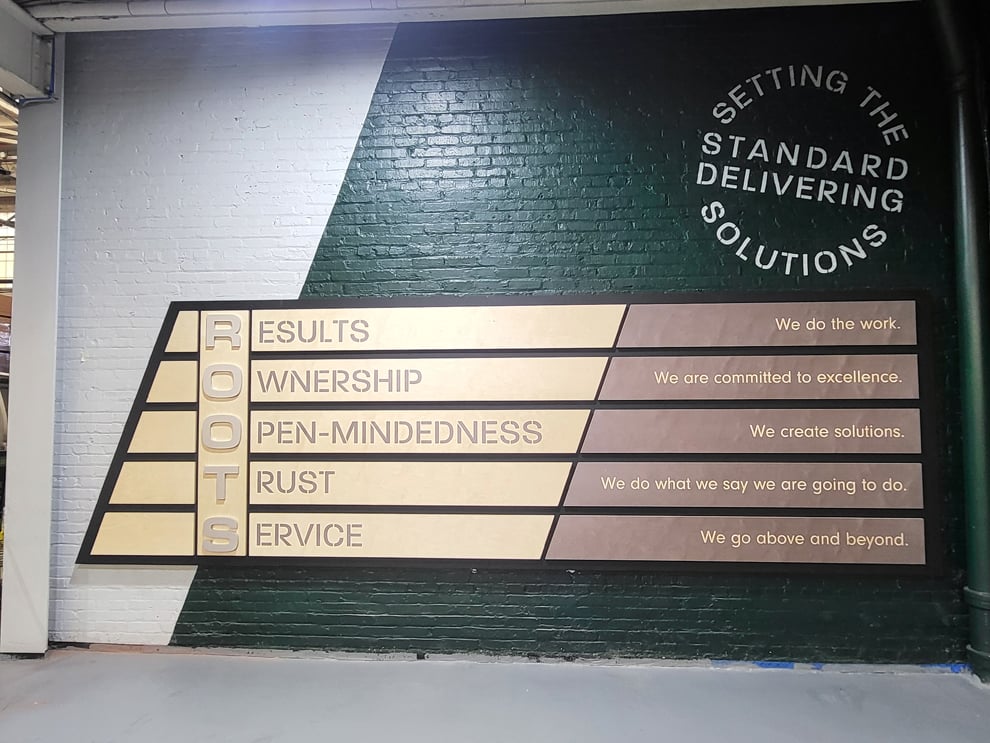
Consider a headquarters where a timeline introduces the company’s founding and defining achievements. A regional office might connect those milestones to local people and community relationships. Another facility may highlight the organization’s core values, mission statement, or employees whose contributions continue that legacy. These are different chapters of one organizational story, not unrelated decoration or matching wall packages.
For leaders responsible for multiple Carolinas locations, the opportunity is to make that shared foundation visible while respecting each facility’s purpose. Heritage helps clients turn approved stories and identity standards into thoughtfully designed signs, graphics, and displays. The result should feel connected because the meaning is consistent, not because the walls have been copied.
What Should People Learn About Your Organization at Every Location?
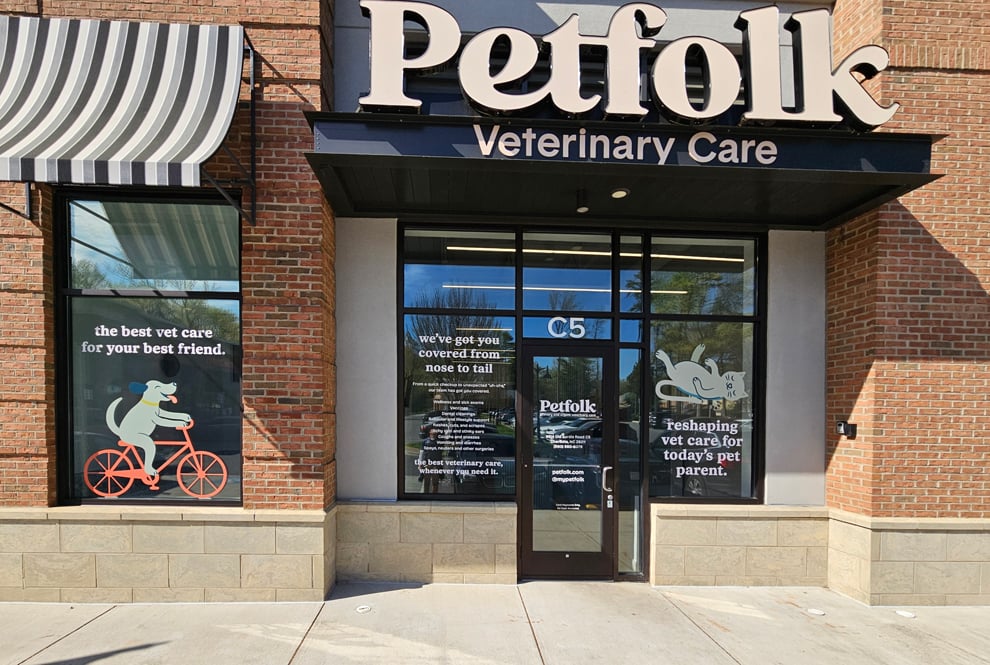
Before choosing a display, consider what every employee and visitor should understand about your organization. Why was it founded? What obstacles and turning points shaped its work? Which values, accomplishments, and commitments still guide its decisions? Those are not simply marketing topics. They are the experiences and convictions people should recognize, even if they have never visited headquarters or met the founders.
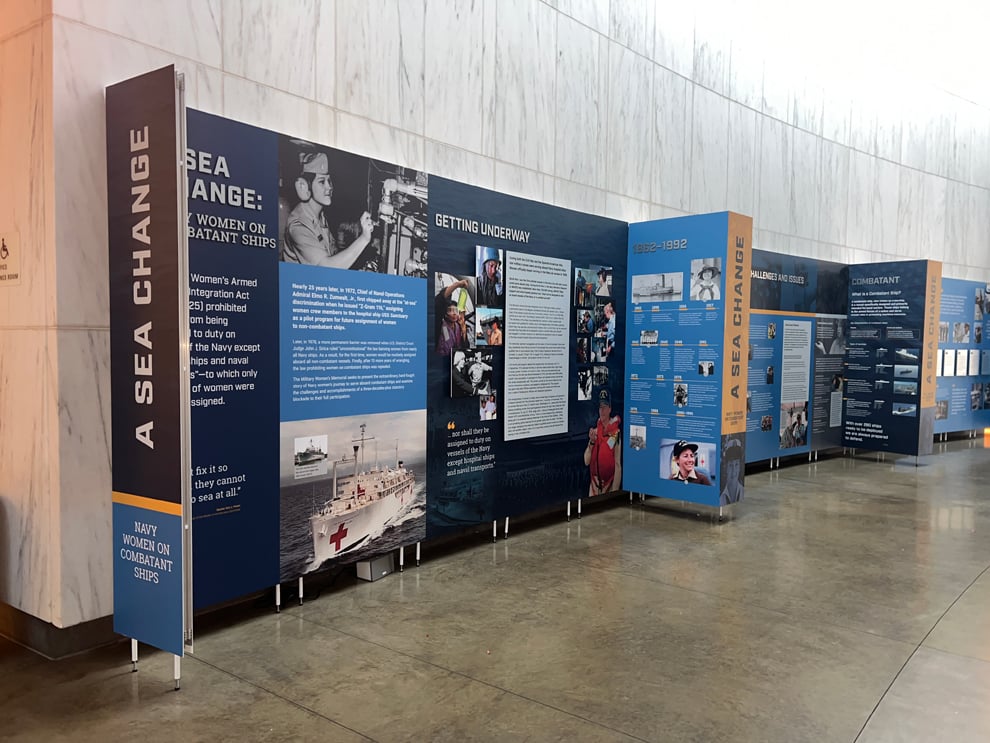
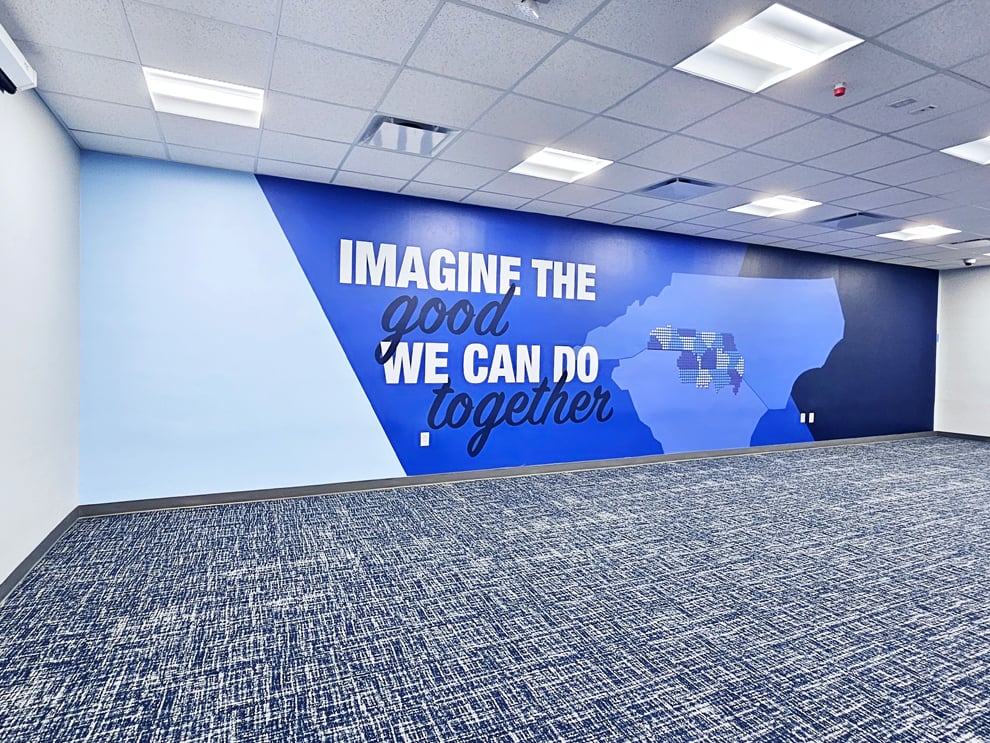
A company history wall can establish that larger context. Milestone timelines, mission statement and vision statement displays, and employee recognition can bring selected parts of the story into everyday view. Heritage works with client stakeholders to connect approved content to the places where it will be useful and meaningful, while recognizing that graphics cannot manufacture the culture they describe.
That same standard applies at Heritage. Our faith in Jesus Christ and dependence on Him shape our desire to honor God by serving teammates, clients, and communities with excellence. We see business as ministry, but our actions must support those words. People should recognize those convictions in how we listen, respond, and follow through. The same test applies to every organization’s values.
Carry One Shared History and Culture Into Different Spaces
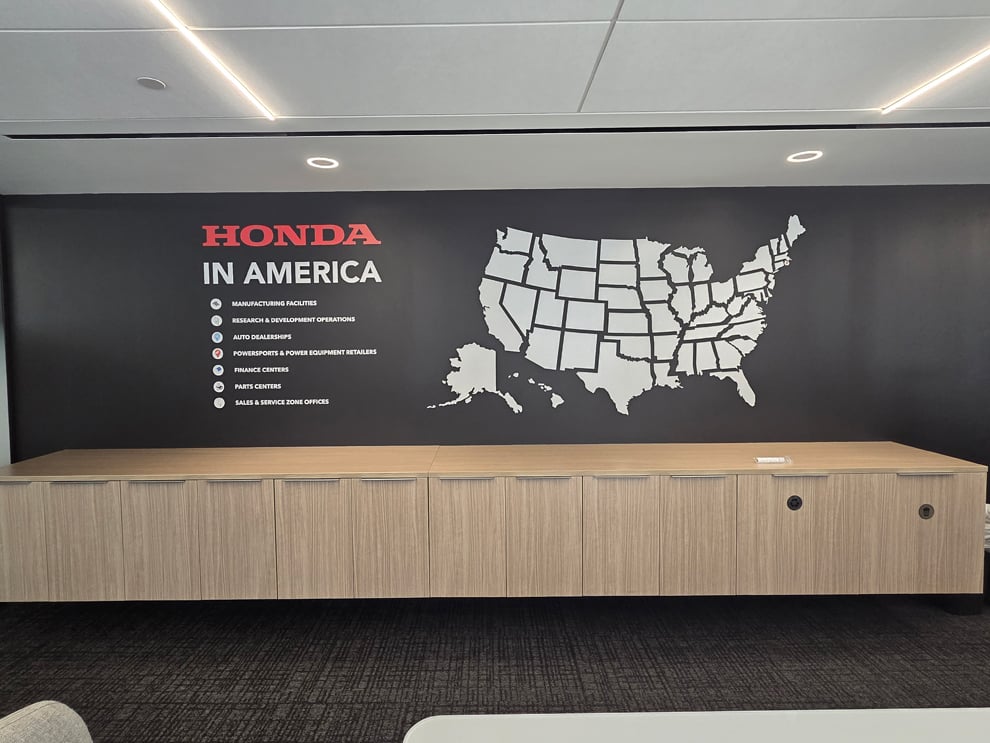
A shared story does not require a standardized room. The organization supplies its verified history, approved visual identity, core values, and the messages that matter most. Heritage can help determine how that foundation should appear in a reception area, a gathering space, or a workplace corridor. The objective is a coherent experience, not a collection of identical displays with different street addresses.
Consider a Charlotte headquarters with room for a substantial founding timeline and a smaller office in Concord with limited display space. A concise values feature or a few carefully selected milestones may work better in the smaller building. A location serving a different audience might emphasize community impact or employee achievements. The organization’s story remains recognizable even as its expression changes with the setting.
Some stories also grow over time. New achievements, employee recognition, and community milestones may deserve future additions. Heritage can discuss appropriate replaceable or updateable physical display components, while the client maintains and approves accurate content. Thinking about those changes during design helps the displays remain useful without making the original installation unnecessarily rigid.
How Can Local People Add Meaning to the Larger Story?
Headquarters usually knows the founding story and approved brand direction. Local colleagues know the accomplishments, relationships, and daily experiences that make their own location meaningful. Both are essential. A useful discovery conversation asks what this location contributes to the wider organization, whose efforts deserve recognition, and which parts of the shared history visitors or newer employees may not know.
Imagine a Charlotte-based organization with headquarters, a client meeting office in Fort Mill, and a regional location in Raleigh. Headquarters could show a larger timeline of the organization’s development. Fort Mill might highlight the service commitments clients can expect. Raleigh could recognize teammates and local milestones that extend the same values into that community. The displays would tell connected but different chapters of a story the client has approved.
Heritage can work with central leadership and local stakeholders to turn these insights into practical environmental graphic design options. The organization remains the authority on its history and messaging; the local team offers context; Heritage helps choose what belongs in the space. That collaboration produces more meaningful work than asking each office to invent its own graphics.
Will the Same Storytelling Displays Work in Every Building?
A beautiful timeline developed for one lobby may not fit another building. The story can travel, but the available walls, viewing distances, lighting, glass, traffic patterns, and architectural character may change what should be featured. Environmental graphic design helps decide whether a longer history wall, a focused values display, a dimensional feature, or a smaller recognition area will communicate best in each setting.
For Heritage-managed projects that include professional installation, site surveys establish the actual dimensions, placement, access, and relevant surface conditions before production. If a location has recently painted walls, the client’s property team must ensure the surface has been properly prepared and fully cured before wall graphics are installed. These are practical planning requirements, not reasons to avoid a good idea.
Heritage can record measurements, candidate display locations, approved messages, installation requirements, and site-specific design decisions as the project develops. A regional office should not inherit a layout merely because it worked at headquarters. Preserving the meaning of the story while adjusting its physical expression helps the finished environments feel intentional rather than mechanically duplicated.
Plan One Storytelling Program, Even When Locations Open in Phases
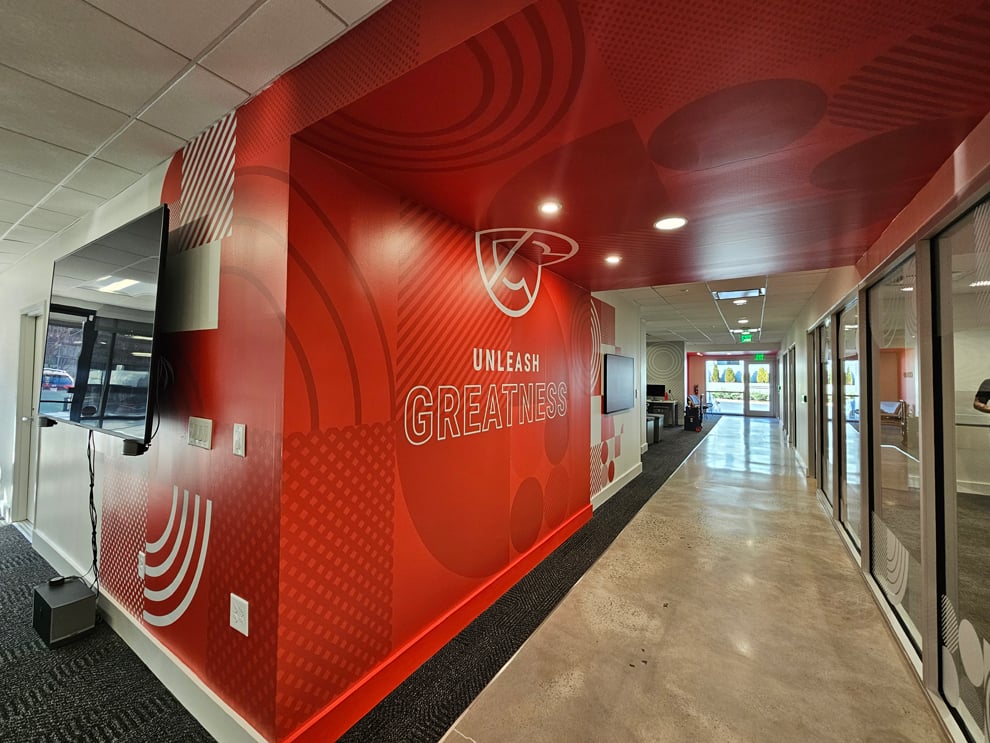
An organization may renovate headquarters this year and open two regional locations next year. Those phases need not tell unrelated stories. A coordinated plan can identify the foundational history, values, visual language, and storytelling priorities that should continue across the program. Leadership can then determine which locations need a fuller presentation and which benefit from a carefully selected chapter.
Heritage can help translate the approved direction into a phased environmental graphics program, with a clear record of content, design decisions, locations, site surveys, and production requirements. When a new office becomes ready, the next phase can build on earlier work while allowing local achievements and building needs to shape the result. The client need not become its own sign-production department to keep continuity.
Investments can follow the purpose of each site. A headquarters may justify a substantial history wall and recognition displays; a small service center may benefit most from a welcoming identity feature and locally relevant storytelling. Coordination protects the shared narrative without requiring the same product list or budget in every facility.
How Heritage Brings Approved Stories Into Physical Environments
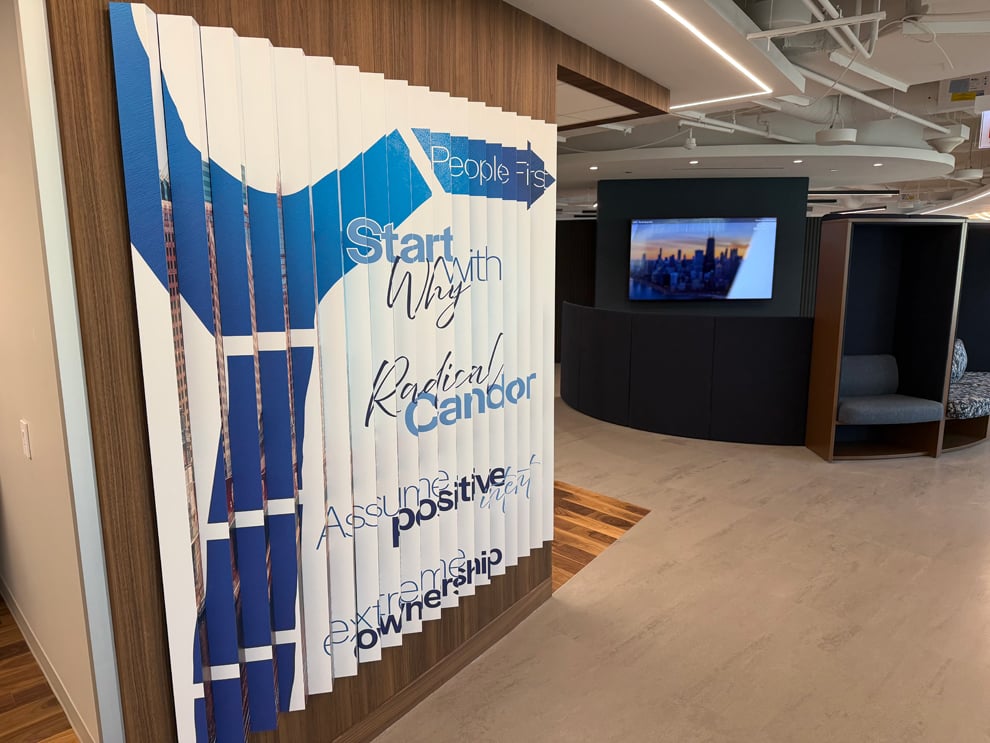
A carefully developed organizational story only becomes useful when it is translated into physical elements that people can encounter. Heritage collaborates with client leadership, marketing, HR, and creative partners to develop environmental graphic design concepts for approved history, values, milestones, and recognition. Placement, scale, materials, fabrication, and installation decisions then determine how those messages function in the actual building.
For Charlotte-based organizations, Heritage combines its Charlotte headquarters and specialty production resources with field and installation support in the Carolinas and a broader network across the Mid-Atlantic. Heritage’s One Dedicated Project Manager System helps preserve approved standards, decisions, and project knowledge while local site requirements are addressed. Environmental graphic design, production, fabrication, and professional installation work within that coordinated process for accepted projects.
One dedicated Project Manager helps connect approvals, site information, design intent, production, and installation throughout accepted phases. The organization retains responsibility for confirming the facts and approving the story; Heritage carries the approved physical work forward. That continuity matters when a facility in another market needs to tell the same larger story without becoming a copy of headquarters.
Make the Story Connected, Not Copied
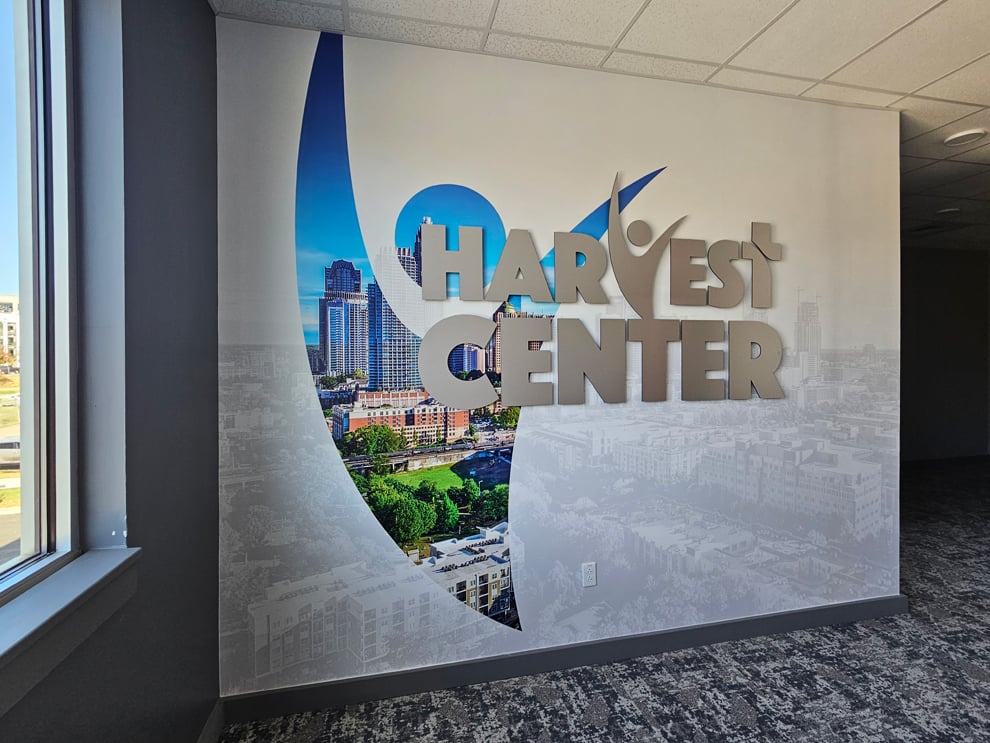
When someone enters a second or third location, success is not measured by whether every wall is identical. Do they recognize the organization and understand what it stands for? Do its history and achievements have a human face? Can local employees see their own contributions within the larger story? Physical displays can make that connection visible, but leadership and daily behavior must give it credibility.
Before planning another facility, consider what people should know about your beginnings, what remains important today, and what the local team is adding to that legacy. Those answers shape better decisions about history walls, values displays, recognition, and the other visual elements that create a connected experience. Heritage can help bring those approved stories into spaces that differ in scale and purpose.
If your Charlotte-area organization wants its history, culture, and values to be recognizable across several locations, Get Started Now with Heritage Signs & Displays. Tell us about your facilities, the stories and people you want to highlight, and the timing you are considering. We can explore a coordinated approach to environmental graphic design, production, fabrication, and installation.
Author
Frequently Asked Questions About Branding Multiple Locations
No. The shared story should be accurate and recognizable, but the physical expression can differ. Headquarters may feature a longer timeline, while a smaller office highlights selected milestones or local achievements. Heritage can help adapt approved content and brand standards to each space through environmental graphic design and coordinated production and installation.
Consider the founding purpose, essential values, approved identity, and a few milestones that explain who you are. Then decide which local people, accomplishments, and community relationships deserve their own expression. Heritage can help develop display concepts, while your organization supplies verified facts and approves what is communicated.
Yes, for accepted projects within its service capabilities and operating geography. Charlotte serves as Heritage’s headquarters and a major specialty production resource, supported by local field resources in the Carolinas and coordinated support across the Mid-Atlantic. One dedicated Project Manager can preserve approved project direction and communication as site-specific production and installation needs are addressed.
For Heritage-managed projects with professional installation, site surveys are required. Each property has its own dimensions, wall and glass conditions, access requirements, and placement considerations. A common concept may be reusable, but the production and installation details must reflect verified conditions at each site. That protects the design intent and supports more reliable scheduling.
Often, yes. Agree on the shared brand direction and establish local priorities before scheduling each phase. Keep approved artwork, material specifications, location records, and responsible contacts organized so later work builds on earlier decisions. Heritage can evaluate the proposed sequence against scope, approvals, site readiness, production capacity, and installation access before confirming a workable plan.
Yes. For accepted projects, Heritage can collaborate with your leadership, marketing, HR, or creative partners to translate approved stories into physical timeline features, core values displays, recognition graphics, and other suitable interior elements. Each design responds to the facility and its audience; the client controls content and approvals.
No. Bring your approved brand direction, reliable history or milestones, priority locations, and a sense of what you want people to understand. Heritage can help develop environmental graphic design and coordinate site surveys, production, fabrication, and professional installation for accepted work. Your organization remains responsible for verifying content and authorizing decisions and property access.
Start with the audiences and spaces where the organization’s history, purpose, or recognition would make the greatest difference. A headquarters may need a comprehensive timeline; a smaller office may benefit from one strong local story. Heritage can help evaluate physical opportunities and plan phases that preserve a shared direction without assuming equal budgets or identical displays.